EN
EN


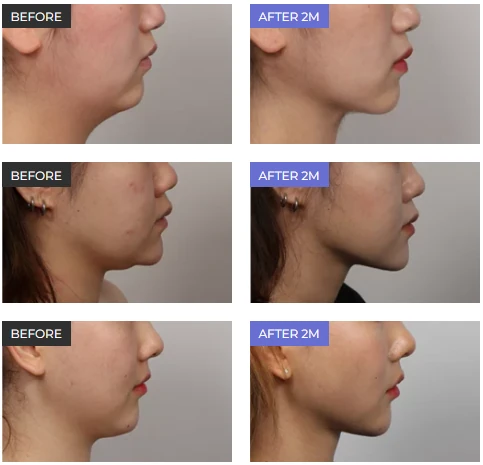
You catch your side profile in a photo, and your jawline seems to melt straight into your neck. It is a common moment, and it usually sends people searching for double chin exercises that same day.
Double chin exercises are at-home moves that work the small muscles under the chin and correct head posture so the line between your jaw and neck looks more defined — they cannot, however, melt fat from under the chin on their own. I would rather tell you that upfront than have you discover it three months from now.
In my practice as a plastic surgeon, the question I hear most often is, “Which moves should I do at home, and how many times?” Most lists of double chin exercises online name a few moves and stop there — no hold time, no frequency, no mistakes to avoid.
This guide covers form and reps for each move, how to check progress, when to stop, and what exercise cannot change. If you want to understand the causes of a double chin and how treatments compare, that article is the better place to start.
What Double Chin Exercises Can and Can’t Change
Before you start any double chin exercises, settle one point: fullness under the chin has more than one cause, and exercise reaches only some of them.
What Can Change: Posture, Muscle Tone and Morning Puffiness
Posture changes first. When your head drifts forward and your chin drops toward your chest, the angle between your chin and neck flattens out. The same person can look as if they have far more chin fat simply because of head position. This is where double chin exercises pay off fastest: a chin tuck brings your head back over your shoulders and changes that angle the moment you do it.
Muscle tone under the chin can change too. Beneath the chin sits a group of small muscles that hold up your tongue and the hyoid bone (a small U-shaped bone at the root of the tongue). When these rarely used muscles start working, many people notice the area under the chin feels a little firmer.
Morning puffiness can ease. If your chin looks especially full when you wake up, gentle movement and upright posture often make a visible difference by the afternoon. That is fluid settling, not fat loss.
What Exercise Can’t Fix: Deep Fat, Lax Platysma, Sagging Skin and Glands
If your jawline has always looked soft, even when you were younger, the cause may lie deeper. Plastic surgery textbooks list several culprits:
- Deep fat under the platysma (the thin, sheet-like muscle that covers the front of the neck)
- A low-sitting hyoid bone, which blunts the chin–neck angle from underneath
- Thick anterior digastric muscles (short muscles that run just under the chin tip)
- Submandibular salivary glands that have descended below the jawbone
Plastic surgery textbooks note that fat beneath the platysma cannot be removed with liposuction and requires a direct approach through a small incision under the chin. If suction cannot reach that layer, double chin exercises certainly cannot.
Bone structure matters as well. Surgical literature on the aging face notes that with a normally high hyoid bone, reducing chin fat improves the profile markedly; with a low hyoid, the change is small. That is one reason two people can do the same double chin exercises and lose the same weight yet see very different results.
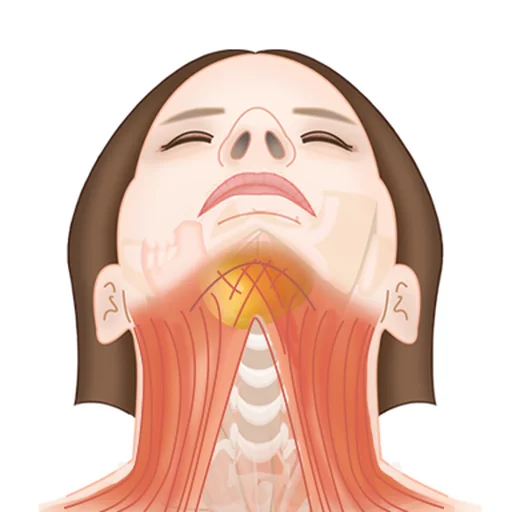
Stretched muscle doesn’t knit back together on its own. Two vertical bands at the front of the neck usually mean the platysma has separated. Surgical textbooks describe stitching its edges back together at the midline as the key correction — exercise cannot close that gap.
At a Glance: Changes vs. Doesn’t Change
| Double chin exercises and habits can change | Exercise is unlikely to change |
|---|---|
| A chin–neck angle that looks blunt because you hold your head forward | Fat just under the skin of the chin (it can’t be spot-reduced) |
| Tension in the front-of-neck muscles (a firmer, supported feel) | Deep fat beneath the platysma |
| Temporary morning puffiness | A stretched, separated platysma (vertical neck bands) |
| The habit of dropping your head in photos | Loose skin, descended salivary glands, a low hyoid bone |
Why Double Chin Exercises Can’t Spot-Reduce Chin Fat
Many people believe that working a body part burns the fat on top of it. Research does not support that.
In a 2011 study on abdominal exercise and belly fat (Vispute et al.), 24 previously inactive adults were split into two groups. One group did 7 abdominal exercises, 10 reps × 2 sets, 5 days a week for 6 weeks. At the end, their belly fat and waist size were no different from the group that did no exercise at all.
Only muscular endurance improved: the muscles worked, but the fat covering them did not shrink faster. The study looked at the abdomen, not the chin, yet the body draws on fat stores as a whole, and that principle applies under the chin too.
So think of double chin exercises as a supporting tool that tidies up posture and muscle tone, not a way to remove fat. If the real issue is fat, muscle or skin, our complete guide to double chin causes and treatments walks through the options.
Dr. Lee’s Key Point: Double chin exercises change posture and muscle tension. Fat, stretched muscle, loose skin and salivary glands sit outside their reach.
4 Double Chin Exercises to Do at Home: Form, Reps and Common Mistakes
A note on the numbers: the reps and sets for the double chin exercises below are not figures set by research. They are a starting point you can manage without strain: add a little if a move is pain-free, do less if it isn’t. Correct form and a daily habit matter more than the count.
Evidence that chin-tuck moves engage the muscles under the chin comes from swallowing rehabilitation. In a 2014 chin-tuck-against-resistance study (Yoon et al.) of 40 healthy adults, pressing a small ball with the chin while seated activated the muscles under the chin more strongly than lifting the head while lying down, measured by EMG (the electrical signal a working muscle gives off). Participants also found it less tiring. The study was about swallowing therapy and did not measure chin fat.
1. Chin Tuck
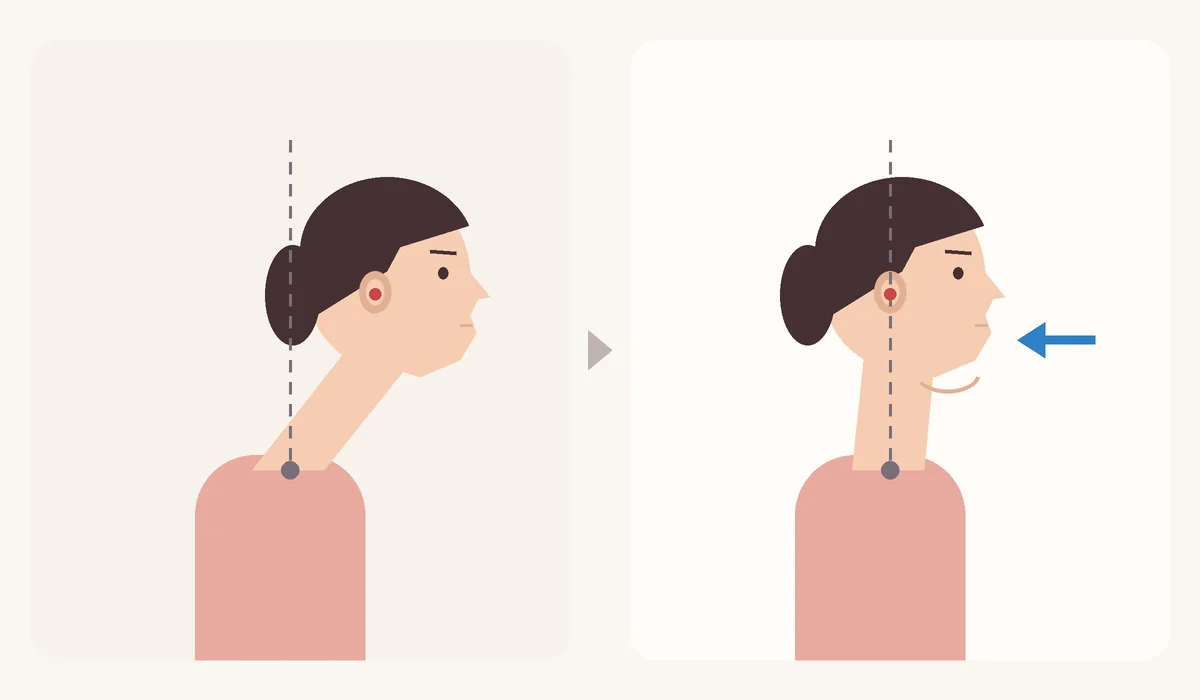
- Starting position: Sit tall in a chair and look straight ahead. It is fine if your head starts a little forward.
- Movement: Without nodding down, glide your chin straight back, level with the floor, until your ears sit directly over your shoulders. If the back of your head feels longer and the skin under your chin bunches briefly, you are doing it right.
- Reps & sets: Hold for 5 seconds, then release. Repeat 10 times for 1 set.
- How often: 2–3 sets a day. Morning, midday and evening works well.
- Common mistakes: Dropping the head so only the chin goes down (the one I see most), shrugging, or holding your breath.
2. Tongue Press (Tongue to the Roof of the Mouth)
After the chin tuck, this is the most popular of the double chin exercises, and you can do it almost anywhere.
- Starting position: Sit or stand upright. Close your lips lightly and leave a small gap between your upper and lower teeth.
- Movement: Spread your whole tongue flat against the roof of your mouth — not just the tip — and press upward firmly. You should feel the area under your chin tighten.
- Reps & sets: Press for 5 seconds, then release. Repeat 10 times for 1 set.
- How often: 2–3 sets a day — easy to do at your desk or on a commute.
- Common mistakes: Clenching your teeth (this strains the jaw joint), pressing with only the tip of the tongue, and letting your head drift forward.
3. Front-of-Neck Stretch (Slow Head Tilt)
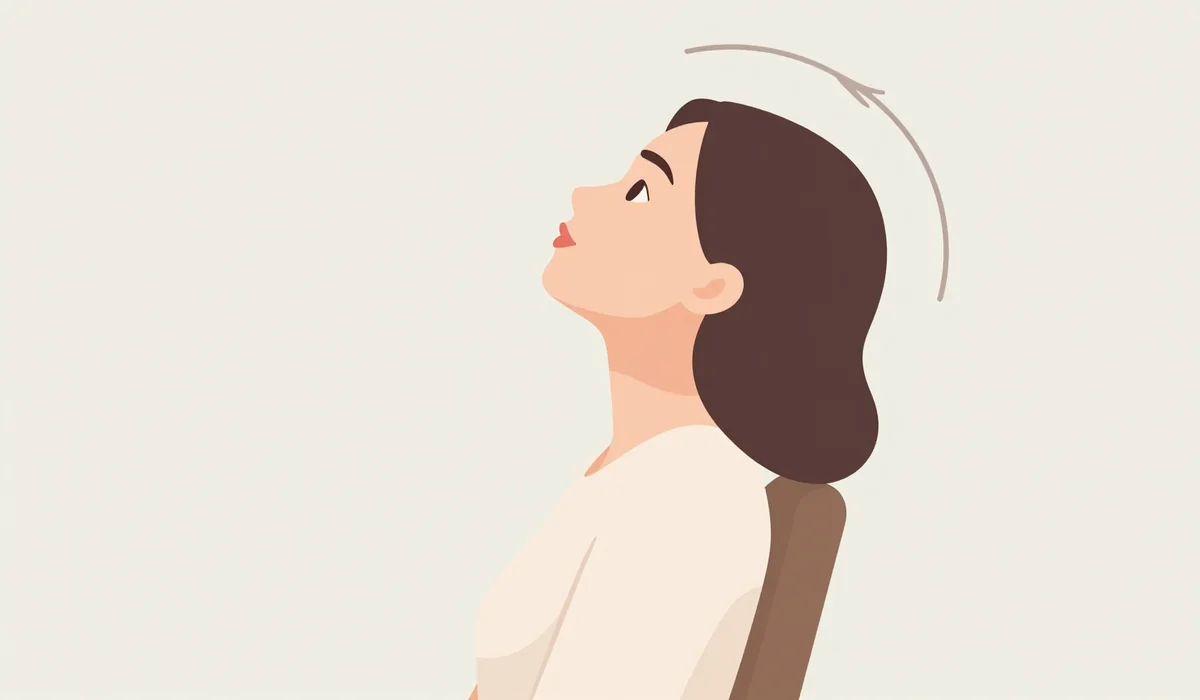
- Starting position: Sit in a chair with a backrest, lean back against it and let your shoulders relax.
- Movement: Slowly tilt your head back toward the ceiling, only as far as is comfortable, and push your lower lip up slightly to feel a gentle stretch along the front of the neck.
- Reps & sets: Hold for 10 seconds, then return slowly. Repeat 5 times for 1 set.
- How often: 2 sets a day is plenty.
- Common mistakes: Cranking the neck too far back, bouncing, or doing it quickly while standing.
If you have a neck disc problem or feel dizzy tilting back, skip this move and focus on chin tucks — see the warning signs below.
4. Seated Resistance Chin Tuck (Fist or Small Ball)
- Starting position: Sit upright and place your fist, or a soft ball about the size of your palm, between your chin and your breastbone.
- Movement: Tuck your chin slightly and press gently down into the fist or ball. Keep your back straight so your upper back doesn’t round.
- Reps & sets: Press for 5 seconds, then release. Repeat 10 times for 1 set.
- How often: 2 sets a day. Once you are used to it, you can mix in short press-and-release pulses.
- Common mistakes: Bending your whole upper body to press, clenching your teeth, or using an object that is too hard.
You may have seen an exercise online where you lie on your back and hold your head up off the floor. It was developed for swallowing rehabilitation and puts a lot of strain on the neck. Among at-home double chin exercises, the seated resistance chin tuck is the more realistic alternative.
Sample Daily Routine
| Move | One rep | Set | Per day | Approx. time |
|---|---|---|---|---|
| Chin tuck | 5-second hold × 10 | 1 set | 2–3 sets | 3–4 min |
| Tongue press | 5-second press × 10 | 1 set | 2–3 sets | 3–4 min |
| Front-of-neck stretch | 10-second hold × 5 | 1 set | 2 sets | 2 min |
| Resistance chin tuck | 5-second press × 10 | 1 set | 2 sets | 2–3 min |
All four double chin exercises together take about 10 minutes a day. Splitting them into two or three short sessions makes the routine easier to keep up.
Dr. Lee’s Key Point: With double chin exercises, form comes before reps — pull your chin straight back instead of dropping your head.
How and When to Check Double Chin Exercise Results
Once you start double chin exercises, it is tempting to check the mirror every day. But lighting and head angle change a mirror image so much that daily checks mislead you. Decide in advance how long you will wait and how you will measure.
Judge After at Least 8–12 Weeks
In a 2018 facial exercise study (Alam et al.), women aged 40 to 65 did 30 minutes of facial exercises daily for 8 weeks, then every other day until week 20, and showed increased upper and lower cheek fullness.
The limits are clear: only 16 of 27 participants finished, there was no comparison group, it studied cheeks rather than the chin, and the researchers credited muscle volume, not fat loss. So it cannot be applied directly to double chin exercises; treat it only as a rough guide to timing — muscle changes are judged over months, not weeks.
With that in mind, judge double chin exercises after at least 8–12 weeks; changes in the first one or two weeks usually reflect posture or swelling.
How to Take Comparable Side-Profile Photos
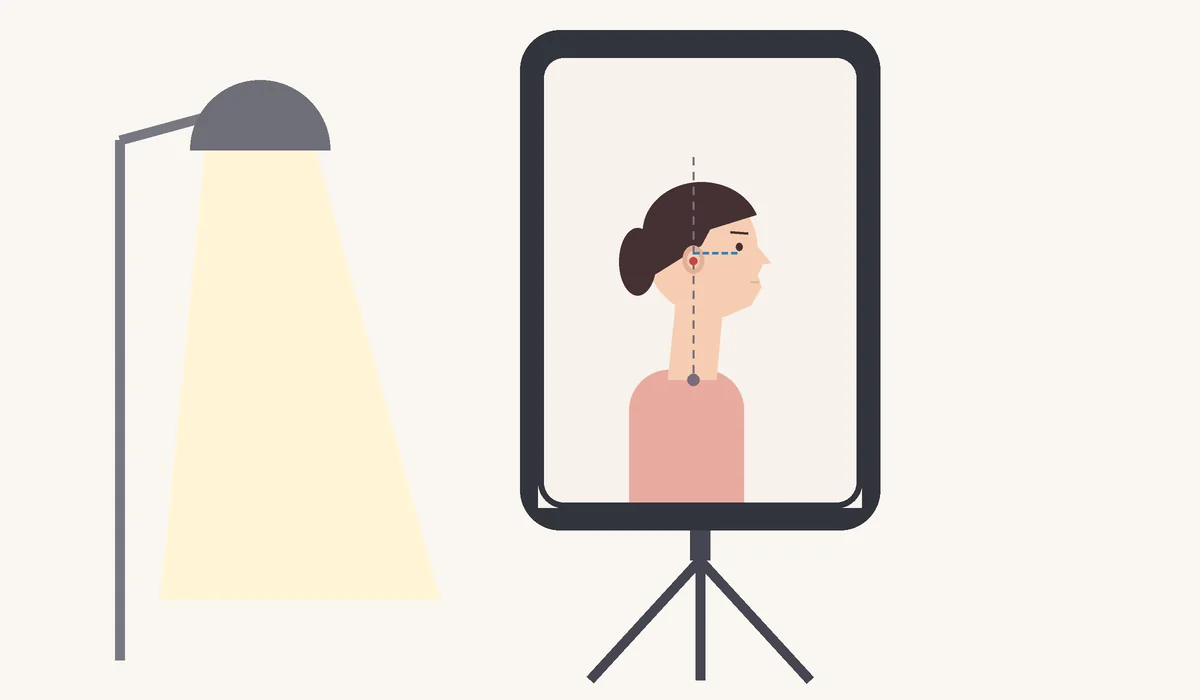
- Same time of day: Shoot at the same time each session, ideally in the afternoon, so morning puffiness doesn’t skew the result.
- Same light and distance: Use the same wall, the same lighting and the same distance between phone and face.
- Camera height: Fix the phone at ear height and keep the line from the outer corner of your eye to your ear canal parallel to the floor. Even a slight downward tilt makes the chin look fuller.
- Two shots: One true side profile and one at a 45-degree angle, both with a relaxed, neutral face.
- Interval: Not daily — photograph your profile every 4 weeks at the same time of day, under the same light, with the phone at ear height, and line each set up next to the first.
These photos are a personal log. If conditions don’t match, it is easy to mistake a change in posture for a change in fat.
Why to Log Weight and Neck Circumference Too
On photo days, note your weight and neck circumference as well. If your weight dropped and your jawline changed, the likely reason is overall fat loss rather than the double chin exercises themselves. If your weight stayed the same but the chin–neck angle looks sharper in the photos, posture is the more likely explanation.
When patients bring this kind of log to a consultation, we can pinpoint what changed and when, which makes finding the cause much faster.
Dr. Lee’s Key Point: Swap the daily mirror for matched photos and a weight log every 4 weeks, and make your call at 8–12 weeks.
When to Stop or Modify: Warning Signs
Double chin exercises look gentle, but they load both the jaw joint and the neck. If any of the situations below apply, adjust the routine or take a break.
Jaw Clicking or Pain (TMJ)
If your jaw clicks with pain when you open or close your mouth, or you can’t open as wide as usual, pause the tongue press and the resistance chin tuck. Habitual teeth-clenchers tend to clench during these moves, loading the TMJ (the hinge joint of the jaw). If symptoms continue, see a dentist or TMJ specialist.
Neck Disc Problems or Arm Tingling
If you have been diagnosed with a cervical disc problem, or your neck, shoulder or arm tingles when you move your head, drop the head-tilt stretch and any lying head-lift exercise. Stick to small-range seated chin tucks. If tingling starts, stop right there and get checked by a physiatrist (a rehabilitation medicine doctor) or an orthopedic specialist.
Dizziness or Headache
If tilting your head back brings on dizziness, blurred vision or a headache, return to neutral, sit and rest. Then drop the neck stretch and keep to chin tucks and tongue presses, which need no big head movements.
Stop and See a Doctor If…
- Jaw or neck pain after exercising lasts into the next day
- Neck, shoulder or arm tingling comes back every time you exercise
- You get dizziness or a headache every time you move your head
- Swallowing hurts, or you feel a firm lump under your jaw that seems to be growing
That last sign needs checking regardless of exercise: a lump under the jaw can involve a salivary gland or lymph node, so don’t try to exercise it away.
Dr. Lee’s Key Point: Pain, tingling or dizziness means you stop double chin exercises for the day. If it keeps happening, don’t push through it — get it checked.
Posture and Daily Habits That Support the Results
Ten minutes of double chin exercises matters less than how you hold yourself for the other 23-plus hours.
Keep Your Phone and Monitor at Eye Level
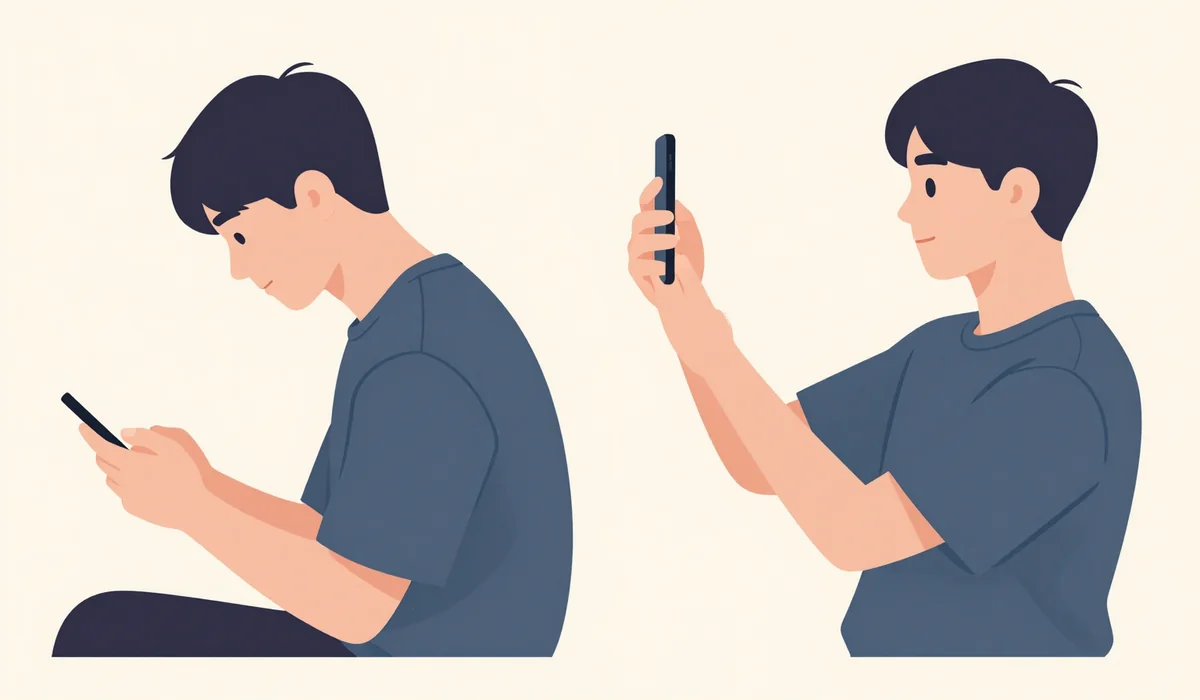
Looking down at a phone held at knee height folds your chin toward your chest and keeps the chin–neck angle blunted for hours. Hold your phone near eye level with your elbow supported, and set the top of your monitor at eye level.
A few chin tucks about once an hour also work as a posture alarm.
Sleep Position and Pillow Height
A pillow that is too high keeps your chin folded all night, making morning puffiness and creases more noticeable. Choose a height that lets your face point at the ceiling with your neck comfortably supported. A new pillow won’t reduce fat; expect slightly less puffy mornings, nothing more.
How Weight Change Affects the Jawline
If you manage your overall weight while doing double chin exercises, total body fat goes down, and the fat just under the skin of the chin can shrink along with it. Because fat isn’t lost from one spot on demand, reducing that layer depends on whole-body weight management. Repeated crash dieting can strain skin elasticity, so slow and steady works better.
Deep fat beneath the platysma, hyoid position and submandibular gland size stay the same after weight loss. Realistically, double chin exercises plus better habits can improve a posture-related angle, morning puffiness, and under-skin fat that shrinks with overall weight loss.
Dr. Lee’s Key Point: Screens at eye level, a lower pillow, slow weight change. These three habits let double chin exercises do their part.
No Change After 3 Months? What to Check Next
If three months of double chin exercises, matched photos and weight records show no difference, the cause likely sits somewhere exercise can’t reach. A 2018 surgical review by Bravo divides the area under the jaw into three zones — beside the chin tip, under the jawbone, and near the jaw angle — each with typical culprits (digastric muscles, hyoid and deep fat; the submandibular gland; the tail of the parotid gland). Where the bulge sits is a clue to its cause.
- Your weight went down but the fullness under your chin stayed → look at fat, especially deep fat, or skeletal factors. This article explains why some under-chin fat doesn’t respond to liposuction.
- You see vertical bands at the front of your neck when you lift your head → the muscle may have stretched and separated. Read more about stretched platysma and neck bands.
- Both sides just below the jawbone feel firm and rounded → it may be the salivary glands rather than fat. See this guide to enlarged salivary glands under the jaw.
- The skin feels loose and you can pinch a fold → skin laxity is the next thing to assess.
Dr. Lee’s Key Point: No change after three months of double chin exercises and careful records doesn’t mean you didn’t try hard enough. It usually means the cause lies outside what exercise can reach.
Double Chin Exercises: Frequently Asked Questions
How long should I do double chin exercises each day?
All four moves in this guide take about 10 minutes a day in total. Split them into two or three short sessions and focus on form and daily consistency over rep count. Increase gradually once a move feels easy and pain-free.
How long does it take to see results from chin tucks?
With chin tucks and other double chin exercises, differences from posture or swelling can show within days, but muscle-related change needs at least 8–12 weeks before you can judge it. Compare side-profile photos taken every 4 weeks at the same time of day, under the same light and at the same camera height, together with a weight log.
Why is my chin fat still there even though I exercise?
Research shows that exercising one area doesn’t burn the fat in that specific spot. Deep fat beneath the platysma, a low hyoid bone and the submandibular glands also sit beyond what exercise can reach. See our cause-by-cause guide to double chin treatments.
Do face massage or jaw exercise devices help a double chin?
Like these moves, massage may temporarily reduce puffiness, but it doesn’t change fat, stretched muscle or loose skin. Jaw trainers that use strong resistance can overload the jaw joint, so stop using one if your jaw clicks or hurts.
Can I do double chin exercises if I have a neck disc problem?
Skip the head-tilt stretch and any lying head-lift exercise, and do seated chin tucks within a small, comfortable range only. If you notice tingling in your neck or arms, or dizziness, during exercise, stop immediately and have it checked by a doctor.
Get a 1:1 Assessment at MINE Plastic Surgery
Double chin exercises are a supporting tool that refines posture, the front-of-neck muscles and puffiness. Judge them after at least 8–12 weeks using records taken under matched conditions, and stop first if you feel pain, tingling or dizziness.
If months of consistent effort bring no change, an in-person examination can show whether the cause is fat, muscle, salivary glands or skin — individual bone structure and skin condition change the answer. For surgical options, see double chin surgery at MINE.
Book a 1:1 consultation at MINE Plastic Surgery — call +82-2-516-1175.
Written and reviewed by Dr. Lee Sung-wook, board-certified plastic surgeon
MINE Plastic Surgery | 813 Nonhyeon-ro, Gangnam-gu, Seoul, Korea | +82-2-516-1175
※ This content is for informational purposes only and does not replace professional medical advice, diagnosis, or treatment. Individual results may vary, and side effects may occur. Please consult with a board-certified plastic surgeon for personalized advice.