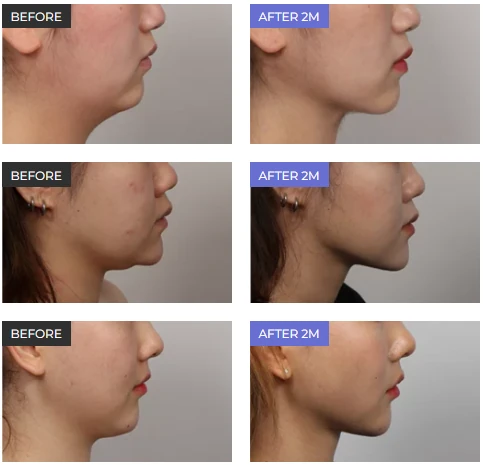
EN



Have you ever tilted your head up and down in the morning mirror and noticed it? You haven’t really gained weight, yet there is a soft fullness under your jaw, and in side-angle photos your profile looks blurred where the chin should meet the neck. This is one of the most common concerns I hear in my consultation room.
How to get rid of a double chin comes down to one question: which layer is the problem? The first step is identifying which layer is causing the fullness — fat under the skin, a loosened neck muscle (the platysma), or loose skin — and then moving through self-care, non-surgical treatment and surgery only as far as that layer requires.
Most guides list every option side by side. This one focuses on the part people usually get stuck on: you have already tried exercises or a non-surgical treatment, the fullness is still there, and you want to know when it is time to move to the next stage — and if surgery is on the table, whether liposuction, platysmaplasty or a mini neck lift actually fits your neck.
In this article
Start With the Layer: What Is Actually Under Your Chin?
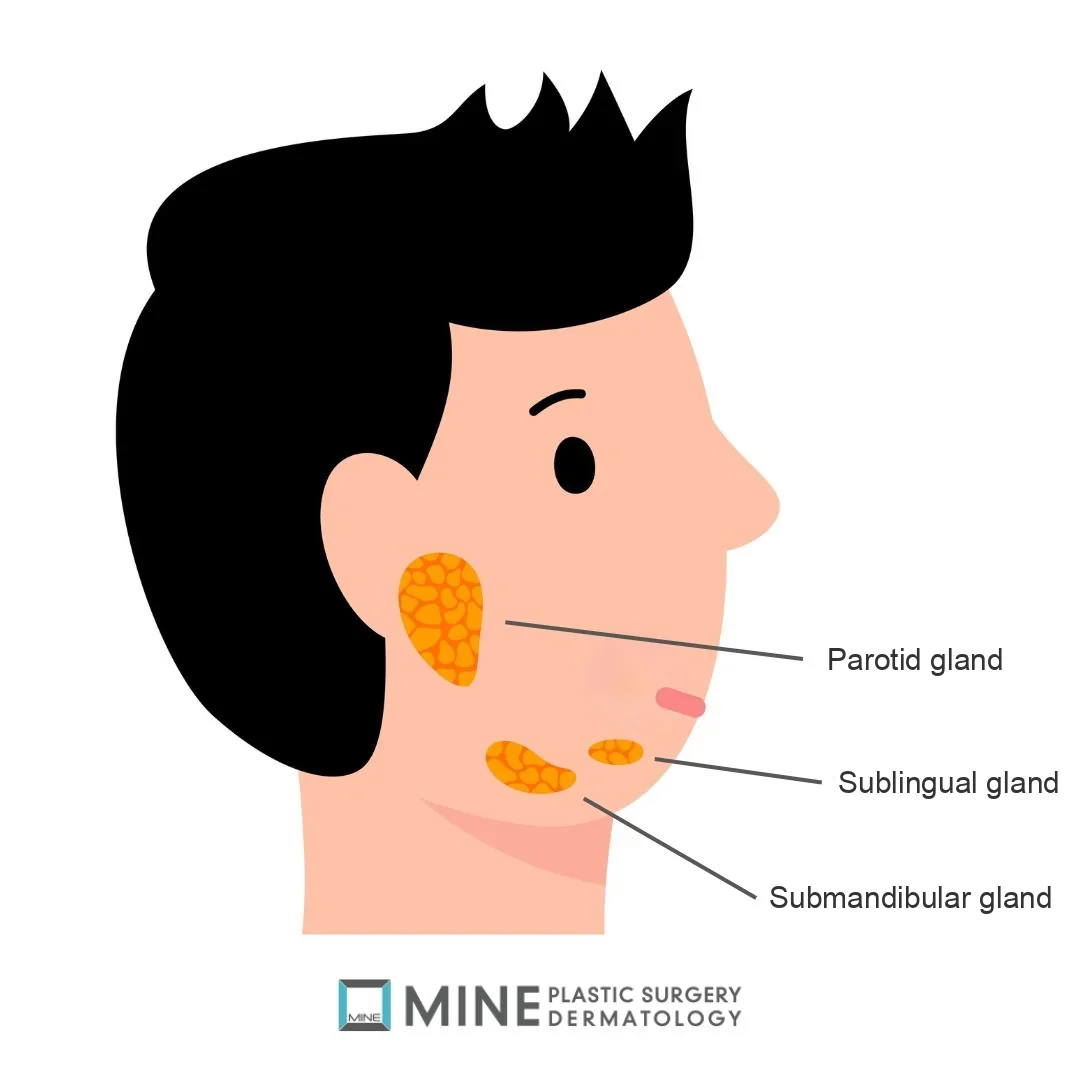
A double chin is rarely just “fat.” Under the chin there are several layers stacked on top of each other: fat directly beneath the skin, a thin sheet-like neck muscle called the platysma, a second pocket of fat sitting deeper below that muscle, the skin itself, and — just under the angle of the jaw — the submandibular salivary glands. The jawbone matters too: a short or slightly receding chin makes the same amount of fat look fuller.
Plastic surgery textbooks describe neck fullness as a combination of problems, several of which sit in a “deep layer” that removing fat under the skin simply cannot reach. That is why two people with similar-looking double chins can need completely different treatments — and why the answer to how to get rid of a double chin is different for each of them.
If you have not yet worked out which type you have, start with our guide on how to read your neck angle and double chin type, and for the background on why it develops, see the five causes of a double chin. The rest of this article assumes you have a rough idea of your type and want to know what to do next.
Dr. Lee’s Key Point: Different causes need different solutions. Before choosing any treatment, find out whether the fullness is coming from fat, muscle, skin or a salivary gland.
Stage 1: Exercise, Posture and Weight — What They Can and Can’t Do
Where self-care helps
For many people trying to figure out how to get rid of a double chin, exercise is the first thing they try. Exercise can only help with mild, early fat — it cannot tighten a stretched platysma or remove excess skin. Movements such as chin tucks, pressing the tongue against the roof of the mouth, and slowly tilting the head back work the muscles at the front of the neck and can help in the early stage. What they do not do is burn fat from one specific spot; there is no good evidence for spot reduction under the chin. If you want the movements themselves, our article on double chin exercises, with reps and limits walks through them.
Posture is the part people underestimate. Spending hours looking down at a phone (“tech neck”) folds and stretches the skin and muscle at the front of the neck. Raising your screen to eye level and cutting down on head-down time can slow that process. In my clinical experience, when posture habits don’t change, the results of any treatment fade sooner.
The real effect of diet and weight
When overall body fat goes up, the fat under the chin tends to go up with it. Losing weight can therefore reduce a fat-type double chin, but it will not shorten a loose muscle or tighten skin that has already stretched. The goal is a stable weight — avoiding big swings in either direction — because repeated gain and loss puts more strain on the skin of the neck.
Dr. Lee’s Key Point: Exercise is a support tool. Once the skin has started to sag or the muscle has stretched, exercise alone has clear limits.
Stage 2: Non-Surgical Double Chin Treatment Options and Their Limits
When self-care isn’t enough, the next step most people consider in working out how to get rid of a double chin is a non-surgical treatment — something without an incision and with little time off work.
HIFU (high-intensity focused ultrasound, such as Ulthera) concentrates heat in the deeper layers of the skin to stimulate tightening, and radiofrequency devices work in a similar way. These suit early-to-moderate laxity in people whose skin still has reasonable elasticity, and recovery is usually quick. Fat-dissolving injections act on a thin, superficial layer of fat. Because they only reach that shallow layer, they have limited effect when sagging skin or a loose platysma is the main cause.
Put simply, non-surgical treatments can refine a mild double chin, but they do not remove deep fat, bring a separated neck muscle back together or cut away excess skin. For a detailed side-by-side of each device and injection, see non-surgical treatments compared.
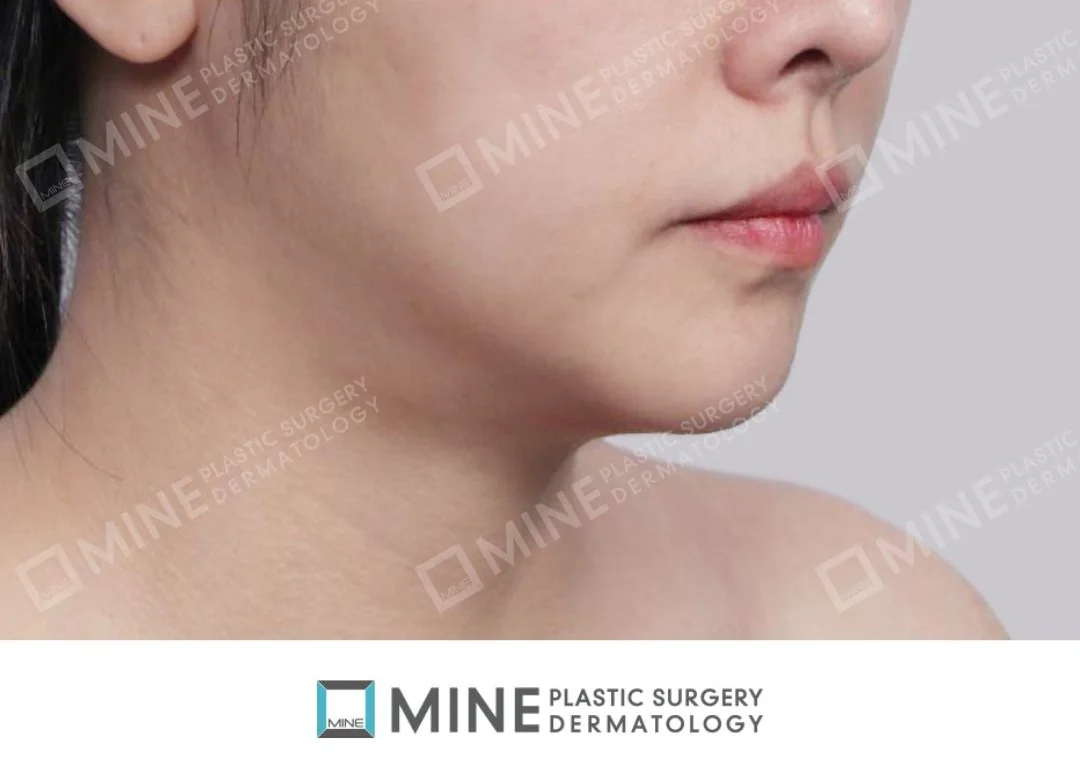
Dr. Lee’s Key Point: Many people want to try non-surgical options first, and that is understandable. But depending on the cause and how advanced it is, surgery can sometimes be the more efficient choice from the start.
When to Move to the Next Stage: 5 Signs Self-Care or Non-Surgical Care Isn’t Enough
This is the question I am asked most often after “what causes it”: how do you know when you have gone as far as one stage can take you? When patients ask me how to get rid of a double chin after trying the first two stages, these five signs are the ones I look for. Each one points to a particular layer, and that layer decides the next step.
| Sign | What it usually means | Typical next step |
|---|---|---|
| 1. Fullness stays after months of consistent self-care at a stable, normal weight | Stubborn fat that diet and exercise won’t shift | Liposuction-based approach |
| 2. Vertical bands appear at the front of the neck when you grimace or tense | Loose, separated platysma muscle | Muscle tightening (platysmaplasty) |
| 3. Skin stays loose or creased, especially when you look down | Excess skin | Mini neck lift or neck lift |
| 4. Firm fullness just below the jaw angle on both sides that doesn’t change with weight | Possible submandibular gland enlargement | Ultrasound first; gland-directed treatment |
| 5. A short or receding chin that blunts the jaw-to-neck angle | Skeletal factor | Chin augmentation may be combined |
1. The fullness doesn’t change even though your weight is normal and stable. If you have kept up self-care for several months, your weight is in a healthy range and has been steady, and the pad under your chin looks the same, that fat is unlikely to respond to more of the same. This is where removing fat directly starts to make sense.
2. You see vertical bands when you clench or grimace. Stand in front of a mirror and pull the corners of your mouth down firmly. If two cords pop up at the front of the neck, the inner edges of the platysma have drifted apart. No amount of fat removal pulls them back together — this layer needs muscle tightening.
3. The skin stays loose or folds when you look down. If the skin itself hangs or creases — the classic “turkey neck” — there is more skin than the neck needs. Tightening devices can help only while elasticity remains; once skin is truly in excess, a lift is what removes it.
4. The fullness is firm and sits just under the corners of your jaw. An enlarged submandibular salivary gland can look almost identical to a double chin, but it feels firmer and does not shrink with weight loss. Liposuction does not treat a gland, so this needs an ultrasound check before any plan is made.
5. Your chin is short or set back. When the chin bone is small or recessed, the angle between jaw and neck looks blunt even with very little fat. Plastic surgery textbooks note that adding chin augmentation (genioplasty) to under-chin liposuction can make a noticeably bigger difference in these patients than fat removal alone.
There is one more practical signal worth watching for: if you have had repeated non-surgical sessions and the contour has plateaued rather than improved, that is a good time to book a surgical assessment instead of another round of the same treatment.
Dr. Lee’s Key Point: Each sign points to a layer. Match the treatment to that layer, and you avoid paying for a stage that was never going to work for your neck.
How to Get Rid of a Double Chin With Surgery: Liposuction vs Platysmaplasty vs Mini Neck Lift
When the signs above point beyond non-surgical care, surgery becomes the most reliable answer — but only if the operation matches the layer. The most common misunderstanding at this stage is “can’t you just remove the fat?” The answer depends on what else is going on. Choosing how to get rid of a double chin surgically means choosing by layer, as the table below shows.
| Problem layer | Liposuction alone | Corset platysmaplasty | Mini neck lift / neck lift |
|---|---|---|---|
| Fat under the skin | Yes | Yes (combined with liposuction) | Often combined |
| Loose platysma / neck bands | No | Yes | Often combined |
| Deeper fat below the muscle | No | Can be reduced when needed | Can be addressed |
| Excess skin | No | Limited | Yes |
| Typical candidate | Younger, good skin elasticity, localized fat | Fat plus muscle laxity — most double chins | Noticeable skin excess, often older patients |
Liposuction alone: who it’s actually for
Plastic surgery textbooks describe the ideal candidate for neck liposuction alone as a relatively young patient with good skin elasticity and fat that is localized under the chin and jaw. For that patient, liposuction alone is often the simplest answer to how to get rid of a double chin: once the fat is removed, the skin shrinks back neatly onto the neck and the result can be very clean.
The same textbooks are clear about the limit: removing fat under the skin and tightening the skin over a loose platysma, neck bands, deeper fat below the muscle or enlarged submandibular glands does not correct those problems. In practice, this is why liposuction alone can make a neck look worse in the wrong patient. Once the fat “cushion” is gone, a stretched muscle and loose skin are left with nothing underneath them, and the sagging can become more visible. If you have neck bands or your skin has lost some of its bounce, liposuction alone deserves a careful second look.
Corset platysmaplasty: fat removal plus muscle tightening
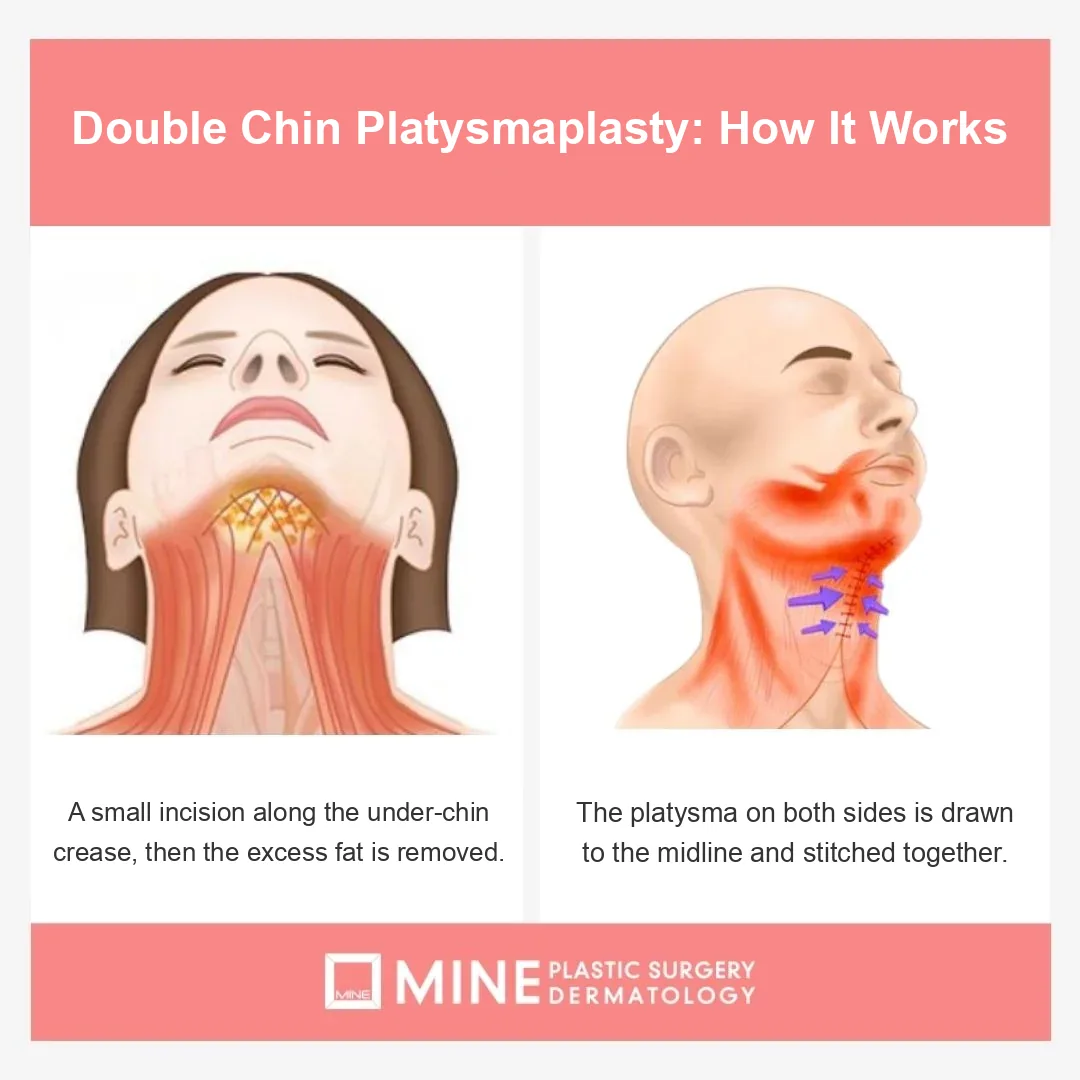
This is where corset platysmaplasty comes in. Through a short incision in or just in front of the natural crease under the chin, excess fat is removed first. The inner edges of the left and right platysma — which have drifted apart with age — are then brought to the midline and stitched together from top to bottom, much like lacing up a corset. Surgical literature describes doing this in two steps, first below the hyoid (the small U-shaped bone in the upper neck) and then above it, up to the under-chin crease.
For most people who ask me how to get rid of a double chin that has both fat and visible neck bands, this is the operation that fits. When the deeper fat pad below the muscle is a large part of the fullness, it can be reduced at the same time; clinical studies on neck lifting note that reducing this deeper fat is frequently necessary for a good result. The benefit of this approach is that volume reduction (liposuction) and structural correction (muscle tightening) happen in one operation, which is what gives a sharper and longer-lasting jaw-to-neck line. You can read more about the procedure itself in our guide to platysmaplasty in Korea.
Mini neck lift or full neck lift: when the skin itself is the problem
If, after the fat and muscle are dealt with, there is still more skin than the neck needs, the skin has to be tightened as well. Textbooks describe two routes: an isolated neck lift through an incision tucked behind the ear, or — more often — combining it with a facelift when the jowls and lower face are also sagging. At MINE, the choice depends on how much the skin has dropped, ranging from a minimal-incision mini neck lift to a full neck lift. The American Society of Plastic Surgeons — neck lift page gives a helpful overview of what a neck lift involves.
When it isn’t fat at all: salivary glands and a receding chin
One of the mistakes I see most often in my consultation room is liposuction performed on what was really an enlarged submandibular gland. From the outside, it looks just like a double chin, but because the cause is a gland rather than fat, liposuction makes little difference. Ultrasound is the simplest way to tell the two apart, and if the gland is the cause, the treatment is directed at the gland itself.
Similarly, when a short or recessed chin is part of the picture, getting rid of a double chin becomes partly a question of bone, and adding chin augmentation can change the profile in a way that no amount of fat removal can.
Dr. Lee’s Key Point: If you only remove the fat, the skin sags into the space left behind. For most double chins, fat and muscle need to be addressed together to get a well-defined jawline.
Recovery and Keeping Your Result
Recovery timeline
Whichever surgical route you choose, it helps to know what recovery looks like. After liposuction combined with platysmaplasty, the main swelling usually improves within 1–2 weeks, and the final contour settles over several months. How quickly you recover depends heavily on the individual and on how much was done, so your own timeline is something we go through at your in-person consultation.
Like any surgery, these procedures carry risks, including inflammation, bleeding and changes in sensation, as well as possible scarring or asymmetry. This is why a consultation with a board-certified plastic surgeon is essential before you decide.
Why weight and posture decide how long it lasts
Liposuction removes fat cells, but the fat cells that remain can still grow. If your weight climbs again after surgery, the under-chin area can fill out and the contour can soften. Head-down posture — long hours on a phone or reading with the chin dropped — can also bring sagging back sooner, even after surgery, so keeping up the posture habits from Stage 1 matters just as much afterward. Knowing how to get rid of a double chin is only half the job; keeping it away is the other half.
Dr. Lee’s Key Point: Surgery is not the finish line. In my view, lifestyle is about half of what keeps the result lasting.
Frequently Asked Questions
What is the most effective way to get rid of a double chin?
The most effective way to get rid of a double chin depends on the cause. If fat is the main issue, liposuction is the core treatment; if the neck muscle has loosened, platysmaplasty is added; and if there is excess skin, a lift is added as well. Exercise and other self-care are best seen as support for mild, early cases.
Can exercises alone get rid of a double chin?
Exercises can help when the fat is mild and the problem is still at an early stage. They cannot tighten a stretched platysma or remove loose skin, so if either is present, it is worth getting a proper diagnosis before investing more time.
Can my skin sag more after chin liposuction?
Yes, it can. If a loose platysma is left untreated, removing the fat can make the sagging more noticeable. Younger patients with good skin elasticity can often have liposuction alone, but if there is laxity, combining it with muscle tightening is the safer choice.
How do I know if it’s a salivary gland and not a double chin?
An ultrasound scan can tell them apart. An enlarged submandibular gland usually feels firmer, sits just under the jaw angle and does not change with weight. Because liposuction does not treat it, at MINE we diagnose first and then decide whether a gland-directed approach is needed.
How long is recovery after double chin surgery?
After liposuction combined with muscle tightening, the main swelling usually improves over 1–2 weeks, and the final contour settles over several months. Recovery varies with the individual and the extent of surgery, so we give you a personal timeline at consultation.
Planning Your Double Chin Consultation at MINE
In the end, how to get rid of a double chin comes down to choosing the method that matches your cause. The same-looking fullness can be a mix of fat, muscle, skin and gland, and the proportions differ from person to person — which is why an accurate diagnosis comes before any plan.
At MINE Plastic Surgery in Gangnam, Seoul, Dr. Lee Sung-wook, a board-certified plastic surgeon, assesses each layer one-on-one before recommending a stage. International patients can start with an online consultation, or reach us by WhatsApp or phone at +82-2-516-1175. If you are still unsure how to get rid of a double chin in your own case, that is exactly what the consultation is for. Bring your questions — there is no need to have decided on a procedure beforehand.
※ This content is for informational purposes only and does not replace professional medical advice, diagnosis, or treatment. Individual results may vary, and side effects may occur. Please consult with a board-certified plastic surgeon for personalized advice.
Written and medically reviewed by Dr. Lee Sung-wook, Board-Certified Plastic Surgeon, MINE Plastic Surgery