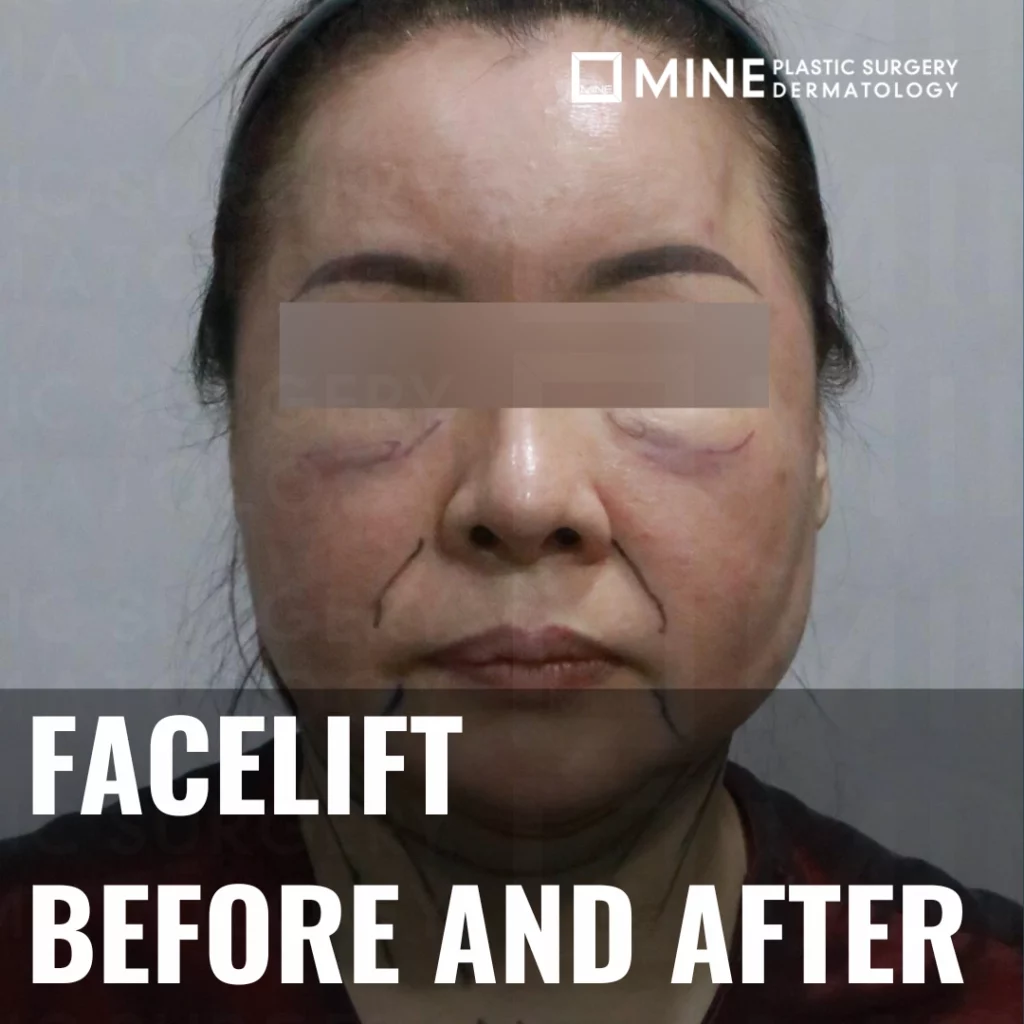
EN
EN


Platysmaplasty is a surgical procedure that tightens and repositions the platysma muscle in the neck to correct visible vertical bands and restore a smoother, more defined jaw-to-neck contour. For the right candidate, it is the muscle-level step that addresses the actual cause of an aging neck rather than just its surface. If you have noticed cord-like lines or a “turkey neck” appearance that creams and devices never seem to touch, the issue usually lies in the muscle layer beneath the skin.
This guide explains platysmaplasty for patients: what it is, who needs it, how the procedure works, the recovery timeline, results and safety, how it compares to a neck lift, and the cost factors to consider. It also covers why many international patients researching this procedure in Korea choose a board-certified plastic surgeon for anatomy-driven neck recontouring.
Medically reviewed by Dr. Lee Sung-wook, board-certified plastic surgeon at MINE Plastic Surgery, Seoul, Korea.
Table of Contents
- What Is Platysmaplasty?
- What Causes Platysmal Bands? (Symptom Self-Check)
- How Platysmaplasty Is Performed: Techniques & Approaches
- Platysmaplasty Recovery Timeline
- Results, Longevity & Safety
- Platysmaplasty vs. Neck Lift: Which Do You Need?
- Platysmaplasty in Korea: Cost Factors & Why Patients Choose MINE
- Frequently Asked Questions
What Is Platysmaplasty?
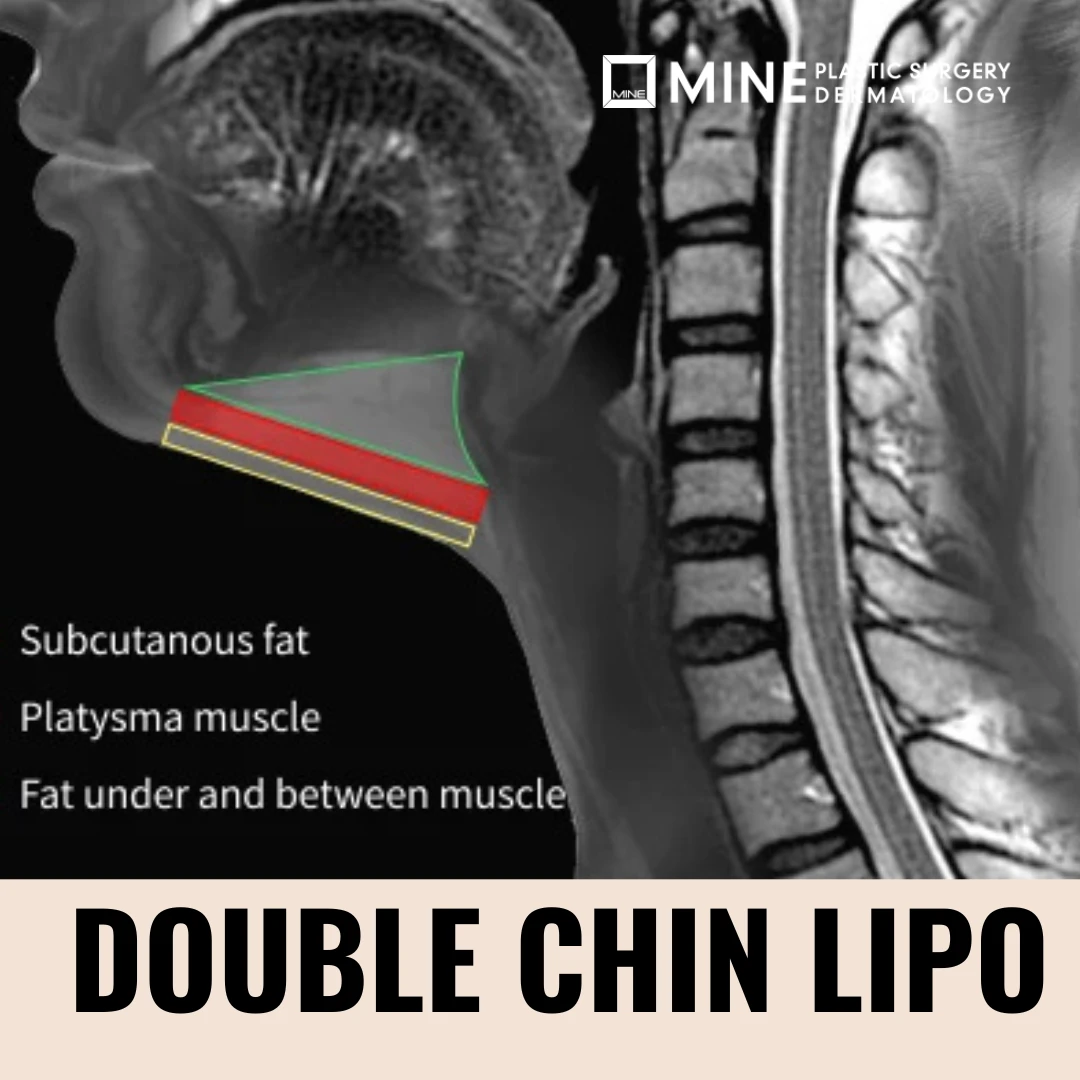
Platysmaplasty tightens and repositions the platysma muscle, the structural layer that gives the neck its contour. As we age, this muscle relaxes and its two halves drift apart, allowing the visible bands and softened jawline that make a neck look older than the face above it. By re-tensioning and reuniting that muscle, the procedure restores a cleaner, more youthful line from the chin to the neck.
The Platysma Muscle and Why It Matters
The platysma muscle is a thin, sheet-like muscle that runs from the upper chest up to the jawline. At the midline of the neck it splits into two halves, and over time the gap between them tends to widen. Because this muscle sits just beneath the skin and surface fat, it largely determines whether the neck looks taut or lax.
An important point that many patients do not realize: the SMAS layer found in the face does not continue into the neck. In the neck, the platysma itself plays the structural role that the SMAS plays higher up. This is why simply tightening skin rarely produces a lasting neck result, and why effective surgery has to address the muscle directly. Readers who want a surgeon-level look at the tissue layers can explore our detailed explanation of neck anatomy and platysmaplasty techniques, the technical companion to this patient guide.
Platysmaplasty vs. a Neck Lift vs. Liposuction
These three terms are often used interchangeably, but they address different problems. Liposuction removes excess fat only and does nothing for muscle laxity. Platysmaplasty targets the muscle itself, correcting bands and restoring tension. A neck lift is the broader procedure that may combine muscle work, fat removal, and skin tightening. According to the American Society of Plastic Surgeons, neck rejuvenation often involves addressing multiple layers rather than one. We compare platysmaplasty and a full neck lift in detail later in this guide.
What Causes Platysmal Bands? (Symptom Self-Check)
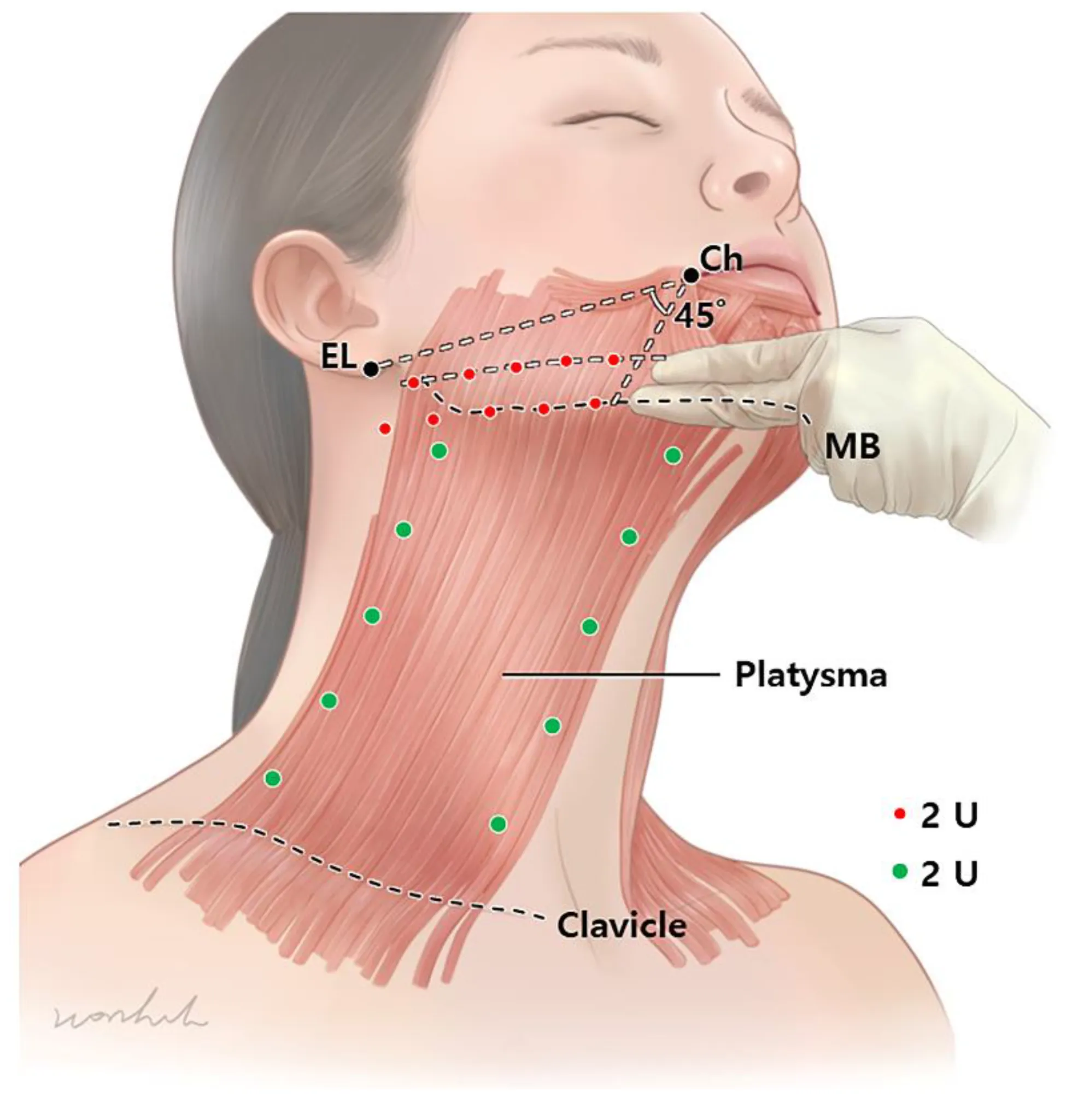
Platysmal bands are vertical neck cords caused by age-related relaxation and progressive central separation of the two platysma muscle halves. As muscle tone decreases and the midline gap widens, the inner edges of the muscle become visible as standing cords, the change most people describe as a “turkey neck.” Understanding what drives this helps clarify why a turkey neck treatment has to reach the muscle, not just the skin.
Static vs. Dynamic Bands
Bands fall into two categories. Static bands are visible even at rest, when the neck is relaxed. Dynamic bands appear only on muscle contraction, such as when you speak, grimace, or tense the neck. Distinguishing the two matters because it influences the surgical plan, and a board-certified plastic surgeon will assess both during an in-person consultation.
Banding rarely occurs in isolation. Several other changes contribute to an aging neck, and patients often notice more than one at the same time:
- Fat redistribution — superficial fat tends to decrease while deeper fat can accumulate, blurring the jaw-neck junction.
- Collagen loss — the skin loses roughly 1% of its collagen per year, reducing firmness.
- Elastin breakdown — the tissue’s natural recoil weakens, so skin no longer springs back.
- A widening neck angle — a youthful cervicomental (neck-to-chin) angle is generally about 105 to 120 degrees, and it tends to open up with age.
- Salivary gland descent — the submandibular glands can drop slightly, adding fullness below the jaw.
Are You a Candidate? A Simple Self-Check
You may be a candidate for platysmaplasty if several of the following apply to you:
- Visible vertical cords or strings running down the front of your neck.
- Loss of a clear, defined border between the jaw and the neck.
- Banding that becomes more obvious when you speak or tense your neck.
- A “turkey neck” or saggy appearance that skincare and devices have not improved.
One caveat is worth stressing: liposuction alone is usually not enough once true bands or muscle laxity are present. Removing fat without addressing the muscle tends to leave the cords visible, which is why understanding why submuscular (subplatysmal) fat removal matters often points patients toward muscle-level correction. A consultation is the only reliable way to confirm candidacy.
How Platysmaplasty Is Performed: Techniques & Approaches
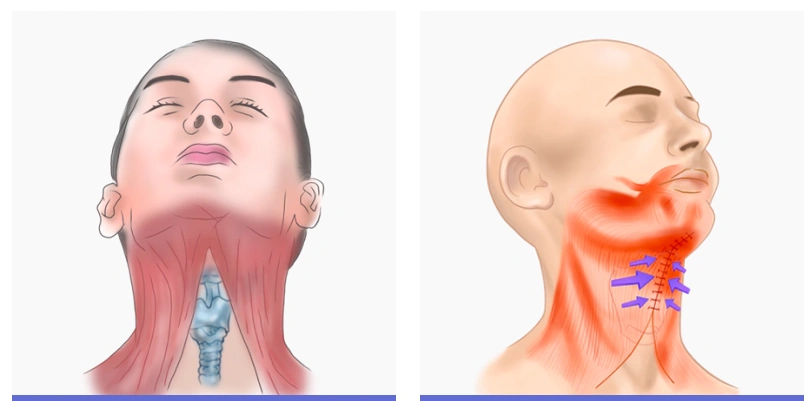
At a patient level, the procedure is essentially muscle re-tensioning, not skin pulling. The surgeon repositions and sutures the platysma so the separated halves once again work as a single, supportive sheet. The exact approach is tailored to your anatomy and the type of banding you have.
Midline, Lateral & Combined Platysmaplasty
There are three main variants of the procedure. Midline platysmaplasty brings the separated muscle bands back together at the center using midline plication sutures. The lateral approach addresses horizontal laxity by anchoring the muscle to the firm fascia over the sternocleidomastoid muscle on the side of the neck. The combined approach uses both for more comprehensive results. Which one fits you depends on whether your laxity is mostly central, lateral, or both, and that is decided in consultation.
Corset Platysmaplasty: MINE’s Signature Technique
Corset platysmaplasty uses 2 to 3 rows of continuous sutures to reunite the separated platysma into one sheet. Rather than a single line of stitches, this continuous, multi-row plication distributes tension evenly, much like the lacing of a corset. The result is a smooth contour and long-term durability that helps prevent the bands from returning. At MINE, corset platysmaplasty is treated as a signature, band-recurrence-preventing technique, and it reflects an approach grounded in peer-reviewed surgical literature rather than improvisation.
Surgical Access: Submental and Retroauricular Approaches
Surgeons reach the platysma through small, well-concealed incisions:
- Submental approach — the submental incision for platysmaplasty is typically about 0.3 to 0.4 cm, hidden behind the natural crease under the chin. It allows midline muscle suturing and, when needed, fat removal.
- Retroauricular approach — an incision placed behind the ear within the hairline, used to lift and remove excess skin.
- Combined approach — both incisions together, for the most comprehensive correction when skin laxity is significant.
In selected cases, deeper adjuncts can be added for a sharper jaw-neck angle: removal of subplatysmal (sub-muscle) fat, management of the digastric muscles, and partial reduction of a submandibular salivary gland. These are not routine for everyone; they are sometimes combined and always decided in consultation. The guiding philosophy is anatomy-driven neck recontouring, addressing each layer that contributes to the problem, rather than simply pulling skin tighter.
Platysmaplasty Recovery Timeline
Recovery is gradual, and the timeline below describes typical ranges only. Healing speed varies from person to person depending on the extent of surgery, individual tissue, and general health, so your own experience may differ from these estimates.
| Time Frame | What to Expect |
|---|---|
| First 1–2 days | A compression garment supports the neck; swelling and bruising are usually at their peak. |
| Week 1 | Suture and dressing care; rest with the head elevated. Most patients keep activity light. |
| Weeks 2–3 | Most visible swelling subsides; many people return to a non-strenuous routine. |
| Weeks 4–6 | Exercise is gradually resumed once cleared by the surgeon. |
| Months 3+ | The final neck contour continues to settle and refine. |
Week-by-Week: What to Expect
The pattern most patients follow is steady rather than dramatic. Most patients see the majority of visible swelling subside within 2 to 3 weeks, with the final neck contour settling over several months. Bruising fades during the first couple of weeks, and any tightness in the neck eases as the tissues relax around the repositioned muscle.
Aftercare and Returning to Daily Life
A few habits support smooth healing: keep the head elevated, especially when sleeping, in the early days; avoid strenuous activity until your surgeon clears it; wear the compression garment as directed; and care for the incision sites to support good scar healing. For a day-by-day companion, see our complete neck lift recovery guide. Always follow the specific aftercare instructions your surgical team provides.
Results, Longevity & Safety
A natural question is how long the results last and how safe the procedure is. Both deserve honest, measured answers rather than promises.
How Long Platysmaplasty Lasts
Platysmaplasty results typically last 7 to 10 years, and robust techniques such as corset platysmaplasty may last longer because of the reinforced, multi-row repair. This is not a one-time fix that stops aging; the neck continues to change over time, and longevity varies with individual skin quality, lifestyle, and the natural aging process. Reported patient satisfaction for neck lift surgery exceeds 90%, which reflects how meaningful a well-matched procedure can be for the right candidate.
Risks and How They’re Minimized
As with any surgery, platysmaplasty carries potential risks, including inflammation, bleeding, infection, scarring, and nerve injury. The primary specific concern is hematoma (a collection of blood under the skin), which surgeons minimize through meticulous hemostasis, including hemostatic sutures. Other complications, such as a salivary fistula, are rare. Overall complication rates are low when the procedure is performed with careful technique by a board-certified plastic surgeon, but no surgery is risk-free. You can read more about how these are managed in our overview of neck lift side effects and complications.
Incisions and Scarring
Platysmaplasty incisions are small and placed where they are easy to conceal: within the natural crease under the chin and, when needed, behind the ear inside the hairline. With proper care, these incisions usually heal to become inconspicuous over time, though scarring varies between individuals. Diligent aftercare matters here, and our guide to managing neck lift scars covers practical steps to support healing.
Platysmaplasty vs. Neck Lift: Which Do You Need?
One of the most common points of confusion is the difference between platysmaplasty and a neck lift. Platysmaplasty addresses the neck muscle; a full neck lift adds skin tightening and, when needed, deep-layer refinement. In other words, platysmaplasty is often the muscle-tightening step within a neck lift rather than a separate alternative.
| Platysmaplasty Alone | Full Neck Lift | |
|---|---|---|
| Main target | Platysma muscle bands and laxity | Muscle + excess skin (± deep-layer fat) |
| Typical candidate | Good skin tone, banding is the main issue | Significant skin laxity and aging |
| Often suits | Milder symptoms, frequently early-to-mid 40s | More advanced aging, frequently 50s and beyond |
| Scope | Focused muscle correction | Broader, multi-layer rejuvenation |
When Platysmaplasty Alone Is Enough
When the skin still has good tone and the main concern is muscle banding, platysmaplasty on its own can deliver a clean result. This often corresponds to a mini neck lift approach for milder symptoms. To weigh how much surgery your situation calls for, our comparison of a full neck lift vs mini neck lift walks through that decision.
When a Full Neck Lift (or Facelift Combination) Is Better
When there is meaningful loose skin along with muscle laxity, a complete neck lift that adds skin removal usually gives a more harmonious outcome. Because the face and neck are continuous structures, platysmaplasty can also be combined with a facelift for a more balanced rejuvenation, though this means a longer surgery and recovery. Patients exploring that route can read about the deep plane Korean facelift and how it integrates with neck work. The right choice depends on your skin laxity, fat, and band severity, and is decided in consultation.
Platysmaplasty in Korea: Cost Factors & Why Patients Choose MINE
For patients considering platysmaplasty in Korea, two questions usually come up: what affects the price, and what sets Korean specialists apart. We address cost in terms of factors rather than fixed figures, because every plan is individual and pricing is always confirmed during consultation.
What Affects the Cost of Platysmaplasty
Rather than a single number, the investment depends on several variables:
- Technique extent — midline only, combined midline and lateral, or with added deep-layer work.
- Combination with a facelift — pairing procedures changes the overall scope.
- Anesthesia type — local with sedation versus general anesthesia.
- Surgeon experience — the training and expertise of the operating specialist.
- Aftercare and follow-up — the structured post-operative support included.
Because these variables differ so much from patient to patient, a personalized consultation is the only accurate way to understand cost.
Why International Patients Choose Korea
Many patients researching where to have the procedure are drawn to Korea for its precise, anatomy-driven approach to neck recontouring rather than simple skin pulling. At MINE Plastic Surgery, treatment is led by board-certified plastic surgeon Dr. Lee Sung-wook, with corset platysmaplasty offered as a band-recurrence-preventing signature technique and a structured aftercare pathway designed for international patients. These techniques align with peer-reviewed literature on corset platysmaplasty and with the standards promoted by international bodies such as ISAPS; for clinical background, the StatPearls: platysmaplasty reference is a useful starting point. If you are weighing your options, a consultation is the clearest next step to understand whether this procedure is right for you.
Frequently Asked Questions
What is platysmaplasty?
Platysmaplasty is a surgical procedure that tightens and repositions the platysma, the thin neck muscle, to correct visible vertical neck bands and restore a smoother jaw-to-neck contour. It targets the muscle layer responsible for an aging neck, rather than treating the skin surface alone, and is often performed as part of a neck lift.
How long does platysmaplasty last?
Results typically last about 7 to 10 years, and durable techniques such as corset platysmaplasty may last longer. Longevity varies from person to person depending on skin quality and the natural aging process, so individual results differ.
What is the difference between platysmaplasty and a neck lift?
Platysmaplasty is the muscle-tightening component, while a neck lift is the broader procedure that may also remove excess skin and address deep-layer fat. Many neck lifts include platysmaplasty as one of their steps.
How long is recovery after platysmaplasty?
Most visible swelling and bruising subside within 2 to 3 weeks, and many patients resume non-strenuous routines around that time. Exercise is usually resumed at 4 to 6 weeks, with the final contour settling over several months. These ranges vary by individual.
Is platysmaplasty safe, and what are the risks?
Complication rates are low when the procedure is performed with careful technique. The main specific concern is hematoma, minimized by meticulous hemostasis, with rare risks such as salivary fistula. A consultation with a board-certified specialist is essential to assess your individual risk.
How much does platysmaplasty cost in Korea?
Cost depends on factors such as the extent of the technique, whether it is combined with a facelift, the type of anesthesia, and surgeon experience. Because each plan is individual, the price is discussed during a personalized consultation rather than quoted as a fixed figure.
Can platysmaplasty fix a “turkey neck”?
When a “turkey neck” is caused by lax platysma bands, platysmaplasty addresses the muscle directly. If excess skin is also present, it may be combined with skin tightening as part of a neck lift. A consultation determines which approach suits your neck.
Considering Platysmaplasty in Korea?
If visible neck bands or a softening jawline have been on your mind, the clearest next step is a personalized assessment. Book a free consultation with board-certified plastic surgeon Dr. Lee Sung-wook at MINE Plastic Surgery to evaluate your platysmal bands and candidacy, and learn more about our MINE Korean neck lift options. Call us at +82-2-516-1175 to arrange a consultation at a time that works for you.
※ This content is for informational purposes only and does not replace professional medical advice, diagnosis, or treatment. Individual results may vary, and side effects may occur. Please consult with a board-certified plastic surgeon for personalized advice.