EN


If your skin stings every time you switch moisturizers, flushes red after a warm shower, or still feels raw weeks after surgery, you have probably learned to be wary of anything that promises “renewal.” Many of the patients who ask me about LDM come to the consultation room with exactly that worry: will this make my skin worse?
LDM (Localized Dynamic Micromassage) is a non-thermal skin treatment that alternates 1 MHz and 3 MHz ultrasound to create cell-level microvibration. The main LDM benefits for sensitive skin are calming redness and supporting the skin barrier without heat, while firmness from new collagen builds gradually over several weeks.
In my clinical experience as a plastic surgeon, I see many patients with reactive, atopic-prone, or post-surgical skin. Because LDM uses almost no heat, it can often be considered for these more delicate skin types. In this article, I will walk you through the two things LDM does for sensitive skin, soothing and firming, and give you a realistic week-by-week timeline of what you may notice.
Table of Contents
- What Is LDM and How Does It Work Without Heat?
- LDM Benefits for Sensitive Skin: The Soothing Effect
- How LDM Supports Firmness: Rebuilding Collagen Gradually
- LDM Results Timeline: What to Expect From Day 1 to Week 4
- Tailoring LDM to Your Skin Type
- Side Effects and Precautions
- Frequently Asked Questions About LDM for Sensitive Skin
- Book a Consultation at MINE Clinic in Seoul
What Is LDM and How Does It Work Without Heat?
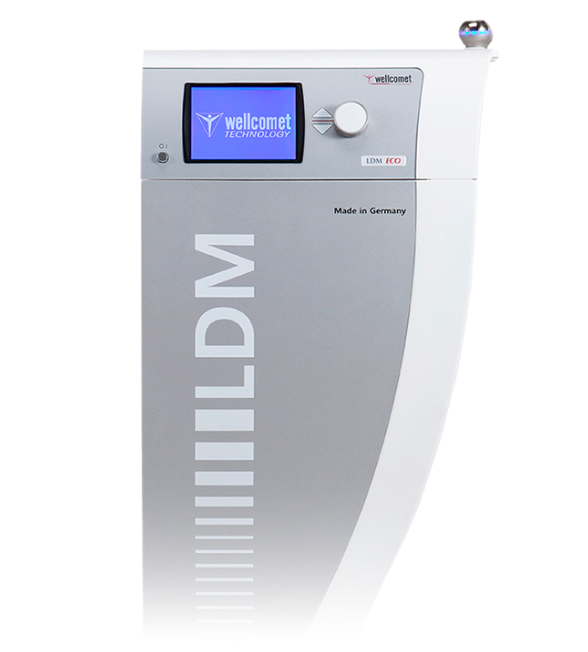
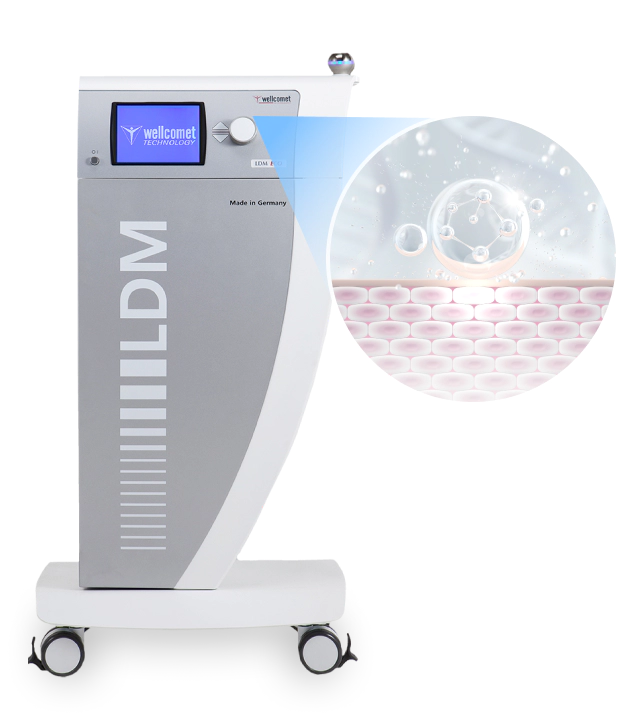
LDM stands for Localized Dynamic Micromassage, and in Korea it is often called “water drop lifting.” Put simply, it uses ultrasound to gently shake the cells in your skin, a bit like a massage at a microscopic level. The device used at our clinic is made by Wellcomet in Germany.
Two Ultrasound Frequencies Working at Different Depths
LDM alternates between 1 MHz and 3 MHz ultrasound up to 500 times per second, creating fine vibration inside the skin. The two frequencies act at different depths: the lower 1 MHz reaches deeper, while 3 MHz concentrates nearer the surface. Physics textbooks explain why: higher-frequency ultrasound loses energy faster as it travels through tissue. A plastic surgery textbook puts a number on it: through 2 cm of tissue, this energy loss is more than 60 times greater at 10 MHz than at 1 MHz. A clinical skin-care textbook likewise notes that treatments aimed at the epidermis and dermis typically use higher frequencies of about 1.5 to 3 MHz.
Combining both frequencies in one session lets the treatment work across several layers of the skin at once. If you are curious about the physics in more detail, I have explained how LDM’s dual-frequency ultrasound works in a separate guide.
Non-Thermal Microvibration vs. Heat-Based Lifting
The question I hear most often is: “If ultrasound reaches the deeper skin, won’t it feel hot?” The short answer is no. LDM uses very little thermal energy.
Dermatology textbooks explain that most energy-based treatments, such as radiofrequency and focused ultrasound, work by heating the dermis (the thick middle layer of skin). That controlled heat causes a small, deliberate injury, and the skin responds by activating fibroblasts (the cells that make collagen) to rebuild. It works, but heat is exactly what reactive skin tends to dislike.
LDM aims for a similar goal through a different route. Instead of heat, it relies on rapid mechanical vibration. Because it does not deliberately create thermal injury, the risk of irritating an already fragile barrier is lower, and the treatment generally feels gentle. That is the main reason LDM belongs in a different category from heat-based lifting devices.
Dr. Lee’s Key Point: LDM alternates 1 MHz and 3 MHz ultrasound to create microvibration at different skin depths, aiming for skin renewal without the heat that tends to aggravate sensitive skin.
LDM Benefits for Sensitive Skin: The Soothing Effect
Of all its effects, soothing is the one I want to emphasize most. When a patient tells me, “I’ve tried everything and my skin only got more sensitive,” this is usually where our conversation about LDM begins. The LDM benefits for sensitive skin come from three linked mechanisms: a protective cell response, barrier support, and gentle lymphatic drainage.
Heat Shock Proteins: Switching On Skin’s Own Defense
LDM’s microvibration has been reported to encourage skin cells to produce heat shock proteins, or HSPs. Despite the intimidating name, the idea is simple: HSPs are protective proteins that cells make when they are under stress, helping them repair themselves and stay stable.
The proposed mechanism is that LDM nudges the skin to switch on its own repair system rather than forcing anything in from outside. This is still a suggested mechanism rather than a firmly established one, so I describe it to patients as a likely contributor, not a certainty. In practice, it fits well with what we observe: skin that feels calmer and less reactive after a course of treatment.
Barrier Repair for Dehydration, Redness, and Stinging
You have probably heard the term “skin barrier.” It mainly refers to the stratum corneum, the outermost layer of skin. Think of it as a brick wall: skin cells are the bricks, and natural lipids are the mortar that keeps moisture in and irritants out. When the mortar thins, water escapes and irritants slip through, which shows up as tightness, stinging, and redness.
A weak barrier is also behind the common “dehydrated yet oily” complaint, where the surface looks shiny while the skin underneath feels tight and dry. LDM may help the barrier recover and has been described as encouraging a more even distribution of hyaluronic acid, the molecule that holds water in the skin. Over time, this can help dryness, redness, and stinging gradually settle. For the hydration side specifically, see my article on LDM for deep hydration.
Why It Can Be Considered for Atopic and Inflamed Skin
Lasers and high-energy treatments must be used carefully on atopic dermatitis (eczema) or rosacea-prone skin, because heat can add to inflammation that is already there. LDM, by contrast, causes very little thermal stress and works in the direction of barrier recovery. That is why it can be considered for skin that is reactive after surgery, atopic, or prone to flushing.
That said, the decision must come from an in-person examination. If eczema is actively flaring, with weeping, cracking, or infection, we treat that first. For a general overview of the condition itself, the American Academy of Dermatology’s atopic dermatitis guide is a helpful patient resource. If you are interested in combining LDM with regenerative injections such as Rejuran, we decide on that together during your consultation.
Dr. Lee’s Key Point: LDM is thought to boost the skin’s own protective proteins and support barrier recovery, which is why it can be considered for sensitive, atopic, and post-surgical skin after a physician’s assessment.
How LDM Supports Firmness: Rebuilding Collagen Gradually
If soothing is the first benefit, firmness is the second layer built on top of it. Once the skin settles, many patients also want to address mild sagging and loss of elasticity. LDM can help with both, but firmness takes noticeably longer to appear, and it helps to understand why.
Fibroblast Stimulation and the Collagen Pathway
Elasticity depends mostly on collagen. With age, fibroblasts slow down, and existing collagen fibers stretch out and break down. LDM’s microvibration is intended to stimulate fibroblasts in the dermis, a bit like sending a “restart” signal to a factory that has been running at half speed.
Textbooks describe energy-based collagen remodeling as a process that unfolds over days to weeks, beginning with a short inflammatory phase and followed by gradual laying down of new collagen. That is why firmness from LDM typically appears after 3 to 4 weeks rather than overnight. New collagen fibers need time to form and mature.
It is also fair to be honest about the evidence. Medical literature reports that mechanical stimulation, including massage-type techniques, can influence fibroblast signaling, but it also notes that there are no clear standard protocols for timing or technique. In other words, the biological direction makes sense, while the size of the effect varies between individuals and depends on skin condition and the number of sessions.
Hydration Balance and Skin Elasticity
Firmness is not only about the amount of collagen. Water content matters too. Well-hydrated skin looks plumper and reflects light more evenly, while dehydrated skin looks dull and accentuates fine lines. By supporting the barrier and hydration balance, LDM can help the skin look fuller from within, which complements the slower collagen effect.
Dr. Lee’s Key Point: Collagen rebuilding is a slow biological process, so the firming benefit of LDM is usually noticed after 3 to 4 weeks and builds over a course of sessions.
LDM Results Timeline: What to Expect From Day 1 to Week 4
The most common source of disappointment with any skin treatment is expecting the wrong result at the wrong time. Here is how I explain the LDM results timeline to my patients. Calming can appear within 24 hours, barrier recovery usually follows over 1 to 2 weeks, and firmness builds from about 3 to 4 weeks onward.
| Stage | Timing | What you may notice |
|---|---|---|
| Calming | Immediately to 24 hours | Less puffiness, heat, and redness; skin feels refreshed |
| Barrier recovery | Weeks 1–2 | Less stinging and tightness; makeup and skincare sit more comfortably |
| Firmness | Weeks 3–4 and beyond | Gradual improvement in elasticity and smoother texture |
Immediately to 24 Hours: Calming
Right after treatment, many patients notice that puffiness eases and their skin feels cooler and less tired. This is linked to the treatment’s lymphatic-drainage effect, which helps move excess fluid and waste out of the tissue. Skin often looks clearer and feels lighter by the next morning.
Weeks 1–2: Barrier Recovery
Over the following one to two weeks, the barrier gradually strengthens. Patients typically report that products sting less, the tight dryness under the surface improves, and flushing becomes less frequent. This is often the stage when people with sensitive skin say they finally feel “comfortable” in their skin again.
Weeks 3–4 and Beyond: Firmness Builds
From around the third or fourth week, the effects of collagen remodeling start to become visible as gradually improved elasticity. In my practice, most patients notice a clear difference after 3 to 5 sessions, but individual variation is large. Age, baseline skin condition, sun exposure, and lifestyle all play a role, so I always set expectations individually.
Tailoring LDM to Your Skin Type
The same device can be used in quite different ways. Intensity, interval, and number of sessions should be adjusted to your skin, and the final plan is always decided after an in-person diagnosis. If you would like to see what a session looks like, I have described the step-by-step LDM treatment process and aftercare separately.
Sensitive and Atopic Skin: Lower Intensity, More Sessions
For reactive or atopic-prone skin, I usually recommend a lower intensity with more sessions rather than a strong treatment all at once. This gives the barrier time to recover between visits and keeps the risk of a flare low. It is one of the most practical LDM benefits for sensitive skin: the treatment can be scaled down without losing its gentle character.
After Surgery: When Can You Start?
After surgery, LDM is generally considered once incisions and sutures have fully healed, and only after your surgeon has checked the area. In some cases, it may also be used during the swelling and bruising stage to support lymphatic drainage, but that depends on the type of surgery and must be discussed with your doctor first. You can find more about LDM treatment at MINE Clinic on our treatment page.
Normal and Combination Skin: How Often
For normal and combination skin, 1 to 2 sessions per month is a common rhythm for maintenance. Some patients schedule a short series first and then space sessions out once they are happy with the result.
Side Effects and Precautions
LDM is non-invasive and generally well tolerated, but no treatment is entirely free of reactions. Knowing what is normal helps you relax afterward.
Temporary Reactions to Expect
- Mild redness or sensitivity: Temporary redness usually settles within a few hours.
- Dryness on the day: Apply a gentle moisturizer, and avoid harsh cleansing, scrubs, saunas, and hot baths for the rest of the day.
- Persistent discomfort: If redness, itching, or stinging lasts longer than expected, contact the clinic so we can check your skin.
Who Should Tell Us Before Treatment
Please let us know in advance if any of the following apply to you, as LDM may not be suitable:
- You are pregnant.
- You have a cardiac pacemaker or another implanted electronic device.
- You have metal implants in the area to be treated.
- You have an active skin infection, open wounds, or a severe eczema flare.
Accurate diagnosis always comes first. A short examination lets us decide whether LDM is appropriate now, later, or not at all.
Frequently Asked Questions About LDM for Sensitive Skin
How many LDM sessions do I need to see results?
Most patients notice calming after the first session and a clearer overall change after 3 to 5 sessions. Sensitive skin usually does better with lower intensity and more sessions. The exact number is decided after an in-person skin assessment.
How is LDM different from Ultherapy?
Ultherapy uses focused ultrasound heat to lift deeper tissue layers, while LDM uses non-thermal microvibration with almost no downtime. Because it does not rely on heat, LDM can be considered for sensitive skin. The right choice depends on whether your main goal is calming or deeper lifting.
Can I go back to normal activities right after LDM?
Yes. LDM is non-invasive, so you can return to your daily routine immediately. On the day of treatment, it is wise to skip harsh cleansing, saunas, and hot baths.
Is LDM safe for atopic or rosacea-prone skin?
Because it uses very little heat, LDM can often be applied to atopic or rosacea-prone skin. However, the level of active inflammation matters, so a physician should examine your skin first and adjust the intensity accordingly.
When can I start LDM after plastic surgery?
It depends on the type of surgery and how your incisions are healing. In most cases, we wait until wounds have fully healed and your surgeon approves. Using LDM during the swelling stage is possible in some cases, but only after a consultation.
Book a Consultation at MINE Clinic in Seoul
To sum up, the LDM benefits for sensitive skin come in two waves: calming and barrier support in the first days and weeks, followed by gradual firmness as new collagen forms. Because it relies on microvibration rather than heat, LDM can be a gentle option for reactive, atopic-prone, or post-surgical skin when the plan is tailored to you.
A good starting point is an in-person skin assessment. At MINE Plastic Surgery & Dermatology in Gangnam, Seoul, we examine your skin, review any recent procedures, and recommend an intensity and schedule that fit your skin and your travel plans. To book, call +82-2-516-1175 or send us a message through our online consultation form.
Written and reviewed by Dr. Lee Sung-wook, Board-Certified Plastic Surgeon, MINE Plastic Surgery & Dermatology.
※ This content is for informational purposes only and does not replace professional medical advice, diagnosis, or treatment. Individual results may vary, and side effects may occur. Please consult with a board-certified plastic surgeon for personalized advice.