EN



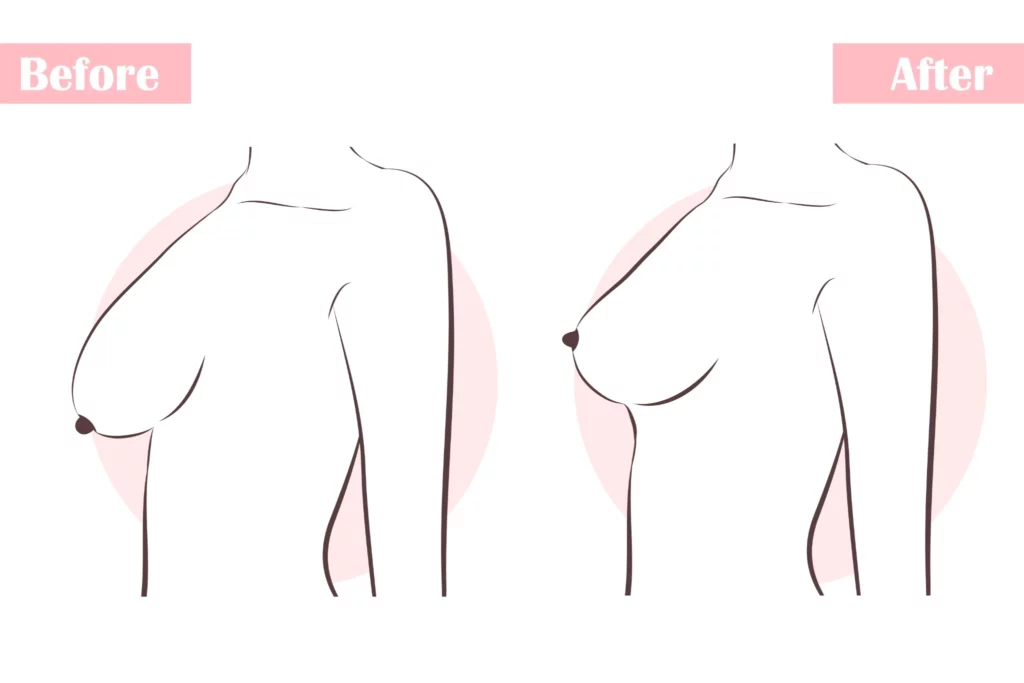
Am I a candidate for breast reduction? You likely are if your breast size causes ongoing neck, shoulder or back pain, rashes under the breasts, limits on your posture or exercise, or lasting emotional distress. Breast reduction (reduction mammaplasty) is surgery that removes breast tissue, fat and excess skin to make the breasts smaller and lift them.
I’m Dr. Lee Sung-wook, a board-certified plastic surgeon at MINE Plastic Surgery & Dermatology in Seoul. “Am I a good candidate for breast reduction, or am I overthinking it?” is one of the questions I hear most often in consultation. This guide walks you through five signs to check, what happens when large breasts also sag, which technique tends to fit which breast, and a realistic recovery timeline.
If you already know you want surgery and need the step-by-step details, read our complete guide to breast reduction surgery instead.
- What Breast Reduction Actually Does
- Am I a Candidate for Breast Reduction? 5 Signs to Check
- Large and Sagging Breasts: Do You Need a Lift as Well?
- Which Technique Fits Your Breasts? Matching Grade to Incision
- Breast Reduction Recovery: Light Daily Life vs. Normal Activity
- Before and After Surgery: Smoking, Medications and Scar Care
- Breast Reduction Candidacy FAQ
- Get a Personal Candidacy Assessment at MINE
What Breast Reduction Actually Does
Breast reduction is often described as “making the breasts smaller,” but that is only half the story. The real goal is to take weight off your neck, shoulders and back, and to give the breast a firmer, better-proportioned shape. Most women who ask whether they are a candidate for breast reduction are not chasing a particular cup size. They want to stop hurting, sleep and exercise comfortably, and find clothes that fit.
What Is Removed: Gland, Fat and Skin
A breast is made of three main parts: glandular tissue (the milk-producing tissue), fat, and the skin that wraps around them. During a reduction, the surgeon removes a planned amount of each and reshapes what remains. The balance between fat and gland differs from person to person. Breasts that are mostly fat can sometimes be reduced with a simpler approach, while dense, glandular breasts need the tissue to be cut out directly.
Does a Reduction Also Lift Sagging Breasts?
Yes, in most cases. When the breasts are both large and sagging, the same operation moves the nipple and areola (the darker skin around the nipple) higher on the chest and tightens the skin envelope. In other words, the lift is built into the reduction. I explain how sagging changes the plan in more detail further down.
Dr. Lee’s Key Point: Breast reduction is not only about making the breasts smaller. It relieves weight-related discomfort and reshapes a sagging contour at the same time.
Am I a Candidate for Breast Reduction? 5 Signs to Check
There is no single number that decides whether you are a candidate for breast reduction. What matters is how your breasts affect your body and your daily life. If even one of the five signs below applies to you clearly and persistently, it is reasonable to discuss a reduction with a plastic surgeon.
1. Chronic Neck, Shoulder or Back Pain (and Bra-Strap Grooves)
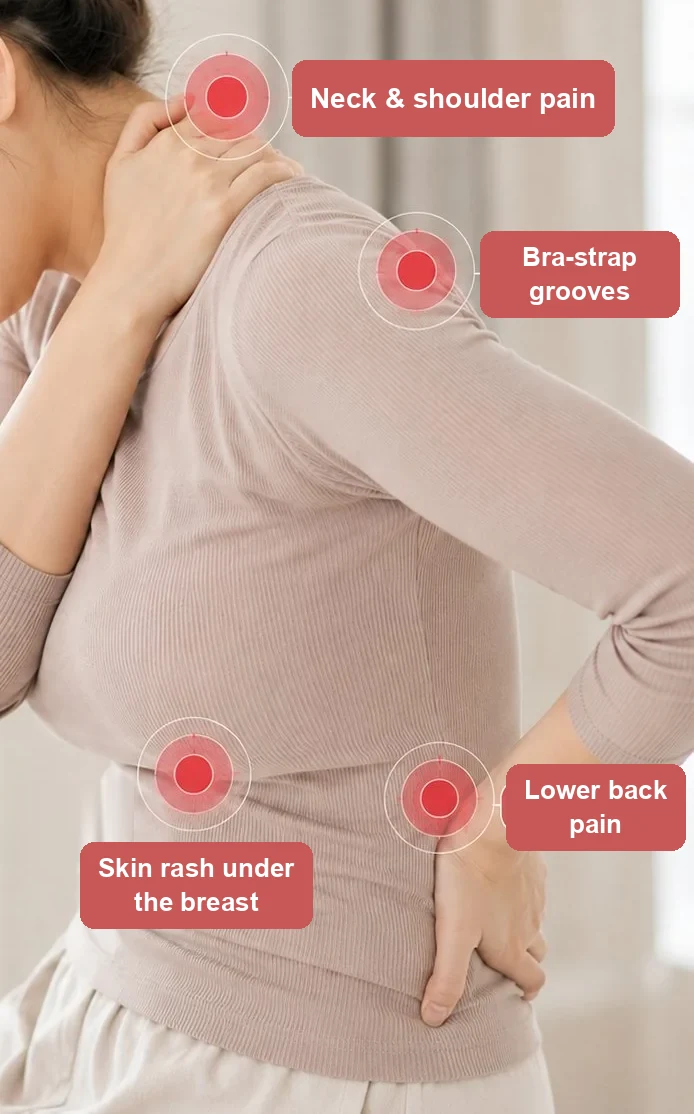
Heavy breasts pull forward and down all day long, and the muscles of the neck, upper back and shoulders work overtime to hold you upright. Over months and years, that strain can turn into chronic pain and tension headaches. A telltale sign is deep, reddened grooves where your bra straps dig into your shoulders. Plastic surgery textbooks list bra-strap grooving, rashes, and neck and shoulder pain as the typical symptoms of macromastia (breasts that are too large for the body frame). If this sounds familiar, it is one of the strongest signs that you are a candidate for breast reduction.
2. Rashes or Skin Irritation Under the Breasts That Keep Coming Back
When a large breast rests on the skin of the chest, sweat and friction collect in the fold underneath. This can cause intertrigo (a red, sore rash in skin folds), sometimes with a fungal infection or an unpleasant smell. If the rash keeps returning even though you use creams, powders and good hygiene, the cause is structural. The skin simply never gets a chance to stay dry, and reducing the weight of the breast removes the problem at its source. Recurring rashes like this are a common reason women ask whether they are a candidate for breast reduction.
3. Posture Changes and Limits on Exercise or Daily Activities
Many women with large breasts notice their shoulders rolling forward or their upper back rounding over time. Running, jumping, yoga or racket sports can feel uncomfortable even in a high-impact sports bra. When surgeons assess candidacy, textbooks advise asking whether breast size restricts daily activities, because this is one of the clearest signs that the breasts are affecting your health, not just your appearance.
4. Ongoing Emotional Discomfort or Self-Image Concerns
Struggling to find tops and swimwear that fit, feeling stared at, or hiding your chest under loose clothing can wear you down. These feelings are valid, and emotional reasons alone can make you a candidate for breast reduction. In my experience, though, the indication is clearest when emotional distress comes together with physical symptoms such as pain or skin irritation.
5. Symptoms Clear Enough to Be Medically Documented
The fifth sign is a practical one: are your symptoms clear enough that a doctor could write them down? Plastic surgery textbooks note that documented pain, limits on activity and earlier attempts to lose weight are what insurers typically look at when they judge whether a reduction is medically necessary. Keeping a simple record of your symptoms, treatments you have tried (physical therapy, painkillers, supportive bras) and your weight history helps any surgeon judge whether you are a candidate for breast reduction.
A note for international patients: Korea’s National Health Insurance generally does not apply to patients who live overseas, so breast reduction in Korea is usually self-pay. If you hope to get some costs covered, ask your own insurer at home before you travel what they require. Rules differ widely between insurers and countries, and only they can tell you whether your symptoms qualify.
Quick Self-Check: How Many Apply to You?
Answer yes or no to each statement below. This is a guide to help you decide whether to book a consultation, not a diagnosis.
- I have neck, shoulder or back pain most days, or deep grooves from my bra straps.
- I get rashes or irritation under my breasts that keep coming back despite treatment.
- My posture has changed, or my breast size stops me from exercising or doing everyday activities comfortably.
- I feel self-conscious or distressed about my breast size, and it affects what I wear or do.
- I could describe my symptoms to a doctor clearly, including what I have already tried.
If you answered yes to one or more, you may well be a candidate for breast reduction and it is worth a professional assessment. Our breast reduction at MINE page also has a cup-size based self-check you can use alongside this symptom-based one.
When It May Be Better to Wait
Some situations do not stop you from being a candidate for breast reduction, but they change the timing. Active smokers, people with poorly controlled diabetes, and those with significant obesity face a higher risk of healing problems; some surgeons decline surgery above a BMI (body mass index) of 35. If you plan to lose a lot of weight or become pregnant soon, breast size and shape can change again afterward. In these cases, I usually recommend planning the operation once things are stable.
Dr. Lee’s Key Point: Emotional reasons alone can make you a candidate, but the case is clearest when pain or skin problems come with it.
Large and Sagging Breasts: Do You Need a Lift as Well?
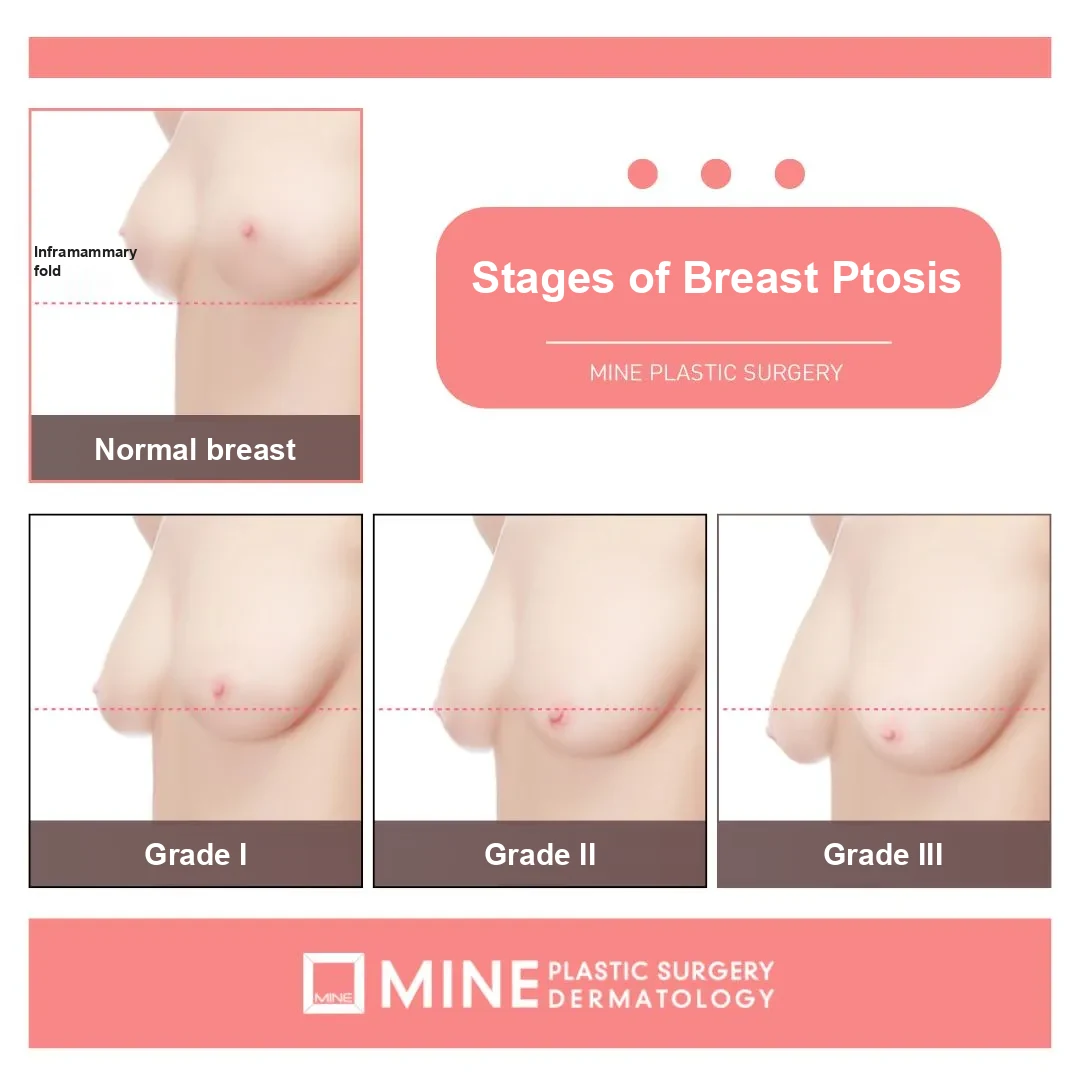
Large breasts and sagging breasts often go together, because the extra weight stretches the skin and supporting tissue over time. Breast ptosis is the medical word for sagging: it means the nipple sits at or below the inframammary fold (the crease where the underside of the breast meets the chest). Sagging does not decide whether you are a candidate for breast reduction; it decides how the operation is planned.
What the Ptosis Grades Mean
Surgeons usually describe sagging with the Regnault grading system, which looks at where the nipple sits compared with that fold:
- Grade I (mild): the nipple sits at the level of the fold.
- Grade II (moderate): the nipple sits below the fold but still above the lowest part of the breast.
- Grade III (severe): in Regnault’s grading, Grade III means the nipple sits below the fold at the lowest point of the breast, pointing downward.
- Pseudoptosis: the nipple stays above the fold, but the breast tissue hangs below it.
For a fuller explanation with causes and options, see our guide to the stages of breast sagging.
Reduction and Lift in One Operation
Breast textbooks describe reduction as the definitive correction when sagging comes with excess volume, because the operation lifts the breast while it reduces it. A breast lift with implants is meant for the opposite situation, where the breast sags but has too little volume. So if your breasts are large and droop, you do not need a separate lift as a second operation: size and nipple position are set together in a single surgical plan. If there is little sagging, the operation simply focuses on removing tissue without a major lift step.
You can read more about combining a breast lift with a reduction in our dedicated guide.
Dr. Lee’s Key Point: If your breasts are both large and sagging, one reduction operation corrects size and sagging together.
Which Technique Fits Your Breasts? Matching Grade to Incision
Once you know you are a candidate for breast reduction, the next question is which technique suits you. It mainly depends on two things: how much tissue needs to be removed, and how much the breast sags.
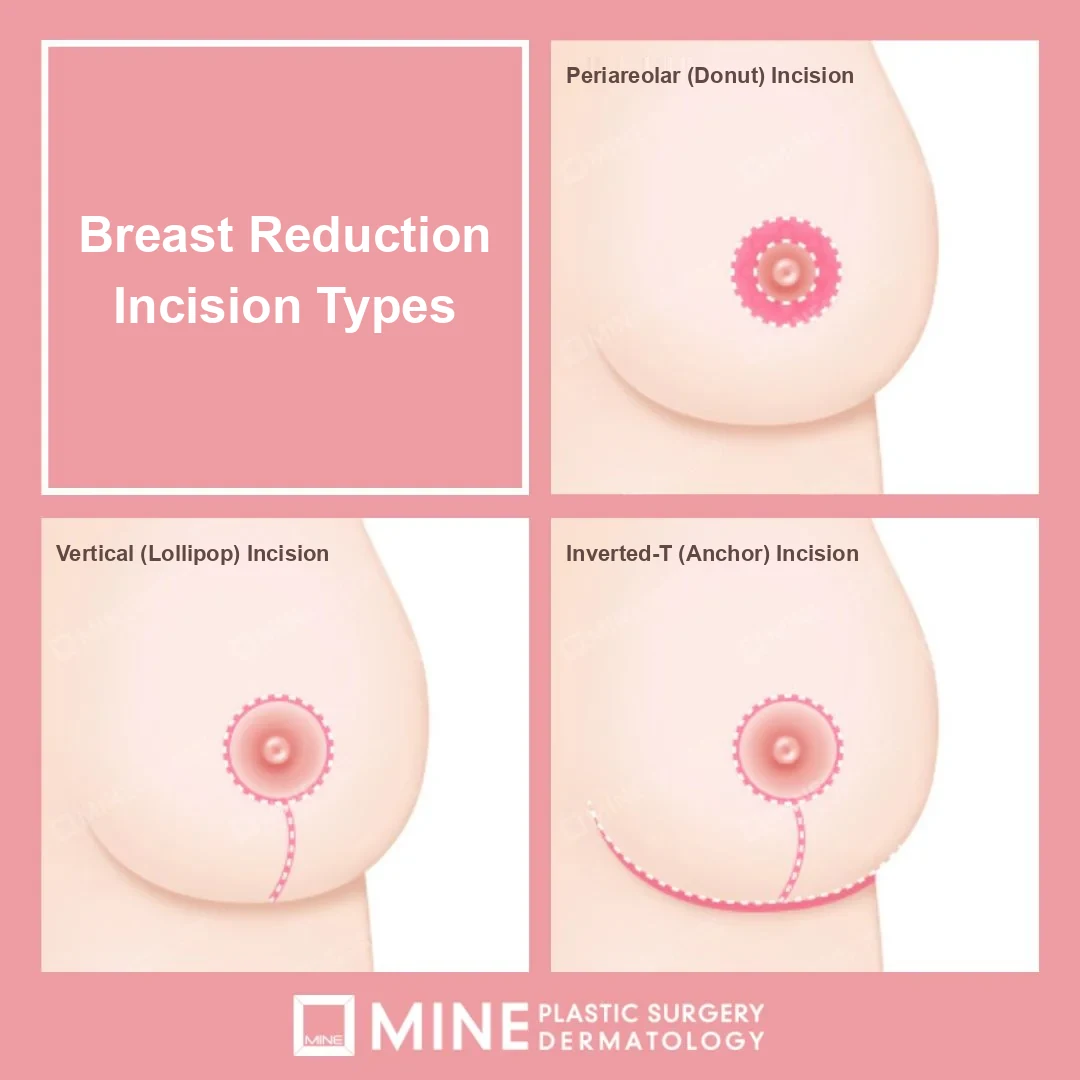
| Technique | Best suited to | Scar |
|---|---|---|
| Liposuction alone | Mostly fatty breasts, minimal sagging, small reduction | Tiny entry points |
| Periareolar (donut) incision | Mild sagging | Around the edge of the areola |
| Vertical (lollipop) incision | Moderate sagging | Around the areola plus a vertical line below it |
| Inverted-T (anchor) incision | Severe sagging or a large reduction | Around the areola, a vertical line and along the breast fold |
Liposuction Alone
Liposuction removes fat through small openings, so the scars are minimal. The limitation is that it does little, and unpredictably, for loose skin. It cannot move the nipple higher, so it suits only a small group of women with fatty breasts and very little sagging.
Periareolar (Donut) Incision
The scar runs around the edge of the areola, where the color change helps hide it. Because it allows only a small amount of lift and reshaping, it is best for modest reductions with mild sagging.
Vertical (Lollipop) Incision
Adding a vertical line from the areola down to the fold lets the surgeon remove more tissue and narrow the breast. Textbooks describe vertical, short-scar methods as giving a shorter scar and a shape that holds up well over time, which makes this a common choice for moderate sagging.
Inverted-T (Anchor) Incision
When the breasts are very large or sag severely, an extra incision along the breast fold gives the most room to remove tissue and tighten skin. This approach has long been the standard method for large reductions and Grade III sagging.
Whichever technique is used, the most important safety principle is preserving the blood and nerve supply to the nipple and areola, which protects sensation and healing. For general guidance on choosing a qualified surgeon, the Korean Society of Plastic and Reconstructive Surgery is a useful starting point. The detailed differences between methods, including how tissue is kept attached and the specific risks, are covered in our complete guide to breast reduction surgery.
Dr. Lee’s Key Point: A longer scar does not mean a worse operation. Matching the method to your sagging and removal volume is what gives a natural result.
Breast Reduction Recovery: Light Daily Life vs. Normal Activity
You may see different recovery times quoted for breast reduction, such as “a few days” in one place and “2–3 weeks” in another. Both can be true, because they describe different stages. Light daily life (looking after yourself, showering, moving around the house) comes back within days. A normal level of activity takes about three weeks, and strenuous exercise takes longer still.
| Time after surgery | What you can usually do |
|---|---|
| First few days | Light daily life: basic self-care, showering as instructed, walking around at home. Drains, if used, usually come out on day 1–2. |
| About 1–2 weeks | Desk work and a light daily routine. |
| About 3 weeks | A normal level of everyday activity. |
| About 4–6 weeks | Strenuous exercise, heavy lifting and running; full workouts around 6 weeks. |
| 3–6 months | Swelling settles and the final shape appears. |
First Days to Week 1: Support Bra and Drains
Right after surgery, you wear a soft support bra and rest with your upper body slightly raised. If drains (thin tubes that remove fluid) are placed, they usually come out on the first or second day. Tightness, swelling and mild pain are expected and are managed with prescribed medication.

Weeks 1–3: Desk Work and Normal Routine
Most people return to desk work after about one to two weeks. Textbooks describe a return to a normal level of activity about 3 weeks after surgery and strenuous exercise after about 4–6 weeks. The soft support bra is usually worn day and night for about 4 weeks, and underwire bras are best avoided for about 2 months. Sensation in the nipple and areola can be reduced for a while; it usually improves gradually over the following months.
Weeks 4–6: Exercise, and the Final Shape at 3–6 Months
Heavy lifting and running can usually restart after about a month, and full workouts around six weeks, once your surgeon has checked your healing. The breasts often look high and firm at first and then soften into their final shape over 3–6 months. How quickly you reach each stage depends on how much tissue was removed and on your own healing. For a week-by-week breakdown, see our breast reduction recovery guide. If you are traveling to Korea, plan your flight home with the clinic at your consultation, based on your procedure and follow-up schedule.
Dr. Lee’s Key Point: Basic self-care within days, desk work around 1–2 weeks, normal activity around 3 weeks, strenuous exercise at 4–6 weeks. The final shape settles at 3–6 months.
Before and After Surgery: Smoking, Medications and Scar Care
Pre-Surgery Checklist
- Stop smoking: quit at least 4–6 weeks before surgery and stay off nicotine for at least 4 weeks afterward. Nicotine narrows blood vessels, so less oxygen reaches the healing tissue.
- Alcohol and blood thinners: stop alcohol and medicines that increase bleeding, such as aspirin, for the period your surgeon advises.
- Health conditions: tell your surgeon about diabetes, high blood pressure, heart problems and any supplements you take.
- Future plans: mention plans for pregnancy, breastfeeding or major weight loss so the timing and technique can be chosen with them in mind.
Smoking deserves extra emphasis. According to plastic surgery textbooks, smokers face a 2–3 times higher risk of wound complications after breast reduction, and one textbook series reported wound problems in about 35% of smokers.
Scar Care After Surgery
Every breast reduction leaves scars; the goal is to make them as fine and well-placed as possible. Wear the prescribed support bra consistently to reduce tension on the incisions. Once the wounds have closed, silicone gel or taping can help scars flatten and fade. Scars usually look pink at first and keep improving for a year or more. Protect them from strong sun during that time.
Dr. Lee’s Key Point: Quitting smoking 4–6 weeks before surgery is not optional. It is the single biggest factor in healing and scarring.
Breast Reduction Candidacy FAQ
How do I know if my breasts are too big for my body?
It is less about cup size and more about symptoms. Chronic neck or back pain, bra-strap grooves, recurring rashes under the breasts and limits on exercise all suggest your breasts are too heavy for your frame. If one of these applies persistently, the answer to “Am I a candidate for breast reduction?” is likely yes, and a plastic surgeon can assess you.
Will my insurance cover breast reduction if I have surgery in Korea?
Korea’s National Health Insurance generally does not apply to international patients who live abroad, so surgery here is usually self-pay. Some insurers at home consider documented symptoms when deciding on coverage. Ask your own insurer what they require before you travel.
Can I breastfeed after a breast reduction?
Often, yes. Studies summarized in plastic surgery textbooks report breastfeeding rates of about 60–80% after reduction with a superior pedicle (keeping the nipple attached to tissue above it) and about 48–65% with a medial pedicle, similar to women who have not had breast surgery. Tell your surgeon about pregnancy or breastfeeding plans beforehand.
How long after breast reduction can I go back to work?
Most people return to desk work after about 1–2 weeks. Jobs that involve lifting or physical effort need longer, and a normal level of activity usually returns around 3 weeks. The exact timing depends on how much tissue was removed.
Will a breast reduction lift sagging breasts?
Yes. When the breasts are large and sagging, the reduction includes a lift that moves the nipple higher and tightens the skin. The more the breasts sag, the more likely a vertical or inverted-T incision is needed to reposition the nipple.
Why do surgeons ask smokers to quit before a breast reduction?
Nicotine narrows blood vessels and slows wound healing. Textbooks report a 2–3 times higher risk of wound complications in smokers, so you should quit at least 4–6 weeks before surgery and stay off nicotine for at least 4 weeks afterward.
Get a Personal Candidacy Assessment at MINE
Whether you are a good candidate for breast reduction depends on your breast size, how much they sag, your symptoms and your health. If you are still asking yourself, “Am I a candidate for breast reduction?”, a self-check can point you in the right direction, but an in-person or online consultation is needed to give you a reliable answer and a personal plan.
To learn how we approach the operation, visit our breast reduction at MINE page, send us a message through our online consultation form, or call +82-2-516-1175.
Written and medically reviewed by Dr. Lee Sung-wook, Board-Certified Plastic Surgeon, MINE Plastic Surgery | 813 Nonhyeon-ro, Gangnam-gu, Seoul | Last reviewed November 11, 2026
※ This content is for informational purposes only and does not replace professional medical advice, diagnosis, or treatment. Individual results may vary, and side effects may occur. Please consult with a board-certified plastic surgeon for personalized advice.