EN
EN

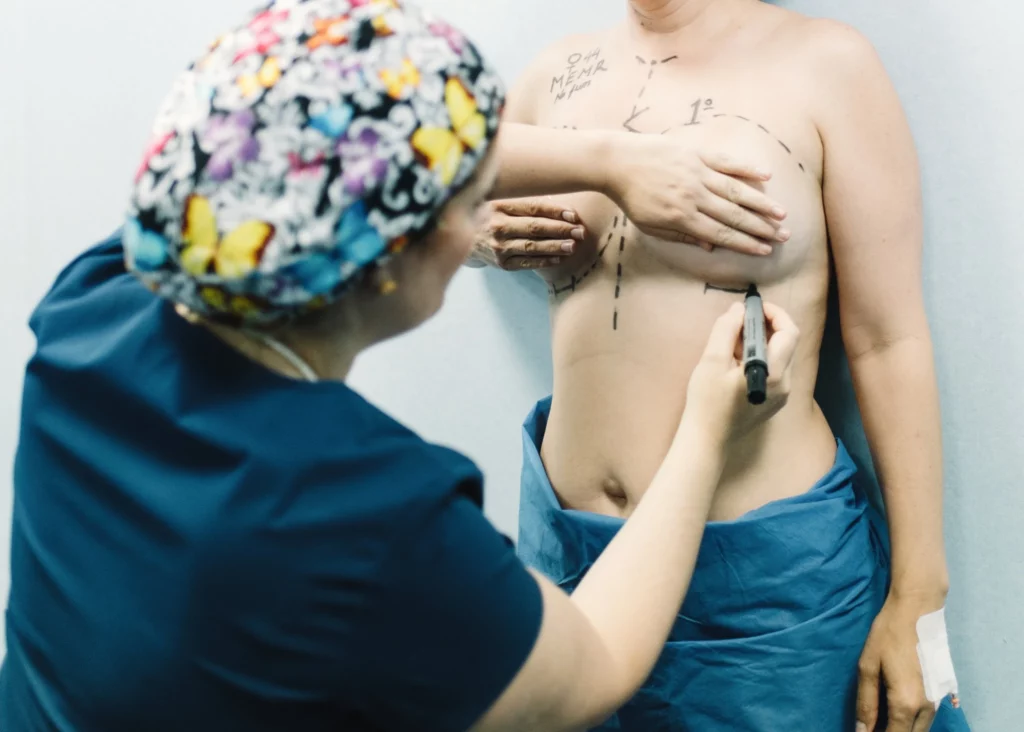
A breast lift incision is the cutting pattern a surgeon uses to remove stretched skin and move the nipple back to a natural height. There are three main patterns — periareolar (donut), vertical (lollipop) and anchor (inverted-T) — and each one is matched to how far the breast has dropped. A fourth, the crescent incision, removes only a thin sliver of skin above the areola and is reserved for the mildest cases. Breast sagging (ptosis) itself is a normal change that follows aging, pregnancy, breastfeeding, weight loss, or simply years of gravity. In this guide we compare every breast lift incision method — how each one is made, what it can correct, and what it leaves behind — so you can weigh the options with your surgeon.
Table of contents
Causes and Characteristics of Sagging Breasts
Breast ptosis (sagging) is medically defined as ‘a condition where breast elasticity decreases and the nipple falls below the breast crease.’ Several factors contribute to breast sagging:
- Aging: Natural decrease in skin elasticity over time
- Pregnancy and breastfeeding: Hormonal changes and fluctuations in breast size
- Weight fluctuations: Rapid weight gain or loss
- Gravity: Continuous gravitational pull over time
- Genetic factors: Inherited skin and connective tissue characteristics
- Smoking: Interferes with collagen production and reduces skin elasticity
- Sun exposure: Accelerates skin aging
Medical professionals classify breast ptosis into distinct stages, and the four-grade scale below follows the same framework used by professional bodies such as the American Society of Plastic Surgeons. Your grade is the single biggest factor in which breast lift incision a surgeon will recommend:
- Grade 1 (Mild): The nipple is at the level of the inframammary fold (breast crease)
- Grade 2 (Moderate): The nipple falls slightly below the inframammary fold
- Grade 3 (Severe): The nipple is significantly below the inframammary fold and points downward
- Grade 4 (Extreme): The nipple points toward the ground at the lowest part of the breast
The degree of sagging, along with individual anatomical characteristics and desired outcomes, determines the most appropriate breast lift incision type for each patient.
Basic Principles of Breast Lifting Surgery
Breast lifting surgery (mastopexy) is designed to elevate and reshape sagging breasts. The fundamental principles of this procedure include:
- Excess skin removal: Eliminating stretched skin to improve breast contour
- Breast tissue repositioning: Elevating sagging breast tissue to a higher position
- Nipple-areola complex repositioning: Moving the nipple and areola to an appropriate position
- Skin redraping: Reshaping the remaining skin for a more youthful, elastic appearance
It’s important to understand that mastopexy is not a breast augmentation procedure but rather focuses on improving breast shape and position. If increased volume is desired, additional procedures like implant placement or fat transfer may be considered.
The surgical approach is determined by considering multiple factors including degree of ptosis, breast size, skin elasticity, nipple position, and other individual characteristics, which guide the selection of the most appropriate breast lift incision type.
Types of Breast Lift Incisions
Various breast lift incision types are available, each designed for specific degrees of sagging and desired outcomes. Understanding these approaches can help you make an informed decision during your consultation.
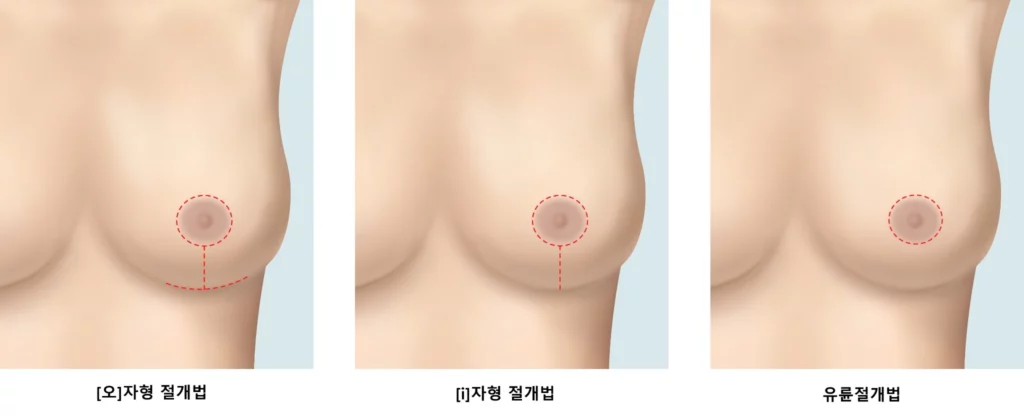
Periareolar (Donut) Incision
The periareolar incision, also known as the donut technique, involves a circular incision around the areola perimeter. This method creates minimal, discreet scarring and is suitable for mild sagging. It is the shortest breast lift incision of the three main patterns, which is why it appeals to patients whose main concern is a visible mark.
Characteristics:
- Circular incision around the areola only
- Scar sits at the areola-skin junction, where it is usually the least noticeable of the three patterns (it fades but does not disappear)
- Suitable for mild ptosis (Grade 1-2)
- Allows for nipple repositioning and moderate skin removal
Best candidates:
- Women with mild breast sagging
- Patients with small to medium breast size
- Those with good skin elasticity
- Patients prioritizing minimal scarring
The periareolar technique is one of the minimal-scarring approaches offered at MINE, valued for its quick recovery and discreet scars.
Vertical (Lollipop) Incision
The vertical incision technique, often called the lollipop method, involves a circular incision around the areola followed by a vertical incision from the areola to the breast crease. The shape resembles a lollipop, hence the name. As a breast lift incision it sits between the donut and the anchor in both scar length and lifting capacity.
Characteristics:
- Circular incision around the areola plus a vertical line to the breast crease
- Moderate scarring (lollipop shape)
- Ideal for moderate sagging (Grade 2-3)
- Allows for greater skin removal and tissue reshaping
Best candidates:
- Women with moderate breast sagging
- Patients with medium-sized breasts
- Those needing significant improvement in breast shape
- Patients requiring more skin removal than the periareolar technique allows
This breast lift incision offers a good balance between effective correction and limited scarring for moderate ptosis cases.
Anchor (Inverted-T) Incision
The anchor incision is the most extensive approach, incorporating a circular incision around the areola, a vertical incision to the breast crease, and a horizontal incision along the breast crease. The resulting pattern resembles an anchor or inverted T-shape. It is the longest breast lift incision of the three, but it is also the only pattern that can take in loose skin in every direction at once.
Characteristics:
- Three-part incision: around areola, vertical line, and along breast crease
- Most extensive scarring (anchor or inverted-T shape)
- Ideal for severe sagging (Grade 3-4)
- Allows for maximum skin removal and tissue reshaping
Best candidates:
- Women with severe breast sagging
- Patients with larger breasts
- Those requiring substantial skin and tissue removal
- Patients needing significant breast reshaping
While this breast lift incision leaves the most visible scars, it is the option that corrects the degree of sagging shorter patterns simply cannot reach.
Recommended Incision Types by Ptosis Grade
The appropriate breast lift incision type generally corresponds to the degree of breast sagging:
- Grade 1 Ptosis (Mild): Nipple at level with breast crease → Crescent incision or Periareolar incision recommended
- Grade 2 Ptosis (Moderate): Nipple slightly below breast crease → Periareolar incision or sometimes Vertical incision recommended
- Grade 3 Ptosis (Severe): Nipple significantly below breast crease → Vertical (Lollipop) incision or Anchor incision recommended
- Grade 4 Ptosis (Extreme): Nipple points downward at lowest part of breast → Anchor (Inverted-T) incision recommended
Comparing Advantages and Disadvantages by Incision Method
Understanding the pros and cons of each breast lift incision type can help you collaborate with your surgeon to select the most appropriate approach for your needs.
| Incision Method | Advantages | Disadvantages | Suitable Ptosis Grade |
|---|---|---|---|
| Periareolar (Donut) | • Minimal, inconspicuous scarring • Shorter recovery period • Natural-looking results | • Limited skin removal capacity • Not suitable for severe sagging • Limited breast shape modification | Mild ptosis (Grade 1-2) |
| Vertical (Lollipop) | • Moderate scarring • Better breast shape contouring • Adequate skin removal | • More visible scarring than periareolar • Slightly longer recovery • Vertical scar may be noticeable | Moderate ptosis (Grade 2-3) |
| Anchor (Inverted-T) | • Maximum skin removal • Most effective shape improvement • Ideal for severe ptosis | • Most extensive scarring • Longest recovery period • Scars more likely to be visible | Severe ptosis (Grade 3-4) |
Scar length is what patients notice first, but it is not what surgeons weigh most heavily. Every breast lift incision has to leave a “pedicle” behind — a bridge of tissue that keeps blood flowing to the nipple and areola. The surgical literature is consistent on this point: the pattern has to protect that blood supply, and the risk climbs when an implant is placed at the same time, because the added pressure can squeeze a long, low-set pedicle.
Skin tension is the second consideration. A donut breast lift incision closes by drawing the surrounding skin inward. If too much skin is removed through that single opening, the areola can widen or the scar can spread over the following year — a pattern well described in the surgical literature. This is why the donut pattern is reserved for milder sagging, and why surgeons often use a spoke-like ring of closing stitches around the areola to hold its border steady.
Finally, the plan can change in the operating room. A well-described approach is to begin with a vertical incision and convert it to an inverted-T only if the skin does not settle smoothly at the crease. Ask in advance whether that conversion is part of your plan, so the final scar pattern is never a surprise.
Current Trends in Breast Lift Techniques
Recent trends in plastic surgery focus on minimizing scarring while maximizing results, and breast lift incision planning has evolved along with them.
Most Commonly Used Incision Types Today
- The Vertical (Lollipop) incision has become increasingly popular as it offers a good balance between effective correction and relatively limited scarring, making it the method of choice for many moderate ptosis (Grade 2-3) cases.
- Minimal Scar Techniques have gained significant popularity. These refined approaches improve upon traditional periareolar methods to minimize scarring while maintaining effectiveness. mineclinic offers these advanced techniques as part of their commitment to aesthetic excellence.
- Hybrid incision techniques are increasingly utilized, combining elements of different approaches customized to each patient’s unique anatomy, particularly beneficial for complex cases.
Adoption of New Technologies
- 3D simulation for surgical planning enables more accurate prediction of results.
- Endoscopic techniques offer minimally invasive approaches in select cases.
- Autologous tissue rearrangement methods continue to evolve for natural results without implants.
Recent studies indicate that proper case selection and skilled technique with the vertical incision method show higher patient satisfaction and faster recovery compared to the traditional anchor method that was previously considered standard. However, there is no single breast lift incision that suits every patient, as the appropriate approach varies with individual anatomy and goals.
Frequently Asked Questions
How long is the recovery period after breast lift surgery?
Recovery time after breast lift surgery varies depending on the breast lift incision technique and individual healing factors:
- Minimally invasive incisions (Crescent, Periareolar): Return to daily activities possible within 1-2 weeks
- Vertical incision: Recovery typically requires 2-3 weeks
- Anchor incision: Recovery generally takes 3-4 weeks
Complete healing and final results may take 6 months to a year. Initially, patients should wear compression bras and avoid strenuous activities.
How visible are the scars after breast lift surgery?
Post-surgical scarring varies by breast lift incision type, individual skin characteristics, and post-operative care:
- Crescent and Periareolar incisions: Scars are generally well-concealed along the areola border
- Vertical incision: The vertical scar remains visible but typically fades over time
- Anchor incision: Creates the most extensive scarring, which fades but remains permanent
Proper scar management and limiting sun exposure can minimize scar visibility. Refer to MINE’s scar management protocol for optimal results.
One detail worth asking about is the areola itself. It tends to stretch a little in the months after surgery, so surgeons mark it slightly smaller than the size they want you to end up with and close that part of the breast lift incision with a purse-string style stitch that holds the border in place.
Can I combine breast lift and augmentation procedures?
Yes, combining breast lift and augmentation procedures is possible through what’s called augmentation-mastopexy. This combined approach is suitable for women experiencing both sagging and volume loss.
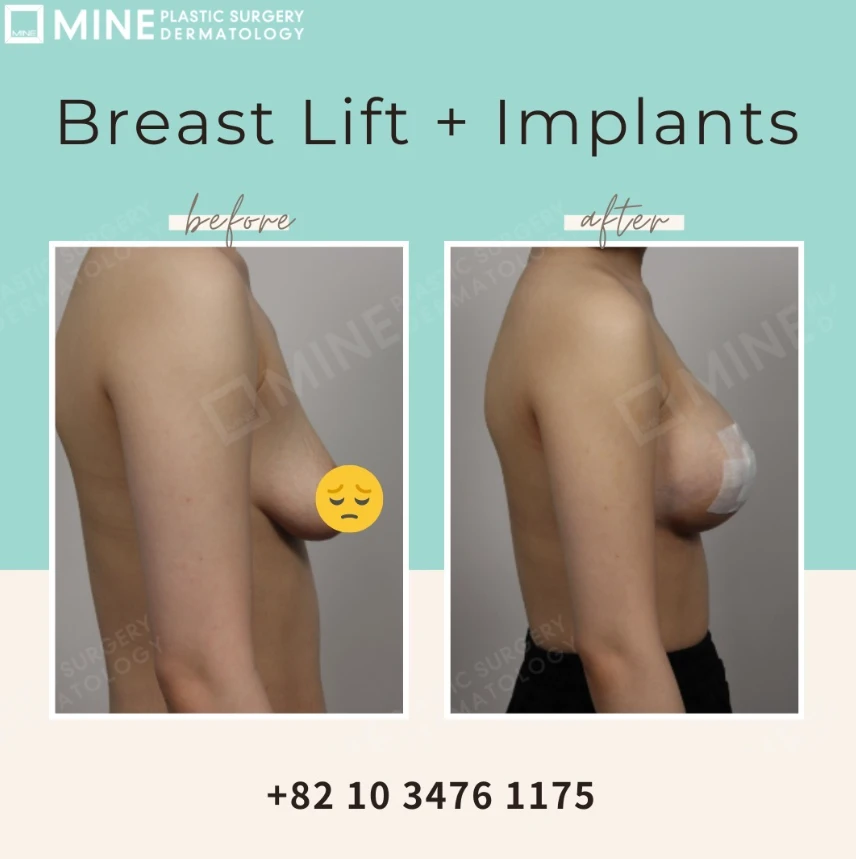
Benefits of combined surgery:
- Single anesthesia and recovery period
- Potential cost savings
- More harmonious overall results
However, combined procedures may be more complex than individual surgeries and carry slightly increased complication risks. Consultation with a specialist is essential to determine the most appropriate approach for your needs.
How long do breast lift results last?
While breast lift results are long-lasting, natural aging, gravity, weight changes, and pregnancy can affect them over time. Generally, results last:
- Younger patients with elastic skin and smaller breasts: Results may last 10-15+ years
- Older patients with less elastic skin and larger breasts: Results typically last 5-10 years
To maximize the longevity of your results:
- Maintain a stable weight
- Avoid dramatic weight fluctuations
- Wear supportive bras
- Avoid smoking
- Limit sun exposure
Conclusion: Importance of Professional Consultation
Selecting the appropriate breast lift incision type should be a personalized decision based on your physical condition, degree of sagging, aesthetic goals, and lifestyle considerations. Consultation with an experienced specialist is essential for optimal results.
A qualified specialist will provide:
- Accurate diagnosis and assessment of ptosis grade
- Analysis of individual anatomical characteristics and skin condition
- Realistic expectations for achievable results
- Detailed explanation of each incision method’s advantages and disadvantages
- Personalized surgical plan tailored to your needs
Located in the heart of Seoul, mineclinic offers experienced medical professionals with extensive expertise in breast enhancement. Their team provides personalized consultations and treatment plans for each patient. If you’re concerned about breast sagging, consult with a specialist for an accurate diagnosis and customized treatment plan.
Breast lift surgery can positively impact not only your appearance but also your confidence and quality of life. Choose the breast lift incision method that’s right for you to achieve a natural and beautiful breast contour.
For more detailed information or to schedule a personalized consultation, contact the specialists at mineclinic. Our experts will help you find the optimal solution for your concerns.
Reviewed by Dr. Lee Sung-wook, Board-Certified Plastic Surgeon, MINE Plastic Surgery & Dermatology (Seoul, Korea).
※ This content is for informational purposes only and does not replace professional medical advice, diagnosis, or treatment. Individual results may vary, and side effects may occur. Please consult with a board-certified plastic surgeon for personalized advice.