EN
EN


Table of contents
Breast lift surgery (mastopexy) is an operation that removes excess skin, reshapes the breast tissue underneath and moves the nipple-areola complex upward, so that a sagging breast sits higher and firmer on the chest wall. It does not add volume on its own — that requires an implant or fat transfer. Breast sagging (ptosis) is a natural physical change experienced by many women, caused by decreased skin elasticity with age, pregnancy and breastfeeding, weight fluctuations, and gravity, and it can bring both physical discomfort and reduced self-confidence. This guide compares the five breast lift surgery techniques used today — how each one is performed, the scar it leaves, who it suits, and how long recovery takes.
Causes and Classification of Breast Ptosis
Before choosing a breast lift surgery technique, it helps to know why ptosis happens. Let’s examine the main causes and classification system to better understand this condition.
Main Causes
- Aging and gravity: Weakening of skin elasticity and connective tissue over time
- Pregnancy and breastfeeding: Hormonal changes and breast tissue alterations due to lactation
- Weight fluctuations: Reduced skin elasticity from rapid weight gain and loss
- Genetic factors: Congenital connective tissue characteristics
- Smoking and UV exposure: Interference with collagen production and accelerated skin aging
Breast Ptosis Classification
Medically, ptosis is graded with the Regnault classification system, and this grade is the single strongest predictor of which breast lift surgery you will be offered:
- Grade 1 (Mild) Ptosis: The nipple and areola remain above the inframammary fold (IMF), but lower breast tissue begins to sag
- Grade 2 (Moderate) Ptosis: The nipple and areola descend to the level of the inframammary fold
- Grade 3 (Severe) Ptosis: The nipple and areola fall below the inframammary fold and point downward
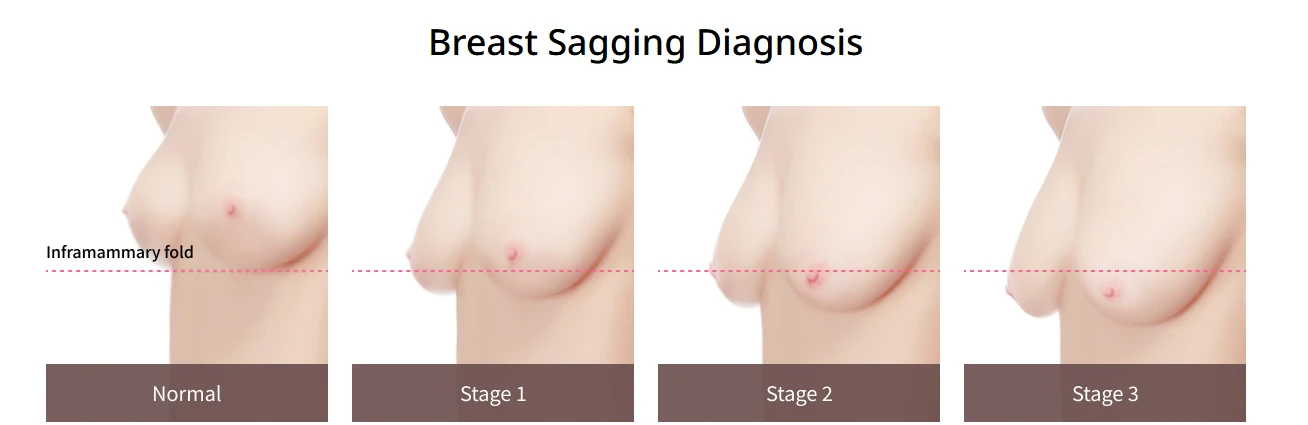
The appropriate surgical method varies according to the degree of sagging, making accurate diagnosis crucial. According to guidelines from the American Society of Plastic Surgeons, a customized surgical plan based on the degree of ptosis and individual patient characteristics significantly impacts surgical outcomes and satisfaction rates.
Types of Breast Lift Surgery Procedures
Surgical correction of breast ptosis offers various options depending on the degree of sagging and patient preferences. Let’s explore the characteristics and suitable candidates for each surgical method in detail.
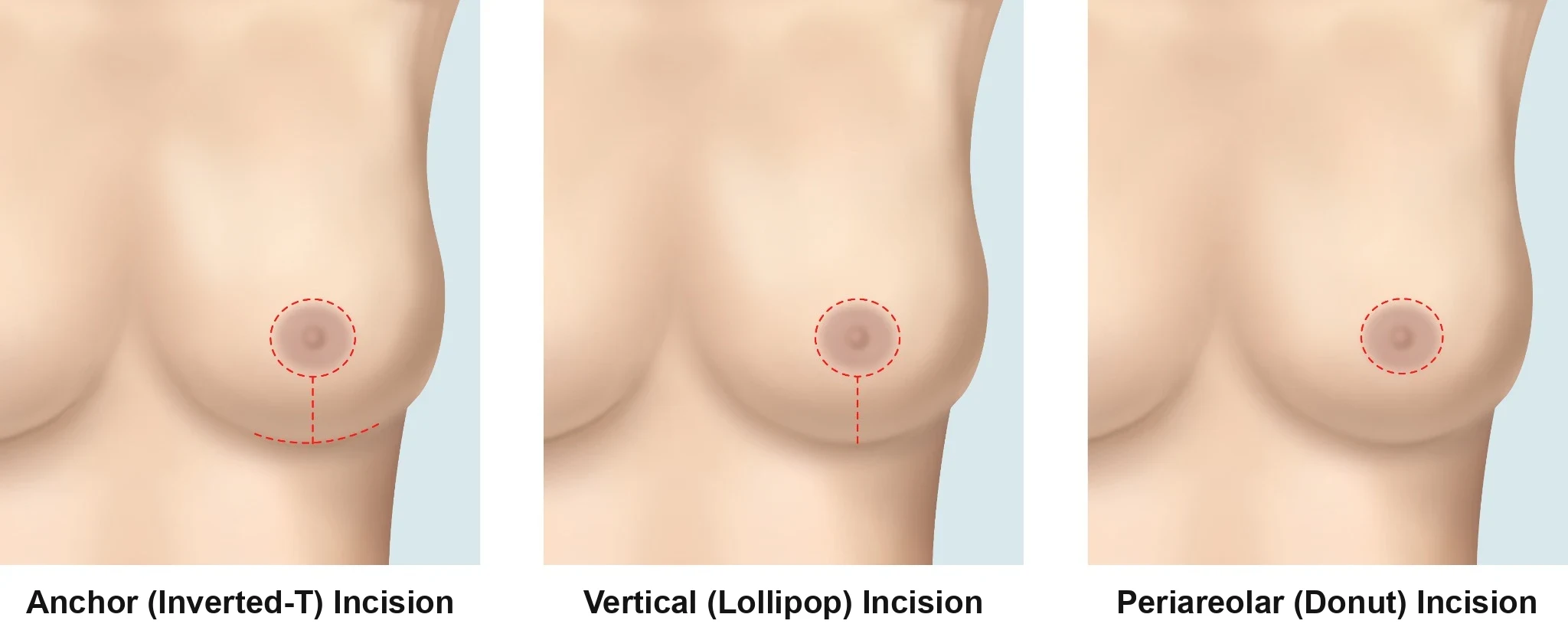
1. Periareolar Lift (Donut Lift)
This technique involves incisions only around the nipple area, making it the most minimally invasive lifting method.
Incision Pattern and Procedure:
- Double circular incision: A circular incision is made along the areola edge, followed by a second, larger circular incision around it
- Process: The skin between the two circular incisions is removed, the breast tissue is internally repositioned and lifted, then the outer circular skin is sutured to the inner areola boundary
- Suturing technique: Typically uses subcutaneous suturing with absorbable threads, utilizing the natural pigment boundary of the areola to conceal scarring
Suitable Candidates:
- Mild sagging (Grade 1 ptosis)
- Smaller breast size
- Those who desire minimal scarring
Advantages:
- Superior aesthetic results with scars limited to the areola perimeter
- Shorter surgery time (approximately 1-1.5 hours) and faster recovery due to minimal incisions
- Lower risk of sensory nerve damage
- Usually possible as outpatient surgery
Disadvantages:
- Limited correction range: Not effective when the nipple has descended more than 3cm below the inframammary fold
- Possibility of skin wrinkling: Potential for wrinkles around the areola if excessive skin is removed
- Long-term result maintenance: Higher possibility of recurrence over time in moderate to severe ptosis cases
2. Vertical Lift (Lollipop Lift)
This approach involves incisions around the areola and a vertical line extending downward from the areola.
Incision Pattern and Procedure:
- Keyhole-shaped incision: A circular incision around the areola, plus a vertical incision from the bottom of the areola to the inframammary fold
- Process:
- After incision, breast tissue is lifted and repositioned
- The nipple-areola complex is moved to a new position
- Excess skin is removed and breast shape is reconfigured
- Skin is sutured along the vertical incision, creating a conical breast shape
- Suturing technique: Three-layer closure (deep, subcutaneous, epidermal) to strengthen wound integrity and minimize scarring
Technical Details:
- Central breast pillar technique: Creating a tissue pillar beneath the areola to maintain breast projection
- Medial breast reshaping: Gathering medial breast tissue to narrow the gap between breasts
- Skin-glandular fixation: Anchoring breast tissue to the chest wall to prevent recurrent sagging
Suitable Candidates:
- Moderate sagging (Grade 2 ptosis)
- Medium-sized breasts
Advantages:
- Optimal for moderate sagging: Well-suited for Grade 2 ptosis patients
- Natural breast shape: Particularly effective for creating a conical breast contour
- Fewer incisions: No inframammary fold incision compared to anchor technique, resulting in less scarring
- Long-lasting results: Good result longevity due to internal tissue repositioning
Disadvantages:
- Vertical scar: Visible scar from below the areola to the inframammary fold
- Initial shape irregularity: Breast lower pole may appear somewhat wrinkled or irregular immediately after surgery, but naturally improves within 3-6 months
- Technical complexity: Requires high skill level from the surgeon
3. Anchor Lift (Inverted-T Lift)
This is the most traditional approach, involving incisions around the areola, a vertical line, and along the inframammary fold.
Incision Pattern and Procedure:
- Anchor-shaped incision: Around the areola, vertically from the areola to the inframammary fold, and horizontally along the inframammary fold
- Process:
- Creating anchor-pattern incisions and forming skin flaps
- Dissecting and repositioning breast tissue, with partial excision if needed
- Moving the nipple-areola complex to a new position (typically 5-7cm elevation)
- Removing excess skin and three-stage closure
- Redefining the inframammary fold and final breast shape adjustment
- Suturing technique: Three-stage closure (deep, middle, and epidermal layers) to distribute tension and minimize scarring
Breast Tissue Manipulation Techniques:
- Auto-augmentation: Relocating lower breast tissue upward to redistribute volume
- Medial pillar formation: Creating tissue pillars for maintaining medial breast volume
- Inframammary fold fixation: Securing the new inframammary fold position
Suitable Candidates:
- Severe sagging (Grade 3 ptosis)
- Larger breast size
- Cases requiring breast reduction
Advantages:
- Extensive correction possible: Most effective for severe sagging (Grade 3 ptosis)
- Breast size adjustment possible: Can be performed simultaneously with breast reduction
- Complete breast shape reconstruction: Overall breast shape improvement possible
- Precise inframammary fold positioning: Symmetrical and natural inframammary fold repositioning
- Long-term result maintenance: Most durable correction effect
Disadvantages:
- Extensive scarring: Most scarring of all techniques due to three-site incisions
- Recovery period: Longer recovery than other methods (typically 2-3 weeks)
- Risk of sensation changes: Possible temporary sensation changes due to extensive tissue manipulation
- Surgery duration: 2-3 hours, longer than other methods
Image: Comparison of different breast lift techniques
4. Breast Lift Surgery Combined with Augmentation
This option combines breast lift surgery with an implant when patients want both ptosis correction and more volume in one operation.
Combined Procedure Process:
- Step-by-step approach:
- First, breast tissue repositioning through lift incisions
- Formation of a pocket for the implant (typically submuscular or dual-plane)
- Implant insertion followed by final breast shape adjustment
- Incision closure
Implant Selection and Placement Options:
- Implant position: Subglandular, submuscular, or dual-plane
- Implant types: Silicone gel, saline, or highly cohesive silicone gel
- Implant shapes: Round or anatomical (teardrop)
- Implant size: Determined by considering chest width, skin elasticity, and desired size
Procedure Variation Techniques:
- Internal bra technique: Creating an internal support structure from autologous tissue
- Combined incision minimization: Performing lift and implant insertion through a single incision
- Hybrid breast augmentation: Combining implants with autologous fat transfer
Suitable Candidates:
- Those who desire simultaneous correction of sagging and size increase
- Cases with volume loss after pregnancy or breastfeeding
Advantages:
- Comprehensive improvement: Simultaneous enhancement of sagging, size, and shape
- Customizable results: Adjustable outcomes through implant type and size selection
- Upper breast volume: Improved upper breast fullness through implants
- Enhanced curves: Natural upper and lower pole volume distribution
Disadvantages:
- Increased procedural complexity: Higher technical difficulty than standalone procedures
- Increased complication risk: Possibility of capsular contracture, implant displacement, etc.
- Extended recovery period: Average 2-4 weeks recovery needed
- Revision surgery possibility: Potential need for additional surgery for implant replacement
- Implant-specific long-term risks: Breast implants are not lifetime devices and require ongoing follow-up. Regulators including the U.S. FDA have linked textured implants to BIA-ALCL, a rare cancer of the immune system that develops in the scar capsule around an implant, and some patients report systemic symptoms known as breast implant illness. Ask your surgeon which implant surface and brand will be used, and report any new swelling, lump or asymmetry — even years later
5. Latest Technologies and Improved Methodologies
Minimal Incision Techniques:
- Modified vertical lift: Combination of short vertical incision with minimal periareolar incision
- Crescent lift: Very limited lift removing only a crescent-shaped skin segment above the areola
Internal Support Structure Enhancement Techniques:
- Mesh support: Formation of internal support structure using bioabsorbable mesh
- Dermal fixation: Direct fixation of breast tissue to the chest wall for improved long-term results
Scar Minimization Technologies:
- Tension-free suturing: Minimizing tension during skin closure to improve scarring
- 3D suturing technique: Three-dimensional suturing for improved breast shape and minimized scarring
- Scar management protocol: Systematic scar management using silicone sheets, laser therapy, steroid injections, etc.
MINE provides personalized surgical planning through 3D simulation and customized surgical techniques based on each patient’s body type and requirements. The breast surgery specialization program at mineclinic focuses on achieving optimal results based on the latest techniques and experience.
Important Considerations Before Breast Lift Surgery
If you’re considering breast lift surgery, reflect on the following factors before making your decision.
Setting Personal Expectations
- Understanding what realistic outcomes breast lift surgery can achieve is essential
- Perfect symmetry or complete restoration to youthful breasts may not be realistically achievable
- The goal of surgery is improvement, achieving the best possible results within your physical conditions
Determining Surgical Timing
- If you have future pregnancy plans, consider that pregnancy and breastfeeding may cause sagging to recur, so surgery after completing family planning might be preferable
- Breast lift surgery is best performed during periods of stable weight
- Generally recommended for adults 18 and older, particularly after breast development is complete
Importance of Surgeon Selection
- Choose a board-certified plastic surgeon with extensive experience in breast lift surgery specifically, not general breast augmentation alone
- Verify the surgeon’s actual results through before-and-after photos
- Establishing trust through sufficient consultation time and open communication with your breast lift surgery specialist is crucial
Pre-Surgery Tests and Preparation
Before breast lift surgery, the following tests and preparations are necessary:
- Basic blood tests, ECG, mammogram or ultrasound
- Discontinue smoking and alcohol two weeks before surgery
- Review blood thinners such as aspirin: these are usually paused about one week before surgery, but only the doctor who prescribed them can decide — never stop a prescribed medication on your own
- Fast for 8 hours before surgery day
The American Society of Plastic Surgeons emphasizes that thorough pre-surgical testing and preparation significantly impact surgical outcomes and safety. In particular, evaluating surgical suitability through accurate testing is essential for patients with existing medical conditions.
Breast Lift Surgery Process and Recovery
Surgical Process
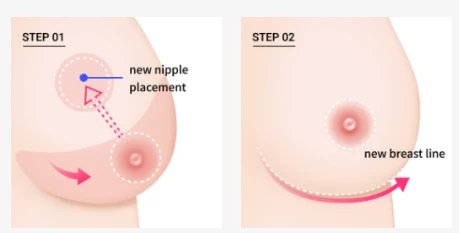
Breast lift surgery typically proceeds as follows:
- Anesthesia: Usually performed under general anesthesia, sometimes with combined twilight and local anesthesia
- Incision: Appropriate incisions based on the chosen lifting method
- Tissue repositioning: Restructuring and reshaping of breast tissue
- Excess skin removal: Elimination of sagging skin
- Nipple and areola repositioning: Movement to an appropriate position
- Suturing: Closure using techniques that minimize scarring
Surgery typically takes about 2-3 hours to complete.
Recovery Process and Return to Daily Activities
Immediately After Surgery to One Week
- Wearing a compression bra to reduce swelling and maintain shape
- Taking prescribed medications for pain management
- Elevating upper body during sleep
- Light activities permitted but limited arm raising
1-2 Weeks
- Return to daily activities possible
- Swelling and bruising begin to decrease
- Suture removal (unnecessary if absorbable sutures were used)
- Showering permitted (following doctor’s instructions)
3-4 Weeks
- Mild exercise can be started
- Continue wearing compression bra
- Begin scar management
1-3 Months
- Moderate intensity exercise permitted
- Final shape gradually begins to appear
- Sensation recovery progresses
6 Months to 1 Year
- Complete recovery and final results visible
- Scar maturation and progressive fading
Recovery after breast lift surgery varies between individuals, and following your surgeon’s instructions closely is what protects the result. MINE provides a systematic recovery program with structured post-surgical management and support. The post-surgical care program at mineclinic includes scar management, physical therapy, and consultation to help achieve optimal results.
Frequently Asked Questions
How visible are scars after breast lift surgery?
Scarring after breast lift surgery varies depending on the surgical method chosen. Periareolar lifts leave scars only around the areola, vertical lifts add a vertical scar line from the areola downward, and anchor lifts include a horizontal scar along the inframammary fold.
Most scars fade over time, and those around the areola often become nearly invisible due to the natural pigment boundary. Scar management products and sun protection help improve scar maturation and appearance. Modern techniques like 3D suturing and tension-free closure methods are also employed to minimize scarring.
Can I have breast augmentation performed simultaneously with a breast lift?
Yes, many patients undergo combined breast lift and augmentation procedures. This is a common choice, especially for women experiencing volume loss and sagging after pregnancy and breastfeeding. This approach allows simultaneous improvement of both breast position and size.
There are several approaches to combined procedures. For example, the internal bra technique creates an internal structure from autologous tissue to support the implant for more lasting results, while hybrid breast augmentation combines implants with fat transfer for a more natural feel and appearance. However, combined procedures are more complex than standalone surgeries, so consultation with an experienced board-certified plastic surgeon is essential to determine the most appropriate method for each individual.
How long do breast lift results last?
The durability of breast lift surgery results varies between individuals, but results generally last more than 10 years. However, natural changes may occur over time due to factors such as aging, gravity, weight fluctuations, pregnancy, and breastfeeding.
Recent advances have developed techniques to strengthen internal support structures. For example, mesh support techniques create internal support using bioabsorbable mesh, while dermal fixation directly anchors breast tissue to the chest wall for more durable results.
To maintain surgical results longer, healthy lifestyle habits, weight maintenance, and wearing supportive bras are important. Avoiding smoking and protecting skin from UV exposure also helps.
Is breastfeeding possible after breast lift surgery?
Whether you can breastfeed after breast lift surgery depends on the surgical technique and individual anatomical structure. Surgical techniques that preserve tissue around the nipple and areola increase the likelihood of breastfeeding. Particularly, glandular preservation techniques can improve appearance while maintaining functional aspects of the breast.
However, not all women can breastfeed after surgery. Extensive tissue repositioning may damage glandular tissue, which can affect breastfeeding ability. If you plan future pregnancies and breastfeeding, detailed consultation with your surgeon before surgery is recommended, and considering surgery after completing family planning may be preferable.
Conclusion and Importance of Expert Consultation
Breast ptosis is a natural phenomenon experienced by many women, but breast lift surgery corrects it reliably. Recent technological advances focus not just on skin tightening but on repositioning breast tissue itself and strengthening internal support structures. These developments allow for more natural results and long-term durability.
Each surgical method should be customized according to the patient’s degree of sagging, skin elasticity, breast size, and personal preferences. Breast lift surgery is more than simply elevating the breasts; it’s a complex procedure that comprehensively improves breast shape, size, symmetry, and nipple-areola complex position.
For successful breast lift surgery, consultation with an experienced board-certified plastic surgeon to develop a personalized surgical plan is essential. Communication with your surgeon helps establish realistic expectations and following pre- and post-operative instructions carefully contributes to good results.
mineclinic employs 3D modeling technology to plan breast lift surgery in advance and suggests optimal surgical methods based on each patient’s anatomical characteristics. For complex sagging cases, customized approaches combining multiple techniques are used to achieve the best results.
If you’re concerned about breast ptosis, consult with a specialist for accurate diagnosis and a customized treatment plan. Through professional consultation, you can find the most suitable surgical method for your needs and regain confidence in your daily life.
※ This content is for informational purposes only and does not replace professional medical advice, diagnosis, or treatment. Individual results may vary, and side effects may occur. Please consult with a board-certified plastic surgeon for personalized advice.
If you found this article helpful, please share it with others. For more information on plastic surgery and dermatology, visit the mineclinic blog.