EN
EN


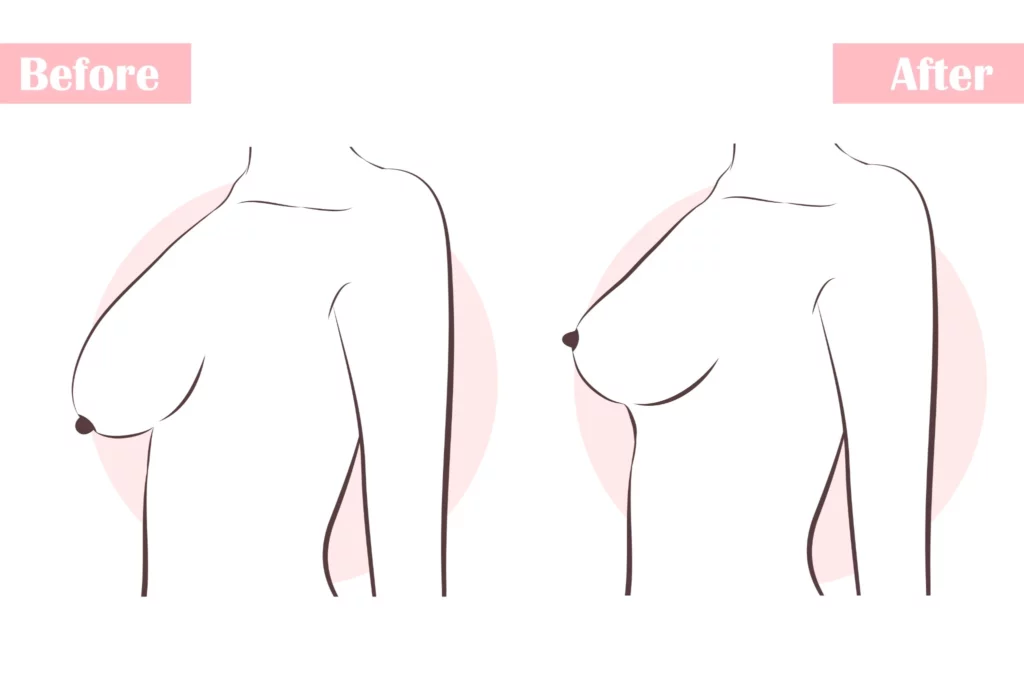
Breast reduction surgery (reduction mammaplasty) is an operation that removes excess breast tissue, fat and skin to make the breasts smaller, lighter and higher, while repositioning the nipple-areola on a pedicle that keeps its blood supply. Living with overly large breasts can cause real physical and emotional strain that shapes everyday life. This guide walks through who the operation helps, how it is done, how to prepare, the risks reported in surgical textbooks, and what recovery looks like.
Table of contents
Understanding Breast Reduction Surgery and Its Indications
In plain terms, the surgeon takes away the extra weight and reshapes what remains into a smaller, lifted breast. Breast reduction surgery is often performed for medical reasons—chronic pain, skin problems and limits on activity—rather than purely for appearance, and the American Society of Plastic Surgeons classes it as a reconstructive procedure.
When Breast Reduction Surgery May Be Necessary
You might consider breast reduction surgery if you experience:
- Chronic neck, shoulder, and back pain: Persistent pain caused by the weight of large breasts
- Poor posture: Hunched posture and related spinal problems due to breast weight
- Skin issues: Irritation, rashes, eczema, and other skin conditions under the breasts
- Activity limitations: Discomfort during exercise or daily activities
- Psychological burden: Stress from self-consciousness and unwanted attention
- Clothing difficulties: Trouble finding clothes and bras that fit properly

Benefits of Breast Reduction Surgery
The main benefits patients look for include:
- Reduced physical discomfort: Relief from neck, shoulder, and back pain
- Improved daily activities: Greater freedom of movement and ability to exercise
- Better posture: Less strain on the spine and shoulders
- Resolution of skin issues: Fewer rashes and less irritation under the breasts
- Enhanced psychological well-being: More confidence and a better body image
- Expanded clothing options: A wider choice of clothing styles
Most patients report meaningful relief from neck, shoulder and back pain after surgery, which is why reduction mammaplasty is often described as one of the more satisfying breast procedures.
Breast Reduction Methods and Types
The right technique depends on breast size, how much tissue needs to come out, and the quality and stretch of the skin. Before looking at each method, it helps to know that surgeons make two decisions, not one.
Incision Pattern vs. Pedicle: Two Separate Choices
The incision pattern is how the skin is cut—and therefore where the scars will sit. The pedicle is the column of tissue left attached to the nipple and areola so that its blood vessels and nerves stay connected while it is moved higher (common types are inferior, superomedial and medial). The two can be mixed and matched: the inverted-T pattern, for example, can be combined with any type of pedicle (Spears, Surgery of the Breast: Principles and Art).
| Skin incision pattern | Scar | Best suited for | Notes |
|---|---|---|---|
| Inverted-T (Wise / anchor) | Around the areola, down the lower breast and along the breast crease | Large reductions or significant sagging | Removes the most skin; longest scar |
| Vertical (lollipop) | Around the areola and straight down to the crease | Mild to moderate reductions | No crease scar; shape settles over weeks to months |
| Periareolar (donut) | Around the edge of the areola only | Small reductions | Shortest scar; limited amount can be removed |
| Free nipple graft | Usually inverted-T, plus a grafted nipple-areola | Very large breasts or poor blood supply to the nipple | Nipple sensation usually lost; breastfeeding not possible |
The incision pattern and the pedicle are two separate choices, and your surgeon will explain which combination fits your anatomy.
1. Anchor (Inverted-T) Incision
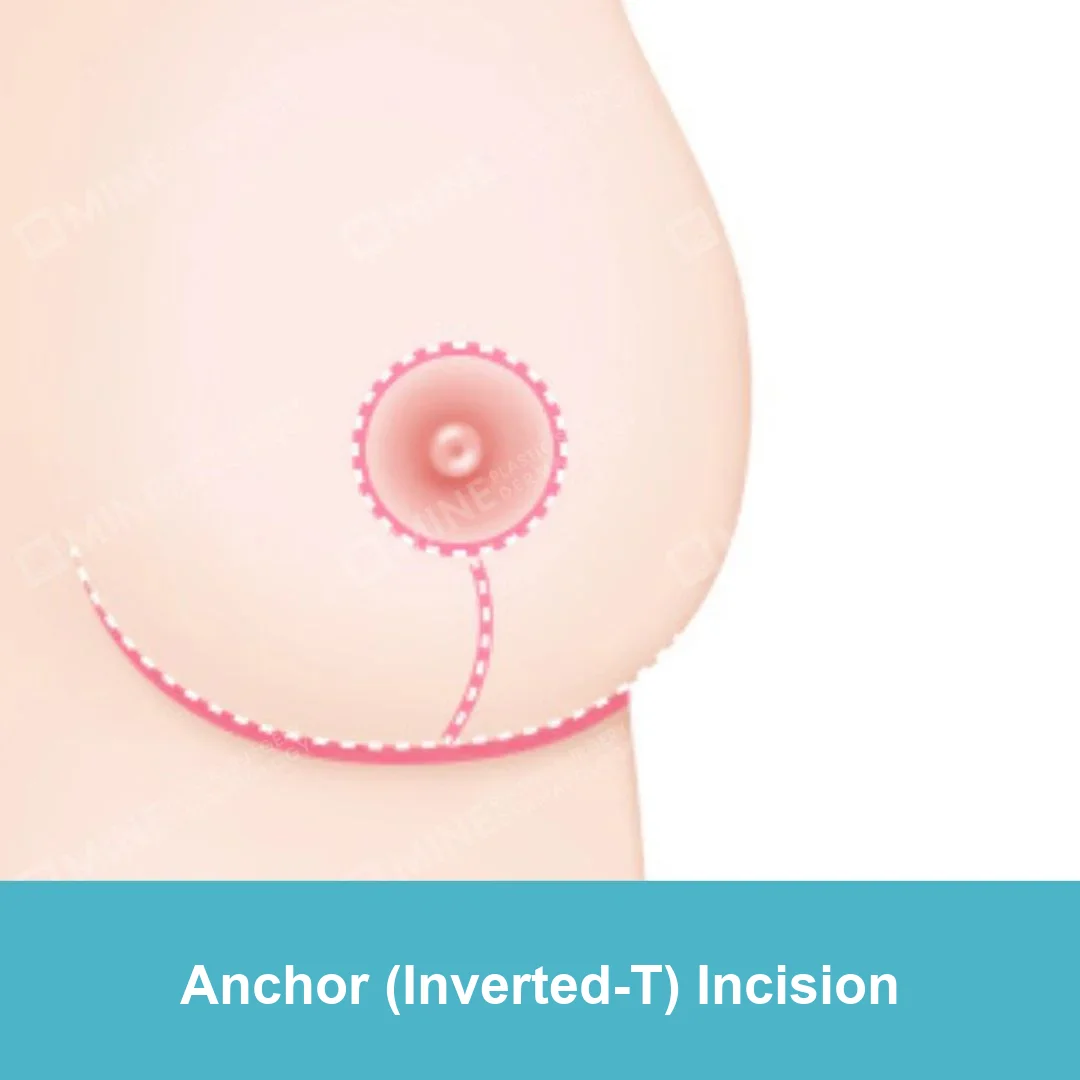
This is the most traditional and widely used technique. Paired with an inferior pedicle, the inverted-T has been a standard approach since the 1970s.
- Incision pattern: Around the areola, vertically from the areola to the breast crease, and horizontally along the crease (anchor shape)
- Suitable for: Medium to large reductions
- Advantages: Removes the most skin, useful for large reductions or significant sagging
- Disadvantages: The longest scar; textbooks also note that the classic Wise-pattern inferior pedicle does little to improve upper-breast fullness
2. Vertical (Lollipop) Incision
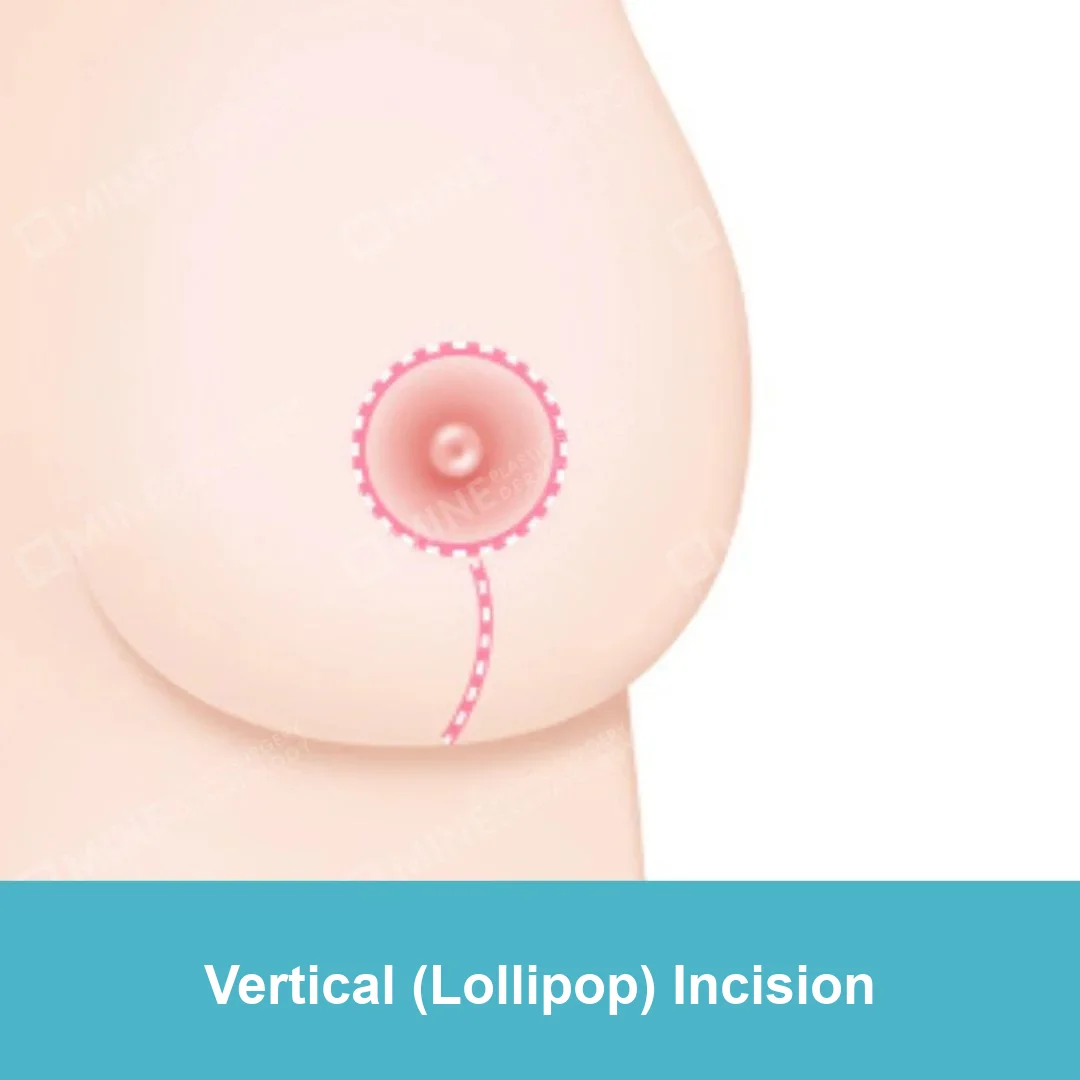
The vertical method narrows the breast and gains projection rather than width, so the lower breast becomes more conical and upper-pole fullness increases slightly. It is commonly combined with a superior or medial pedicle.
- Incision pattern: Around the areola and vertically from the areola to the breast crease (lollipop shape)
- Suitable for: Mild to moderate reductions
- Advantages: Shorter scar than the anchor technique, with no scar along the breast crease
- Disadvantages: Limited for very large reductions; right after surgery the breast can look unusual—fuller on top, flat underneath—and it settles into its final shape over weeks to months (Neligan, Plastic Surgery, Vol. 5)
3. Periareolar (Donut) Incision
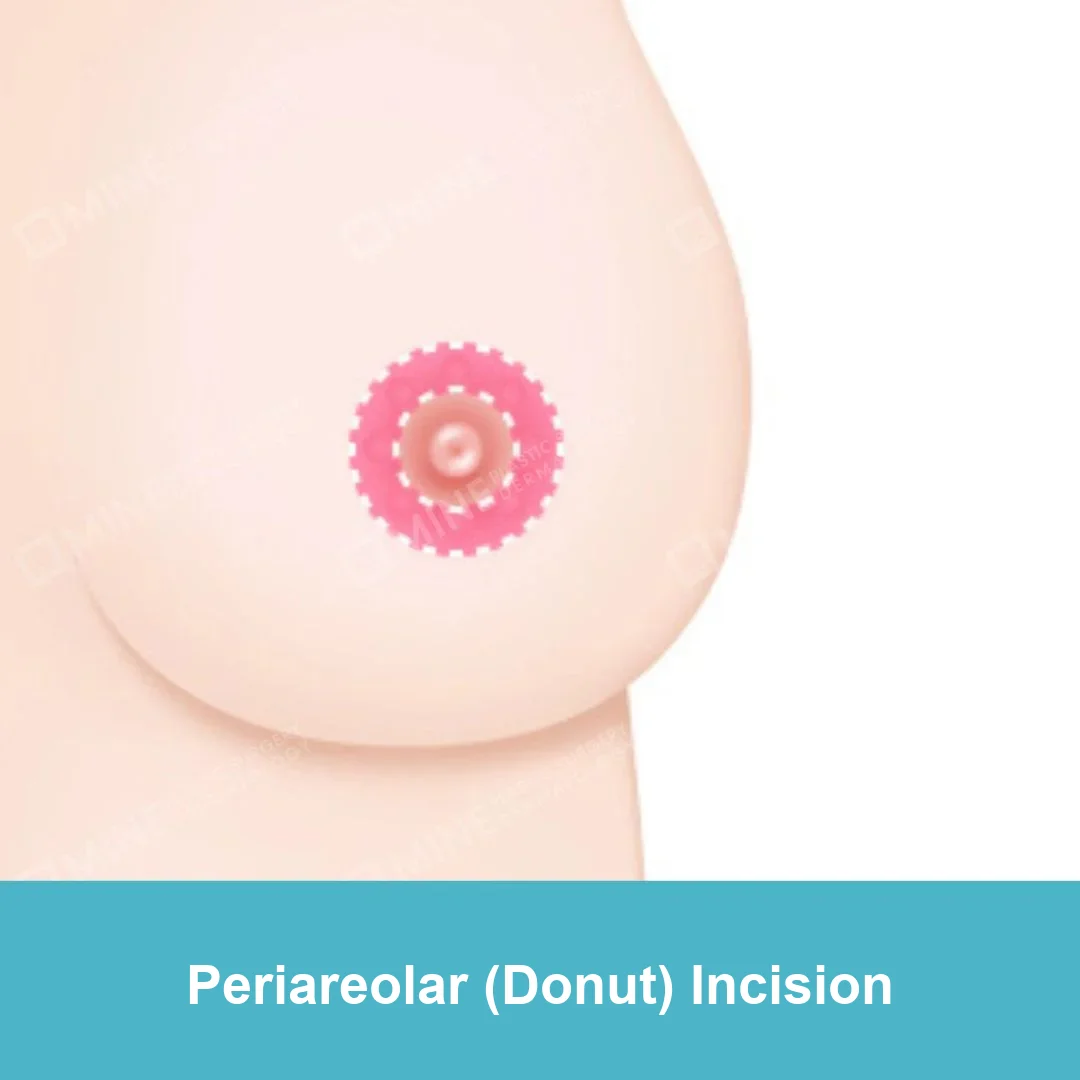
Suitable for small reductions:
- Incision pattern: Circular incision only around the areola
- Suitable for: Small reductions
- Advantages: Minimal scarring
- Disadvantages: Not suitable for large reductions
4. Free Nipple Graft
Used for very large breast reductions:
- Characteristics: The nipple and areola are removed and placed in their new position as a full-thickness skin graft, without a connecting column of tissue
- Suitable for: Very large breasts, or cases where the blood supply to the nipple would be at high risk
- Advantages: Allows very large reductions; graft failure is uncommon
- Disadvantages: The nipple usually has no sensation afterwards, breastfeeding is not possible, and loss of pigment (a lighter areola) is common
If you want to weigh these options side by side, you can compare breast reduction techniques in detail, including which body types each one suits.
How to Prepare for Breast Reduction Surgery
Good preparation makes surgery safer and recovery smoother:
Initial Consultation and Examinations
- Specialist consultation: Detailed discussion of goals, desired breast size, and surgical methods
- Medical history review: Current medications, allergies, existing conditions
- Physical examination: Breast assessment, measurements, photography
- Breast imaging: Mammogram or ultrasound to check breast health
- Blood tests: Evaluation of overall health and fitness for surgery
- Expectation setting: Agreeing on realistic outcomes
Two Weeks Before Surgery
- Medication adjustments: Stop aspirin, anti-inflammatory drugs and blood thinners (as directed by your doctor)
- Smoking cessation: Quit smoking as instructed by your surgeon. Smoking is an independent predictor of complications after breast reduction (Neligan), so stopping nicotine well before surgery matters
- Alcohol limitation: Reduce alcohol consumption
- Vitamins and supplements: Pause certain supplements such as vitamin E and omega-3 (check with your doctor)
One Week Before Surgery
- Home preparation: Get recovery essentials ready (front-opening clothes, medications, easy meals)
- Arrange help: Have someone available for the first few days after surgery
- Verify instructions: Review and follow all pre-operative instructions
- Health maintenance: Sleep well and eat a balanced diet
The Day Before Surgery
- Personal hygiene: Shower and use special soap if instructed
- Fasting: Typically no food or drink for 8 hours before surgery
- Medications: Take only medications approved by your doctor
- Rest: Get good rest and adequate sleep
What Happens During Breast Reduction Surgery?
The operation typically proceeds in the following steps:
Pre-Surgical Preparation
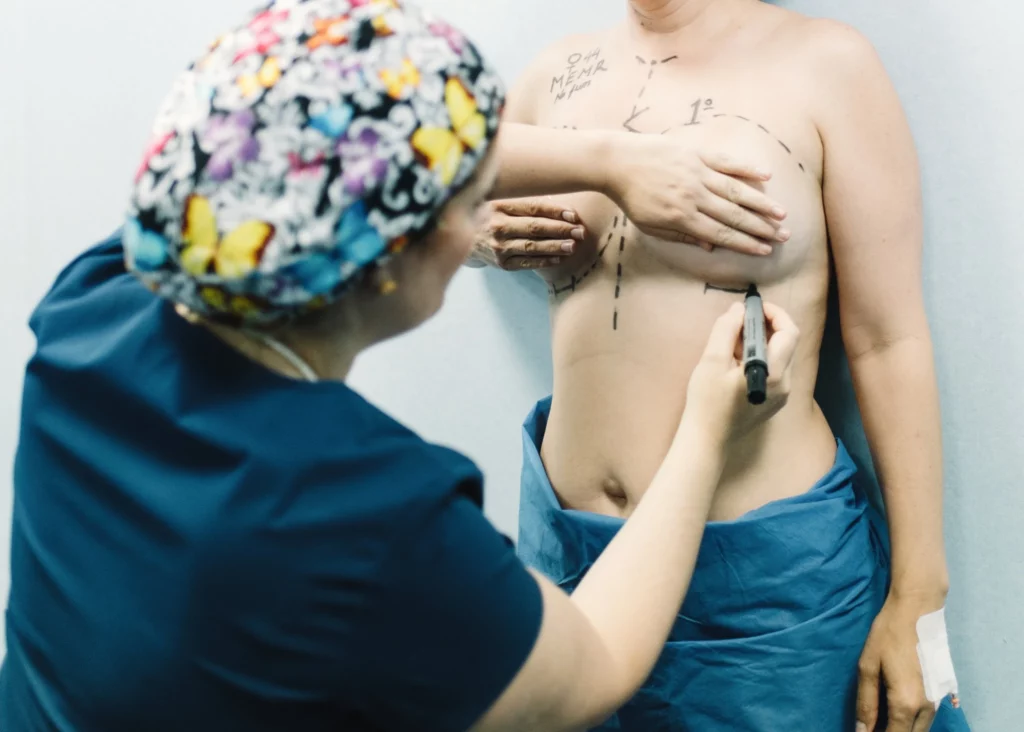
- Marking: While you are awake and standing, the surgeon marks the breast according to the surgical plan
- Anesthesia: Most procedures are performed under general anesthesia
- Sterilization: Thorough sterilization of the surgical area
Surgical Process
The details vary with the technique, but for the typical anchor incision method:
- Incision: Incisions are made according to the planned pattern
- Tissue removal: Excess fat, glandular tissue, and skin are removed
- Nipple repositioning: The nipple and areola are moved up on their pedicle to a suitable height
- Shape adjustment: The remaining breast tissue is shaped
- Suturing: Incisions are closed in layers
Surgery Duration and Hospital Stay
- Duration: Usually 2-4 hours
- Hospital stay: Typically outpatient or an overnight stay
At Mine Plastic Surgery in Gangnam, Seoul, Korea—led by board-certified plastic surgeon Dr. Lee Sung-wook—breast reduction surgery is planned around each patient’s body and goals, and the technique is chosen after examination rather than in advance.
Risks and Complications of Breast Reduction Surgery
Like any operation, breast reduction surgery carries risks. Numbers help put them in proportion. The BRAVO multicenter study reviewed 179 patients, most of whom had a Wise-pattern inferior pedicle reduction; with the Wise pattern, the overall complication rate was 37%. The single most common problem was delayed wound healing, at 20%, followed by stitches working their way out through the skin (“spitting sutures”) at 6%. Hematoma occurred in 3%, fat necrosis in 2%, and nipple necrosis and seroma in 1.4% each (Spears, Surgery of the Breast: Principles and Art, Lippincott Williams & Wilkins).
Early Complications
These appear in the first days or weeks after surgery:
- Bleeding or hematoma: A collection of blood that may need to be drained
- Seroma: A pocket of clear fluid under the skin
- Infection: Redness, warmth, fever or unusual discharge
- Wound separation: Small areas where the incision opens, most often where the scars meet
- Compromised blood supply: Part of the nipple-areola or skin edge may not get enough blood and can die off (necrosis)
In a study of 250 consecutive vertical-scar reductions, superficial wound separation was the most frequent complication, seen in 2.2% of breasts (Neligan, Plastic Surgery, Vol. 5: Breast).
Late Complications
Surgical textbooks list several issues that may show up months later:
- Too much or too little tissue removed, or left-right asymmetry
- Contour irregularities, fat necrosis (firm lumps of damaged fat) and thick scars
- Bottoming-out, where tissue drops below the nipple over time; changes in nipple position or shape; widening of the areola
- Altered nipple sensation and inability to breastfeed
What Raises the Risk
According to the textbook Plastic Surgery (Neligan), resections over 1,000 g per breast are linked to more wound separation and infection, and smoking is an independent predictor of complications. By contrast, hematoma, seroma, nipple necrosis and fat necrosis do not appear to depend on how much tissue is removed. Stopping smoking and keeping a stable, healthy weight before surgery are the risk factors you can control yourself.
Recovery Process After Breast Reduction Surgery
Recovery from breast reduction surgery varies between individuals, but most people return to light activity and desk work within about 1–2 weeks. The general timeline looks like this:
Immediately After Surgery to One Week
- Pain management: Moderate pain controlled with prescribed medication
- Drainage tubes: May be placed and are typically removed within 1-2 days
- Compression bra: Worn continuously to reduce swelling and support the wounds
- Rest and positioning: Minimal activity, sleeping with the upper body slightly raised
Weeks 1-4
- Return to routine: Light daily activities and desk work are usually possible in weeks 1-2
- Showering: Permitted with your doctor’s approval (usually after one week)
- Compression bra: Keep wearing it; by weeks 3-4 a supportive sports bra can replace it for part of the day
- Activity: Avoid heavy lifting and strenuous exercise; light walking can begin around weeks 3-4, with a follow-up visit to check healing
Months 1-12
- Months 1-3: Most swelling settles and most daily activities and exercise can be resumed
- Sensation: Most patients regain much of their nipple and breast sensation over 6–12 months, but some are left with permanently reduced or heightened sensation
- Final results: The final shape and size become apparent between 6 months and 1 year
- Scar maturation: Scars gradually become lighter and flatter
Throughout recovery, take medications exactly as prescribed, watch for signs of infection (fever, spreading redness, increased drainage, worsening pain), avoid straining the upper body and arms, and keep every follow-up appointment.
Our breast reduction recovery guide breaks this down week by week, including when you can drive, exercise and travel.
How Should You Manage Breast Reduction Scars?
Where your scars sit depends on the incision pattern: around the areola for every technique, down the lower breast for vertical and anchor patterns, and along the crease for the anchor. Scars are usually red and firm at first and fade gradually over about 12 months. A few habits help:
- Silicone sheets or gel once the wounds have fully closed
- Sun protection for healing scars
- Less tension on the incisions—no heavy lifting or stretching early on
- See your surgeon if a scar becomes raised, thick or itchy, as hypertrophic scars can be treated
For treatment options beyond the basics, read our complete guide to breast reduction scars.
Frequently Asked Questions About Breast Reduction Surgery
Is Breastfeeding Possible After Breast Reduction Surgery?
Summary: Many women can still breastfeed, but no technique can guarantee it.
Most reductions keep the nipple-areola attached to underlying tissue, which preserves some ability to breastfeed. Because glandular tissue is removed, milk supply may be lower. Pedicle techniques that keep the nipple attached give the best chance, but no technique can guarantee breastfeeding; inability to lactate is listed among the late complications. After a free nipple graft, breastfeeding is not possible.
Women who plan to have children should discuss this before surgery—our article on how breast surgery affects breastfeeding covers the details.
Will Sensation Return After Breast Reduction Surgery?
Summary: Most patients regain much of their sensation within 6–12 months, but permanent changes are possible.
Right after surgery, the nipple and breast skin may feel numb or less sensitive because of nerve stretching and swelling. Over time:
- 3-6 months: Sensation gradually returns in most patients
- 1+ years: Sensation returns close to normal for many patients; a minority are left with lasting numbness or oversensitivity
Altered nipple sensation is a recognized late complication in surgical textbooks. Recovery depends on the technique, how much tissue is removed and individual healing. A free nipple graft usually leaves the nipple without sensation.
How Long Do Breast Reduction Results Last?
Summary: The reduction is permanent, but the breasts still change with weight, hormones and age.
The removed tissue does not grow back, yet these factors can influence long-term results:
- Weight fluctuations: Significant weight gain can enlarge the breasts again (more on breast reduction and weight changes)
- Pregnancy and breastfeeding: Hormonal changes may alter size and shape
- Aging: Skin gradually loses elasticity
- Hormonal changes: Menopause or hormone therapy may cause changes
A stable weight, healthy habits and a well-fitting supportive bra help keep results long-lasting.
What’s the Difference Between Breast Reduction and Breast Lifting?
Summary: Breast reduction decreases size and weight, while a lift raises sagging breasts without making them smaller.
- Breast reduction:
- Main goal is reducing breast size and weight
- Removes glandular tissue, fat, and skin
- Includes nipple repositioning
- Addresses physical discomfort from large breasts
- Breast lift (mastopexy):
- Main goal is raising sagging breasts
- Improves shape without reducing size
- May include nipple repositioning if needed
- Mainly performed for cosmetic reasons
Because a reduction also raises the nipple and tightens the skin, it naturally includes a lifting effect—but a lift alone cannot reduce size and weight.
How Long Before Breast Reduction Surgery Should I Stop Smoking?
Summary: Stop several weeks before surgery, for the period your surgeon specifies.
Smoking is an independent predictor of complications after breast reduction, particularly problems with wound healing and blood supply to the skin and nipple. Most surgeons ask patients to stop all nicotine—including vaping and patches—some weeks before the operation and to stay off it during healing. Your surgeon will give you an exact timeframe at your consultation.
New Trends and Techniques in Breast Reduction Surgery
Techniques continue to evolve, mainly toward shorter scars and better shape.
Shorter-Scar Techniques
- Vertical pattern: Avoids the long scar along the breast crease
- Periareolar approaches: Keep the scar to the edge of the areola for suitable candidates
Liposuction-Assisted Techniques
- Useful for patients whose breasts contain a large share of fatty tissue
- Can complement traditional incisions and may reduce the extent of incisions in selected patients
Conclusion: A Choice for a Healthier, More Confident Life
Breast reduction surgery goes beyond appearance to improve quality of life for many women, easing the physical pain, activity limits and psychological burden that come with overly large breasts.
As this guide shows, breast reduction requires careful preparation, an informed choice of technique and attentive aftercare. From the incision pattern to scar care, the best plan is the one built around your body and goals.
If your breasts are causing you discomfort, a consultation is the first step. At MINE Clinic, our surgeons listen to your concerns and explain the options that suit you—book a breast reduction consultation to start.
※ This content is for informational purposes only and does not replace professional medical advice, diagnosis, or treatment. Individual results may vary, and side effects may occur. Please consult with a board-certified plastic surgeon for personalized advice.