EN


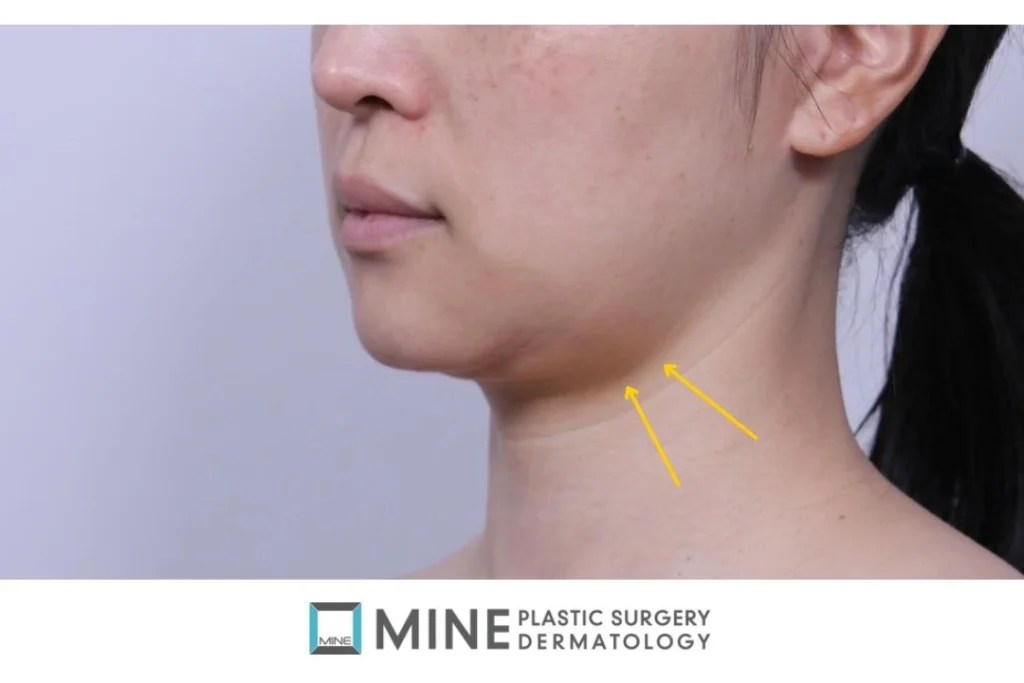
Is salivary gland removal worth it? Salivary gland removal is a surgery that reduces an enlarged submandibular gland through a small incision under the chin, and it is worth it only when that gland — not fat, loose skin, or a slack neck muscle — is what makes your double chin.
“Doctor, I’ve lost the weight, so why hasn’t my jawline come back?” I hear some version of this in my consultation room almost every week.
My honest answer is that the surgery is excellent for the right person and close to useless for the wrong one. The deciding factor is the cause. This article covers when the surgery pays off, three situations where it won’t fix your double chin, when you will actually see the new jawline, and how long the result lasts. For anatomy and surgical approaches in more depth, see our salivary gland removal surgery overview.
What Salivary Gland Removal Actually Changes in Your Jawline
Salivary gland removal changes one structure only: the part of the gland that pushes the skin outward below the jawbone. It does not remove fat, tighten skin, or lift a sagging neck on its own.
Where the Submandibular Gland Sits and Why It Shows Under the Chin
You have three pairs of major salivary glands. The parotid glands sit in front of the ears, the sublingual glands lie under the tongue, and the submandibular glands sit on each side just beneath the lower border of the jaw. That last pair is the one that matters for your profile.
Some people are simply born with larger submandibular glands. In others, the glands enlarge over time, and in my clinical experience frequent overeating, late-night eating, heavy drinking, and binge eating followed by vomiting are common patterns in these patients. Aging can also let the glands descend. When an enlarged gland sits low, it shows as a firm lump under each side of the jaw, and it becomes most obvious when you tilt your head back. It looks like a double chin, but it is not fat, which is why weight loss leaves it untouched.
Partial Reduction, Not Full Removal
The name “salivary gland removal” sounds more drastic than the cosmetic operation really is. At MINE, we remove only the portion of the submandibular gland that protrudes, and the rest of the gland stays in place and keeps working.
This is different from the full gland excision that head and neck surgeons perform for disease. Salivary gland surgery textbooks list salivary stones with chronic inflammation as the most common reason for removing the whole gland, followed by tumors, autoimmune conditions, unexplained enlargement, and severe drooling. A cosmetic reduction, by contrast, reshapes the area under the jaw while preserving function.
Patients often worry about a dry mouth. When you are resting, the submandibular glands produce a large share of your saliva, as standard references on the physiology of salivation (NCBI StatPearls) explain. However, a cosmetic procedure removes only part of the gland, and the parotid glands, the sublingual glands, and the remaining gland tissue keep producing saliva. If you want the full picture, I cover saliva function after submandibular gland surgery in a separate article.
Is Salivary Gland Removal Worth It for Your Double Chin? Match the Cause First
A double chin is a symptom, not a diagnosis. Four different tissues can create the same fullness under the jaw, and each needs a different fix. If the treatment doesn’t match the cause, even a well-performed operation will disappoint you.
The 4 Causes of a Double Chin and What Fixes Each
| Cause | What you notice | What fixes it |
|---|---|---|
| Excess fat under the skin | Soft, pinchable, thick across the whole area | Liposuction, weight loss |
| Enlarged submandibular gland | Firm lump on each side, more visible with your head tilted back | Salivary gland reduction or salivary gland Botox |
| Loose, sagging skin | Gets worse with age, loss of elasticity | Neck lift or facelift |
| Lax platysma muscle (the thin sheet of muscle at the front of the neck) | Visible bands or a loose, hanging neck | Platysma tightening |
Many people have more than one cause at the same time. For a closer look at how each one develops, see our guide to the five types of double chin.
When Salivary Gland Removal Is Worth It
In my practice, the surgery tends to be a good investment when several of these apply:
- You can feel a firm, rounded lump under one or both sides of the jaw.
- Your jawline hasn’t improved after weight loss or liposuction.
- The area under your jaw clearly bulges when you lift your chin.
- You’ve had salivary gland Botox two or three times and weren’t satisfied, or you are tired of repeating it.
- You are planning a neck lift or facelift and want the jawline refined in the same operation.
If that describes you, the surgery is usually worth it, because it removes the one structure that diet, exercise, and fat removal cannot reach.
3 Cases Where It Won’t Fix Your Double Chin
This is the part of the consultation I consider most important. Is the surgery worth it if the gland isn’t the problem? No. Here are the three situations where I advise patients against it, and why the result would fall short.
1. Your double chin is mostly fat. If the fullness is soft and you can pinch it, the bulk sits above the gland in the fat layer. Reducing the gland would leave that fat exactly where it is, so your profile would barely change. Liposuction under the chin is the right tool here.
2. Loose skin is the main problem. When skin has lost its elasticity, it hangs regardless of what lies beneath it. A mini neck lift or a facelift addresses the skin and the deeper support layers instead.
3. The platysma muscle has gone slack. If you see vertical bands or the neck droops when you look down, the muscle sling has loosened. The gland is not causing that shape, so removing part of it won’t restore the angle. Tightening the platysma is what makes the difference.
Signs the Swelling Is Temporary or the Gland Is Normal Size
Two more groups do not need surgery. First, some people notice puffiness under the jaw after a period of overeating or heavy drinking, and it settles again. That temporary enlargement usually responds to lifestyle changes or salivary gland Botox. Second, if your glands are a normal size, there is nothing to reduce, and an operation would add risk without adding benefit.
That is why the first step at MINE is always a hands-on physical examination and an ultrasound scan to measure the size and position of the glands. If fat, gland, and skin all contribute, we plan a combination rather than forcing one procedure to do everything.
How the Procedure Works at MINE
At MINE, most cosmetic salivary gland procedures take about 30 minutes to an hour through a 2.8–3 cm incision in the natural crease under the chin. Here is what happens on the day.
Step-by-Step: From Ultrasound to Closure
- Diagnosis: Ultrasound confirms the size and position of each gland and checks how much fat lies above it.
- Anesthesia: At MINE, the procedure is performed under sedation, so you sleep comfortably throughout.
- Incision: A small incision of about 2.8–3 cm follows the natural crease beneath the chin, where it is hard to see from the front.
- Partial gland reduction: Only the protruding portion of the gland is removed.
- Closure: The incision is closed carefully in layers to keep the scar as fine as possible.
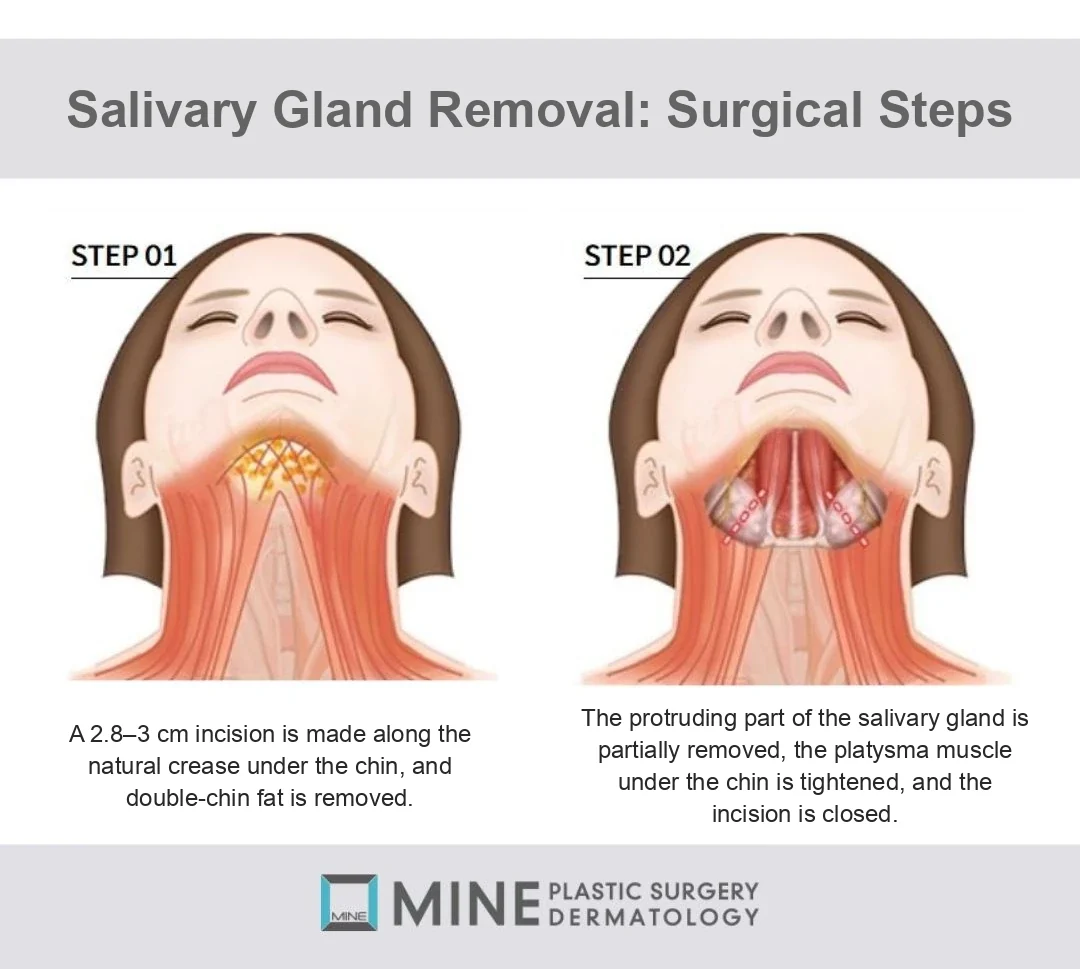
As the illustration shows, gland reduction is often combined with fat removal through the same incision and with tightening of the platysma muscle. Whether you need those extra steps depends on what your ultrasound and examination show.
Combining It With Liposuction, Platysma Tightening, or a Neck Lift
Because many double chins have mixed causes, combination surgery is common:
- Double chin liposuction when fat and gland both contribute.
- Platysma tightening when the neck muscle has loosened.
- Neck lift or mini neck lift for patients in midlife or later with loose skin.
When You’ll See Results and How Long They Last
The jawline you see in the mirror on day three is not your result. Swelling hides the change for a while, and judging too early leads to needless worry.
Recovery and Results Timeline
| When | What to expect |
|---|---|
| 3–5 days | Light daily activities are usually possible |
| 1–2 weeks | Most swelling and bruising settle; most activities can resume |
| 2–3 weeks | Strenuous exercise can usually restart |
| 2–4 weeks | Tightness eases; subtle swelling can last up to 4 weeks, and from here the new jawline can be judged |
| 1–2 months | Any temporary mouth dryness usually resolves |
| 6 months–1 year | The scar fades and becomes hard to notice |
Most swelling settles within 1–2 weeks, with subtle swelling lasting up to 4 weeks, after which the new jawline can be judged. For international patients, this means you can usually fly home within the first one to two weeks, but plan to assess the final shape at home a few weeks later. Recovery speed varies from person to person.
Are the Results Permanent?
Removed gland tissue does not grow back, so results are permanent, whereas salivary gland Botox lasts about 3–6 months. That is the main reason patients who have tried Botox several times move on to surgery: they want to stop repeating treatment.
So does the surgery pay off over the long run? When the gland is the true cause, the value builds over time, because one procedure replaces years of repeat injections.
What Can Still Change Your Jawline Later
“Permanent” applies to the reduction in gland volume, not to your whole neck. Weight gain can add fat under the chin, skin loses elasticity with age, and the platysma can loosen over the years. None of these involve the gland, and any of them can soften your jawline again. Keeping a stable weight is the best way to protect the result.
Risks and Precautions Before You Decide
Common Side Effects
| Symptom | How long it lasts | How to manage it |
|---|---|---|
| Swelling | 1–2 weeks (subtle swelling up to 4 weeks) | Cold compresses, keep your head raised |
| Bruising | 1–2 weeks | Fades on its own |
| Tightness or stiffness | 2–4 weeks | Eases gradually with time |
| Temporary dry mouth | 1–2 months | Drink plenty of water |
Less Common Risks: Nerve, Infection, Scarring
Nerve injury. A small branch of the facial nerve, the marginal mandibular nerve, runs near the gland and controls movement at the corner of the mouth. There is a risk of temporary weakness of this nerve, so an experienced surgeon plans the incision and dissection to stay clear of its path. Salivary gland surgery textbooks recommend placing the incision about 3 cm below the angle of the jaw in traditional gland excision for exactly this reason. Choosing a surgeon who performs this procedure regularly matters.
Infection. Surgical textbooks report wound infection in about 2–9% of traditional full gland excisions done for disease. That is a larger operation, so the figure cannot be applied directly to a cosmetic partial reduction, but it is a reminder to take infection seriously. If you notice redness, warmth, or discharge, contact the clinic right away. When treated early, infection usually clears within 1–2 weeks.
Scarring. Placing the incision in the natural crease under the chin and closing it precisely keeps the scar as discreet as possible.
Before and After Surgery Care
Before surgery:
- If you take blood thinners such as aspirin or warfarin, talk to our medical team before stopping them.
- For your safety under anesthesia, do not eat on the day of surgery.
- Avoid alcohol and smoking for 1–2 weeks beforehand.
After surgery:
- For the first 48 hours, apply cold compresses for 15–20 minutes at a time.
- Sleep with your head raised.
- Avoid strenuous exercise, saunas, and alcohol for one week.
- Choose soft foods.
- Contact us immediately if you have redness, warmth, or severe pain.
Salivary Gland Botox or Surgery: Which Gives Better Value?
Surgery is not the only way to shrink the gland. Surgical textbooks note that botulinum toxin injections are also used to treat excessive drooling, because the toxin reduces the gland’s activity; in cosmetic use it can also make an enlarged gland look smaller for a few months. Here is how the two compare.
| Salivary gland Botox | Salivary gland surgery | |
|---|---|---|
| Method | Injection | Surgery through a small incision |
| Anesthesia | Local or none | Sedation |
| Treatment time | 10–15 minutes | 30 minutes–1 hour |
| How long it lasts | 3–6 months (needs repeating) | Permanent |
| Downtime | Almost none | 1–2 weeks |
| Best for | Mild enlargement, or if you want to avoid surgery | Clear enlargement, or if you want a lasting change |
My usual advice is simple. If the enlargement is mild, start with Botox. If two or three sessions haven’t satisfied you, consider surgery. If you want a lasting result from the start, or you are already planning a neck lift or facelift, surgery is the more efficient choice. For a detailed decision guide, read our article on choosing between Botox and gland reduction.
Frequently Asked Questions About Salivary Gland Removal
How long do salivary gland removal results last?
The reduction in gland volume is permanent, because removed gland tissue does not grow back. Your jawline can still change later through weight gain, skin aging, or a loosening platysma, but those changes are unrelated to the gland.
When will I see my new jawline after salivary gland removal?
Most swelling settles within 1–2 weeks, and subtle swelling can last up to 4 weeks. After that you can judge the new shape fairly. The scar continues to fade for 6 months to a year.
Why didn’t losing weight get rid of my double chin?
Your double chin may come from an enlarged submandibular gland rather than fat. Gland tissue doesn’t shrink when you lose weight, so a firm bulge under the jaw often stays even after significant weight loss. An ultrasound can show which tissue is responsible.
Will I have a dry mouth after salivary gland removal?
Most patients don’t notice a lasting problem, because only part of the gland is removed and your other salivary glands keep working. Some people feel mild dryness at first, which usually resolves within 1–2 months.
Can salivary gland removal be combined with double chin liposuction?
Yes. When fat and an enlarged gland both contribute, doing them together usually gives a better result, and both can be done through the same small incision under the chin.
Is the scar from salivary gland removal visible?
The incision is about 2.8–3 cm long and follows the natural crease under the chin, so it is hard to see from the front. It fades gradually and is usually difficult to notice after 6 months to a year.
Find Out If Salivary Gland Removal Is Worth It for You at MINE
Salivary gland removal is not for everyone. When a careful diagnosis confirms that an enlarged gland is behind your double chin, though, it can achieve what weight loss and fat removal could not. Is salivary gland removal worth it in your case? The honest answer depends on what an examination and ultrasound show.
At MINE, I recommend this surgery only to patients whose glands are truly the cause. If you live abroad, you can start with an online consultation and send clear side-profile photos, including one with your head tilted back. Learn more about salivary gland reduction at MINE, or call us at +82-2-516-1175.
Written and reviewed by Dr. Lee Sung-wook, Board-Certified Plastic Surgeon, MINE Plastic Surgery & Dermatology | 813 Nonhyeon-ro, Gangnam-gu, Seoul | +82-2-516-1175
Sources: salivary gland surgery textbooks; physiology references on salivation; MINE clinical experience.
※ This content is for informational purposes only and does not replace professional medical advice, diagnosis, or treatment. Individual results may vary, and side effects may occur. Please consult with a board-certified plastic surgeon for personalized advice.