EN


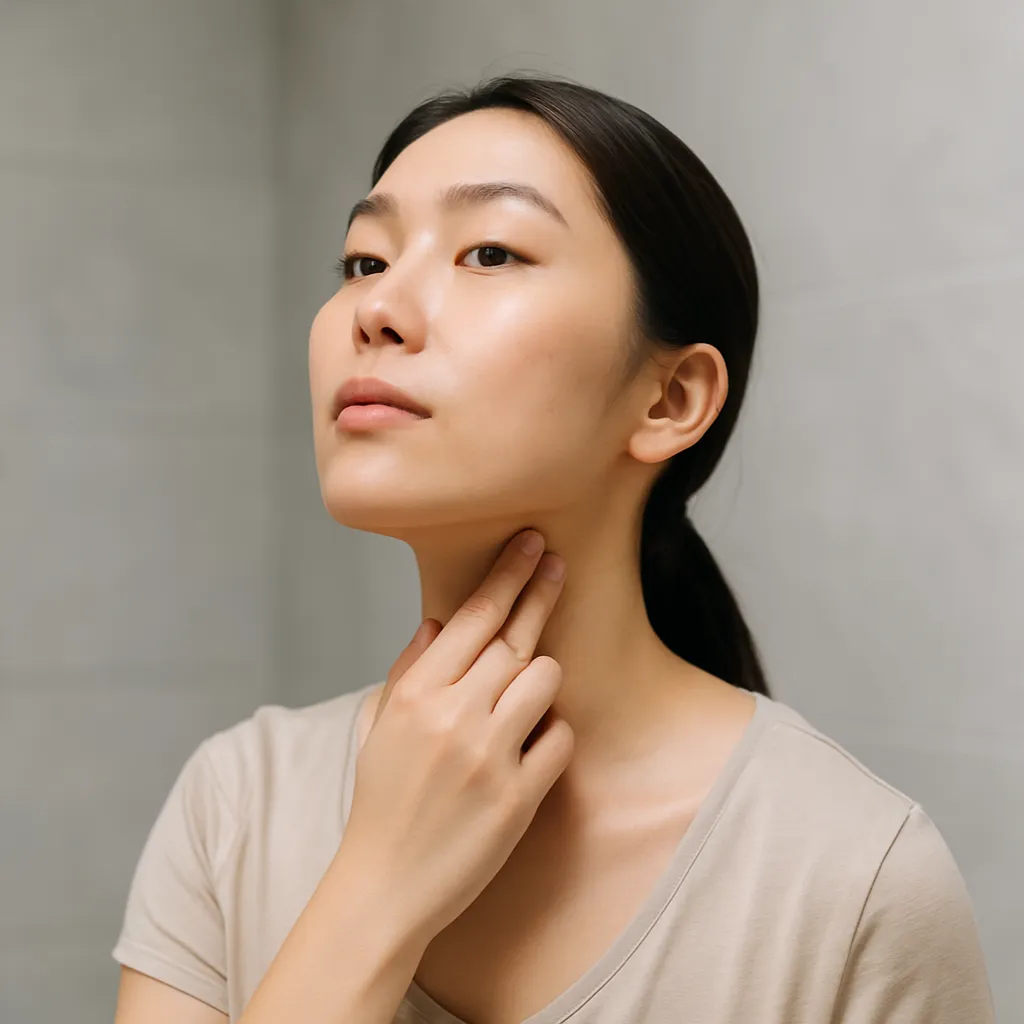
Salivary gland hypertrophy treatment is the medical approach to shrinking enlarged salivary glands — most often the submandibular glands under the jaw — that keep the jawline looking full even after you lose weight. Because the extra volume is gland tissue rather than fat, it needs a treatment that acts on the gland itself.
“I’ve lost weight everywhere except under my jaw.” I hear some version of this in my consultation room almost every week. The scale has moved, yet the lower face still looks round and the jawline stays soft. In many of these patients, the fullness is not fat at all but an enlarged salivary gland.
If you’re still not sure whether it’s fat or gland, we cover that comparison in a separate guide. This one picks up from there: choosing and preparing for salivary gland hypertrophy treatment. You’ll find a 7-point self-check, a Botox-versus-surgery decision table and a week-by-week recovery plan.
Why an Enlarged Salivary Gland Won’t Shrink With Weight Loss
Doctors call this kind of enlargement sialadenosis, or sialosis: a soft, painless swelling of the gland that is not caused by infection or a tumor. Salivary gland surgery textbooks describe it as non-inflammatory and non-cancerous, and the condition itself rarely causes health problems. For most people it is a question of appearance and comfort, not danger.
The Three Major Salivary Glands at a Glance
You have three pairs of major salivary glands. At rest, they share the work roughly like this (the figures are approximate and vary from person to person):
| Gland | Location | Share of resting saliva | How it looks when enlarged |
|---|---|---|---|
| Parotid | In front of and below the ear | About 25% | Lower face looks wider and more square |
| Submandibular | Under the jawbone | About 65% | Fullness under the jaw, a double-chin look |
| Sublingual | Under the tongue | About 10% | Rarely visible from the outside |
The submandibular glands make most of your saliva at rest, so when they enlarge, the area under the jaw looks noticeably fuller. That is why most salivary gland hypertrophy treatment for jawline concerns focuses on these two glands.
Why Losing Fat Can Make Glands Look Bigger
Gland tissue is made of cells that produce saliva, not fat cells that store energy. Dieting, fat-dissolving injections and liposuction all target fat, so they won’t shrink a gland. That is why salivary gland hypertrophy treatment has to act on the gland directly.
In fact, as the fat around the jaw thins out, an enlarged gland can stand out more than before. Patients often tell me their jaw looks “lumpier” after losing weight. That change is the gland becoming easier to see, not new fat.
What Causes Salivary Gland Hypertrophy? Lifestyle vs Inherited Factors
In my clinical experience, most patients with an enlarged gland share a few habits or inherited traits. Sorting them into two groups shows you which part you can actually change.
Lifestyle Triggers You Can Change
- Frequent spicy, salty or strongly flavored food
- Repeated vomiting after binge eating (bulimia or other eating disorders)
- Chewing gum or hard foods for long periods
- Regular drinking and smoking
- Chronic stress and overwork
- Not drinking enough water, leading to a dry mouth
Cutting back on these triggers supports any treatment and may slow further enlargement.
Inherited Factors You Can’t Change
- Family history — larger glands can run in families
- Individual differences in anatomy
- Tissue enlargement left behind by chronic salivary gland inflammation
Because these factors can’t be changed by habit, salivary gland hypertrophy treatment is often the practical option.
Why the Trigger Comes First
A salivary gland surgery textbook notes that this type of enlargement can improve once the underlying problem is controlled or a triggering medication is stopped. It also stresses that ruling out other conditions first helps patients avoid surgery they never needed. So before any salivary gland hypertrophy treatment, it is worth asking what is driving the swelling.
The same textbook is clear that binge-and-purge eating patterns need to be treated before gland surgery is considered. If that sounds familiar, you are not alone. Talking to your doctor or an eating-disorder specialist is a strong first step — it protects your health and helps any later treatment last.
7-Point Self-Check: Is Your Jaw Fullness an Enlarged Gland?
The 7 Signs (3 or More? Book a Consultation)
Before you look into salivary gland hypertrophy treatment, go through the list below and count how many apply to you:
- Your jaw area stays full even after dieting.
- There is a bulge below the ear or under the jaw.
- Jaw-slimming Botox made little or no difference.
- Your jaw looks more prominent after weight loss, not less.
- The line between your jaw and neck is hard to make out.
- Your mouth often feels dry, or you notice bad breath.
- You love strongly flavored food or chew gum often.
If three or more apply, a consultation is worthwhile. A checklist can’t diagnose anything, though — it only tells you whether an exam makes sense.
When Jaw Botox Did Nothing: A Gland Signal
Jaw-slimming Botox relaxes the masseter, the chewing muscle at the angle of the jaw. If several sessions changed nothing, the bulk may be gland rather than muscle. A quick check: clench your back teeth. Muscle turns firm and pops out, while an enlarged gland stays the same.
How a Surgeon Confirms It: Touch and Ultrasound
Diagnosis starts with palpation, which simply means feeling the area by hand. Fat feels soft and spreads under the fingers; an enlarged gland feels firmer with a clearer edge. An ultrasound scan then shows the size of the gland and rules out stones, inflammation or a lump.
For a step-by-step look at how to tell a double chin from an enlarged salivary gland, see our separate comparison guide. Once the gland is confirmed as the cause, the next question is which treatment fits.
Botox vs Gland Reduction: Choosing Your Salivary Gland Hypertrophy Treatment
Salivary gland hypertrophy treatment follows two main paths: a non-surgical injection and a surgical partial reduction. The right one depends on how large the gland is, how much it bothers you and how much downtime you can accept.
Salivary Gland Botox: The Non-Surgical First Step
Salivary gland Botox is the main non-surgical salivary gland hypertrophy treatment for an enlarged gland. Botulinum toxin (Botox) blocks the nerve signal that tells the gland to make saliva. With less work to do, the gland gradually becomes smaller, much as a muscle shrinks when it is used less.
Salivary gland Botox takes about 10–20 minutes and typically lasts several months to around a year. There is no incision and no scar, and most people return to their normal routine the same day. Because the effect wears off, it needs repeating, and it has limited impact on a very large gland.
Precision matters here. An aesthetic surgery textbook points out that the submandibular gland sits deep under a layer of tissue, with the mylohyoid muscle (the muscle that forms the floor of the mouth) running through it. Toxin placed in the wrong spot can make swallowing feel awkward for a while, so the injection needs careful guidance, ideally with ultrasound.
Partial Gland Reduction Surgery: For Moderate to Severe Enlargement
When Botox is not enough, or the gland is clearly large, the surgical form of salivary gland hypertrophy treatment removes part of the gland. Partial gland reduction uses a 2.2–3 cm incision hidden in the natural crease under the jaw and takes about an hour under sedation or general anesthesia. Recovery takes about 1–2 weeks.
The goal is to remove only the portion that creates the bulge. A recent aesthetic surgery journal review identifies this conservative, partial approach as the key to lowering the risk of saliva collecting under the skin. In one surgical series summarized in that aesthetic surgery journal review, injecting botulinum toxin onto the gland surface during surgery brought fluid collections and leaks down to about 2.4% of cases. The results are long-lasting, though they vary from person to person.
Side-by-Side: 5 Factors That Decide It
This table compares the two forms of salivary gland hypertrophy treatment on the factors patients ask about most:
| Factor | Salivary gland Botox | Partial gland reduction |
|---|---|---|
| How long it lasts | Several months to about 1 year | Long-lasting, varies by person |
| Procedure time | 10–20 minutes | About 1 hour |
| Anesthesia | Local or none | Sedation or general anesthesia |
| Recovery | Same day | About 1–2 weeks |
| Best fit | Mild enlargement | Moderate to severe enlargement |
A Simple Decision Path
For most people, deciding on salivary gland hypertrophy treatment follows this order:
- Confirm the cause. An exam and ultrasound show that the fullness really is gland.
- Mild, and you’d rather avoid surgery? Start with Botox.
- Not enough after a fair trial? Have your suitability for surgery assessed.
- Moderate to severe from the start? Discuss partial reduction directly.
If you have already tried injections, our guide on when salivary gland Botox isn’t enough explains what usually happens next.
When Fat or Skin Laxity Is Also Involved
Some necks have more than one issue. If excess fat or loose skin sits alongside the gland, fat removal, platysma (neck muscle) tightening or a neck lift can be combined with gland treatment in the same session, so that each layer gets the treatment it needs.
Risks and Recovery Timeline After Gland Reduction
Every operation carries some risks, and before any gland surgery I go through them openly with the patient. Knowing what is normal makes the first few weeks far less stressful.
Temporary Effects (Usually Settle in 2–4 Weeks)
- Bruising and swelling around the incision
- A stiff or tight feeling under the jaw
- Temporary dry mouth
Uncommon Complications to Discuss With Your Surgeon
- Nerve irritation: The marginal mandibular branch of the facial nerve (a small nerve that moves the corner of the mouth) runs close to the gland. Numbness or weaker lower-lip movement can occur, and in most cases it recovers within a few months. A recent literature review counted mandibular nerve injury in about 4% of reported cases.
- Sialocele (saliva pooling under the skin): In a published surgical series on submandibular gland reduction, fluid collections after surgery appeared in the first two weeks and had resolved by four weeks. They were managed with watchful waiting, needle drainage for comfort and Botox injected into the remaining gland.
- Thickened scar: This depends on your skin type and usually improves with scar care.
Recovery Week by Week
| When | What to expect |
|---|---|
| Surgery day | You go home the same day |
| Days 1–3 | Swelling and bruising peak; use cold compresses |
| Days 7–10 | Stitches removed; most daily activities possible |
| Weeks 2–4 | Most swelling gone; the new jawline starts to show |
| Months 1–3 | Final contour |
Stitches come out at 7–10 days, and most swelling settles within 2–4 weeks. The final shape takes one to three months to appear as the deeper tissue settles.
Will Removing a Gland Leave My Mouth Dry?
This is one of the most common worries I hear. Besides the three pairs of major glands, you have hundreds of minor salivary glands lining the mouth, and together they take over the work. Any temporary dry mouth after submandibular gland reduction usually resolves within 2–3 weeks.
Before and After Your Procedure: Preparation and Aftercare
A smooth recovery starts before surgery day. The steps below apply to gland reduction surgery; Botox needs far less preparation.
Two Weeks Before Surgery: How to Prepare
- Two weeks before, stop aspirin, omega-3 and other medicines or supplements that affect blood clotting. Never stop a prescription medicine without asking the doctor who prescribed it.
- The night before, avoid heavy drinking and get a full night’s sleep.
- Fast for at least 8 hours before surgery.
- Come without makeup and wear a comfortable top that opens at the front.
Week 1 Aftercare
- Keep your head raised above heart level to reduce swelling.
- Apply cold compresses to the area at regular intervals.
- Eat soft foods and avoid hard or spicy dishes.
- Limit long conversations and avoid opening your mouth wide.
Weeks 1–4: Getting Back to Normal
- Avoid intense exercise and saunas for at least 2 weeks.
- Avoid alcohol and smoking for at least 4 weeks.
- After the stitches come out, apply sunscreen carefully over the scar.
For a fuller checklist, see our guide to salivary gland surgery precautions.
Salivary Gland Hypertrophy Treatment: Frequently Asked Questions
How do I know if I need salivary gland hypertrophy treatment?
A surgeon can usually tell by touch — an enlarged gland feels firmer and more defined than fat — and an ultrasound confirms it. If repeated jaw Botox has done nothing, that is another sign. For background on what a double chin actually is, see our separate guide.
Is Botox or surgery better for an enlarged salivary gland?
The best salivary gland hypertrophy treatment depends on your gland. If the enlargement is mild and you would rather avoid surgery, Botox is a sensible first step. If it doesn’t give enough improvement, a surgeon can assess whether partial gland reduction suits you.
How long does salivary gland Botox last?
Usually several months to about a year, though this varies from person to person. Because the effect fades, most people need repeat sessions to maintain it.
Will the scar from salivary gland reduction be visible?
The incision is under 3 cm and placed in the natural crease under the jaw, so it is hard to see from the front and fades over time. How it heals depends on your skin, and some people develop a thicker scar that needs extra care.
Can salivary gland reduction make my face asymmetrical?
Both sides are usually treated together and planned for balance. Any existing difference between the left and right glands is measured beforehand and factored into the plan.
Can salivary gland hypertrophy be prevented?
Cutting back on strongly flavored food and gum, drinking enough water, limiting alcohol, not smoking and managing stress can all help. Once a gland has already enlarged, though, lifestyle changes alone rarely bring it back to its original size, which is where salivary gland hypertrophy treatment comes in.
Start With an Accurate Diagnosis
A full jaw that won’t respond to dieting or jaw Botox is often a gland issue, and the right salivary gland hypertrophy treatment depends on getting that diagnosis right. At MINE, every assessment combines a hands-on exam with ultrasound so the plan matches what is actually under the skin. You can read more about salivary gland reduction at MINE, including who it suits and how the procedure works.
If you live abroad, you can start with an online consultation with MINE in Seoul. Send clear front and side-profile photos, and I can tell you whether your jaw fullness is likely to be caused by the gland before you travel. You can also reach us by phone at +82-2-516-1175.
Written and reviewed by Dr. Lee Sung-wook, Board-Certified Plastic Surgeon, MINE Plastic Surgery & Dermatology | 813 Nonhyeon-ro, Gangnam-gu, Seoul | +82-2-516-1175
※ This content is for informational purposes only and does not replace professional medical advice, diagnosis, or treatment. Individual results may vary, and side effects may occur. Please consult with a board-certified plastic surgeon for personalized advice.