EN


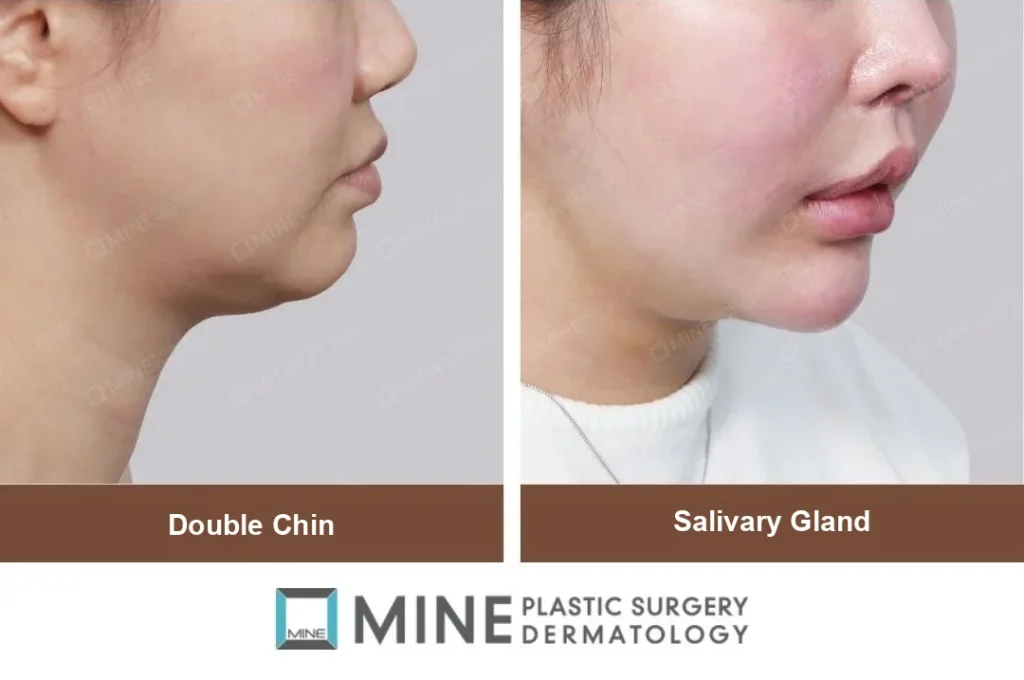
The difference between a double chin and salivary gland enlargement comes down to tissue: a double chin is a soft build-up of fat and loose skin under the chin, while enlarged salivary glands are firm submandibular glands sitting just inside the jawbone on both sides. In the double chin vs salivary gland comparison, the two can look almost identical in a side profile, but they are fixed in completely different ways.
“I’ve dieted for months and the area under my chin won’t budge.” “From the side, my jaw just blends into my neck, so I avoid photos.” I hear some version of these two comments in consultations almost every week, and I understand the frustration behind them.
What many patients don’t realize is that the bulge they call a double chin is not always fat. In my clinical experience, a good number of people who come in convinced they have a double chin actually have enlarged salivary glands, or a mix of both. Getting the double chin vs salivary gland question right matters, because a treatment aimed at the wrong tissue simply won’t work.
Below is my guide to double chin vs salivary gland: how to tell them apart, what causes each, and which treatment fits each.
Double Chin vs Salivary Gland: 5 Key Differences at a Glance
The most common misunderstanding I see is the belief that any fullness under the jaw must have the same cause. It doesn’t. The table below compares double chin vs salivary gland enlargement on the five points that matter most when you are deciding what to do next.
| Feature | Double chin | Enlarged salivary glands |
|---|---|---|
| What it is made of | Fat under the skin, plus loose skin and a relaxed neck muscle (platysma) | Enlarged submandibular glands, the salivary glands under each side of the jaw |
| How it feels | Soft and squishy | Firm, rubbery, like a defined lump |
| Where it sits | A broad area from under the chin tip to the front of the neck | On both sides, just inside the jawbone, more localized |
| Effect of weight loss | May improve somewhat as you lose weight | Stays the same regardless of weight |
| Main treatment | Liposuction, platysma tightening, neck lift | Submandibular gland removal (partial or full, depending on the diagnosis) |
If you remember one row, make it the third. Fat spreads across the middle under your chin; glands sit left and right, tucked just inside the jawbone. When I’m sorting out double chin vs salivary gland, location is often my first clue.
Dr. Lee’s Key Point: A double chin and enlarged salivary glands can look alike, but the tissue causing the bulge is different. Treating without an accurate diagnosis rarely gives the result you were hoping for.
For a deeper look at why a double chin can appear even when you’re slim, see our separate guide. Here, I keep the causes brief and focus on double chin vs salivary gland differences.
What Causes a Double Chin?
A double chin rarely has a single cause. Medical textbooks group the causes of a double chin into 4 categories: fat under the chin, a loose platysma muscle, the structure of the jaw, and the position of the hyoid bone. Each calls for a different approach, so the double chin vs salivary gland comparison is only the first step of a diagnosis.
Excess Fat Under the Chin
When fat builds up under the chin and along the front of the neck, the jawline loses its sharp edge. This fat resists diet and exercise, so plenty of slim people still have fullness here.
Surgical literature describes 3 distinct layers of neck fat. The first sits between the skin and the platysma muscle. The second lies under that muscle, and the third sits even deeper. Standard liposuction mainly reaches the top layer, so if much of your fullness sits deeper, liposuction alone may change less than you expect.
Loose Skin and a Relaxed Platysma Muscle
The platysma is the thin sheet of muscle covering the front of the neck. With age, the skin under the chin loses collagen and elastic fibers, and the platysma loosens and can separate in the middle. No diet tightens that kind of sagging.
This often starts to show in the late 30s. After 50, skin and deeper layers tend to sag together, which calls for lifting rather than fat removal alone.
Jaw and Hyoid Bone Structure
A short or set-back lower jaw can make the jawline look weak even with little fat. In that case, fat removal helps only so much, and the bone itself may need attention.
The hyoid bone (a small U-shaped bone in the upper neck) matters too. Published plastic surgery reviews note that when the hyoid sits in a normal, high position, removing fat under the chin can improve the angle markedly. When it sits low, fat removal alone gives only a modest change. That is why, whenever I assess fullness under the jaw, I examine the whole neck.
Dr. Lee’s Key Point: Fat, skin elasticity, a loose platysma and bone structure usually act together in a double chin, so each person needs an individual assessment.
What Causes Enlarged Salivary Glands Under the Chin?
You have a pair of submandibular glands, one under each side of the jaw, sitting just inside the jawbone. When they grow larger than usual, they push the area under the jaw outward on both sides, a fullness easily mistaken for fat. This is the gland side of the story.
Naturally Large Glands (Constitutional Enlargement)
In our clinic, the most common pattern we see is glands that have simply been on the larger side since adolescence, with no illness behind them. Many patients say the fullness appeared in their teens or early twenties and never changed with their weight.
Medical textbooks use the term sialadenosis for a long-lasting, even swelling of a salivary gland that is not caused by infection, inflammation or a tumor. Under the microscope, the gland cells that make saliva become larger. Textbooks note it affects the parotid glands (in front of the ears) more often than the submandibular glands, one more reason a proper exam matters.
Repeated Stimulation of the Glands
Habits that keep the glands producing a lot of saliva, such as often eating sour or very spicy food, or long-standing inflammation in the mouth, may contribute to enlargement over time. They are possible contributors, not proven causes. Textbooks also link certain medications, including some blood pressure medicines, to gland swelling, so mention any regular medication at your consultation.
Other Medical Causes That Need Imaging
Less often, swelling under the jaw comes from a stone in the gland’s duct (salivary stones), chronic inflammation of the gland (sialadenitis), swollen lymph nodes, or, rarely, a growth in the gland. Salivary gland textbooks stress that these must be told apart from simple enlargement. A painful swelling that grows around mealtimes, or one that appears only on one side, should be checked with ultrasound or CT before any cosmetic plan is made.
Dr. Lee’s Key Point: Dieting and skin treatments don’t shrink an enlarged gland, because the bulge isn’t fat. If the fullness has stayed the same through weight changes, the gland is worth checking.
Is It a Double Chin or Enlarged Salivary Glands? 3 Simple Self-Checks
A few checks at home can point you in the right direction. They are not a diagnosis; a specialist’s exam and imaging confirm it. But they help you see the double chin vs salivary gland difference on your own face.
Check 1: Tilt Your Head Back
Look up toward the ceiling and watch the area under your chin in a mirror, or ask someone to take a side photo.
- If it’s fat: the fullness spreads out and flattens as the skin stretches.
- If it’s a gland: a firm bulge stays visible on each side, just under the jawline.
Check 2: Feel Along the Inside of Your Jaw
Place your fingertips under the angle of your jaw and press gently inward, just inside the bone.
- If it’s fat: it feels soft, and you can pinch it.
- If it’s a gland: you feel a round, firm lump on each side that doesn’t pinch like fat.
Check 3: Notice What Happens When You Lose Weight
Think back to times when your weight changed.
- If it’s fat: the area under your chin shrank along with the rest of your body.
- If it’s a gland: the fullness stayed exactly the same, whatever the scale said.
Many people have both: enlarged glands plus some fat under the chin, which makes home checks confusing. That is why, when someone asks me “double chin vs salivary gland?”, I confirm the answer with ultrasound before planning anything. You can read more about why an ultrasound consultation matters in our separate article.
Dr. Lee’s Key Point: If you can feel a firm lump on both sides under your jaw, consider enlarged salivary glands and have a specialist settle the double chin vs salivary gland question before choosing a treatment.
Treatment Paths: Double Chin Surgery vs Salivary Gland Removal
Once the cause is clear, the treatment follows. Here the double chin vs salivary gland distinction starts shaping your surgical plan.
For a Double Chin: Platysma Tightening
When the problem is a platysma muscle that has loosened and separated in the middle, platysma tightening can be effective. Through a small incision under the chin, the muscle edges are brought together in the center and secured, sharpening the border between jaw and neck. It suits people with little fat whose jawline still looks blunt in profile, and fat under the chin can be removed at the same time if needed. You can learn more about Korean double chin surgery at MINE on our procedure page.
For a Double Chin With Sagging: Mini Neck Lift or Face and Neck Lift
When loose skin or a relaxed platysma comes with the fat, liposuction alone is not enough. A mini neck lift uses a short incision behind the ear to lift skin and muscle together for a more natural, longer-lasting result.
For people over 50 with significant loss of skin elasticity, or sagging across the whole neck, a combined face and neck lift is often the most effective option. It lifts the SMAS (the supporting layer beneath the facial skin) as well as the skin, treating sagging at a deeper level. For general background, see the American Society of Plastic Surgeons’ overview of neck lift surgery.
Dr. Lee’s Key Point: Fixing a double chin is rarely as simple as “just remove the fat.” The extent of surgery should be decided by looking at the skin, the supporting layers and the bone structure together.
For Enlarged Glands: Submandibular Gland Removal
When the glands are the cause, Botox can shrink the glands temporarily, but removing the enlarged tissue is the most reliable lasting solution. You can read about submandibular gland removal at MINE on our procedure page.
Submandibular gland removal is done through an incision of about 3–4 cm hidden in a natural crease under the jaw. The key is protecting nearby nerves. Surgical textbooks name 3 nerves to preserve: the small branch of the facial nerve that moves the corner of the mouth (the marginal mandibular branch), the nerve that gives feeling to the tongue (the lingual nerve), and the nerve that moves the tongue (the hypoglossal nerve).
For a full walkthrough of the gland procedure itself, read our salivary gland reduction guide.
Dr. Lee’s Key Point: In gland surgery, protecting the nerves comes first. Choose a surgeon with extensive experience in the anatomy of this area.
When You Have Both: Combined Surgery
In my experience, the combined type, with enlarged glands and fat under the chin together, is more common than glands alone. In these cases, gland removal and liposuction under the chin can be done in the same operation. You go through one recovery instead of fixing one problem and discovering the other later. In a combined case, double chin vs salivary gland is not an either-or choice.
Recovery Side by Side: Double Chin Surgery vs Gland Removal
I don’t think it’s fair to talk only about benefits. Here is a realistic look at recovery and side effects, so you can compare the double chin vs salivary gland options honestly.
| Time after surgery | Double chin surgery (liposuction or lifting) | Salivary gland removal |
|---|---|---|
| Days 0–3 | Bruising and swelling at their peak; compression garment needed | Swelling and stiffness under the jaw; a small drain stays in place |
| 1–2 weeks | Bruising fades; return to daily life (2 weeks recommended after lifting) | Drain and stitches removed; return to daily life |
| 1–3 months | Remaining swelling settles and the jawline takes shape | The incision scar gradually fades |
| 6 months | Final result visible | Scar keeps fading |
Double chin vs salivary gland surgery: the pace of recovery is similar, and most people are back to daily activities within 1–2 weeks.
Double Chin Surgery Recovery Timeline
The first few days are the hardest. Wear the compression garment as instructed, and if you had a lift rather than liposuction alone, plan for the full 2 weeks off.
Salivary Gland Removal Recovery Timeline
The area under the jaw feels swollen and stiff at first, with a small drain in place. The drain and stitches come out within 1–2 weeks, and the scar fades over 1–3 months.
Possible Side Effects of Each
Double chin surgery: temporary numbness or tingling, a collection of blood under the skin (hematoma), asymmetry, and thickened scars are possible. Rare complications include skin necrosis (loss of a small area of skin) and nerve injury.
Salivary gland removal: temporary numbness around the mouth, bruising and swelling under the jaw, and a temporary drop in saliva are possible. Rarely, injury to the marginal mandibular nerve can cause an uneven smile at the corner of the mouth. This is usually temporary, and very rarely permanent.
Plastic surgery guidelines generally stress thorough explanation and informed consent before surgery and regular follow-up afterward to keep side effects to a minimum. At MINE, we schedule regular follow-up visits during recovery for that reason.
Dr. Lee’s Key Point: Side effects are always possible, but with an accurate diagnosis, careful surgery and attentive aftercare, most people recover safely.
Before and After Surgery: What Your Surgeon Will Ask You to Do
Whether it turns out to be fat, glands or both, the same basic preparation and aftercare apply.
Before Surgery
- Stop smoking at least 2 weeks before surgery. Smoking reduces blood flow, slows healing and raises the risk of complications.
- Review your medications. Aspirin, omega-3 and vitamin E can increase bleeding, so check with your doctor about stopping them 1–2 weeks before surgery.
- Share your health history. Tell your surgeon about conditions such as high blood pressure, diabetes or thyroid disease in advance.
After Surgery
- Wear the compression garment for the full period you are told, to limit swelling and bleeding.
- Keep your head raised. Sleep with extra pillows so your head stays above your heart; this helps swelling go down.
- Eat soft food at first after gland removal, and avoid very sour food in the early days.
- Avoid alcohol, saunas and intense exercise for at least 4 weeks.
Small habits like these make a real difference to how smoothly you heal.
Dr. Lee’s Key Point: Aftercare matters as much as the surgery itself. Following your surgeon’s instructions closely improves both the speed of recovery and the final result.
Frequently Asked Questions
Double chin vs salivary gland: how can I tell which one I have?
Fat feels soft, spreads across the middle of the area under the chin and changes with your weight. An enlarged gland feels like a firm lump on each side, just inside the jawbone, and stays the same when you lose weight. Ultrasound settles the double chin vs salivary gland question, and many people turn out to have both.
Will my double chin come back if I gain weight after liposuction?
Liposuction removes fat cells from the area, so the same amount of fat is unlikely to build up there again. However, if you gain a lot of weight, the fat cells that remain can grow larger and some fullness may return. Keeping a stable weight helps protect the result.
Will removing a salivary gland give me a dry mouth?
Rarely enough to notice in daily life. Besides the submandibular glands, you have parotid glands, sublingual glands and hundreds of tiny salivary glands in the mouth. Temporary dryness after gland removal usually settles within 2–4 weeks because the remaining salivary glands compensate.
Can Botox shrink enlarged salivary glands instead of surgery?
Botox can shrink an enlarged salivary gland by temporarily reducing its activity, but the effect typically fades after 4–6 months, so injections must be repeated. If the glands are significantly enlarged, the result may be limited. For a lasting change, gland removal is the more suitable option.
Can double chin surgery and salivary gland removal be done at the same time?
Yes. When both fat and glands contribute, doing them together is often recommended, because you go through a single recovery. Before surgery, an accurate diagnosis of how much each one contributes is essential, because that is what the surgical plan is built on.
Will the scars from double chin or gland surgery be visible?
Platysma tightening uses a very small incision of about 3–5 mm in the natural crease under the chin, so the scar is barely noticeable. Gland removal also uses a crease under the jaw, and the scar fades over time. For lifting procedures, the incision sits behind the ear and is usually hidden by hair.
Getting the Diagnosis Right Is the First Step to a Defined Jawline
Double chin vs salivary gland enlargement: the two may look alike, but the tissue behind them, and the right fix, are completely different. Rather than assuming “it’s probably just a double chin,” let the answer come from a specialist’s examination. That is the surest path to a result that fits your face.
The right procedure depends on your bone structure, where your fat sits, your skin elasticity and the size of your glands. At MINE Plastic Surgery in Seoul, I examine the area by hand and with ultrasound before recommending anything, so the plan targets the tissue truly causing the fullness. Knowing whether fat, glands or both are behind the fullness is where every good jawline plan begins.
If you are abroad and still wondering “double chin vs salivary gland: which one do I have?”, you can start with an online consultation. Send clear front and side photos of your jawline so I can take a first look before you travel. You can also reach us by phone at +82-2-516-1175.

Written and reviewed by Dr. Lee Sung-wook, Board-Certified Plastic Surgeon, MINE Plastic Surgery | 813 Nonhyeon-ro, Gangnam-gu, Seoul | +82-2-516-1175
Sources: Salivary gland surgery textbooks (sialadenosis and submandibular gland chapters); aesthetic surgery textbooks (causes of the double chin and neck fat anatomy); plastic surgery literature reviews on the aging neck; MINE Plastic Surgery clinical experience.
※ This content is for informational purposes only and does not replace professional medical advice, diagnosis, or treatment. Individual results may vary, and side effects may occur. Please consult with a board-certified plastic surgeon for personalized advice.