EN


Mini facelift recovery time at MINE Plastic Surgery is about 5 days until light daily activities, 7–10 days until stitch removal, 1–2 weeks for most swelling and bruising to settle, and 3–6 months for the final jawline and cheek contour. How fast you heal depends on your general health, your skin and how widely the SMAS layer was released.
“How many days off work do I actually need?” That is usually the first question patients ask me in consultation, and for international patients it comes with a second one: “When can I fly home?” A mini facelift is still surgery, so it helps to know in advance what each week of healing looks like and which milestones you can plan around.
I’m Dr. Lee Sung-wook, a board-certified plastic surgeon at MINE Plastic Surgery & Dermatology in Seoul. This guide focuses on timing: what you will notice from day 1 to month 6, and when work, hair washing, exercise and travel become realistic. For the detailed day-by-day care routine, see our mini facelift aftercare checklist.
Table of Contents
Table of Contents
Mini Facelift Recovery Time at a Glance
At MINE, light daily activities are usually possible about 5 days after a mini facelift. The table below summarizes the typical flow, based on MINE’s surgical information and post-operative instructions. Everyone heals a little differently, so treat these as planning ranges rather than fixed dates.
| Milestone | Typical timing at MINE (varies by individual) |
|---|---|
| Surgery time and anesthesia | About 1 hour, IV sedation |
| Discharge | Same day |
| Light daily activities | From about day 5 |
| Stitch removal | About day 7–10 |
| Most swelling and bruising settled | 1–2 weeks |
| Light walking | From week 1–2 |
| Strenuous exercise | From about 1 month |
| Sauna and jjimjilbang | Avoid for 1 month |
| Residual swelling and final contour | 3–6 months |
| Follow-up visits | About 3 |
One point is easy to misread: “about 5 days” is when a light routine becomes possible, not when the swelling and bruising are gone. If you have an important event such as a wedding, a presentation or a return flight, please tell our team at your consultation so we can plan the surgery date around it.
What Is a Mini Facelift — and Why Recovery Isn’t “Mini”
A mini facelift is a surgical lift that repositions sagging tissue in the midface and along the jawline through a shorter incision than a full facelift. The word “mini” refers to the incision, not to the work done underneath. That difference is the key to understanding mini facelift recovery time. For a general overview of facelift surgery, the American Society of Plastic Surgeons facelift overview is a helpful starting point.
A Small Incision: From the Scalp to Just Above the Ear
At MINE, the incision starts inside the temporal hairline (the scalp at the side of the head) and ends just above the ear, involving only the upper part of the ear. It does not come down to the antitragus (the small bump of cartilage above the earlobe) or the earlobe itself, and it does not continue behind the ear. Leaving the lower ear untouched helps protect the natural ear shape and avoids the pulled-down earlobe sometimes called “pixie ear.”
A Wide SMAS Release Under the Skin
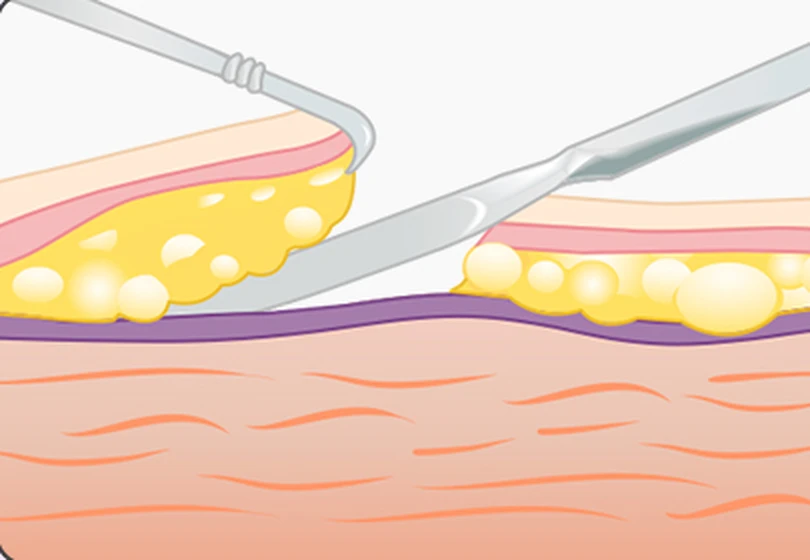
Under the skin lies the SMAS (a fibrous layer that supports the facial tissues, a bit like the lining that holds a cushion’s stuffing in place). The SMAS is held down by retaining ligaments (bands of connective tissue that tether it to deeper structures). In a mini facelift at MINE, these ligaments are released across the midface, covering the cheekbone area, the upper and lower cheeks and down to the jowls and jawline, so the SMAS can be lifted and fixed directly, layer by layer. It is the same layered technique we use in a full facelift, performed through a smaller incision.
This is why a smaller incision does not automatically mean much less swelling. Because the area released under the skin is wide, the swelling curve can be close to that of a full facelift. At MINE, patients typically return to light daily life at about 5 days after either operation. These are our own clinical figures, not a universal rule.
Dr. Lee’s Key Point: When patients hear “mini,” they often expect a weekend of downtime. I’d rather you plan for the first two weeks honestly, because that is where most of the visible healing happens.
Who This Recovery Timeline Fits
The mini facelift recovery time in this guide applies to MINE’s mini facelift technique. Here is who that procedure is designed for.
Good Candidates for a Mini Facelift
A mini facelift usually suits people who notice:
- Sagging in the cheeks and midface
- Deepening nasolabial folds (the lines from the nose to the mouth corners)
- Jowls and drooping mouth corners
- A preference for a surgical lift over lasers or threads, with a smaller incision than a full facelift
Most patients are in their 30s or 40s. If sagging has already moved below the jawline or into the neck, a full facelift combined with a neck lift, or a mini neck lift, may be a better match. We decide this together at your consultation after examining your face in person.
International Patients Planning Time Off and Travel
If you are traveling to Korea, build your stay around the fixed milestones: about 3 follow-up visits and stitch removal around day 7–10. The exact number of days varies with your healing and your surgery plan, so please confirm the length of stay with our team before you book flights. We would rather adjust your dates in advance than have you leave before your follow-up is complete.
Surgery Day and Follow-Up Visits
On the Day: About 1 Hour Under IV Sedation, Home the Same Day
The operation takes about 1 hour under IV sedation, with discharge the same day. Surgery is performed by me, Dr. Lee Sung-wook, and follows four main steps:
- A small incision from the scalp to just above the ear
- Wide release of the SMAS and division of the retaining ligaments
- Lifting the SMAS in the direction opposite to the sagging
- Fixing the SMAS firmly at a deep level, separately from the skin
Because the lift is held by the deeper layer rather than by pulling the skin tight, the skin itself is not stretched to hold the result. If you want to confirm a surgeon’s credentials before surgery, you can check board certification through the Korean Society of Plastic and Reconstructive Surgeons.
What the Three Follow-Up Visits Check
Follow-up visits are built into your mini facelift recovery time, so count them when you plan leave or travel. Each visit has a clear purpose:
- Incision check: how the wound is healing and when the stitches can come out
- Safety check: signs of hematoma (a collection of blood under the skin) or infection
- Progress check: how swelling and bruising are settling, and which daily activities you can add next
Mini Facelift Recovery Timeline, Stage by Stage
The mini facelift recovery timeline below describes what most patients notice and what matters most at each stage. Keep in mind that care instructions here are brief; the full routine with cold-compress timing, food and sleeping position is in the mini facelift aftercare checklist.
Days 0–3: Swelling Peaks
- Swelling and bruising usually get slightly worse for 2–3 days, then begin to settle
- Bruising may drift downward toward the jawline
- Mild pain and a feeling of tightness
- Temporary numbness in the cheeks
What matters now: keep your head raised and avoid straining, bending over or anything that pushes up your blood pressure. Plastic surgery textbooks stress controlling blood pressure during the first 48 hours after a facelift, because sudden spikes can trigger bleeding under the skin. In plain terms, the first two days are about rest and calm.
Days 4–7: Back to Light Daily Life
- Swelling starts to come down noticeably
- Bruises turn yellowish and fade
- Mild itching at the incision, which is a normal part of wound healing
What matters now: light daily activities are possible from about day 5. You can wash your face from the day after surgery, keeping water away from the incision near the top of the ear. Avoid long periods with your head bent down, heavy lifting and saunas.
Weeks 1–2: Stitches Out, Bruising Fades
- Stitches are typically removed 7–10 days after surgery, depending on skin type
- Most visible swelling and bruising settles
- Your new contour begins to show
- Numbness slowly starts to return to normal sensation
What matters now: you can shampoo after the stitches are out. Light walking is fine from week 1–2. Makeup can go on from the time our team advises, avoiding the incision lines, and daily sunscreen is a good habit from this point.
Weeks 3–4: Settling In
- Remaining swelling keeps going down
- The tight feeling when you smile or talk eases
- Most patients are back to a normal social life
What matters now: continue the scar care you started after stitch removal. Because the incision sits within the hairline and just above the ear, it is easy to hide, but it still needs time to mature. The scar timeline is explained in how mini facelift scars heal.
Months 1–3: Residual Swelling You Can Feel
- Visible swelling is mostly gone within about 2 weeks
- Swelling you can still feel when you touch your face fades over 2–3 months
- Strenuous exercise can usually resume from about 1 month
What matters now: a slightly firm or uneven feeling under the skin during this period is usually residual swelling, not a problem with the result. If one side feels noticeably different, ask us at your follow-up rather than judging it in the mirror.
Months 3–6: Your Final Contour
- The final jawline and cheek contour is judged at 3–6 months
- Many patients feel the face “deflate” a little before the result settles, which is usually swelling resolving
What matters now: patience. This is the longest part of mini facelift recovery time, but most of it happens quietly while you are already back to normal life. Plastic surgery textbooks advise photographing facelift results at least 6 months after surgery, once swelling has fully settled, and the same literature recommends allowing about 1 year of healing before considering any touch-up. That is why I evaluate the final result at this stage, not in the first few weeks. For what happens after that, see how long a mini facelift lasts.
Dr. Lee’s Key Point: In my clinical experience, the first 48 hours shape the rest of the mini facelift recovery time. Rest, a raised head and calm blood pressure do more for your healing than anything else in that window.
When Can I Work, Wash My Hair, Exercise, or Fly Home?
These are the questions that decide how much leave to book and when to schedule flights. Here are short, direct answers based on the typical mini facelift recovery time at MINE.
Returning to Work and Daily Routine
Desk work and a light routine are usually possible from about day 5. Visible swelling and bruising can last 1–2 weeks, though, so if your job is face-to-face or on camera, planning around 2 weeks off is often more comfortable. This is practical planning advice rather than a fixed rule; some patients go back sooner, others prefer a little longer.
Washing Your Face and Hair
Face washing starts the day after surgery; shampooing starts after stitch removal at about day 7–10. Until then, keep water off the incision near the top of the ear. When you do wash your hair, use gentle fingertips instead of rubbing hard, and dry it with cool air rather than a hot blow-dryer.
Makeup and Sun Protection
Makeup can be applied from the time our team advises, avoiding the incision lines. Concealer is useful for fading bruises in week 2. Use sunscreen daily, as healing skin and fresh scars are more prone to darkening in the sun.
Exercise, Sauna and Alcohol
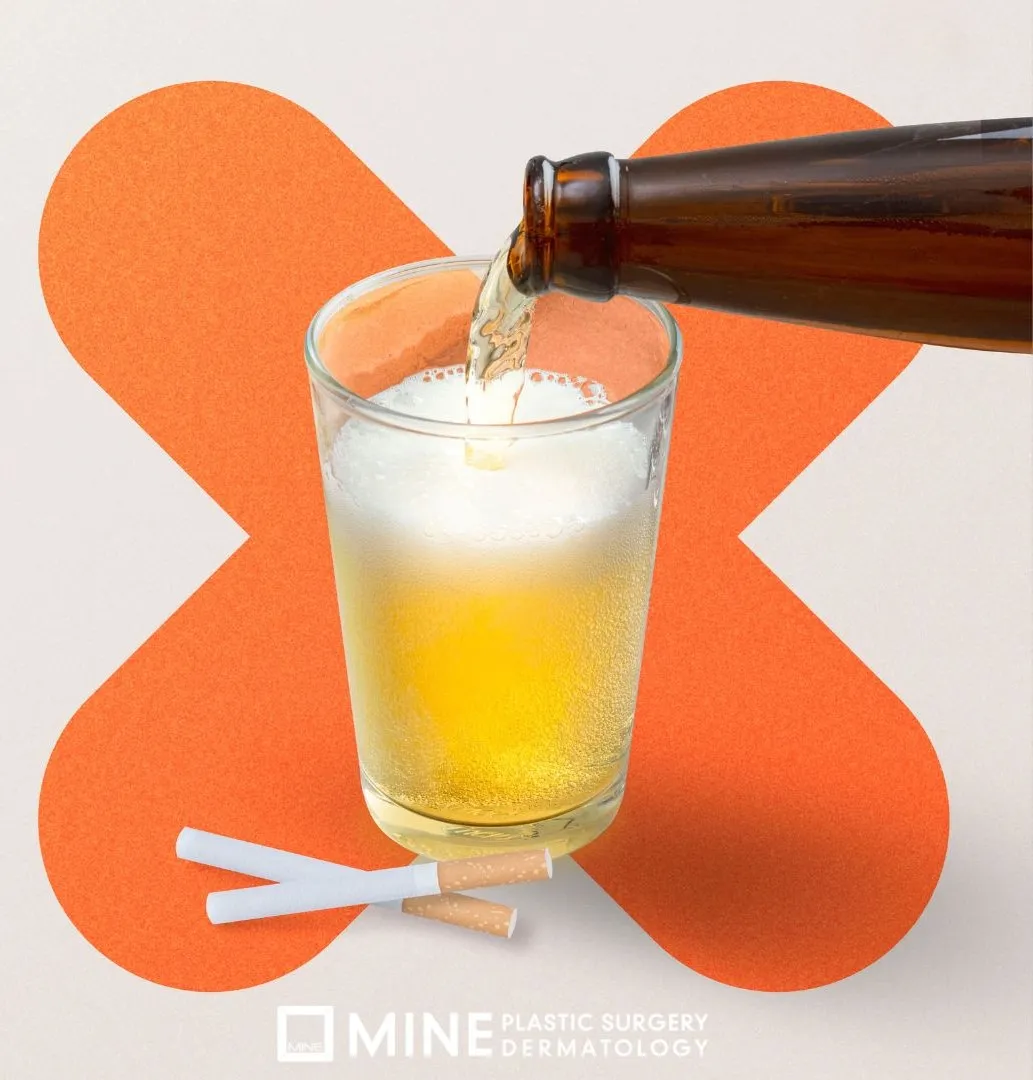
Light walking is fine from week 1–2, and strenuous exercise from about 1 month. Gentle walking supports circulation, but anything that raises your heart rate sharply can increase swelling early on. Avoid saunas and jjimjilbang (Korean bathhouses) for 1 month because of the infection risk to healing incisions. Alcohol and smoking slow blood flow to healing tissue and should be avoided during early recovery.
Flying Home After a Mini Facelift in Korea
Plan your flight around stitch removal (about day 7–10) and your follow-up visits, and confirm the date with our team before booking. There is no single “safe” flight day that fits everyone; it depends on how your incision and swelling are progressing. Most international patients find it easiest to stay until the stitches are out and the follow-up checks are done.
Precautions and Warning Signs During Recovery
Habits That Keep Recovery on Schedule
- Stop smoking, and discuss aspirin, omega-3 and similar supplements with our team, about 2 weeks before surgery
- Choose soft, low-salt food in the early days to limit swelling
- Sleep on your back with your head raised for at least 2 weeks
- Contact the clinic instead of judging asymmetry yourself while swelling is still present
Small habits like these are often what separates a smooth mini facelift recovery time from a longer one.
Rare Complications to Know About
Some changes are common and temporary: swelling and bruising for 1–2 weeks (sometimes longer), numbness that recovers over several months, slight asymmetry caused by uneven swelling, and scars along the hairline and just above the ear.
More serious complications are uncommon. Plastic surgery textbooks report hematoma as the most common facelift complication, at about 2–3% in women and up to 8% in men, and note that careful surgical technique and blood-pressure control can bring the rate in men down to about 4%. Infection after facelift surgery is reported in under 1% of cases in the medical literature. Facial nerve weakness is rare: in one textbook series of 3,500 facelifts it occurred in 0.1% of patients, and all of those cases recovered within 6 months. For a fuller breakdown, see our guide to mini facelift side effects and warning signs.
Call the Clinic Right Away If…
- One side of your face swells much more than the other
- You have a fever of 38°C (100.4°F) or higher
- You feel severe pain or pressure at the incision
- You notice discharge or pus from the wound
- You have difficulty breathing or chest pain
These signs need prompt assessment. Early treatment of a hematoma or infection usually keeps your overall mini facelift recovery time on track.
Mini Facelift Recovery Time: Frequently Asked Questions
How long is mini facelift recovery time?
At MINE, most patients return to light daily activities in about 5 days. Stitches come out at around 7–10 days, most swelling and bruising settles within 1–2 weeks, and the final contour is judged at 3–6 months. Healing speed varies from person to person.
How long does swelling last after a mini facelift?
Swelling usually increases for the first 2–3 days, then gradually goes down. Most visible swelling is gone by about 2 weeks, while slight swelling you can feel by touch fades over 2–3 months.
When can I wash my face and hair after a mini facelift?
You can wash your face from the day after surgery, keeping water off the incision near the top of the ear. Shampooing starts after stitch removal, around day 7–10. Avoid rubbing hard and dry your hair with cool air.
When can I exercise after a mini facelift?
Light walking is fine from week 1–2. Strenuous exercise such as running or weight training can usually resume from about 1 month. Avoid saunas and jjimjilbang for 1 month.
Is mini facelift recovery faster than a full facelift?
Not necessarily. The incision is smaller, running from the scalp to just above the ear, but the SMAS release across the midface down to the jowls is similar, so swelling can follow a similar curve. At MINE, both usually allow light daily life at about 5 days. If sagging extends below the jawline or into the neck, a facelift with a neck lift or a mini neck lift may be discussed at consultation.
How long should I stay in Seoul after a mini facelift?
Plan your stay around stitch removal at about day 7–10 and the follow-up visits (about 3 in total). Because healing varies, please confirm your exact dates with our team before booking your return flight.
Planning Your Mini Facelift Recovery in Seoul
To sum up, mini facelift recovery time at MINE means about 5 days to light daily life, 1–2 weeks for most swelling and bruising, stitch removal at 7–10 days and a final contour at 3–6 months. The incision is small, but the SMAS release underneath is wide, so the first 1–2 weeks matter most.
Surgery is same-day, with about 3 follow-up visits at our clinic at 813 Nonhyeon-ro, Gangnam-gu, Seoul (Apgujeong Station, Line 3, Exit 4). If you are planning travel, send us your preferred dates through our online consultation form or call +82-2-516-1175, and we’ll help you map your stay around the milestones. You can also read more about the mini facelift at MINE.
Written and medically reviewed by: Dr. Lee Sung-wook, Board-Certified Plastic Surgeon, Representative Director of MINE Plastic Surgery & Dermatology
※ This content is for informational purposes only and does not replace professional medical advice, diagnosis, or treatment. Individual results may vary, and side effects may occur. Please consult with a board-certified plastic surgeon for personalized advice.