EN


Mini facelift aftercare is the set of at-home steps (sleeping position, compresses, wound and hair care, and activity limits) that you follow for about six months after a mini facelift so swelling settles and the small scalp incision heals well.
The operation itself takes about an hour. The weeks that follow are where you do most of the work. This checklist puts every mini facelift aftercare instruction we give our patients in time order, so you always know what you can do, what to avoid and for how long.
I’m Dr. Lee Sung-wook, a board-certified plastic surgeon at MINE Plastic Surgery & Dermatology in Seoul. Below I also explain why each rule exists, based on plastic surgery textbooks, because instructions are much easier to follow when the reason makes sense.
Table of Contents
Table of Contents
What Mini Facelift Aftercare Involves
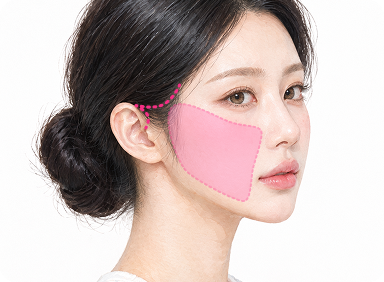
At MINE, a mini facelift is done through a small incision from the scalp to just above the ear. Surgery takes about one hour under sedation, you go home the same day, and most people return to everyday routines in about 5 days. You will visit the clinic 3 times afterward for check-ups and care. You can read more about how our mini facelift is performed on the procedure page.
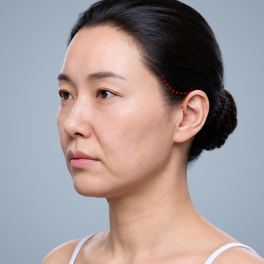
Because the incision is small, recovery is lighter than after a full facelift. Even so, the lifted tissue still needs time to settle into its new position, and what you do at home affects how smoothly that happens. Aftercare matters as much as the surgery itself.
Here is the whole timeline at a glance. Each line is explained in the sections below.
| When | What to do or avoid |
|---|---|
| Days 0–3 | Cold compresses (surgery day included). Swelling and bruising build up. |
| Day 1 | Face washing, makeup and contact lenses are OK. |
| Day 3 | Shampooing allowed. Switch to warm compresses after day 3. |
| Week 1 | No aspirin or vitamin E. Compression band 24 hours a day. |
| Weeks 1–2 | Light walking can start. Band 24 hours a day for 1–2 weeks, then at least 8 hours a day. |
| Week 2 | Skin staples removed. Back-sleeping period ends. |
| Month 1 | Wait until now for strenuous exercise, saunas, alcohol, smoking, hair dye, perms, massage and opening your mouth wide. |
| Months 1–2 | Tightness and numbness feel strongest, then ease. |
| Months 2–3 | The last of the swelling fades. |
| Month 6 | Ultherapy and other ultrasound-based devices allowed. |
Who This Checklist Is For
This mini facelift aftercare guide is written for patients who have had, or are about to have, a mini facelift at MINE through the small scalp-to-above-the-ear incision described above.
A full facelift involves a longer incision and a different recovery schedule. If that is your procedure, please follow our separate guide to full facelift precautions instead.
Healing also varies from person to person. If your surgeon gives you an instruction that differs from this page, follow your surgeon.
Days 0–3: Swelling, Cold Compresses and Sleeping Position
Sleep on your back for 2 weeks
The first rule of mini facelift aftercare is simple: for the first 2 weeks, sleep facing the ceiling. Do not lie on your side or on your stomach. Side sleeping presses the pillow directly against the freshly lifted cheek and the incision, which can add swelling and pull on healing tissue. A travel pillow or a couple of pillows on each side can help keep you from rolling over at night.
Cold compresses for 3 days, then warm
Swelling and bruising increase for 2–3 days, ease gradually over 2–4 weeks, and the last swelling fades over 2–3 months. The exact pace differs from person to person.
Cold first, then warm, is the core of early mini facelift aftercare. Use cold compresses from the day of surgery through day 3. Cold narrows small blood vessels, which limits early swelling and bruising. After day 3, switch to warm compresses, which improve circulation and help the body clear the remaining swelling. You can use the compress pack we give you (heat it in the microwave for about 15 seconds) or a heated sleep eye mask.
Medications: what to take and what to avoid
Take the medication prescribed at discharge starting 30 minutes after your first post-surgery meal, then stick to the scheduled times. If you develop diarrhea, a rash or any other sign of allergy, contact the clinic.
Do not take aspirin or vitamin E for 1 week after surgery, because both make bleeding more likely. According to plastic surgery textbooks, a collection of blood under the skin (a hematoma) is the most common facelift complication, reported in about 2–3% of women. The same textbooks note that avoiding blood-thinning and anti-platelet medicines and keeping blood pressure under control are key ways to lower that risk. The American Society of Plastic Surgeons also lists bleeding among the risks to discuss before any facelift.
If you have a strong headache, you can take acetaminophen (Tylenol; paracetamol in the UK and Australia) in addition to your prescription.
Eating and drinking
You can eat a normal diet. For now, go easy on very spicy or salty food, since strongly seasoned meals can make swelling worse.
Days 1–14: Washing, Wound Care, Staples and the Compression Band
Face washing, makeup and contact lenses from day 1
From the day after surgery, you can wash your face, wear makeup and put in contact lenses.
Shampooing from day 3
You can shampoo your hair from day 3. Work gently around the incision rather than scrubbing it. Afterward, dry the stitched area with the cool setting on your hair dryer, because hot air can irritate the healing skin.
Ointment and staple removal at week 2
Once the gauze is removed, apply the ointment to the incision twice a day, morning and evening. Staples are removed at week 2. After that, the line keeps maturing for many months. You can read about how mini facelift scars fade in our separate guide.
Wearing the compression band
The compression face band (a chin-and-cheek garment) is a key part of mini facelift aftercare. Wear it 24 hours a day for the first 1–2 weeks. You can take it off briefly to eat or brush your teeth. After that, wear it for at least 8 hours a day.
The band presses the lifted skin evenly against the tissue underneath. That leaves less room for fluid or blood to pool, which helps swelling go down. Snug is the goal, not painfully tight. If the band hurts, or the skin looks pale or dark when you take it off, contact the clinic.
Weeks 1–4: Exercise, Sauna, Alcohol and Smoking
Returning to activity
Recovery doesn’t mean staying in bed. Everyday activities are fine right away. Light walking can start after 1–2 weeks, and strenuous exercise should wait 1 month. Hard exercise raises blood pressure and heart rate, and a sudden rise in blood pressure is exactly what textbooks warn can trigger bleeding under the lifted skin.
Sauna, hair dye and perms
Avoid saunas for 1 month because of the risk of infection. Infection is uncommon after facelift surgery; textbook series put it at less than 1%. Even so, heat, steam and shared facilities are worth avoiding while the incision is still healing. Hair dye and perms can resume after 1 month.
Alcohol and smoking
Avoid alcohol and smoking for 1 month. Both increase the risk of bleeding and infection and slow wound healing. Smoking is a particular problem: it narrows the tiny blood vessels that feed the skin, so the lifted skin heals more slowly.
Facial expressions and massage
For about 1 month, try not to open your mouth very wide or make exaggerated facial expressions. These can cause pain and a strong pulling sensation. Also avoid massage and anything that puts pressure on your face for 1 month.
Your mini facelift aftercare checklist for weeks 1–4:
- Light walking: after 1–2 weeks
- Strenuous exercise: after 1 month
- Sauna: after 1 month
- Alcohol and smoking: after 1 month
- Hair dye and perms: after 1 month
- Massage, facial pressure and opening your mouth very wide: after 1 month
Normal Mini Facelift Recovery Sensations vs When to Call Us
Tightness and numbness (worst at months 1–2)
Not every new sensation during recovery is a problem. A tight feeling or reduced sensation in the skin is a normal part of healing. It is usually strongest during months 1–2 and gradually improves after that.
Firmness, lumps and skin dimpling
The lifted area may feel firm and look slightly uneven for a while. This improves with time. Small dents in the skin (skin dimpling) can also appear temporarily and usually start to improve after about 1 month. Do not try to rub or massage them out.
Hair thinning near the incision
The scar line itself has no hair follicles, so no hair grows along that thin line. Hair right next to the incision may thin or shed for a while after surgery. Plastic surgery textbooks report that this hair loss is usually temporary and grows back within a few months. Rarely, a small patch does not recover. If thinning hasn’t improved after a few months, contact the clinic, as options such as a minor scar revision or hair grafting are available.
Mouth-corner movement
Rarely, a small nerve branch near the mouth is affected and one corner of the mouth does not lift fully when you smile. This usually recovers over 2–3 months. Plastic surgery textbooks describe this kind of nerve weakness as temporary in most cases, so try not to worry; we will check it at your follow-up visit.
Warning signs at a glance
Call the clinic straight away if you notice any of the following:
- One side of your face suddenly swells much more than the other and becomes painful or tense. That pattern can mean a hematoma, and it is best treated early.
- Fever
- Spreading redness around the incision
- Discharge from the incision
For a fuller list, see our guide to mini facelift side effects and warning signs.
Month 6: Ultherapy, Energy Devices and Long-Term Care
Avoid Ultherapy (micro-focused ultrasound) and other ultrasound-based energy devices, such as HIFU, for 6 months. Plastic surgery textbooks note that it can take up to 6 months for all postoperative swelling to settle completely. Waiting until then lets the tissue heal fully before any heat-based treatment is applied to it.
If you plan to add skin tightening later, you can read about how Ultherapy works and how long it lasts. And if anything feels unclear at any stage of your mini facelift aftercare, don’t hesitate to contact the clinic.
Mini Facelift Aftercare FAQ
How long should I sleep on my back after a mini facelift?
For 2 weeks. Sleep facing the ceiling and avoid lying on your side or stomach, so there is no pressure on the lifted cheek or the incision.
When can I wash my hair after a mini facelift?
From day 3 after surgery. Don’t scrub the incision, and dry the stitched area with cool air from your hair dryer.
How long do I wear the compression band?
Wear it 24 hours a day for the first 1–2 weeks, taking it off only briefly to eat or brush your teeth. After that, wear it for at least 8 hours a day.
When can I exercise or drink alcohol again?
Light walking can start after 1–2 weeks, and strenuous exercise after 1 month. Alcohol and smoking should both be avoided for 1 month.
Why can’t I get Ultherapy for 6 months after a mini facelift?
We ask you to avoid Ultherapy and other ultrasound devices for 6 months. Textbooks note that swelling can take up to 6 months to settle completely, so the tissue should be fully healed first.
Planning Your Mini Facelift Recovery in Seoul
If you are traveling to Korea, plan your stay around the mini facelift aftercare schedule. Skin staples come out at week 2, and you will have 3 follow-up visits, so many international patients arrange their trip around those dates. We are happy to help you work out the timing during your consultation.
To learn more about the procedure, visit our mini facelift page. You are welcome to send us an online consultation request, message us on WhatsApp, or call +82-2-516-1175. We are at 813 Nonhyeon-ro, Gangnam-gu, Seoul.
Written and reviewed by Dr. Lee Sung-wook, Board-Certified Plastic Surgeon, MINE Plastic Surgery & Dermatology.
※ This content is for informational purposes only and does not replace professional medical advice, diagnosis, or treatment. Individual results may vary, and side effects may occur. Please consult with a board-certified plastic surgeon for personalized advice.