EN



How long does Ultherapy last? Ultherapy is a non-surgical microfocused ultrasound lift, and its results are typically reported to last about 1 to 2 years, peaking 3 to 6 months after treatment as new collagen forms.
“How long will it last?” is one of the questions I hear most often in consultation, usually right after “Does it hurt?” It is a fair question. Ultherapy is an investment of time and money, and nobody wants to find out six months later that the lift has quietly gone.
The honest answer comes with a caveat. That 1-to-2-year range varies a lot from person to person. How fast your skin ages, how much it sags to begin with and how well you care for it afterward all shift the number. In this guide I will walk you through what the clinical studies actually measured, who tends to get longer-lasting change, and how often it is sensible to repeat the treatment.
Dr. Lee Sung-wook, Board-Certified Plastic Surgeon, MINE Plastic Surgery, Seoul
What Ultherapy Is and Why Its Effect Builds Over Months
To understand why the effect lasts as long as it does, it helps to know what is happening under the skin. Ultherapy does not work on the day of treatment the way a filler does. It starts a repair process that keeps going for months.
Focused Ultrasound That Skips the Skin Surface
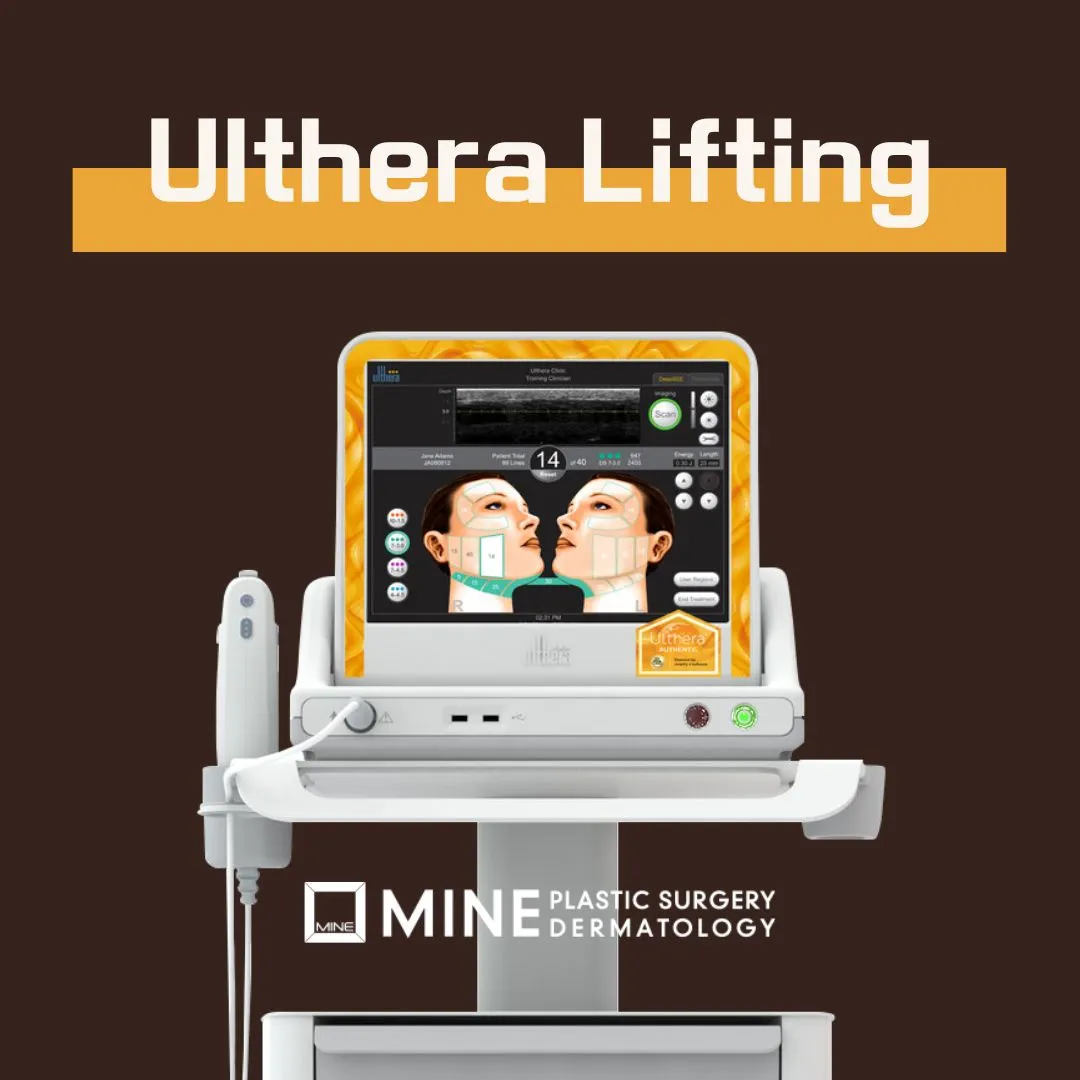
The technical name for Ultherapy is MFU-V, short for microfocused ultrasound with visualization. Think of a magnifying glass gathering sunlight into one small hot spot. Ultherapy does the same with ultrasound energy, concentrating it at a set depth while the skin surface (the epidermis) is left intact.
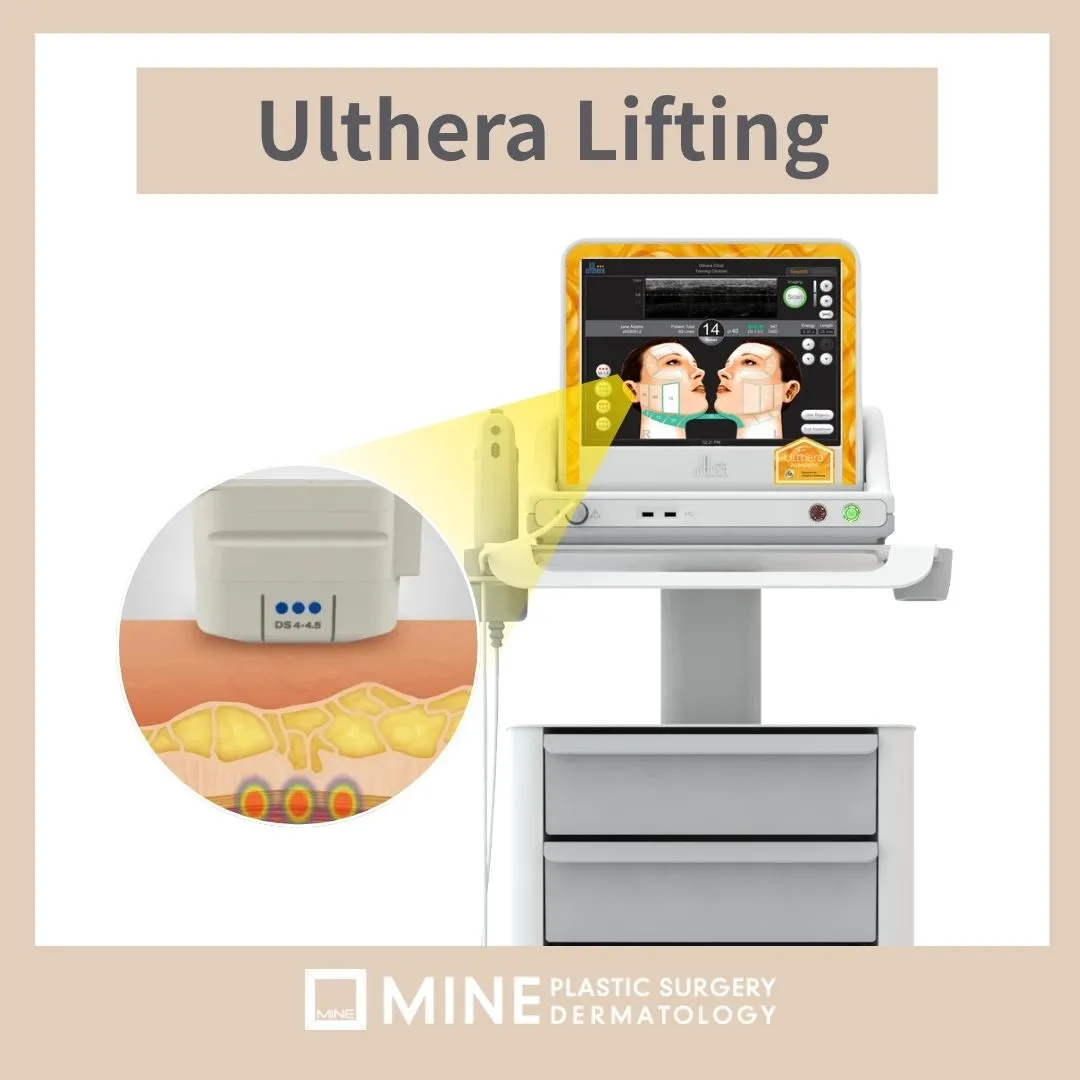
The “visualization” part means the practitioner sees a live ultrasound image of the tissue layers while treating, so energy can be placed at the intended depth. The device was authorized for marketing by the U.S. FDA in 2009; you can see the FDA De Novo record for the Ulthera System. Treatment heads (transducers) come in three depths, 1.5 mm, 3.0 mm and 4.5 mm, which let us work from the dermis down to the deepest supporting layer.
From 65°C Coagulation Points to New Collagen
Plastic surgery textbooks describe Ultherapy’s focal points in the dermis and SMAS reaching temperatures of about 65°C. At each point a tiny area of tissue gently coagulates, a bit like the way an egg white firms up when heated.
Your body treats these tiny points as areas that need repair. Over the following months it lays down fresh collagen, a process doctors call neocollagenesis (the skin making brand-new collagen). This is why the real change appears gradually and why people with normal wound healing tend to respond better. If you want a deeper look at the mechanism, I have covered the science of HIFU and collagen in a separate guide.
Why Reaching the SMAS Matters for Longevity
The SMAS is the thin layer of muscle and connective tissue that holds up the face. It is the same layer a surgeon lifts during a facelift. The 4.5 mm transducer reaches this layer, which is what separates Ultherapy from treatments that only work on the surface.
Stimulating the SMAS gives a subtle structural lift rather than just smoother skin. Because the change is built from new collagen in deeper tissue, it fades slowly instead of disappearing all at once.
How Long Does Ultherapy Last? What the Clinical Numbers Say
Clinic brochures tend to show only the most flattering cases. Published studies give a more balanced picture, including the people who did not see much change. Here is what they report.
The Typical Range: 1–2 Years
So, how long does Ultherapy last for most people? Ultherapy results are usually reported to last 1 to 2 years, with the peak around 3 to 6 months after treatment. This is a range, not a fixed expiry date. Your skin keeps aging after the treatment, so the new collagen is slowly working against the same forces that caused the sagging.
Two people of the same age can have very different experiences. Heavy sun exposure, smoking and poor skin care can shorten how long the effect is noticeable. Consistent sun protection and hydration tend to help it hold for longer.
Peak Results at 3–6 Months
Dermatology literature reports that heat-based tightening treatments like this usually reach their peak 3 to 6 months after the session. Right after treatment some people notice a slight tightening, as existing collagen contracts. The bigger change comes later, as new collagen fills in.
This matters when you ask “How long does Ultherapy last?”, because the clock really starts from the peak, not from treatment day. Many patients who feel “nothing happened” at week three are simply too early.
| Time after treatment | What is typically reported |
|---|---|
| Right after | Slight tightening in some people as existing collagen contracts |
| About 3 months (90 days) | Improvement seen in about two-thirds of patients in a 103-patient trial |
| 3 to 6 months | Peak effect as new collagen builds up |
| 1 to 2 years | Effect gradually fades with ongoing skin aging |
The 103-Patient Trial at 90 Days
In a 103-patient clinical trial, about two-thirds of patients reported improvement at 90 days, and clinicians rated about 60% as improved. That study (Oni et al., 2014, Aesthetic Surgery Journal) looked at lower face and neck laxity.
A retrospective study reported improvement in more than 80% of faces and necks at 90 and 180 days (Fabi and Goldman, 2014, Dermatologic Surgery). A retrospective study looks back at treated patients’ records, so it is useful but less controlled than a prospective trial.
Not Everyone Responds: The 1-in-5 to 1-in-3 Reality
Read the same data the other way around. Roughly 1 in 5 to 1 in 3 people in these studies noticed no clear change. Ultherapy is not a treatment that gives everyone the same result.
That is why, in my consultations, I do not promise that “everyone gets better.” I explain which conditions make a good response likely and which ones point to its limits. Knowing this before treatment saves a lot of disappointment.
Who Gets Longer-Lasting Results — and Who Should Consider Surgery
The answer to “How long does Ultherapy last?” depends heavily on choosing the right person to treat. A well-matched patient sees a clearer change, and a clearer change stays visible for longer.
Good Candidates: Mild-to-Moderate Laxity and BMI of 30 or Less
Plastic surgery textbooks describe microfocused ultrasound as suited to mild-to-moderate skin and soft-tissue laxity. In practical terms, that is early jowling, a softening jawline or slight looseness under the chin.
The clinical trial observed better results in people with a BMI of 30 or less. BMI is a simple weight-for-height measure; a lower figure usually means less fat under the skin for the energy to pass through. Most people who do well are somewhere between their 30s and early 50s, when sagging has started but is not yet advanced.
When Ultherapy Hits Its Limit
Some situations are beyond what ultrasound can fix:
- Severe neck laxity or deep jowls
- Heavy fat under the skin of the lower face and neck
- Prominent platysmal bands (the vertical cords that appear on the front of the neck as its muscle separates with age)
Textbooks are clear that non-surgical options, while useful, do not have the same impact on facial aging as face and neck lift surgery. If you have significant sagging, a surgical consultation is the more honest next step. You can see how the options stack up in my guide to Ultherapy compared with Thermage, HIFU and thread lifts.
Age, Skin Type and Lifestyle: What the Trial Found
Interestingly, the trial did not find a significant link between improvement and age, skin type, alcohol use or other medical conditions. Because Ultherapy does not target skin pigment, it can be used across a wide range of skin tones.
What does seem to matter is the body’s ability to heal and build collagen. People with normal wound healing tend to respond more clearly.
What Happens During Treatment (and Why Planning Affects Duration)
The plan for your session shapes how well the effect holds. Depth, energy placement and the areas chosen all make a difference.
Choosing Transducer Depth
The 4.5 mm transducer works on the SMAS and is responsible for the structural lift. The 3.0 mm and 1.5 mm heads work in the dermis, improving firmness and texture. Most treatments combine depths, chosen by where the sagging is and how thick the skin is in each area.
Textbook literature notes that in a randomized trial, single-plane and dual-plane microfocused ultrasound gave comparable improvement at 1, 3 and 6 months. In other words, simply adding more layers does not automatically mean a stronger or longer result. The plan should fit the face.
Shot Count in Brief
More shots are not proportionally better. Excess energy can put an unnecessary burden on the tissue without adding much to the lift. I explain the reasoning in more detail in my article on how many Ultherapy shots you need.
Combining With Skin-Regeneration Treatments
Some patients pair Ultherapy with treatments that support the skin surface, such as LDM (a gentle ultrasound skin-care treatment) or Rejuran and other PDRN injections (skin boosters made from salmon DNA). These are optional and decided after consultation, based on your skin’s needs.
Recovery and Day-to-Day Care That Helps Results Last
Ultherapy has very little downtime, and most people return to normal activity the same day. Aftercare is a real part of the answer to “How long does Ultherapy last?”: what you do in the months afterward matters more than the first few days.
What You May Feel Right After
Some people notice slight tightening straight away. Temporary redness, swelling, tenderness or light bruising can appear. In the textbook literature, side effects such as redness and bruising reported in trials cleared within about 30 days. Contact your clinic if anything feels unusual or does not settle.
Sun Protection and Hydration for Longevity
UV light breaks down collagen, including the new collagen your skin has just built. A few daily habits help slow the fade:
- Apply sunscreen every day, even when it is cloudy
- Keep the skin well moisturized
- Avoid smoking
I tell patients to think of Ultherapy as part of slowing skin aging, not a one-time fix. The treatment gives the collagen a boost; your daily habits decide how long that boost stays visible.
How Often Can You Do Ultherapy? Safe Repeat Intervals
Since the effect gradually fades, it is natural to ask about maintenance. This is also where I see the most misunderstanding, because “more often” is not “better.”
Why Maintenance Sessions Come Up
When people ask me “How long does Ultherapy last, and when should I go again?”, my answer is that a maintenance plan makes sense. Many people consider another session once they notice the lift softening. The key is to plan it at a sensible interval rather than on a fixed, frequent schedule.
The Risk of Repeating Too Often: Reduced Blood Supply
Facelift literature has raised a concern that repeated HIFU treatments may damage the subdermal vascular plexus, the fine network of blood vessels just under the skin. If that happens, the skin’s blood supply could be reduced, which matters if you later have a facelift, because healing depends on good circulation.
There is also a reported possibility that repeated energy delivery may cause fibrosis (stiffening) of fat or narrowing of small vessels, which could affect how well a future fat graft takes. These are possibilities rather than certainties, but they are good reasons not to over-treat. Some patients also worry about volume loss; I discuss whether Ultherapy can cause fat loss or hollow cheeks separately.
Recommended Interval: 6–12 Months or Longer
Most specialists space Ultherapy sessions 6 months to 1 year or more apart. In my practice, I time a repeat session by how your skin has actually changed, not by the calendar alone.
Planning Around a Future Facelift or Fat Graft
If you think you may have a facelift or fat grafting in the future, tell your surgeon how many energy-based treatments you have had and when. That history helps them plan safely. It is one more reason to treat Ultherapy as a measured, spaced-out maintenance tool.
Ultherapy vs Thermage, HIFU and Thread Lifts: Duration in Context
Ultherapy is often compared with other lifting options, and the question “How long does Ultherapy last?” only makes sense next to how each one works. They act at different depths, so they are not simply “longer” or “shorter” versions of each other.
Ultherapy vs Thermage (RF)
Thermage uses radiofrequency (RF) energy, which heats the dermis and the tissue just beneath it to tighten collagen. Dermatology textbooks contrast this with focused ultrasound, which can reach deeper, down to the SMAS. Ultherapy is generally chosen for a structural lift, Thermage for overall skin tightening, and some patients combine the two.
Ultherapy vs Shurink and Other HIFU
Shurink is a Korean HIFU device that works on the same focused-ultrasound principle. The main difference is that Ultherapy adds real-time imaging, so the practitioner can see the tissue layers while placing energy.
When a Thread Lift or Facelift Fits Better
Thread lifts and facelifts physically reposition tissue rather than relying on collagen remodeling. For moderate or more advanced sagging, they usually make more sense than repeating energy-based treatments again and again.
Frequently Asked Questions
How long does Ultherapy last on the face?
Ultherapy is usually reported to last about 1 to 2 years on the face, with the peak effect around 3 to 6 months after treatment. How long it stays visible depends on how fast your skin ages, sun exposure and daily skin care.
How often can you do Ultherapy?
Most specialists space sessions 6 months to 1 year or more apart. Repeating too often may affect the blood supply under the skin, so the timing should be decided with a specialist who has examined your skin.
When will I see the full effect?
Some people notice slight tightening right away, but the full effect usually appears around 3 to 6 months after treatment as new collagen builds up. Judging the result too early is a common source of disappointment.
Why didn’t Ultherapy work for me?
In clinical studies, roughly 1 in 5 to 1 in 3 people saw no clear change. Severe laxity, platysmal bands and heavy fat under the skin all limit what ultrasound can do. In those cases, a surgical consultation may be more helpful.
Can I make Ultherapy results last longer?
Daily sunscreen, good hydration and not smoking help slow the fade. Sensible spacing between sessions and being a good candidate in the first place, with mild-to-moderate laxity and a BMI of 30 or less, also make a difference. These habits go a long way toward deciding how long your Ultherapy results last.
Is Ultherapy or Thermage longer lasting?
There is no simple ranking, because they work at different depths. Ultherapy targets the SMAS for a structural lift, while Thermage focuses on tightening the dermis. Some patients benefit from combining them.
Find Out How Long Ultherapy Could Last on Your Skin
There is no single answer to “How long does Ultherapy last?”, because it depends on your degree of laxity, your age and how your skin responds with new collagen. At MINE Plastic Surgery, I assess whether Ultherapy suits your face or whether another option, including surgery, would serve you better.
If you are planning a visit to Seoul, you can learn more about Ultherapy at MINE, call us at +82-2-516-1175, or send a request through our website consultation form.
Written and reviewed by Dr. Lee Sung-wook, Board-Certified Plastic Surgeon, MINE Plastic Surgery.
※ This content is for informational purposes only and does not replace professional medical advice, diagnosis, or treatment. Individual results may vary, and side effects may occur. Please consult with a board-certified plastic surgeon for personalized advice.