EN
EN


Table of Contents
1. Medication
(1) The medication prescribed at discharge should be taken 30 minutes after your first meal following surgery. Please take it regularly at the designated times. If you experience symptoms such as diarrhea or allergic reactions after taking the medication, please contact the clinic.
(2) For 1 week after surgery, do not take aspirin or Vitamin E, as they may cause bleeding.
(3) Even if your symptoms improve or disappear, please do not stop taking the prescribed medication on your own. Be sure to follow the medical staff’s instructions for both medication and patch use.
(4) [Banan Tablets (Cefpodoxime proxetil) + Soleton Tablets (Zaltoprofen) + Rabewon Tablets 10mg (Rabeprazole sodium) + Funalsinyl Tablets (Metronidazole)]
– Twice daily (morning/evening)
– Take for 7 days
– Helps reduce saliva secretion to prevent fluid accumulation
(5) [Glycopyrrolate]
– Twice daily (morning/evening)
– Take for 14 days
– Helps reduce saliva secretion to prevent fluid accumulation
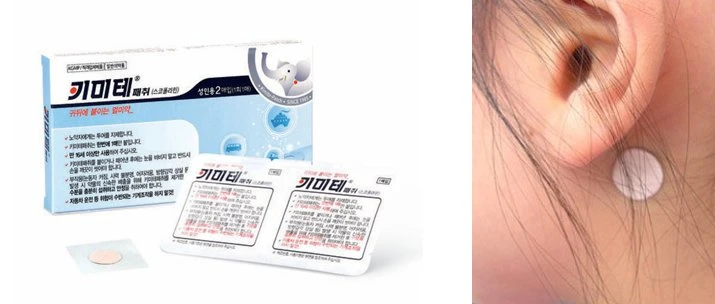
(6) [Kimite Patch (Scopolamine Patch)]
– Apply one patch to clean skin behind one ear
– Replace every 3 days (each patch lasts approximately 72 hours)
– Use continuously for 12 days
– Alternate between left and right ears
– If the patch falls off, apply a new one behind the opposite ear
– If you feel dizziness or discomfort, you may temporarily remove the patch and reapply the same one once symptoms improve
※ Not using the patch may lead to excessive saliva production and delay recovery.
※ After removing the patch, wash your hands and the application area thoroughly with soap to prevent residue from getting into the eyes.
※ Avoid touching your eyes after handling the patch, as it may cause temporary blurred vision, pupil dilation, and light sensitivity.
※ Possible side effects include blurred vision (due to pupil dilation), light sensitivity, drowsiness, dizziness, dry mouth, difficulty urinating, and rash. In severe cases, anxiety or hallucinations may occur.
※ Do not drive or operate machinery while using the Kimite patch.
(7) Prescription for Overseas Patients
[Basic Prescription]
- Banan Tablets (Cefpodoxime proxetil)
1 tablet / twice daily / for 7 days - Soleton Tablets (Zaltoprofen)
1 tablet / twice daily / for 7 days - Rabewon Tablets 10mg (Rabeprazole sodium)
1 tablet / twice daily / for 10 days - Funalsinyl Tablets (Metronidazole)
1 tablet / twice daily / for 10 days - Glycopyrrolate
1 tablet / once daily / for 14 days - Kimite Patch (Scopolamine Patch)
2 boxes / apply one patch behind one ear only
/ replace every 3 days / use for 12 days
※ Even if your symptoms improve, do not stop taking the medication on your own. Please follow the medical staff’s instructions.
[Emergency Medication]
- Banan Tablets (Cefpodoxime proxetil)
1 tablet / twice daily / for 10 days - Rabewon Tablets 10mg (Rabeprazole sodium)
1 tablet / twice daily / for 10 days - Funalsinyl Tablets (Metronidazole)
1 tablet / twice daily / for 10 days - Kimite Patch (Scopolamine Patch)
2 boxes / apply one patch behind one ear only
/ replace every 3 days / use for 12 days
[For Bacterial Infection Due to Saliva Accumulation Emergency]
- Ilsung Augmentin Tablets 625mg (Augmentin 625mg)
1 tablet / three times daily / for 7 days - Bioflor 250 Capsules (Bioflor 250 Cap)
1 capsule / twice daily / for 7 days - Myungmoon Glycopyrrolate Tablets (Glycopyrrolate Tab)
1 tablet / twice daily / for 7 days - Dongil Clindamycin Capsules 150mg (Clindamycin 150mg Capsule)
2 capsules / three times daily / for 7 days
※ For overseas patients, in preparation for possible situations after returning home, we provide an additional 10-day supply of emergency medication and a 7-day course of antibiotics for potential bacterial infection due to saliva accumulation, in addition to the basic prescription.
If you experience swelling in the salivary gland area or symptoms of saliva accumulation at the surgical site, you must first consult with the medical staff. After confirmation, please take the emergency medication according to medical instructions.
2. Swelling Management & Compression Garment Care
(1) For 2–3 days after surgery, swelling and bruising will gradually increase, then subside slowly over 2–4 weeks. Individual differences exist.
(2) From the day of surgery until 3 days after surgery, apply cold compresses. After that, switch to warm compresses.
(Please use the compress pack provided.)
- Cold compress: Store the pack in the freezer before use
- Warm compress: Heat in microwave for 15–20 seconds (do not overheat as it may burst)
- Temporary numbness in the double chin area may reduce your ability to feel heat. To prevent burns, always check the temperature on the back of your hand before applying to the surgical area.
(3) The surgical area will feel firm for about 2 months and then gradually soften. This is a natural process, so there is no need to worry.
(4) Compression management (wearing the chin strap): The key is to reduce the space where saliva can accumulate.
- Maintain compression 24 hours a day for 1 week (at least 3 full days minimum)
- Do not tighten excessively (enough space for one finger)
- Wear during sleep
- Replace immediately if wet or contaminated
- From Day 8, continue wearing at home or while sleeping
- If saliva leakage is suspected, wear continuously for compression
3. Wound Care
(1) Sutures are removed on the 7th day after surgery. After suture removal, remove the Steri-Tape (white tape) applied by the clinic after 3 days. Until suture removal, apply a bandage under the chin.
(2) After suture removal, apply skin-colored 3M tape for 3 months. It is not necessary to apply behind the ears.
(3) After salivary gland surgery, the gauze fixed inside the chin strap must be maintained for 7 days. Fold 3–4 pieces of gauze and place them over the surgical area, positioning them inside the chin strap to apply compression. After washing, when wearing the chin strap again, insert the gauze in the same position.
(4) If thread lifting was performed together, do not forcibly remove the patches covering the needle entry points. It is recommended to keep DuoDERM(patch) applied for about 2 days.
(5) Radiofrequency treatment will be performed twice after suture removal. Please make a reservation and visit the clinic. T. +82 10 3476 1175
※ If severe heat sensation or severe persistent pain occurs in the surgical area, you must visit the clinic.
※ The incision site has a risk of infection, so do not rub it with your hands for 1 month after surgery.
※ If thread protrudes from the lifting hole and can be felt, please visit the clinic.
4. Scar Ointment Care Guide
(1) How to Use the Ointment
- Dermatix Ultra Gel or Contractubex Gel (choose only one product)
- For effective scar improvement, begin using the ointment 3 months after suture removal, and continue consistently for at least 6 months
- Clean the scar area thoroughly and gently dry it
- Use only after the wound has completely healed (avoid use if the wound is still open)
- Apply a small amount thinly (pea-sized amount is sufficient)
- Gently massage onto the scar area
- Wait about 1–2 minutes until completely dry
- Recommended use: twice daily (morning and evening)
(2) Precautions
- Do not rub or scratch the scar area after applying the ointment
- UV exposure may worsen scar pigmentation, so use sunscreen when going outside. If skin irritation or allergic reaction occurs during use, stop immediately and contact the clinic
5. Progress (Individual differences exist)
(01) First Month Progress
- Week 1: Often maintained without significant change
- Week 2: Gradual decrease begins
- Weeks 3–4: Most cases show clear improvement
(02) Good Signs Include:
- Swelling reduced in the morning
- Less swelling after meals than before
- Overall trend of size reduction
6. Symptoms That May Occur During the Recovery Process
(1) A tight or numb sensation of the skin is part of the normal healing process and will gradually improve over time. (Usually most noticeable for about 1–2 months.)
(2) The surgical area may feel firm and slightly uneven or bumpy, but this will improve gradually with time.
(Typically starts improving after about 3 months.)
(3) During the surgery, tissue separation occurs during the dissection process, which may cause the skin to temporarily feel firm or palpable to the touch.
This is a normal postoperative reaction and a natural part of the tissue adhesion and healing process.
(4) In rare cases, a nerve near the corner of the mouth may be temporarily affected, causing the corner of the mouth not to lift properly. This usually recovers over a period of 2–3 months. (5) Please avoid massaging or applying pressure to the area for 1 month.
(6) Please avoid Ultherapy or ultrasound laser treatments on the double chin area for 6 months.
(7) Please avoid tilting your head backward to about 90 degrees for long periods for 3 months.
This is because time is needed for the dissolvable sutures used to tie the muscles to dissolve and for proper tissue adhesion to occur.
7. Items to Check Daily
- Whether medication was taken
- Patch condition
- Changes in swelling size
- Whether compression is maintained
- Body temperature
8. Please Contact Us in the Following Cases
[Immediate Contact or Visit Required]
- Fever above 38°C
- Sudden rapid increase in swelling
- Severe pain
- Pus or foul odor
- Wound separation
- Difficulty breathing
- Possible secondary infection of accumulated saliva
[Consultation Within 2–3 Days Required]
- Persistent worsening swelling after meals
- Repeated recurrence despite compression
- No improvement for more than 3 days
- Severe medication side effects (severe dry mouth, vision disturbance, urinary difficulty, etc.)
9. When Additional Treatment Is Required (Saliva Accumulation)

– What is Saliva Accumulation (Sialocele)?
It refers to a condition in which saliva secreted from the salivary gland temporarily fails to drain and accumulates in the surgical area, causing swelling.
Characteristics include:
- Swelling at the surgical site
- Soft, fluid-filled sensation when touched
- Swelling tends to increase after meals
- Pain is usually not severe
※ Although uncomfortable, saliva accumulation is a complication that usually recovers well. Most cases improve within 2–4 weeks with medication, compression management, and restriction of stimulating foods.
※ If compression does not resolve it or if a large amount of saliva accumulates causing significant swelling, the accumulated saliva may need to be removed with a syringe. However, the decision must be made by the treating physician after ultrasound examination and evaluation.
10. Lifestyle Guidelines
[Diet After Surgery]
- Dietary control is necessary to reduce saliva secretion.
- Foods to Avoid:
It is recommended to avoid foods that may stimulate saliva production, such as:
– Sour foods (lemon, vinegar, plum, grapefruit, and other high-acidity foods)
– Spicy foods (foods with a high amount of chili)
– Salty foods (pickles, and other pickled high-sodium foods)
– Hard or chewy foods (jerky, nuts, toffee, etc.)
– Very hot foods (freshly boiled soups, hot beverages, etc.)
– Other irritating foods (malatang, hot sauce, spicy ramen, etc.) - During meals, you may feel tightness or notice swelling in the salivary gland area. If these symptoms occur, please inform the clinic and apply slightly more compression to the area, as this may help alleviate the symptoms.
[Washing & Showering]
- Face washing is allowed from the day after surgery.
(After removing the double chin tape, apply waterproof tape before shampooing / waterproof tape can be purchased at a pharmacy or online.) - Sauna is prohibited for 1 month after surgery (risk of infection).
- Makeup and contact lens use are allowed from the next day. (When removing makeup, be careful not to get the tape wet.)
[Alcohol & Smoking]
- Alcohol and smoking negatively affect bleeding, wound healing, and infection, so they are prohibited for 1 month after surgery.
[Exercise]
- Daily activities are allowed immediately.
- Light walking exercise from 1–2 weeks after surgery.
- Strenuous exercise from 1 month after surgery.
[Sleep]
- Keep your head elevated above heart level when sleeping after surgery.
[Other]
- Get sufficient rest
- Do not massage areas where saliva has accumulated
※ Post-operative care is as important as the surgery itself, so we ask for your cooperation. (salivary gland reduction)
※ If you have any questions, please contact the clinic at any time.
※ Contact: +82 10 3476 1175 | Clinic Hours: Weekdays 10:00–19:00, Saturday 10:00–16:00