EN


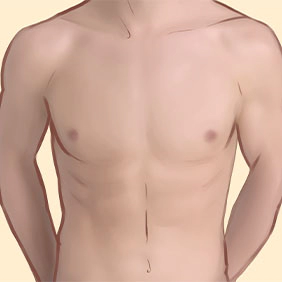
Male areola reduction is a procedure that makes a wide areola smaller by removing a ring of skin around its border. In men, though, a large-looking areola is often caused by glandular tissue or fat underneath, so the first step is finding out what lies beneath it.
Try this: lie down and gently pinch the tissue under your areola, the darker circle of skin around the nipple. Some men feel a firm, coin-sized disc. Others feel something soft that spreads out with no clear edge. They may describe exactly the same worry, yet they need different operations.
I’m Dr. Lee Sung-wook, a board-certified plastic surgeon at MINE Plastic Surgery & Dermatology in Seoul. Many men lower their voice when they raise this concern, but it is not a rare one. In this guide I’ll explain how to tell the three types apart and, for each, whether male areola reduction is enough on its own or needs to be combined with gynecomastia surgery.
Table of Contents
Table of Contents
What Is Male Areola Reduction? Why a Man’s Areola Can Look Large
First, the terms: the nipple is the small part that sticks out; the areola is the pigmented skin around it. They are different tissues and grow for different reasons.
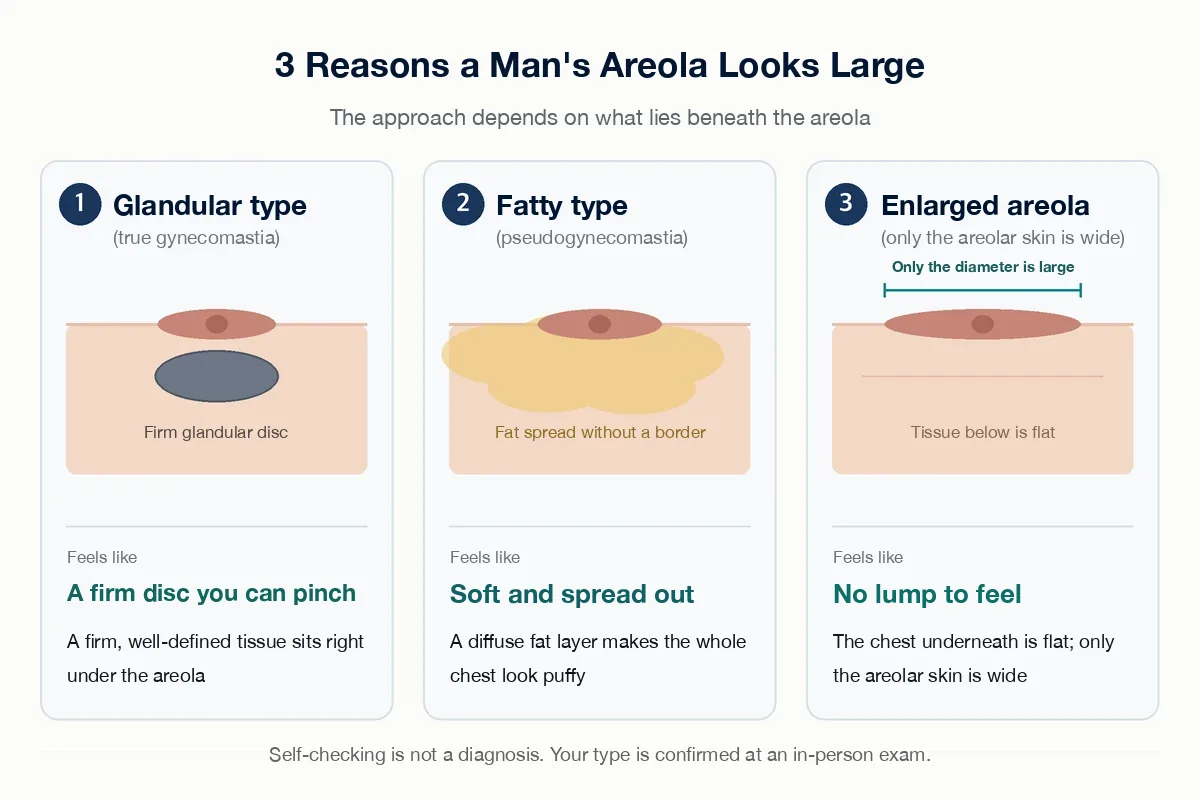
In men, an areola usually looks large for one of three reasons: glandular tissue (the tissue that produces milk in women) has grown underneath it, fat has built up without any gland, or the chest is flat and only the areolar skin itself is wide. When a man asks me about male areola reduction, working out which of these three applies is the first thing I check.
Type 1: Glandular tissue under the areola (true gynecomastia)
True gynecomastia means glandular tissue has grown directly beneath the nipple and areola, where you can feel it. It spreads outward from the areola and usually affects both sides. Under your fingertips it feels like a firm disc, about the size of a coin or a checker piece, and some men notice a dull ache or tenderness when they press on it.
In practice, gland mixed with fat is the form I see most often, so “gland or fat?” is really a question of which makes up more of the volume.
Type 2: Fat without gland (pseudogynecomastia)
Pseudogynecomastia (a fatty chest, not a glandular one) means the fat layer has thickened without any growth of gland. It has no clear border and feels soft to the touch. It often started around the same time as weight gain. Another typical sign: when you lie down, the fat spreads out to the sides and the shape becomes less defined.
Type 3: Flat chest, wide areolar skin only (isolated areolar enlargement)
Some men have a masculine, flat chest, yet the areola circle still looks noticeably large. Neither gland nor fat is the cause; the areolar skin simply has a wide diameter. In that case there is no reason to operate inside the chest at all; male areola reduction alone addresses the problem.
Proportions make this easier to judge than a vague feeling that it “looks big.” Plastic surgery textbooks describe an ideal male proportion of chest width to areola diameter of about 3.4 to 1, and of nipple to areola of about 1 to 3. If your areola looks closer to a third of your chest width, it is on the wide side.
| Type | How it feels | Location | Both sides? | Usual approach |
|---|---|---|---|---|
| Glandular (true gynecomastia) | Firm, coin-like disc | Directly under the areola | Usually both | Gland removal through an incision at the areolar edge |
| Fatty (pseudogynecomastia) | Soft, spread out, no clear border | Across the whole chest | Usually both | Weight loss first, then liposuction for what remains |
| Enlarged areola | No lump to feel | The areolar skin itself | One or both | Periareolar donut reduction |
Dr. Lee’s Key Point: The first fork in male areola reduction is what lies under the areola. A firm disc means gland, something soft means fat, and nothing at all means it is the skin.
Gynecomastia vs Male Areola Reduction: 3 Terms Men Often Confuse
Gynecomastia is a condition; areola reduction is an operation
Gynecomastia is the name for a condition: glandular tissue has grown in the male chest and made it larger. It describes a state, not a surgery. Male areola reduction, on the other hand, is the name of an operation that reduces the diameter of the areolar skin. So being told you have gynecomastia does not automatically mean you need an areola reduction.
- Gynecomastia — a condition in which glandular tissue grows in the male chest (the diagnosis)
- Male areola reduction — surgery that reduces the diameter of the areolar skin (a treatment)
- Gynecomastia surgery — surgery that removes gland and fat from under the areola (a treatment)
The areola and the nipple are different structures
A wide areola and a long nipple are separate problems, and the surgery for each is planned separately. Quite a few men have a normal areolar diameter and are only bothered by the part that sticks out in the middle. If the length or width of the nipple itself is your concern, our article on male nipple reduction covers that topic in detail.
Why male areola enlargement differs from women’s
In women, the areolar skin often stretches after pregnancy, breastfeeding or changes in breast volume. In men, it is more often the gland or fat beneath that pushes the areola forward so it looks wider. Because the starting point is different, the incision plan is different too. For a broader look at the procedure in women, see our guide to areola reduction surgery.
Dr. Lee’s Key Point: Gynecomastia is a diagnosis; areola reduction is an operation. Having the diagnosis does not decide the surgery.
Who Needs Male Areola Reduction? A 3-Step Self-Check at Home
Here is a way to get a rough sense of direction before you come in. Your fingertips are more reliable than a mirror.
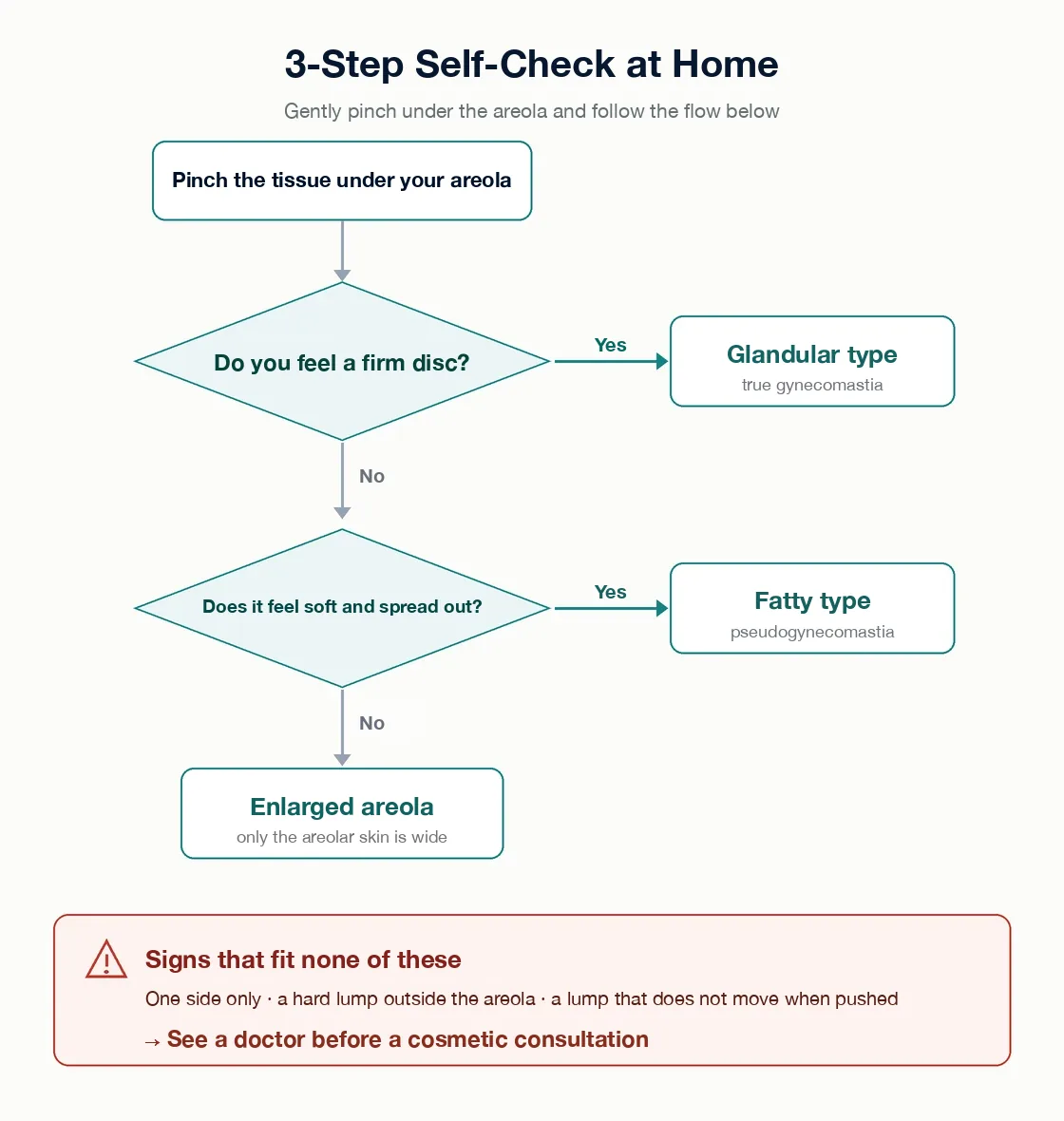
Step 1: Lie down and gently pinch under the areola
If you feel a firm, coin-sized disc right under the areola, the glandular type is likely. If it feels soft with no clear edge, the fatty type is more likely. Lying down helps because fat spreads to the sides while a glandular disc keeps its shape.
Step 2: Compare both sides
Gynecomastia usually affects both sides, and a small size difference is common. If only one side has clearly enlarged, see the warning signs in the next section.
Step 3: Look at the areolar border and overall chest contour
Ask yourself whether the whole chest bulges, or whether the chest line is flat and only the areola circle is wide. If the chest contour bulges too, gland or fat is involved. If the chest is flat and only the areola is wide, the areolar skin itself is the likely issue. In that case, male areola reduction on its own is usually what’s needed.
- A firm disc under the areola → closer to the glandular type
- Soft and spread out with no border → closer to the fatty type
- No lump, only a wide areola circle → closer to the enlarged-areola type
- It started when you were gaining weight → suspect a larger share of fat first
- Only one side, or a lump outside the areola → stop self-checking and see a doctor
This check gives you a direction, not a diagnosis. A doctor tells gland and fat apart mainly by examination, adding ultrasound only when needed.
Dr. Lee’s Key Point: Lie down, check both sides and pinch under the areola. Those three things alone change where your consultation starts.
Precautions: When to See a Doctor First — and When Surgery Can Wait
This part matters even though it is uncommon. Male breast cancer accounts for less than 1% of cancers in men. Its typical pattern, though, is different from gynecomastia: one side only, with a hard lump that feels fixed in place, often outside the areola.
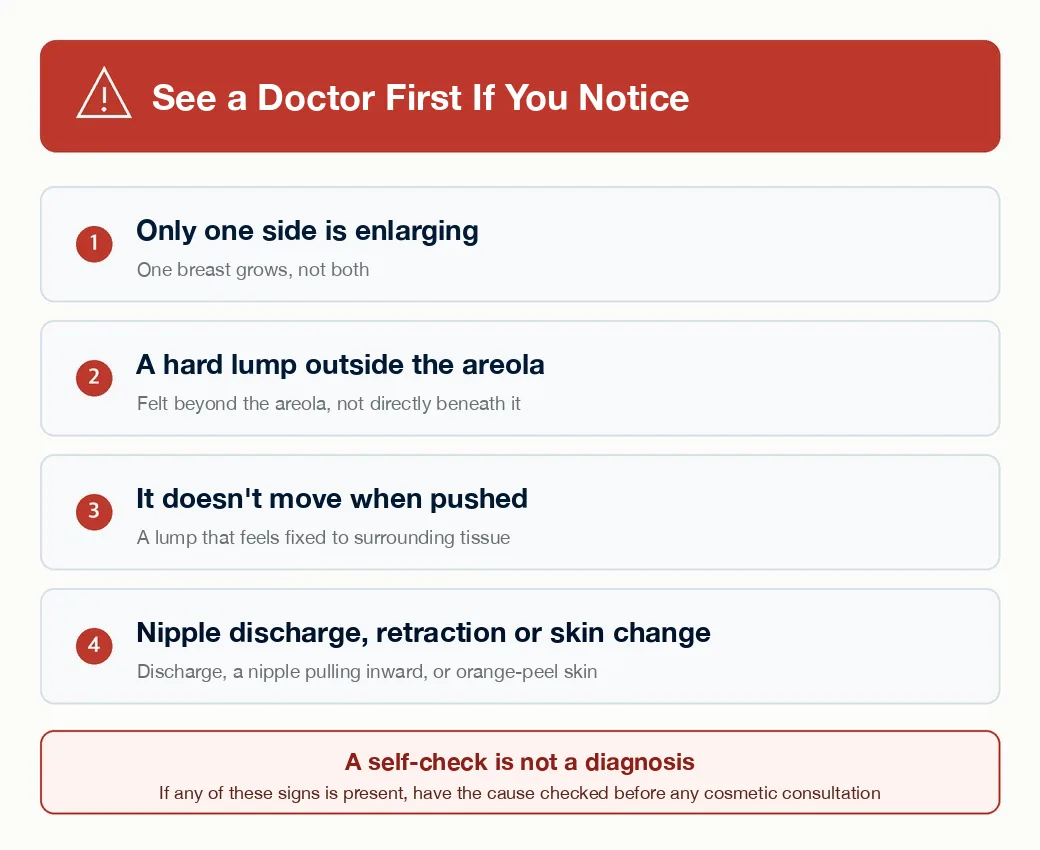
Red flags: one side only, hard fixed lump, lump outside the areola
The glandular disc of gynecomastia is usually on both sides, sits directly beneath the areola and moves a little under the skin. A lump on one side that stays put when pushed, or one felt separately in the chest tissue beyond the areola, is a different kind of finding.
Nipple discharge, retraction or skin change
Discharge without squeezing, a nipple that is pulling inward, or skin that starts to look like orange peel all need to be checked. The same goes for a lump in the armpit.
If you notice even one of these signs, a medical exam comes before any male areola reduction consultation. Hormone tests or mammography are not run on everyone; they are used selectively when only one side has grown or something more serious is suspected.
On the other hand, in my clinical experience, many men who ask about male areola reduction don’t need to book surgery that day. Sometimes waiting is the better choice.
Puberty: most cases resolve on their own
According to plastic surgery textbooks, up to 65% of adolescent boys develop pubertal gynecomastia, and about 75% of cases resolve on their own within two years. It appears while hormones settle into balance, then recedes.
Medication or underlying cause: correct the cause first
Medical literature attributes roughly 10–20% of gynecomastia to medications or other substances, and in those cases fixing the cause comes before surgery. A clinical overview such as the StatPearls overview of gynecomastia (NCBI Bookshelf) lists the usual culprits, including some stomach and blood pressure drugs, certain psychiatric medications and prostate medications. In the gym context, anabolic steroids and some supplements belong on this list too. Thyroid, liver or kidney problems can also play a role, so tell your doctor about everything you take.
Weight-related: fatty type → lose weight first
For the fatty type, weight loss is the first step. As fat decreases, the chest flattens, and the impression of an oversized areola often fades. Treating only what remains after that is the way to keep incisions to a minimum.
| Situation | What to do first | When to revisit surgery |
|---|---|---|
| Started at puberty, less than 2 years ago | Watch and wait | If it is unchanged after 2 years |
| A medication or substance is a suspected cause | Talk to your prescribing doctor about adjusting it | If it remains after the cause is corrected |
| Fatty type that began with weight gain | Lose weight | If the contour remains after weight loss |
| One side only, outside the areola, fixed lump | Medical exam and tests | Only after the cause has been identified |
Dr. Lee’s Key Point: When puberty, medication or weight is behind it, time and correcting the cause come before surgery.
The Procedure: Male Areola Reduction Alone vs Combined With Gynecomastia Surgery
This is where the path really splits. If you can feel a firm disc under the areola, male areola reduction alone will not fix the chest contour. You can shrink the areolar diameter, but the tissue pushing it forward from below would still be there.
When gland is present: why liposuction alone is not enough
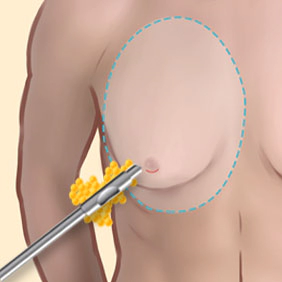
Glandular tissue is much tougher and firmer than fat. The cannula used in liposuction (a thin tube that suctions fat) is designed for soft fat, so it removes very little of a fibrous glandular disc. If only the fat is removed, the remaining disc can actually stand out more, and the area under the areola may poke out like a button.
Where the incision goes: the lower areolar border
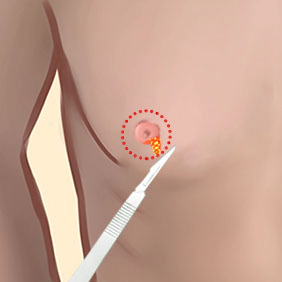
So when gland is present, the surgeon makes a half-circle incision along the colour boundary between the areola and the surrounding skin and removes the glandular disc directly. This spot is chosen because a scar placed where the colour changes tends to blend in. The surrounding fat is often suctioned through the same opening.
In the textbook algorithm, liposuction comes first; any firm disc that remains is removed through a half-circle incision along the lower areolar border. Removing the fat first reveals the true size of the gland, which is why following this order helps keep the incision short.
Removing everything is not the goal. A thin layer of tissue is deliberately left directly under the areola. If that layer is taken out too, the areola can sink in, which surgeons call a saucer deformity. Judging how much to leave is the real skill in this operation.
When excess skin must also be reduced
If there is a lot of stretched skin, the chest can sag like an empty pouch even after the gland is removed. Whether skin also needs reducing is judged on the operating table once tissue is out: if folds smooth out on their own, the wound is closed; if not, skin is reduced around the areola, or around its whole circumference in more severe cases. A longer incision means a longer scar, so it is extended only as far as needed.
- Glandular disc, tight skin → half-circle incision at the areolar edge to remove the gland, plus liposuction around it
- Gland mixed with fat → liposuction to shape the contour first, then removal of the remaining disc
- Skin still loose after gland removal → skin reduced around the areola as well
- No gland, only wide areolar skin → male areola reduction (periareolar donut technique) alone
Because the amount of gland often differs slightly between sides, the tissue removed from each side is compared and the contour is rechecked with the patient sitting up. You can see how the full operation is carried out on our page about gynecomastia surgery at MINE.
When the areola alone is wide: periareolar donut reduction
Now the other branch. If you can’t feel any lump no matter how you pinch, and your chest is flat but the areola circle is wide, what needs reducing is the areolar skin itself. This is the classic situation for male areola reduction on its own.
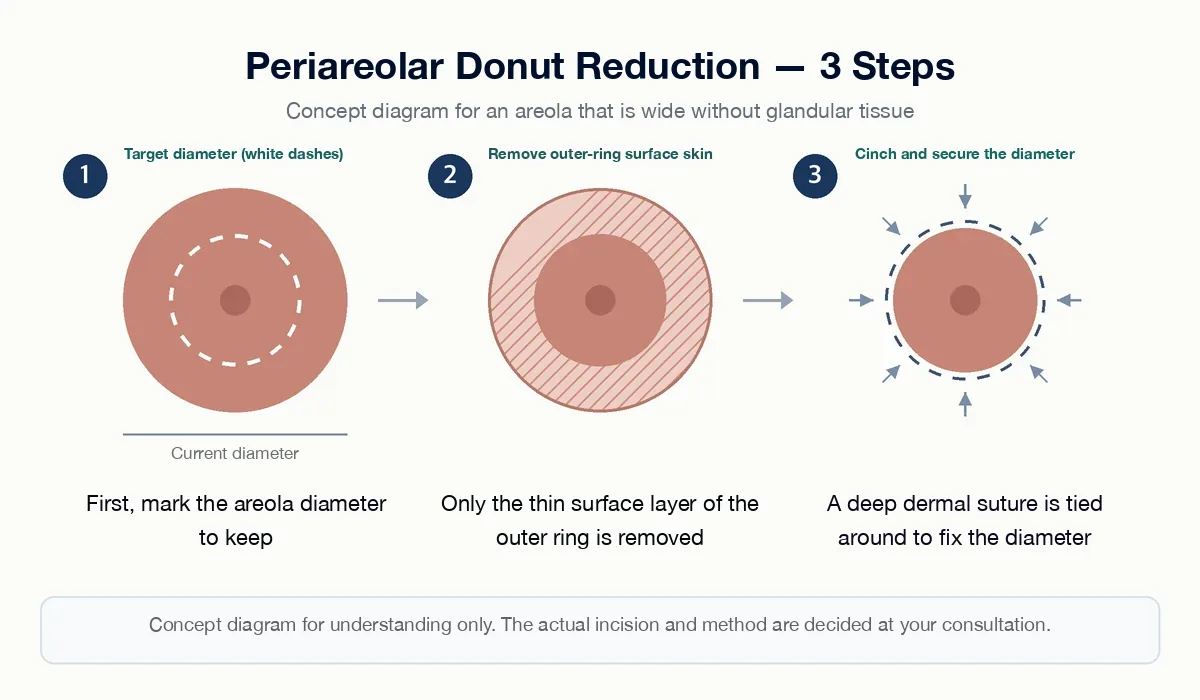
First, the diameter of the areola to be kept is marked. A donut-shaped ring is drawn outside it, and only the very top layer of skin in that ring is removed. This step is called de-epithelialisation (removing only the surface layer of skin). The deeper layer of skin and the blood vessels inside it are left in place to protect the blood supply to the nipple and areola.
The target diameter is based on proportion, not guesswork. The circle to keep is drawn according to chest width, and only the ring outside it is removed. Because the areola spreads differently when you sit and when you lie down, the markings are checked in both positions.
Keeping the areola from widening again (purse-string / round-block)
Plastic surgery textbooks note that the main weakness of incisions around the areola is a tendency for the areola to widen again afterwards. Without a stitch that wraps around the deep skin layer and cinches the new diameter, tension from the surrounding skin can stretch it back out. Think of a drawstring pulled tight around the mouth of a pouch. The purse-string suture described by Peled and colleagues in 1985, and the round-block technique described by Benelli in 1990, were developed for exactly this purpose.
Fixing the diameter in the deep layer takes the tension off the surface stitches, so the skin can be closed without strain. Small pleats around the edge right after surgery often smooth out over time.
No lump? The chest is not opened
With no glandular tissue present, there is no reason to go inside the chest. The surgery stays around the areola, so recovery is lighter too. If you’ve been told you need gynecomastia surgery but can’t feel any disc, it is worth having that assessment double-checked.
| Male areola reduction alone | Combined with gynecomastia surgery | |
|---|---|---|
| What is treated | The diameter of the areolar skin | Gland and fat, plus areolar skin if needed |
| What you can feel | No lump | A firm disc or a soft layer of fat |
| Incision | A ring around the areola | A half-circle at the areolar edge, extended around the whole areola if needed |
| Work inside the chest | None | Yes (gland removal and liposuction) |
| Main trade-offs | A scar around the areola; the diameter may widen again | Scarring, a sunken areola, asymmetry, hematoma, recurrence |
When gland is present and the areola is still wide after it is removed, the diameter can be reduced through the same incision on the same day. Removing a lot of tissue and skin at once strains the blood supply, though, so how much to combine depends on the amount of tissue.
Dr. Lee’s Key Point: If there is no lump, the inside of the chest is left alone. Only the surface of a ring of skin is removed, and the new diameter is cinched in the deep layer.
Recovery, Scarring and Possible Complications
Male areola reduction alone is usually a shorter operation and lighter on the body than one that also removes gland, because it stays in the skin layer. Lighter does not mean scarless, however. Even when only the areola is reduced, the incision runs all the way around it.
What the scar looks like
The incision for male areola reduction is placed on the colour boundary between the areola and the surrounding skin so that it blends in. The sharper the colour contrast and the clearer the border, the less noticeable the line tends to be. Reducing the diameter too aggressively can cause pleating around the edge or an unnatural shape, which is another reason the target size is based on chest proportions. For more on scar placement by technique, see where gynecomastia surgery scars sit.
Possible complications
To be honest, this surgery has side effects like any other. Plastic surgery textbooks list the following complications of male chest reduction:
- Bleeding and hematoma (a collection of blood), or seroma (a collection of fluid)
- Infection
- Under-correction or over-correction
- A sunken area under the areola (saucer deformity)
- Left–right asymmetry
- Numbness or altered sensation
- The nipple pulling inward
- Wide or raised scars
The colour and shape of the areola can also change. Tissue that keeps returning should be distinguished from tissue that was simply left behind; when growth truly recurs, textbooks advise looking for an underlying medical cause. How bruising and swelling settle, and how long to wear a compression garment, are covered in our guide to gynecomastia surgery recovery.
Frequently Asked Questions About Male Areola Reduction
How can a man reduce the size of his areolas?
It depends on the cause. If glandular tissue sits under the areola, it is removed through an incision at the areolar edge. If it is mostly fat, weight loss comes first and liposuction treats what remains. If only the areolar skin is wide, male areola reduction with the periareolar donut technique is enough on its own. Exercise cannot shrink stretched areolar skin.
What is the difference between male areola reduction and gynecomastia surgery?
They remove different things. Male areola reduction reduces the diameter of the areolar skin, while gynecomastia surgery removes gland and fat from under the areola. Both use incisions at the areolar edge, which is why they are easily confused. It is common to do both on the same day.
Can exercise or dieting make male areolas smaller?
For the fatty type, yes, it helps. As you lose weight and the chest gets thinner, the areola looks smaller in proportion. Glandular tissue and areolar skin that has already stretched will not shrink with exercise, so in those cases surgery may be considered.
How noticeable is the scar after male areola reduction?
The incision is placed on the colour boundary between the areola and the skin so it blends into the change in colour. Still, no surgery leaves no scar at all. How visible it stays depends on your skin, the stitching technique and aftercare, which we discuss at the consultation.
When should a teenager with enlarged breasts see a doctor?
Most pubertal cases improve on their own within about two years, so there is no need to decide on surgery right away. See a doctor sooner, regardless of timing, if only one side grows, there is a hard lump outside the areola, or there is nipple discharge. Pain that interferes with daily life is also worth having checked.
Summary: When a Consultation Makes Sense
A man’s areola looks wide for one of three reasons: gland, fat or the areolar skin itself. If you feel a glandular disc, the areolar edge is opened and the gland is removed as well. If the skin is the only problem, male areola reduction with the donut technique is enough on its own. And a hard, fixed lump on one side or outside the areola calls for a medical exam, not a cosmetic consultation.
The right approach depends on how much gland there is and how much the skin has stretched. Neither can be judged from photos or descriptions; they have to be felt in an exam. I recommend an in-person consultation with Dr. Lee Sung-wook, a board-certified plastic surgeon, before you decide. If gland removal looks likely, start with our page on gynecomastia surgery at MINE. You can also reach us through our online consultation form or by phone at +82-2-516-1175 (813 Nonhyeon-ro, Gangnam-gu, Seoul).
Written and medically reviewed by: Dr. Lee Sung-wook, Board-Certified Plastic Surgeon, Representative Director of MINE Plastic Surgery & Dermatology
※ This content is for informational purposes only and does not replace professional medical advice, diagnosis, or treatment. Individual results may vary, and side effects may occur. Please consult with a board-certified plastic surgeon for personalized advice.