EN



Breast asymmetry surgery is a plastic surgery procedure that reduces a visible difference in size, shape or nipple position between the two breasts — by using different implant sizes, transferring fat to the smaller side, or lifting or reducing one side. The aim is balance that other people would not notice, not two identical breasts.
If one cup always gapes while the other fits, you are far from alone. Most women have some difference between their breasts, and for many it is barely visible. Breast asymmetry surgery becomes worth considering when the difference shows in clothes, makes bra shopping a puzzle, or simply bothers you every day.
In this guide I explain, in plain language, how breast asymmetry surgery works, why breasts become uneven, and how the three main tools compare: different implant sizes, fat transfer to the smaller breast, and a lift or reduction on one side. In practice these are often combined. For a wider overview of procedures, see our guide to types of breast surgery.
What Is Breast Asymmetry Surgery?
Breast asymmetry surgery is not one fixed operation. It is a plan built around what is actually different between your two breasts. That difference usually falls into one or more of three areas: volume (one breast is smaller), shape (one breast is narrower, flatter or more pointed), and position (one nipple or breast fold sits higher than the other).

Because each of these needs a different fix, the first step is always careful measurement. Once we know which of the three is driving the difference, the choice of method becomes much clearer.
How Common Uneven Breasts Are
Uneven breasts are a normal part of human anatomy. The two sides of the body are rarely perfect mirror images, and breasts are no exception. Small differences in cup size, nipple height or fullness are common and usually harmless.
Because some asymmetry is so common, the realistic goal of breast asymmetry surgery is balance, not two identical breasts. This is an important point to settle before any planning starts, because it shapes what a good result looks like for you.
When a Difference Is Worth Correcting
Breast asymmetry surgery is elective. There is no medical rule that says a certain difference must be corrected. The decision rests on how visible the difference is and how much it affects your comfort and confidence.
Patients usually come in for one of these reasons:
- One bra cup is clearly looser, so they pad one side every day.
- Swimwear and fitted tops show the difference.
- One breast is heavier and feels uncomfortable during exercise.
- The difference has grown after pregnancy, breastfeeding or weight change.
For teenagers, it is wise to wait until breast growth has settled before planning surgery. Breasts can keep changing during development, and a difference that looks large at one stage may shrink later.
Why Breasts Are Uneven: Volume, Shape and Position
Breast surgery textbooks sort asymmetry into 3 basic groups — volume, contour (shape) and position — and the group decides which technique is used. Thinking in these three groups makes a confusing problem much easier to understand.
Volume Difference (One Breast Smaller)
This is the most familiar type of uneven breasts. One breast simply holds more tissue than the other. The shape and nipple height may be similar, but one side looks and feels fuller. A pure volume gap is usually the easiest to balance, either by adding volume to the smaller side or by reducing the larger one.
Shape Difference (Tuberous or Constricted Breast)
Sometimes one breast develops with a narrow base, a high breast fold and a puffy or enlarged areola. This is called a tuberous or constricted breast. Another rare cause is Poland syndrome, a condition present from birth in which the chest muscle and breast on one side are underdeveloped.
These conditions need a different plan from simple volume work, because the tissue itself must be reshaped and released, not only filled. If your asymmetry looks like this, the consultation will focus on shape as much as size.
Position Difference (Nipple Height and Breast Fold)
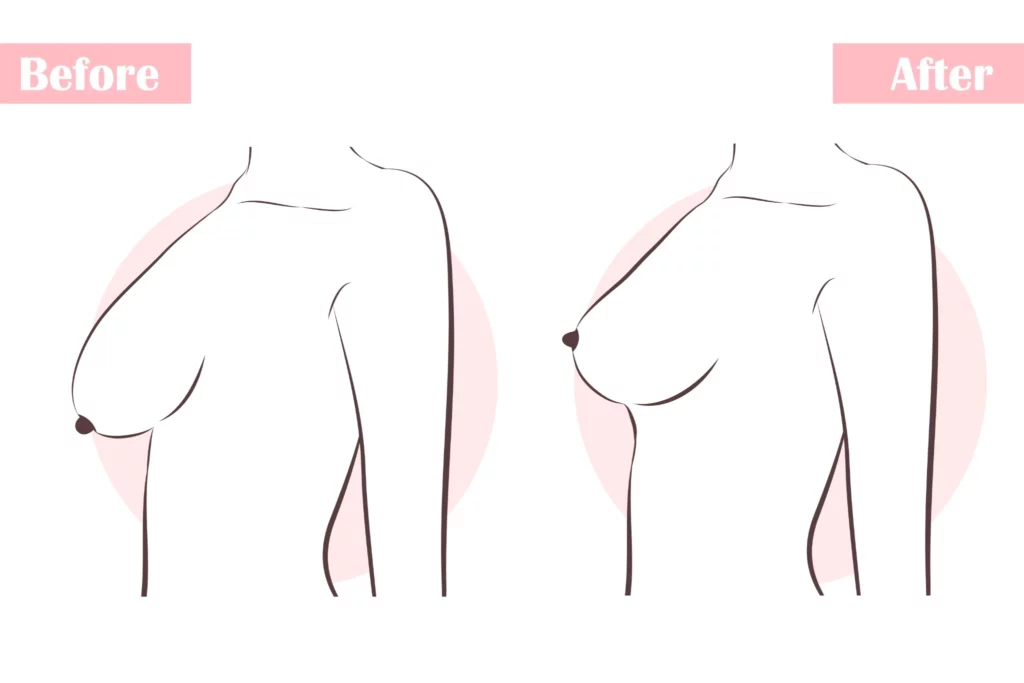
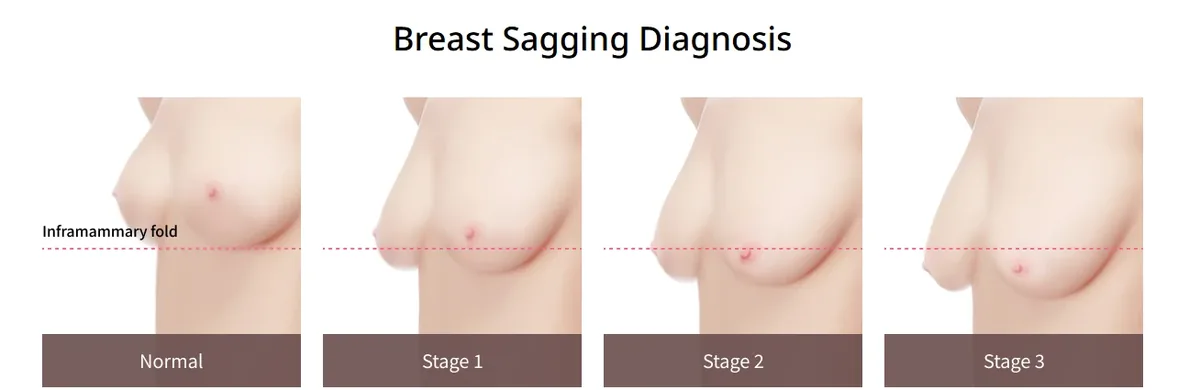
Here the main problem is where things sit. One nipple may be lower, or the inframammary fold (the crease under the breast) may sit at a different level. One breast may also sag more than the other. Adding volume alone does not fix a position difference; it often needs a lift on one side.
The shape of the chest wall also matters. If the ribcage itself is uneven, it limits how symmetric the breasts can look, whatever technique is used.
One more group deserves a separate mention. If your breasts were even before an augmentation and became uneven afterwards, the cause is usually the implant — malposition (the implant has shifted), capsular contracture (scar tissue tightening around it) or rupture. That is a revision problem rather than natural asymmetry, and it is covered in our guide to breast revision surgery.
3 Breast Asymmetry Surgery Options Compared
Surgical textbooks list 4 approaches to breast asymmetry: different implant sizes, reducing the fuller breast, fat grafting the smaller breast, or a combination of these. Below, I group them into three main tools and then explain how they are combined.

Different Implant Sizes (or Profiles) for Each Side
When both breasts are small and you would also like to go larger, different implant sizes are often the most practical route. Each breast is measured on its own and compared with the other. The smaller side then receives a larger implant volume, and sometimes a different profile (how far the implant projects forward).
Choosing implants for breast asymmetry surgery is not simple arithmetic. A gap of a certain volume does not always mean the implants should differ by exactly that amount, because skin stretch, base width and tissue thickness all change how an implant looks. In uncommon cases where the skin on the smaller side is very tight, textbooks describe stretching it first with a tissue expander (a temporary balloon-like implant) before placing the final implant.
Different implants are good at balancing volume. On their own, they cannot raise a lower nipple or correct a lower breast fold.
Fat Transfer to the Smaller Breast
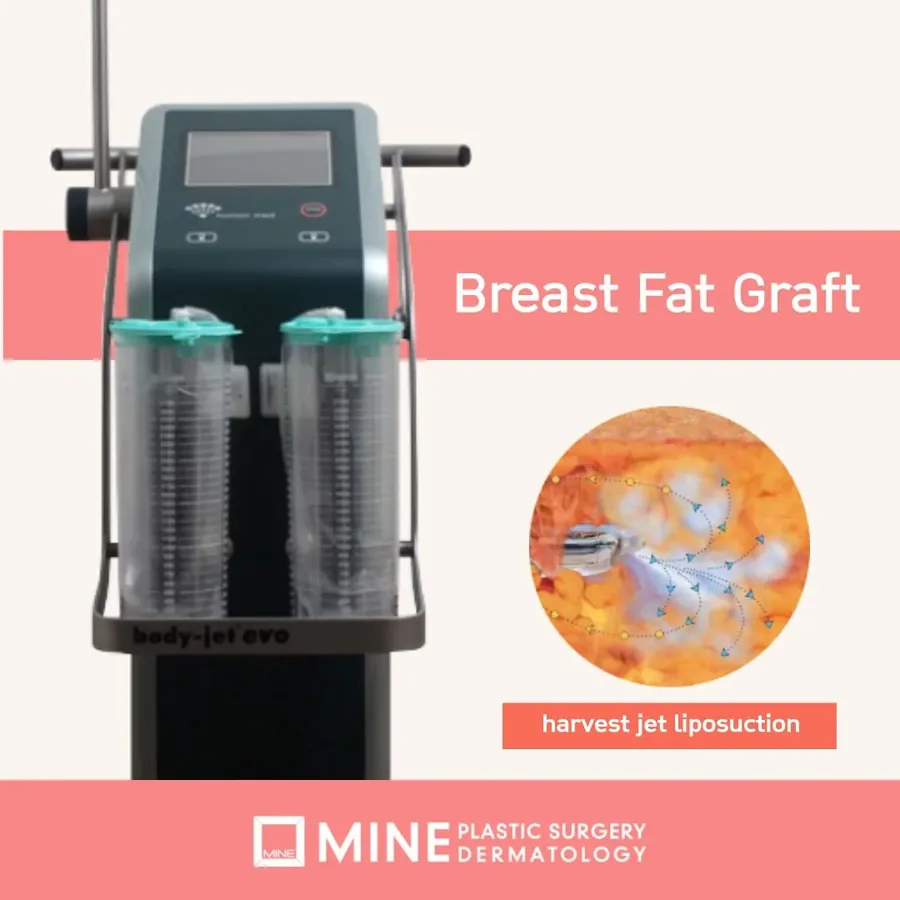
Fat transfer, also called fat grafting, is an implant-free form of breast asymmetry surgery. It takes fat from an area such as the abdomen or thighs by gentle liposuction, purifies it, and injects it into the smaller breast in many tiny portions. Published surgical guidance notes that minor corrections can be achieved safely with fat alone. It is a useful option when one side is underdeveloped, and for smoothing small dips in contour. You can read more about the technique in our page on breast fat grafting.
Fat transfer has a clear limitation: not all of the fat survives. Plastic surgery textbooks report that roughly 50% of transferred fat may be lost over time, so a second fat transfer session is sometimes needed. Textbooks also note that routine breast imaging can still be carried out after fat grafting; you should simply tell the radiologist about your surgery.
One-Sided Lift or Reduction of the Larger Breast
When the problem is position or excess size, the work is done on the larger or lower breast. A mastopexy (breast lift) on one side raises the nipple and tightens the skin so that it matches the other side. A reduction removes tissue from a breast that is clearly heavier. For details on the lift itself, see our page on breast lift surgery, and the ASPS overview of breast lift gives a helpful general background.
In breast asymmetry surgery, a one-sided lift is often paired with volume work on the other breast. The goal is for both sides to match in shape and fullness, not only in nipple height.
Combining Methods
Many patients have more than one type of difference. One breast might be both smaller and lower, for example. In that case breast asymmetry surgery may combine an implant on one side with a lift on the other, or an implant with a small amount of fat to refine the edges.
| Method | Suited to | Size of difference | Scars | Possible extra session |
|---|---|---|---|---|
| Different implant sizes | Volume gap when you also want larger breasts | Moderate to large | One short incision per side (fold, areola edge or armpit) | Rare; revision if position or size needs adjusting |
| Fat transfer to the smaller breast | Mild volume gap, contour dips, underdeveloped side | Small to mild | Tiny entry points on the breast and donor area | Sometimes, because part of the fat is absorbed |
| One-sided lift or reduction | Lower nipple, sagging or heavier breast | Any, when position or excess is the issue | Around the areola, sometimes vertical or anchor-shaped | Occasionally, for fine-tuning |
| Combination | More than one type of difference | Moderate to large | Depends on the methods combined | Depends on the methods combined |
Which Option Fits Your Type of Asymmetry?
The right breast asymmetry surgery depends on what kind of difference you have and what you want. A breast surgery textbook puts it simply: how volume differences are treated depends greatly on the patient’s wishes. Some women want both breasts larger; others only want the larger side to match the smaller one.
Small Volume Difference
If the gap is only a fraction of a cup size and your nipples sit at a similar height, the simplest breast asymmetry surgery is often fat transfer to the smaller breast. It avoids an implant and uses your own tissue. A short comparison of the two volume tools is in our article on implants vs fat transfer for volume and scars.
Moderate to Large Difference With Augmentation Desired
If the difference is clearly visible and you would like to be larger overall, different implant sizes are usually the most predictable choice for breast asymmetry surgery. Fat can then be added in small amounts where an edge or dip needs smoothing.
One Breast Sagging or Larger
When one nipple sits lower or one breast is fuller and heavier, breast asymmetry surgery focuses on that side: a one-sided lift, an asymmetric lift (both sides lifted by different amounts), or a reduction. Volume may be added to the other side if it is also small.
Asymmetry After a Previous Breast Surgery
Asymmetry that appears after an augmentation needs a different assessment. We check implant position, capsule tightness and implant integrity first, because the fix is usually a revision rather than a new augmentation.
During a consultation for breast asymmetry surgery, these measurements guide the plan:
- Breast base width on each side
- Nipple-to-fold distance (from the nipple to the crease under the breast)
- Nipple height compared with the other side
- Skin stretch and tissue thickness
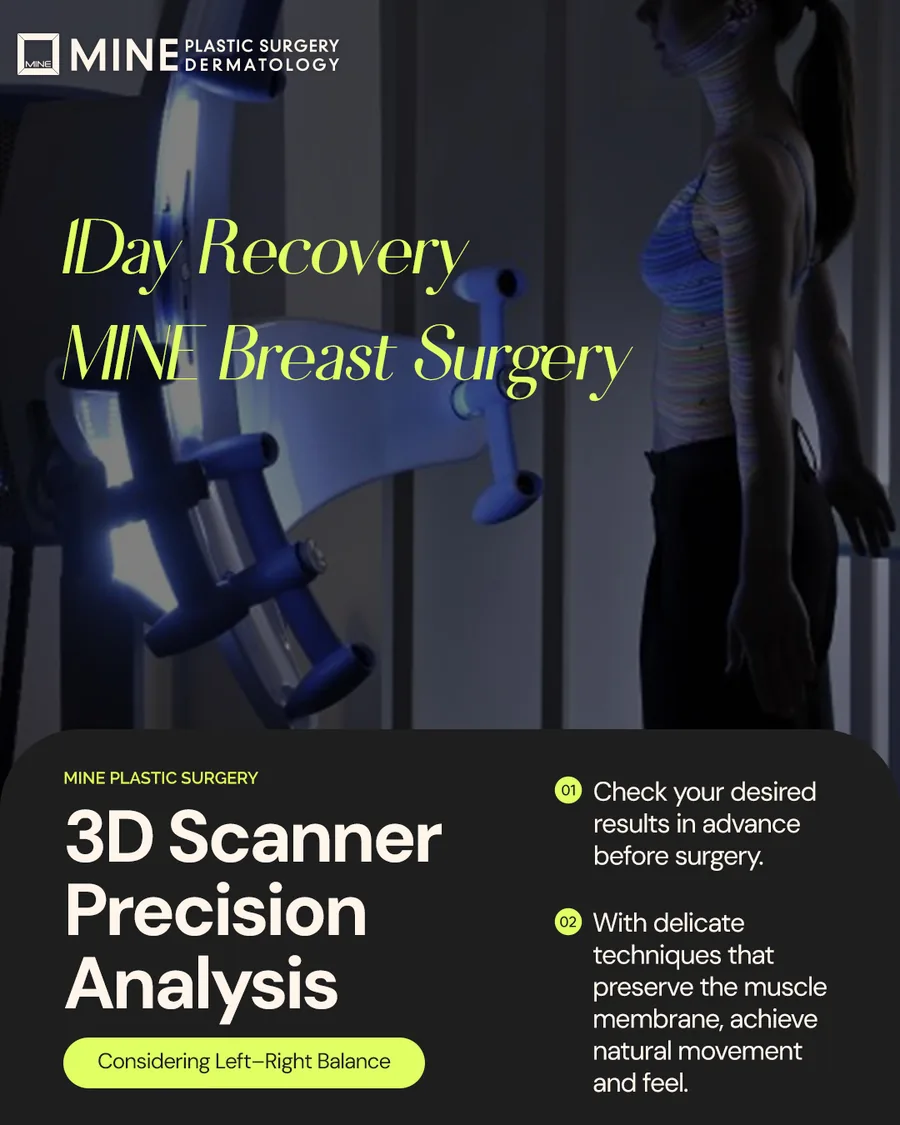
- Photos and 3D views from the front and sides
A medical check always comes before a cosmetic plan. A new lump, skin dimpling, a change in the nipple, or asymmetry that appears suddenly in adulthood should be examined with breast imaging first. These signs are not a reason to panic, but they are a reason to rule out a medical cause before any breast asymmetry surgery is planned.
Surgery Day and Recovery Timeline
What happens on the day of surgery depends on the methods chosen, but the overall flow is similar. Recovery after breast asymmetry surgery also varies by method, so it helps to look at each separately.
What Happens on Surgery Day
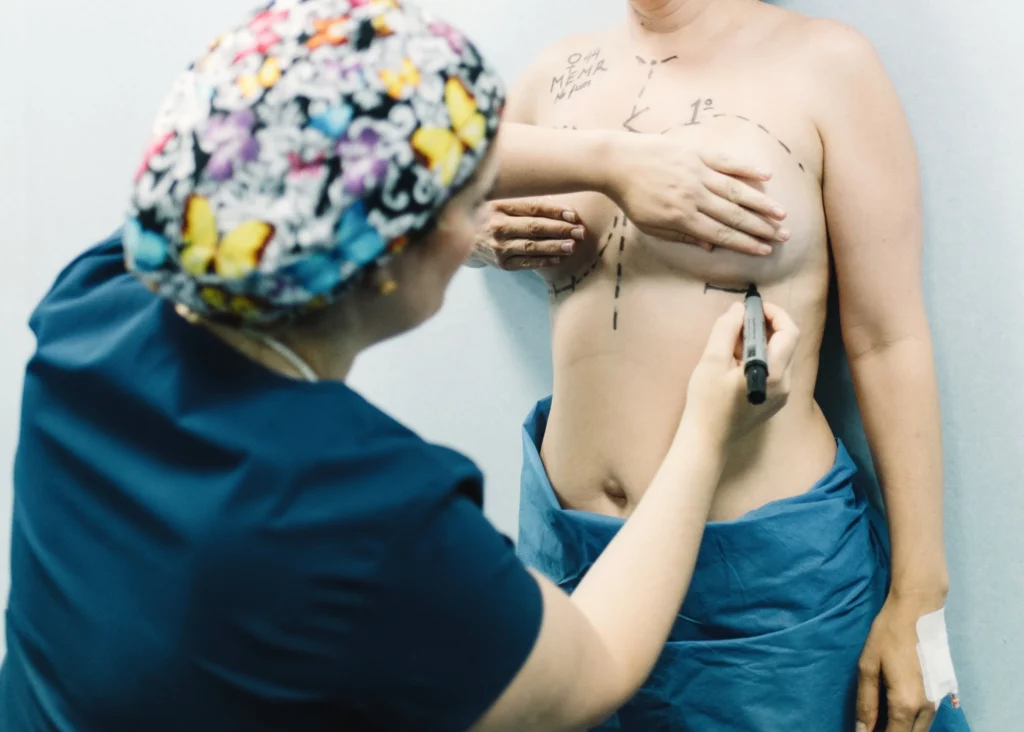
Breast asymmetry surgery is usually performed under general anesthesia. Before you go into the operating room, the surgeon marks your breasts while you are standing, because breasts sit differently when you lie down. The incision depends on the method: the breast fold, the edge of the areola or the armpit for implants; around the areola, and sometimes vertically, for a lift; and small entry points for fat transfer, which also adds a liposuction step at the donor site.
Recovery Week by Week
The recovery ranges below are typical, not guaranteed. Your own timeline depends on the methods combined, your healing and your surgeon’s instructions.
| Method | First week | Weeks 2–6 | When to judge the result |
|---|---|---|---|
| Different implant sizes | Soreness and tightness; many return to desk work after about 1 week | Avoid heavy lifting and upper-body exercise for about 4–6 weeks | Implants settle over about 3–6 months |
| Fat transfer | Swelling and bruising on the breast and donor area | Swelling settles gradually over several weeks | Volume is judged at about 3–6 months |
| One-sided lift or reduction | Wound care and a support bra | Light activity; avoid strain on the incisions | Shape settles over months; scars keep fading for about 12 months |
Swelling is often uneven in the early weeks, especially when the two sides had different procedures. One breast may look larger, higher or firmer for a while. This is expected, so try not to judge the balance during the first weeks.
When You Can Judge the Final Balance
Fat transfer volume is usually judged about 3 to 6 months after surgery, once swelling has settled and the surviving fat has stabilized. Implants also need a few months to drop into their final position, and breast lift scars typically keep fading for about 12 months.
For international patients, I recommend planning enough time in Seoul for the early follow-up checks before flying home. Our team can advise on a sensible length of stay once your surgical plan is set.
Risks and Realistic Limits of Breast Asymmetry Surgery
Every breast asymmetry surgery method carries risks, and a good plan weighs them against the benefit. Knowing them in advance also helps you recognize what is normal during healing and what needs a call to the clinic.
Risks of Each Method
- Implants: capsular contracture (scar tissue tightening around the implant), malposition, rupture, infection, bleeding and changes in nipple or breast sensation. The American Society of Plastic Surgeons’ page on breast augmentation gives a clear general overview of implant safety.
- Fat transfer: unpredictable fat survival, oil cysts (small fluid-filled lumps), fat necrosis (firm lumps where fat did not survive) and bruising at the donor site.
- Lift or reduction: visible scars, changes in nipple sensation and wound-healing problems.
Why Perfect Symmetry Is Not the Goal
No surgeon can make two breasts identical. Natural differences in the chest wall, skin and tissue remain after any operation, and the two sides also heal slightly differently. A realistic goal for breast asymmetry surgery is balance that other people would not notice, with clothes and bras fitting evenly.
In my clinical experience, patients who start with this goal are usually the most satisfied, because their expectations match what surgery can actually deliver.
When a Touch-Up Is Needed
The surgical literature notes that over- or under-correction can leave some remaining volume or position difference, which is handled with a further revision. With fat transfer, a planned second session is common because part of the fat is absorbed. Touch-ups are usually considered only after the result of breast asymmetry surgery has settled, typically several months after surgery.
Frequently Asked Questions About Breast Asymmetry Surgery
How much difference between breasts is normal?
Some difference between the breasts is common in most women, and small variations in size or nipple height are usually harmless. Breast asymmetry surgery is worth considering when the difference shows in clothing or bra fit, or when it bothers you.
Can fat transfer alone fix uneven breasts?
For a mild volume difference, often yes — textbooks describe minor corrections achieved safely with fat alone. Because roughly half of the fat may not survive, a second session may be needed. Larger gaps usually need implants.
Can I get a different implant size in each breast?
Yes. Implants can differ in volume and sometimes in profile, chosen from measurements of each breast. However, implants alone cannot fix a difference in nipple height; that usually needs a lift on the lower side.
Is a one-sided breast lift possible?
Yes, when only one breast sags or one nipple sits lower. It is often combined with volume work so that both sides match in shape and fullness, not only in height.
How long does recovery take after breast asymmetry surgery?
It depends on the method. Many implant patients return to desk work after about 1 week, fat transfer volume is judged at about 3–6 months, and lift scars keep fading for about 12 months. These are general ranges.
Why are my breasts uneven after a previous augmentation?
The cause is usually implant malposition, capsular contracture or rupture rather than natural asymmetry. This is treated as a revision; see our guide to breast revision surgery for the options.
Planning Breast Asymmetry Surgery in Seoul
Every breast asymmetry is different, and the right plan comes from examining your breasts and listening to what you want to change. If you are considering breast asymmetry surgery in Seoul, you can start with an online consultation: send clear front and side photos, and I will review them personally and suggest a preliminary plan.
You can reach MINE Plastic Surgery through our online consultation form, on WhatsApp, or by phone at +82-2-516-1175.
Written and medically reviewed by Dr. Lee Sung-wook, Board-Certified Plastic Surgeon, MINE Plastic Surgery & Dermatology, Seoul. Published November 24, 2026. Last reviewed November 24, 2026.
※ This content is for informational purposes only and does not replace professional medical advice, diagnosis, or treatment. Individual results may vary, and side effects may occur. Please consult with a board-certified plastic surgeon for personalized advice.