EN


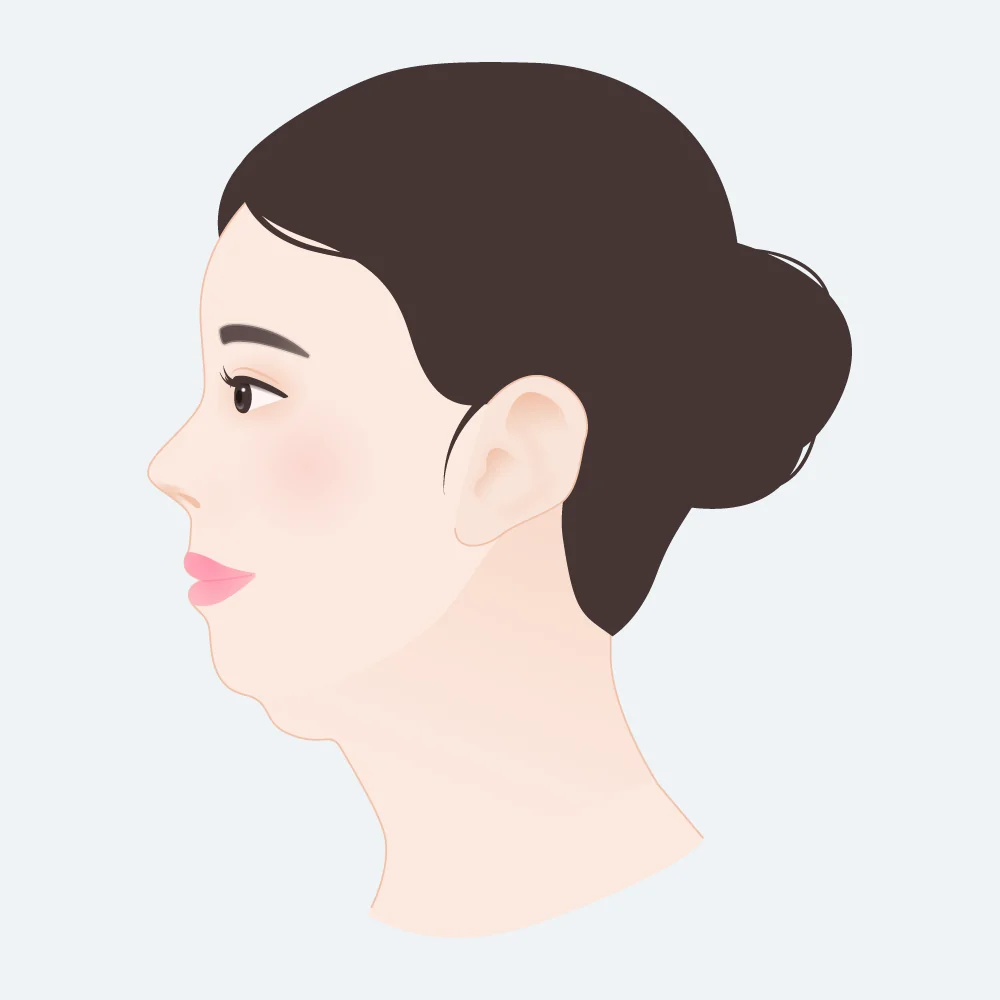
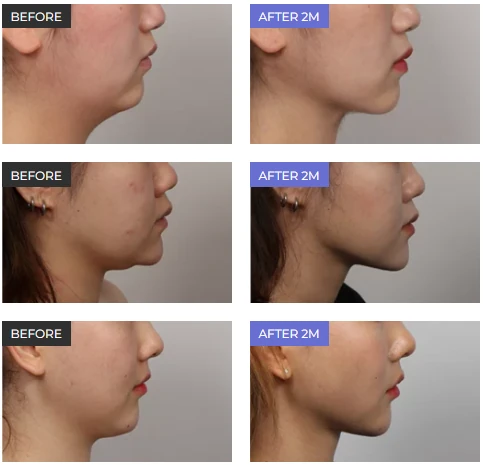
A double chin when skinny is fullness under the chin that stays even at a normal or low body weight, because its cause lies in deeper structures — fat beneath the neck muscle, a loose platysma, the salivary glands, or the position of the jaw and hyoid bone — rather than in body fat.
“I’m pretty slim, so why won’t my double chin go away?” In my clinic, this is one of the questions I hear most often. Many patients have already dieted and tried neck exercises while the area under the chin stayed exactly the same. If you have a double chin when skinny, you are far from alone, and it is not a sign that you have failed at dieting.
I’m Dr. Lee Sung-wook, a board-certified plastic surgeon at MINE Plastic Surgery in Seoul. This article answers two focused questions: what is actually causing a double chin when skinny in your case, and which treatment matches that cause. The short version is that the answer depends on which layer is responsible, not on how much you weigh.
Why You Get a Double Chin When Skinny: 5 Causes Weight Loss Can’t Reach
Body weight mainly changes the fat just under the skin. The muscle, glands and bone below it look much the same whether you gain or lose a few kilos. That is why a double chin when skinny is so common: the fullness is coming from somewhere dieting cannot reach.
Plastic surgery textbooks note that when the neck angle has looked blunt since youth, fat lying beneath the platysma is often responsible, and this deep fat cannot be removed by suction alone. Below are the 5 causes I check for in every slim patient.
1. Deep fat hiding beneath the neck muscle
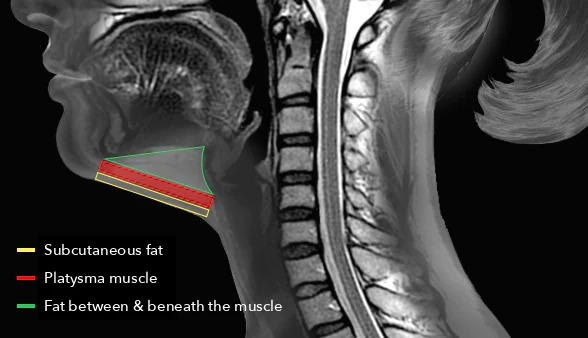
The neck has two fat layers under the chin. One sits just under the skin (subcutaneous fat). The other sits deeper, under a thin sheet of muscle called the platysma (subplatysmal fat). Textbooks describe this deeper fat as a common reason for a lifelong soft neck angle, sometimes together with a low-sitting hyoid bone.
This matters for treatment. A suction cannula works in the layer above the muscle, so deep fat is left behind. It has to be removed directly through a short incision under the chin. This is one of the main structural reasons thin people end up with a double chin.
2. A loose or separated platysma muscle
The platysma is a thin, sheet-like muscle that covers the front of the neck, a bit like a sling under the jaw. When its inner edges loosen or drift apart in the middle, the area under the chin sags forward even when there is very little fat. A loose platysma alone can produce a double chin in someone who is otherwise slim. Some people also see two vertical cords (platysmal bands) when they tense the neck.
3. Bone position: a low hyoid or a short chin
The hyoid is a small U-shaped bone above the Adam’s apple, and the tissues under your chin hang from it like a hammock. If it sits low or forward, the jaw-neck angle looks soft at any weight. A short or set-back lower jaw has a similar effect, because there is less “frame” for the skin and muscle to drape over. Bone position is one cause that no diet can change.
4. Bulky digastric muscles and salivary glands
Beneath the platysma there are also two small paired muscles under the chin (the anterior digastric muscles) and the submandibular glands, the salivary glands that sit just under each side of the jaw. Either can add fullness. Neck-lift specialists recommend that surgeons assess the gland, hyoid and digastric muscles before treating the platysma, a group they call the “cervical triad”.
In slim patients, glands are easy to miss. A gland that sits low can become more visible after fat is removed or the neck is tightened, which is why it needs to be checked before surgery, not after.
5. Skin that has lost its snap
Age on its own does not decide this; skin quality does. Some people in their thirties already have thin, crepey neck skin, while others keep firm, elastic skin much longer. Skin that no longer springs back cannot shrink neatly over a new contour. When skin is the main issue, the double chin tends to look like loose folds rather than a rounded pad.
Genetics and a forward-head posture (looking down at a phone) can also contribute. They help explain why two people at the same weight can have very different necklines.
The five causes at a glance:
- Deep fat beneath the platysma, which suction alone cannot reach
- A loose or separated platysma that lets the area under the chin sag forward
- Bone position: a low or forward hyoid, or a short or set-back lower jaw
- Bulky digastric muscles or submandibular glands that add fullness under the jaw
- Skin that has lost its elasticity and cannot shrink over a new contour
Fat, Muscle, Gland or Bone? How Surgeons Tell Them Apart
Because each cause needs a different fix, sorting them out comes first. Some simple checks at home can give you a hint, but they are not a diagnosis.
What a quick pinch and head-tilt can (and can’t) tell you
Soft tissue you can pinch, which thins out when you tilt your head back to look at the ceiling, is more likely to be fat just under the skin. Fullness that stays firm when you look up, or cords that appear when you clench your neck, point more toward muscle or deeper tissue.
Small, firm lumps just below the jawline on both sides may be the submandibular glands rather than fat. They often stand out more in slim patients because there is less fat around them.
What a consultation adds
A self-check cannot see beneath the muscle. An examination, with ultrasound where it is used, separates superficial fat, deep fat, muscle and gland so the treatment plan targets the right layer. If you want to understand how the neck angle itself is assessed, I explain it in more detail in what liposuction alone can and can’t do for a double chin.
Double Chin Treatment Matching Table: Which Fix Fits Your Type
Four common double chin types in slim patients each match a different treatment combination, plus a fifth option for mild cases. In my experience, many thin people with a double chin fall into the first or fourth row.
| What you see | Main cause | Usually matched treatment |
|---|---|---|
| Soft fullness, skin still springs back | Fat above (and sometimes below) the muscle + loose platysma | Chin liposuction with muscle tightening (platysma plication) — see double chin liposuction with muscle tightening at MINE |
| Fullness plus loose, crepey skin | Fat + muscle + skin laxity | Liposuction + muscle tightening + mini neck lift |
| Jowls and overall lower-face sagging with a double chin | Facial and neck tissue descent | Liposuction + muscle tightening + face and neck lift |
| Little fat, but lumps under the jawline | Enlarged or low-sitting submandibular glands | Salivary gland reduction + small-volume liposuction |
| Mild fullness, good skin, no wish for an incision | A small amount of superficial fat or laxity | Non-surgical options, such as a thread lift or energy-based devices, may be discussed |
Many slim patients with a double chin have two causes at once, for example fat plus a slightly low gland, so the final choice is always made after an in-person exam.
Chin Liposuction With Muscle Tightening: Why Both Steps Matter
For the most common type in slim patients, the first row in the table, I perform liposuction and muscle tightening together. Here is why, in plain terms.
Liposuction reduces volume; muscle tightening rebuilds structure
Liposuction removes fat. Muscle tightening (platysma plication) gives the jaw-neck line its frame. In a slim patient whose platysma is loose, removing fat alone can leave a soft or even more “hanging” look, because the support underneath is still slack.
The technique described in plastic surgery textbooks is straightforward:
- A short incision is made in the natural crease under the chin.
- The fat is suctioned.
- The loose inner edges of the platysma are lifted and stitched together in the midline.
- Where needed, surgeons release a small part of the muscle near the hyoid to soften visible bands.
How long the operation takes depends on how much needs to be treated.
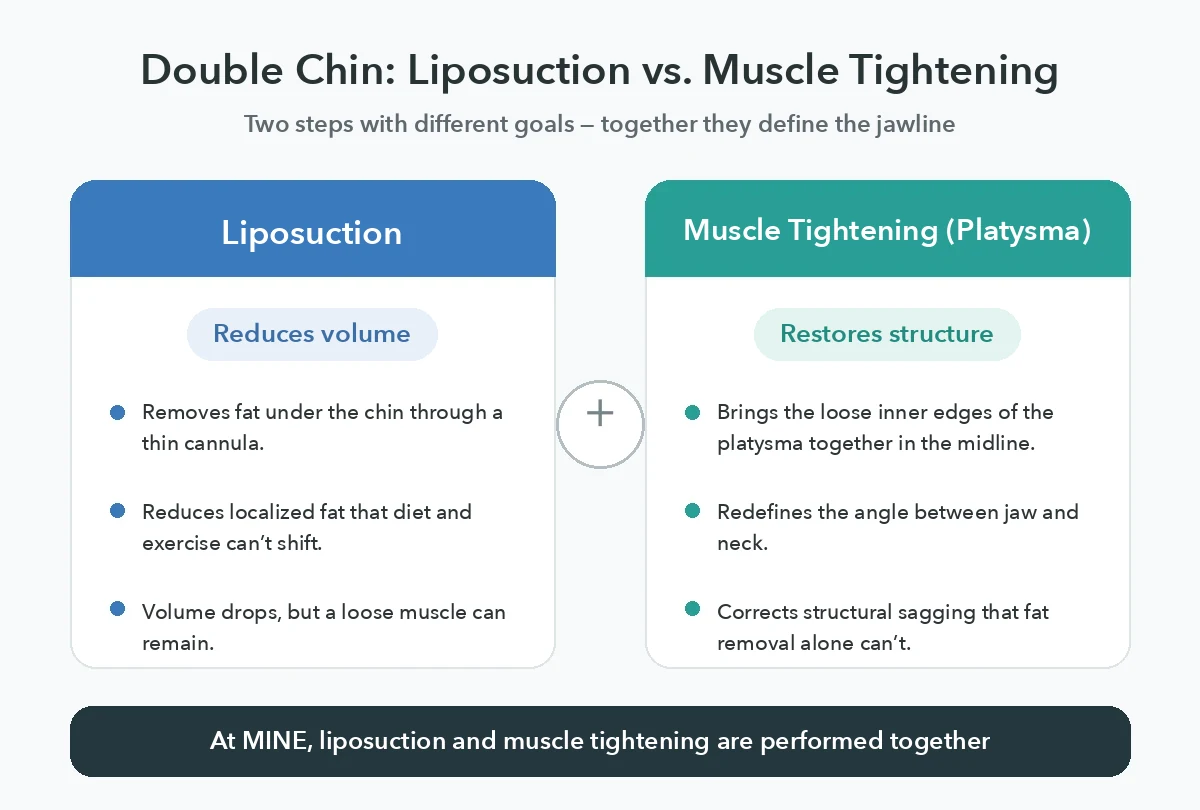
Before liposuction, a tumescent solution is injected. It contains a local anesthetic plus an agent that narrows small blood vessels, which reduces bleeding and makes the fat easier to work with. It does not dissolve fat.
Why a sharper neck angle needs good skin
This part surprises many patients. According to plastic surgery textbooks, converting a blunt neck angle into a sharp one requires more skin, not less. Think of a triangle: a straight slope from chin to collarbone is shorter than the two sides of a crisp angle.
So for slim patients, the deciding question is not age but whether the skin is elastic enough to drape over the new angle. If it is, liposuction with muscle tightening is often enough. If the skin is already loose and thin, a neck lift is added so the skin fits the new shape instead of folding.
What Recovery Looks Like When Both Steps Are Combined
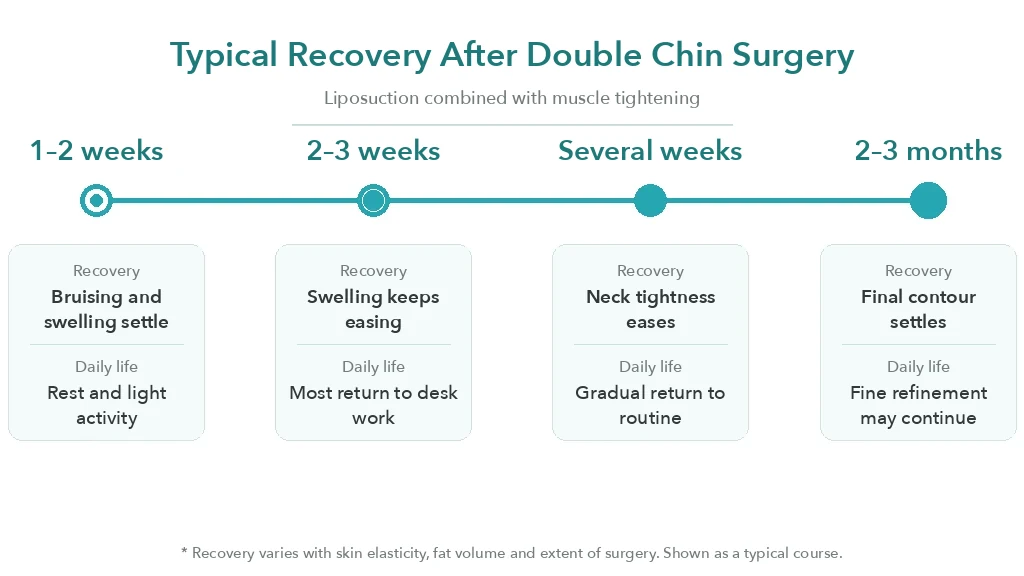
Recovery varies from person to person and with the extent of surgery, so treat the following as a typical pattern. Bruising and swelling usually settle over the first 1–2 weeks.
Most people return to desk work in about 2–3 weeks after combined liposuction and muscle tightening, although this varies with the extent of surgery. A tight or pulling feeling in the neck is common early on after the muscle is tightened, and it eases over several weeks. The final contour then settles over roughly 2–3 months, with fine refinement continuing for some people.
Key recovery milestones, as a typical pattern:
- First 1–2 weeks: bruising and swelling settle
- About 2–3 weeks: most people return to desk work
- Over several weeks: early neck tightness eases
- Roughly 2–3 months: the final contour settles
Like any surgery, this procedure carries risks, including bruising, fluid collection, infection, irregularities and temporary changes in sensation. Your surgeon should explain these in detail before you decide.
Removed fat cells do not grow back, but the fat cells that remain can still enlarge if you gain a lot of weight, and skin continues to age. Keeping your weight stable helps the result last.
Before you book: if you smoke, stop well before surgery, because smoking slows wound healing. Tell your surgical team about every medication and supplement you take, and follow their instructions on what to pause and when.

Double Chin When Skinny: Frequently Asked Questions
Why do I have a double chin when I’m skinny?
You can have a double chin when skinny because the fullness comes from structures that weight barely changes: deep fat beneath the platysma muscle, a loose platysma, low-sitting salivary glands, or the position of the hyoid bone and chin. Dieting mainly shrinks fat just under the skin, so these deeper causes stay put.
How do I know if my double chin is fat or muscle?
A rough hint: soft tissue you can pinch that thins when you look up is usually fat, while cords that appear when you tense your neck suggest the muscle is involved. Deep fat and glands cannot be judged by touch alone, so a proper answer needs an examination, often with ultrasound.
Will muscle tightening change my facial expression?
Your normal smile and speech should look the same. The platysma is actually one of the facial-expression muscles: a branch of the facial nerve supplies it, and it blends into the muscles that pull the lower lip down. Midline plication works on its inner edges under the chin, away from the nerve path to the lower lip. Textbooks describe a temporary lower-lip asymmetry, called pseudoparalysis, when the platysma is cut more extensively; it is uncommon and usually recovers on its own within weeks to months. Early tightness when turning the neck is common and fades.
How big is the scar after liposuction with muscle tightening?
Muscle tightening needs a short incision placed in the natural crease under the chin, where it sits in shadow. It is pink at first and usually fades to a fine line over several months, depending on skin type and aftercare.
Can the double chin come back after surgery?
Fat cells that are removed do not regrow. However, the remaining fat cells can enlarge with significant weight gain, and the skin keeps aging over time. Keeping your weight stable is the most practical way to protect the result.
When is salivary gland reduction needed instead of more liposuction?
Salivary gland reduction is considered when the fullness comes from the gland rather than fat, typically firm lumps just under the jawline. A 2015 clinical study of 112 consecutive submandibular gland reductions found minor complications in 10.8% of patients, all resolving within 3 months. In that 2015 study, temporary nerve weakness of the lower lip occurred in 4.5% of cases and resolved fully by 3 months.
Find Out Which Type of Double Chin You Have
When you are slim and still have a double chin, diagnosis comes first and treatment second. Once we know whether the fullness is fat, muscle, gland, bone or skin, the right plan usually becomes clear, and you avoid paying for a procedure that targets the wrong layer.
If you have lived with a double chin for years despite being slim, a clear diagnosis is the best first step. At MINE, I examine each patient personally and explain what I find before any treatment is booked. To arrange a 1:1 consultation, call +82-2-516-1175.
※ This content is for informational purposes only and does not replace professional medical advice, diagnosis, or treatment. Individual results may vary, and side effects may occur. Please consult with a board-certified plastic surgeon for personalized advice.