EN


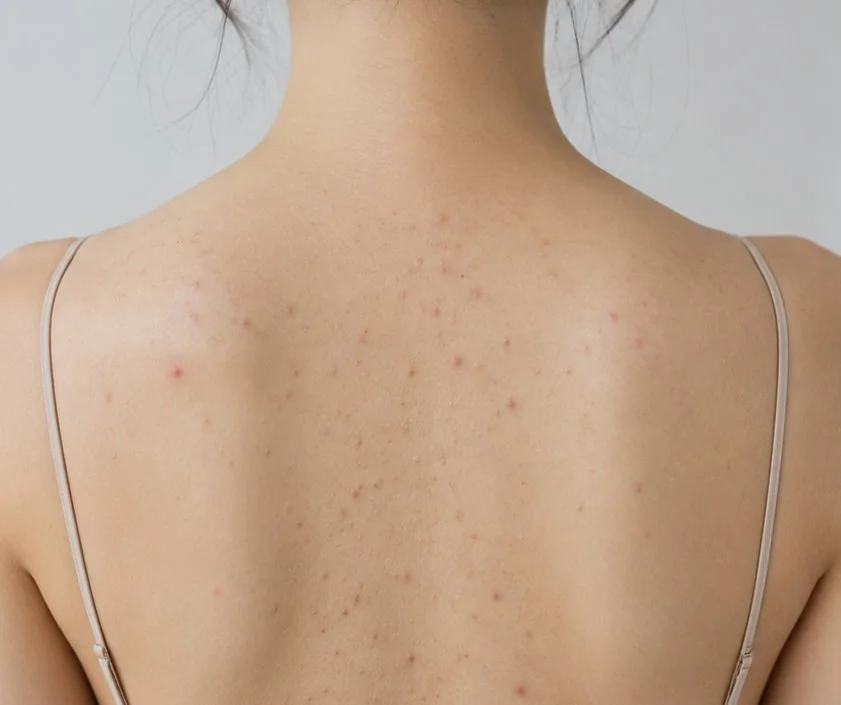
Maybe you noticed them in the mirror after a shower, or felt them under a thin summer shirt: red bumps scattered across your back. Your face gets attention every day, but your back is hard to see and harder to reach, so breakouts there are easy to ignore until they leave red or brown marks, and sometimes scars.
Figuring out how to get rid of back acne comes down to matching treatment to the bump: clogged comedones are extracted, red and painful lesions are calmed with targeted injections, and recurring oiliness or leftover marks are managed with peels, alongside daily habits that cut sweat, friction and product residue on the back.
Scrubbing harder or squeezing more rarely solves the problem. In this guide I explain how to tell which type of bump you have, how to check that it is acne and not folliculitis, which of 4 clinic treatments fits each type, and what to expect afterwards. If you have been searching for how to get rid of back acne that keeps coming back, start with the bump itself.
How to Get Rid of Back Acne: Start by Identifying the Bump Type
The back is naturally rich in oil glands. When oil (sebum) and dead skin cells build up inside a pore, they form a plug, and that plug is where acne starts. Because the back stays covered by clothing for most of the day, it is also exposed to sweat, heat and rubbing for hours at a time.
Dermatology textbooks describe acne as taking 4 main forms: comedones (clogged pores, either open “blackheads” or closed “whiteheads”), papules (small red bumps), pustules (bumps with a yellow or white tip) and nodules or cysts (deeper, firmer, painful lumps). These can appear on the back and chest just as they do on the face, and each form calls for a different approach.
Clogged bumps, red inflamed bumps, or leftover marks?
Before choosing any treatment, it helps to sort what you see into three groups:
- Clogged bumps: small, skin-colored or dark-topped bumps that feel rough. These are comedones, where sebum and dead skin are trapped in the pore.
- Red, inflamed bumps: swollen, tender or pus-filled spots. Inflammation has set in around the clogged pore.
- Leftover marks: flat red or brown spots where acne used to be. These are often post-inflammatory hyperpigmentation (PIH, dark marks left behind after inflammation) rather than active acne.
A few back-specific triggers tend to keep the cycle going. Excess sebum and dead skin clog pores. Wet workout clothes, tight tops and bag straps add sweat and friction. Shampoo, conditioner and hair treatments can run down the back and stay on the skin. And scrubbing hard with a rough towel or brush irritates skin that is already inflamed. For a broader look at triggers across the chest, shoulders and back, see our guide to common causes of body acne and K-beauty care.
Dr. Lee’s Tip: Back acne is rarely caused by one thing. Sebum, dead skin, sweat and friction usually act together, so if breakouts keep returning, the care needs to match the current state of your skin, not a one-size routine.
Why back acne is harder to manage than facial acne
You cannot look at your own back the way you check your face. Small comedones go unnoticed, so most people only realize there is a problem once the bumps have turned red and inflamed. The back is also in constant contact with clothing, which traps sweat and adds friction, and hair-product residue can be left behind after every shower.
Then there is squeezing. Many people try to pop back acne by feel, without being able to see what they are doing. Pressing on an inflamed bump again and again damages the surrounding skin and raises the chance of dark marks or scars. That is why learning how to get rid of back acne is not only about the bumps you have today; it is also about changing the skin environment that keeps producing new ones.
Back Acne or Folliculitis? Why the Difference Matters
Not every red bump on the back is acne. Folliculitis is inflammation of the hair follicles, and on the back it can look very much like acne: small red bumps, sometimes with a pus-filled tip. Telling the two apart by eye alone is often difficult, even when you can see the area clearly.
A few clues suggest it is worth having the area examined:
- Many red bumps of a similar size keep appearing in the same area.
- The bumps itch rather than simply feel sore.
- The usual acne care does not seem to make much difference.
Why does it matter? Because the right medication and approach depend on the cause, so the first step in how to get rid of back acne is making sure it really is acne. Treating folliculitis as if it were ordinary acne, or the other way around, can mean months of effort with little change. A short skin examination is usually the quickest way to settle the question. If you would like background reading, the DermNet overview of folliculitis explains the condition in plain language.
Bacne Treatment in the Clinic: 4 Options Matched to Lesion Type
In the clinic, there is no single protocol for how to get rid of back acne that applies to everyone. The plan is chosen after checking how many comedones and inflamed lesions there are, how oily and congested the skin is, and whether marks have already formed. At MINE Plastic Surgery & Dermatology, we combine acne extraction, inflammatory acne injections, Aladdin peel and Black peel in steps, depending on what we find. You can read more about our overall acne treatment at MINE Dermatology.
1. Acne extraction for clogged comedones
Comedones form when sebum and dead skin block a pore. Depending on the skin’s condition, these can be cleared by professional extraction, which gently removes the trapped sebum and keratin (the tough protein that makes up dead skin cells) from inside the pore.
Because the back is so hard to see, many people try to squeeze these at home. Forcing them out by feel tends to irritate the surrounding skin and can make inflammation worse. In the clinic, the lesions that need extraction are identified first and then cleared in a controlled way.
2. Inflammatory acne injection for red, painful bumps
Some bumps become swollen, red and painful. For selected lesions like these, a small amount of diluted corticosteroid (an anti-inflammatory medicine) can be injected directly into the bump. The aim is to calm the inflammation quickly so the lesion does not grow larger or linger for weeks.
Dermatology textbooks note that injecting a corticosteroid directly into a severe cystic lesion can help prevent scarring, but that potent steroids used too often can thin the skin (steroid atrophy, a small dent where the skin has become thinner). That is why the injection is used selectively. Not every back acne bump needs one; it is reserved for the inflamed lesions where it makes sense after examination.
3. Aladdin peel for rough texture and marks
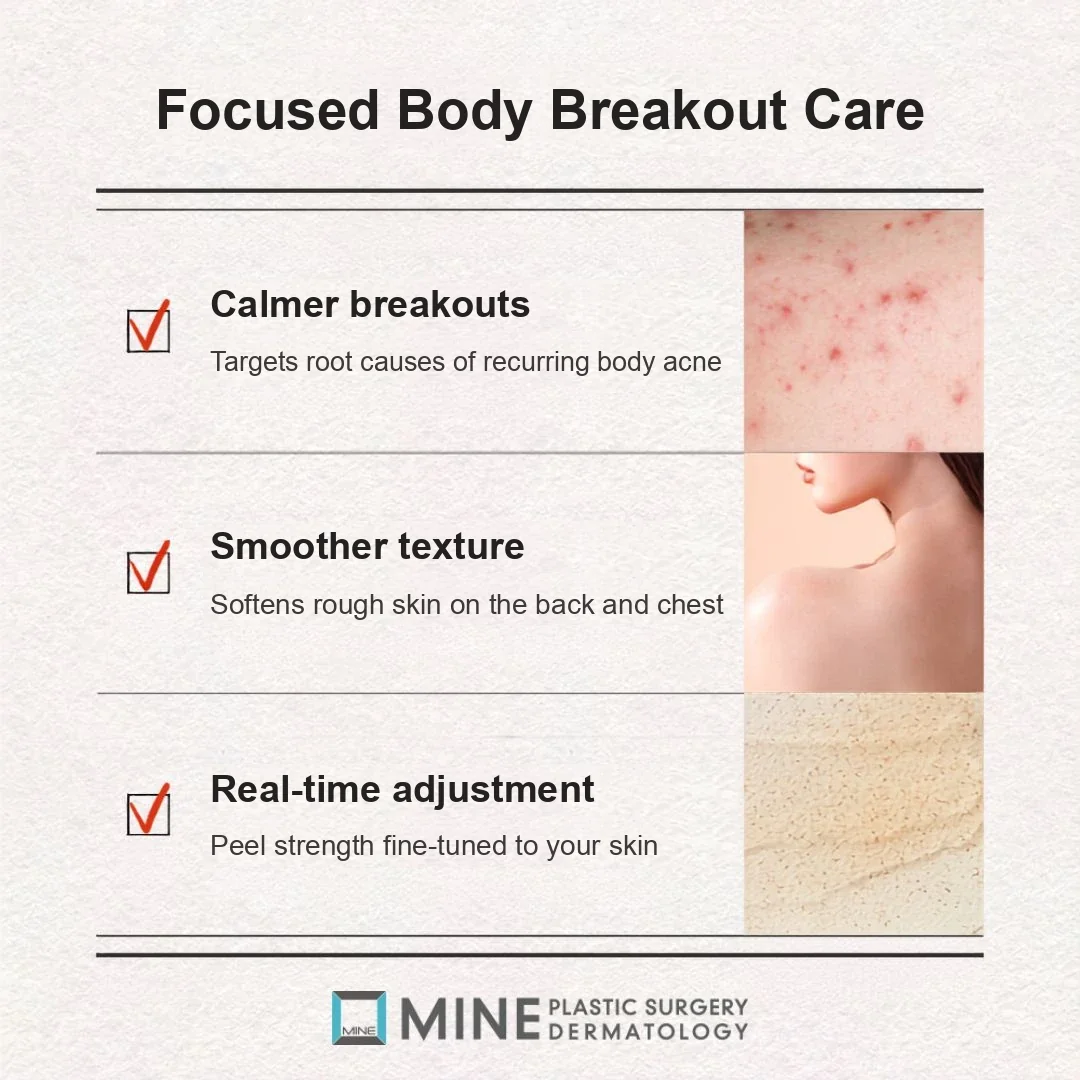
When back acne keeps returning and the skin has become rough, with dark marks left behind, an Aladdin peel may be considered. It works by delivering a micro-spicule ingredient (tiny needle-shaped particles) into the skin to encourage the outer layer to shed and the skin to renew itself. This can help with recurring breakouts as well as the pigmentation and uneven texture that acne leaves behind.
Back skin is thicker than facial skin, so the strength and interval of the peel are adjusted to each person’s skin condition and sensitivity. Expect some flaking for a while afterwards as the old skin sheds.
4. Black peel for oily, easily clogged skin
For skin that produces a lot of sebum, builds up dead skin and clogs easily, a Black peel can be used. It clears away excess oil and dead skin and helps keep the pores in better condition, which can reduce how often new breakouts appear. Depending on the skin, it may be combined with extraction or inflammation care in the same treatment plan.
Cosmetic dermatology textbooks list chemical peels among the options for post-inflammatory hyperpigmentation, redness and shallow scars left by acne on the chest and upper back. The same literature notes that in-office salicylic acid peels (a BHA, an oil-soluble exfoliating acid) help reduce acne inflammation.
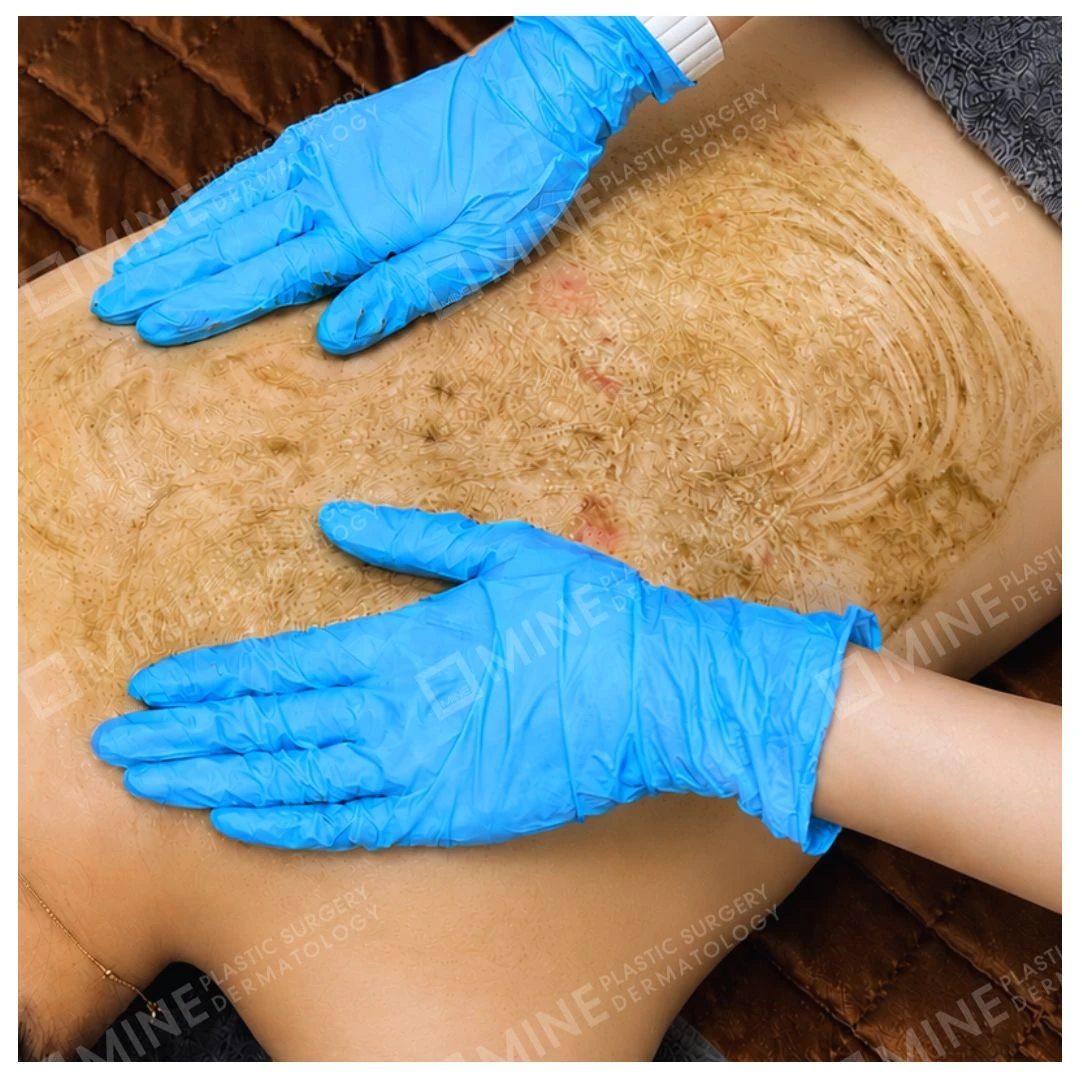
Aladdin peel vs Black peel: which fits your back?
Neither peel is better across the board; they serve different purposes:
- Aladdin peel suits recurring breakouts combined with existing dark marks or rough texture. Because it encourages shedding and renewal, flaking is common for a while afterwards.
- Black peel suits oily skin with heavy dead-skin build-up and pores that clog easily, where the main goal is controlling sebum and congestion.
The choice depends on the type of lesions, how inflamed they are, the level of sebum and dead skin, and whether pigmentation is present. For more detail on how each peel works, see our body acne guide.
Dr. Lee’s Key Point: In my clinical experience, repeating a single treatment rarely solves back acne. A stepwise approach works better: extract the comedones, inject selected inflamed lesions when needed, and use a peel matched to the skin for sebum, dead skin and leftover marks.
Will Back Acne Clear Right Away? What Recovery Looks Like
When people look up how to get rid of back acne, it is easy to hope that one session will leave the back completely clear. In practice, the bumps you have now and the marks they leave behind need to be thought of separately.
Active bumps, recurrence and marks heal on different timelines
Extraction and inflammation care can settle the lesions that are present today. But if sebum and dead skin keep building up, and sweat and friction keep irritating the skin, new acne can still form. On top of that, red marks or brown pigmentation often last longer than the acne itself.
That is why a plan for how to get rid of back acne works best in 3 phases: clear the active lesions, control recurrence, then fade marks and smooth the texture. Dark marks are different from true acne scars, which change the skin’s surface. If you are unsure which you have, our article on how to tell acne marks from acne scars walks through the differences. In short, back acne treatment runs in 3 phases: clear the active lesions, control recurrence, then fade marks and smooth the texture.
Common reactions after back acne treatment
After extraction or a peel, some temporary reactions can appear depending on your skin and the treatment used. Here is what to expect and how to look after your skin:
| Reaction | What you may notice | What to do |
|---|---|---|
| Redness or stinging | Pink skin, a warm or burning feeling | Keep irritation to a minimum |
| Flaking or dryness | Peeling skin and tightness after a peel | Moisturize well |
| Redness at extraction sites | Treated spots look red for a while | Don’t touch or pick at them |
| Dark marks (PIH) | Brown spots where inflammation was | Avoid sun exposure |
| New breakouts | Fresh bumps as sebum and habits continue | Keep up consistent care |
After an Aladdin peel in particular, flaking, dryness or redness can appear. Let the flakes come off on their own; do not peel them off or use a scrub. For more on caring for skin after peels, see our chemical peel aftercare guide. Recovery differs from person to person, depending on skin condition and the treatment chosen.
Back-Specific Home Care: 6 Habits That Reduce Breakouts
Clinic treatment works best alongside daily habits that reduce the irritation your back faces every day. These 6 habits cover the at-home part of how to get rid of back acne: shower after exercise, wash gently, rinse your back last, keep fabrics clean, avoid squeezing and protect your back from the sun. For further reading, see the American Academy of Dermatology guidance on back acne.
Shower soon after exercise
Sitting in sweaty clothes keeps moisture and friction on the skin. After a workout, shower as soon as you reasonably can and change into clean, dry clothes.
Wash gently — skip harsh towels and brushes
When acne appears, it is tempting to scrub harder to get the back “really clean”. In Korea, many people grew up using a rough exfoliating mitt (often called an Italy towel) in the bathhouse, and long-handled shower brushes are common everywhere. On inflamed skin, this kind of friction only adds irritation. A light touch with a mild cleanser is enough.
If you want an active ingredient in the shower, look for an over-the-counter body wash with salicylic acid (a BHA, an oil-soluble exfoliating acid that works inside pores). Dermatology textbooks describe salicylic acid as an anti-inflammatory option for acne. Use it gently rather than scrubbing it in, and stop if your skin becomes irritated.
Wash hair first, then rinse your back last
Shampoo, conditioner and hair treatments can run down your back and stay there. Cosmetic ingredient research shows that some ingredients found in hair and skin products are comedogenic (likely to clog pores), so residue matters. Wash your hair first, then your body, and finish by rinsing your back thoroughly so no product is left behind.
Change sweaty clothes and keep bedding clean
Don’t stay in damp gym clothes or sweaty shirts for long. Clothing that sits directly against your back, along with sheets and pillowcases, should be kept clean as well.
Don’t squeeze what you can’t see
Squeezing acne with fingers or tools can break the skin and make inflammation worse. On the back, where you cannot see what you are doing, the risk is even higher, so it is best to leave the bumps alone.
Protect an exposed back from the sun
Even after the acne settles, dark marks can remain, and sunlight can make them more noticeable. If you wear open-back tops or swimwear, apply sunscreen to your back too. If marks persist, there are dedicated pigmentation and brightening treatments that can help.
Risks and When to See a Dermatologist for Back Acne
Mild breakouts can often be watched while you adjust your habits. But part of knowing how to get rid of back acne is knowing when home care is not enough.
Signs it’s time for a clinic visit
- Red, inflamed acne keeps appearing on your back.
- Some bumps are painful or feel hard to the touch.
- Breakouts cover a wide area and keep coming back.
- Brown or red marks are left behind every time a bump heals.
- New acne keeps forming despite good home care.
- You cannot tell whether it is acne or folliculitis.
Leaving inflamed acne untreated for a long time, or squeezing it again and again, can lead to pigmentation or scarring, so it is better to start appropriate treatment before things get worse. For severe or cystic acne that does not respond to other care, a dermatologist may also discuss prescription options such as retinoids (vitamin A-derived medicines that help unclog pores), which textbooks describe as a core part of acne treatment.
Treatment risks to discuss before you start
Every option for how to get rid of back acne carries some risk. After extraction or peels, temporary redness, stinging, flaking and dryness are common, and post-inflammatory hyperpigmentation can appear, especially with sun exposure. With corticosteroid injections, overuse can thin the skin and leave a small dent, which is why they are used only on selected lesions. Results vary from person to person, so these points are worth discussing at your consultation before you decide how to get rid of back acne in your own case.
FAQ: How to Get Rid of Back Acne
How do I get rid of back acne fast?
Working out how to get rid of back acne fast starts with identifying the type of bump. Clogged comedones respond to professional extraction, and selected red, painful lesions can be calmed with a targeted injection, which usually settles them faster than home squeezing. No single session clears the back for good, so treatment is combined with habits that limit sweat, friction and product residue.
Is it OK to pop back acne?
It is not recommended. You cannot see your back clearly, so squeezing by feel easily damages the surrounding skin. Pressing on inflamed bumps again and again can make the inflammation worse and leave dark marks or scars. If comedones need clearing, professional extraction is the safer option.
What is the difference between back acne and folliculitis?
Folliculitis is inflammation of the hair follicles, and on the back it can look very similar to acne, so it is hard to tell them apart on your own. If many red bumps of a similar size keep appearing, or the bumps itch, it is a good idea to have them examined, because the right treatment depends on the cause.
Which is better for back acne, Aladdin peel or Black peel?
Neither is better in general, because they serve different purposes. Aladdin peel suits recurring breakouts with dark marks or rough texture, while Black peel suits oily, easily clogged skin. The choice depends on lesion type, how inflamed the lesions are, sebum and dead-skin levels, and whether pigmentation is present.
Why do brown marks stay after back acne heals?
After inflammation settles, the skin can produce extra pigment, leaving post-inflammatory hyperpigmentation. These brown marks can last longer than the acne itself. Protecting your back from the sun helps keep them from darkening, and persistent marks may need separate care such as peels or brightening treatments.
Can back acne come back after treatment?
Yes. Back acne is influenced by sebum, dead skin, sweat and friction, so new breakouts can appear even after successful treatment. The best results come from combining clinic care with daily habits that reduce irritation, and from following up when new lesions start to form.
Back Acne Treatment in Korea at MINE Clinic
The answer to how to get rid of back acne is not squeezing harder or scrubbing longer. It starts with checking what kind of bumps you have, then clearing comedones by extraction, calming inflamed lesions when needed, and using a peel matched to your skin for recurring oiliness, dead skin and leftover marks.
At MINE Plastic Surgery & Dermatology in Seoul, we assess the type of back acne and your skin condition in person before applying acne extraction, inflammatory acne injections, Aladdin peel or Black peel. Because care often takes more than one visit, international patients may find it helpful to discuss timing when planning their stay. If your back acne keeps returning or marks are starting to build up, please contact us to book a consultation: call +82-2-516-1175 or visit us at 813 Nonhyeon-ro, Gangnam-gu, Seoul.
Written and reviewed by Dr. Lee Sung-wook, Board-Certified Plastic Surgeon, MINE Plastic Surgery & Dermatology
※ This content is for informational purposes only and does not replace professional medical advice, diagnosis, or treatment. Individual results may vary, and side effects may occur. Please consult with a board-certified plastic surgeon for personalized advice.