EN
EN

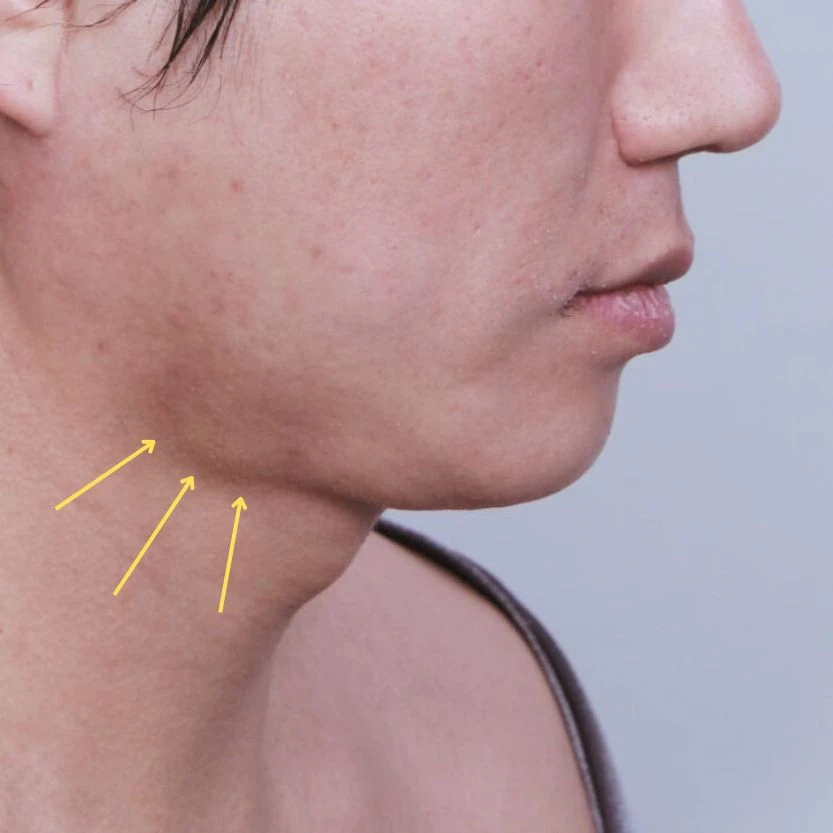
Table of Contents
What Is Salivary Gland Removal Surgery?
Salivary gland removal surgery for jawline contouring is a procedure that removes only the part of the submandibular gland that bulges below the jawline, through a small incision in the under-chin crease. The deeper part of the gland and its saliva duct are left in place, so the gland keeps working.
So, can salivary glands be removed? Yes, but “removal” means two different operations. Ear, nose and throat surgeons take out the whole submandibular gland (a sialadenectomy) to treat stones, chronic infection or tumors. Cosmetic salivary gland removal is a partial reduction: only the portion that sags or protrudes below the jaw is trimmed, to sharpen the line where the jaw meets the neck. The rest of this guide is about the cosmetic version, and about how to tell whether you actually need it.
- What is removed: the protruding outer portion of the submandibular gland, not the whole gland.
- Who it suits: people whose under-jaw bulge comes from the gland itself, confirmed by examination and ultrasound.
- What it does not change: jaw width, a square jaw (bone) or loose neck skin.
- Main risks: temporary nerve weakness of the lower lip in about 4% of patients in published studies, plus bleeding and saliva collection in roughly 1% each.
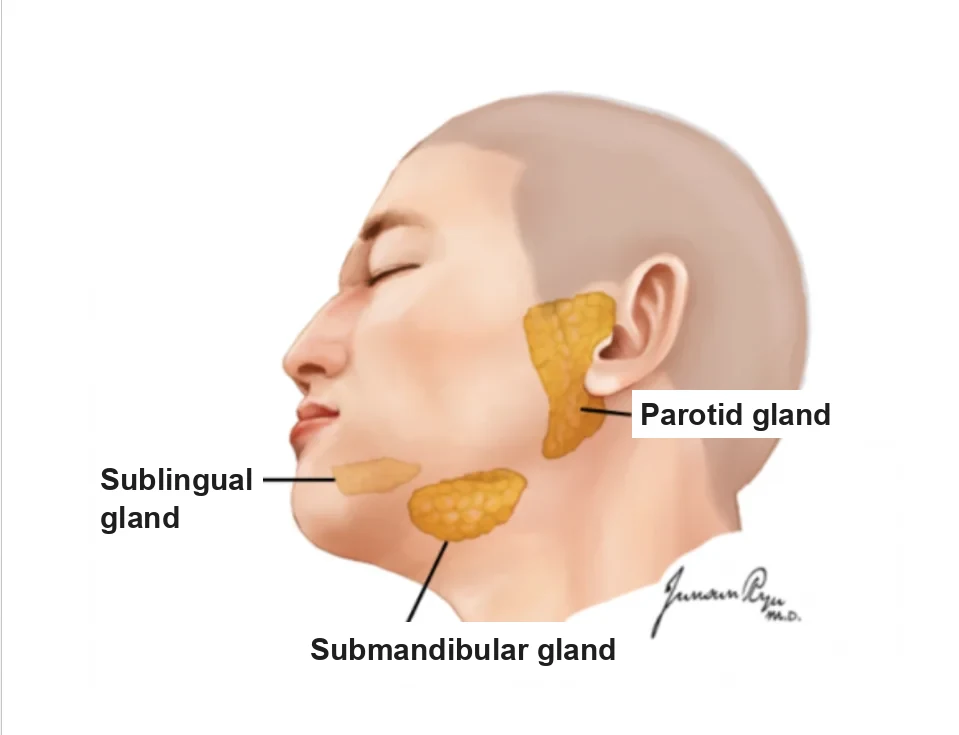
Illustration note: The three major salivary glands. Cosmetic surgery deals only with the submandibular gland below the jaw. (Original illustration: National Cancer Center Korea, Dr. Joon-Sun Ryu; labels translated into English.)
Understanding the Salivary Glands and Their Function
There are three pairs of major salivary glands, plus hundreds of tiny minor glands lining the mouth:
- Submandibular gland: sits just below the jawbone on each side. At rest, the two submandibular glands make roughly 65% of the saliva in your mouth, according to the textbook Clinical Management of Salivary Gland Disorders.
- Parotid gland: sits in front of the ear. It works hardest when you eat, supplying about half of all saliva during meals.
- Sublingual gland: sits under the tongue and contributes a small share.
Saliva starts digestion (amylase breaks down starch), protects the teeth and gums, keeps the mouth moist for speaking and swallowing, and helps you taste food. That is why cosmetic salivary gland removal is designed to remove only the visible bulge and keep the rest of the gland and its duct working, rather than removing the gland completely.
From a cosmetic point of view, a gland that is naturally large, or that has dropped with age as its supporting tissues loosen, can push out below the jawline and blur the angle between the jaw and the neck.
Cosmetic Purposes of Salivary Gland Removal
How Does It Enhance Facial Appearance?
When the gland is the main cause of fullness under the jaw, salivary gland removal mainly changes your side profile:
- Clearer jaw-to-neck angle: less rounding below the jawline in profile.
- Less side bulging when you look down: the two lumps on either side under the jaw become less prominent.
- Less of a “double chin” look in people who are not carrying much fat but still look full under the jaw.
How much changes depends on how much of the fullness the gland was responsible for, along with skin elasticity, fat, the platysma (neck) muscle and your bone structure. A 2025 review by Morel et al. in the Aesthetic Surgery Journal concluded that submandibular gland reduction offers aesthetic benefits but carries real risks, and that careful planning and technique are what keep those risks low. It is not the right operation for everyone, so an in-person assessment comes first.
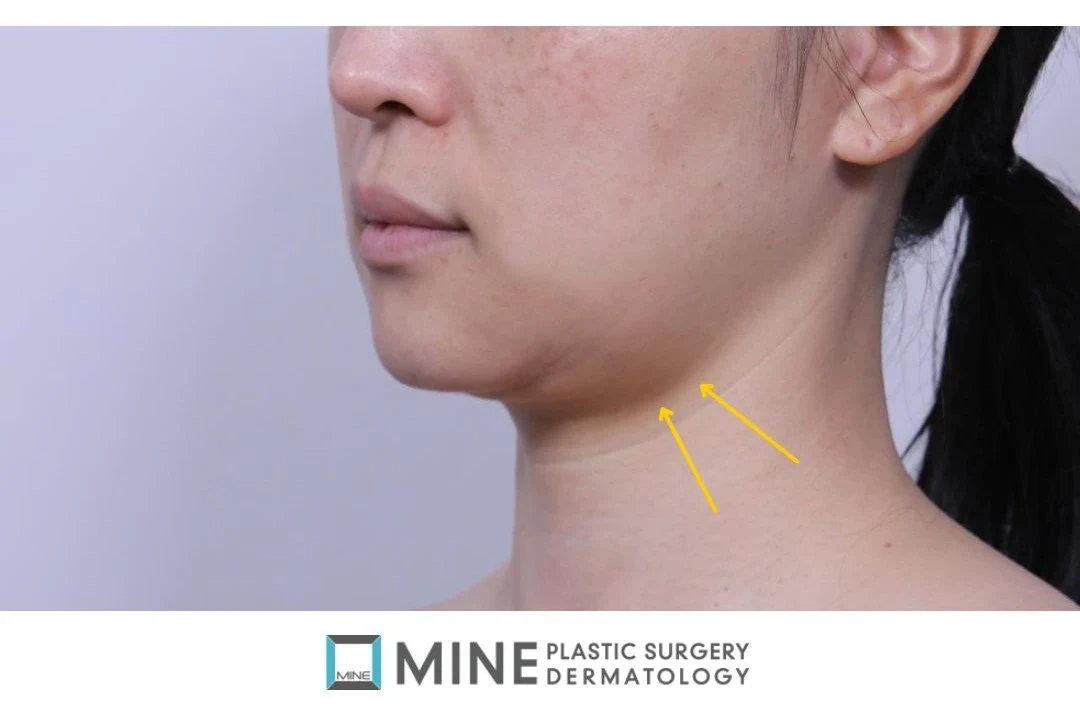
What salivary gland removal does not change:
- Face width or a square jaw: these come from bone and the masseter muscle and need facial contouring or other treatment.
- Loose neck skin: sagging skin needs a lifting procedure such as a neck lift.
- Ageing: the gland tissue that remains can still descend over the years.
Who Is a Good Candidate?
You may be a candidate for salivary gland removal if you:
- Still have bulges on both sides under the jaw after losing weight.
- See a rounded fullness below the jawline in profile that blurs the jaw-neck border.
- Have an enlarged or drooping gland confirmed on ultrasound.
- Have had salivary gland Botox several times with little change, or would rather not repeat injections.
- Noticed the gland outline become more visible after double chin liposuction or a lifting procedure.
Think twice, or discuss it carefully first, if you:
- Often have a dry mouth or have had salivary gland disease.
- Have fullness that comes mainly from fat or from the jawbone.
- Have a bleeding disorder or poorly controlled blood pressure, because bleeding deep in the neck is the complication surgeons watch most closely.
See an ENT doctor first if the area under your jaw swells and hurts every time you eat, one side suddenly gets bigger, or you can feel a hard lump. These can be signs of a salivary gland condition such as an infection (sialadenitis), a stone or a tumor, which should be checked by an ear, nose and throat (ENT) specialist before any cosmetic consultation.
Is It the Gland, Fat or Bone?
Fullness under the jaw usually has one of three causes, and each needs a different solution:
| Cause | Where and how it feels | Most visible | Usual options |
|---|---|---|---|
| Enlarged submandibular gland | Just below the jawbone on both sides; a slightly firm lump | In profile, or when looking down | Salivary gland removal (partial), salivary gland Botox |
| Double chin fat | Centre of the under-chin; soft and pinchable | From the front, when looking down | Liposuction, double chin surgery |
| Square jaw | Angle of the jaw; hard bone | From the front | Facial contouring surgery |
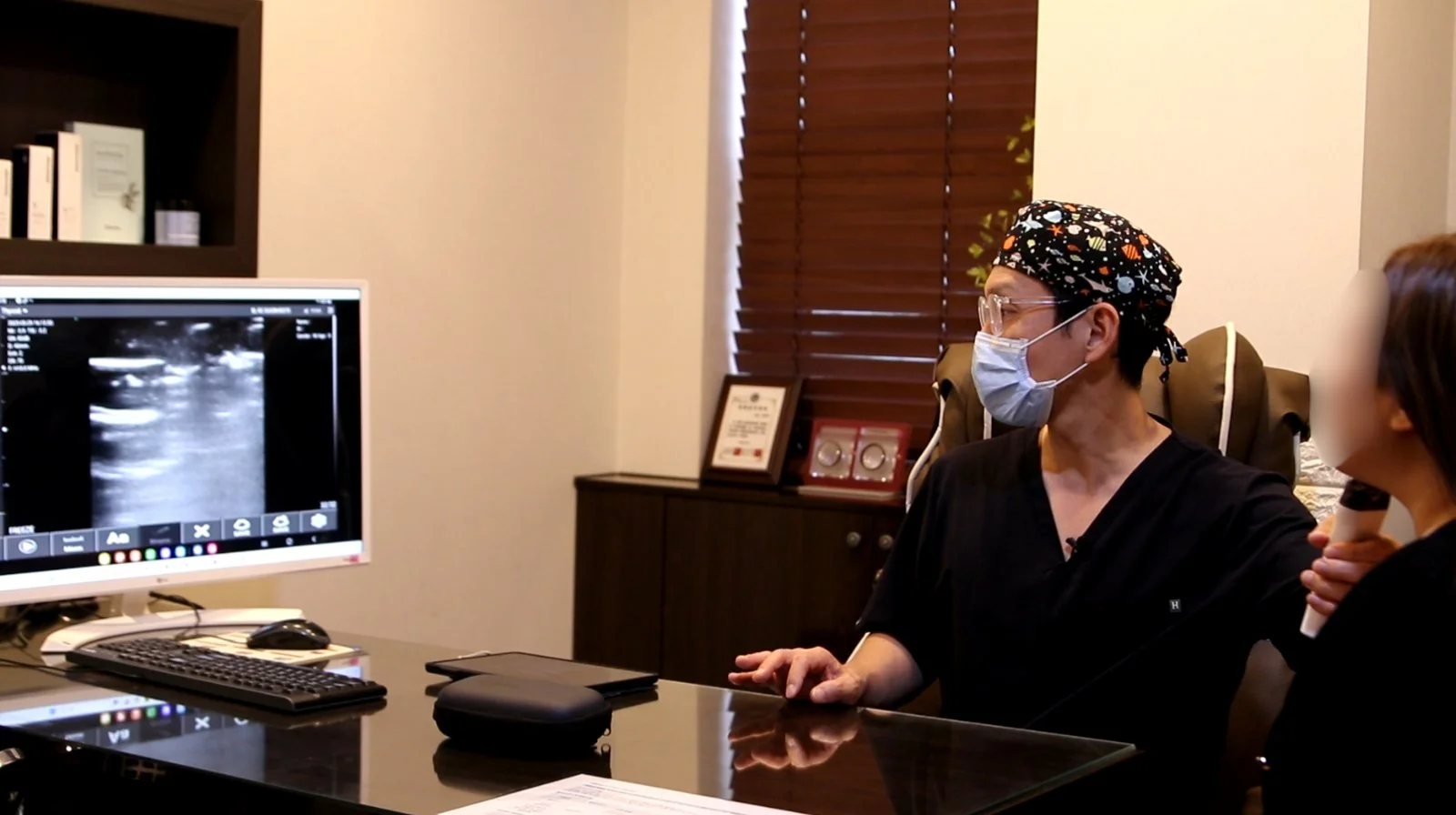
In practice, the gland, fat and a loose platysma muscle often overlap, and it is hard to tell them apart by touch alone. That is why an ultrasound to measure the gland’s size and depth is part of the consultation at MINE Plastic Surgery.
Salivary Gland Removal vs. Non-Surgical Options
What Are the Non-Surgical Alternatives for Jawline Refinement?
The main alternative is salivary gland Botox, in which botulinum toxin is injected into the submandibular gland to make it less active and slightly smaller. Saliva output drops within about two weeks, and any visible change in the jawline tends to appear around four to six weeks. A single treatment typically lasts about four to five months, varying from person to person, so it is usually repeated every four to six months.
Liposuction is often tried first, but it removes fat, not gland tissue. If the gland is the cause, the bulge stays, and the gland can even look more obvious once the fat around it is gone. We explain this in detail in why liposuction does not fix a salivary gland bulge.
| Salivary gland Botox | Salivary gland removal (partial) | |
|---|---|---|
| Method | Injection | Surgery through a small under-chin incision |
| Anesthesia | None or numbing cream | Sedation (general anesthesia in some cases) |
| How long the change lasts | About 4–5 months per treatment; repeated every 4–6 months | The removed tissue does not grow back |
| Downtime | Little to none | About 5 days to return to daily life; 1–2 weeks for visible swelling |
| Best suited to | Mild enlargement, or anyone who wants to avoid surgery | Clear gland bulging confirmed on examination and ultrasound |
When Should You Consider Surgery Instead?
Salivary gland removal may be the more appropriate choice if:
- Botox has not made enough of a difference after two or three sessions.
- You want a lasting change instead of repeating injections a few times a year.
- Your glands are clearly enlarged or protruding on ultrasound.
- You are already planning double chin surgery or a neck lift, so the gland can be addressed through the same incision.
If you are still deciding, it often makes sense to start with Botox. If the result is too small, surgery remains an option. If you want to read more about the operation itself, our salivary gland reduction surgery guide covers the technique in more depth.
Surgery Process and Preparation
Preoperative Checklist
- Examination and ultrasound: to confirm the gland’s size, position and depth below the skin.
- Basic tests: blood tests and other checks to make sure you are fit for surgery and anesthesia.
- Medication review: aspirin, vitamin E and other supplements that increase bleeding are usually stopped about 2 weeks before, as advised by the medical team. Never stop a prescribed blood thinner on your own; talk to the doctor who prescribed it first.
- No smoking or alcohol: from about 2 weeks before surgery, to help wound healing.
- Fasting: at least 8 hours before surgery because of the anesthesia.
Surgical Steps
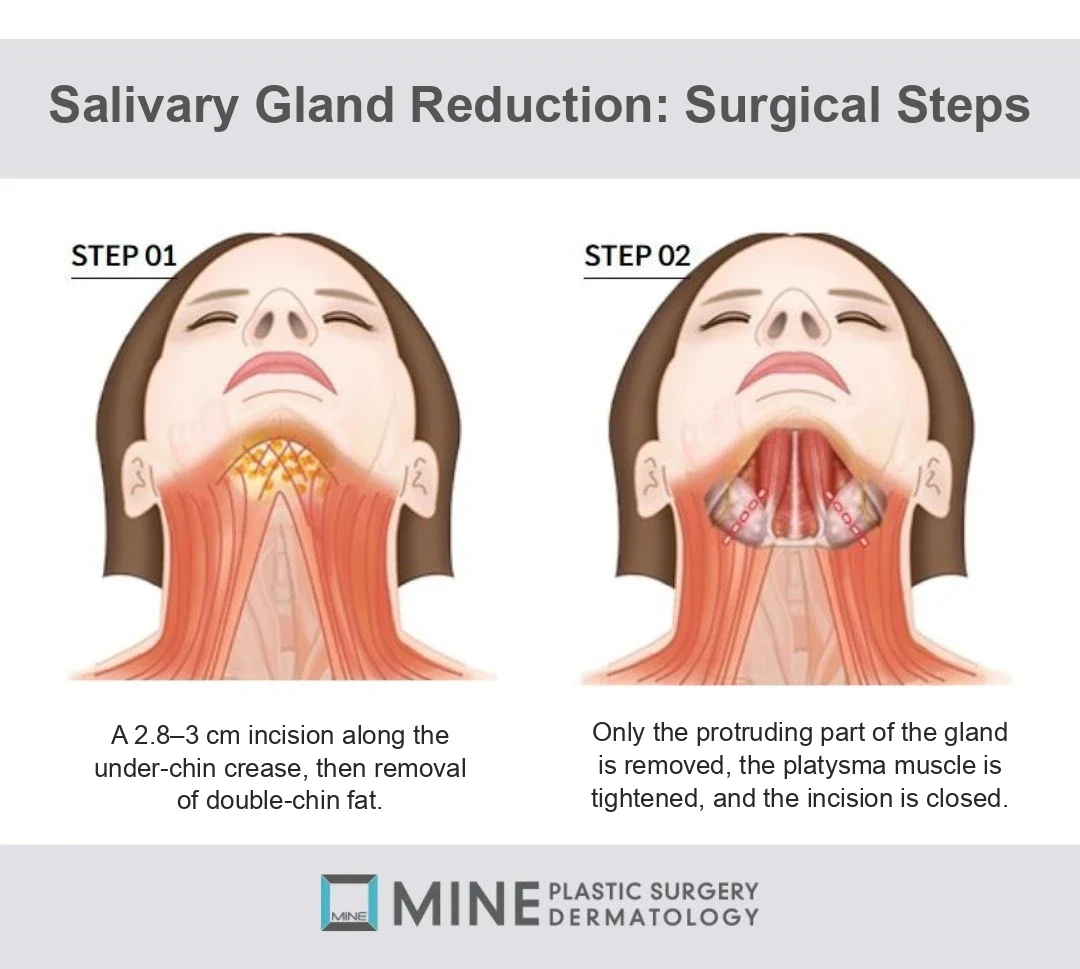
At MINE, salivary gland removal takes about 2 hours under sedation (general anesthesia in some cases), and you go home the same day.
- Incision: about 3 cm or less along the first natural crease under the chin, the one that forms when you look down.
- Fat contouring: if needed, fat is reduced both above and below the platysma, the thin sheet of muscle just under the skin of the neck.
- Partial gland removal: working inside the gland’s capsule and away from nearby nerves and vessels, the surgeon removes only the part of the gland that sits outside the mylohyoid, the thin muscle that supports the floor of the mouth. The deeper part and the saliva duct stay in place.
- Muscle tightening: a loose platysma muscle is brought together in the middle to support the area under the chin.
- Bleeding control and closure: the gland bed has many blood vessels, so bleeding is checked carefully before the wound is closed in layers and a compression band is applied.
Three nerves run close to the submandibular gland: the marginal mandibular branch of the facial nerve (which moves the lower lip), the lingual nerve (tongue sensation) and the hypoglossal nerve (tongue movement). According to Dr. Lee Sung-wook, board-certified plastic surgeon at MINE, the most important part of the operation is staying clear of these nerve pathways and removing only as much tissue as is needed.
Surgical Approaches
1. Submandibular (Under-Chin) Approach
This is the most common technique and the one used at MINE Plastic Surgery. The incision of 3 cm or less sits in the natural crease under the chin, so it is relatively hard to see from the front, although how quickly the scar fades depends on your skin. The same incision also gives access to the fat and the platysma muscle, so the gland, fat and muscle can all be treated together when needed.
2. Facelift (Postauricular) Approach
Some surgeons reach the gland through a facelift incision around and behind the ear. This avoids a scar under the chin and can be combined with a facelift, but it is technically more demanding and is generally reserved for patients who are having a facelift anyway.
What Are the Risks of Salivary Gland Removal?
The 2025 Aesthetic Surgery Journal review pooled 11 studies of 1,651 patients who had the submandibular gland reduced for cosmetic reasons. Each complication was counted only in the studies that tracked it, so the denominators differ:
| Complication | Reported rate | What it means |
|---|---|---|
| Nerve injury | About 4.0% | For example, one side of the lower lip moving less; usually improves over time |
| Sialocele | About 1.3% | Saliva collecting where the gland was trimmed, causing swelling |
| Hematoma | About 1.2% | Blood collecting at the surgical site; some need a second procedure to drain it |
| Salivary fistula | About 0.8% | A small channel through which saliva leaks toward the skin |
| Dry mouth | About 0.13% | One reported case in the studies that counted it |
| Neck firmness (induration) | About 21% | Temporary hardness at the surgical site, reported in the two small studies that tracked it |
The reviewers noted that rates varied between studies because techniques and patient groups differed, and that most complications settled within a few months. Swelling, bruising, temporary numbness under the jaw, brief asymmetry while the two sides heal and an incision scar are also expected. For how each side effect is managed, see our guide to common side effects of submandibular gland reduction.
Recovery and Postoperative Care
Recovery Timeline
Most people are back to daily life about five days after salivary gland removal, but the final contour takes one to three months to settle.
| When | What to expect (varies by person) |
|---|---|
| Day of surgery | Checked in the recovery room, then home the same day |
| Days 1–3 | Swelling at its peak; cold compresses and the compression band matter most |
| Around day 5 | Stitches removed; most people return to daily life |
| Weeks 1–2 | Most visible swelling and bruising settle |
| After 2 weeks | Exercise, sauna and alcohol resumed gradually after a check-up |
| Months 1–3 | Remaining subtle swelling and firmness soften and the contour settles |
Travelling to Seoul for surgery? Stitches usually come out around day 5 and there are typically about three follow-up visits, so plan to stay in Seoul for about one to two weeks before flying home.
Post-Surgery Care Tips
- Cold compress: 4–5 times a day for 15–20 minutes at a time during the first 3 days.
- Compression band: wear it for as long as instructed, usually about a week.
- Head elevation: sleep with your head slightly raised for the first few days.
- Diet: you can usually chew and talk normally, but avoid tough, hard, hot or spicy food for a few days.
- Activity: no strenuous exercise, sauna or alcohol for 2 weeks. Smoking slows healing.
- Follow-up: attend your scheduled visits so the wound and swelling can be checked.
- Call the clinic right away if one side of the neck suddenly becomes firm and swollen, or if breathing or swallowing becomes difficult. These can be signs of bleeding.
For a week-by-week guide to going back to work and exercise, read our submandibular gland reduction recovery guide.
Frequently Asked Questions
Does It Affect Saliva Production?
For most people, not noticeably. Only the protruding part of the gland is removed, the deeper part and its duct keep working, and the other salivary glands continue to produce saliva. In the 2025 review, dry mouth was reported in only about 0.13% of patients. Some people notice mild dryness early on that usually eases as healing progresses.
How Are Scars Managed?
The salivary gland removal incision of 3 cm or less sits in the natural crease under the chin, so it is relatively hard to see from the front. Scars usually look red at first and fade over the following months, at a pace that depends on your skin type. Avoiding smoking, protecting the area from the sun and following the clinic’s scar-care advice all help.
Is There a Risk of Nerve Damage?
Yes, and you should know the real numbers. In the 2025 review of 1,651 patients, nerve injury was reported in about 4% of cases, most often temporary weakness of the lower lip on one side caused by irritation of the marginal mandibular nerve. Most cases improve over the following months. Surgeons reduce this risk by working within the gland’s capsule and removing only the protruding portion.
How Much Does It Cost?
The cost of salivary gland removal depends on:
- How much gland tissue needs to be removed.
- Whether fat removal, muscle tightening or a lift is combined.
- Your individual anatomy.
An exact quote is given after an in-person consultation at MINE Plastic Surgery.
Do Salivary Glands Grow Back After Removal?
No. The part of the gland that has been removed does not grow back. The tissue left behind can still descend slowly with age, and changes in weight or skin elasticity can alter the area under the jaw over time.
Can You Live Without a Submandibular Gland?
Yes. People who have a whole submandibular gland removed for medical reasons still have the gland on the other side, both parotid glands and many minor glands, though some notice a drier mouth. Cosmetic salivary gland removal is far less extensive: it only trims the protruding part and leaves the rest of the gland in place.
Conclusion
Salivary gland removal is not something everyone needs. It can help when an enlarged or drooping submandibular gland is the real cause of fullness under the jaw, but it will not fix fat, bone or loose skin, and it carries risks you should weigh, including temporary nerve weakness in about 4% of patients. The first step is finding out what is actually causing the bulge.
At MINE Plastic Surgery & Dermatology in Gangnam, Seoul, Dr. Lee Sung-wook assesses the gland, fat and muscle together, using examination and ultrasound, before recommending surgery, Botox or another option.
If you are wondering whether salivary gland removal is right for you, book a consultation to find out what is behind your jawline concern.
Medically reviewed by Dr. Lee Sung-wook, board-certified plastic surgeon, MINE Plastic Surgery & Dermatology, Seoul. Last reviewed: October 2026.
※ This content is for informational purposes only and does not replace professional medical advice, diagnosis, or treatment. Individual results may vary, and side effects may occur. Please consult with a board-certified plastic surgeon for personalized advice.