EN
EN


Juvelook Volume for sunken cheeks is a PDLLA+HA hybrid injectable collagen biostimulator that restores hollow cheeks in two phases: an immediate hydration effect from hyaluronic acid (HA), followed by gradual, natural volume from PDLLA-triggered collagen regeneration (a process doctors call neocollagenesis) over the following 4 to 8 weeks. Unlike a traditional filler that simply fills the empty space, it prompts your own skin to rebuild its support from within.
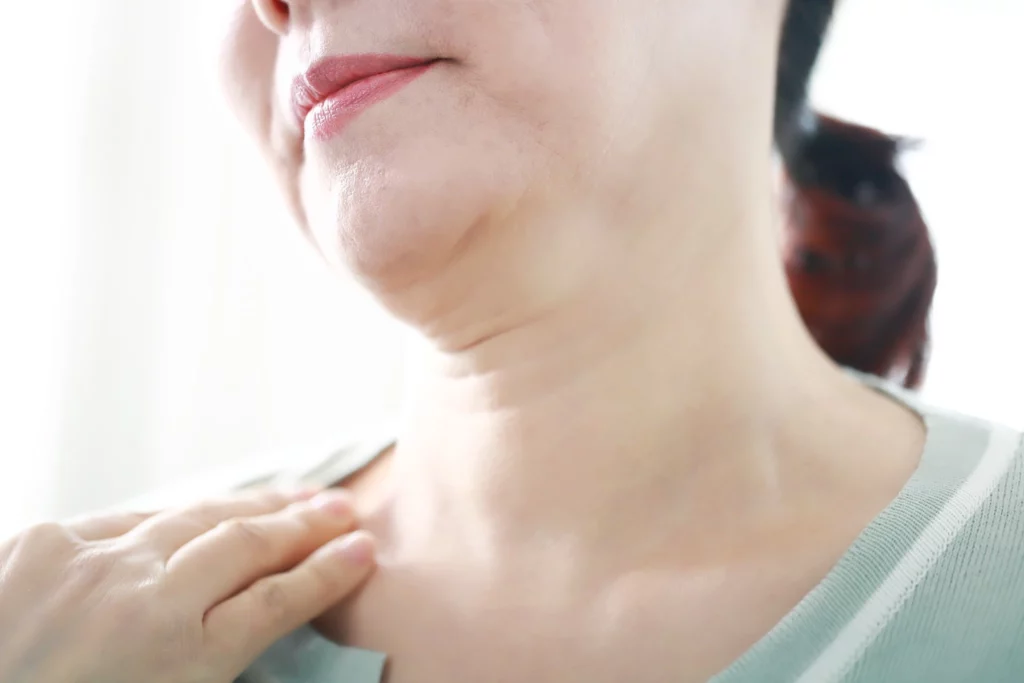
Next time you catch your reflection, you might notice your cheeks look a little flatter than they used to, with faint shadows where there used to be a soft curve. Perhaps your face looks fine when you smile, but at rest it reads as tired or older than you feel. That impression is often the natural result of volume slowly draining from the midface.
What makes the Juvelook Volume for sunken cheeks approach worth understanding is that it does not stop at topping up an empty pocket. It works with your skin’s own biology to rebuild elasticity over time. In this article, Dr. Lee Sung-wook of MINE Plastic Surgery explains it the way he would in the consultation room: why cheeks hollow out in the first place, and exactly how this treatment works, grounded in the medical literature but written in plain language.
Table of Contents
- Why Do Cheeks Become Sunken? The Aging Science
- What Is Juvelook Volume? The PDLLA+HA Dual-Action Formula
- The 3-Step Mechanism: How Juvelook Volume Restores Sunken Cheeks
- Treatment Areas: Beyond Sunken Cheeks
- Side Effects and Precautions: What to Know Before Treatment
- Juvelook Volume vs. Regular HA Fillers: Which Is Right for You?
- Frequently Asked Questions
Why Do Cheeks Become Sunken? The Aging Science
Fat Pad Atrophy and Collagen Loss: The Root Cause
The reason young cheeks look round and firm comes down to two things sitting just beneath the surface: the buccal fat pad (the cushion of fat that props up the cheek) and the collagen woven through the deeper skin. As we age, that fat cushion gradually thins, and the collagen that once kept the skin taut declines alongside it.
Cosmetic and dermatology textbooks point to this atrophy of the soft tissue and fat layer as the main driver of age-related volume loss in the face. When the underlying support gives way, the skin above it sinks inward and begins to sag, and the cheek takes on that hollowed look. This is why volume restoration is regarded in medical anti-aging practice as one of the core strategies for the midface, rather than a wrinkle problem treated line by line.
How Sunken Cheeks Change Your Appearance
When the cheek loses its volume, the shadow beneath it deepens, the nasolabial folds (the lines running from the nose to the corners of the mouth) look more pronounced, and the whole face can seem to droop slightly. That is the real reason a hollow cheek can make someone look more tired or older than they actually are. It helps to think of it not as a single wrinkle, but as a three-dimensional change in the structure of the face itself.
What Is Juvelook Volume? The PDLLA+HA Dual-Action Formula
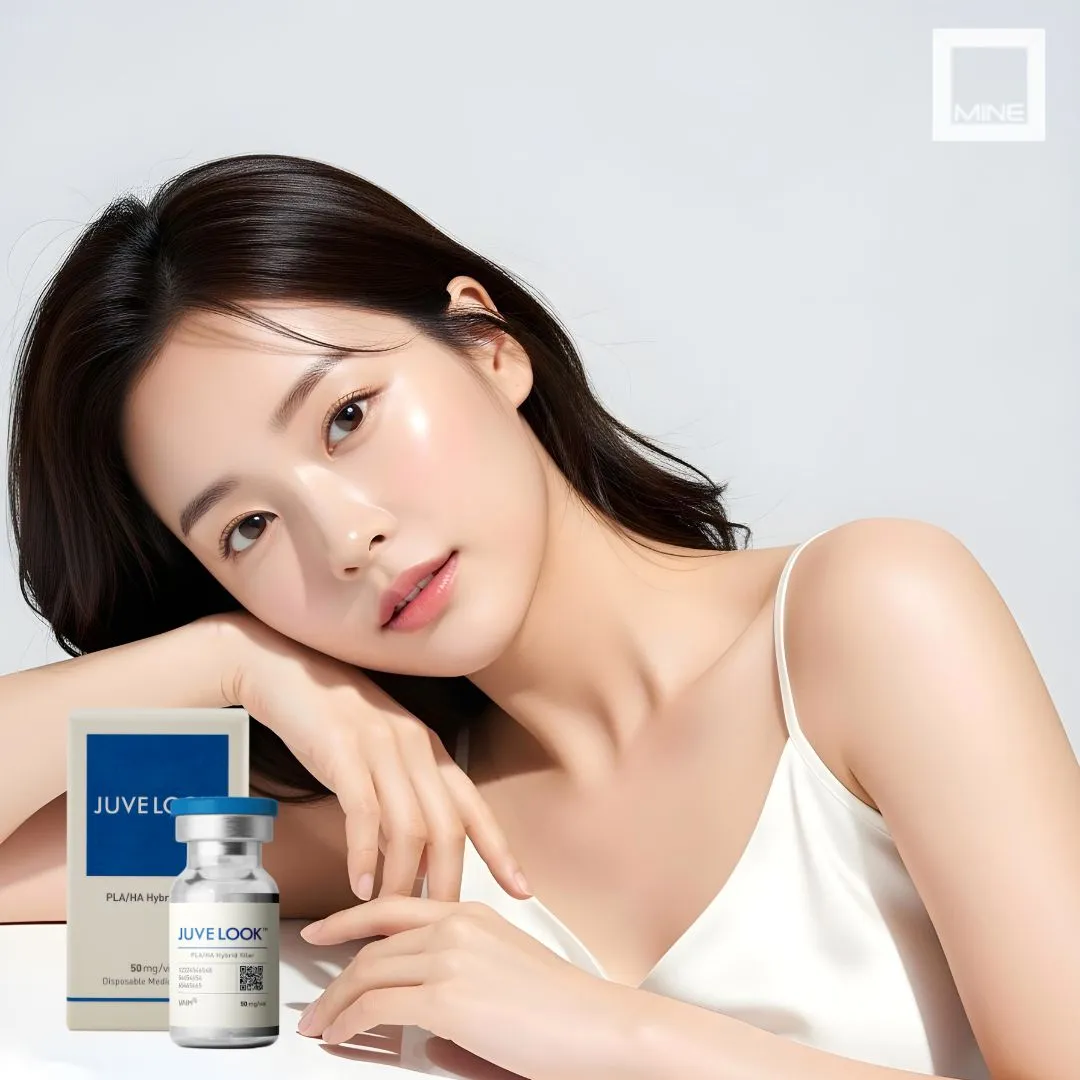
Not Just Another Filler — What Makes It a Collagen Biostimulator
Many people assume Juvelook Volume is simply one more type of filler, but the way it works is fundamentally different. A conventional hyaluronic acid (HA) filler fills an empty space directly, much like inflating a small water balloon under the skin. Juvelook Volume’s defining ingredient does something else entirely: it acts as a collagen biostimulator, a substance that nudges your skin into producing its own collagen.
Cosmetic dermatology literature draws a clear line between this category and ordinary space-filling fillers. Rather than adding bulk on the day of treatment, it switches your skin’s collagen “factory” back on, so that over the following weeks the firmness you see is elasticity your own body has produced. You can learn more about the full treatment process on our Juvelook Volume treatment at MINE service page.
How PDLLA and HA Each Work in Your Skin
Juvelook Volume combines two key ingredients, each with its own job:
- PDLLA (polylactide, a biodegradable material that triggers collagen renewal): A member of the poly-lactic acid family, it stimulates fibroblasts (the cells in your skin that manufacture collagen) to build new collagen, a process medically termed neocollagenesis, or “new collagen formation.”
- HA (hyaluronic acid, a moisture-binding ingredient): It adds an immediate sense of hydration and volume right after injection, holding a natural shape as a bridge until the new collagen has time to develop.
What is reassuring is that PDLLA is not some untested new material. It belongs to the same family as Vicryl absorbable sutures, the dissolving stitches that the body safely breaks down after surgery, a biodegradable material with more than 30 years of established safety in medicine. The injectable poly-L-lactic acid (PLLA) class it comes from was first approved in Europe in 1999 and received U.S. FDA approval in 2004 (as Sculptra) for facial fat loss, giving it a well-documented safety record (see the FDA’s reference on FDA-approved filler ingredients).
The 3-Step Mechanism: How Juvelook Volume Restores Sunken Cheeks

The way Juvelook Volume restores a sunken cheek unfolds gradually, a little like planting seeds and waiting for new growth to come up beneath the surface. Here is what happens at each stage.
Step 1 — Right After Injection: Instant Volume from HA (First 1–2 Hours)
The initial volume you feel right after injection comes from the hyaluronic acid, and it partially diminishes within 1 to 2 hours as the carrier fluid absorbs. This is expected and completely normal. It is simply the hydrostatic, or water-based, effect of the suspension settling, not the treatment failing. The real effect begins only after this point.
Step 2 — Weeks 2–4: PDLLA Breaks Down, Fibroblasts Activate
As PDLLA microparticles break down over weeks 2 to 4, your body’s immune cells process them, and that very process triggers fibroblast activation. Fibroblasts, remember, are the cells that manufacture collagen in your skin. Doctors call this clean-up by immune cells phagocytic digestion, but the takeaway is simple: the breakdown of the material is exactly what prompts your skin to start building collagen. The ingredient is not just disappearing; its disappearance is what lays the foundation for new firmness.
Step 3 — Weeks 4–8 Onward: Your Skin Builds Real Collagen
By around weeks 4 to 8, the collagen your own skin has produced begins to fill the cheek with volume and elasticity, slowly and steadily. Because the change arrives gradually rather than all at once, it tends to look natural, with little sign that anything was done. According to cosmetic dermatology research, PLLA-class biostimulators produce a gradual correction of volume-depleted areas, with the effect accumulating over months rather than days. Once the desired result is reached, that improvement is generally reported to last up to 18 to 24 months. If you want to go deeper on the science, read our article on how Juvelook triggers collagen regeneration.
Treatment Areas: Beyond Sunken Cheeks

Juvelook Volume is not limited to the cheeks. It can be applied across the many areas of the face that lose volume with age.
Under-Eye Hollows and Dark Circles
When the under-eye area hollows out, it casts a shadow that can look like a dark circle. Restoring volume here softens that shadow, leaving a brighter, more refreshed appearance around the eyes.
Nasolabial Folds and Deep Lines Around the Mouth
When the cheek beside the fold is properly supported, the deep nasolabial crease and the shadows around the mouth ease. Rather than packing filler directly into the line, this approach restores the underlying volume so the fold softens naturally, a structural correction rather than a surface one.
Temples and Forehead Volume Restoration
Bringing a soft curve back to flat or hollow temples and forehead makes the whole face look more three-dimensional. Because every area needs its own injection depth, volume, and careful left-to-right balance, a one-to-one assessment by a specialist is essential. For a full facial volume design overview, see our complete guide to Juvelook treatment areas.
Side Effects and Precautions: What to Know Before Treatment

Nodules and Granulomas — Risk and Prevention
Among the known side effects of PLLA-class agents are subcutaneous nodules (small lumps beneath the skin) and granulomas (clusters where tissue bundles together). These were reported more frequently in older literature, largely from a time before modern injection technique was well established. With today’s methods, adequately diluting the product and following a gentle massage protocol of 5 minutes a day for 5 days after treatment significantly reduces the risk.
The key point is that the concern lies not in the material itself but in how skillfully it is handled. Receiving treatment from an experienced specialist, and following the aftercare instructions you are given, is what keeps it safe.
Post-Treatment Care: Massage, Sun, Alcohol
For about a week after treatment, the following helps minimize side effects:
- Massage the area gently for 5 minutes a day over 5 days, exactly as instructed.
- Avoid strong sun exposure, saunas, and hot baths for one week.
- Hold off on alcohol and strenuous exercise, as both can worsen swelling and bruising.
If some bruising or swelling does appear, it usually settles within a week. Makeup and cleansing can typically resume about 4 hours after treatment. For a complete guide on maintaining your results, see how to maximize Juvelook Volume longevity.
Juvelook Volume vs. Regular HA Fillers: Which Is Right for You?
Immediate Volume vs. Gradual Elasticity: Different Goals, Different Treatments
These two treatments are not better or worse than each other; they serve different goals. A regular HA filler delivers volume the moment it goes in and is easy to adjust, since it can be dissolved if the shape is not quite right. It is the better choice when you want a fast, well-defined change.
Juvelook Volume, on the other hand, draws out a gradual, natural improvement in elasticity built from your own skin’s collagen. It suits diffuse cheek volume loss, where steady progress over the months is preferable to an instant result.
Duration and Maintenance Comparison
On duration, Juvelook Volume tends to last comparatively long: its effects are generally reported at 18 to 24 months after reaching the desired result, against 3 to 12 months for standard HA fillers and just 2 to 4 months for injectable collagen. That means a longer interval between sessions. When sunken cheeks are pronounced, the two treatments are sometimes used together or in sequence; which combination fits you depends on your facial anatomy and the impression you are after, which is why MINE builds a one-to-one plan for each patient. If you are unsure whether standard Juvelook or the Volume variant fits your concern, read Juvelook vs. Juvelook Volume: which is right for you.
Frequently Asked Questions About Juvelook Volume for Sunken Cheeks
How effective is Juvelook Volume for sunken cheeks?
It works in two phases. The HA gives immediate volume right after treatment, while the PDLLA-triggered collagen regeneration delivers gradual, natural-looking volume and elasticity starting around weeks 4 to 8. The effect is generally reported to last up to 18 to 24 months after the desired result is reached. Because individual results vary, an in-person consultation is needed.
When will I see results after Juvelook Volume treatment?
You will see an immediate HA effect right after the injection, though it partially diminishes within 1 to 2 hours, which is normal and expected. The real, collagen-driven improvement begins around weeks 4 to 8 and continues gradually after that. Patience matters here, since this is not an instant filler.
What is the difference between Juvelook Volume and regular HA fillers?
HA fillers fill the space directly, giving an immediate and reversible result. Juvelook Volume uses PDLLA to stimulate fibroblasts so your own skin produces new collagen, a collagen biostimulator approach. The result comes on more gradually but tends to last longer and look more natural.
What are the side effects of Juvelook Volume?
Rarely, subcutaneous nodules or granulomas can occur, though the risk is minimized by adequate dilution and a 5-day massage protocol. More common and temporary effects include bruising, swelling, and mild firmness, which typically resolve within a week. Always follow the post-treatment care instructions you are given.
How many sessions of Juvelook Volume do I need for sunken cheeks?
Typically 1 to 3 sessions, depending on the degree of volume loss. Once the desired result is reached, the effect maintains for around 18 to 24 months. The exact number of sessions is determined after an in-person assessment.
Consult with Dr. Lee at MINE: Your Personalized Cheek Restoration Plan
Every face is different, so the same treatment placed in different amounts and at different depths can produce very different results. At MINE, Dr. Lee Sung-wook, a board-certified plastic surgeon, personally conducts every consultation, examining both where the volume has been lost and the overall impression you would like to restore before building a one-to-one plan.
If sunken cheeks or loss of firmness have been on your mind, it is worth getting an accurate assessment rather than relying on searches alone.
- Consultation by phone: +82-2-516-1175
- Online inquiry: book a consultation through our website booking form
- Location: MINE Plastic Surgery & Dermatology, 813 Nonhyeon-ro, Gangnam-gu, Seoul, Korea
Reviewed by Dr. Lee Sung-wook, Board-Certified Plastic Surgeon, MINE Plastic Surgery & Dermatology.
※ This content is for informational purposes only and does not replace professional medical advice, diagnosis, or treatment. Individual results may vary, and side effects may occur. Please consult with a board-certified plastic surgeon for personalized advice.