EN
EN

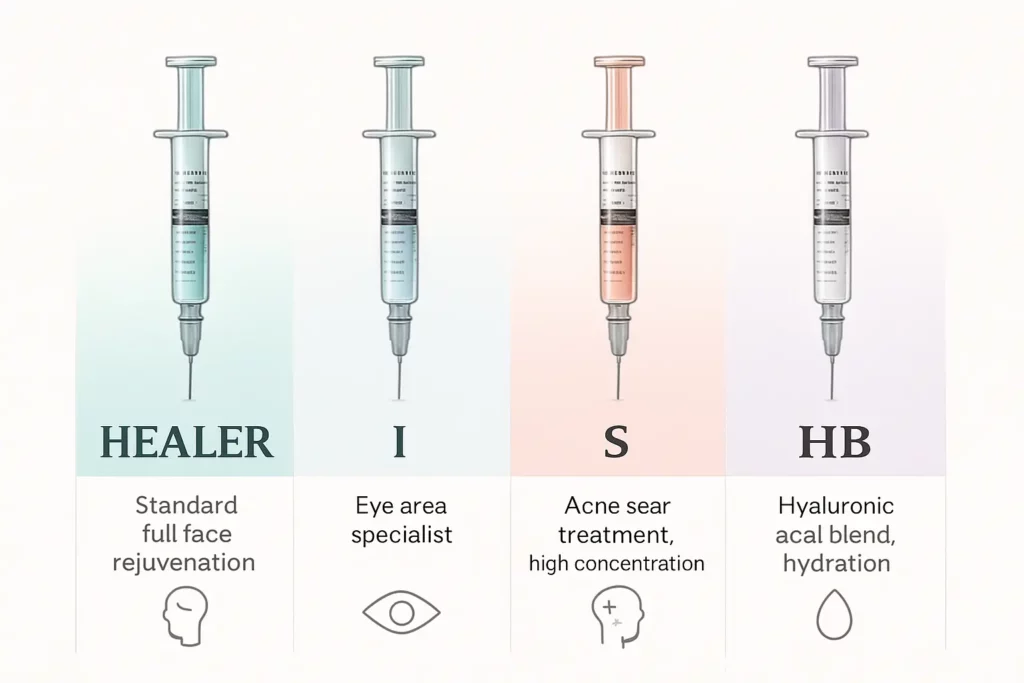
If you have been researching skin rejuvenation in Seoul, you have probably run into a confusing wall of options: Healer, I, S, HB. The rejuran healer types are four distinct polynucleotide (PN) skin-regeneration injectables — Healer, I, S, and HB — each formulated with a different PN concentration and a different target indication, so the right one depends entirely on your skin concern and the treatment zone.
“I want to try Rejuran, but there are so many versions — how do I know which one is mine?” This is one of the most common questions our patients ask. And it matters: the full-face product, the eye-area product, and the scar-specific product are genuinely different formulas. Choosing the wrong one can mean weaker results and more bruising or swelling than necessary.
In this guide, Dr. Lee Sung-wook at MINE Plastic Surgery in Seoul walks through each of the rejuran healer types from a consultation standpoint — laying out the differences in a clear table, explaining the PDRN vs PN molecular-weight question in plain language, and covering MINE’s proprietary Rejewel Injection. If you are new to the treatment altogether, you may want to start with our complete Rejuran treatment guide first.
Table of Contents
What Is Rejuran Healer? PN Skin Regeneration Explained
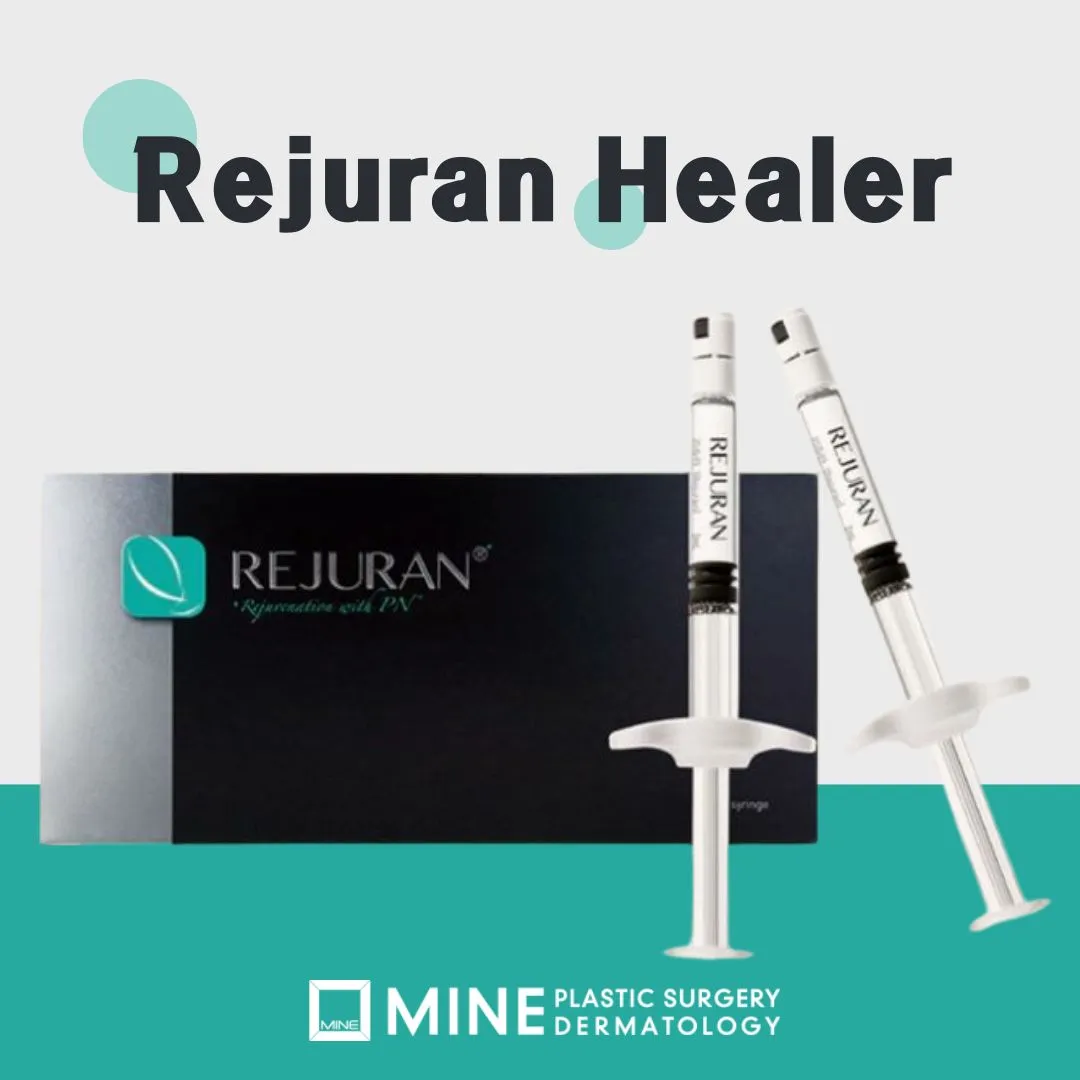
Rejuran Healer is a skin-regeneration injectable built around PN (polynucleotide) — a skin-repair ingredient purified from salmon DNA. Because PN is structurally similar to the DNA fragments our own bodies already contain, it tends to sit well in the skin with a low burden of rejection.
Crucially, Rejuran Healer is approved by Korea’s Ministry of Food and Drug Safety as a tissue-regenerating biological material — not a volumizing filler. That distinction is the whole point: instead of simply adding foreign volume, it prompts your own skin cells to rebuild themselves.
PDRN vs PN: Why the Molecular-Weight Difference Matters
While reading about Rejuran, you will keep meeting two terms: “PDRN” and “PN.” Both come from salmon DNA, and in Korean clinical practice the words are often used interchangeably — but technically there is a difference worth understanding.
PDRN (polydeoxyribonucleotide) is a DNA polymer with a molecular weight roughly in the 50–1,500 kDa range, made of comparatively short chains. Unlike ordinary DNA, it does not carry genetic information — it simply acts as a signal that tells skin cells to repair and regenerate. PN (polynucleotide) has a higher molecular weight, with longer chains. The longer the chain, the greater the viscosity and elasticity, and the longer the material tends to stay in the skin. In plain terms, PN behaves like a longer, stickier thread that works slowly and steadily beneath the surface. You can read more about the science in our deep dive on the effects of PDRN and Rejuran skin regeneration.
4 Ways PN Works in Your Skin
Laboratory research has shown that PDRN/PN promotes wound healing and strengthens the skin barrier by switching on the skin’s own repair signals — effects confirmed in both cell models and a lab-grown artificial skin model. What does that actually do for your face? It breaks down into four pathways:
- Stimulating cell growth — it activates fibroblasts (the dermal cells that produce collagen), supporting fresh collagen synthesis.
- Antioxidant activity — it helps suppress the free radicals (reactive oxygen species) that accelerate skin aging.
- Anti-inflammatory effect — it calms the small inflammatory reactions that leave skin irritated.
- Barrier reinforcement — it improves the skin’s ability to hold moisture, easing the deep dryness many people feel under the surface.
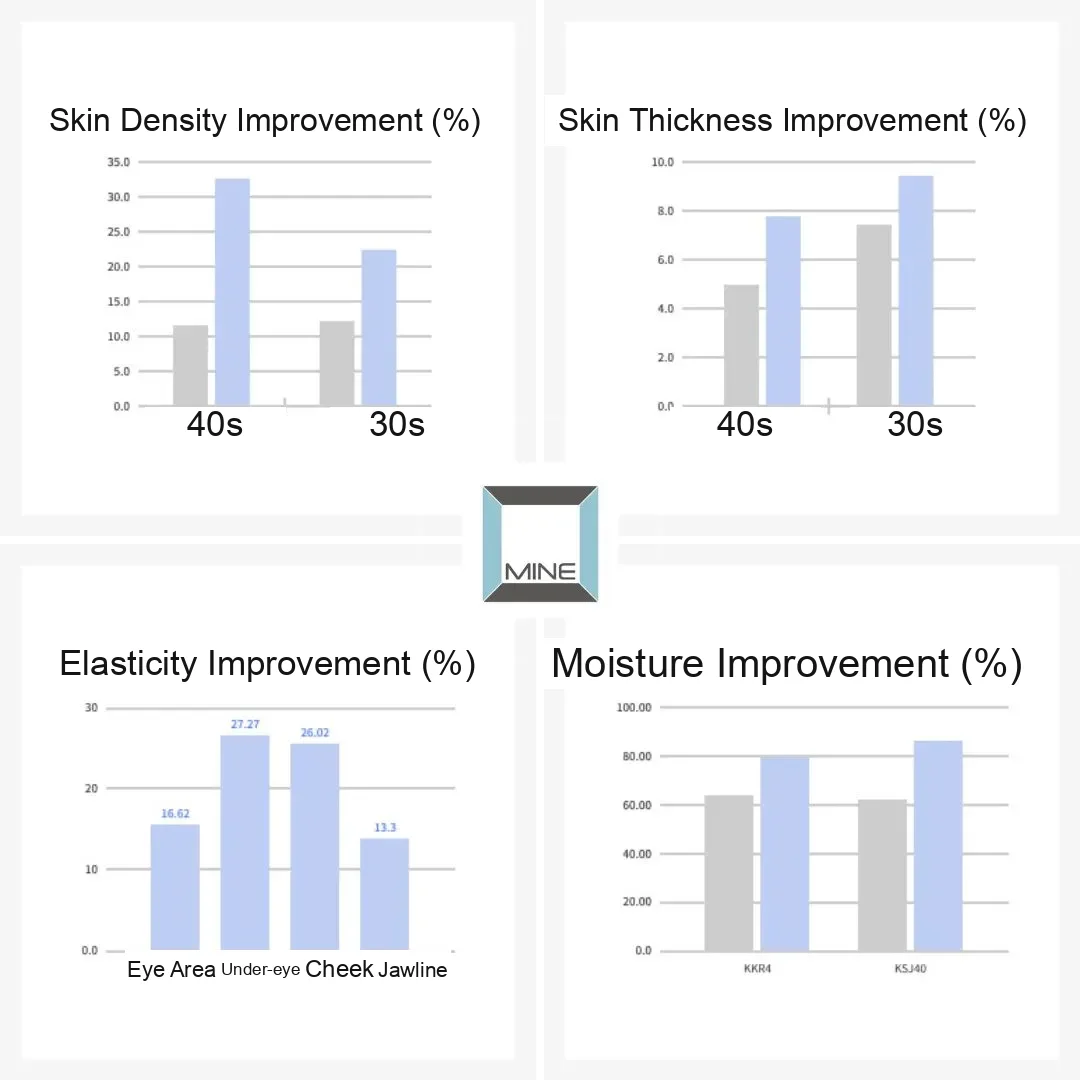
In clinical research, a treatment course delivered over roughly 12 weeks was associated with about a 20% increase in dermal thickness and around a 30% reduction in transepidermal water loss (TEWL — the amount of moisture that escapes through the skin). These figures come from a research setting, and individual results vary. To see how this translates into real skin change, see our overview of how PDRN transforms your skin. Rejuran is regulated as an approved product by the Ministry of Food and Drug Safety (MFDS).
Rejuran Healer Types at a Glance — Comparison Table
Here is the part most people are curious about: how the rejuran healer types actually differ. They all belong to the same Rejuran family, but their concentration and intended use are clearly distinct.
| Product | Volume | Concentration & Feature | Main Indication | Injection Zone |
|---|---|---|---|---|
| Rejuran Healer | 2 ml | PN 2%, standard concentration | Overall wrinkles, elasticity, texture | Full face |
| Rejuran I | 1 ml | Lowest gel concentration | Fine eye-area lines, dark circles | Around the eyes |
| Rejuran S | 1 ml | Highest concentration & viscosity | Depressed (atrophic) acne scars | Localized to scars |
| Rejuran HB | 2 ml | PN + hyaluronic acid + lidocaine | Dry/sensitive skin, comfort | Full face |
Which Skin Concern Matches Each Type?
To put it simply: if your concern is overall facial aging and skin texture, the standard Rejuran Healer is the baseline. If dullness and fine lines around the eyes bother you most, Rejuran I is the dedicated choice. If depressed acne scars are your biggest worry, Rejuran S is built for that. And if your skin is dry or sensitive, or you are nervous about procedural pain, Rejuran HB is a comfortable starting point.
Rejuran Healer vs Rejuran I — Eye Area Treatment Compared
The biggest difference between Rejuran Healer and Rejuran I comes down to where each is used. Healer is the standard full-face product; Rejuran I is a dedicated formula whose concentration has been dialed down specifically for the eye area.
Why Rejuran I for Eye Wrinkles and Dark Circles?
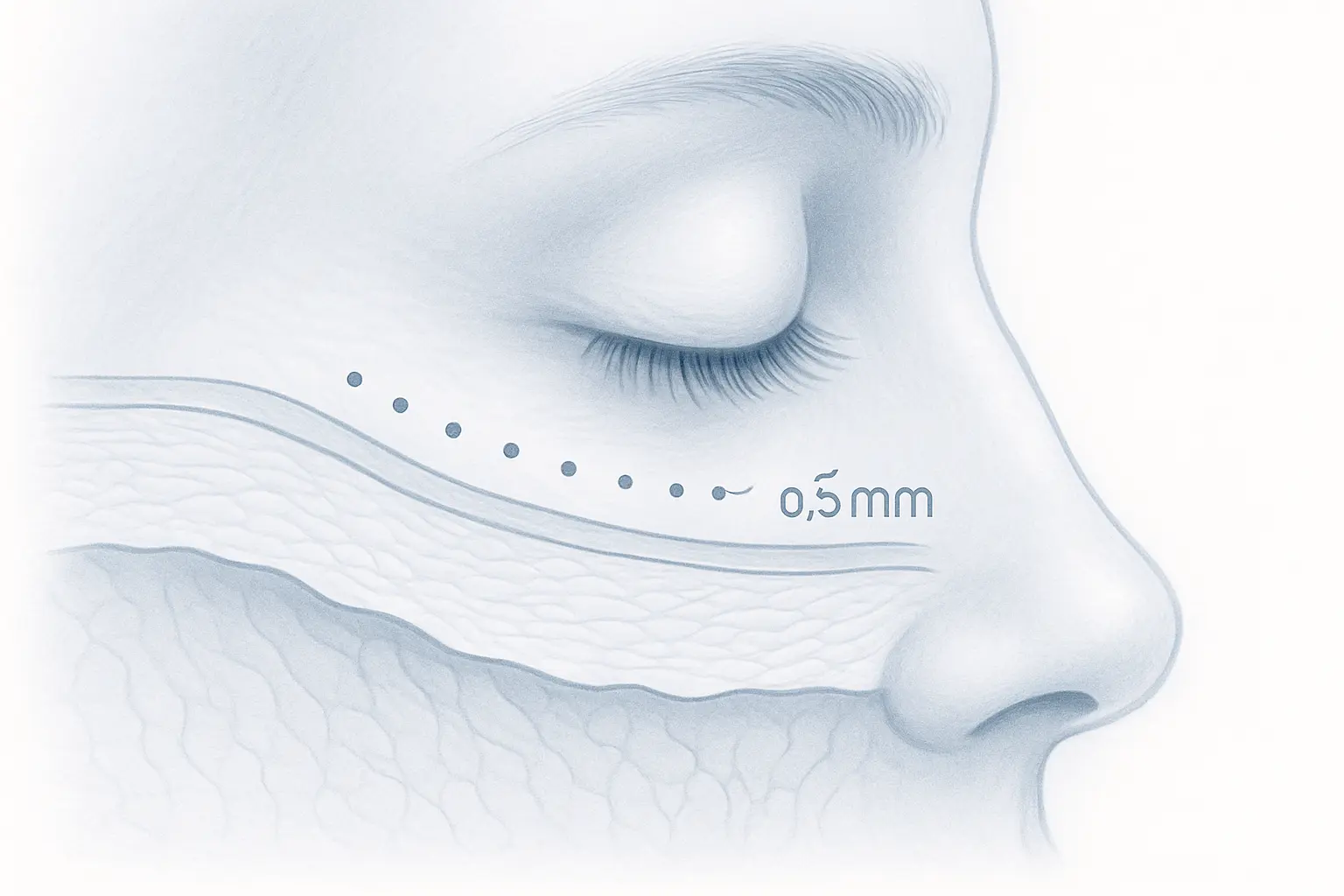
The skin around the eyes is the thinnest on the face — only about 0.5 mm thick. Inject a high-viscosity product into a zone this thin and delicate, and you risk clumping, swelling, and bruising.
Rejuran I uses the lowest gel concentration in the lineup, so it spreads evenly even through fragile periorbital tissue. That is why it is the usual choice when the goal is softening fine eye lines or brightening dark, shadowed under-eyes.
Combination Therapy: Healer + I on the Same Day
It is also possible to treat the full face with Rejuran Healer and the eye area with Rejuran I in a single visit — a combination approach. Matching the concentration to each zone tends to give a more natural overall result, so the right pairing is decided during consultation after assessing your skin.
Rejuran S for Acne Scars — High-Concentration Formula Explained
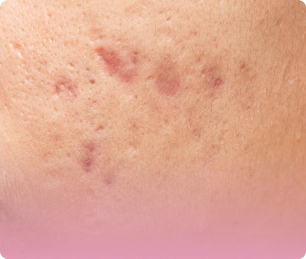
Rejuran S is the most concentrated and most viscous of the four rejuran healer types, formulated specifically for the depressed, shadow-casting acne scars that resist ordinary skincare.
Dual Mechanism: Immediate Volume Fill + Long-Term Tissue Regeneration
Rejuran S works in two ways at once. First, because the formula is thick and high-viscosity, it physically fills the depression of a scar and lifts the surface. Second, the PN component drives tissue regeneration in that area, so over time the skin’s own thickness gradually builds back up. In other words, it aims for both an immediate fill and longer-term repair.
Acne Scar Subtypes and What to Expect
Acne scars fall into different shapes: boxcar (angular edges), ice-pick (narrow and deep), and rolling (broad, wave-like depressions). Because injection depth and spacing change with the scar type, accurately assessing the scar before treatment is essential — this is not a do-it-yourself decision. Deeper scarring often cannot be resolved in a single visit and may be treated across several sessions.
Rejuran HB — Hyaluronic Acid Blend for Hydration and Comfort
Rejuran HB adds hyaluronic acid (HA — a molecule that helps skin hold onto moisture) to the standard PN base. The idea is to pair PN’s regenerative effect with the instant hydration HA provides.
PN + HA Synergy: Immediate Moisture With Long-Term Regeneration
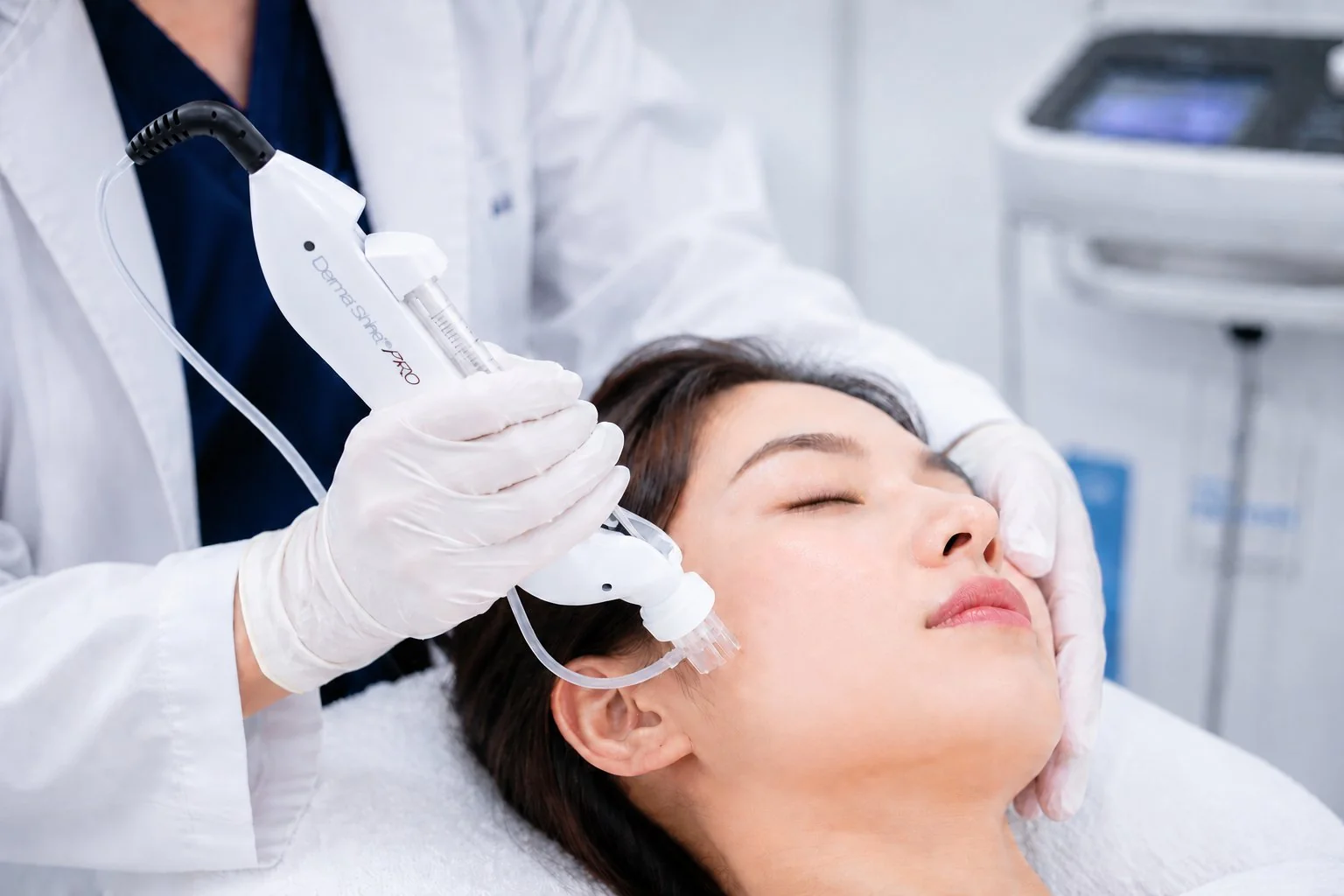
While PN slowly supports regeneration deep in the skin, the hyaluronic acid alongside it pulls in water right away, adding a dewy, luminous finish from the first session. Think of it as two ingredients dividing the work between them — one for the long game, one for immediate comfort and glow.
Who Should Choose Rejuran HB?
Rejuran HB contains lidocaine, a local anesthetic, so the procedure is noticeably more comfortable than standard Healer. That makes it a great place to start for people with dry or sensitive skin, and for first-time Rejuran patients who would rather ease in. One important note: anyone with a known allergy to local anesthetics should tell their physician before treatment, since lidocaine is part of this formula.
MINE Rejewel Injection — Rejuran Healer Upgraded With MINE’s Proprietary Formula
At MINE Plastic Surgery, we offer our own in-house treatment built on a Rejuran Healer base: the MINE Rejewel Injection.
The Rejewel Injection is a cocktail treatment that layers lifting, tightening, brightening, and antioxidant compounds onto the Rejuran Healer base, following MINE’s own recipe. Compared with using Rejuran Healer alone, it is designed to address several aging concerns in a single session.
It suits patients dealing with a mix of issues at once — loss of firmness, a dull or uneven tone, fine lines. That said, exactly which ingredients are combined and in what ratio depends on the individual skin assessment, so the formula is custom-designed during consultation rather than fixed in advance.
Rejuran Treatment Schedule: How Many Sessions Do You Need?
Once you have settled on a product, the next question is almost always: “How many times do I need to come in?”
Initial Course: 3–4 Sessions at 2–4 Week Intervals
Rejuran is typically delivered as a course of 3–4 sessions, spaced 2–4 weeks apart. You may already notice better hydration and smoother texture after the first session, but because collagen takes time to build, the more visible change is usually felt from the third session onward.
Maintenance and How Long Results Last
After completing a course, results generally last about 6–12 months. From there, roughly 2–4 maintenance sessions per year are recommended to sustain the effect — though the right interval varies with your skin condition, age, and lifestyle, and individual results differ.
Frequently Asked Questions About Rejuran Healer Types
What is the difference between Rejuran Healer, I, S, and HB?
Rejuran Healer is the standard full-face product (PN 2%, 2 ml). Rejuran I is the eye-area version with the lowest concentration. Rejuran S is the scar-focused variant with the highest concentration and viscosity, for depressed acne scars. Rejuran HB adds hyaluronic acid to boost hydration and lidocaine to reduce discomfort. Each has its own indication and injection zone.
What is the difference between PDRN and PN in Rejuran?
Both PDRN (polydeoxyribonucleotide) and PN (polynucleotide) are derived from salmon DNA. PN has a higher molecular weight and longer chains, which tends to give it greater viscosity, elasticity, and staying power in the skin. The two terms are often used interchangeably in the Korean market, but PN is technically the higher-grade polymer.
How many Rejuran sessions are needed to see results?
A standard course is usually 3–4 sessions at 2–4 week intervals before the change becomes clear. You may feel improved hydration and elasticity after a single session, but clinically meaningful change often appears from the third session onward. Results vary by individual.
How is Rejuran Healer different from a dermal filler?
A filler (such as a hyaluronic acid filler) physically adds volume right away, whereas Rejuran Healer uses PN to prompt your skin’s own cells to regenerate. Their purpose and mechanism are different, and the two are sometimes used together when both volume and regeneration are needed.
What are the aftercare instructions after Rejuran treatment?
On the day of treatment, avoid washing the face and applying makeup, and skip saunas, alcohol, and vigorous exercise for about 48 hours. Do not rub or massage the treated area. Minor bruising and swelling usually settle within 3–7 days. If unusual symptoms persist, please visit the clinic for an evaluation.
Choose Your Rejuran Healer Type With a Specialist
As we have seen, the right Rejuran depends on your specific skin concern and the area being treated. With so many options, it is far safer to choose after a specialist assessment than to decide on your own.
At MINE Plastic Surgery in Seoul, we assess your skin through a one-on-one consultation and help you decide which of the rejuran healer types — Healer, I, S, or HB — and whether the MINE Rejewel Injection best suits you. You can explore the full service on our Rejuran treatment at MINE Clinic page. To book a free skin assessment with Dr. Lee Sung-wook, call +82-2-516-1175.
※ This content is for informational purposes only and does not replace professional medical advice, diagnosis, or treatment. Individual results may vary, and side effects may occur. Please consult with a board-certified plastic surgeon for personalized advice.