EN



Rejuran is a skin booster injection that delivers PDRN (polydeoxyribonucleotide) — small DNA fragments extracted from salmon testes — into the dermis to help the skin repair itself. Because the core ingredient is salmon-derived, a Rejuran salmon allergy question is one of the first things to settle: anyone with a fish or salmon allergy should tell their doctor before treatment.
“I’m allergic to fish. Can I still get Rejuran?” We hear this in consultations often, especially from international patients who read about the salmon origin while planning a trip to Seoul. The honest short answer is: don’t decide on your own in either direction. Share your full allergy history with the doctor, and the decision is made at your consultation at Rejuran treatment at MINE.
This guide covers five things to know first: the short answer, which part of Rejuran comes from salmon, why allergy history matters with animal-derived injectables, what to tell your doctor, and how to tell a normal reaction from one worth reporting. We finish with options if Rejuran turns out not to be the right fit.
In this article
- Rejuran Salmon Allergy: The Short Answer
- What in Rejuran Actually Comes From Salmon?
- Why Allergy History Matters With Animal-Derived Injectables
- What to Tell Your Doctor Before Rejuran
- Normal Reaction or Allergic Reaction? What to Watch After Treatment
- If Rejuran Isn’t Right for You: Boosters With a Different Core Ingredient
- Frequently Asked Questions
Rejuran Salmon Allergy: The Short Answer
A Rejuran salmon allergy concern is a reason for a careful medical review, not an automatic yes or no. Rejuran contains PDRN made from salmon, so a fish or salmon allergy is something your doctor needs to know about and weigh before any injection.
What we can say clearly:
- Rejuran uses a salmon-derived ingredient. That fact alone is enough to raise your allergy history at consultation.
- There is no reliable published data on how often people with fish allergies react to salmon-derived PDRN. Anyone who tells you it is definitely safe — or definitely unsafe — for you is going beyond the evidence.
- The clinic reviews your history and decides carefully. At MINE, the doctor looks at what kind of reaction you have had, how severe it was and your other allergies before advising whether Rejuran is appropriate.
In other words, the right next step is a conversation with the doctor, not a guess based on online forums.
What in Rejuran Actually Comes From Salmon?
The salmon-derived part of Rejuran is its active ingredient, PDRN. It is not made from fish meat; it is a purified form of DNA taken from salmon testes. Knowing this helps you describe the product accurately when you talk to your doctor or your allergist.
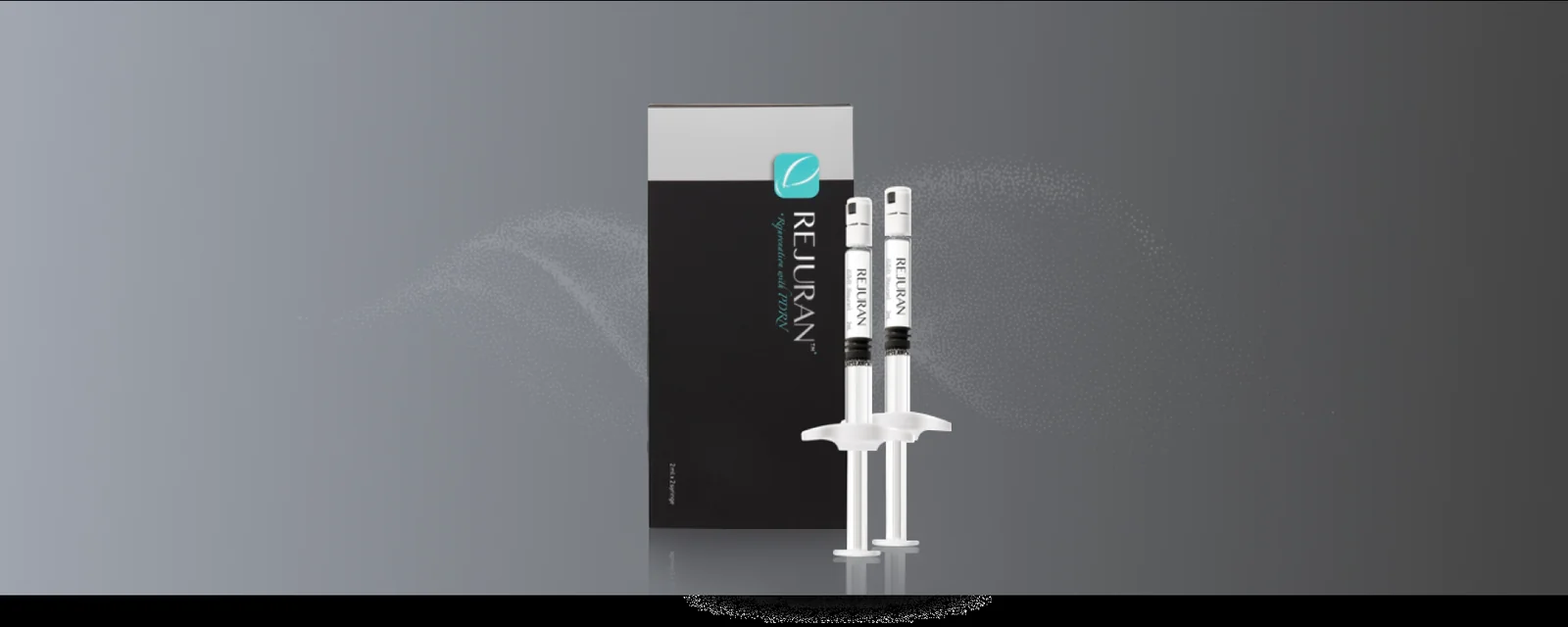
PDRN: DNA fragments from salmon testes
PDRN stands for polydeoxyribonucleotide. Put simply, it is a chain of small DNA pieces that help the skin repair itself. Research describes PDRN as a DNA polymer that, unlike regular DNA, carries no genetic information — it cannot change your own DNA. What it does is send repair signals to skin cells.
One point matters for anyone with a Rejuran salmon allergy question: we are not aware of evidence showing that processing removes every possible allergen, so we don’t claim that it does. The ingredient’s origin is salmon, and that is what your doctor will consider.
What PDRN does in the skin, in one paragraph
A 2023 study in Molecules on PDRN and skin regeneration describes PDRN as an agonist of the A2A adenosine receptor (a “switch” on the cell surface that turns on repair signals), which supports skin-cell regeneration and strengthens the skin barrier. That is the core reason it is used as a skin booster. For a side-by-side look at the ingredients in other boosters, see how PDRN compares with other skin booster ingredients. Rejuran also comes in several product types, which your doctor can explain if treatment goes ahead.
Why Allergy History Matters With Animal-Derived Injectables
Allergy history matters because whenever an injectable contains an animal-derived ingredient, doctors match the ingredient’s origin against the patient’s known allergies before injecting. This is a long-standing principle in cosmetic dermatology, not something unique to Rejuran.
What dermatology textbooks say about animal-derived ingredients
Cosmetic dermatology textbooks give two clear examples of this principle:
- Bovine collagen fillers: because these products contain a cow-derived component, textbooks state that pre-treatment skin testing is necessary before use.
- Bird-derived hyaluronic products: hyaluronic acid products of avian origin were not used in people allergic to avian products such as eggs.
These examples don’t prove that a salmon allergy behaves the same way with PDRN — the ingredients and the immune responses are different. They explain why your doctor asks detailed questions: ingredient origin plus allergy history is the standard check before an injection. Textbooks also describe allergic reactions to injectables as rare and, when they do occur, treatable with medicines such as corticosteroids.
Other allergies worth mentioning: numbing cream and lidocaine
Fish isn’t the only allergy to bring up. A Rejuran session usually starts with numbing cream left on the skin for about 20 minutes. Dermatology textbooks note that patients with lidocaine hypersensitivity (an allergy to a common local anesthetic) should not receive lidocaine-containing injectables. If you have ever reacted to a numbing cream, a dental anesthetic or any other medicine, tell your doctor so the plan can be adjusted.
What to Tell Your Doctor Before Rejuran
If you have a Rejuran salmon allergy concern, tell your doctor exactly what you react to, how severe the reaction was and what other allergies or medicines are part of your history. The more specific you are, the easier it is for the doctor to make a careful decision.

Your allergy checklist
Bring these details to your consultation — written down, if possible, and translated into English if your records are in another language:
- Which food caused the reaction: salmon only, other fish, or shellfish as well.
- What happened: hives, itching, lip or eye swelling, stomach symptoms, or trouble breathing.
- Severe reactions: whether you have ever had anaphylaxis (a sudden, whole-body allergic reaction) or been told to carry an epinephrine auto-injector.
- Allergy testing: any skin-prick or blood test results from your allergist.
- Other allergies: medicines, local anesthetics, numbing creams, latex or skincare ingredients.
- Current medications: including antihistamines, steroids or immune-suppressing drugs.
- Skin conditions: eczema, active acne or infection in the area to be treated.
How the consultation decides
At consultation, the doctor reviews your skin condition, your main concerns and your allergy history together. Based on that, they will advise whether Rejuran is appropriate and, if it is, which type suits you and how many sessions make sense. If the doctor has doubts, they may suggest a different booster instead.
What the session involves if you go ahead
If Rejuran is approved, the treatment itself is short:
- Consultation — skin assessment and allergy review.
- Cleansing and numbing cream — about 20 minutes to reduce discomfort.
- Injection — fine needles place PDRN into the dermis over roughly 30–40 minutes.
- Soothing care — calming treatment for the skin afterward.
The whole visit usually takes about an hour.
Normal Reaction or Allergic Reaction? What to Watch After Treatment
A normal reaction after Rejuran stays at the injection sites and fades within hours to days, while an allergic reaction tends to spread beyond the treated area or affect your breathing. For anyone who came in with a Rejuran salmon allergy worry, knowing the difference helps you stay calm about expected changes and act quickly on the rare ones that need attention.
Expected reactions and how long they last
Right after the injections, small raised bumps (papules) appear where PDRN was placed. They are an expected sign of the product sitting in the skin, and post-injection bumps from Rejuran usually settle within 24–48 hours. For photos and a fuller timeline, see what Rejuran bumps look like and how long they last.
Dermatology textbooks list redness, swelling and bruising in the days following treatment as common adverse events after skin injections, and in our experience with Rejuran, bruising and redness usually fade on their own within a few days. On the day of treatment, avoid saunas, intense exercise and alcohol.
Signs to report to the clinic
Contact the clinic promptly if you notice any of the following, as these are not part of the usual healing pattern:
- Hives or itching that spread beyond the injected area
- Swelling of the lips, eyes, tongue or throat
- Redness or swelling that keeps getting worse instead of settling
If you have trouble breathing, feel faint or notice throat tightness, seek emergency care immediately — and use your epinephrine auto-injector if one has been prescribed for you.
| What you notice | Usually means | What to do |
|---|---|---|
| Small bumps at injection points | Expected reaction | Wait; usually settles in 24–48 hours |
| Mild redness or bruising | Expected reaction | Usually fades within a few days |
| Spreading hives or itching | Not expected | Contact the clinic promptly |
| Facial or throat swelling, breathing trouble | Possible serious reaction | Seek emergency care |
If Rejuran Isn’t Right for You: Boosters With a Different Core Ingredient
If, after a Rejuran salmon allergy review, the doctor advises against treatment because of your allergy history, the next step is usually a skin booster built on a different core ingredient. The aim isn’t to find a “better” product but one that suits your skin goals and your allergy profile.
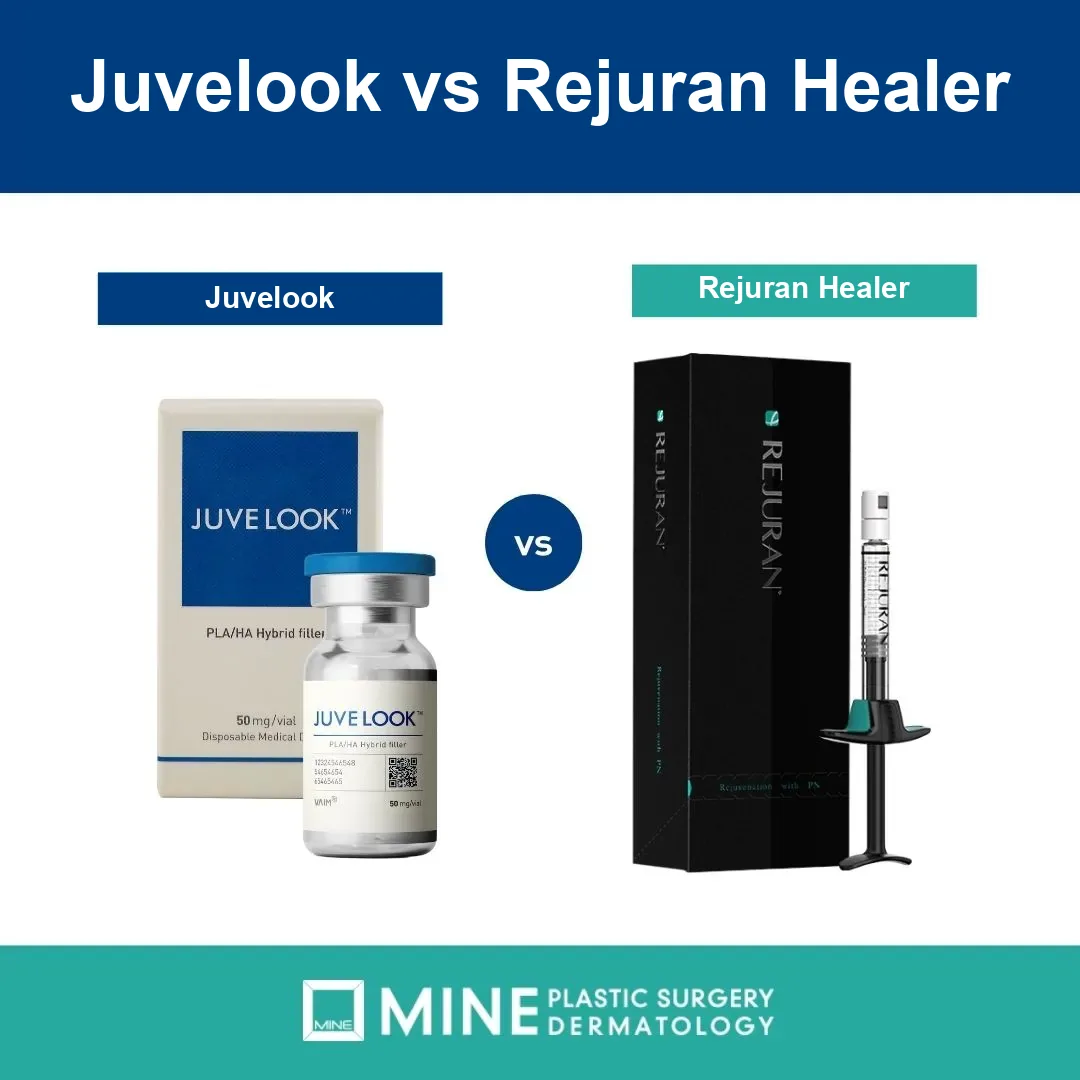
Juvelook (PDLLA)
Juvelook is based on PDLLA, a biodegradable polymer (a material the body gradually breaks down) that stimulates collagen directly. Its core ingredient is different from salmon-derived PDRN, which is why it often comes up in conversations with patients who have a fish allergy. Your doctor will still confirm the full formulation with you. For a closer comparison, read Laetigen vs Rejuran vs Juvelook.
Re2O and other options — confirm the ingredient source
Re2O is a multi-ingredient booster focused on skin texture and tone; you can learn how the Re2O skin booster works before your visit. Laetigen belongs to the PN (polynucleotide) family, which may share a similar origin to Rejuran’s ingredient, so it should not be assumed to be a fish-free choice. For any product, ask your doctor directly where each ingredient comes from before you agree to treatment.
Frequently Asked Questions
Can I get Rejuran if I have a fish or salmon allergy?
Rejuran uses a salmon-derived ingredient, so you need to tell your doctor about your allergy before treatment. The clinic reviews your allergy history and decides carefully whether Rejuran is appropriate for you. Please don’t make this decision on your own.
How is Rejuran made from salmon?
Its active ingredient, PDRN, is made of small DNA fragments extracted from salmon testes rather than fish meat. Research describes PDRN as activating the A2A adenosine receptor, which supports skin regeneration and barrier repair.
How do I know if a reaction after Rejuran is normal?
Small bumps at the injection points usually settle within 24–48 hours, and bruising or redness fades within a few days. Hives that spread beyond the treated area, facial or throat swelling, or breathing trouble are not expected — contact the clinic, or seek emergency care for breathing problems.
What can I try instead of Rejuran if I’m allergic to fish?
Boosters with a different core ingredient, such as Juvelook (PDLLA), may be discussed at consultation. Always confirm each product’s ingredient source with your doctor, because some boosters share similar origins.
How many Rejuran sessions do I need and when will I see results?
Changes build gradually over about 4–12 weeks as the skin produces new collagen. Three to four sessions spaced 3–4 weeks apart are usually recommended, and results vary from person to person.
Talk to a Doctor About Your Allergy History
Have a Rejuran salmon allergy question, or not sure whether Rejuran suits you with your allergy history? Book a consultation at MINE Plastic Surgery & Dermatology in Seoul, and our doctor will review your history and walk you through your options. Call +82-2-516-1175 or visit our Rejuran treatment at MINE page to get started.
※ This content is for informational purposes only and does not replace professional medical advice, diagnosis, or treatment. Individual results may vary, and side effects may occur. Please consult with a board-certified plastic surgeon for personalized advice.