EN
EN


Knowing how to choose a breast augmentation surgeon in Korea comes down to verifying eight things yourself — the surgeon’s board certification, who actually operates, how the implant plan is tailored to your body, real case photos, surgical safety, aftercare, revision capability and consultation quality — rather than trusting price, ads or review counts.
If you have started researching breast surgery in Seoul, you have probably hit the same wall most patients do: there are simply too many clinics. A single search brings up hundreds of them, and every one says it is skilled, safe and natural-looking. Eye-catching promotions, flawless before-and-after photos, dozens of glowing reviews — the more information you collect, the harder the decision becomes.
The real problem is that most patients choose without knowing which criteria actually matter. As a board-certified plastic surgeon, I have put together the eight checks I would want my own family to use. I have also separated what you can verify from home before you fly from what you can only judge in the consultation room.
- Why Price, Instagram and Review Counts Are the Wrong Criteria
- How to Choose a Breast Augmentation Surgeon in Korea: The 8-Point Checklist
- Breast Surgeon Checklist: What to Check and How to Verify It
- Breast Augmentation Side Effects and Recovery Timeline: An Honest Overview
- Before and After Surgery: Precautions From a Plastic Surgeon
- Frequently Asked Questions
- Choosing Your Surgeon With Confidence at MINE
Why Price, Instagram and Review Counts Are the Wrong Criteria
3 Common Mistakes When Comparing Breast Clinics
When I ask patients why they chose a particular clinic, three answers come up again and again:
- “Their promotional price was the lowest.”
- “I kept seeing them on Instagram.”
- “They had the most reviews.”
None of these reasons says anything about surgical safety or the surgeon’s skill. A low price does not tell you anything about implant quality or the anesthesia safety system behind it. How often a clinic appears in your feed mostly reflects its marketing budget. And reviews can be curated content rather than a balanced picture.
The same goes for search results. Typing “best breast augmentation surgeon” into Google rarely tells you who suits your body; it mostly shows you who has invested most in visibility. What you need instead is a set of checks you can run yourself.
Dr. Lee’s Key Point: More advertising does not mean better surgery. A clinic chosen without clear criteria is the riskiest choice of all.
Who This Checklist Is For
This guide is written for international patients planning breast augmentation in Korea and comparing clinics from abroad. It is equally useful if this is your first breast surgery, if pregnancy and breastfeeding have changed your breast volume or shape, or if you are considering revision because of a problem with previous implants.
How to Choose a Breast Augmentation Surgeon in Korea: The 8-Point Checklist
1. Confirm a Board-Certified Plastic Surgeon (and How to Check From Abroad)
Breast augmentation is a demanding operation, so the first thing to confirm is that your surgeon is a board-certified plastic surgeon. In Korea, a “plastic surgery clinic” and a “board-certified plastic surgeon” are not the same thing. Any licensed doctor can open a cosmetic practice, but only a doctor who has completed a full plastic surgery residency and passed the specialist board examination holds plastic surgery specialist certification.
You can check this in three ways:
- The clinic’s staff page. Look for the operating surgeon’s full name and specialist credentials, not just a clinic logo. For example, you can see how credentials are listed on the clinic’s medical staff page.
- The national society’s member search. Search for the surgeon on the website of the Korean Society of Plastic and Reconstructive Surgeons (KSPRS), the professional body for plastic surgeons in Korea.
- The specialist license on display. At your visit, check that a specialist certificate is displayed in the consultation room.
A practical tip for overseas patients: before your consultation, ask the clinic for your surgeon’s name in Korean. The KSPRS site is in Korean, but a browser translation tool makes the member search easy to use. If you are from the US, think of this as similar to checking a surgeon’s board status at home — but for surgery in Korea, the place to check is the Korean society.
2. Ask Who Will Actually Perform Your Surgery
At some clinics, the doctor you meet at the consultation is not the doctor who performs the operation. Confirm that one surgeon takes consistent responsibility from consultation through surgery and follow-up. At MINE, the principle is that the surgeon you consult with performs your surgery personally. For a closer look at how operating surgeon, anesthesia and aftercare arrangements vary between clinics, see why breast augmentation quotes differ between clinics in Korea.
Dr. Lee’s Key Point: “Who will operate on me?” is the most basic question you can ask — and the most important one. Ask it at every consultation.
3. Expect an Implant and Incision Plan Built Around Your Body
Breast augmentation involves several decisions: round or anatomical (teardrop-shaped) implants, the pocket where the implant sits, and the incision — in the armpit, around the areola, or in the fold under the breast. You can compare the trade-offs in our guide to breast augmentation incision options.
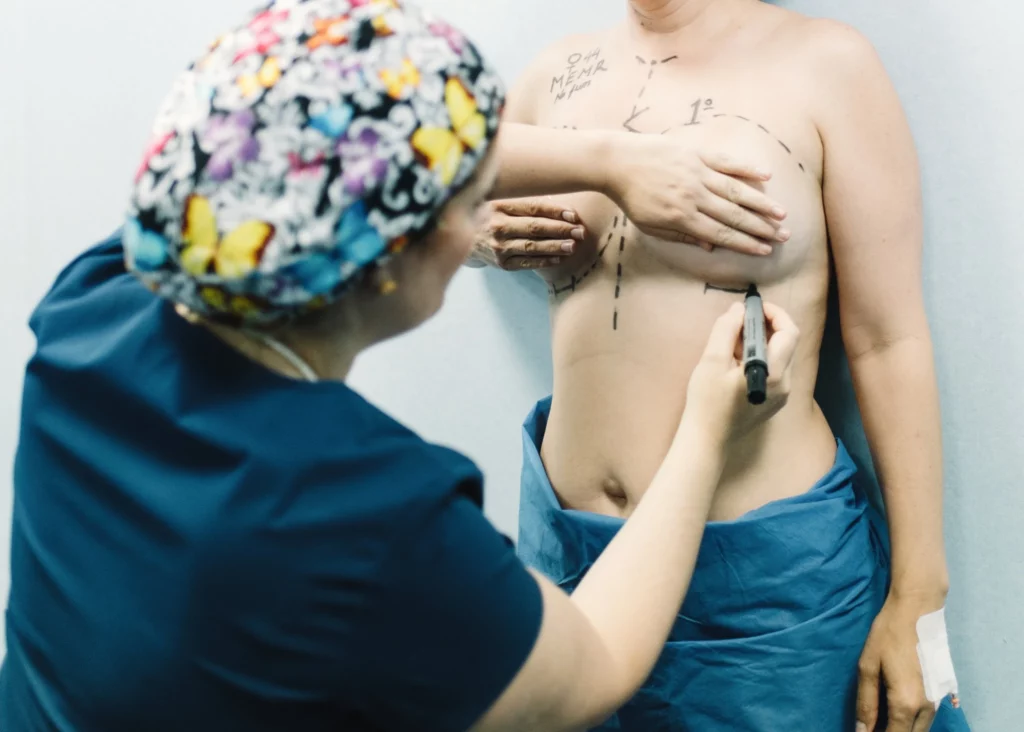
Plastic surgery textbooks describe the consultation as the place where these choices should be made for you specifically. The surgeon assesses your goals and expectations, then examines your tissues — how thick your skin is and how much natural breast tissue will cover the implant (soft-tissue coverage). Those measurements guide the implant size and type, the pocket and the incision. Textbooks also note that modern breast augmentation has moved away from guesswork toward measured, dimension-based planning, which is linked to fewer complications and reoperations.
In practice, a good plan sounds specific: “Because your upper breast tissue is thin, I recommend this pocket so the implant edge is less visible.” A warning sign is a one-size-fits-all answer such as “This is what everyone gets.” In my clinical experience, the patients who are happiest long term are those who understood why their plan was chosen.
4. Read Before-and-After Photos and Reviews Critically
Look for real cases across a range of body types and situations, not polished ad images. If a gallery shows only perfect-looking results, or every case looks the same, be cautious.
When you review photos, ask yourself:
- Are there cases with a body type and starting volume similar to mine?
- Are the before and after photos taken with the same lighting, angle and posture?
- Do they show side and oblique views, not just the front?
- Is the time since surgery stated for each photo?
Reviews deserve the same scrutiny. A handful of detailed reviews that mention recovery, follow-up and how concerns were handled tell you more than hundreds of short five-star comments. You can browse MINE’s photo reviews with these questions in mind.
Dr. Lee’s Key Point: It matters less how many before-and-after photos a clinic has than whether any of them look like your body.
5. Check the Clinic’s Surgical Safety System
Breast augmentation is performed under general anesthesia. Confirm that a specialist anesthesiologist manages your anesthesia and that the operating room has proper safety equipment and monitoring. Most anesthesia-related incidents stem from gaps in the safety system rather than from the operation itself. You can read about MINE’s surgical safety system; the article on clinic quotes linked above explains how these arrangements differ between clinics.
6. Look for Structured, Long-Term Aftercare
What happens after surgery has a large effect on your final result. Look for a clinic with a long-term program that runs from dressings and swelling and bruising care right after surgery, through scar management, to regular check-ups. As an international patient, also ask how follow-up works once you fly home. MINE’s post-op care program shows what a structured approach looks like.
7. Ask How the Clinic Handles Revisions and Complications
This is the check patients most often overlook. Beyond the first operation, ask whether the clinic can manage unexpected problems — and revision surgery — itself. Skilled clinics tend to have handled many cases of breast revision surgery themselves.
Plastic surgery textbooks identify capsular contracture (hardening and tightening of the scar capsule that naturally forms around an implant) as the most common complication of breast augmentation and the main reason for revision surgery. The same literature lists implant malposition (the implant sitting too high, too low or too far to the side) and recurrent sagging as other common reasons for a second operation. Clinical studies also show how complexity adds risk: a three-year review of 166 patients found that combining implants with a breast lift had a significantly higher complication rate than implants alone, and repeat (secondary) operations had higher revision and complication rates still.
Prevention starts in the operating room. Breast surgery textbooks describe a 14-point plan to lower capsular contracture risk, including a no-touch implant technique and careful control of bleeding. In plain terms, that means handling the implant as little as possible, keeping the pocket clean and dry, and minimizing any chance of contamination. It is fair to ask a surgeon how they approach this.
A useful question for your consultation: “If I develop capsular contracture, what would you do, and how is follow-up care handled?”
Dr. Lee’s Key Point: Getting it right the first time matters — but so does choosing a clinic that stays responsible if something goes wrong.
8. Judge the Consultation: Do They Actually Listen?
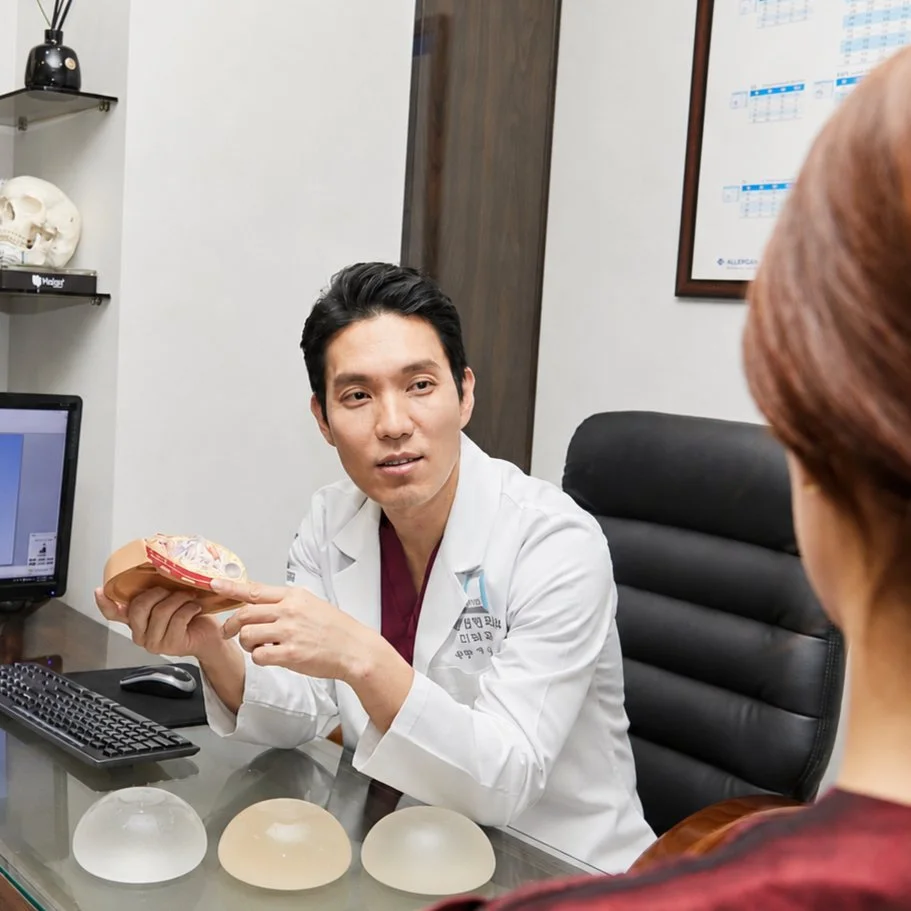
The last check is the quality of your first consultation. Does the surgeon take enough time to understand your body, your lifestyle, the result you want and the things that worry you? If the consultation is over in five minutes, or most of it is spent on price, think carefully before booking.
Medical textbooks describe a thorough consultation as one that evaluates your goals and expectations and includes a full medical history and physical examination to spot any risk factors. They also note that many patients research extensively and see more than one surgeon before deciding — so getting several consultations is normal, not disloyal.
For overseas patients, an online pre-consultation is a good first filter. Share clear photos, your height and weight, your medical history and your goals, then see how specific and unhurried the answer is.
Breast Surgeon Checklist: What to Check and How to Verify It
Use this table as your step-by-step tool for how to choose a breast augmentation surgeon in Korea. The first column is what to check, the second is where to verify it, and the third is the question to ask.
| Check | How to verify | What to ask |
|---|---|---|
| ✅ Board-certified plastic surgeon | KSPRS member search; clinic staff page | “Can I see your specialist certification?” |
| ✅ Same surgeon from consultation to follow-up | Ask directly at the consultation | “Will you personally perform my surgery?” |
| ✅ Personalized implant and incision plan | How specific the plan is | “Why this implant, pocket and incision for my body?” |
| ✅ Diverse real cases | Clinic photo gallery | “Do you have cases with a body like mine?” |
| ✅ Surgical safety system | Safety-system information | “Who monitors anesthesia during surgery?” |
| ✅ Aftercare program | Aftercare details | “How do follow-ups work after I fly home?” |
| ✅ Revision and complication capability | Experience with revision cases | “What happens if I develop capsular contracture?” |
| ✅ Consultation depth | Your own experience at the first consultation | “Do I feel heard and unhurried?” |
Breast Augmentation Side Effects and Recovery Timeline: An Honest Overview
Here is a straightforward look at side effects and recovery. In my view, a clinic that explains this part honestly is one you can trust — which is why it belongs in any surgeon checklist.
Common Side Effects and How Long They Last
| Symptom | Typical duration | How it is managed |
|---|---|---|
| Swelling | Most noticeable for 2–4 weeks after surgery | Cold compresses, compression |
| Bruising | Gradually improves within 1–2 weeks | Absorbs naturally; laser care if needed |
| Pain and discomfort | Around the first week after surgery | Prescribed pain medication |
| Changes in sensation | Temporary numbness, usually recovering within a few months | Observation |
| Capsular contracture | Can occur in some patients | Early detection and treatment are important |
Recovery Timeline, Stage by Stage
- Days 1–3: Swelling and pain are at their peak. Rest and take your prescribed medication.
- Weeks 1–2: You can gradually return to daily activities, but avoid heavy lifting and strenuous exercise.
- Weeks 4–6: About 70–80% of the swelling has usually subsided, and the implants begin to settle into a stable position.
- Months 3–6: Your final result takes shape, and scars stabilize during this period.
Most patients return to daily activities about 5–7 days after breast augmentation, while final results take 3–6 months. If you are flying home, plan your return date with your surgeon rather than around the first good-looking week.
Dr. Lee’s Key Point: A clinic that says there are no side effects is less trustworthy than one that explains the risks honestly and tells you how they will be managed.
Before and After Surgery: Precautions From a Plastic Surgeon
Before Surgery
- At least 2 weeks before: Stop aspirin and supplements that can affect blood clotting, such as omega-3 and red ginseng.
- At least 1 week before: Avoid alcohol and smoking. Smoking significantly slows wound healing.
- On the day of surgery: Do not eat or drink for at least 8 hours beforehand.
- Medical conditions: Tell your surgeon in advance about any condition such as high blood pressure, diabetes or thyroid disease.
After Surgery
- Sleeping position: Sleep with your upper body raised about 30 degrees, and avoid sleeping on your side for 4 weeks.
- Compression bra: A dedicated compression bra is typically worn for about 6 weeks.
- Exercise: Hold off on upper-body workouts and intense cardio for at least 6–8 weeks.
- Regular check-ups: Even if everything feels fine, attend check-ups at 6 months and 1 year.
A common misconception: “The swelling is gone, so I must be fully healed.” Not quite. It takes at least 3–6 months for the implants to reach their final position and for the surrounding tissue to fully stabilize. How you look after yourself during this period shapes your final result.
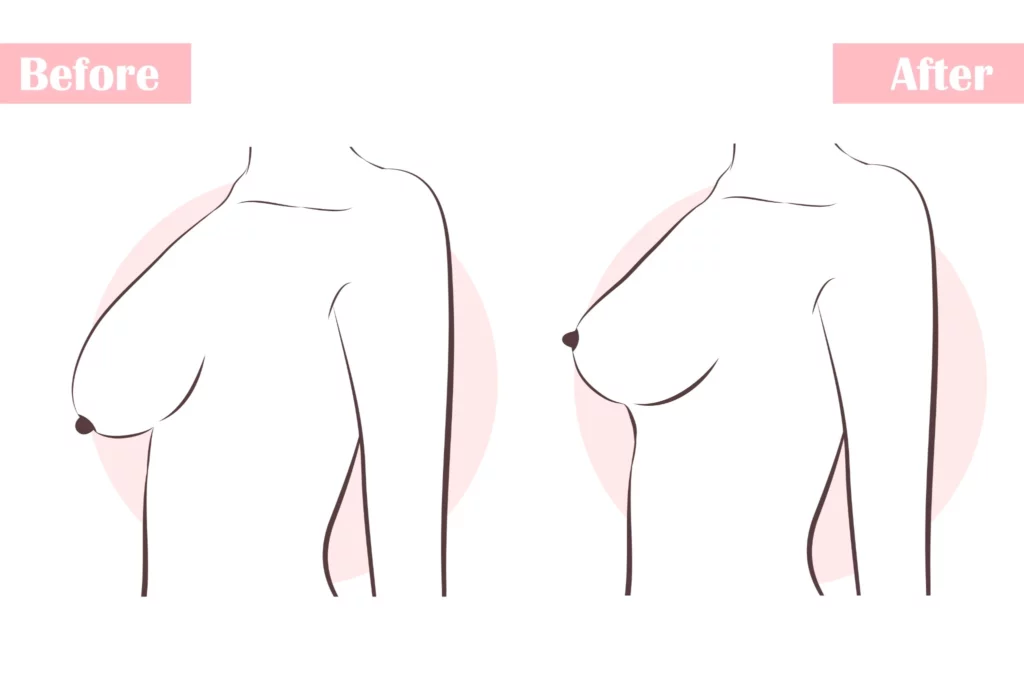
If your breasts also sag, a breast lift can be considered alongside augmentation. If your nipples have changed after childbirth, nipple reshaping can be discussed at the same consultation.
Frequently Asked Questions
Should price decide how to choose a breast augmentation surgeon in Korea?
Price can be a reference point, but it should not be your main criterion. An unusually low price may mean compromises in implant quality, anesthesia safety or aftercare. Base your choice on the surgeon’s experience, the safety system and the aftercare program; an exact cost needs a personal consultation. To understand why quotes vary, see why breast augmentation quotes differ between clinics in Korea.
How long is recovery after breast augmentation?
Most patients return to daily activities about 5–7 days after surgery, but it takes 3–6 months for swelling to fully resolve and the final result to show. Recovery varies with your job and lifestyle, so share your schedule — including your flight home — at the consultation.
Do breast implants last a lifetime?
No. As the U.S. FDA notes, breast implants are not lifetime devices, and implant condition is typically reviewed at around 10–20 years, depending on the manufacturer. Regular check-ups and ultrasound help you keep track of your implants over time.
Can I have breast augmentation if I have breastfed before?
Yes. However, pregnancy and breastfeeding change the breasts in different ways, such as sagging or loss of volume, so augmentation alone may not be enough. In some cases, fat grafting to the breast or a breast lift combined with augmentation is the better option. A thorough consultation with a specialist is essential.

What happens if capsular contracture develops after breast surgery?
Capsular contracture happens when the fibrous capsule around an implant tightens too much. Early cases can be managed with massage and medication, while severe cases may need surgery, so consult a team experienced in breast revision surgery. Textbooks stress that prevention matters most, and regular check-ups help catch changes early.
Choosing Your Surgeon With Confidence at MINE
Breast surgery is a decision whose effects last for many years. When you weigh how to choose a breast augmentation surgeon in Korea, apply these eight checks carefully rather than following flashy ads or the lowest price — you will be far better placed to have a safe experience and a result you are happy with.
At MINE Plastic Surgery & Dermatology, board-certified plastic surgeon Dr. Lee Sung-wook takes personal responsibility for every stage, from consultation and surgery to aftercare. Each plan is designed one-to-one after a close look at your body and lifestyle, with natural-looking results as the goal.
Because the right approach depends on your anatomy and health, an accurate assessment matters. You can visit us in Seoul or request an online consultation — international patients can start by sending photos and questions through the consultation form at mineclinic.com or by calling +82-2-516-1175. You can also meet the team on our medical staff page.
Written and medically reviewed by Dr. Lee Sung-wook, Board-Certified Plastic Surgeon, Representative Director of MINE Plastic Surgery & Dermatology. Published October 10, 2026. Last reviewed October 10, 2026.
※ This content is for informational purposes only and does not replace professional medical advice, diagnosis, or treatment. Individual results may vary, and side effects may occur. Please consult with a board-certified plastic surgeon for personalized advice.