EN
EN

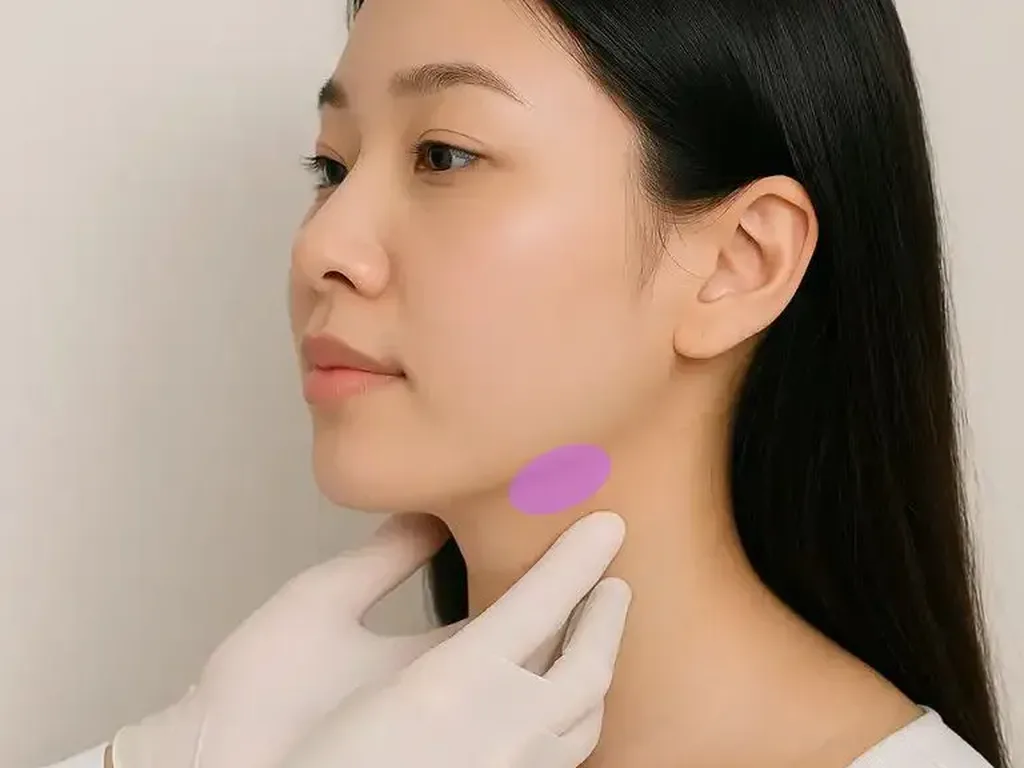
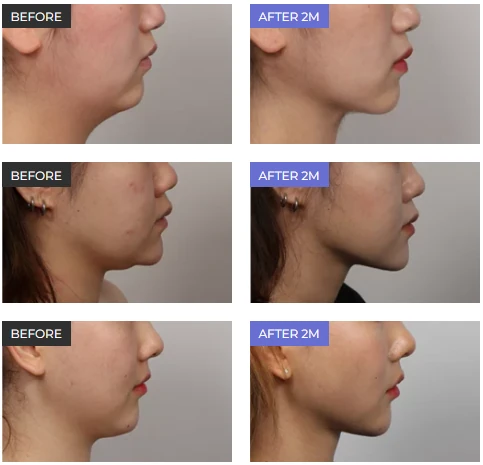
Double chin surgery side effects are the problems that can follow a procedure that tightens the platysma muscle under the chin — mainly hematoma, lumpiness, tightness and nerve symptoms. Most of what patients feel in the first weeks is normal healing, but a few signs need a call to your surgeon the same day.
If your surgery is over and the area under your chin suddenly feels unfamiliar — swollen, firm, tight or strangely numb — that worry is completely understandable.
In my practice, double chin surgery side effects fall into two groups: early symptoms that appear within the first two weeks, and late changes that only show once the swelling has gone down months later. When patients ask me, “Is this normal?”, I start by asking when it began.
This guide walks through the four double chin surgery side effects I am asked about most — swelling and firm lumps, uneven skin, tightness, and nerve symptoms — and ends with a simple 3-level guide to when you should contact your surgeon. If you would like to read about the procedure itself first, see how our double chin surgery is performed.
Double Chin Surgery Side Effects: What Can Happen and When
First, a short word on what the surgery does, because it explains most double chin surgery side effects. Through an incision of about 1.5–2 cm under the chin, the surgeon removes excess fat and then draws the inner edges of the platysma (the thin muscle sheet covering the front of the neck) toward the midline and stitches them together. It suits people whose double chin comes from a mix of fat under the chin and a loose, separated platysma.
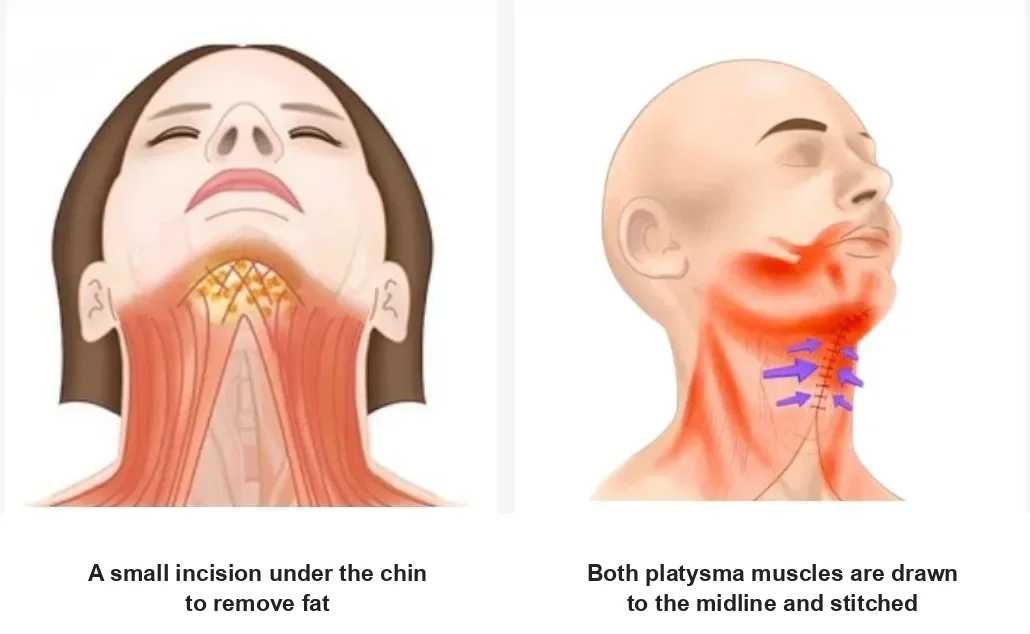
Because the surgery involves lifting skin, removing fat and tightening muscle in a small space, each of these steps can leave its own kind of after-effect. Plastic surgery textbooks sort them by timing.
Early Symptoms: The First Two Weeks
Plastic surgery textbooks divide neck and under-chin complications into early ones — hematoma, seroma, sialocele and temporary weakness of the lip-lowering nerve branch — and late ones such as contour irregularities and asymmetry. In plain terms, the early double chin surgery side effects include:
- Hematoma — a collection of blood under the skin
- Seroma — a pocket of clear tissue fluid
- Sialocele — a collection of saliva, which only applies if the salivary glands were also treated
- Temporary nerve weakness — the small facial nerve branch that pulls the corner of the mouth down stops working properly for a while
Late Changes: Months After Surgery
Other double chin surgery side effects only become visible once the swelling settles. These include uneven or lumpy skin, a difference between the left and right sides, and fat that was either under-removed or over-removed.
It is important to keep perspective here. Swelling, bruising, firmness, tightness and dull sensation are, in most cases, part of normal recovery. In my patients, swelling peaks at 3–5 days, is about 50–60% gone at 2 weeks and about 70–80% gone at 3–4 weeks, and is roughly 90% gone by 2–3 months; the final contour is judged after 6 months. You can follow the details in our week-by-week double chin surgery recovery timeline.
Dr. Lee’s Key Point: When a symptom started is the first clue that separates normal healing from double chin surgery side effects that need attention.
Swelling or a Firm Lump Under the Chin: Hematoma, Seroma or Normal Firmness?
Swelling is the most common of all double chin surgery side effects, and almost everyone is alarmed when the area under the chin swells and turns hard after surgery. But “swelling” can mean very different things depending on what is underneath. Three possibilities cover most cases.
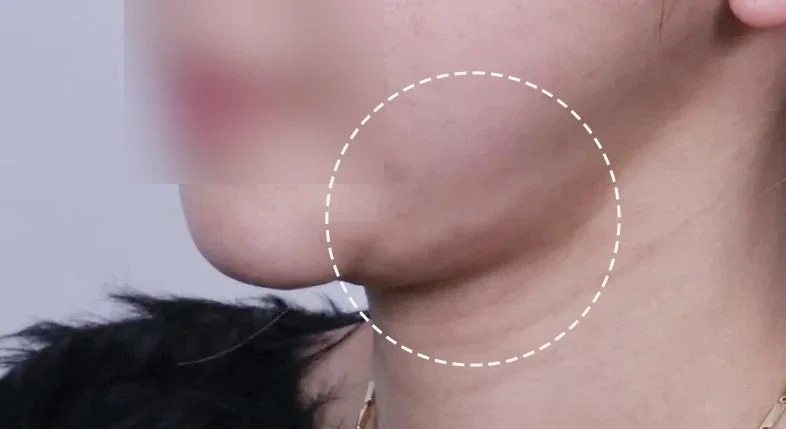
Hematoma: One Side Swells Fast, Hurts and Feels Tight
A hematoma forms when blood leaks and pools where the muscle was stitched or the skin was lifted. It usually appears early, within the first few days after surgery. Typically one side swells quickly, with pain and a tight, pressured feeling, and the bruising may spread and darken.
Of all double chin surgery side effects, this is the one where speed matters most. A hematoma that is found early and treated promptly rarely affects the final result. At the clinic, the surgeon examines the area by touch and, if needed, with ultrasound, then drains the blood with a needle or a small drain and reapplies compression.
Rarely, bleeding deep in the neck can press on the airway, and research on neck surgery specifically warns about this risk. If you have trouble breathing or swallowing together with rapid swelling on one side, do not wait for your appointment — contact your surgeon right away, and go to the emergency room if it happens at night.
Seroma or Sialocele: A Soft, Fluid-Filled Pocket
A seroma is a pocket of clear tissue fluid, not blood, that collects in the space created during surgery. It feels soft and squishy, a bit like a small water balloon, and it is usually less painful than a hematoma. If the salivary glands were treated at the same time, a sialocele (a saliva collection) can feel much the same.
Among double chin surgery side effects, a seroma is less urgent. Still, rather than waiting for it to disappear by itself, have it checked by the clinic that performed your surgery. The fluid is usually drawn out with a needle and the area is compressed again.
Normal Firmness: Both Sides Firm, Gradually Softening
As the tissue heals, it temporarily hardens. Doctors call this induration. If both sides feel similarly firm, there is no warmth or sudden change in size, and the area softens little by little over several weeks, it is part of recovery. This kind of firmness is common after neck procedures and is one of the double chin surgery side effects that usually resolves on its own.
The table below compares these three swelling-type double chin surgery side effects at a glance.
| Type | How it feels | When it usually appears | What the clinic does |
|---|---|---|---|
| Hematoma | One side tight, painful, swelling fast | Early, usually the first few days | Ultrasound check, drainage, compression |
| Seroma / sialocele | Soft, squishy, fluid-filled | Days to weeks | Needle drainage, compression again |
| Normal firmness | Both sides evenly firm | Softens over several weeks | Observation |
Dr. Lee’s Key Point: Even firmness on both sides means you can wait. One side growing and hurting means you should not.
Lumpiness and Uneven Skin: When to Judge It and How It Is Corrected
Uneven skin is one of the late double chin surgery side effects. Some patients come back once the swelling has eased and say, “The skin under my chin looks bumpy.” With this concern, the most important thing is not to reach a conclusion too early.
Why Contour Irregularities Happen
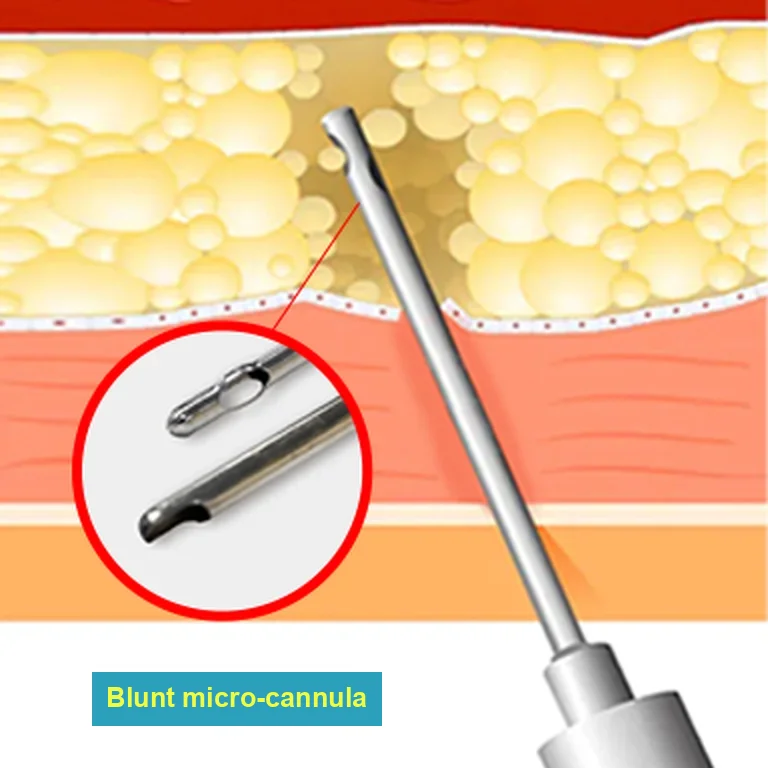
There are three main reasons the skin under the chin can look uneven:
- Too much fat removed — the thin skin drapes directly over the muscle, so its surface shows through, or the sagging beside the jawline becomes more noticeable.
- Adhesions — the skin and the tissue beneath it reattach unevenly while healing.
- Leftover fat — small areas of fat remain and create bumps.
Keep in mind that the neck heals more slowly than the face. Swelling and scars there take longer to settle, so the surface often looks uneven for a while even when nothing is wrong.
Swelling or a True Irregularity? When to Decide
Early bumpiness is very often swelling and firmness fading at different speeds in different spots. That is why under-chin lumpiness is first assessed at 2–3 months, when about 90% of the swelling is gone, and finally judged after 6 months. If fullness remains and you are wondering whether the surgery worked at all, read when to judge your platysmaplasty result.
What the Surgeon Checks Before Any Correction
Once the tissue has fully settled, the surgeon first works out the cause: over-removal, adhesion or leftover fat. The right approach depends on that answer, so the method should be decided with your surgeon after an examination. In the meantime, take photos in the same lighting and from the same angle every few weeks. This makes real changes much easier to compare than memory or a bathroom mirror.
Dr. Lee’s Key Point: Lumpiness, like most late double chin surgery side effects, is judged once the tissue has settled — not by how quickly you want an answer.
Tightness After Double Chin Surgery: Normal Pulling vs. Warning Signs
Tightness is among the most common double chin surgery side effects — nearly everyone feels some after this surgery. What matters is when and how it pulls.
Pulling When You Bend or Turn Your Head
Pulling when you bend or turn your head is expected after the muscle is tightened and usually peaks around 2–6 weeks before easing. Think of a hammock whose loose ropes have just been pulled taut and retied. It will feel stiff for a while, and that is natural.
Tightness With Trouble Breathing or Swallowing
If your neck feels tight even while you are still, and breathing feels restricted or swallowing is hard, that is not normal tightness. It can be linked to the deep bleeding described above, so contact your surgeon immediately.
Vertical Bands That Appear Months Later
A few months after surgery, vertical lines may reappear at the front of the neck, or the stitched area may look like a tight band. It is not unusual for part of the platysmal bands to remain after surgery. This is not an emergency; have it checked at a routine follow-up.
Dr. Lee’s Key Point: Pulling only when you move is part of recovery. Tightness with breathing trouble while you are still means call right away.
Nerve Symptoms: Numbness Is Different From an Uneven Smile
Nerve symptoms are the double chin surgery side effects patients find most worrying. When patients ask me, “Did you damage a nerve?”, I first split the question in two. Is the problem with how it feels, or with how it moves? These involve two different kinds of nerves, and they are checked differently.
Numbness or Tingling Under the Chin and Neck
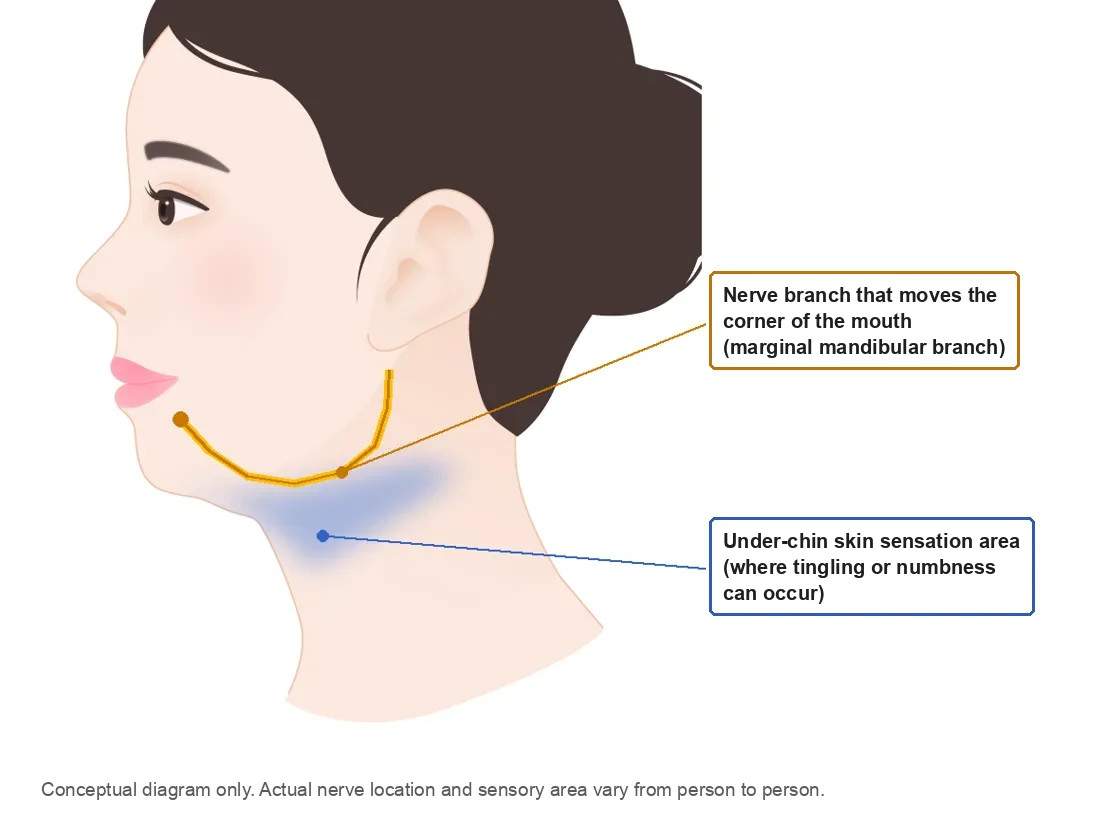
Just under the skin runs a fine web of small sensory nerves. When the skin is lifted during surgery, these nerves can be affected, and the area under the chin may feel numb, “like someone else’s skin,” or tingly. In most cases, sensation returns gradually over a few weeks to a few months.
When One Side of the Lower Lip Does Not Move Down
Just below the jawline runs a branch of the facial nerve called the marginal mandibular branch, which pulls the corner of the mouth and lower lip down. If it is not working properly, one side of your lower lip may not drop when you smile widely, so your smile looks uneven. Textbooks note that this branch is most at risk where it passes close to the jawline near the firm attachment points of the lower face.
Anatomical research shows this nerve branch runs above the lower jaw border in 81% of cases in front of the facial artery, about 0.9–1.4 cm from the bone — which is why surgeons work carefully along that line. In most cases the nerve is not cut. Swelling or traction simply weakens its signal for a time, a temporary state doctors call neurapraxia.
In a 2015 study of 112 neck lifts that also reduced the submandibular glands (Mendelson et al., Plastic and Reconstructive Surgery (2015)), temporary weakness of the marginal mandibular nerve occurred in 4.5% of patients, and all recovered fully within 3 months. Because these patients also had salivary gland surgery, the figure is not the rate for muscle tightening alone — but it shows how this kind of nerve weakness usually recovers.
How Long to Wait With Nerve Symptoms
The standard approach is for your surgeon to record how your mouth corner moves and how large the numb area is, then compare at each visit. If sensation shows no sign of returning after several weeks, or a new problem with movement appears after things had been fine, bring your appointment forward.
Dr. Lee’s Key Point: A dull feeling and a lip that won’t move are two different nerve problems, and they are checked in a different order.
When to Call Your Surgeon About Double Chin Surgery Side Effects: A 3-Level Guide
Here is how the double chin surgery side effects above sort into three levels: call now, raise it at your next check-up, or assess at 3–6 months.

Call Right Away — Do Not Wait for Your Appointment
- Trouble breathing or swallowing (at night, go to the emergency room)
- One side under the chin suddenly swelling, painful and tight
- Warmth, redness or pus, or a fever of 38°C (100.4°F) or higher that does not go away
Can Wait Until Your Next Check-Up
- A soft, squishy, fluid-filled feeling
- Numbness or tingling under the chin or on the neck
- Tightness that you feel only when you move your head
- A slight difference between the left and right sides
If any of these milder double chin surgery side effects gets steadily worse, bring your visit forward.
Changes to Assess at 3-6 Months
- Uneven or lumpy skin
- Noticeable asymmetry between the two sides
- Vertical bands pulling at the front of the neck
- Fullness that remains after the swelling has gone
What You Can Do After Surgery to Lower the Risk
According to plastic surgery textbooks, bleeding control starts in the operating room. Before closing, the anesthesiologist raises the blood pressure back to its pre-surgery level so that any hidden bleeding shows itself and can be stopped — low blood pressure can mask a bleeding vessel. For the same reason, to lower the risk of bleeding-related double chin surgery side effects, after surgery you should avoid situations that make your blood pressure spike: forcing yourself through pain instead of taking your prescribed medication, vomiting, heavy coughing, drinking alcohol and strenuous exercise. For the rest of your routine, follow our aftercare precautions after double chin surgery.
One more request: please do not diagnose yourself. Write down the date each symptom started and take photos, then show them to the clinic that performed your surgery. In my clinical experience, this simple record does more than anything else to point the examination in the right direction. If you had surgery abroad and are now home, contact your operating surgeon first, and use a local emergency room for any of the “call right away” signs.
Dr. Lee’s Key Point: Breathing trouble, swallowing trouble and sudden one-sided swelling are the double chin surgery side effects where you don’t count the days. Call right away.
Frequently Asked Questions About Double Chin Surgery Side Effects
When do double chin surgery side effects usually appear?
Hematoma, seroma and nerve symptoms usually appear within a few days to two weeks. Lumpiness, asymmetry and visible bands show up months later, once the swelling has gone down. Because about 90% of swelling fades by 2–3 months, contour concerns are judged after that point.
Is swelling on only one side under my chin a hematoma?
Of the swelling-related double chin surgery side effects, a hematoma is the one to act on quickly. If one side suddenly gets bigger, hurts and feels tight, it may be a hematoma, so contact your surgeon right away. If both sides are similarly firm and gradually softening, it is often normal firmness — but an examination is the only way to be sure.
Will an uneven smile after platysmaplasty get better?
In most cases this is one of the temporary double chin surgery side effects: it reflects short-term weakness of the nerve branch that moves the corner of the mouth, and it recovers within a few months. Even in a study of patients who also had salivary gland surgery, this weakness resolved within 3 months. Your surgeon will record the movement and track it at each visit.
How long does numbness under the chin last after surgery?
Numbness is one of the more common double chin surgery side effects. It comes from the fine sensory nerves in the skin, and it usually returns gradually over a few weeks to a few months. If there is no change at all after several weeks, bring your appointment forward.
How long should I wait before correcting lumpy skin under my chin?
Take a first look at 2–3 months, when most of the swelling has gone, and make the final call after 6 months. At that stage your surgeon can identify the cause and discuss the right way to correct it.
Worried About a Symptom? Talk to Your Surgeon First
To sum up: if you are worried about double chin surgery side effects, sort what you feel along three lines — when it started, whether it is on one side or both, and whether it is a problem of feeling or of movement. Most double chin surgery side effects are healing responses that settle with time. Trouble breathing or swallowing and sudden one-sided swelling, however, are signs to call immediately.
The same double chin surgery side effects can mean different things depending on the surgical technique and your own tissue, so start with the clinic that performed your surgery. If you had surgery elsewhere and would like an independent opinion on your recovery, you can book an in-person examination at MINE during a visit to Seoul. Learn more about double chin treatment at MINE.
Book a 1:1 consultation at MINE Plastic Surgery — call +82-2-516-1175.
Written and reviewed by Dr. Lee Sung-wook, board-certified plastic surgeon
MINE Plastic Surgery | 813 Nonhyeon-ro, Gangnam-gu, Seoul, Korea | +82-2-516-1175
※ This content is for informational purposes only and does not replace professional medical advice, diagnosis, or treatment. Individual results may vary, and side effects may occur. Please consult with a board-certified plastic surgeon for personalized advice.