EN
EN


Your jawline doesn’t look quite the way it used to when you shave. Ultherapy for men is a non-surgical lift that uses microfocused ultrasound to create tiny heat points in the dermis and SMAS of a man’s face, refining the jawline without incisions. The SMAS is the thin, fibrous layer under the skin that wraps and supports the facial muscles.
The device is the same one used for women, but male skin and the male lower face are built differently, so the treatment has to be planned differently too. The question I hear most from men in clinic is simple: “Will it work the same on me as it does on women?”
The short answer is no, not exactly the same. Because the skin is different, Ultherapy for men is designed differently, the realistic range of change is different, and so is the point where surgery starts to make more sense. If you’d like a broader overview first, you can browse all our lifting articles.
Table of Contents
What Makes Ultherapy for Men Different? 3 Ways Male Skin Differs
With Ultherapy for men, the device is the same, but the plan changes because the skin itself is different. The differences fall into three groups: thickness, oil and beard growth, and the way skin ages over time.
Thicker Dermis With More Collagen
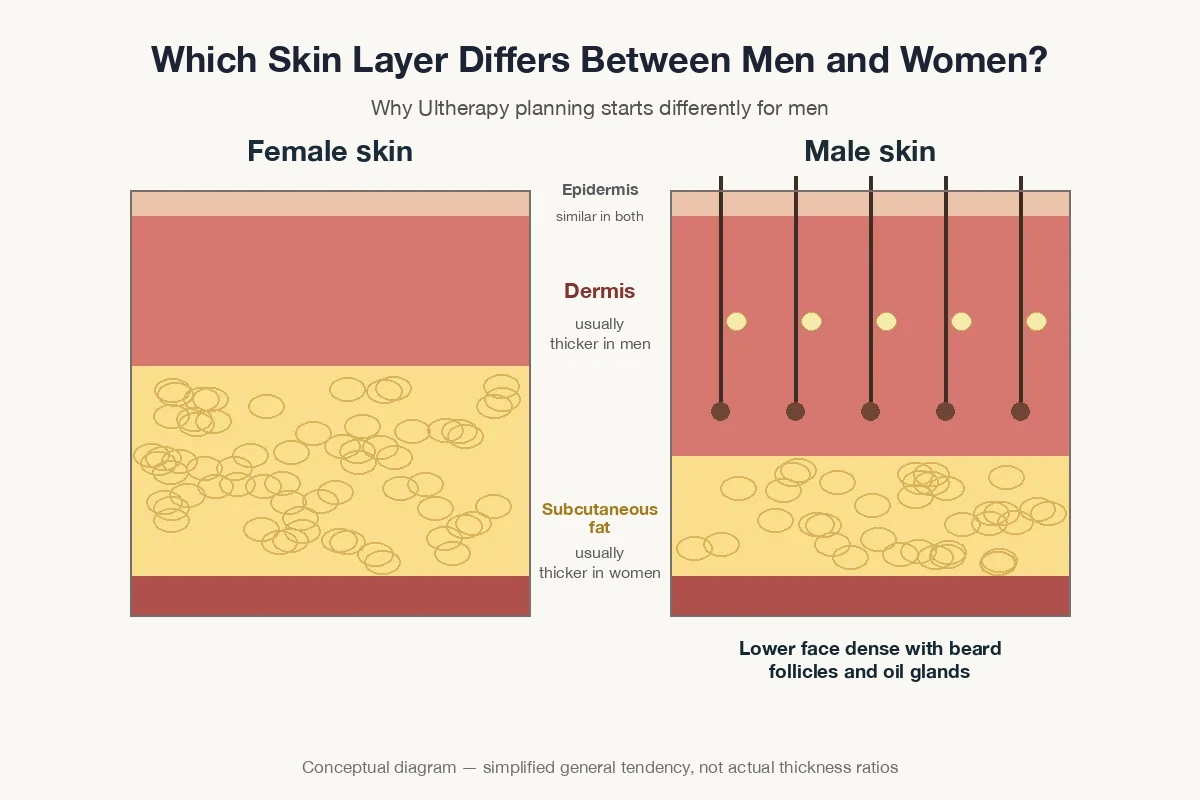
Dermatology textbooks report that male skin (the epidermis and dermis measured together) is thicker than female skin at every age from 5 to 90, by up to about 1.4 times in some studies. That figure, however, comes mostly from measurements of body skin such as the forearm, so it can’t be converted into an exact multiple for the face. The accurate takeaway is that “male skin tends to be thicker.”
What’s interesting is where the difference sits. The outermost layer, the epidermis, is about the same in men and women. The gap is in the dermis underneath, the layer that gives skin its firmness and spring. The dermatology literature also notes that men’s skin holds more collagen (the protein that keeps skin firm) at every age. Women, on the other hand, carry a thicker layer of subcutaneous fat beneath the skin.
Oil and Beard-Area Skin That Stay Active Into Your 60s
Studies summarized in textbooks show that men’s sebum (skin oil) output stays nearly unchanged through their 50s to 70s, while women’s falls sharply over the same years. Add the beard-growing skin along the jaw and lower cheeks, and the male lower face ends up with a distinct profile: thick, oily and densely packed with hair follicles.
Men’s and Women’s Skin Thin on Different Curves
Skin also ages along a different path. Male skin thins slowly and steadily over the years, while female skin tends to hold its thickness until around 50 and then declines. That’s why a man and a woman in their 40s can’t really be assessed against the same yardstick, which is one more reason Ultherapy for men is planned on its own terms.
In my clinical experience, the practical meaning of all this is straightforward. If you copy a depth and shot plan designed for a female face onto a thick, oily male lower face, it won’t fit well. That is the reason Ultherapy for men deserves its own plan.
Dr. Lee’s Key Point: The goal isn’t “stronger because you’re a man.” It’s “matched to the structure of male skin.”
Who Is a Good Candidate? How Men’s Jawlines Sag
For most men, the first thing that bothers them is the jawline. The clean line running from below the ear to the chin starts to blur, and soft tissue begins to settle beside the corners of the mouth.
The Three Layers Behind Jowls
Jowls rarely have a single cause. They form when three things happen together: the SMAS loosens, the fat sitting on it slides downward, and the skin loses elasticity. So the first step is to work out which of those layers has dropped the most.
It also helps to know that different parts of the face age in different directions. The forehead, under-eye area and upper cheeks tend to hollow out with age. The lower face, by contrast, often gains jowl fat while the platysma (the thin sheet of muscle covering the front of the neck) loosens, so it descends while keeping its volume. That is why so many men describe their lower face as feeling “heavy.”
On top of that, the thickness and character of the SMAS vary from person to person, and even from zone to zone on the same face. Some areas are fattier, some more fibrous, and some sit right next to muscle. This is one reason no single depth and allocation pattern for Ultherapy for men suits every patient.
When a Blunt Jawline Isn’t Sagging at All
Quite a few men come in saying their jawline has sagged when the real cause is something else. A square, wide lower face may come from a well-developed masseter (the chewing muscle at the angle of the jaw). A full area under the chin may come from the salivary glands or submental fat (fat beneath the chin). Ultherapy does not change any of these, so an examination to separate them from true laxity is an essential first step.
In general, good candidates for Ultherapy for men have mild to moderate laxity focused along the jawline and under the chin, and they expect refinement rather than a transformation.
Dr. Lee’s Key Point: Ultherapy treats sagging. It does not treat volume or muscle.
How Ultherapy for Men Is Planned: Depth, Shots and Beard Areas
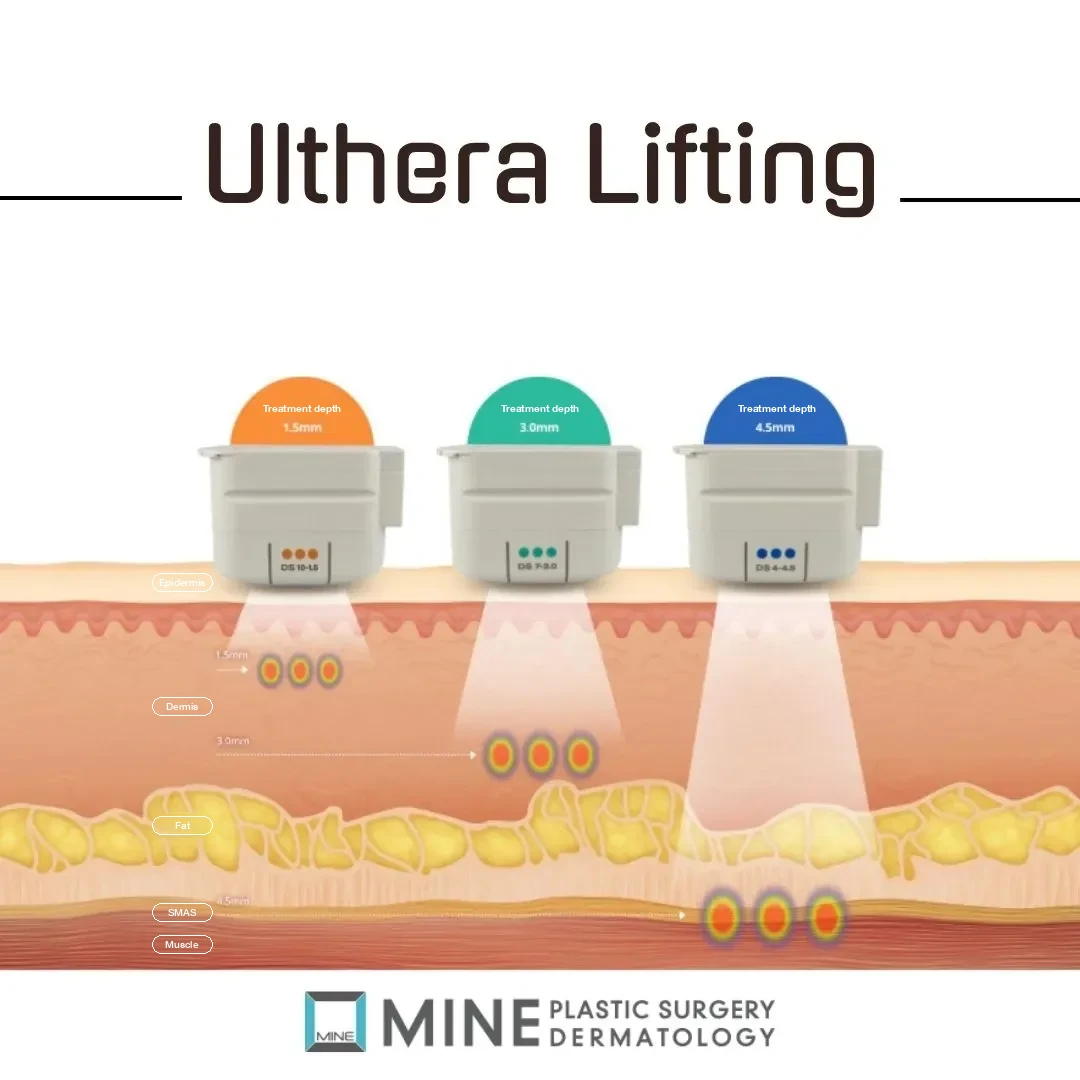
According to plastic surgery textbooks, microfocused ultrasound heats focal points to about 65°C, creating coagulation points of roughly 1 mm³ in the dermis and SMAS. Think of a magnifying glass focusing sunlight onto one spot: the energy passes through the skin surface and concentrates only at a set depth. The technology was developed specifically to address lower-face and neck laxity without surgery.
Dermatology texts also explain why ultrasound suits this job. Focused ultrasound energy travels much deeper through tissue than laser or radiofrequency energy. As the sound waves pass into the tissue, they make molecules vibrate, and that vibration turns into heat right at the focal point. This is what allows Ultherapy for men to reach the SMAS beneath thick male skin, a layer that surface-based treatments can’t reach directly.
Depth Choice: Treating SMAS and Thick Dermis Separately
Ultherapy for men uses the same interchangeable transducers (treatment heads) as any Ultherapy session, each set to a different depth. A 4.5 mm transducer targets the SMAS, while a 3.0 mm transducer targets the dermis; a 1.5 mm head works in the more superficial dermis. Because men tend to have a thicker dermis, the same depth setting doesn’t necessarily land in the same layer for every man, so it needs to be checked individually.
This is where the device’s built-in ultrasound imaging helps. The handpiece shows a live image of the layers beneath the skin before energy is delivered. Skin-imaging research notes a basic trade-off: higher ultrasound frequencies give sharper images but see less deeply. In practice, the image lets me confirm where the dermis ends and the SMAS begins on a thicker male face, rather than assuming a standard layout.
So in Ultherapy for men, I plan two layers separately: a deep layer that supports the loosened SMAS, and a shallower layer that works on the elasticity of the thick dermis. For the general depth-by-transducer and shot-count framework, see our general transducer and shot-count standards.
Shot Placement: Jawline and Under-Chin First
When I plan Ultherapy for men, I usually start by checking three zones, the jawline, the area under the chin and the area below the cheekbone, to see where sagging is concentrated. A man whose laxity sits on the jawline and a man whose under-chin skin has loosened may receive the same total number of shots, but the distribution will be completely different.
A common myth is that “men have thicker skin, so they need more shots.” In reality, shot count is set individually by the degree of laxity, the size of the treatment area and your tolerance for discomfort, not by gender.
What I Check in a Male Ultherapy Consultation
Here is what I actually look at before recommending Ultherapy for men:
- Skin thickness and elasticity: I pinch and gently stretch the skin to judge how thick and firm the dermis is.
- Where the sagging sits: jawline, under-chin or below the cheekbone, and which came first.
- Causes that aren’t sagging: masseter muscle, salivary glands or submental fat mixed into the picture, which Ultherapy won’t change.
- Previous treatments: when you had lifting, filler or thread treatments, since this changes the plan.
- Skin problems and shaving habits: if there’s inflammation or nicks in the beard area, I may postpone the session.
Beard Areas, Pain and Treatment Day
In Ultherapy for men, the beard area needs particular attention. Beard-growing skin has densely packed follicles and is often already sensitized by shaving, so you may feel more discomfort or irritation there. When to shave before and after treatment depends on your skin, and I advise on it individually during the consultation.
Discomfort is usually more noticeable when the deeper layer is being treated, and along the jawline where the bone sits close to the surface. On the day, a numbing cream helps, and during the session I check in on how you’re feeling and adjust energy and placement as needed. If it becomes too much, tell me straight away; that keeps the session safe and comfortable.
Dr. Lee’s Key Point: Same device, different outcome. Where it’s placed and how deep it goes is what makes the difference.
Recovery After Male Ultherapy: What to Expect
Ultherapy for men is non-surgical, but that doesn’t mean there’s no reaction at all. Knowing in advance which reactions are common and which signs need a check-up makes the days afterward much less stressful.
Common Reactions in the First Days
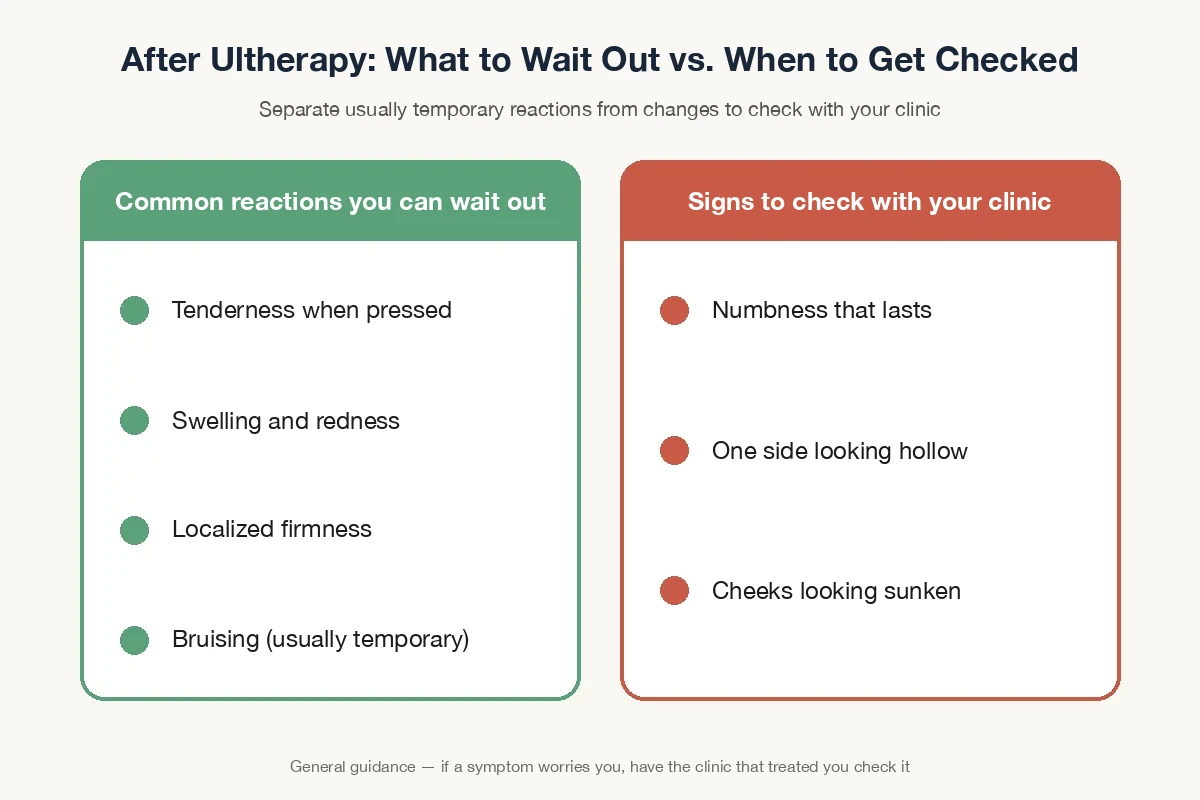
Dermatology textbooks describe pulses of about 150 milliseconds that create coagulation points of roughly 1 mm³ while sparing most surrounding tissue and the skin surface, which is why recovery is usually quick. Even so, after Ultherapy for men you may notice tenderness when you press on the area, swelling, redness, small areas that feel firm, or bruising. These are usually temporary.
How results develop over the following months, and how long they tend to last, is covered in our Ultherapy recovery and results timeline. Longevity also depends on age, skin condition and lifestyle, so it’s worth estimating together in consultation.
Aftercare for Oily, Beard-Area Skin
Aftercare following Ultherapy for men mostly comes down to three everyday habits:
- Shaving: time your shaves so razor irritation doesn’t pile on while the treated skin is still sensitive.
- Calming oily skin: even if your skin is oily, focus on gentle moisturizing and soothing products after treatment rather than harsh cleansers.
- Avoiding heat: until redness and swelling settle, cut back on things that flush the face, such as saunas and heavy drinking.
Risks and Realistic Limits of Ultherapy for Men
With men who are new to lifting treatments, I always start by setting expectations. Microfocused ultrasound, including Ultherapy for men, does not produce the kind of change that a facelift or neck lift does. Knowing this from the start is what keeps you from being disappointed.
What Men Usually Notice and What It Won’t Change
What men commonly notice is a slightly crisper jawline border and a firmer feel to the lower face. How much depends heavily on skin thickness, how deep the sagging is and lifestyle habits. A 2014 study of microfocused ultrasound on the lower face (Oni et al., Aesthetic Surgery Journal 2014) found that results varied from person to person.
There are also changes that Ultherapy for men simply isn’t designed to make. A square jaw from a developed masseter, a full under-chin from the salivary glands or submental fat, and neck skin that is already very loose are difficult to change with ultrasound heat. Trying to fix all of these in one go usually ends in frustration, so I explain the right approach for each cause separately.
Rare Side Effects: When to Call Your Clinic
Less commonly, the cheeks can look hollow, or nerve irritation can cause numbness. These are uncommon after Ultherapy for men, but if you notice either, have the clinic that treated you check it promptly. If hollowing is a concern for you, we’ve explained whether Ulthera can cause hollow cheeks in more detail.
Dr. Lee’s Key Point: Redness and swelling are signs to wait out. Numbness that lingers or one side looking hollow are signs to get checked.
When Men Should Consider Surgery Instead of Ultherapy
Ultherapy for men is a good option, but it isn’t the answer for every degree of sagging. Once laxity passes a certain point, getting a surgical consultation alongside, rather than repeating non-surgical sessions, may save you both time and money.
Significant Sagging and Visible Neck Bands
The plastic surgery literature points out that many men who want a better neck and under-chin also have a loosened platysma, so liposuction or skin tightening alone falls short. That is an anatomical problem beyond what ultrasound heat, and therefore Ultherapy for men, can address. Try these checks in front of a mirror:
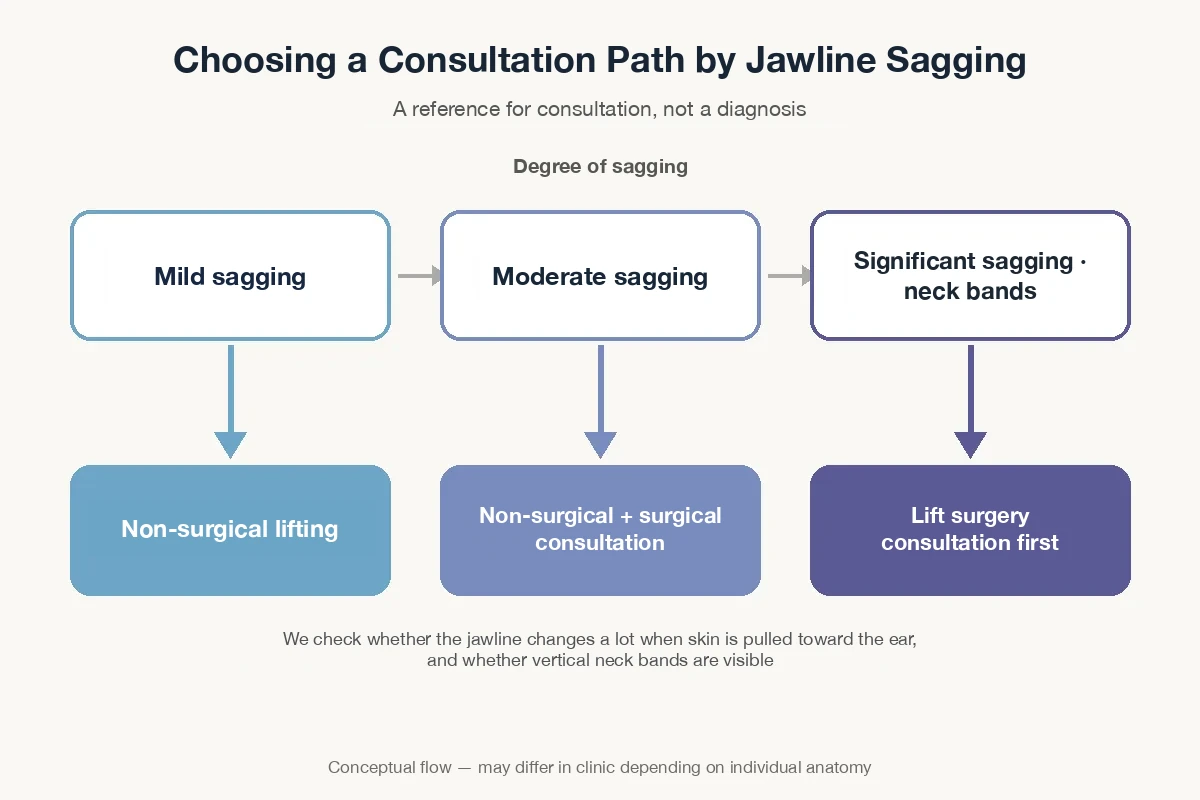
- When you gently pull the skin at the side of your face toward your ears, your jawline changes a lot.
- When you lift your chin or clench your teeth, thick vertical bands of muscle appear at the front of your neck.
- The skin under your chin folds or hangs loosely.
- You’ve had several non-surgical lifting sessions, and each one seems to do less.
The more of these apply, the more likely it is that a surgical consultation is worthwhile. This list is a reference to discuss in consultation, not a diagnosis.
Ultherapy, Mini Facelift or Facelift: How the Choice Is Made
As a rough guide: mild sagging points toward non-surgical lifting; moderate sagging calls for a non-surgical plan plus a surgical consultation; significant sagging with visible neck bands means a lift surgery consultation should come first. To see how surgical lifting differs on a male face, read our guide to facelift surgery for men.
Dr. Lee’s Key Point: Ultherapy isn’t a substitute for surgery. It’s an option to choose when the timing and the degree of sagging are right.
Ultherapy for Men: Frequently Asked Questions
Does Ultherapy work the same for men as for women?
It’s the same device, but male skin and lower-face structure differ, so the plan and the results differ too. Men tend to have a thicker dermis and a heavier lower face, so depth and shot placement are matched to male skin. The change men notice is mostly jawline refinement, and it varies widely between individuals.
How many Ultherapy shots do men need?
Men don’t automatically need more shots just because they’re men. Shot count is set by the degree of laxity, the size of the treatment area and your tolerance for discomfort. Thick skin matters more for choosing the depth than for deciding the number of shots.
What age should men consider Ultherapy?
The degree of sagging matters more than age. If firmness is just starting to fade, Ultherapy for men can be considered as an early, preventive option; if sagging is already deep, it’s worth adding a surgical consultation. Two men of the same age can have very different skin.
Can men with a heavy beard get Ultherapy?
In most cases, yes; a heavy beard doesn’t rule out Ultherapy for men. Beard areas can feel more irritation and discomfort, so shaving timing and post-treatment calming care are discussed with you during the consultation.
How is Ultherapy different from Shurink and other HIFU devices for men?
Both use focused ultrasound to create heat points beneath the skin, but Shurink Universe (a Korean HIFU device) is a separate machine with a different manufacturer, handpiece setup and way of delivering energy. Which one suits you depends on how much sagging you have and which area you want to treat.
Planning Male Ultherapy at MINE in Seoul
If there’s one thing I emphasize about Ultherapy for men, it’s this: the aim isn’t to go harder, but to match depth and shot placement to a thick dermis, an oily lower face and a lower face that tends to descend with its volume. The benefit usually shows up as a more defined jawline, and if sagging is significant or neck bands are visible, a surgical consultation is worth considering as well.
Skin thickness, the degree of sagging and lower-face structure are different for every man, so every plan for Ultherapy for men is different too. For an accurate assessment, we recommend an in-person consultation at MINE in Seoul. Cost depends on your individual plan, and you can find more about Ulthera lifting at MINE on our treatment page.
Written and medically reviewed by Dr. Lee Sung-wook, Board-Certified Plastic Surgeon
MINE Plastic Surgery & Dermatology | 813 Nonhyeon-ro, Gangnam-gu, Seoul, Korea | +82-2-516-1175
※ This content is for informational purposes only and does not replace professional medical advice, diagnosis, or treatment. Individual results may vary, and side effects may occur. Please consult with a board-certified plastic surgeon for personalized advice.