EN
EN

Table of contents
Sagging skin and loss of facial elasticity are natural phenomena that everyone experiences with age. But what if there was a non-surgical method to address these concerns? Ultherapy is precisely that revolutionary lifting treatment, utilizing High-Intensity Focused Ultrasound (HIFU) technology to deliver thermal energy to deep skin layers, stimulating collagen production and creating a lifting effect.
This Ultherapy guide walks you through everything in plain language: how the treatment actually works, what the clinical evidence shows, the step-by-step process, the results timeline, possible side effects, and how to care for your skin afterward. With clear, accurate information, you can decide whether Ultherapy is the right choice for you.
What is Ultherapy? Understanding HIFU Technology
Ultherapy is a non-surgical lifting treatment that utilizes High-Intensity Focused Ultrasound (HIFU) technology. Since receiving FDA approval in 2009, it has gained worldwide recognition as a safe and effective skin lifting procedure.
Definition and History of Ultherapy
Ultherapy (Ulthera) was developed by Ulthera Inc. in the United States and is marketed under various similar names globally. The treatment first received FDA approval for eyebrow lifting in 2009, followed by approval for neck lifting in 2012, and décolletage treatment in 2014.
The Relationship Between Ultherapy and HIFU Technology
HIFU technology delivers focused medical ultrasound to specific depths within tissues. Ultherapy specializes this HIFU technology for skin lifting, with the unique ability to deliver thermal energy to deep tissues without damaging the skin’s surface.
FDA Approval and Safety of Ultherapy Treatment
Ultherapy has received approval not only from the US FDA but also from regulatory agencies worldwide, including those in Europe and Asia. The American Society of Plastic Surgeons recognizes Ultherapy in its guidelines as a highly safe non-surgical lifting treatment. Numerous clinical studies have verified both its effectiveness and safety profile.
How Does Ultherapy Work? The Collagen Production Mechanism
Skin Layer Structure and Ultherapy’s Target Points
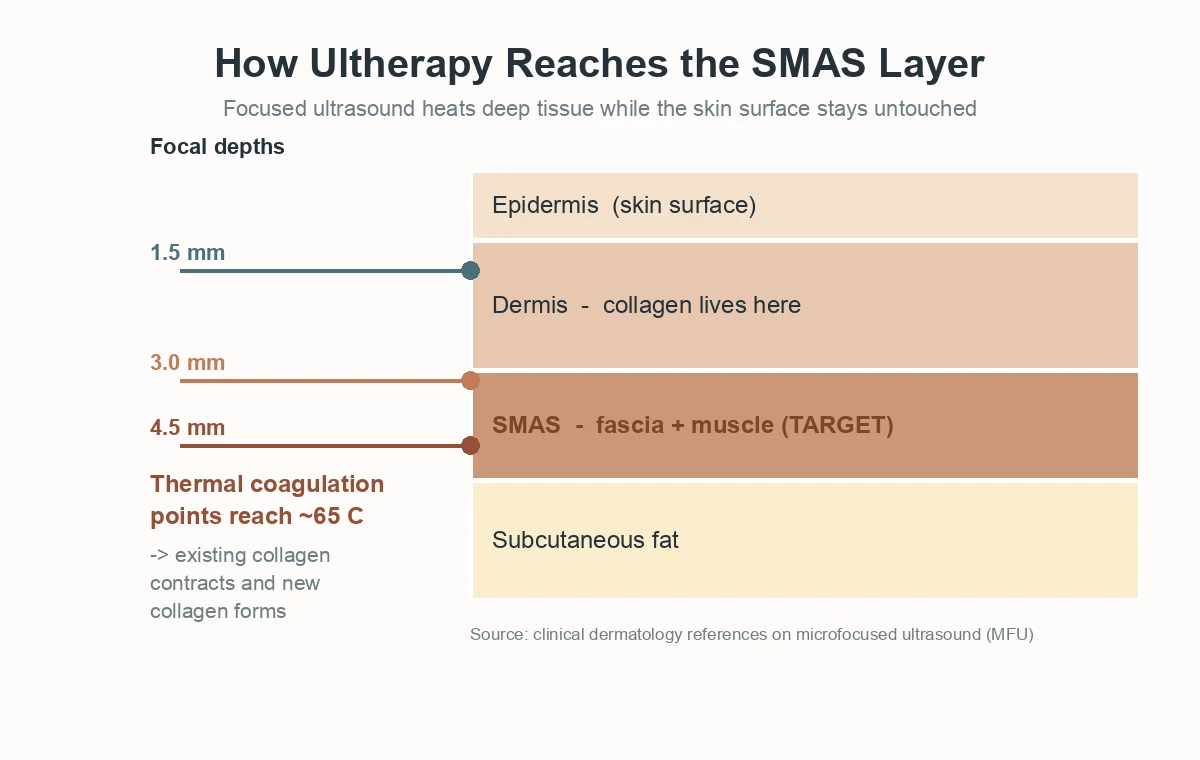
The skin consists of three main layers: epidermis, dermis, and subcutaneous fat. Ultherapy works beneath the dermis, targeting the SMAS (Superficial Muscular Aponeurotic System) layer. The SMAS layer contains fascia and muscles, and delivering thermal energy to this area plays a crucial role in creating elastic, lifted skin.
How Ultrasound Energy Stimulates Collagen Production
Doctors often call this technology microfocused ultrasound, or MFU. The device focuses sound-wave energy onto tiny points deep in the skin — inside the dermis and the SMAS layer — where the temperature at each point climbs to roughly 65-70°C. Because the energy is focused on these deep spots, the surface of your skin is left untouched. At each heated point (called a thermal coagulation point, or TCP), the following chain of events begins and creates the lifting effect:
- Thermal Injury: Focused ultrasound energy causes microscopic thermal damage to targeted tissues
- Collagen Denaturation: Existing collagen fibers contract
- Inflammatory Response: Tissue healing process begins
- Neocollagenesis: Stimulation of new collagen formation
- Tissue Remodeling: Tissue restructuring occurs over 3-6 months
Scientific Evidence for Ultherapy Treatment
According to multiple clinical studies, over 90% of patients experience noticeable skin improvement after Ultherapy. Measurements taken three months post-treatment showed an average eyebrow lift of 1.7mm and jawline lift of 1.9mm. These effects continued to improve for up to 6 months after treatment. We summarize these studies in our review of the clinical evidence for Ultherapy, and explain the underlying physics in our deep dive on the HIFU science behind Ultherapy.
What is the Ultherapy Treatment Process?
Ultherapy is typically performed as an outpatient procedure requiring no special preparation other than numbing cream. The treatment process involves consultation, preparation, treatment, and recovery phases.
Pre-Treatment Consultation and Preparation
During the pre-treatment consultation, the following points are addressed:
- Assessment of skin condition and aging progression
- Discussion of expected results and realistic outcomes
- Review of medical history and allergies
- Explanation of treatment costs and recovery process
On the day of treatment, preparation includes:
- Cleansing the treatment area
- Application of numbing cream if needed (typically 30 minutes before treatment)
- Application of ultrasound gel to the treatment area
The Ultherapy Treatment Process
- Ultrasound Imaging Assessment: The practitioner first uses the transducer to view the layers beneath your skin in real-time. This allows for precise energy delivery to the correct depth.
- Customized Energy Settings: Energy intensity and depth are adjusted according to your skin condition and thickness.
- Treatment Execution: Ultrasound energy is delivered to deep skin layers. The practitioner presses the transducer against your skin and moves it in lines across the treatment area.
- Multi-Layer Treatment: Typically, energy is delivered at three different depths (1.5mm, 3.0mm, 4.5mm) to maximize the overall lifting effect.
Equipment Used in Ultherapy Treatments
Ultherapy treatments utilize the following equipment:
- Ultherapy System: FDA-approved official Ultherapy device
- Transducers: Handpieces that deliver energy at various depths
- Ultrasound Diagnostic Equipment: Devices that allow real-time visualization of skin layers
- Ultrasound Gel: Medium that facilitates ultrasound transmission
Treatment Duration and Pain Management
Ultherapy treatment typically takes 30-60 minutes for a full face treatment, depending on the area. Pain management methods include:
- Pre-treatment numbing cream application (typically 30 minutes before)
- Oral pain relievers if needed
- Adjustment of energy intensity based on individual pain threshold
Pain levels vary between individuals, but most patients report the discomfort as “tolerable.” Some patients may experience momentary sharp sensations or heat during the treatment.
What Results Can You Expect from Ultherapy?
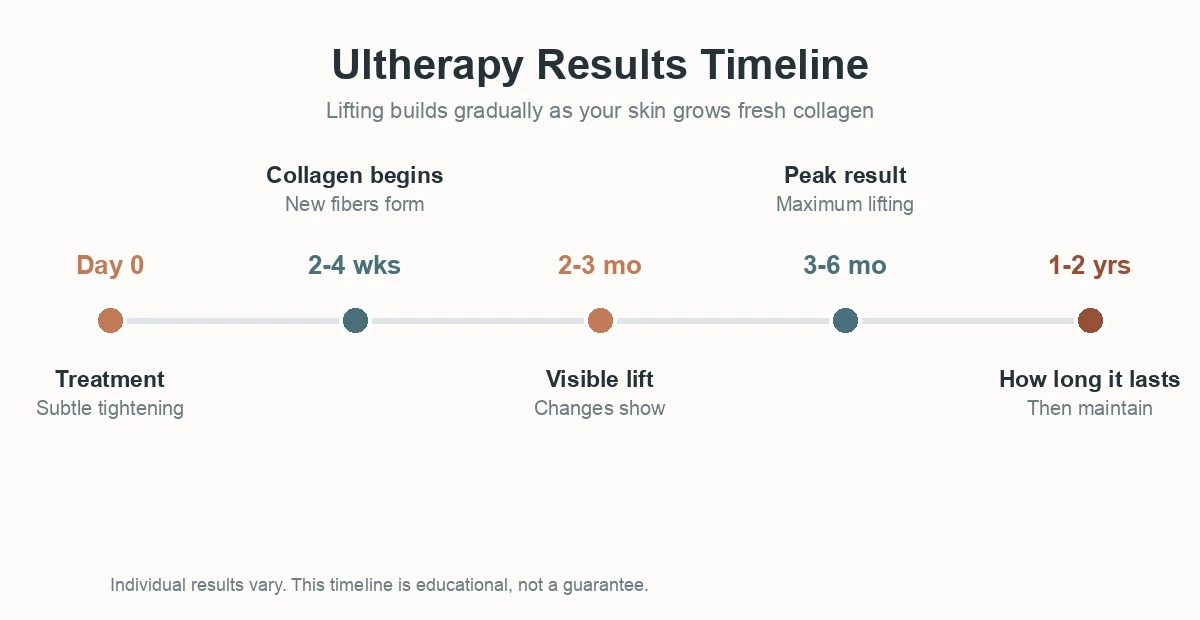
Ultherapy results can be divided into immediate lifting effects and long-term collagen stimulation. While some lifting may be noticeable immediately after treatment, maximum results typically appear 2-3 months after treatment as they develop gradually.
Immediate vs. Long-Term Effects of Ultherapy
Immediate Effects:
- Mild tissue contraction resulting in subtle lifting
- Slight improvement in jawline and cheek definition
- Enhanced skin firmness
Long-Term Effects (2-6 months):
- Increased skin elasticity from new collagen production
- Progressive enhancement of the lifting effect
- Reduction in wrinkles and improved skin texture
- Improvement in jowls and cheek sagging
How Long Do Ultherapy Results Last?
The duration of Ultherapy results varies depending on individual skin condition, age, and lifestyle factors, but typically lasts 1-2 years. Maintenance treatments are recommended afterward.
Factors affecting result longevity include:
- Patient’s age
- Skin aging rate
- Lifestyle habits (smoking, alcohol consumption, sun exposure)
- Skincare routine
- Number of treatment lines and energy intensity used
Age-Related Differences in Expected Results
20s-30s:
- Primarily preventative effects
- Improvement in early sagging and elasticity loss
- Facial contour refinement
40s-50s:
- Improvement in moderate skin sagging and wrinkles
- Enhanced jawline and cheek definition
- Increased firmness and skin tightening
60s and Above:
- Partial improvement in severe skin sagging
- More limited effects compared to surgical options
- Enhanced skin texture and elasticity
Real Cases Demonstrating Ultherapy Results
Patients who received Ultherapy treatments at mineclinic experienced the following results:
- 45-year-old woman: Improved facial contours through jawline lifting, with approximately 2mm lifting effect measured 3 months post-treatment
- 38-year-old woman: Reduced cheek sagging and nasolabial folds (smile lines), with results lasting up to 6 months
- 52-year-old woman: Reduced neck wrinkles, enhanced jawline definition, and overall improved skin elasticity
Individual results vary, so discussing realistic expectations during consultation is crucial.
How Does Ultherapy Compare to Other Lifting Treatments?
Besides Ultherapy, various lifting treatments are available. Understanding the differences can help you choose the most suitable treatment for your needs.
Ultherapy vs. Thermage: Comparing Core Principles
| Feature | Ultherapy | Thermage |
|---|---|---|
| Energy Type | HIFU (High-Intensity Focused Ultrasound) | RF (Radiofrequency) |
| Penetration Depth | 1.5mm, 3.0mm, 4.5mm (reaching SMAS layer) | Epidermis to dermis (difficulty reaching SMAS layer) |
| Pain Level | Moderate to High | Low to Moderate |
| Recovery Period | Minimal to None | Minimal to None |
| Result Duration | 1-2 years | 6 months-1 year |
| Ideal Candidates | Mild to moderate skin sagging | Early skin aging, elasticity loss |
Key Difference: Ultherapy reaches the SMAS layer for more powerful lifting effects, while Thermage tends to cause less discomfort and may be more effective for skin texture improvement. (Ultherapy vs Thermage vs Titanium comparison)
Ultherapy vs. Other HIFU Treatments: Same Technology, Different Applications
Both Ultherapy and other HIFU treatments use HIFU technology, but with these differences:
- Brand Difference: Ultherapy is the official brand from Ulthera Inc., while HIFU refers to various devices using similar technology.
- Ultrasound Imaging Capability: Ultherapy provides real-time ultrasound imaging for precise energy delivery, while some HIFU devices lack this feature.
- FDA Approval: Ultherapy has FDA approval, but not all HIFU devices do.
- Energy Delivery Method: Ultherapy delivers energy in linear patterns, while some HIFU devices deliver it in point formations.
Ultherapy vs. Thread Lifting: Non-Surgical vs. Minimally Invasive Treatments
| Feature | Ultherapy | Thread Lifting |
|---|---|---|
| Treatment Approach | Non-invasive (no skin incisions) | Minimally invasive (threads inserted into skin) |
| Working Mechanism | HIFU energy stimulates collagen production | Physical lifting using inserted threads |
| Recovery Period | Minimal to None | 1-2 weeks (swelling, bruising possible) |
| Result Onset | Maximum effects 2-3 months post-treatment | Immediate results |
| Result Duration | 1-2 years | 1-3 years |
| Ideal Candidates | Mild to moderate skin sagging | Moderate to severe skin sagging |
Key Difference: Ultherapy provides natural lifting without incisions, while thread lifting offers more immediate and pronounced results but requires recovery time.
When is Ultherapy the Best Choice?
Ultherapy may be suitable in the following cases:
- For mild to moderate skin sagging
- When seeking natural-looking lifting effects
- When preferring no downtime after treatment
- For the 30-50 age group seeking preventative or early aging management
- When feeling uncomfortable with surgical options
Conversely, other treatments might be more appropriate when:
- You have severe skin sagging (consider surgical lifting)
- You want immediate results (consider thread lifting)
- Your primary concern is skin texture (consider lasers, Thermage)
For a full side-by-side breakdown, read our comparison of Ultherapy versus Thermage, HIFU and thread lifts, or visit mineclinic’s lifting comparison page.
Pre and Post-Ultherapy Care Guidelines
Following pre and post-treatment guidelines is crucial to maximize Ultherapy results and minimize potential side effects. For a complete step-by-step checklist, see our Ultherapy before-and-after care guide.
Pre-Ultherapy Essential Checklist
From two weeks before treatment:
- Discontinue blood circulation-affecting medications: Aspirin, ibuprofen, vitamin E supplements
- Limit smoking and alcohol consumption: These can impair blood circulation and delay recovery
- Minimize sun exposure: Avoid prolonged sun exposure and consistently use sunscreen
Day of treatment:
- Remove makeup: Arrive with clean skin
- Remove jewelry: Take off earrings, necklaces, etc.
- Wear comfortable clothing: For neck treatments, wear clothing that doesn’t cover the neck area
Medications and Activities to Avoid Before Treatment
Medications to Avoid:
- Blood thinners like aspirin and ibuprofen
- Supplements affecting blood circulation such as vitamin E and omega-3
- Large amounts of certain herbs or foods that promote blood circulation (e.g., garlic, ginger)
Activities to Avoid:
- Excessive sun exposure (direct sunlight, tanning)
- Other skin treatments like peels or lasers
- Excessive alcohol consumption
- Smoking
Immediate Post-Treatment Care
First 24-48 hours after treatment:
- Cold Compresses: Apply if swelling or discomfort occurs
- Adequate Hydration: Drink plenty of water to promote toxin elimination
- Avoid Irritating Skincare Products: Skip retinol, AHA/BHA, etc.
- Avoid Excessive Heat Exposure: Stay away from saunas, hot baths, steam rooms
- Limit Strenuous Exercise: Light walking is acceptable
- Sun Protection: Always apply sunscreen when going outdoors
Post-Care Recommendations to Maximize Ultherapy Results
For 1-6 months after treatment:
- Maintain a Consistent Skincare Routine: Focus on hydration and sun protection
- Use Collagen-Boosting Products: Vitamin C serums, peptide-containing products
- Stay Hydrated: Drink at least 2 liters of water daily
- Follow a Healthy Diet: Consume protein and vitamin C-rich foods that support collagen production
- Quit Smoking: Smoking interferes with collagen production and accelerates skin aging
- Get Adequate Sleep: Essential for skin regeneration
- Regular Skin Maintenance: Follow professional recommendations for maintenance programs
To maintain results long-term, check your skin condition every 6 months and consider retreatment every 1-2 years as needed.
What Side Effects Can Occur with Ultherapy and How to Address Them?
Like all medical procedures, Ultherapy may cause side effects, but most are temporary and manageable with proper care.
Common Side Effects of Ultherapy
Frequent Side Effects (occurring in over 10% of cases):
- Temporary Pain and Discomfort: May occur during or immediately after treatment, typically resolving within a few hours to 1-2 days
- Swelling: Mild swelling in the treatment area, usually subsiding within 2-3 days
- Redness: Temporary skin redness that typically disappears within a few hours
- Sensory Changes: Temporary numbness, tingling, or sensitivity in the treated area
Less Common Side Effects (occurring in 1-10% of cases):
- Bruising: More likely in areas with weak blood vessels or in patients taking blood thinners
- Increased Skin Sensitivity: Temporary heightened sensitivity in the treated area
- Temporary Blanching: Rarely, the treated area may appear white temporarily
Serious Side Effects and Their Likelihood
Rare Serious Side Effects (occurring in less than 1% of cases):
- Nerve Damage: Very rarely, temporary facial nerve damage may occur
- Burns: Possible with improper energy settings or device malfunction
- Persistent Pain: Usually temporary, but rarely may persist longer
- Hyperpigmentation: Higher risk in patients with darker skin tones
- Skin Texture Irregularities: Very rarely, uneven texture may appear on the skin surface
How to Handle Side Effects
Recommended actions when side effects occur:
For Common Side Effects:
- Pain/Discomfort: Take prescribed pain relievers, apply cold compresses (at 20-minute intervals)
- Swelling: Apply cold compresses, sleep with head elevated, stay hydrated
- Redness: Avoid irritating products, use dermatologist-prescribed soothing creams if needed
- Sensory Changes: These typically resolve naturally; consult your doctor if severe
For Serious Side Effects:
- Contact your treatment provider immediately if symptoms worsen or persist beyond the expected recovery period
- Seek professional medical attention for severe pain, skin abnormalities, or nerve symptoms
- Document treatment details and symptoms thoroughly to inform your doctor if burns or serious side effects occur
Pre-Treatment Preparations to Minimize Side Effects
Ways to reduce side effect risks:
- Choose a Reputable Medical Facility: Select an experienced specialist and officially certified equipment
- Thorough Consultation: Disclose all medical history and current medications to your doctor
- Pre-Treatment Testing: Blood tests if necessary to confirm treatment suitability
- Follow Guidelines: Strictly adhere to pre and post-treatment instructions
- Personalized Treatment: Ensure customized treatment plans based on your skin condition, thickness, age, etc.
Mineclinic’s Ultherapy treatment page offers personalized consultation to minimize side effect risks through customized treatment plans.
Expert Answers to Frequently Asked Questions About Ultherapy
Here are expert answers to common questions from those considering Ultherapy treatment.
How Painful is Ultherapy?
Ultherapy pain levels vary by individual pain tolerance, but most patients experience moderate discomfort. The pain typically manifests as momentary stinging or heating sensations when ultrasound energy is delivered.
Pain Management Methods:
- Pre-treatment numbing cream application
- Oral pain relievers if needed
- Energy intensity adjustments
- Sufficient breaks during treatment
Patients particularly sensitive to pain should discuss this with their doctor before treatment to determine appropriate pain management strategies.
When Do Ultherapy Results Become Visible?
Ultherapy results appear in two phases:
- Immediate Effects: Some patients may notice subtle lifting immediately after treatment due to tissue contraction from ultrasound energy.
- Progressive Effects: The true Ultherapy results develop over time:
- 2-4 weeks: Initial collagen production begins
- 2-3 months: Visible changes appear, lifting effects increase
- 3-6 months: Maximum results achieved
Results vary by individual, with factors such as skin condition, age, and lifestyle affecting both timing and degree of improvement.
At What Age Can You Get Ultherapy?
Legally, Ultherapy is approved for those 18 and older, but clinically, the decision depends more on skin condition and necessity rather than age.
Age-Based Recommendations:
- Late 20s-Early 30s: Can begin for preventative purposes and to improve early elasticity loss
- Mid 30s-40s: Most effective period, addressing moderate skin sagging
- 50s and Above: May have more limited effects but serves as an alternative to surgical methods
For younger patients, carefully consider the necessity, while older patients should have realistic expectations about potential results.
When Should You Consider Ultherapy Retreatment?
Ultherapy results typically last 1-2 years with individual variation. Consider these factors when determining retreatment timing:
- Individual Aging Rate: Faster aging may require more frequent treatments
- Previous Treatment Results: How long effects from the previous treatment last
- Treatment Goals: Maintenance vs. additional improvement
- Lifestyle Factors: Smoking, sun exposure, stress, etc., may necessitate more frequent treatments
General recommendations include:
- Maintenance: Every 12-18 months
- Progressive Improvement: 6-12 month intervals for different areas or depths as needed
- Intensive Improvement: 2-3 treatments at 3-6 month intervals initially, followed by maintenance
Does Combining Ultherapy with Botox/Fillers Create Synergistic Effects?
Yes, combining Ultherapy with Botox or fillers can create synergistic effects by leveraging each treatment’s strengths:
Ultherapy + Botox:
- Ultherapy: Deep tissue lifting and elasticity improvement
- Botox: Expression line reduction and jawline slimming
- Combined Effect: Maximized overall facial rejuvenation
Ultherapy + Fillers:
- Ultherapy: Overall skin firmness and lifting
- Fillers: Volume restoration in specific areas, deep wrinkle improvement
- Combined Effect: Comprehensive improvement of various aging signs
Combination Treatment Guidelines:
- Generally recommended to perform Ultherapy first, followed by Botox or fillers 2-4 weeks later
- For patients with existing fillers, Ultherapy should avoid those specific areas or adjust energy intensity
- Personalized combination treatment plans required
Mineclinic’s combination treatment program helps achieve optimal results through personalized treatment plans.
Is This Ultherapy Guide Based on Medical Evidence?
Yes. The science in this Ultherapy guide reflects what dermatology and plastic surgery textbooks report about microfocused ultrasound (MFU), the technology Ultherapy is built on. Medical references describe how focused ultrasound is aimed at the dermis and the deeper SMAS layer, where the temperature at each focal point reaches about 65°C. That controlled heat makes existing collagen contract right away and then prompts your body to build fresh collagen over the following months — the same two-step process (immediate tightening, then gradual lifting) described throughout this guide. As always, confirm what is right for your skin with a qualified specialist.
Is Ultherapy Right for You?
Ultherapy can be an excellent choice for those seeking effective non-surgical skin lifting. As we’ve explored, Ultherapy uses HIFU technology to deliver thermal energy to deep skin layers, stimulating collagen production and providing natural lifting effects.
However, like all treatments, Ultherapy isn’t suitable for everyone. Consider these factors when deciding:
- Whether your skin condition and aging level are appropriate for Ultherapy
- If your expected results are achievable with Ultherapy
- If your pain sensitivity and recovery time expectations align with Ultherapy
- Whether Ultherapy is the best option compared to other lifting treatments
Accurate diagnosis and personalized treatment planning require consultation with a specialist. Mineclinic offers skin condition analysis and personalized consultations to help identify the most suitable lifting solution for you.
For more detailed information or to schedule a consultation about Ultherapy, visit mineclinic or request an online consultation. We’re committed to helping you turn back the clock on your skin.
This information is provided for general educational purposes only and is not intended to replace professional medical advice. For accurate diagnosis and treatment appropriate for your individual condition, please consult with a specialist.
※ This content is for informational purposes only and does not replace professional medical advice, diagnosis, or treatment. Individual results may vary, and side effects may occur. Please consult with a board-certified plastic surgeon for personalized advice.