EN
EN

Quick answer: Ultherapy is an FDA-cleared, non-invasive skin-lifting treatment that uses High-Intensity Focused Ultrasound (HIFU) to heat the deep SMAS layer and stimulate collagen. In manufacturer-cited clinical studies it has been associated with up to 42% more new collagen and an 86% brow-lift response, with results typically lasting 12–18 months. Individual results vary.
Table of contents
Ultherapy results are backed by over 50 clinical studies and 120 peer-reviewed publications, making it the most scientifically validated non-invasive skin lifting treatment available today. This innovative High-Intensity Focused Ultrasound (HIFU) technology delivers precise energy to deep tissue layers, stimulating natural collagen production without damaging the skin’s surface. If you’re considering this FDA-approved treatment, understanding the scientific evidence behind Ultherapy effectiveness is crucial for setting realistic expectations and achieving optimal outcomes.
What is Ultherapy? Understanding HIFU Technology
Ultherapy received FDA approval in 2009 as the first and only non-invasive ultrasound treatment for skin lifting and tightening. Unlike diagnostic ultrasound used for imaging, HIFU technology focuses ultrasound energy at specific depths to create therapeutic thermal effects in targeted tissue layers.
Key features that set Ultherapy apart include:
- Non-invasive procedure: No incisions, injections, or surface damage required
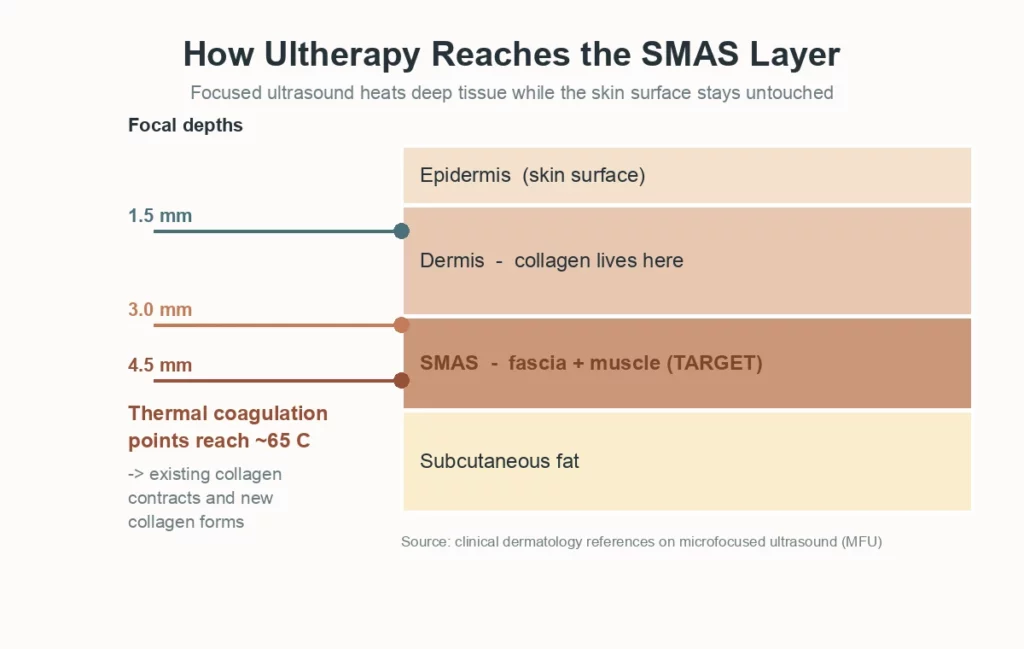
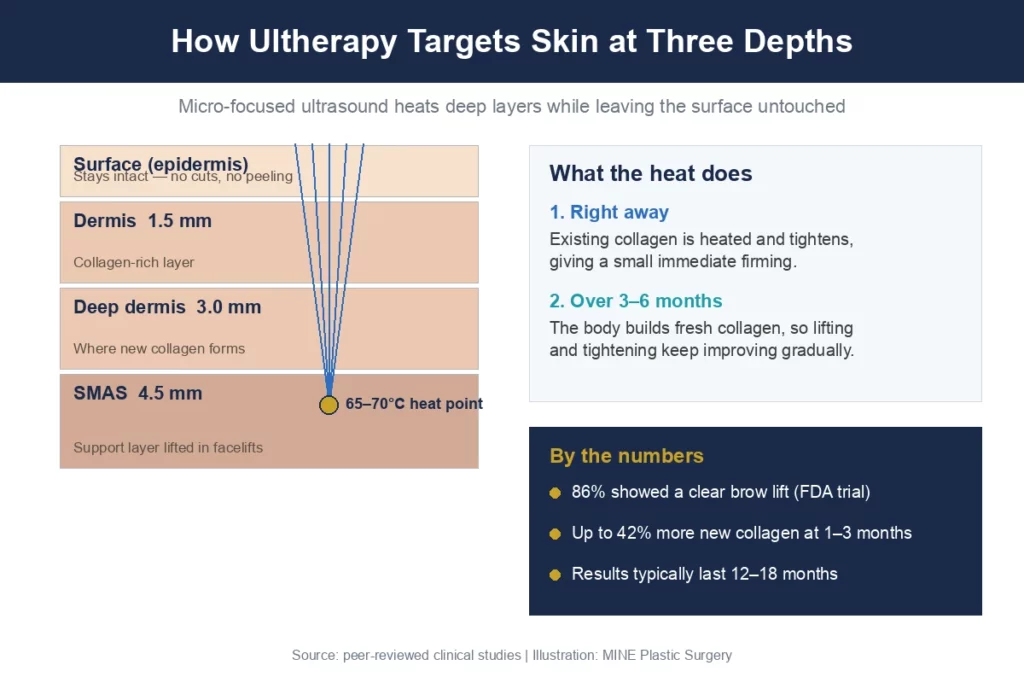
- Precision depth targeting: Delivers energy at 1.5mm, 3.0mm, and 4.5mm depths
- Thermal coagulation zones: Creates 65-70°C heat points for tissue contraction and collagen stimulation
- Real-time visualization: Ultrasound imaging allows practitioners to see target tissues up to 8mm deep during treatment
- SMAS layer targeting: Reaches the same foundational layers addressed in surgical facelifts
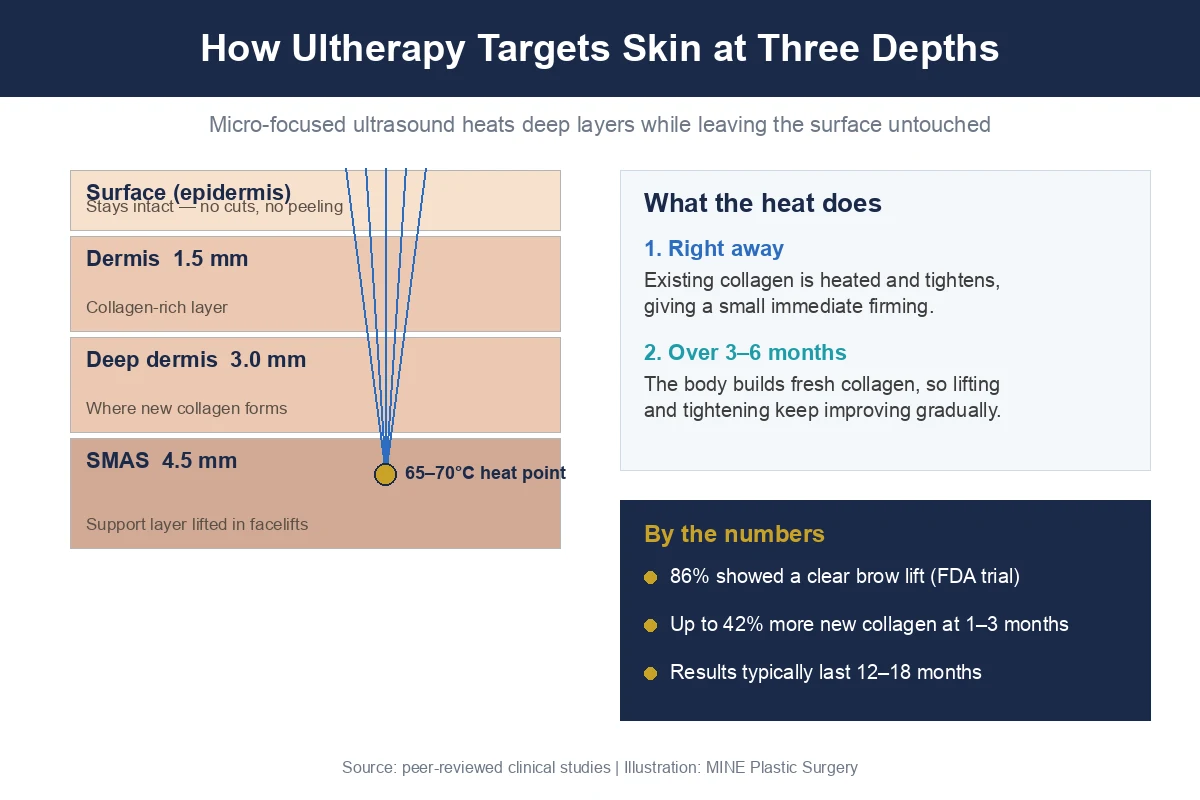
How Ultherapy’s focused ultrasound reaches three set depths (1.5 mm, 3.0 mm, and the 4.5 mm SMAS layer) while the skin surface stays intact, creating tiny heat points that tighten tissue right away and trigger new collagen over the following months.
Scientific Principles Behind Ultherapy Results
Ultherapy effectiveness is based on two scientifically proven mechanisms that work synergistically to achieve skin tightening and lifting:
In plain terms, this is the same idea described in dermatology textbooks: focused ultrasound delivers depth- and temperature-controlled heat into the deeper skin layers (the dermis and the SMAS), without touching the surface. Standard medical references explain that when collagen is heated to roughly 50–75°C it denatures and contracts, which is what tightens the skin straight away. Over the following weeks and months, the body responds by laying down fresh collagen in the reticular dermis — a slow rebuild that dermatology texts call neocollagenesis. So the early change you feel is the “shrink,” and the bigger, longer-lasting change is the “rebuild.”
Immediate Tissue Contraction
When HIFU energy creates thermal coagulation points at 65-70°C, existing collagen fibers undergo controlled denaturation. This thermal modification causes collagen structures to contract by approximately one-third of their original length, resulting in immediate tissue tightening. This process occurs selectively in deep tissue layers while leaving the skin surface completely intact.
Long-term Collagen Remodeling
The more significant and lasting Ultherapy results come from the body’s natural healing response to controlled thermal injury:
- Inflammatory cascade activation: Thermal damage triggers the body’s wound healing process
- Growth factor release: Increased production of TGF-β (transforming growth factor-beta) and other collagen-stimulating factors
- Fibroblast activation: Cells responsible for collagen production become metabolically active
- Neo-collagenesis: New Type I and Type III collagen synthesis increases significantly
- Elastin regeneration: Improved skin elasticity through elastin fiber renewal
- Tissue remodeling: Gradual reorganization occurs over 3-6 months for progressive improvement
This biological process creates stronger, more organized collagen architecture that provides long-lasting structural support and natural-looking rejuvenation.
Clinical Studies Proving Ultherapy Effectiveness
Ultherapy is supported by more than 50 clinical studies and 120 peer-reviewed papers, establishing it as the most researched non-invasive skin lifting treatment available.
Pivotal FDA Approval Studies
The landmark clinical trial that led to FDA approval demonstrated remarkable Ultherapy results. Among 35 evaluable subjects, 86% showed clinically significant brow-lift 90 days after treatment, with mean eyebrow elevation of 1.7mm.
Large-Scale Multi-Center Clinical Research
A comprehensive study of 103 adults evaluated Ultherapy effectiveness using both qualitative assessment by blinded reviewers and quantitative 3D photography analysis. Results showed:
- 90-day improvement rate: 58.1% of patients showed improvement according to blinded clinical reviewers
- Patient satisfaction: 63.6% of patients reported visible improvement in skin laxity
- BMI correlation: Better outcomes were observed in patients with BMI ≤30 kg/m²
Histological Evidence of Collagen Regeneration
Tissue analysis studies provide direct evidence of Ultherapy’s mechanism of action. Histological examination revealed immediate fibroblast activation and up to 42% increase in new collagen production at 4-12 weeks post-treatment.
Asian Population Studies
Research specifically conducted on Asian skin types confirmed Ultherapy effectiveness across different ethnicities. A study of 49 Chinese patients with Fitzpatrick skin types III-IV demonstrated safe and effective facial skin tightening with minimal side effects lasting only a short time.
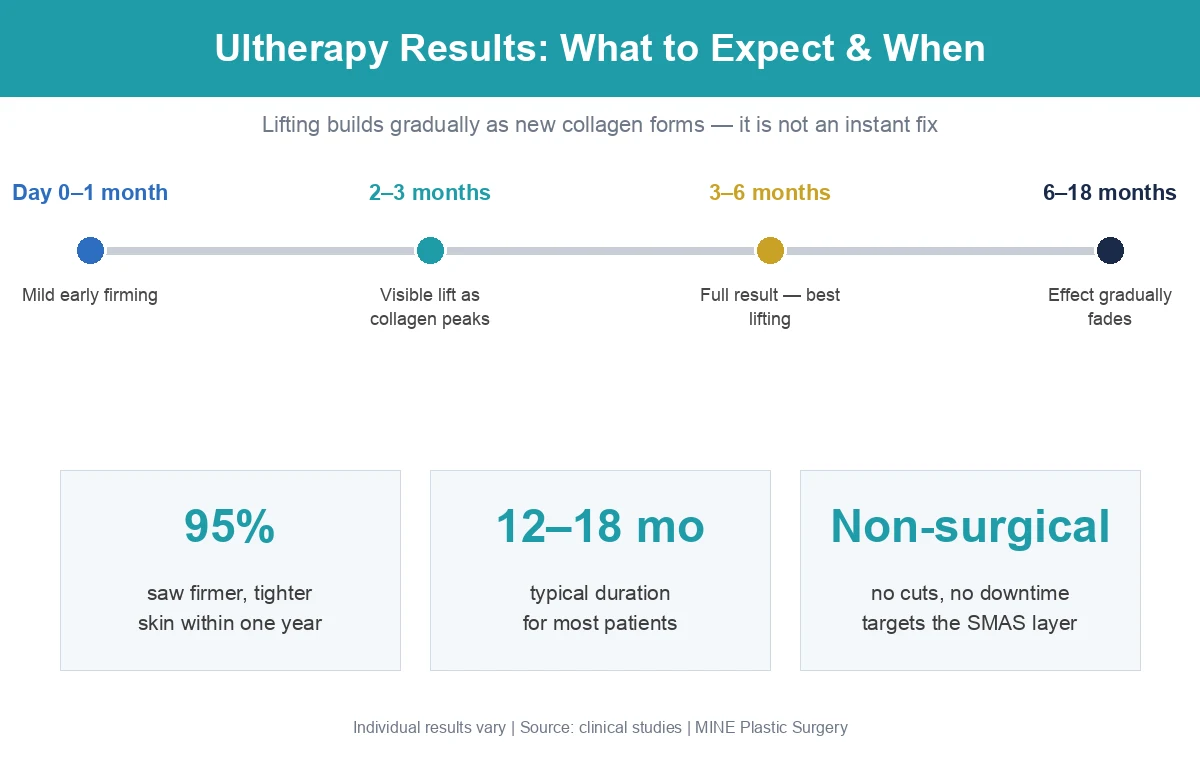
What clinical studies report about Ultherapy results over time: a small early firming, the strongest lift between three and six months as new collagen forms, and an effect that typically lasts 12–18 months. Individual results vary.
What Changes Can You Expect from Ultherapy?
Ultherapy is FDA-cleared to lift the brow, skin on the neck and under the chin, as well as improve lines and wrinkles on the décolletage. Clinical studies and patient experiences reveal specific improvements across multiple areas:
Facial Contouring Improvements
Ultherapy results for facial rejuvenation include:
- Eyebrow elevation: Average 1-2mm brow lift creating more open, youthful eye appearance
- Periorbital improvement: Reduction in crow’s feet and under-eye skin laxity
- Mid-face lifting: Significant improvements in cheek and mid-face sagging
- Nasolabial fold softening: Diminished appearance of smile lines and marionette lines
- Jawline definition: Enhanced jaw contour with reduced jowling
- Neck tightening: 72.9% of neck-treated patients achieved visible tissue lift ≥20.0 mm² in the submental area
Skin Quality Enhancement
Beyond lifting effects, patients experience comprehensive skin improvement:
- Increased elasticity: Enhanced skin bounce and resilience
- Improved texture: Smoother, more refined skin surface
- Tissue densification: Strengthened dermal structure and support
- Pore size reduction: Less visible pores due to improved skin tightness
- Enhanced thickness: Increased dermal thickness from new collagen formation
Patient Satisfaction Metrics
About 95% of patients treated with Ultherapy saw firmer, tighter skin within one year. Clinical studies consistently report:
- 3-month satisfaction: Over 75% of patients express satisfaction with results
- 6-month satisfaction: Satisfaction rates increase to over 80%
- Treatment tolerance: High comfort levels compared to other energy-based treatments
How Long Do Ultherapy Results Last?
Ultherapy results duration varies based on individual factors, but clinical research provides clear timelines for expectation setting.
Results Timeline
Improvement begins at three to six months and continues to develop through 12 months:
- Immediate to 1 month: Mild initial lifting from collagen contraction
- 2-3 months: Noticeable improvements as collagen production peaks
- 3-6 months: Maximum results from complete collagen remodeling
- 6-12 months: Continued improvement as new collagen matures
Duration of Effects
On average, treatment results last about two years, though individual experiences vary:
- Average duration: 12-18 months for most patients
- Individual variation: Results can last anywhere from one to five years or more
- Age-related differences: Younger patients (20s-30s) may see effects lasting 18-24 months, while older patients (50s+) typically experience 12-15 months
Factors Affecting Longevity
Ultherapy results duration is influenced by:
- Age and skin condition: Younger skin with better baseline collagen responds longer
- Lifestyle factors: Sun exposure, smoking, and poor nutrition accelerate aging
- Treatment intensity: Higher energy levels and shot density may extend results
- Maintenance treatments: Touch-up treatments every one to two years can prolong effects
- Skincare regimen: Proper post-treatment care supports collagen health
Expert Opinions on Ultherapy Effectiveness
Leading medical professionals consistently endorse Ultherapy results based on clinical experience and scientific evidence.
Dermatologist Perspectives
Board-certified dermatologists emphasize Ultherapy’s unique position in aesthetic medicine:
“Ultherapy’s ability to target both cutaneous layers like the reticular dermis and fibromuscular layers such as the SMAS makes it ideal for comprehensive facial rejuvenation,” notes a leading aesthetic dermatologist specializing in energy-based treatments.
Plastic Surgeon Insights
Members of the American Society of Plastic Surgeons recognize Ultherapy as an effective non-surgical option:
“For patients with mild to moderate skin laxity, Ultherapy provides clinically significant improvement without surgical risks. The ability to visualize target tissues during treatment ensures optimal energy delivery and patient safety.”
Clinical Research Perspectives
Medical researchers emphasize that “significant improvements in the overall aesthetics of sagging of the mid and lower face could be accomplished by using a micro-focused ultrasonic treatment plan” with minimal side effects and long-lasting results.
Maximizing Your Ultherapy Results
Achieving optimal Ultherapy effectiveness requires strategic planning before, during, and after treatment.
Pre-Treatment Optimization
- Provider selection: Choose board-certified physicians with extensive Ultherapy experience
- Realistic expectations: Understand that while Ultherapy can yield significant improvements, individual results may vary
- Comprehensive consultation: Detailed assessment of skin condition and treatment goals
- Medical history review: Ensure candidacy and identify any contraindications
Post-Treatment Care Protocol
Enhance and maintain Ultherapy results with evidence-based aftercare:
- Sun protection: Daily broad-spectrum sunscreen application is essential to protect new collagen
- Hydration support: Adequate water intake supports cellular regeneration
- Collagen-supporting skincare: Vitamin C, retinoids, and peptides enhance treatment effects
- Healthy lifestyle: A diet full of vitamins and antioxidants, sufficient water intake, and regular exercise contribute to skin health
- Professional maintenance: Regular follow-up with your provider for optimal results monitoring
Combination Treatment Strategies
Ultherapy works well with skin remodeling treatments like Profhilo that further boost collagen production while improving skin elasticity and hydration. Pairing ultrasound lifting with a laser approach is also popular — see how we combine Titanium lifting and Ulthera for a stronger lift. Complementary treatments may include:
- Injectable treatments: Botox for dynamic wrinkles, dermal fillers for volume restoration
- Skincare treatments: Professional facials and medical-grade topical regimens
- Maintenance sessions: Follow-up treatments scheduled over time help fight the natural aging process
For comprehensive treatment planning and to maximize your Ultherapy results, consult with experienced professionals at mineclinic who can develop a personalized approach based on your specific needs and aesthetic goals.
Frequently Asked Questions
Does Ultherapy work?
Yes – for the right candidate. Across more than 50 clinical studies, most patients showed a measurable brow-lift and many reported firmer skin within a year, making it one of the most studied non-invasive skin-lifting treatments. Results vary by skin laxity, age, and treatment depth.
How long do Ultherapy results last?
Most patients keep their results for 12–18 months. With good skin quality and occasional maintenance sessions, some patients may retain the effects for up to two to three years.
When will I see Ultherapy results?
Some tightening can be felt immediately, but the main results build gradually over 2–3 months and peak around 6 months as new collagen forms.
Does Ultherapy cause fat loss?
Ultherapy is designed to target the deep SMAS layer and collagen, not facial fat, so unwanted fat loss is uncommon at standard settings. Temporary volume change has rarely been reported when energy is applied too superficially, so an experienced provider tailors the depth and energy to protect facial volume. We cover this concern in detail in our guide on whether Ulthera can cause hollow cheeks.
Is Ultherapy better than a facelift?
Ultherapy targets the same deep SMAS layer addressed by a surgical facelift, without incisions or downtime – but a facelift still gives greater, longer-lasting lift for advanced sagging. The two are not equivalent, and the best option depends on your degree of laxity and goals. For a side-by-side breakdown, see our comparison of Ulthera, Thermage, HIFU and thread lifts.
The Science-Backed Truth About Ultherapy Results
With over 50 clinical studies, 120 peer-reviewed publications, and more than 2 million treatments performed worldwide, Ultherapy results are scientifically validated and clinically proven. The treatment’s HIFU technology creates measurable improvements in skin laxity through documented collagen regeneration and tissue remodeling processes.
However, achieving optimal Ultherapy effectiveness requires realistic expectations, proper candidate selection, and expert treatment delivery. Individual factors such as age, skin condition, and lifestyle significantly influence outcomes and duration of results.
When considering Ultherapy for non-surgical skin tightening, partnering with experienced professionals ensures the best possible outcomes. At mineclinic, our team combines scientific expertise with personalized treatment approaches to help you achieve natural-looking, long-lasting results.
Ready to experience scientifically-proven Ultherapy results for yourself? Contact mineclinic today to schedule a comprehensive consultation and discover how this revolutionary treatment can help you achieve your aesthetic goals safely and effectively.
Medical disclaimer: This article is for general educational purposes only and does not replace a professional medical consultation. Ultherapy is a medical procedure, and individual results, suitability, and risks vary from person to person. The clinical figures cited here come from published studies and manufacturer data and are not a promise of any specific outcome. Always consult a qualified, licensed physician to discuss your goals and whether this treatment is right for you.
※ This content is for informational purposes only and does not replace professional medical advice, diagnosis, or treatment. Individual results may vary, and side effects may occur. Please consult with a board-certified plastic surgeon for personalized advice.