EN
EN

Ultherapy is a non-surgical skin-tightening treatment that uses high-intensity focused ultrasound (HIFU) to heat the deep SMAS support layer, prompting your body to build new collagen that gradually lifts and firms the skin over the following months. Because those results build slowly as collagen renews, how you care for your skin before and after the session has a direct effect on the final outcome.
Ultherapy is widely used as a non-surgical alternative to a facelift, but good Ultherapy care before and after treatment is essential for achieving optimal results. Your Ultherapy care routine is just as important as the procedure itself. To get the most from the treatment while keeping side effects to a minimum, a little attention is needed from pre-treatment preparation through the full recovery period.
This Ultherapy care guide walks you through every stage: how to prepare in the weeks before, what to do in the first few days after, a week-by-week recovery timeline, the skincare routine that protects your results, and when to plan a follow-up. Use it as a simple, practical Ultherapy care checklist.
This comprehensive guide will walk you through each stage of Ultherapy care, from preparation guidelines to immediate aftercare and long-term maintenance strategies. Learn evidence-based care methods to enhance your Ultherapy results and enjoy firmer, more youthful skin.
Table of contents
What is Ultherapy? Understanding the Mechanism and Benefits
Ultherapy is a non-surgical lifting procedure that utilizes High-Intensity Focused Ultrasound (HIFU) technology. It delivers ultrasound energy to the deep layers of your skin without damaging the surface, stimulating collagen production for natural rejuvenation.
How Ultherapy Works (HIFU Technology)
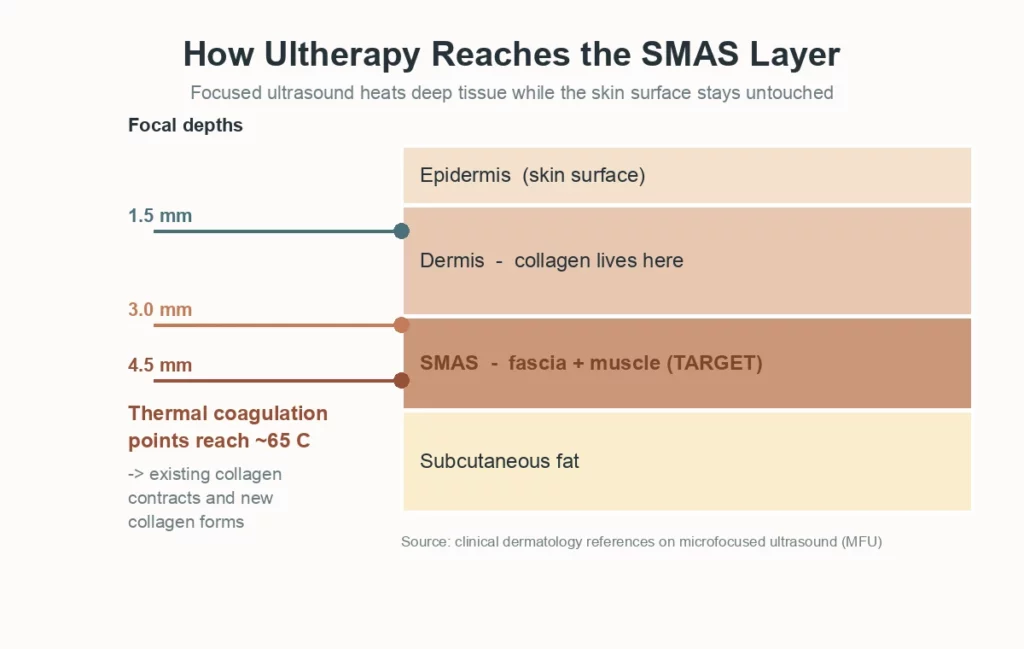
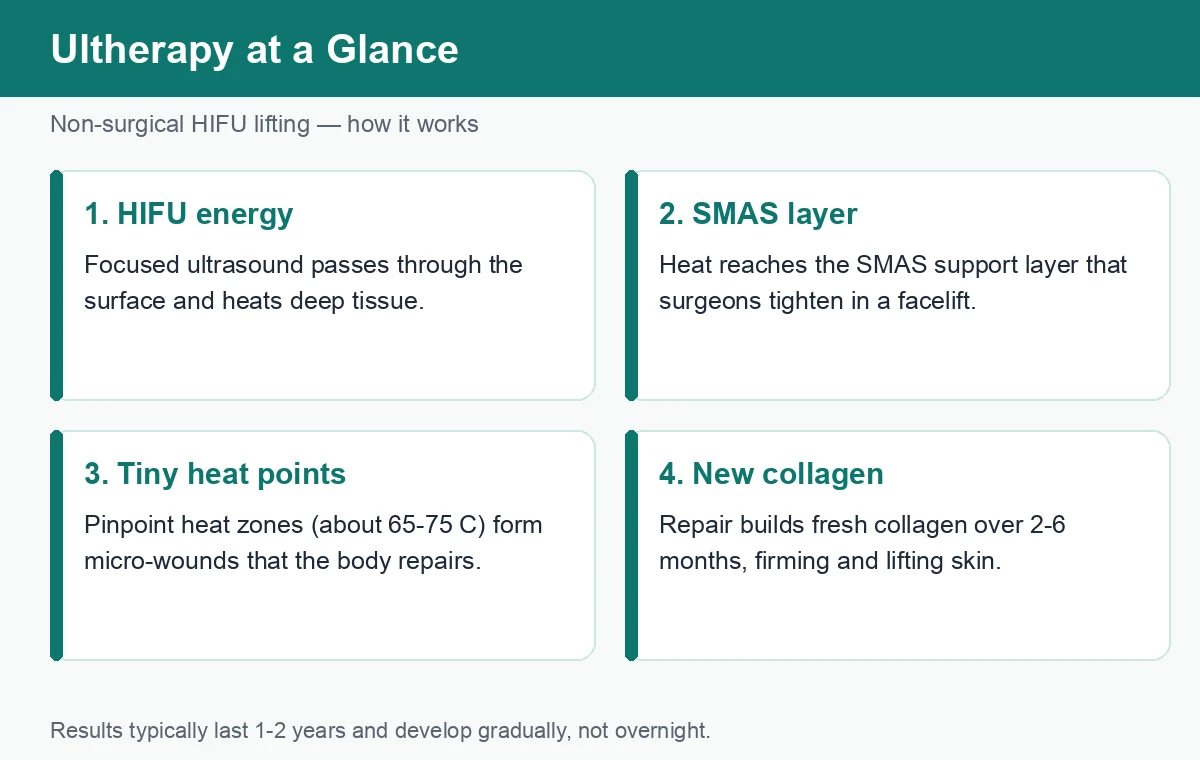
Ultherapy’s HIFU technology delivers energy from the skin’s surface down to the SMAS (Superficial Muscular Aponeurotic System) layer. This thermal energy, reaching temperatures of 65-75°C, creates precise micro-injuries that trigger the body’s natural healing response, stimulating collagen and elastin production.
Unlike most surface treatments, Ultherapy works beyond the epidermis and dermis to reach the SMAS layer directly, which is why it can produce more noticeable lifting. In simple terms, the focused ultrasound creates tiny, controlled heat points deep in the skin; your body treats each one as a small wound to repair, and that repair process lays down fresh collagen. Dermatology textbooks describe this as the targeted formation of thermal “injury zones” in the SMAS that drives natural skin renewal (Essentials for Aesthetic Dermatology in Ethnic Skin, 2023). According to the American Society of Plastic Surgeons, HIFU also helps regenerate collagen in the deeper skin layers.
How Ultherapy Affects Your Skin
Following Ultherapy treatment, your skin undergoes several changes:
- Immediate contraction effect: The thermal energy causes collagen fibers to contract, providing an initial tightening effect.
- Collagen remodeling: Over 2-3 months, new collagen forms, gradually improving skin elasticity.
- Tissue strengthening: Skin tissues strengthen from deep layers upward, improving sagging.
Typical Duration of Results and Individual Variations
Ultherapy results typically last 1-2 years, though this varies based on skin condition, age, lifestyle, and maintenance. Preventative treatments are recommended annually for those in their 20s-30s, while those over 40 may benefit from treatments every 6-12 months.
Proper pre and post-treatment care is crucial for extending these results—which is precisely what this guide focuses on.
How Should You Prepare for Ultherapy Treatment?
Proper preparation in the weeks before your Ultherapy treatment is crucial for maximizing results and minimizing potential side effects. Here’s what you should focus on starting two weeks before your procedure.
What to Do Two Weeks Before Treatment
- Sun protection: Minimize sun exposure and apply SPF 50+ sunscreen diligently for two weeks before treatment.
- Intensify hydration: Focus on strengthening your skin barrier with hydrating products to support post-treatment recovery.
- Avoid alcohol and tobacco: Both impair blood circulation and can cause inflammation, so abstain for at least two weeks pre-treatment.
- Reduce caffeine intake: Caffeine may increase sensitivity during the procedure, so decrease consumption in the days leading up to treatment.
- Increase water consumption: Drink at least 2 liters of water daily to improve skin condition.
Medications and Ingredients to Avoid
Discontinue the following 1-2 weeks before treatment:
- Blood thinners: Aspirin, ibuprofen, and similar medications that increase bleeding risk
- Retinol (Vitamin A derivatives): Can make skin thin and overly sensitive
- AHA/BHA exfoliants: May increase skin sensitivity
- Vitamin E supplements: Can interfere with blood clotting
- Immunosuppressants: May delay post-treatment recovery
Instead, use products containing skin-soothing ingredients such as panthenol, allantoin, and ceramides.
Day-of-Treatment Preparations and Considerations
- No makeup: Arrive with completely clean skin.
- Comfortable clothing: Wear comfortable attire as the treatment may take some time.
- Sufficient rest: Ensure you’re well-rested the night before.
- Light meal and hydration: Have a light meal and drink plenty of water before your appointment.
- Practitioner consultation: Provide accurate information about any medications, allergies, and previous treatments.
Upon arrival at the clinic, your healthcare provider will review a final checklist with you. Prepare any questions you have in advance to discuss during this time.
What Immediate Aftercare Should You Follow?
The first three days after Ultherapy require the most attentive Ultherapy care. Good management during this period is crucial for minimizing side effects and promoting recovery.
Care Guidelines from Immediately After Treatment to 3 Days
- Makeup is technically allowed: While Ultherapy is non-invasive and makeup can be applied immediately, it’s best to give your skin a rest on the treatment day.
- Sun protection: Your skin becomes more sensitive post-treatment, so apply SPF 50+, PA++++ sunscreen meticulously when going outside.
- Cold compress: For any swelling, apply an ice pack (wrapped in a towel) for 15 minutes at hourly intervals.
- Soothing care: Use products containing aloe vera, panthenol, or madecassoside to calm the skin.
- Maintain cleanliness: Keep the treated area clean and avoid excessive massaging or rubbing.
Tips for Managing Swelling and Discomfort
Most patients experience mild swelling, redness, or tingling sensations after treatment. These typically resolve naturally within 3 days.
Swelling management tips:
- Sleep with your head slightly elevated
- Avoid facial massages and saunas
- Stay hydrated but limit high-sodium foods
Pain management tips:
- Take physician-prescribed pain relievers as directed
- Use cooling mists or soothing sheet masks
- Contact your provider if pain becomes severe or persistent
Behaviors and Foods to Avoid
During the first three days, avoid:
- Strenuous exercise: Intense workouts increase blood flow and may worsen swelling
- Saunas, steam rooms, hot baths: High temperatures can exacerbate inflammation
- Alcohol and smoking: These delay recovery and interfere with collagen production
- Caffeine: Can dilate blood vessels and worsen swelling
- Spicy foods and excessive salt: May increase inflammation and swelling
- Direct sun exposure: Increases risk of hyperpigmentation
During this period, focus on consuming water-rich fruits and vegetables and antioxidant-rich foods to support healing.
Week-by-Week Recovery Guide: 1 Week to 1 Month Post-Treatment
The period from one week to one month after Ultherapy is when results gradually begin to appear. Consistent Ultherapy care during this phase is decisive for achieving optimal outcomes.
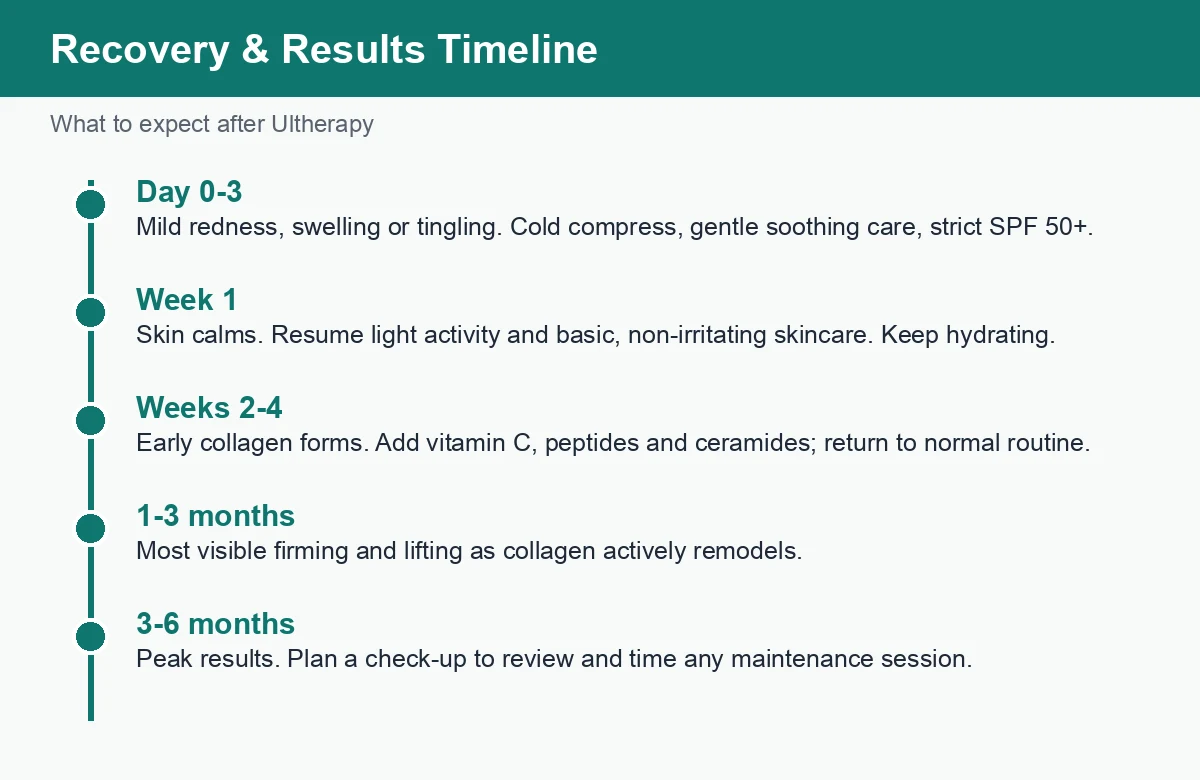
Week 1 Focus Points
- Maintain skin soothing: Continue focusing on calming the skin while introducing light hydration.
- Ongoing sun protection: Consistently use strong sunscreen.
- Resume light exercise: Start with walking or gentle stretching before gradually increasing intensity.
- Consistent hydration: Continue drinking at least 2 liters of water daily.
- Return to basic skincare: Non-irritating, foundational skincare can be reintroduced.
Weeks 2-4 Focus Points
- Introduce collagen-boosting ingredients: Add vitamin C, peptides, and niacinamide to your skincare routine to enhance collagen production.
- Intensify hydration: Strengthen your skin barrier with ceramides and hyaluronic acid.
- Nutritional support: Increase consumption of antioxidant-rich foods.
- Resume normal exercise: Return to your regular fitness routine to promote circulation.
- Quality sleep: Aim for 7-8 hours of quality sleep, which is essential for skin regeneration.
When Results Appear and How to Manage Expectations
Ultherapy results vary between individuals but typically follow this timeline:
- Immediately after treatment: Some patients experience an immediate “lifting” effect, though this may be temporary due to swelling.
- 2-3 weeks later: Initial collagen production begins, with subtle changes becoming noticeable.
- 1-3 months: Most noticeable improvements occur as collagen remodeling actively progresses.
- 3-6 months: Maximum results become visible.
During this period, it’s beneficial to schedule follow-up appointments with your mineclinic specialist at 1-2 month intervals to monitor progress and receive recommendations for additional skin treatments if needed.
Skincare Routines to Maximize Ultherapy Results
A tailored skincare regimen is the core of long-term Ultherapy care, helping you maximize and extend your results. Focus on these Ultherapy care strategies starting one month after your treatment.
Recommended Skincare Ingredients and Products
- Antioxidants: Vitamin C, E, and ferulic acid protect skin from free radicals and support collagen production.
- Peptides: Various peptide formulations stimulate collagen synthesis and improve skin elasticity.
- Hyaluronic acid: This powerful humectant hydrates skin and adds volume.
- Niacinamide: Strengthens the skin barrier, brightens, and reduces pore size.
- Ceramides: Reinforce the skin barrier and prevent moisture loss.
- Retinol: Can be gradually introduced starting 4+ weeks post-treatment, beginning with lower concentrations to further stimulate collagen production.
Skincare Ingredients to Avoid
- Strong exfoliants: Avoid high-concentration AHA/BHA products for the initial 4 weeks.
- Alcohol-heavy formulations: These can dry and irritate the skin.
- Synthetic fragrances and dyes: May cause irritation to sensitive skin.
- Mineral oil: Can clog pores and create issues.
- Steroid-containing products: Long-term use can thin the skin.
Home Ultherapy Care Tips for Maintaining Results
- Daily skincare routine:
- Morning: Gentle cleanser → toner → antioxidant serum → moisturizer → sunscreen
- Evening: Double cleansing → toner → peptide/regenerating serum → nourishing cream
- Weekly special care:
- Hydrating mask 2-3 times weekly
- Gentle exfoliation 1-2 times weekly (starting 4 weeks post-treatment)
- Gentle massage to stimulate circulation
- LED mask therapy: Red light and near-infrared LED masks can further stimulate collagen production.
- Facial exercises: Specific exercises targeting facial muscles can complement lifting effects. Check mineclinic’s facial exercise guide for recommendations.
For professional maintenance, consider visiting your clinic every 2-3 months for skin assessments and additional treatment recommendations.

How to Manage Potential Ultherapy Side Effects
While Ultherapy is non-invasive, some patients may experience side effects. Most are temporary and can be managed with proper care.
Common Side Effects and Solutions
- Redness and Swelling
- Symptoms: Temporary redness and swelling at treatment sites
- Solutions: Cold compresses, soothing masks, adequate hydration
- Pain and Sensitivity
- Symptoms: Tingling or burning sensations
- Solutions: Physician-recommended pain relievers, gentle skincare products
- Temporary Sensation Changes
- Symptoms: Numbness or tingling in treated areas
- Solutions: Typically resolves naturally within 2-4 weeks; consult your provider if persistent
- Bruising
- Symptoms: Bruising or subcutaneous bleeding at treatment sites
- Solutions: Arnica cream, vitamin K products
When to Return to Your Provider
Seek immediate medical attention if you experience:
- Severe pain: Pain not controlled by standard pain relievers
- Significant swelling: Swelling that persists or worsens after 48 hours
- Skin discoloration: Persistent white or gray discoloration
- Signs of infection: Fever, purulent discharge, severe redness
- Signs of nerve damage: Persistent numbness or sensation loss
Lifestyle Habits to Minimize Side Effects
Reduce side effect risks and promote recovery with these habits:
- Adequate hydration: Drink 2+ liters of water daily to support metabolism and toxin elimination
- Avoid smoking: Smoking constricts blood vessels and impedes collagen production
- Minimize sun exposure: UV radiation damages collagen and increases pigmentation risks
- Stress management: Stress can worsen inflammation, so practice meditation, yoga, or other relaxation techniques
- Sufficient sleep: 7-8 hours of quality sleep is essential for cellular regeneration and recovery
If side effects occur, avoid self-diagnosis and consult your healthcare provider. Mineclinic offers a comprehensive aftercare system to promptly address any post-treatment concerns.
Lifestyle and Dietary Habits for Prolonged Ultherapy Results
Daily habits and nutrition significantly impact how long your Ultherapy results last. Proper lifestyle choices promote collagen production and maintain skin elasticity.
Collagen-Boosting Foods and Nutrients
- Protein: Consume foods rich in amino acids, the building blocks of collagen.
- Chicken breast, fish, tofu, eggs
- Vitamin C: Essential for collagen synthesis, abundant in:
- Citrus fruits, strawberries, kiwi, broccoli, bell peppers
- Zinc: Important for collagen production and tissue regeneration.
- Oysters, pumpkin seeds, sesame seeds, nuts
- Antioxidant foods: Protect skin from free radical damage.
- Berries, dark chocolate, green tea, tomatoes
- Omega-3 fatty acids: Reduce inflammation and promote skin health.
- Salmon, mackerel, flaxseeds, walnuts
Beneficial Lifestyle Habits for Skin Elasticity
- Hydration: Consistently drink 2+ liters of water daily to maintain skin hydration.
- Regular exercise: 30+ minutes of aerobic exercise 3-4 times weekly improves circulation and delivers oxygen and nutrients to the skin.
- Adequate sleep: 7-8 hours of quality sleep is essential for skin regeneration and collagen production.
- Stress management: Meditation, yoga, and deep breathing techniques help lower cortisol levels.
- Facial massage: Regular facial massage can promote blood circulation and lymphatic drainage.
Habits and Environmental Factors to Avoid
- Excessive sun exposure: Always use SPF 50+ sunscreen and avoid direct sunlight.
- Smoking: Tobacco constricts blood vessels and impedes oxygen and nutrient delivery.
- Excessive alcohol consumption: Alcohol causes dehydration and increases inflammation.
- Sugar and refined carbohydrates: These can damage collagen through glycation.
- Air pollution and fine dust: Thoroughly cleanse skin after outdoor exposure to remove accumulated pollutants.
While the effects of healthy lifestyle and dietary choices may not be immediately apparent, they significantly contribute to maintaining Ultherapy results and promoting long-term skin health. As your skin is your body’s largest organ, overall health management directly impacts skin condition.
When and How to Schedule Follow-Up Ultherapy Treatments
Ultherapy results typically last 1-2 years, but this varies based on skin condition, age, and lifestyle. To maintain optimal results, consider appropriate timing for follow-up treatments.
Optimal Timing for Follow-Up Treatments
- Age-based recommendations:
- 20s-30s: Annually for preventative maintenance
- 40s: Every 9-12 months
- 50+: Every 6-9 months
- Individual skin assessment considerations:
- When sagging begins to reappear
- When you notice diminishing effects
- Seasonal preventative maintenance
- Decision-making through regular professional consultations:
- Check skin condition every 3-6 months
- Evaluate result longevity
- Develop personalized retreatment plans
Considerations Before Retreatment
- Previous treatment evaluation:
- Satisfaction level and duration of results
- Side effects or discomfort experienced
- Areas for improvement
- Current skin condition analysis:
- Degree of sagging
- Wrinkle and elasticity status
- Skin thickness and collagen condition
- Treatment type and intensity adjustments:
- Shot count may differ from initial treatment
- Focus on specific areas possible
- Customized planning based on previous experience
- Interval management:
- Too-frequent treatments may stress the skin
- Minimum 6-month intervals generally recommended
Tips for Combining Ultherapy with Other Treatments
Combining Ultherapy with complementary treatments can create synergistic effects:
- Botox and fillers:
- Can be administered 2+ weeks after Ultherapy
- Ultherapy addresses lifting, Botox targets dynamic wrinkles, and fillers restore volume loss
- Laser treatments:
- Consider laser treatments 4+ weeks after Ultherapy for surface skin improvement
- Ultherapy works for deep lifting while lasers improve skin tone and texture
- Skin boosters:
- Hyaluronic acid skin boosters can be administered 2+ weeks after Ultherapy
- Helps with hydration and skin radiance
- PDO threads:
- Combining Ultherapy with PDO threads provides enhanced lifting effects
- Minimum 1-month interval recommended between treatments
Always consult with a healthcare professional before planning combination treatments. Mineclinic offers personalized Ultherapy retreatment and combination treatment programs based on individual skin conditions and goals.
Frequently Asked Questions About Ultherapy
How Painful is Ultherapy Treatment?
The pain level during Ultherapy varies depending on individual pain threshold and treatment area. Generally, patients experience more discomfort when treating areas close to bone. Most describe momentary sharp or prickling sensations that occur only during the treatment.
To reduce discomfort, providers may offer pre-treatment pain medication, numbing cream, or local anesthesia if necessary. If you’re sensitive to pain, discuss pain management options with your provider before treatment.
When Will I See Results from Ultherapy?
Ultherapy results don’t appear immediately but develop gradually over time. Some patients may feel a slight “lifting” effect immediately after treatment, though this could be due to temporary swelling. The true collagen-building and remodeling effects follow this timeline:
- 2-3 weeks: Initial collagen production begins with subtle changes
- 1-3 months: Progressive improvements become increasingly noticeable
- 3-6 months: Maximum results become visible
The timing and extent of results vary based on individual skin condition, age, and collagen-producing capacity.
When Can I Apply Makeup After Ultherapy?
Since Ultherapy is non-invasive, makeup application is technically possible immediately after treatment. However, for minimal skin stress, follow these guidelines:
- Treatment day: Preferably allow your skin to rest without makeup
- Day after treatment: Light base makeup is acceptable
- 3+ days after treatment: Resume normal makeup routine
When applying makeup, use clean brushes and gentle products, and cleanse gently. Always apply sunscreen, which is essential regardless of makeup use.
Which is More Effective: Ultherapy or Thermage?
Both Ultherapy and Thermage are non-surgical lifting treatments with different mechanisms and effects:
- Ultherapy: Uses HIFU technology to reach deep into the SMAS layer for more significant lifting effects. Results typically last 1-2 years.
- Thermage: Uses radiofrequency (RF) energy primarily targeting the dermis, effective for skin tightening and tissue firming. Results typically last 6-12 months.
The more effective option depends on individual skin condition, goals, and age:
- For significant sagging, Ultherapy may be more suitable
- For overall skin tightening and pore improvement, Thermage may be more effective
- Individuals over 50 may benefit more from Ultherapy’s deeper action
- Those with sensitive skin might prefer Thermage
For the optimal choice, consult with specialists at mineclinic for personalized recommendations.
Is There a Limit to How Many Ultherapy Treatments I Can Have?
While there’s no absolute limit to Ultherapy treatments, maintaining appropriate intervals is important. Too-frequent treatments may stress the skin and provide limited additional benefits.
- Recommended minimum interval: 6 months
- General maintenance cycle: Once yearly
- Age-based recommendations:
- 20s-30s: Once yearly
- 40s: Every 9-12 months
- 50+: Every 6-9 months
Appropriate treatment intervals vary based on individual skin condition, collagen-producing capacity, and lifestyle. Regular consultations with your provider will help establish a personalized treatment plan.
Conclusion: The Importance of Proper Care for Maximizing Ultherapy Results
Ultherapy stands as a premier non-surgical lifting option, and good Ultherapy care significantly enhances its effectiveness and longevity. From thorough pre-treatment preparation to meticulous post-treatment Ultherapy care and healthy daily habits, each step plays a crucial role in determining your outcomes.
The hallmark of Ultherapy is its natural, progressive lifting effect that develops over time. Rather than expecting immediate results, patients experience increasingly rejuvenated and firmer skin through a 3-6 month collagen remodeling process. Proper care during this period substantially impacts results.
If you’re considering Ultherapy, professional consultation and a customized care plan are essential. Mineclinic offers optimal Ultherapy treatments and management recommendations tailored to your skin condition and goals. Through expert consultation, you can receive clear guidance on whether Ultherapy is suitable for you, what results to expect, and how to care for your skin throughout the process.
Skin care isn’t a one-time procedure but requires ongoing attention and effort. With proper care, you can maximize Ultherapy’s benefits and maintain healthy, beautiful skin for longer periods.
For more detailed information about Ultherapy and a personalized consultation, connect with one of our specialists for an accurate assessment and customized solutions.
Medical disclaimer: This article is for general educational purposes only and is not a substitute for professional medical advice, diagnosis, or treatment. Ultherapy suitability, results, and possible side effects differ from person to person. Always consult a qualified medical professional about your individual situation before starting, combining, or changing any treatment.
Was this information helpful? If you have additional questions about Ultherapy treatment or care methods, please leave them in the comments below. Mineclinic is committed to supporting your skin health journey.
※ This content is for informational purposes only and does not replace professional medical advice, diagnosis, or treatment. Individual results may vary, and side effects may occur. Please consult with a board-certified plastic surgeon for personalized advice.