EN


Rejuran bumps (also called Rejuran embossing) are small, temporary raised wheals that appear at each injection point right after a Rejuran injection — a normal skin reaction, not a separate product. They usually flatten on their own within a few days as the injected liquid is absorbed into the skin.
Still, it can be unsettling. You finish your skin booster session, look in the mirror, and see a neat grid of little raised dots across your cheeks. “Is this a side effect?” “Is this the new ‘Rejuran Embo’ everyone talks about?” These are among the questions I hear most often in my clinic.
I’m Dr. Lee Sung-wook, a board-certified plastic surgeon and the lead doctor at MINE Clinic in Gangnam, Seoul. In this guide, I’ll explain why Rejuran bumps form, how long they usually last, what normal healing looks like, and the 5 warning signs that mean you should get checked.
What Are Rejuran Bumps? A Reaction, Not a Product
Rejuran bumps are the visible footprint of an injection placed in the skin, not something you buy. Understanding that one point clears up most of the confusion you will find online.
“Rejuran Embo” Is Not a Product Line
Let me start with the short answer: there is no product called “Rejuran Embo.” The manufacturer, PharmaResearch, sells several Rejuran products, and none of them carries the name “Embo.” If you want to see how the real products differ, I’ve covered the official Rejuran lines (Healer, I, S and HB) in a separate guide.
The mix-up is understandable. Because Rejuran has several products with a word added after the brand name, many people assume “Embo” is simply another one. In reality, “embo” is clinic shorthand for “embossing,” the raised look of the skin after treatment.
What “Embossing” Means on Your Skin
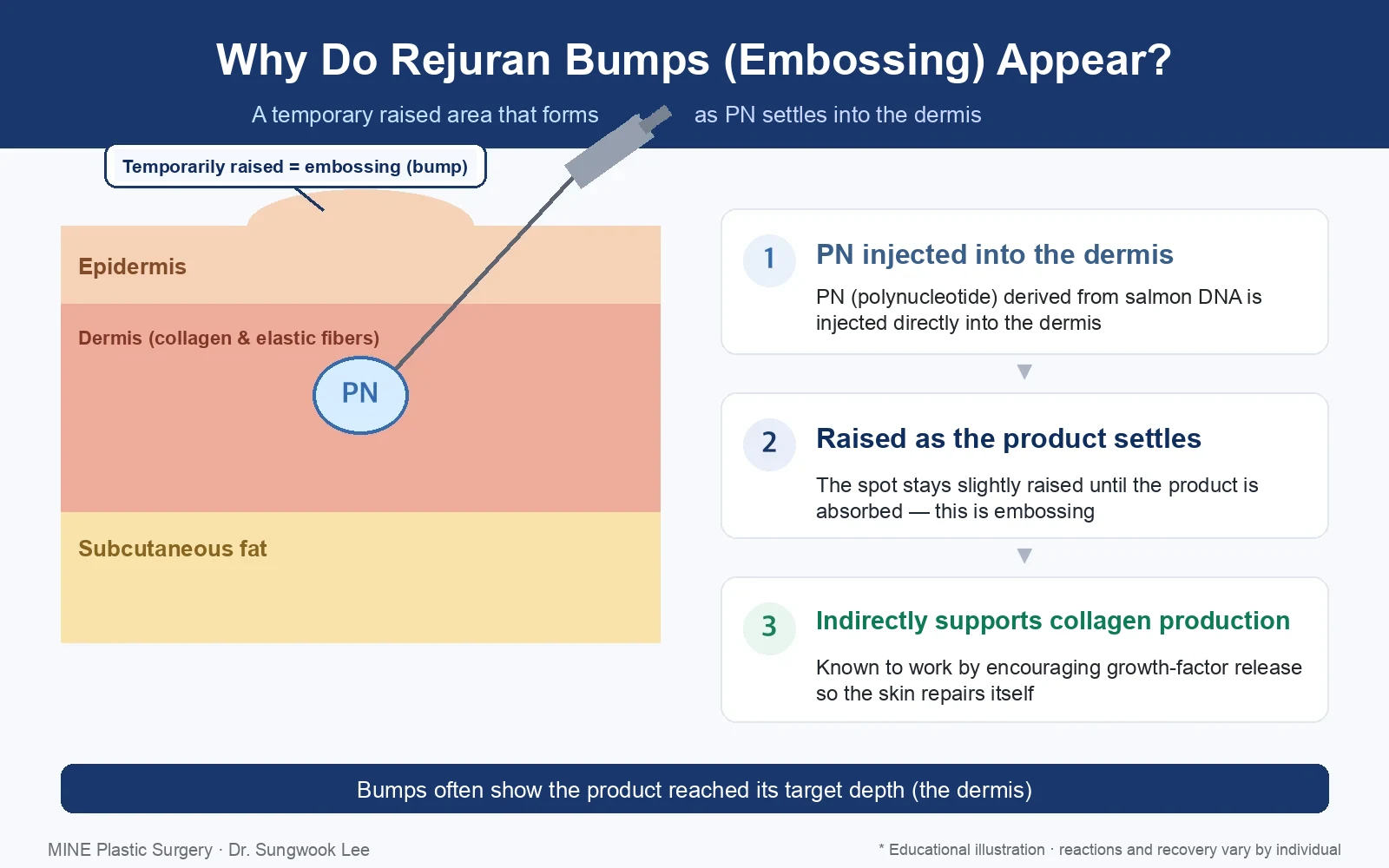
Embossing originally refers to pressing a stamp into paper so that the surface is raised. After a Rejuran injection, each spot where the liquid settles into the dermis (the deeper layer of skin that holds collagen and elastic fibers) rises slightly for a while, so the skin looks as if it has been stamped.
If you touch the area, the bumps usually feel like tiny, soft lumps. As the product is absorbed, they gradually sink back down until the skin surface looks even again.
Dr. Lee’s Key Point: “Rejuran Embo” is not a product you can choose. It is the everyday name for the temporary raised look your skin can have right after a Rejuran injection.
Why Do Rejuran Bumps Form After Injection?
To understand why Rejuran bumps appear, it helps to know what Rejuran actually does once it is inside your skin. The short version is that the product is placed precisely, in small amounts, at a specific depth.
What PN/PDRN Does in the Dermis
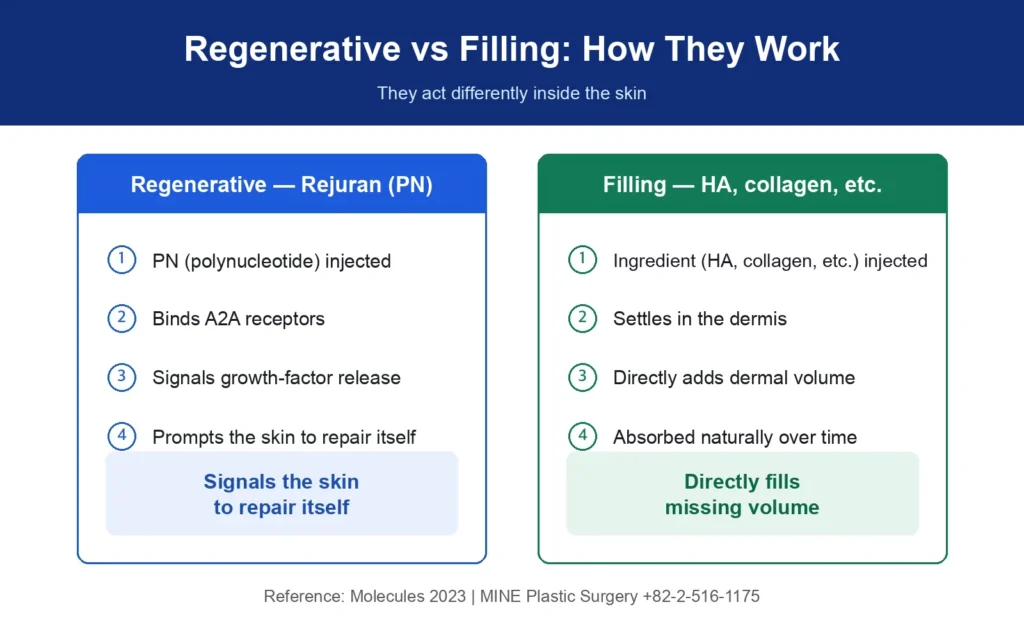
The key ingredient in Rejuran is PN (polynucleotide, a skin-repair ingredient purified from salmon DNA), a close relative of PDRN (polydeoxyribonucleotide). It is injected directly into the dermis.
Research on PDRN describes how it acts on a receptor on skin cells called the A2A receptor. Think of it as a switch: once it is switched on, cells release growth factors (natural signaling proteins that tell tissue to repair itself). A 2023 study in Molecules on PDRN reported that this receptor activity encourages growth-factor release, supports new small blood vessels and helps calm inflammation. That study used plant-derived PDRN, so I cite it only for the general mechanism, not as a Rejuran trial.
In plain terms, Rejuran does not fill a space the way a filler does. It works more like a nudge that helps your skin rebuild itself, which also supports collagen production indirectly over the following weeks. If you’d like the deeper science, see my article on how PDRN supports skin regeneration.
Superficial Placement Creates Small Raised Wheals
This precise placement is exactly why Rejuran bumps form. Each injection leaves a small droplet of liquid sitting in the upper part of the dermis. Until that droplet is absorbed, it pushes the skin above it slightly upward, creating a small raised wheal.
That is why, in many cases, neat and evenly spaced bumps simply show that the product reached the depth it was aimed at. They are a sign of where the liquid went, not a sign that something went wrong.
There is an important difference, though, between a soft wheal that flattens and a firm lump that stays. According to dermatology textbooks, visible papules or nodules (small firm bumps) can follow any skin injectable, especially when the product is placed too superficially or is too concentrated. Those are a different issue from ordinary Rejuran bumps, and I’ll explain how to tell them apart in the next section.
Who Notices Bumps More (and Why No Bumps Is Not Failure)
How visible Rejuran bumps are depends on several things: the injection depth, the amount placed at each point, the treated area and your own skin thickness and texture. Thin skin under the eyes, for example, may show bumps differently from thicker cheek skin.
Bump patterns can also look different with other skin boosters. Hyaluronic acid boosters, which mainly add moisture and volume directly, may spread and settle differently in the skin. If you are weighing those options, I explain how hyaluronic acid skin boosters compare with Rejuran in a dedicated article.
Just as importantly, a session with very few visible bumps is not a failed session. Whether bumps are visible does not tell you how well the treatment will work.
Dr. Lee’s Key Point: Rejuran bumps are usually the natural trace of PN settling into the dermis. Their size varies from person to person, and their absence does not mean the treatment did not work.
Normal Rejuran Bumps vs Warning Signs: How to Tell
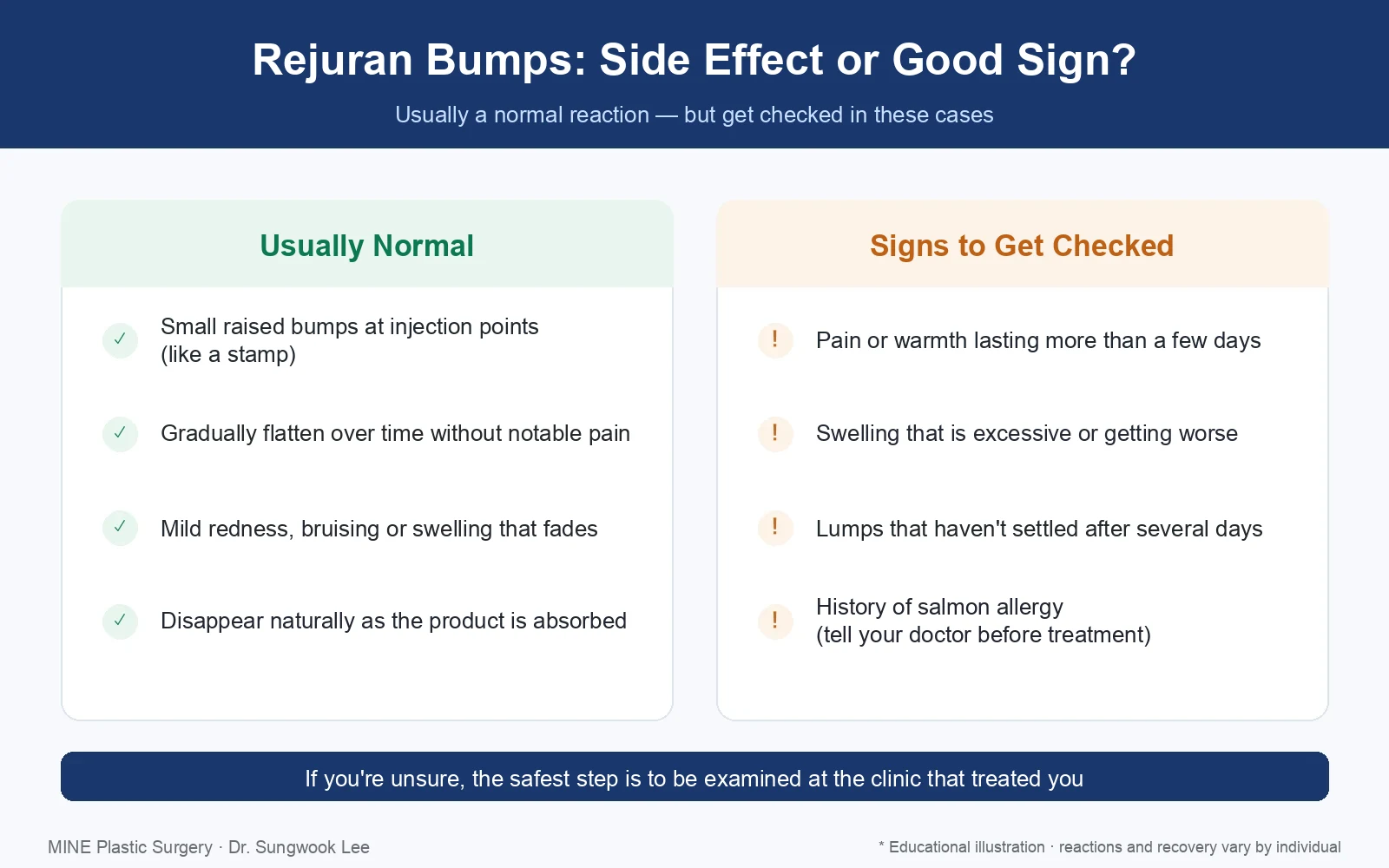
This is the most important part of the guide. In most cases, Rejuran bumps are a normal reaction. But a few signs suggest something other than simple embossing, and those deserve a doctor’s look.
| Usually normal | Get checked |
|---|---|
| Small raised bumps at injection points, like a stamp pattern | Bumps that have not settled after several days |
| Bumps gradually flatten over time | Pain that is getting worse or does not ease |
| No notable pain, only mild tenderness | Warmth or heat in the treated area |
| Mild redness, bruising or swelling that eases | Swelling that is excessive or worsening, spreading redness, pus or fever |
| Soft feel that disappears as the product is absorbed | Firm, hard nodules that stay |
Signs Your Bumps Are Normal
If Rejuran bumps rise at the injection points right after treatment, you have no notable pain, and the bumps slowly flatten over the following days, that is generally a normal course. Mild redness, small bruises and slight swelling can appear alongside the bumps and should ease gradually.
Rejuran bumps are usually absorbed within a few days. Exactly how many days varies with the amount injected, the area treated and your skin, so I avoid promising a specific number.
5 Warning Signs to Get Checked
Contact your clinic if you notice any of the following:
- Bumps that don’t settle: lumps that are still clearly raised several days after treatment.
- Pain that increases or persists: tenderness that gets stronger instead of fading.
- Warmth or heat: the area feels hot to the touch.
- Excessive or worsening swelling: especially with spreading redness, pus or fever, which can point to infection.
- Firm, hard nodules: lumps that feel solid rather than soft and do not shrink.
Textbooks on injectables list infection and persistent nodules among the possible complications of skin injections in general. They are not “bumps that take longer,” and they need to be assessed in person.
When to Contact the Clinic
If you’re unsure, don’t try to diagnose yourself, and don’t squeeze or massage the lumps to flatten them. Pressing on Rejuran bumps can irritate the skin further. The sensible step is to contact the clinic that treated you and, if possible, send a clear photo or come in for an examination.
Also note that Rejuran’s main ingredient comes from salmon DNA. If you have a history of salmon or fish allergy, tell your doctor before treatment, not after.
Dr. Lee’s Key Point: Rejuran bumps are usually normal, but pain, warmth or swelling that lasts for days may be a different reaction. When in doubt, get examined rather than waiting it out.
How Long Do Rejuran Bumps Last? Typical Timeline
Recovery varies from person to person, but most patients follow a similar general pattern. Rejuran bumps usually flatten within a few days, while redness, swelling and bruising fade within 1-2 weeks.
| Time after treatment | What you may notice |
|---|---|
| Right after | Raised bumps at injection points, mild redness |
| Within a few days | Bumps are absorbed and flatten |
| 1-2 weeks | Remaining redness, swelling or bruising fades |
| 2-4 weeks onward | Gradual improvement in skin texture and quality |
Right After Injection
Immediately after your session, Rejuran bumps are at their most visible. You may also see some redness and pinpoint marks where the needle entered. This is the stage when most patients worry, and it is also the stage that changes fastest.
The First Few Days
Over the next few days, the liquid is absorbed and Rejuran bumps soften and flatten. Some bruising may become more noticeable during this time before it fades. If you are traveling to Seoul for treatment, plan your session a few days before flights, photos or important events so the bumps have time to settle.
For makeup, our clinic recommends keeping it light the day after treatment; normal makeup is usually fine from day 3.
Weeks 2-4: Results Develop After Bumps Fade
Here is something many patients don’t realize: when Rejuran bumps disappear, the treatment is not “over.” Visible Rejuran results typically begin to appear 2-4 weeks after treatment, which fits what PDRN studies describe: a growth-factor-driven repair process that takes time. The regeneration work continues under the surface after the skin looks smooth again. For more detail, see the Rejuran results timeline.
Dr. Lee’s Key Point: Rejuran bumps fade within days, but skin regeneration continues over 2-4 weeks. Be gentle with your skin in the first few days and give the results time.
Rejuran Bumps Aftercare: How to Help Them Settle
Rejuran bumps settle on their own, but sensible aftercare reduces swelling and bruising and keeps the skin calm.
Day of Treatment: Cold Compress and Hands Off
- Apply a gentle cold compress to swollen areas for short periods.
- Don’t rub, press or massage the bumps.
First Week Do’s and Don’ts
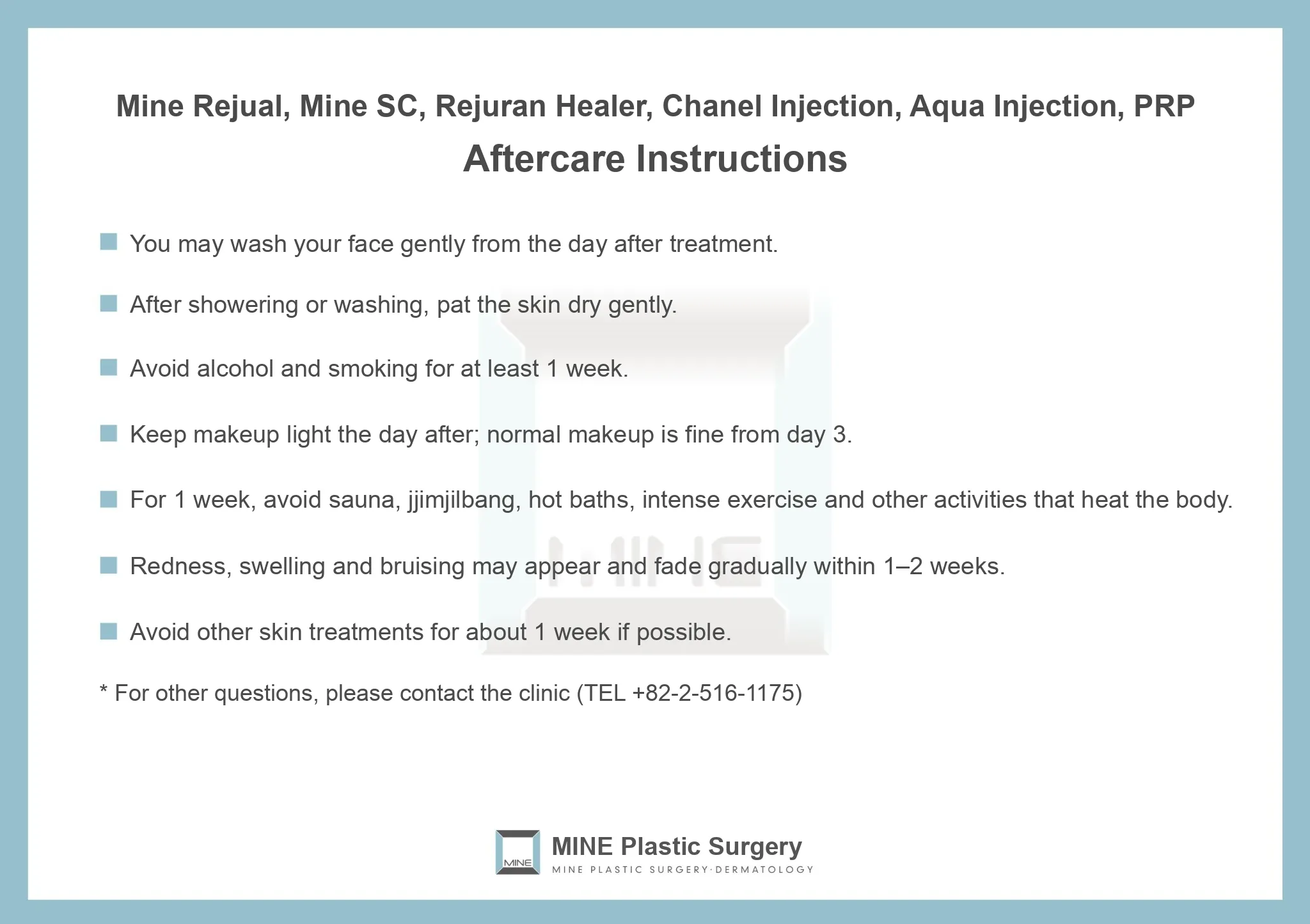
These points follow the aftercare sheet we give patients at our clinic:
- You may wash your face gently from the day after treatment.
- After washing, pat your skin dry rather than rubbing.
- Avoid alcohol and smoking for at least 1 week.
- Keep makeup light the day after; normal makeup is fine from day 3.
- For 1 week, avoid saunas, jjimjilbang (Korean bathhouses with hot rooms), hot baths, intense exercise and anything else that heats the body.
- Avoid other skin treatments for about 1 week if possible.
The reason behind these rules is simple: heat, alcohol and friction all increase blood flow and irritation in freshly treated skin.
You can also lower your risk of bruising before your appointment. Medical textbooks note that avoiding aspirin, NSAIDs (anti-inflammatory painkillers such as ibuprofen) and vitamin E for about 10 days before injections can lower the chance of bruising. Please tell your doctor about these, but never stop a prescribed medication without your doctor’s advice.
Dr. Lee’s Key Point: Cool, gentle and hands-off is the rule for the first days. Avoiding heat and alcohol for a week helps bumps, swelling and bruising settle smoothly.
Dr. Lee’s Advice Before Your Rejuran Treatment
The question I hear most in consultations is, “If I don’t get bumps, does that mean it didn’t work?” It is a very common misunderstanding, so let me address it alongside the things you should tell your doctor first.
Tell Your Doctor About These First
- Salmon or fish allergy: Rejuran’s PN is derived from salmon DNA.
- Pregnancy or breastfeeding.
- Medications that affect bleeding: such as blood thinners, antiplatelet drugs, aspirin or painkillers you take regularly.
- Active skin infection in the treatment area: textbooks advise postponing injections until an infection has cleared.
This information is the starting point for a safe treatment plan, so please share it even if it seems minor.
Bumps Don’t Measure Results
You cannot judge results by whether Rejuran bumps appear. Injection depth, volume and your skin all change how visible they are. The better measure is how your skin looks and feels over the following weeks.
Every patient’s skin concerns are different. For some, Rejuran is a good fit; for others, a different regenerative treatment may suit them better. That is why I always recommend a diagnosis tailored to your skin rather than a one-size-fits-all plan. You can read more about Rejuran treatment at MINE.
Dr. Lee’s Key Point: What matters is not whether you get bumps, but whether the treatment suits your skin concern. If you’re unsure, an in-person consultation is the clearest way to decide.
Rejuran Bumps FAQ
How long do Rejuran bumps last?
Rejuran bumps are usually absorbed and flatten within a few days. The exact timing depends on the amount injected, the area and your skin. Any redness, swelling or bruising can take 1-2 weeks to fade completely.
Are Rejuran bumps a side effect?
Usually not. They are a normal reaction to product placed in the dermis. However, pain, warmth or swelling that lasts several days, pus, fever or firm nodules are not typical and should be checked by a doctor.
What does it mean if I don’t get bumps after Rejuran?
It is not a sign of failure. Bump visibility depends on injection depth, volume and skin type. Judge your results over 2-4 weeks rather than by how your skin looks on day one.
How can I make Rejuran bumps go down faster?
Use a gentle cold compress on the day of treatment and avoid rubbing the area. Skip saunas, hot baths, alcohol and intense exercise for about a week. The bumps will settle on their own as the product is absorbed.
Is “Rejuran Embo” a different product from Rejuran Healer?
No. “Embo” describes the raised bump reaction after injection, not a product line. The official Rejuran products include Healer, HB and I (for the eye area), among others.
Not Sure About Your Bumps? Talk to MINE Clinic
If you are planning Rejuran in Seoul or have questions about how your skin is healing, our team is happy to help. International patients can reach us through the online consultation form or WhatsApp, or call +82-2-516-1175. We’ll review your concerns and explain whether Rejuran, or another option, fits your skin.
※ This content is for informational purposes only and does not replace professional medical advice, diagnosis, or treatment. Individual results may vary, and side effects may occur. Please consult with a board-certified plastic surgeon for personalized advice.