EN


Parotid vs submandibular Botox is the choice between injecting botulinum toxin into the parotid gland, which sits below the ear beside the jaw angle, and the submandibular gland, which sits under the jawline. Both glands can widen the lower face, but they do it in different places and need different injection depths.
Many of the patients I see say something like this: “I lost weight, but my lower face still looks wide,” or “I had masseter Botox and nothing changed under my jaw.” When the cause is an enlarged salivary gland, the next question is which one — and that answer shapes the whole treatment.
In this article I compare the two treatments side by side: where each gland shows on your face, how we tell them apart, when both are treated in one visit, how the injection technique differs, and how the risks differ. I’m Dr. Lee Sung-wook, a board-certified plastic surgeon in Seoul, and this is how I explain it in consultation.
Parotid vs Submandibular Botox: What Is the Difference?
Parotid vs submandibular Botox is a comparison of two injection targets: the parotid gland at the side of the lower face and the submandibular gland under the jaw. In both cases, botulinum toxin calms the gland’s activity, and over the following weeks the gland gradually becomes smaller. There is no incision and no scar. The differences come down to four things: the location, the depth of the injection, the structures we have to protect, and the side effects to watch for.
The 4 essential differences at a glance:
- Where the fullness shows — the parotid widens the jaw angle below the ear; the submandibular gland bulges under the jawline.
- Injection depth — the parotid is treated relatively close to the skin; the submandibular gland lies deeper, inside deep fascia.
- Structures to protect — facial nerve branches around the parotid; the marginal mandibular branch, the lingual and hypoglossal nerves, the facial vessels and the mylohyoid muscle around the submandibular gland.
- The side effect you are most likely to notice — brief chewing fatigue after parotid Botox; dry mouth (and, rarely, swallowing discomfort) after submandibular Botox.
Where Each Gland Sits on Your Face
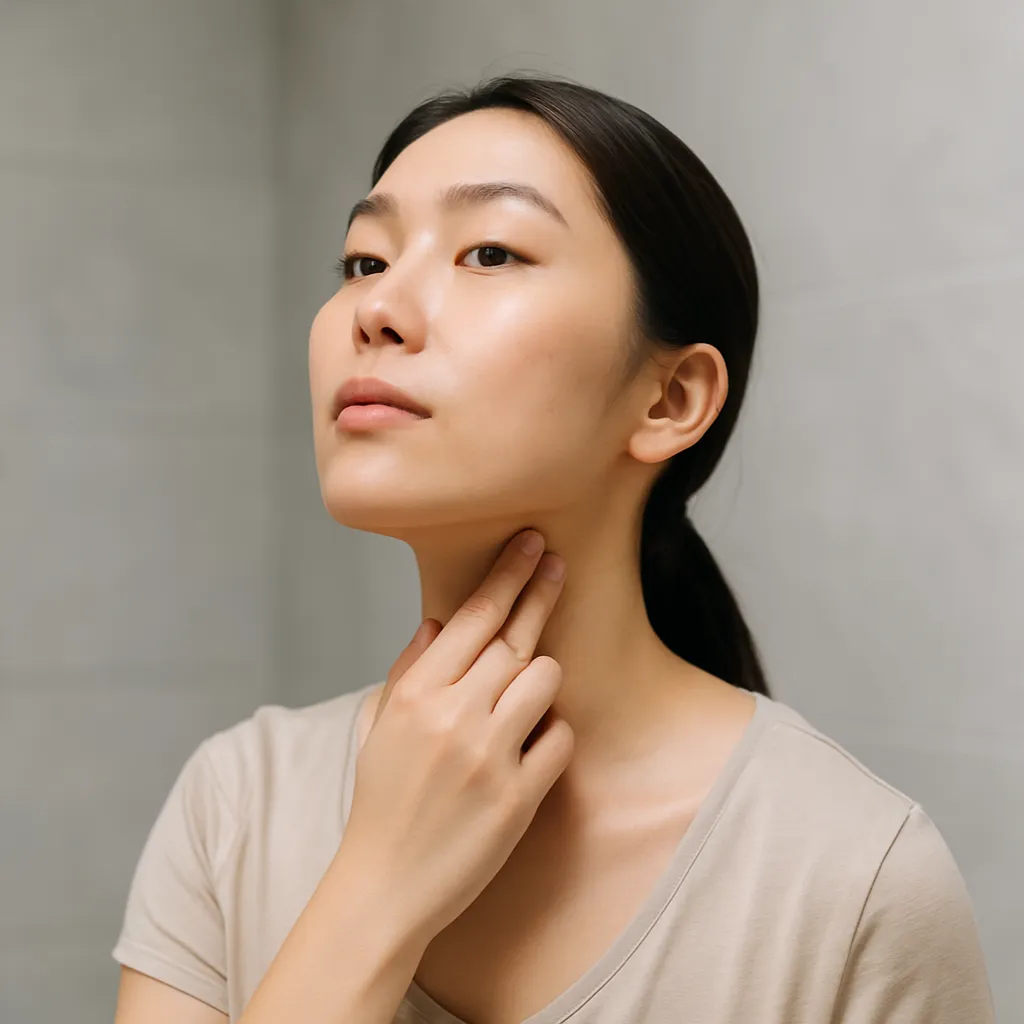
The parotid gland is the largest salivary gland. There is one on each side, in front of and below the ear, spreading down beside the angle of the jaw. When it is enlarged, the area just below the ear looks full, and the jaw can look square or heavy even if the bone itself is not wide.
The submandibular gland is smaller and sits on the inner side of the lower jawbone, under the jawline. When it is enlarged, the area under the jaw bulges, and the border between the jaw and the neck becomes blurred. It is often mistaken for a double chin, especially when the fullness stays even after weight loss.
Side-by-Side Comparison Table
Here is the parotid vs submandibular Botox comparison at a glance.
| Feature | Parotid Botox | Submandibular Botox |
|---|---|---|
| Location | In front of and below the ear, beside the jaw angle | Under the jawline, on the inner side of the lower jaw |
| How enlargement looks | Fullness at the jaw angle; can look like a square jaw | Bulge under the jaw; can look like a double chin |
| Injection depth | Relatively shallow, just under the skin | Deeper, inside a layer of deep fascia (a tough sheet of connective tissue) |
| Main structures to protect | Branches of the facial nerve | Marginal mandibular branch of the facial nerve, lingual and hypoglossal nerves, facial artery and vein, and the mylohyoid muscle |
| Most noticeable side effect | Brief chewing fatigue if toxin spreads into the masseter | Dry mouth; rarely, swallowing discomfort |
Which Gland Is Making Your Jaw Look Wider? How Diagnosis Works
Every parotid vs submandibular Botox decision starts with one question: which gland? In my clinical experience, many patients arrive unable to tell the two glands apart — and that is completely normal. So before anything else, I examine you to confirm which gland is enlarged, or whether both are. A wide lower face can come from bone (the jaw angle), muscle (the masseter), fat, an enlarged gland, or a mix of these. Salivary gland Botox only makes sense once a gland is confirmed as the cause.
Signs That Point to the Parotid
- Fullness directly below the ear that runs down to the jaw angle
- A soft, diffuse swelling behind the back edge of the jawbone rather than a firm muscle bulge
- The area does not firm up much when you clench your teeth
Signs That Point to the Submandibular Gland
- A bulge under the jawline, closer to the neck than to the ear
- The jaw-to-neck line looks soft even though you are not carrying much fat elsewhere
- Fullness under the jaw that stays the same after weight loss
Palpation and Ultrasound: Ruling Out Masseter, Fat and Bone
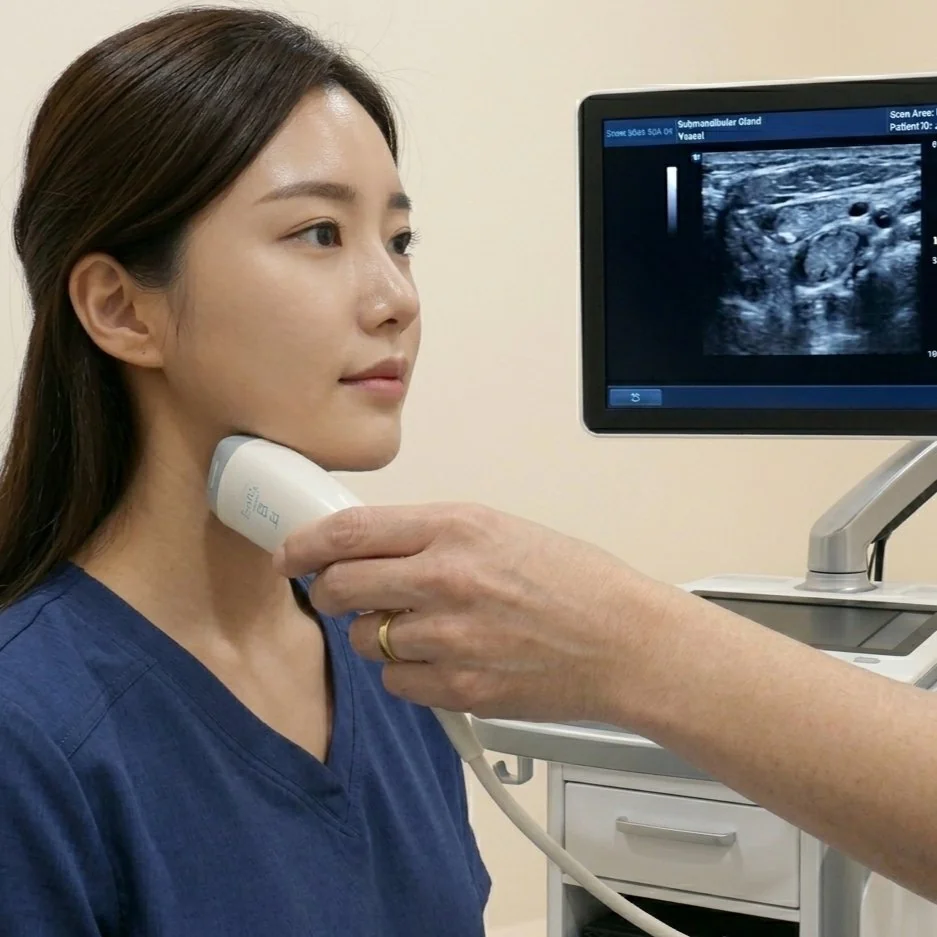
I start with palpation (examining by touch) while the patient relaxes and then clenches. The masseter hardens when you bite; a gland does not. Fat feels softer and moves with the skin. Ultrasound then shows the size and position of each gland in real time, so we can see whether the parotid, the submandibular gland, or both are actually enlarged. If you want more detail on telling the parotid apart from the chewing muscle, I cover parotid gland Botox versus masseter Botox in a separate article.
When Parotid and Submandibular Botox Are Done Together
Parotid vs submandibular Botox is not always an either-or choice. Some patients have enlargement in both glands, and treating only one leaves part of the contour unchanged. The parotid shapes the side of the lower face, while the submandibular gland shapes the line under the jaw. When both are enlarged, treating both brings the two areas into balance.
Why the Parotid Can Show Up After Masseter Botox
This is one of the most common surprises. Aesthetic dermatology textbooks describe parotid Botox as an add-on to masseter Botox: once the masseter muscle shrinks, a prominent parotid gland can become more visible as a diffuse swelling behind the back edge of the jaw. In plain terms, the muscle was hiding the gland. So if your jaw angle still looks full after masseter Botox, the parotid is one of the first things I check.
Planning the Dose for Two Glands in One Visit
Sometimes the answer to parotid vs submandibular Botox is simply both: the two glands can be treated on the same day. The total dose and the amount for each site are decided at the examination, based on gland size and whether the masseter is being treated too. Realistic expectations matter here as well: if your lower-face width comes from a mix of gland and muscle, gland injections alone will not change everything, and I’ll tell you that before we start.
Injection Technique: Shallow Parotid vs Deep Submandibular
The biggest practical difference in parotid vs submandibular Botox is depth. One gland lies close to the surface; the other sits deep under the jaw, wrapped in fascia and close to the floor of the mouth.
How the Parotid Is Injected
The parotid lies relatively close to the skin, so the toxin is spread across several points within the gland rather than placed in one spot. A salivary gland surgery textbook describes injecting the parotid at about 4 to 10 points, depending on gland size, preferably under ultrasound guidance. Because branches of the facial nerve run through the parotid, the injection pattern follows the gland’s anatomy closely.
How the Submandibular Gland Is Injected
The submandibular gland lies deeper and is surrounded by deep fascia. Surgical textbooks note that the mylohyoid muscle (the muscle that forms the floor of the mouth) sits right next to the gland, so the toxin must be placed at a precise depth to avoid affecting swallowing. This is why I describe the submandibular side as the more delicate of the two. A 2024 ultrasound study in Dermatologic Surgery examined the submandibular gland specifically to guide botulinum toxin injection, for exactly this reason.
Step by Step at MINE
- Examination and differential diagnosis — palpation and, when needed, ultrasound to confirm which gland is enlarged and to rule out masseter, fat and bone.
- Comfort — numbing cream or cooling on the injection area.
- Gland-specific injection — the number of points and the dose are set individually for each gland.
- Aftercare guidance — what to do and avoid in the first days, plus a follow-up plan.
The appointment takes about 15 minutes, including the assessment, and most patients return to normal activities the same day.
Parotid vs Submandibular Botox Safety: How the Risks Differ
Both treatments are minimally invasive, but their safety profiles are not identical, because the neighboring structures are different.
Structures to Protect Around Each Gland
Parotid: the facial nerve branches pass through and around the gland. These nerves control facial expression, which is why the injection points follow the gland’s anatomy.
Submandibular: the key structures are the marginal mandibular branch of the facial nerve (which moves the lower lip), the lingual nerve (sensation of the tongue), the hypoglossal nerve (movement of the tongue), and the facial artery and vein. The mylohyoid muscle, which helps you swallow, is also close by. Botulinum toxin rarely causes vascular problems, but accurate depth still matters for every one of these structures.
Side Effects Compared: Dry Mouth, Chewing, Swallowing
- Dry mouth: the submandibular gland produces roughly two-thirds of resting saliva, so dry mouth is usually more noticeable after submandibular Botox than after parotid Botox. The other salivary glands keep working, so it is partial and temporary.
- Chewing fatigue: this is more closely linked to parotid Botox. Textbooks note that the parotid can partly overlap the masseter, so toxin spreading into that muscle can make chewing feel weaker for a while. It is a muscle effect, not a loss of gland function.
- Swallowing discomfort: specific to submandibular Botox and rare, related to the nearby mylohyoid muscle.
- Lower-lip or smile asymmetry: a rare effect of submandibular Botox that can occur if the marginal mandibular branch is affected.
- Common to both: redness or mild swelling usually settles within 1 to 3 days; bruising can take 1 to 2 weeks to fade; the area may feel tender for a few days.
Official drug information, such as the MedlinePlus botulinum toxin safety information, also lists difficulty swallowing as a warning sign to report right away. For a closer look at dry mouth and swallowing after the under-jaw injection, see why submandibular gland Botox needs extra care.
Before either treatment, tell your doctor if you take blood thinners, have ever had a reaction to botulinum toxin, or are pregnant or breastfeeding — botulinum toxin is not given during pregnancy or while breastfeeding.
Parotid vs Submandibular Botox Recovery: What to Expect
Recovery looks much the same for both glands. You can go back to your routine on the same day, and any swelling usually settles within 1 to 3 days. Salivary gland literature reports a clear drop in saliva output within about 2 weeks of injection, and visible slimming usually begins around 2 to 4 weeks. The change is gradual, so it looks natural rather than sudden.
The duration of the effect varies from person to person, and repeat sessions maintain the result. I explain how long the results typically last in a dedicated article. I usually see patients again at about 4 to 6 weeks to check the result. In the first week, avoid massaging the area and go easy on very hard or chewy foods, so the toxin stays where it was placed.
Does Treating One Gland or Both Change the Cost?
Yes, it can. Whether we treat the parotid only, the submandibular gland only, or both changes the plan, and with it the cost. Gland size affects the number of units needed, and the product used also makes a difference. The surgeon’s experience matters too, particularly for the deeper submandibular injection. Because these factors are only clear after an examination, a quote without a diagnosis is rarely accurate. You can read more about how salivary gland Botox cost is calculated before your visit.
Frequently Asked Questions About Parotid vs Submandibular Botox
How do I know if I need parotid or submandibular Botox?
Look at where the fullness sits. Fullness below the ear along the jaw angle points to the parotid, while a bulge under the jawline points to the submandibular gland. An examination and ultrasound confirm it, and sometimes both glands are enlarged.
Can parotid and submandibular Botox be done on the same day?
Yes. When both glands are enlarged, they can be treated in one visit. The total dose is split between the two areas based on the examination.
Why is submandibular Botox considered more delicate than parotid Botox?
The submandibular gland sits deeper, inside deep fascia, close to the mylohyoid muscle that helps you swallow. The marginal mandibular branch of the facial nerve, the lingual and hypoglossal nerves, and the facial vessels are also nearby, so precise depth is essential.
Which causes more dry mouth, parotid or submandibular Botox?
Usually submandibular Botox. That gland produces roughly two-thirds of resting saliva, so dry mouth is more noticeable after it is treated. The dryness is only partial, since the other glands keep working, and it fades over time.
What happens if only one of the two glands is treated?
The contour changes only in the treated area. If fullness remains elsewhere, it may come from the other gland, the masseter or fat, and I reassess it at the follow-up visit.
Find Out Which Gland Is Behind Your Jawline
Making the right parotid vs submandibular Botox call starts with an accurate diagnosis, not guesswork in the mirror. If you are planning a trip to Seoul, you can send front and side photos of your jawline with an online consultation request, message us on WhatsApp, or call +82-2-516-1175 for an initial assessment. The final plan is confirmed in person after examination. Learn more about salivary gland reduction at MINE.
※ This content is for informational purposes only and does not replace professional medical advice, diagnosis, or treatment. Individual results may vary, and side effects may occur. Please consult with a board-certified plastic surgeon for personalized advice.
Written and medically reviewed by: Dr. Lee Sung-wook, board-certified plastic surgeon (Korea), MINE Plastic Surgery & Dermatology, Seoul · Last reviewed: November 2026