EN
EN


Table of contents
Understanding Jawline Sagging After Surgery
Jawline sagging after contouring surgery is the gradual loosening and downward drift of skin and soft tissue along the lower face that can appear once the jawbone has been reshaped or reduced. In simple terms, the bone underneath acts like a frame for a tent: when part of that frame is trimmed away during contouring, the “fabric” of skin, fat, and muscle on top has to settle onto a smaller shape. If it does not tighten down neatly, the lower face can look loose or heavy instead of sharper.
Jawline contouring has become a popular way to create a slimmer, more defined lower face. The goal is a cleaner profile and a crisper jaw angle. For most people the result is exactly that. But for some, a degree of jawline sagging after contouring surgery shows up later, and it can quietly undercut an otherwise good outcome. Knowing why this happens makes it much easier to prevent and, when needed, to correct.
Post-surgical sagging is not all-or-nothing. It ranges from barely visible softening that only the patient notices to clearer looseness that benefits from treatment. How severe it becomes depends on several things working together: your age, your genetics, how elastic your skin is, and the surgical technique used. Jawline sagging is one of the more common concerns patients raise after facial contouring, which is exactly why understanding these factors is worth your time before and after any procedure.
What Causes Jawline Sagging Following Contouring Procedures?
Several anatomical and surgical factors work together to produce jawline sagging after facial contouring. They rarely act alone; usually two or three combine. Here are the main ones, explained plainly.
1. Bone Structure Modification and Support Loss
Jawline contouring usually involves mandibular angle reduction (shaving the back corner of the jaw) or chin reshaping, both of which remove bone. The mandible, or jawbone, is the scaffold that holds up everything on the lower face. Trim that scaffold and the overlying tissue has less to rest on, which can lead to:
- Less structural support for the skin and fat sitting on top of the bone
- A shifted balance of weight across the lower face
- Weakened anchor points where the face’s retaining ligaments and muscles attach
That last point matters more than most people expect. The face is held in place by a network of retaining ligaments and a sheet of connective tissue surgeons call the SMAS (the superficial musculo-aponeurotic system). Plastic surgery anatomy texts describe these ligaments as the true “support cables” of the face: when they loosen with age, the fat and skin they were holding slide downward, deepening folds and forming jowls. Bone reshaping can disturb the same anchor points. If a large portion of the jaw angle is removed and the soft tissue is not re-supported, the skin may not redrape cleanly onto the new, smaller foundation, and jawline sagging becomes more likely.

2. Skin Elasticity and Adaptation Challenges
After the bone is reshaped, the skin has to shrink and conform to the new jaw shape. How well it does this is one of the biggest predictors of whether jawline sagging appears. Skin behaves a bit like an elastic band: young, well-hydrated skin snaps back, while older or sun-damaged skin stays stretched. The factors that affect this include:
- Collagen and elastin levels, the proteins that give skin its bounce, which naturally fall with age
- Skin laxity that was already present before surgery
- Genetics, which influence skin thickness and how well it heals
- Lifestyle factors such as sun exposure and smoking, both of which break down collagen
Patients with firm, elastic skin usually see very little sagging because their skin tightens neatly around the new bone shape. People whose skin has lost elasticity, which is more common in older patients or those with significant sun damage, are the ones who tend to notice looser results. This is why a surgeon assesses your skin quality, not just your bone shape, before recommending a contouring plan.
3. Fat Redistribution and Volume Changes
Facial fat is not one solid layer; it sits in separate pockets, or compartments, that give the face its youthful fullness and quietly support the structures above them. Contouring surgery, and the natural aging that follows, can unsettle this arrangement:
- Fat compartments can drift downward with gravity once their support changes
- Volume can be lost in areas that were quietly propping up the jawline
- Fat pads can shift unevenly, creating bumps or hollows along the contour
- Jowls can become more obvious if fat slides toward the lower jaw
Surgical anatomy references note that in the aging face, fat becomes less tightly packed and contours grow more abrupt, especially near the anterior jowl. Heavy bone reduction without a plan for managing this soft tissue can tip that balance and contribute to jawline sagging.
4. Muscular Changes and Weakness
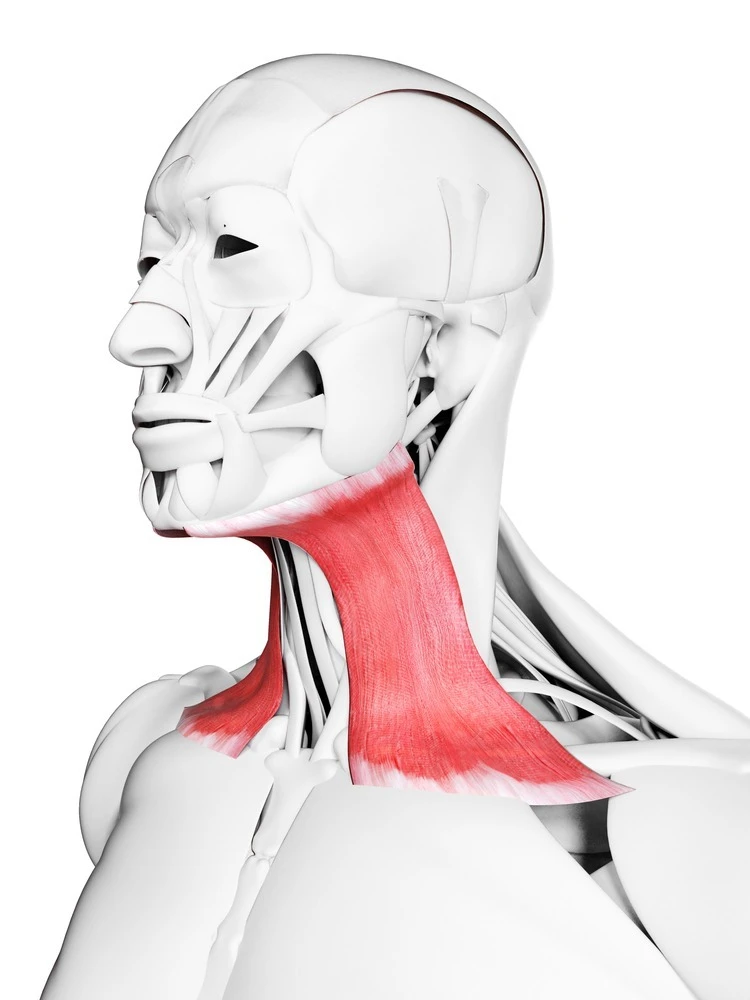
The muscles of the lower face and neck, especially the platysma (a broad sheet of muscle running down the neck), the masseter (the chewing muscle), and the mentalis (the chin muscle), all help define the jawline. Surgery can affect them in several ways:
- Temporary muscle weakness during recovery while tissues heal
- Changed attachment points after the bone is reshaped
- Reduced muscle tone from temporary nerve irritation, which usually recovers
- Shifts in how the muscles move, which can subtly change the lower face
The platysma in particular acts like a hammock under the jaw and neck. When it loses tone, the lower face loses one of its supports, and jawline sagging can look more pronounced. Gentle, surgeon-approved muscle rehabilitation during recovery is often overlooked, yet it can make a real difference.
How Different Contouring Procedures Affect Jawline Stability
Not every contouring procedure carries the same risk. The amount of bone removed, the area treated, and how the soft tissue is handled all change the odds of jawline sagging. Here is how the most common procedures compare.
V-Line Surgery and Jawline Vulnerability
V-line surgery, popular for creating a slimmer, more tapered chin and jaw, involves significant mandibular angle reduction and chin reshaping. Because it changes a lot of bone, it carries particular risk for jawline sagging through:
- Removing a substantial amount of bone at the angles of the jaw
- Disturbing muscle attachments at the jaw angle
- Changing how tension is distributed across the lower face
- Potentially loosening the deep retaining ligaments that hold the face up
In general, the more bone that is removed and the more the jaw-angle support is reduced, the greater the chance that the skin will struggle to redrape, which is why conservative, support-preserving planning matters so much with V-line procedures.
Chin Reduction Surgery: Balance and Support Considerations
Chin reduction reshapes the front projection of the lower face. It can contribute to jawline sagging by:
- Reducing the forward support the chin gives to the lower face
- Disturbing the mentalis muscle, which can affect the chin and lower lip position
- Changing the chin-to-neck angle, which can create the appearance of looseness
- Altering lower-face proportions in a way that highlights any pre-existing laxity
The chin is a quiet anchor for the soft tissue around it. Reducing it without a plan for the overlying skin and muscle can lead to unexpected looseness, particularly in the small dip just beside the chin known as the prejowl area.
Buccal Fat Removal: Mid-Face Support Implications
Buccal fat removal targets the cheeks rather than the jaw, but it can still influence how the jawline looks by:
- Reducing mid-face volume that helps support the structures below it
- Creating a hollow look that can make any jawline irregularity stand out
- Speeding up the appearance of age-related volume loss
- Upsetting the balance between the upper, middle, and lower thirds of the face
Many facial surgeons now caution that taking too much buccal fat, especially in patients who already have thin faces, can accelerate facial aging and make jawline sagging more noticeable over time.
Can Jawline Sagging After Surgery Be Prevented?
It cannot always be prevented completely, because skin quality and aging are partly out of anyone’s control. But the risk of jawline sagging can be meaningfully reduced with good planning, the right surgical technique, and disciplined aftercare. Prevention happens in three stages.
Pre-Surgical Assessments and Planning
Preventing jawline sagging starts before the operating room, with a careful look at your individual anatomy:
- Facial anatomy analysis to flag features that raise the risk of sagging
- A skin elasticity check to gauge how well the skin will redrape
- 3D imaging and simulation to anticipate how tissue will settle on the new shape
- Age-appropriate planning that respects how the face naturally changes over time
Surgeons at Mineclinic use advanced imaging to predict how soft tissue will adapt to structural changes, which allows for more precise, support-conscious planning rather than simply removing as much bone as possible.
Surgical Technique Modifications
The technique itself can be adapted to protect the lower face from sagging:
- Conservative bone reduction that keeps enough structure to support the tissue above
- SMAS plication or suspension, which tightens the deep support layer of the face
- Skin tightening at the same time, when the surgeon judges it appropriate
- Preserving or repositioning fat instead of simply removing it
- Repositioning the deeper tissue layers so support lasts, not just the skin surface
This reflects a core lesson from facelift surgery: tightening skin alone does not hold, because the heavier tissue underneath is what descends. Repositioning the SMAS and respecting the retaining ligaments is what gives a durable result. According to the American Society of Plastic Surgeons, pairing bone work with supportive soft-tissue techniques helps reduce post-surgical sagging.
Post-Surgical Care and Support
Good aftercare protects the result while tissue heals and settles:
- Compression garments to support the tissues during early healing
- Early, gentle non-surgical tightening when your surgeon recommends it
- Surgeon-guided facial exercises to help supporting muscles recover tone
- A collagen-supporting skincare routine to keep skin quality strong
- Sun protection, since UV damage breaks down the collagen that keeps skin firm
How Long Does It Take for Jawline Sagging to Appear After Surgery?
Jawline sagging can show up on different timelines, and knowing which window you are in helps you and your surgeon respond appropriately:
- Right away (first 1–2 weeks): usually swelling or temporary muscle weakness, not true sagging
- Early (1–3 months): may point to how the tissue is adapting to the new shape
- Delayed (6–12 months): can reflect longer-term healing and structural settling
- Late (years later): typically natural aging, sometimes made more visible by the earlier surgery
Most patients who develop noticeable jawline sagging see it within the first several months after surgery. That is exactly why follow-up appointments during the first half-year are so valuable: early changes are the easiest to treat.
Treatment Options for Post-Surgical Jawline Sagging
If jawline sagging does appear, there is a full ladder of options, from non-invasive treatments to surgery. The right choice depends on how loose the tissue is and what is driving it.
Surgical Correction Approaches
For more pronounced jawline sagging, surgery usually gives the most definitive correction:
- Lower face and neck lift procedures to reposition tissue that has descended
- Submental liposuction to remove excess fat that makes the jawline look heavy
- Platysma tightening to firm the neck muscle that supports the jawline
- Chin implants to restore projection and support when the chin was over-reduced
- Fat grafting to replace lost volume in key support areas
These address different parts of the problem and are often combined for a comprehensive correction.

Non-Surgical Treatment Options
For mild to moderate looseness, non-surgical treatments can deliver real improvement with little downtime:
- Energy-based skin tightening such as Ultherapy or radiofrequency, which stimulate collagen deep in the skin
- Dermal fillers to restore volume and add support along the jawline
- Thread lifting to gently reposition tissue for a temporary lift
- Muscle-relaxing injections to soften the muscle pull that worsens jowls
- Collagen-stimulating treatments such as microneedling with radiofrequency
The American Society of Plastic Surgeons notes that non-surgical options generally give more subtle improvement than surgery, but with far less recovery time, making them a sensible first step for early or mild jawline sagging.
Combination Therapy Approaches
For the best results, specialists at Mineclinic often recommend combining approaches rather than relying on a single treatment:
- Staged treatment plans that tackle different causes of sagging in sequence
- Maintenance protocols to protect results over the long term
- Personalized skincare to support overall skin health
- Periodic touch-up treatments to keep the jawline looking its best
When Should You Seek Professional Help for Jawline Sagging?
Signs That Require Attention
Some signs mean it is worth having jawline sagging assessed by a professional rather than waiting:
- Uneven sagging that looks clearly worse on one side
- Looseness that is getting worse quickly over a short period
- Functional problems such as difficulty chewing or speaking
- Significant distress about the change in your appearance
- Pain or discomfort along the jawline
Choosing the Right Specialist
Correcting jawline sagging after surgery calls for specific expertise:
- Board-certified facial plastic surgeons experienced in revision procedures
- Specialists in non-surgical rejuvenation for milder cases
- A surgeon who understands your original procedure and the anatomical changes it made
Mineclinic offers thorough evaluations by specialists experienced in managing post-surgical concerns, so patients get care matched to their specific situation rather than a one-size-fits-all fix.
Conclusion and Next Steps
Jawline sagging after contouring surgery comes from a mix of anatomical change, surgical technique, and your own healing. It is not always fully preventable, but understanding the causes helps you choose your surgeon and procedure wisely and act early if looseness appears. Talk with your surgeon about aftercare and lifestyle steps that lower your risk, and remember that gentle, well-timed treatment usually beats waiting.
If you are considering jawline contouring or already noticing jawline sagging after a procedure, the specialists at Mineclinic can offer personalized guidance and treatment options matched to your facial anatomy and goals. Facial contouring keeps advancing, and working with knowledgeable professionals remains the best way to achieve and keep a clean, well-supported jawline.
Medical disclaimer: This article is for general educational purposes only and is not a substitute for professional medical advice, diagnosis, or treatment. Surgical and non-surgical outcomes vary from person to person, and every procedure carries potential risks. Always consult a qualified, board-certified specialist about your individual situation before making any treatment decision.
Have questions about jawline sagging after contouring surgery? Contact the specialists at Mineclinic for a personalized consultation.
※ This content is for informational purposes only and does not replace professional medical advice, diagnosis, or treatment. Individual results may vary, and side effects may occur. Please consult with a board-certified plastic surgeon for personalized advice.