EN
EN


If you have ever researched anti-wrinkle injections, you have almost certainly run into the Xeomin vs Botox question. Both are well-established treatments for softening expression lines, yet they are talked about as if they were rivals. The truth is more interesting — and more useful when you are deciding what is right for your face.
Table of Contents
- What Is Xeomin? (and How It Differs From Botox)
- How Xeomin Works: The Science of a Temporary Effect
- Xeomin vs Botox: Does the Purified Formula Reduce Tolerance?
- Xeomin vs Botox: How Long Does Each One Last?
- What Xeomin Treats: FDA-Approved Uses
- Xeomin Side Effects & Who Should Be Cautious
- Frequently Asked Questions About Xeomin
At MINE Plastic Surgery & Dermatology in Seoul, our patients often ask whether the “purified” toxin really makes a meaningful difference. This Xeomin vs Botox guide walks through how the treatment actually works, what the science says about results, duration, and tolerance, and where the honest limits of each product lie — all explained in plain language, reviewed by a board-certified plastic surgeon.
What Is Xeomin? (and How It Differs From Botox)
Xeomin (incobotulinumtoxinA) is a type-A botulinum toxin made by Merz Aesthetics in Germany that relaxes muscles to soften wrinkles — the same core action as Botox, but with one key formulation difference. That difference is what most of the Xeomin vs Botox debate comes down to.
The simplest way into the Xeomin vs Botox question is to see what the two share. Botox and Xeomin belong to the same family (botulinum toxin type A) and do the same job: they relax the small muscles that crease the skin when you frown, raise your brows, or squint, which softens the dynamic wrinkles those movements create. Where they differ is purity. Xeomin is refined through a double-filtration step (Merz calls it the XTRACT process) that strips away the surrounding “complexing” or accessory proteins, leaving behind only the roughly 150 kDa active neurotoxin. Because nothing wraps around the active molecule, it is often described as the “naked toxin.” Botox carries that same active toxin plus the extra accessory proteins.
It is worth being precise about what this is — and is not. The two products are not different drug classes; they are different formulations of the same type of toxin, used at a clinical 1:1 dose ratio in practice. (Units are not an official interchangeable measure — each product is measured by its own laboratory method, so the 1:1 ratio is a clinical convention, not a regulatory equivalence.) For readers who like the technical names, Xeomin’s generic name is incobotulinumtoxinA and Botox’s is onabotulinumtoxinA.
| Feature | Xeomin | Botox |
|---|---|---|
| Generic name | incobotulinumtoxinA | onabotulinumtoxinA |
| Maker | Merz Aesthetics (Germany) | AbbVie / Allergan (USA) |
| Formulation | Purified “naked toxin” — accessory proteins removed | Active toxin + accessory proteins |
| Active component | ~150 kDa neurotoxin only | ~150 kDa neurotoxin + complex |
| Typical onset | ~3–5 days | ~3–5 days |
| Typical duration | ~3–4 months | ~3–4 months |
One simple, citation-friendly takeaway: Xeomin contains only the ~150 kDa active neurotoxin after the surrounding complexing proteins are filtered out. If you are weighing Xeomin against a general Botox treatment at MINE, that purity is the single defining distinction.

How Xeomin Works: The Science of a Temporary Effect
To understand why Xeomin softens wrinkles — and why the effect fades — it helps to look at what happens at the tiny gap where a nerve meets a muscle. This is also where the Xeomin vs Botox story is really the same story, because both products act on the identical biological switch.
Blocking the muscle’s “go” signal
Normally, a nerve tells a muscle to contract by releasing a chemical messenger called acetylcholine (the chemical that tells muscles to move). To release that messenger, the nerve relies on a small “docking” protein called SNAP-25 (a docking protein the nerve uses to release its signal). Botulinum toxin type A works by cutting that SNAP-25 protein. With the docking protein out of action, the nerve can no longer release its signal, the muscle relaxes, and the wrinkle sitting on top of it eases.
Put in one sentence for easy reference: botulinum toxin type A works by cleaving the SNAP-25 protein, temporarily blocking acetylcholine release at the neuromuscular junction. This mechanism is the same whether the product is Xeomin or Botox — it is described in dermatology and plastic-surgery textbooks and in FDA prescribing information alike.
Why the effect wears off — and why repeat treatment is needed
The keyword here is temporary, and it applies equally to both sides of the Xeomin vs Botox comparison. As described in plastic-surgery and dermatology references, the affected nerve endings respond by sprouting tiny new branches that form working connections, so signaling slowly resumes. Over the following weeks the original nerve recovers its function and those temporary sprouts shrink away. The net result is that movement — and the wrinkle — gradually return. That is precisely why this treatment, exactly like Botox, needs to be repeated to maintain the result rather than being a one-time fix.
On timing: cosmetic muscle relaxation typically begins 2 to 3 days after injection and can reach full effect by 8 to 10 days. So if you do not see the full result the morning after, that is completely normal — the toxin needs time to take hold.

Xeomin vs Botox: Does the Purified Formula Reduce Tolerance?
This is the part of the Xeomin vs Botox conversation that attracts the most claims — and the most exaggeration. When people compare Xeomin vs Botox on “tolerance,” they are usually asking about antibodies, so let us keep it grounded in what the evidence actually supports.
Lower protein load: ~0.6 ng vs ~5 ng per 100 units
The numbers are the place to start. Xeomin contains about 0.6 ng of protein per 100 units, versus roughly 5 ng for Botox. Because Xeomin’s accessory proteins have been filtered out, the total amount of foreign protein delivered with each treatment is lower.
Why does that matter? Botulinum toxin is a foreign protein, and the immune system can sometimes respond to foreign proteins by making “neutralizing antibodies” — antibodies that bind the toxin and reduce how well future treatments work. In theory, delivering less foreign protein could give the immune system less to react to. As reported in clinical studies, this lower foreign-protein load may reduce the risk of forming neutralizing antibodies over repeated treatments. In a phase-III glabellar-line trial, Sattler and colleagues found that this complexing-protein-free formulation was non-inferior to another botulinum toxin type A, supporting both the purified-formula and the equivalent-efficacy picture.
What “reduced antibody risk” does and does not mean
Here is the honest, important balance. Dermatology textbooks are clear that botulinum toxin is an immunogenic protein capable of producing both neutralizing and non-neutralizing antibodies. In other words, antibody formation is rare but never zero for any botulinum toxin product, Xeomin included. Reassuringly, the rates reported in studies are low: neutralizing-antibody positivity was approximately 0.3% in a clinical pool of about 2,649 patients, and long-term repeated-use studies report low antigenicity.
So the responsible way to read the Xeomin vs Botox tolerance question is as a possible, study-reported advantage in the antibody-risk profile — not a guarantee, and not a reason to say Xeomin is “better” than Botox overall. The two are best understood as a formulation difference with a potential benefit, which is exactly how your physician should frame it during a consultation.

Xeomin vs Botox: How Long Does Each One Last?
One of the most common searches is simply how long does Xeomin last. The short answer to the Xeomin vs Botox duration question: about the same as Botox.
In head-to-head studies on glabellar (frown) lines and other facial wrinkles, the Xeomin vs Botox results are remarkably close — the two products perform comparably. To be clear, in head-to-head glabellar-line studies, Xeomin produced results and satisfaction equivalent to Botox. It is not a stronger or longer-lasting toxin — it is an equally effective one with a cleaner formulation.
On the practical timeline, Xeomin results typically appear within 3 to 5 days and last about 3 to 4 months, with some reports of slightly faster onset. As with any neurotoxin, your results will vary depending on the dose used, which muscle is treated, and your own metabolism.
- Onset: first softening around 3–5 days
- Peak effect: roughly 1–2 weeks after treatment
- Duration: about 3–4 months on average
- Retreatment: typically once the movement and lines gradually return
A note on dosing: clinicians often use Xeomin and Botox at a 1:1 unit ratio in everyday practice, but remember the products are officially measured differently, so the units are not formally interchangeable — your treating physician individualizes the dose. If you are exploring all of your options, you may also find our complete guide to neck wrinkles helpful, since toxin is only one tool among several. (One housekeeping point worth mentioning: in everyday clinical use, handling and storage stability is a practical convenience rather than a treatment advantage.)
Where Dysport and Daxxify fit into the picture
It also helps to remember that the Xeomin vs Botox comparison is not the whole market. Two other type-A toxins come up often: Dysport (abobotulinumtoxinA), which some clinicians find spreads a little more and is sometimes chosen for broader areas, and Daxxify (daxibotulinumtoxinA), which is studied for a potentially longer duration in some patients. None of this changes the core Xeomin vs Botox decision for most facial wrinkles — it simply shows that “purified vs standard” is one axis among several, and that the right toxin is the one matched to your muscles and goals rather than the one with the loudest marketing.
What Xeomin Treats: FDA-Approved Uses
One point that rarely comes up in a casual Xeomin vs Botox comparison is the range of conditions each toxin is officially cleared to treat. This neurotoxin started its cosmetic life narrowly and has since broadened. Its uses fall into two buckets: aesthetic and therapeutic.
Cosmetic: glabellar, forehead & crow’s-feet lines
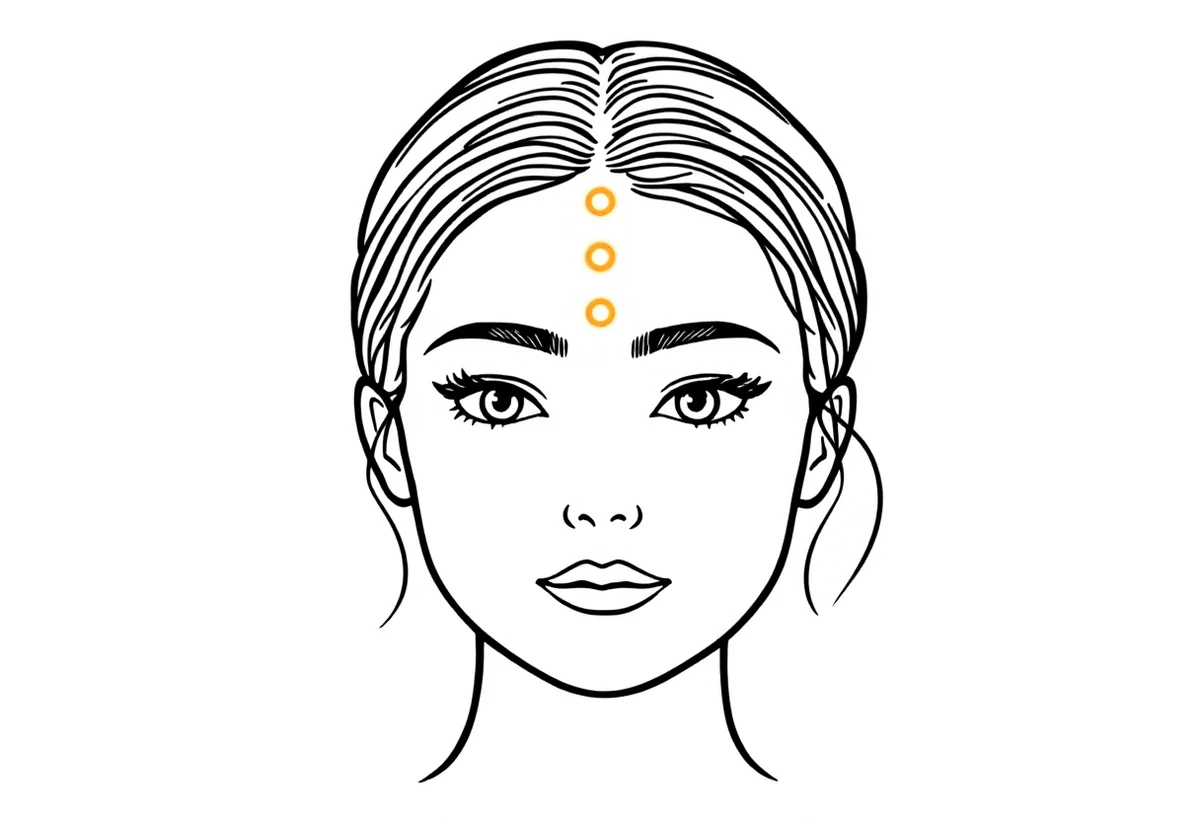
According to the FDA, Xeomin was first approved for glabellar (frown) lines in 2011. In 2024 the FDA expanded Xeomin to treat the glabellar, forehead, and crow’s-feet lines of the upper face simultaneously — making it the first product approved for that three-area upper-face combination in the US. You can review the official FDA prescribing information for the full approval details. Global aesthetic standards bodies such as ISAPS are also useful references when you are evaluating where and with whom to be treated.
Therapeutic indications beyond wrinkles
Beyond cosmetics, botulinum toxin type A has a long medical track record. Its therapeutic indications include cervical dystonia (a neck-muscle disorder), blepharospasm (involuntary eyelid spasm), upper-limb spasticity, and chronic sialorrhea (excessive drooling). These are outside the scope of an aesthetic consultation, but they illustrate how well-characterized this class of medicine is.
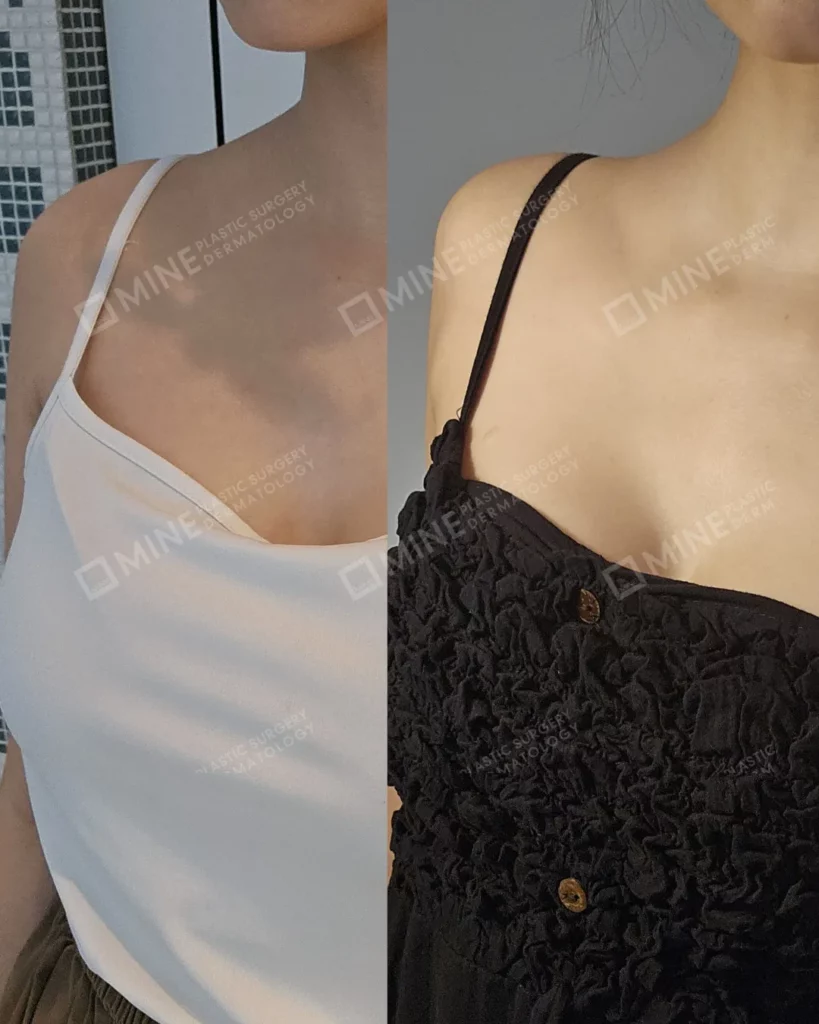
Botulinum toxin is also used on the body, not just the face. At MINE we offer related options such as wrinkle injection treatments and trapezius botulinum toxin for shoulder-line contouring — the same family of medicine applied to different goals.

Xeomin Side Effects & Who Should Be Cautious
No injectable is risk-free, and a balanced view is essential before any treatment — and on safety, the Xeomin vs Botox profiles are very similar. The good news is that most Xeomin side effects are mild and temporary.
Common Xeomin side effects include temporary bruising, swelling, and injection-site headache; eyelid droop is rare. You may also notice mild injection-site pain or, uncommonly, slight expression asymmetry — usually short-lived. Rarely, the toxin can affect a nearby muscle and cause a temporary droop of the eyelid (ptosis), which is one reason injection technique and dose matter so much.
This is exactly why individual variation and an in-person assessment count for so much. A board-certified specialist evaluates your facial anatomy, the strength of each muscle, and your goals before deciding on dose and injection points — something no online article can do for you. For a sense of how toxin side effects are managed in a different setting, our article on the side effects of salivary-gland botox walks through a related example.
Some groups should be especially cautious. People who are pregnant or breastfeeding, and those with neuromuscular disorders, should consult a physician before considering any botulinum toxin treatment. When in doubt, ask — a thorough consultation is always the safest first step.
Frequently Asked Questions About Xeomin
What is the difference between Xeomin and Botox?
In the Xeomin vs Botox comparison, both are type-A botulinum toxins that relax muscles to soften wrinkles, so their core action is the same. The key difference is formulation: Xeomin is purified to remove the surrounding complexing proteins, leaving only the active “naked toxin,” while Botox includes those accessory proteins. In wrinkle studies their efficacy is equivalent — the distinction is purity, not a different medicine.
How long does Xeomin take to work and how long does it last?
Results from Xeomin typically appear in about 3 to 5 days and last around 3 to 4 months — in the Xeomin vs Botox timeline these figures are essentially the same. Because the effect is temporary, the muscle gradually regains movement and repeat treatment is needed to maintain results. Your exact timeline depends on the dose, the muscle treated, and your metabolism.
Is Xeomin less likely to cause tolerance than Botox?
This is the heart of the Xeomin vs Botox tolerance debate. Xeomin’s lower foreign-protein load — about 0.6 ng versus roughly 5 ng per 100 units — may reduce the risk of forming neutralizing antibodies over repeated treatments, as reported in clinical studies. However, no botulinum toxin is fully free of antibody risk: tolerance is rare but never zero for any product, including Xeomin.
What are the common side effects of Xeomin?
The most common Xeomin side effects are temporary bruising, swelling, injection-site pain, and mild headache, and in the Xeomin vs Botox comparison this safety profile is broadly similar. Eyelid droop or slight expression asymmetry can occur but are rare and usually temporary. A consultation with a board-certified specialist is essential to minimize risk through proper dosing and technique.
Can Xeomin be used at the same dose as Botox?
In clinical practice, Xeomin and Botox are often used at a 1:1 unit ratio, which is one reason the Xeomin vs Botox switch is straightforward for many patients. That said, the products are officially measured by different methods, so their units are not formally interchangeable. Dosing is always individualized by the treating physician based on your anatomy and goals.
Considering Xeomin or Botox? Let’s Talk It Through
Choosing between Xeomin and Botox is rarely about one product being “better.” The Xeomin vs Botox choice is about matching the right toxin, dose, and injection plan to your face, your history, and your goals. The most reliable way to make that decision is a careful, unhurried conversation with a board-certified specialist.
For international patients, Korea has become a well-known destination for this kind of care, where board-certified neurotoxin treatment is widely available and the overall value — clinical standards alongside cost — is part of why many travelers research a Xeomin vs Botox plan here rather than at home. (Exact pricing depends on the areas treated and the dose, so it is always confirmed in a personal consultation rather than quoted from an article.)
If you would like personalized guidance, you are warmly invited to a free online consultation with MINE Plastic Surgery & Dermatology in Seoul, Korea. Dr. Lee Sung-wook, a board-certified plastic surgeon, and our team can talk through whether Xeomin or Botox better suits what you are hoping to achieve — no pressure, just clear, evidence-based answers. You can reach us at +82-2-516-1175 to arrange a time that works for you, wherever you are in the world.
※ This content is for informational purposes only and does not replace professional medical advice, diagnosis, or treatment. Individual results may vary, and side effects may occur. Please consult with a board-certified plastic surgeon for personalized advice.
Written and medically reviewed by Dr. Lee Sung-wook, Board-Certified Plastic Surgeon, MINE Plastic Surgery & Dermatology, Seoul, Korea.