EN
EN


Table of Contents
Have you ever admired the graceful, swan-like neck and perfectly angled shoulders of BLACKPINK’s Jennie? That elegant silhouette has sparked a worldwide beauty trend, and one of the most popular ways to chase it is trapezius botox. In Korea, fans describe the look as “90-degree shoulders” — a clean right angle where the neck meets the shoulder line. At the 2025 Met Gala, Jennie’s outfit drew extra attention precisely because of that crisp shoulder-neck contour.
Trapezius botox is a non-surgical treatment in which a small dose of botulinum toxin type A is injected into the trapezius muscle to relax and gradually slim it, creating a longer, sleeker shoulder-neck line. Also known as “TrapTox” or “Barbie Botox,” it pairs an aesthetic upgrade with a practical bonus: many people also feel less neck and shoulder tension afterward. This guide explains how trapezius botox works, who it suits, what results to expect, and how to stay safe.

Dimitrios Kambouris/Getty Images
What is Trapezius Botox?
The trapezius is a large, diamond-shaped muscle that runs from the base of your skull, across the tops of your shoulders, and down your upper back. When the upper part of this muscle is overdeveloped — from genetics, heavy lifting, stress, or hours hunched over a screen — it can look bulky and visually shorten the neck. Trapezius botox targets exactly that upper portion.
In simple terms, trapezius botox involves injecting a controlled amount of botulinum toxin type A into specific points of the upper trapezius. The toxin temporarily limits the muscle’s ability to contract. Over the following weeks the muscle uses itself less, softens, and slims down — smoothing the shoulder-neck transition. The injection itself uses very fine needles and takes only a couple of minutes per side.
Medical vs. Cosmetic Applications
Playful names like “Barbie Botox” can make the treatment sound purely cosmetic, but the trapezius is also a common source of real discomfort. People who carry stress in their shoulders often deal with neck pain, tension headaches, and stiffness. Relaxing an overactive trapezius can ease those symptoms while reshaping the area.
This is not a brand-new idea. Doctors have used botulinum toxin in the neck and shoulder region for more than two decades, including for chronic migraine and cervical dystonia — both conditions with established, FDA-approved botulinum toxin treatments. The cosmetic “Jennie shoulder” use simply applies the same well-studied muscle-relaxing principle to body contouring.
Why the Jennie Shoulder Trend is So Popular
Interest in the procedure surged after beauty creators visited Seoul clinics to recreate “Jennie’s shoulders,” but the ideal itself has been a Korean beauty standard for years. The appeal comes down to a few visual elements that many people find flattering:
- A near 90-degree angle between the neck and the shoulders
- An elongated, swan-like neck that reads as elegant
- Balanced proportions that make posture look more upright
- A refined, delicate frame that flatters open necklines and off-shoulder styles
It is worth keeping expectations realistic, though: trapezius botox softens and slims an overdeveloped muscle, but it cannot change your underlying bone structure. The goal is a more graceful version of your own shoulder line, not an identical copy of any celebrity.
How Trapezius Botox Works
Trapezius botox works on a simple principle: muscles only stay bulky if they keep contracting. By calming the overactive upper trapezius, the treatment lets the muscle rest, which both relaxes it and lets it gradually shrink in size. Patients often notice they sit and stand a little taller, too, because the muscle is no longer pulling the shoulders up.
The Science Behind the Treatment
Botulinum toxin type A is a purified protein that blocks the nerve signal telling a muscle to contract. As dermatology textbooks describe, it does this by stopping the release of acetylcholine, the chemical messenger at the junction between nerve and muscle. The effect is local and temporary: only the injected muscle is relaxed, and normal function returns as the body forms new nerve connections over the following months.
When that mechanism is applied to the trapezius, it:
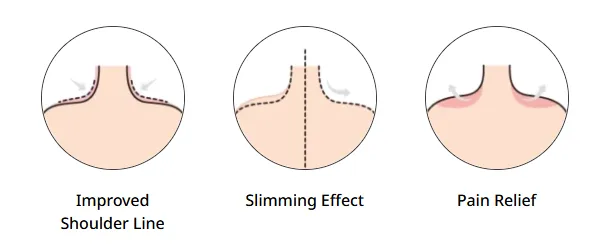
- Reduces muscle overactivity that drives bulk and tension
- Encourages gradual slimming as the resting muscle loses volume
- Supports better posture by easing unconscious shoulder lifting
- Relieves tension in the neck and shoulders
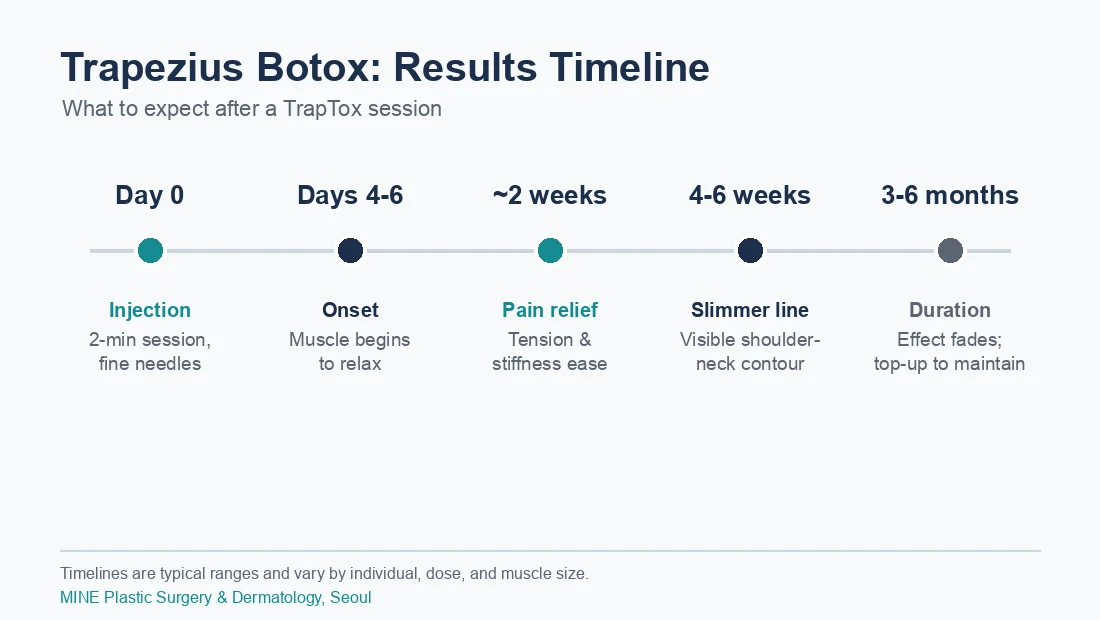
Botulinum toxin is an FDA-approved medication with a long safety record. With trapezius botox, the first changes are usually felt within one to two weeks, with the slimming effect becoming clearest around four to six weeks.
Benefits of Trapezius Botox Treatment
Aesthetic Benefits
A longer-looking neck: As the bulky upper trapezius softens, the neck appears more elongated and the shoulder-neck area looks smoother — the swan-like effect many patients want.
A cleaner shoulder line: The slope of the shoulders becomes more defined, moving closer to that sought-after right-angle look.
More upright posture: With the muscle no longer over-tensing, many people find their shoulders sit lower and more relaxed.
Therapeutic Benefits
Pain relief: Relaxing the muscle reduces tension, stiffness, and the dull ache that builds up after long desk days.
Fewer tension headaches: Because tight shoulders and neck muscles can trigger headaches, many patients report fewer of them.
Targeted treatment: The toxin is placed precisely where it is needed, so it can ease focal shoulder tension without the whole-body side effects sometimes linked to oral painkillers or muscle relaxants.
Who is a Good Candidate?
Ideal Candidates Include:
- People with an overdeveloped upper trapezius from genetics or repetitive strain
- Those with chronic neck and shoulder tension from posture or stress
- Anyone wanting a more elongated neckline and a softer shoulder slope
- “Tech neck” sufferers who spend long hours at a computer
Who Should Avoid the Treatment:
If your trapezius is naturally weak or thin, a doctor may advise against it. Other situations where the treatment is not recommended include:
- Pregnancy or breastfeeding
- Known allergy to botulinum toxin
- Neuromuscular disorders (such as myasthenia gravis or ALS)
- Current use of certain medications (such as aminoglycoside antibiotics or muscle relaxants)
- An active skin infection at the injection sites
A thorough consultation is the only reliable way to know whether trapezius botox is suitable for you, which is why every plan starts with an in-person assessment.
The Treatment Process
Initial Consultation
The process starts with a consultation with a licensed doctor, usually a dermatologist or a surgeon experienced in injectables. They review your medical history, feel the size and strength of your trapezius, and talk through your goals so the dose can be tailored to you.
Pre-Treatment Preparation
In the days before your appointment, it helps to avoid blood-thinning medicines and supplements such as aspirin, ibuprofen, and fish oil where your doctor agrees it is safe to pause them. This lowers the chance of bruising at the injection sites.
The Procedure
The injection itself is quick — often under five minutes for both shoulders. A typical session involves:
- Cleaning and marking the injection points
- Dosing each side based on muscle size (commonly tens of units per side)
- Several small injections spread across the upper trapezius
- Aftercare instructions before you leave
Because the needles are very fine, most patients describe only minimal discomfort, often comparing it to a quick pinch.
Results and Recovery
Timeline for Results
Botulinum toxin usually starts working within four to six days. Tension relief tends to come first, often noticeable within about two weeks. The cosmetic slimming takes a little longer than it does for facial wrinkle treatments — the visible reduction in muscle bulk generally appears over four to six weeks.
Duration of Effects
Results from trapezius botox typically last three to six months, and some people enjoy effects a little longer. Because the result is temporary, maintenance sessions are needed to keep the slimmer line over time. Many patients find the muscle responds more easily with repeat treatments.
Post-Treatment Care
There is little to no downtime. You can usually return to your day right away, but a few simple steps help the toxin settle where it should:
- Stay upright and avoid lying down for about four hours
- Skip strenuous exercise for 24–48 hours, and avoid heavy shoulder workouts for about two weeks
- Do not massage or rub the treated area for a week
- Stay hydrated and limit alcohol for a day or two
Potential Side Effects and Risks
Common Side Effects
Trapezius botox is generally well tolerated. The most common side effects are mild and short-lived: a little bruising, swelling, or redness at the injection sites, and occasionally a brief feeling of muscle weakness. These usually settle on their own within a few days.
Serious Considerations
As with any botulinum toxin injection, results depend heavily on technique. Choose an experienced injector: placed well, the dose is both safe and effective, but over-dosing or poor placement can temporarily weaken shoulder function until the toxin wears off.
If you train hard: Remember that the trapezius helps stabilize the neck and shoulders. While the toxin is active, you may notice reduced strength in some upper-body lifts, so plan around that if heavy training is part of your routine.
When to Seek Medical Attention
Contact your provider promptly if you experience any of the following:
- Difficulty swallowing or breathing
- Muscle weakness that spreads beyond the treated area
- Signs of an allergic reaction, such as a rash or trouble breathing
- Persistent pain or any unusual symptom
Alternative Options
If you prefer to start without injections, several non-invasive approaches can help with tension and posture, though they will not slim the muscle the way trapezius botox does:
Physical Therapy and Exercise
- Targeted stretching for the neck and shoulders
- Posture-correction exercises
- Strengthening the muscles that support good alignment
Manual Therapies
- Deep-tissue or sports massage
- Chiropractic care
- Myofascial release techniques
Lifestyle Modifications
- An ergonomic desk and screen setup
- Stress-management habits
- Better sleep positioning
These options can genuinely improve comfort and posture over time. For a refined neck and jaw profile, some patients also explore Korean jawline and neck-lift options, while those curious about the different toxin brands can compare Xeomin and Botox in Korea. For dramatic, lasting muscle slimming, however, trapezius botox remains the most direct route to the “Jennie shoulder” look.
Frequently Asked Questions
How much does trapezius Botox cost?
Pricing varies with location, the injector’s expertise, and the dose your muscle needs. In Korea, trapezius botox is often more affordable than in many Western countries. Because it is considered a cosmetic treatment, it is usually not covered by insurance. Ask for a clear quote at your consultation.
Is trapezius Botox painful?
The needles are very fine, so most people feel little more than a quick pinch or sting at each point. The session is short, and numbing options are available if you are sensitive to injections.
Can I exercise after trapezius Botox?
Avoid strenuous exercise for 24–48 hours, and ease back into heavy shoulder work over about two weeks. Once you resume training, expect a temporary dip in upper-body strength while the muscle is relaxed.
How long before I see results?
Tension relief often appears within about two weeks. The cosmetic slimming of the shoulder-neck line develops more gradually, usually becoming clear around four to six weeks after treatment.
Are the results permanent?
No. Trapezius botox is temporary, with effects that generally last three to six months. Repeat sessions maintain the look — which also means any unwanted effect is temporary too.
A sleeker shoulder-neck line is one of the most popular reasons people try trapezius botox, and the same treatment can quietly ease day-to-day neck and shoulder tension. It is a non-surgical option with minimal downtime — but results still depend on a careful assessment and a skilled injector.
If you are considering trapezius botox for a more elegant neck-shoulder contour, book a consultation with the team at MINE Plastic Surgery and Dermatology. A doctor can assess your anatomy, set realistic expectations, and decide whether the treatment is right for you.
This article is for general educational purposes only and is not a substitute for professional medical advice, diagnosis, or treatment. Results vary between individuals, and every procedure carries potential risks. Always consult a qualified healthcare professional before making decisions about any treatment.
※ This content is for informational purposes only and does not replace professional medical advice, diagnosis, or treatment. Individual results may vary, and side effects may occur. Please consult with a board-certified plastic surgeon for personalized advice.