EN
EN

Table of contents
Neck sagging is the loss of a clean, defined border between the jaw and the neck. Surgeons describe it as a blunting of the cervicomental angle — the angle where the underside of the chin meets the front of the neck — and it is driven by loosening skin, a weakening platysma (the thin sheet of muscle across the front of the neck), and fat that sits both above and below that muscle.
Many people assume neck sagging is exclusively an issue for older adults, but the reality is that signs of neck aging can begin appearing as early as your twenties and thirties. Whether caused by genetics, frequent phone use, weight fluctuations, or early collagen loss, neck sagging in younger individuals requires specialized treatment approaches that differ significantly from traditional surgical methods. Korean jawline lifting (also called a mini neck lift) has become a practical option for addressing early-stage neck sagging while keeping results natural and youthful.
Understanding Early Neck Aging in Young Adults
The neck is often called the “forgotten zone” in skincare routines, yet it’s one of the first areas to show visible signs of aging. The skin on our neck is thinner and more sensitive to sun exposure, environmental factors, and lifestyle habits, making it particularly vulnerable to premature aging.
Several factors contribute to neck sagging in your twenties and thirties:
Genetic Predisposition: Some individuals inherit a tendency toward earlier collagen breakdown and skin laxity in the neck area. Neck liposuction is generally suited for younger patients in their 20s and 30s who have genetic accumulation of fat that gives the neck a full appearance.
Technology-Related Posture: Constant downward head positioning while using smartphones and computers, often called “tech neck,” accelerates the formation of horizontal neck lines and contributes to neck sagging.
Rapid Weight Changes: Significant weight loss or fluctuations can leave behind loose skin in the neck area, particularly in younger patients whose skin hasn’t yet lost all its elasticity.
Sun Damage and Environmental Factors: Cumulative UV exposure and pollution can accelerate collagen breakdown, leading to premature skin aging in exposed areas like the neck.
Early Collagen Loss: While major collagen loss typically begins in the thirties, some individuals experience earlier decline due to lifestyle factors, stress, or genetic predisposition.
What Causes Neck Sagging in Your 20s and 30s?
Lifestyle explains only part of the picture. When neck sagging shows up decades earlier than expected, the cause is usually anatomy rather than aging, and medical textbooks on neck rejuvenation describe that anatomy in a remarkably consistent way.
The Cervicomental Angle: The Line That Defines a Young Neck
The cervicomental angle is the corner where the underside of the chin meets the front of the neck. When that corner is crisp, the neck reads as young and defined. When it softens — surgeons call this blunting — the jaw and the neck blur into a single line, and that blurring is the anatomical reality behind the phrase “neck sagging.”
There is a counterintuitive point in the surgical literature that matters for younger patients. Turning a blunted angle into a sharp neckline actually calls for more skin, not less: a straight line cutting across a corner — the hypotenuse — is shorter than the two sides it replaces, so a sharper corner needs more length of skin to line it. Cutting away skin aggressively is therefore the wrong instinct in your twenties and thirties, and it is one reason early neck sagging can often be treated through short incisions rather than a full neck lift.
Seven Structures Behind Neck Sagging
Textbook accounts of neck rejuvenation trace a blunted cervicomental angle to seven separate structures. Any one of them, or several working together, can produce neck sagging:
- Loose skin — the covering layer stretches and no longer drapes tightly over the jaw.
- A lax platysma (the thin sheet of muscle across the front of the neck) — it loosens and can separate down the midline, creating vertical bands.
- Subcutaneous fat — the shallow fat layer sitting directly under the skin.
- Subplatysmal fat (deep fat lying underneath the platysma muscle) — invisible from the outside, and a frequent cause of a full, undefined area under the chin.
- Anterior digastric muscle bellies (paired muscles running under the chin) — when bulky, they add to submental fullness.
- A low or forward-set hyoid bone (the small U-shaped bone that anchors the floor of the mouth) — its position is inherited and sets how sharp your angle can ever be.
- A descended submandibular gland (a saliva gland that sits under the jaw) — once it drops below the jawline it shows as a soft bulge.
The last two deserve underlining. A hyoid bone that sits low and a salivary gland that hangs below the jaw are things you were born with, not things you caused. That is why neck sagging can appear at 25 in someone with excellent skin, a stable weight and diligent sun protection — the structures underneath were simply arranged that way.
Why Liposuction Alone Often Fails to Fix Sagging Under the Chin
Patients often arrive having already had chin liposuction elsewhere, puzzled that the area still looks heavy. The explanation is layered anatomy: the deep fat sitting under the platysma cannot be suctioned. Surgical texts are explicit that this layer has to be reached directly through a small incision under the chin, which is exactly why deep, submuscular fat has to be removed directly.
Suction clears the shallow layer and leaves the deep one untouched, so the profile changes only slightly. In a neck that has been blunted since childhood, that deep fat is often the main culprit, sometimes alongside a low-lying hyoid bone. Treating only what a cannula can reach is the most common reason neck sagging looks essentially unchanged after a procedure.
Is It Fat, Muscle, or Loose Skin? A Quick Self-Check
A mirror will not give you a diagnosis, but it can tell you which conversation to have. Try these three steps and note what happens.
| What to try | What you notice | What it points to |
|---|---|---|
| Lift your chin | The sagging largely disappears when you tilt your head back | Skin laxity is the dominant factor |
| Say “eeee” firmly | Two vertical cords stand out down the front of the neck | Platysmal bands — the problem is muscular |
| Pinch under the chin | A thick roll that you can easily grasp | Superficial fat, just under the skin |
| Pinch under the chin | The fullness stays but nothing pinches | Deep fat beneath the platysma muscle is the more likely cause |
There is a separate track worth mentioning. Some younger patients notice looseness only after facial bone contouring or jaw surgery, because the soft tissue envelope no longer matches the reduced framework beneath it. We look at that pattern in our guide to jawline sagging after contouring surgery.
Please treat all of this as orientation only. A self-check does not replace an in-person examination by a qualified doctor, and the deep layers that matter most simply cannot be judged from the outside.
Do You Actually Need Surgery for Neck Sagging in Your 20s?
Often, no. Mild neck sagging in your twenties usually belongs in the watch-and-manage category, and there is no medical reason to operate on a neck that is still holding its shape. Daily sun protection, correcting the head-down posture that deepens horizontal neck lines, and a steady weight are unglamorous but genuinely load-bearing.
Non-surgical options sit on the same shelf, not a lower one. Radiofrequency and ultrasound tightening, thread lifts, and small doses of botulinum toxin placed into prominent platysmal bands can all soften early changes, and it is worth comparing neck wrinkle treatments before assuming that an operation is the answer.
Surgery earns its place when the cause is structural — deep fat, a separated muscle, a descended gland — because no device reaches those layers. That is a decision to make after an examination, not before one, and never as a preventive step taken just in case.
What Is Korean Jawline Lifting (Mini Neck Lift)?
Korean Jawline Lifting (mini neck lift) is highly recommended for those who lack a clear boundary between the chin and neck. This innovative approach combines advanced surgical techniques with Korea’s signature emphasis on natural-looking results and minimal scarring.
Korean jawline lifting is a well-established approach to lower-face contouring that has gained international recognition for its ability to create the coveted “V-line” face shape. Korean jawline lifting is a specialized facial contouring procedure that reshapes the lower face by addressing the soft tissue, fat, and skin along the jaw and chin.
When it comes to addressing a double chin and neck sagging, a one-dimensional approach is rarely enough. At Mine Plastic Surgery, we focus on treating all of the underlying causes of an aging neck and jawline, not just the surface. Our specialized surgical techniques combine fat removal, muscle correction, and skin tightening to deliver natural, long-lasting improvements.
1. Double Chin Fat Removal
Excess fat beneath the chin is one of the most common reasons patients feel their face looks heavier or older. Unlike temporary solutions, our procedure directly removes submental fat deposits with basic liposuction, creating a slimmer and more defined jawline profile.
2. Platysmaplasty for Muscle Correction
As we age, the platysma muscle—a thin sheet of muscle running across the front of the neck—often weakens and separates, leading to vertical bands and a sagging appearance. Through platysmaplasty, we carefully tighten and reposition this muscle, restoring firmness and improving the overall contour of the neck.
3. Submuscular Fat Reduction
In addition to superficial fat, deeper layers of fat beneath the muscle can contribute to a bulky, undefined look. At Mine Plastic Surgery, we target and reduce these deeper fat pockets, a step often overlooked in standard procedures. This submuscular fat removal helps achieve a sharper and more elegant neckline.
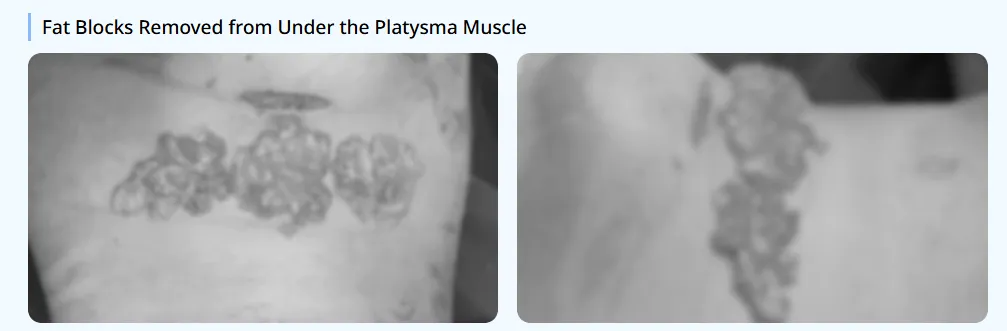
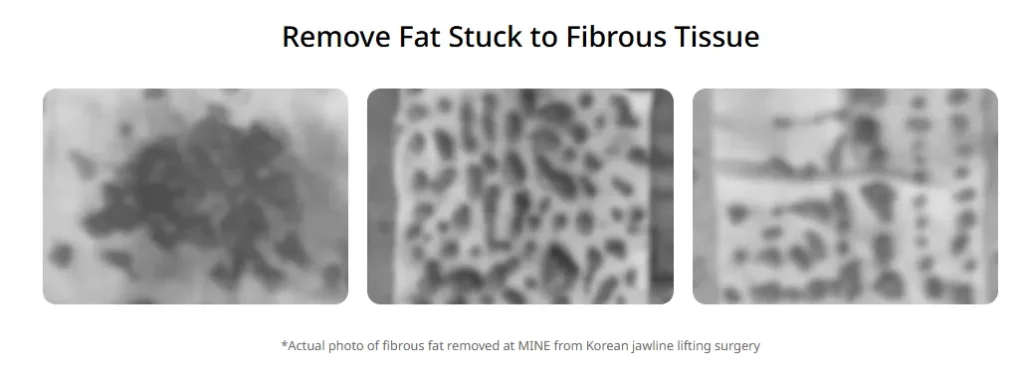
4. Manual Removal of Fibrous Fat
Some fat becomes trapped within fibrous connective tissue, making it resistant to conventional suction or dissolving treatments. We address this challenge by manually removing fat stuck to fibrous tissue, ensuring a smoother result and preventing unevenness along the jawline.
5. Sagging Skin Excision
Finally, excess skin is carefully trimmed and redraped to eliminate looseness and wrinkles. This step is critical for patients with advanced neck sagging, as removing fat and tightening muscles alone cannot fully restore a youthful neck without addressing the skin.
Why a Multi-Layered Approach Matters
By combining fat removal, muscle tightening, fibrous fat release, and skin excision, Mine Plastic Surgery provides a comprehensive answer to neck sagging rather than a partial fix. This layered approach results in a balanced, natural look—patients not only enjoy a slimmer neckline but also improved skin tone, smoother jawline definition, and a youthful overall impression.
Key Features of Korean Jawline Lifting:
Precision-Focused Techniques: Korean surgeons utilize microscopic attention to detail, ensuring that each adjustment harmonizes with the patient’s natural facial structure while creating a more defined jawline.
Advanced Technology Integration: Korean medical professionals combine advanced technology with expertise, attracting a growing number of individuals seeking to rejuvenate their appearance safely and efficiently.
Natural Result Philosophy: Unlike Western approaches that may focus on dramatic changes, Korean techniques prioritize subtle enhancements that look naturally youthful rather than obviously altered.
Mini Neck Lift: A Targeted Option for Early Neck Sagging
The term mini neck lift refers to a shorter skin incision and a smaller field of dissection in the neck. This kind of procedure suits patients with very minimal signs of neck aging. If you are unsure where you sit on that scale, our breakdown of the difference between a full neck lift and a mini neck lift is a useful place to start.
A mini neck lift is specifically designed for younger patients who are experiencing early signs of neck aging but don’t require the extensive intervention of a full neck lift. Men or women in their 30s, 40s or 50s with early jowling, mild neck sagging and some laxity can benefit from mini neck lifts.
Advantages for Younger Patients:
Targeted Treatment: A mini neck lift is designed to address excess skin and fat in the lower face and neck area, so it is generally recommended for patients with mild to moderate neck sagging and jowls.
Shorter Recovery Time: The recovery time for a mini neck lift is typically shorter than a full neck lift, with most patients able to return to normal activities one week after surgery.
Less Extensive Surgery: Because a mini neck lift is planned around early, clearly defined changes, it uses shorter incisions and a smaller field of dissection than a full neck lift. It is not a preventive measure, and it should only be considered once an examination has confirmed a structural cause.
Natural Integration: A mini neck lift usually requires local anesthesia with sedation. After sedation, the doctor makes incisions behind the ears and/or under the chin, allowing for precise adjustments that complement your natural features.
Who Should Consider These Treatments?
The ideal candidates for Korean jawline lifting and mini neck lift procedures are individuals who:
Age Range: Primarily those in their twenties to early forties who are experiencing early neck sagging but still maintain good skin elasticity.
Specific Concerns: If you’re noticing signs of aging, such as minor jowls or loose skin around the cheeks and jawline, a mini facelift may be an effective procedure to address these issues.
Realistic Expectations: Understanding that these procedures provide enhancement rather than complete transformation, with results that look natural and age-appropriate.
Good Overall Health: As with any surgical procedure, it is essential to be in good overall health to minimize the risks of complications.
Lifestyle Factors: Patients who smoke must stop for at least three weeks before the procedure since smoking interferes with the body’s natural healing process.
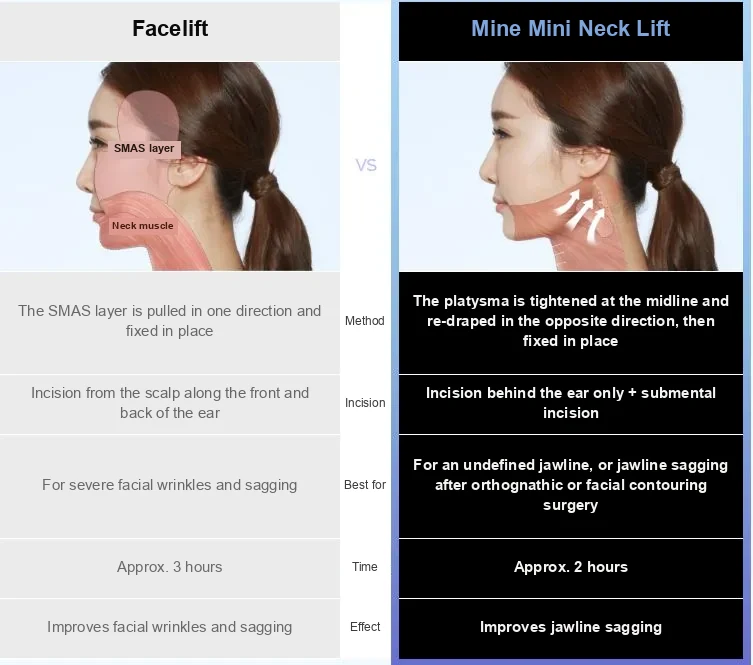
| Facelift | Mine mini neck lift | |
|---|---|---|
| Method | The SMAS layer is pulled in one direction and fixed in place | The platysma is tightened at the midline and re-draped in the opposite direction, then fixed in place |
| Incision | From the scalp along the front and back of the ear | Behind the ear only, plus a small incision under the chin |
| Typically recommended for | Severe facial wrinkles and sagging | An undefined jawline, or jawline sagging after orthognathic or facial contouring surgery |
| Surgery time | Approx. 3 hours | Approx. 2 hours |
| Result | Improves facial wrinkles and sagging | Improves jawline sagging |
Mini Neck Lift Recovery
Recovery time after a standard facelift, mini facelift, or neck lift is fairly quick. Most patients are back to their daily routine within one to three weeks.
Week 1: Expect some swelling and bruising, particularly around the jawline and neck. Most patients can return to light activities within a few days.
Weeks 2-3: Your neck may feel tight for a few weeks. Your surgeon will give you detailed instructions for your recovery and aftercare.
Months 1-3: Final results become apparent as swelling completely subsides and tissues settle into their new position.
Is Neck Sagging Surgery Safe? Risks and Complication Rates
No operation is risk-free, and anyone considering surgery for neck sagging deserves real figures rather than reassurance. Published surgical series give a reasonably clear picture of what can go wrong and how often.
In a series of 117 consecutive platysma–SMAS plication procedures published in the Journal of Plastic, Reconstructive & Aesthetic Surgery (2010), hematoma (a collection of blood under the skin) occurred in 3.4% of patients, and every case was drained under local anesthesia without affecting the final result.
Transient facial nerve motor dysfunction occurred in 3.4% of that series. The authors report no long-lasting or permanent motor palsies, and every case fell within the initial 30th centile of patients — that is, the earliest part of the series. Put plainly, where a surgeon sits on their own experience curve has a measurable effect on safety.
The picture shifts when the submandibular gland is reduced during the same operation. A 2015 review of 112 consecutive cases in Plastic and Reconstructive Surgery reported major complications in 1.8% of cases — significant hematomas that required an early return to the operating room, one of which was potentially fatal. Minor complications occurred in 10.8% and were managed without further surgery: submandibular sialocele in 4.5% and marginal mandibular nerve neurapraxia in 4.5%, all of which resolved fully by three months, with no patient reporting a permanent dry mouth.
That 1.8% belongs beside the reassuring numbers rather than behind them. Bleeding deep in the neck is uncommon, but it is the complication a surgical team has to plan for rather than assume away. One more caveat matters if you are reading this in your twenties or thirties: those were face lift patients with a median age of 57, so the figures describe the operation rather than your neck.
Reported rates for sialocele — a small pocket of saliva that can collect after part of the gland is removed — depend on how much gland is taken and by whom. In the single-surgeon series above it was 4.5%, while a 2025 review in Aesthetic Surgery Journal pooling 1,651 aesthetic gland resections put it at 1.33%. Both figures describe operations in which the gland was deliberately reduced; a neck lift that leaves the gland alone does not carry this risk.
Reducing the gland adds three risks that belong to it specifically: bleeding deep in the neck that can press on the airway, a significant increase in neurapraxia (temporary nerve weakness) when the neck is being operated on for a second time, and benign sialocele. On the practical side, minor cervical hematomas are treated with drainage and netting sutures, and microfoam tape applied for one week has been reported as a way to reduce submental swelling.
Scarring is the other common worry, and a fair one. We set out how neck lift scars are managed in a dedicated guide, alongside a fuller account of neck lift side effects and complications.
One caveat outweighs any single percentage. These figures come from particular techniques in particular series, and your own risk depends on your anatomy, your general health and how extensive the surgery needs to be. That is assessed in consultation and physical examination, never from a table.
How Long Do Results Last?
How long your results last depends on the treatment you have and on individual factors:
Mini Neck Lift: A mini neck lift usually lasts about 5-8 years before most people consider getting a repeat procedure, but everyone is different. Generally speaking, the younger a patient is, the longer results will last.
According to the American Society of Plastic Surgeons, the longevity of the result primarily depends on your skin properties, daily life and skin routine. Maintaining good skincare habits and sun protection can significantly extend the lifespan of any neck rejuvenation procedure.
Frequently Asked Questions
Why is my neck sagging at 30?
Neck sagging at 30 is usually structural rather than a sign of premature aging. A hyoid bone that sits low or forward, a submandibular gland that has dropped below the jawline, deep fat beneath the platysma, or early loosening of that muscle can each blunt the jaw-to-neck angle while your skin is still in excellent condition. Genetics, rapid weight change and years of head-down posture add to the effect.
Is sagging skin under the chin fat or loose skin?
It can be either, and often it is neither on its own. Three layers create fullness under the chin: skin, the platysma muscle, and fat — which itself sits in a shallow layer and a deep layer beneath the muscle. The deep layer cannot be suctioned and has to be removed directly, which is why liposuction alone sometimes leaves the area looking unchanged.
What causes jowls in your 20s?
Jowls in your twenties usually come down to inherited facial structure, significant weight loss, or soft tissue that no longer matches the bone underneath after contouring or jaw surgery. The ligaments along the jawline loosen slightly and let fat drift downward, which breaks the clean line of the jaw far earlier than most people expect.
Can neck wrinkles in your 20s be improved without surgery?
In most cases, yes. Horizontal neck lines in your twenties respond to consistent sun protection, better screen posture, retinoid or peptide skincare, and energy-based tightening such as radiofrequency or ultrasound, while small doses of botulinum toxin can soften prominent platysmal bands. Surgery is reserved for structural neck sagging that no device can reach.
Can Korean jawline lifting be combined with other procedures?
Yes, many patients achieve optimal results by combining treatments. A mini neck lift can be combined with other cosmetic procedures, such as a mini facelift or eyelid lift, to create a comprehensive rejuvenation plan. Your aesthetic specialist can recommend the most suitable combination based on your specific concerns and goals.
Is a mini neck lift safe in your 20s?
When performed by qualified professionals, both Korean jawline lifting and mini neck lift procedures have a well-documented safety profile in published surgical series for appropriate candidates. Good candidates for these procedures are younger patients with minimal degrees of skin laxity, fatty deposits, and muscle deformations.
How do I choose between surgical and non-surgical options?
The choice depends on several factors including the severity of your neck sagging, desired downtime, budget, and long-term goals. At Mine Plastic Surgery, Dr. Lee Sung-wook makes that call — non-surgical or surgical — after examining which layer is actually driving the change, rather than from photographs alone.
Do Korean jawline lifting results look natural?
When performed by experienced practitioners, these procedures are designed to enhance your natural features rather than create an artificial appearance. Today’s Korean beauty standards favor naturally full, well-defined features over artificial-looking enhancements.
Taking care of your neck doesn’t have to wait until visible aging becomes severe. With innovative techniques like Korean jawline lifting and mini neck lift procedures, individuals in their twenties and thirties can address early neck sagging while achieving natural, long-lasting results. Whether you choose surgical or non-surgical approaches, the key is working with experienced professionals who understand the unique needs of younger patients and can create a personalized treatment plan.
If the early signs of neck sagging have started to bother you, Mine Plastic Surgery & Dermatology offers unhurried consultations to identify which layer — skin, muscle, fat or gland — is actually driving the change in your case. Your assessment and any surgery are carried out by Dr. Lee Sung-wook, board-certified plastic surgeon. You can read more about the procedure itself at Mine Plastic Surgery & Dermatology and then book a consultation to talk through the options that suit your anatomy.
This information is provided for educational purposes and should not replace professional medical advice. Individual results may vary, and all surgical procedures carry inherent risks that should be discussed with a qualified healthcare provider.
※ This content is for informational purposes only and does not replace professional medical advice, diagnosis, or treatment. Individual results may vary, and side effects may occur. Please consult with a board-certified plastic surgeon for personalized advice.