EN
EN


Table of Contents
Understanding Rhinoplasty and Nose Types
Rhinoplasty in Korea is nose surgery tailored to your individual nose type, where the surgeon selects techniques based on the shape of your bridge, tip, and nostrils rather than applying a single fixed method. Commonly known as a “nose job,” rhinoplasty is one of the most sought-after cosmetic procedures worldwide. However, what many people don’t realize is that there is no one-size-fits-all approach to this surgery. The shape, structure, and characteristics of your nose determine the specific techniques and strategies a surgeon must employ to achieve optimal results.
Every individual has a unique nasal anatomy. Some people are born with a prominent dorsal hump that creates an uneven profile, while others may have a flat nasal bridge that lacks definition. Some struggle with a bulbous tip that appears disproportionate to their face, and others have functional concerns like a deviated septum that affects breathing. Understanding your specific nose type is the first critical step in your rhinoplasty journey.
Why does nose type matter? The answer lies in the complexity of nasal anatomy. The nose comprises bone, cartilage, skin, and soft tissue, each of which varies in thickness, strength, and distribution from person to person. A skilled surgeon must evaluate all of these factors to develop a personalized surgical plan. This is precisely why rhinoplasty in Korea has gained international recognition—Korean plastic surgeons have developed specialized techniques for different nose types, ensuring natural-looking and harmonious results.
Key Takeaway: Successful rhinoplasty requires a customized approach based on your unique nasal structure. Choosing a surgeon who specializes in your specific nose type dramatically improves outcomes.
Common Nose Types and Their Surgical Solutions
Understanding the different nose types and their corresponding surgical approaches empowers you to have informed discussions with your surgeon. A guiding principle behind modern rhinoplasty in Korea is that the nasal bridge (dorsum) and the nasal tip are treated as two separate units—each managed with its own technique—so that height and tip shape can be refined independently. Below, we explore the most common nose types and how rhinoplasty addresses each one.
Flat or Low Nose Bridge
A flat or low nose bridge is characterized by minimal projection and lack of definition along the nasal dorsum. This is one of the most common concerns among Asian patients seeking rhinoplasty in Korea. The nose may appear wide and lack vertical height, creating an imbalance with other facial features.
Surgical approach: Augmentation rhinoplasty is the primary solution. Surgeons at Mine Clinic commonly use silicone implants or autologous cartilage (from the patient’s own body, such as ear or rib cartilage) to build up the nasal bridge. Because a low bridge often needs more material than the septum alone can provide, surgeons frequently turn to ear (conchal) cartilage for moderate height or rib cartilage when more support is required. The choice between synthetic implants and autologous tissue depends on the patient’s preferences, skin thickness, and desired outcome.
Hump Nose (Dorsal Hump)
A dorsal hump creates a visible bump on the bridge of the nose when viewed from the side. This irregularity can make the nose appear overly prominent and detract from facial harmony. Dorsal humps can be bony, cartilaginous, or a combination of both.
Surgical approach: Hump reduction rhinoplasty involves carefully shaving down or removing the excess bone and cartilage to create a smooth, straight profile. Rather than simply filing the bump away, experienced surgeons aim to preserve the upper lateral cartilages (the side walls just under the bridge)—a detail that helps keep the internal breathing passage open and prevents a pinched or collapsed look as the nose heals. In some cases, controlled fractures (osteotomies) are performed to narrow the nasal bones and prevent a flat-top appearance after hump removal. Mine Clinic’s surgeons use precise techniques to ensure natural contours.
Bulbous Nose (Wide Nasal Tip)
A bulbous nose features a rounded, wide, or undefined nasal tip. This can make the nose appear disproportionately large or lacking in refinement. The cause is often thick skin combined with weak or widely spaced lower lateral cartilages.
Surgical approach: Tip rhinoplasty focuses on reshaping and refining the nasal tip cartilages. Modern tip surgery in Korea is largely built on the septum—the central wall inside the nose—because anchoring the tip to a stable cartilage framework (using methods such as a septal extension graft) gives lasting projection and prevents the tip from dropping over time. Techniques may include cartilage suturing, trimming, or grafting to create better definition. For patients with particularly thick skin, additional measures may be needed since the skin envelope limits how much refinement is visible externally.
Deviated Nose
A deviated nose is crooked or asymmetrical, often resulting from trauma, genetics, or developmental factors. Beyond cosmetic concerns, a deviated septum can significantly impair breathing and overall quality of life.
Surgical approach: Correcting a deviated nose requires addressing both the external deviation and any internal septal deviation. Because a crooked nose is frequently both an aesthetic and a functional problem, this type of rhinoplasty in Korea combines cosmetic improvements with septoplasty to restore both appearance and nasal airflow. Mine Clinic’s surgeons are experienced in handling complex deviated nose corrections that require meticulous cartilage repositioning and bone realignment. For severe or previously operated cases, this may overlap with revision rhinoplasty.
Short or Upturned Nose
A short nose appears disproportionately small for the face, with an upturned tip that may expose the nostrils excessively when viewed from the front. This creates a “pig nose” appearance that many patients wish to correct.
Surgical approach: Lengthening rhinoplasty is one of the more challenging procedures. Surgeons must carefully release contracted tissues and use septal extension grafts or cartilage grafts to increase nasal length and rotate the tip downward. This requires significant technical expertise to achieve natural results.
Long or Arrow Nose
Conversely, a long nose extends too far from the face, with a tip that may droop downward, especially when smiling. This can age the face and create an unbalanced profile.
Surgical approach: Shortening rhinoplasty involves reducing the septum, repositioning the tip cartilages, and sometimes performing tip rotation to lift the nasal tip. The goal is to create better proportion between the nose and other facial features.
Wide Nostrils (Alar Flaring)
Some patients have nostrils that flare excessively or a nasal base that is wider than desired. This can be an isolated concern or combined with other nasal shape issues.
Surgical approach: Alarplasty (alar reduction) involves carefully removing small wedges of tissue from the nostril base or sidewalls to narrow the nostrils. This procedure must be performed conservatively to avoid unnatural-looking results.
How Rhinoplasty is Performed at Mine Clinic
Mine Clinic in Seoul has developed a comprehensive approach to rhinoplasty in Korea that prioritizes natural results, patient safety, and long-term satisfaction. Here is what you can expect when undergoing nose surgery at our facility.
Pre-Operative Consultation
Your journey begins with an in-depth consultation, which can be conducted online for international patients before arriving in Korea. During this consultation, your surgeon will analyze your facial proportions using advanced imaging technology, discuss your aesthetic goals, review your medical history, and develop a customized surgical plan. You can begin this process through our online consultation service.
What sets Mine Clinic’s consultations apart? Our medical staff takes time to understand not just what you want to change, but why. This deeper understanding allows us to recommend procedures that will truly enhance your appearance while maintaining facial harmony.
Surgical Techniques
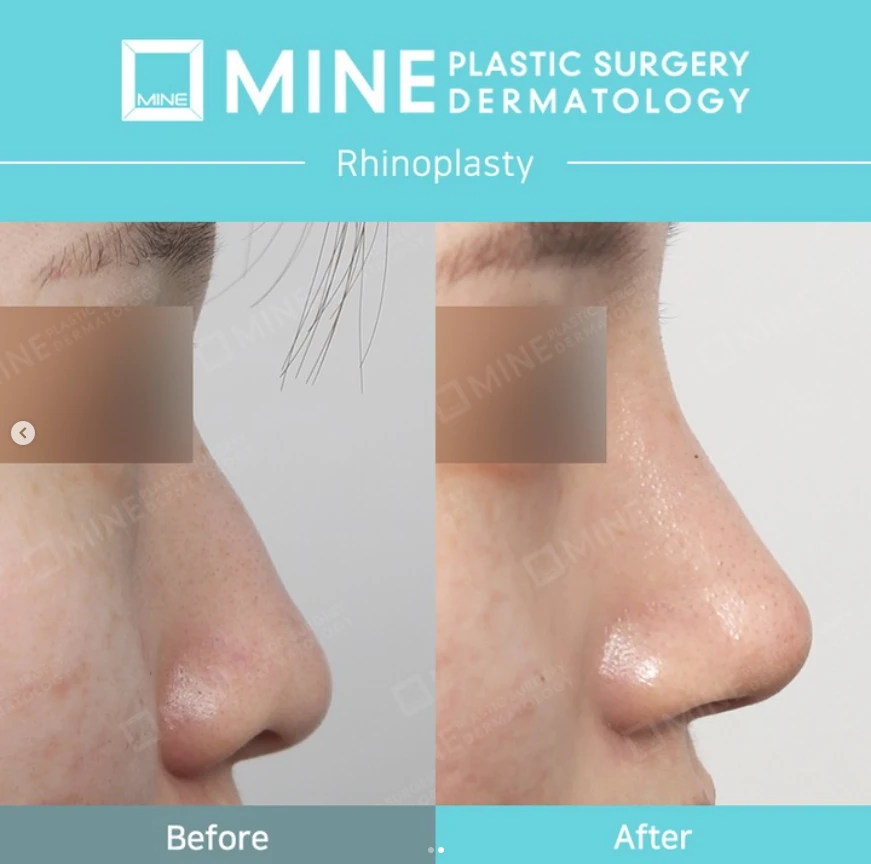
Mine Clinic employs both open and closed rhinoplasty techniques, selected based on the complexity of the case and the changes required.
Open rhinoplasty involves a small incision across the columella (the tissue between the nostrils), allowing the surgeon to fully visualize the nasal structures. This approach is preferred for complex cases requiring significant reshaping, revision surgeries, or when cartilage grafting is needed.
Closed rhinoplasty uses incisions made entirely inside the nostrils, leaving no visible external scars. This technique offers faster recovery and less swelling but may limit the surgeon’s ability to make extensive changes.
Cartilage grafting is a cornerstone of Korean rhinoplasty. Rather than relying solely on synthetic implants, many surgeons harvest cartilage from the patient’s own septum, ear, or in some cases, rib. Surgeons generally reach for septal cartilage first, then ear cartilage for smaller refinements, and rib cartilage when a larger or stronger support is needed. This autologous tissue integrates naturally with the body and reduces the risk of complications associated with foreign materials. Visit our main MINE Rhinoplasty page to learn more about our comprehensive approach.
The Procedure Day
On the day of surgery, you will arrive at Mine Clinic’s state-of-the-art facilities. Rhinoplasty is typically performed under general anesthesia or local anesthesia with sedation, depending on the extent of the procedure. Surgery duration ranges from one to three hours.
Mine Clinic maintains strict care and safety protocols, including continuous monitoring during and after surgery, to ensure patient well-being.
Why Choose Korea and Mine Clinic for Your Nose Surgery
South Korea has emerged as the global leader in cosmetic surgery, and rhinoplasty is no exception. There are compelling reasons why thousands of international patients travel to Seoul for nose surgery each year.
Advanced Surgical Techniques
Korean plastic surgeons have pioneered numerous rhinoplasty techniques, particularly for addressing the unique characteristics of Asian noses. These innovations include sophisticated cartilage grafting methods, minimal-incision approaches, and techniques that prioritize natural-looking results over dramatic changes. According to the American Society of Plastic Surgeons, rhinoplasty remains one of the top cosmetic procedures performed globally, and Korean surgeons contribute significantly to advancing the field.
Competitive Pricing
Despite the high quality of care, rhinoplasty in Korea often costs significantly less than equivalent procedures in the United States, Europe, or Australia. This value proposition, combined with the opportunity to recover in a modern, safe city like Seoul, makes medical tourism to Korea an attractive option.
Mine Clinic’s Unique Advantages
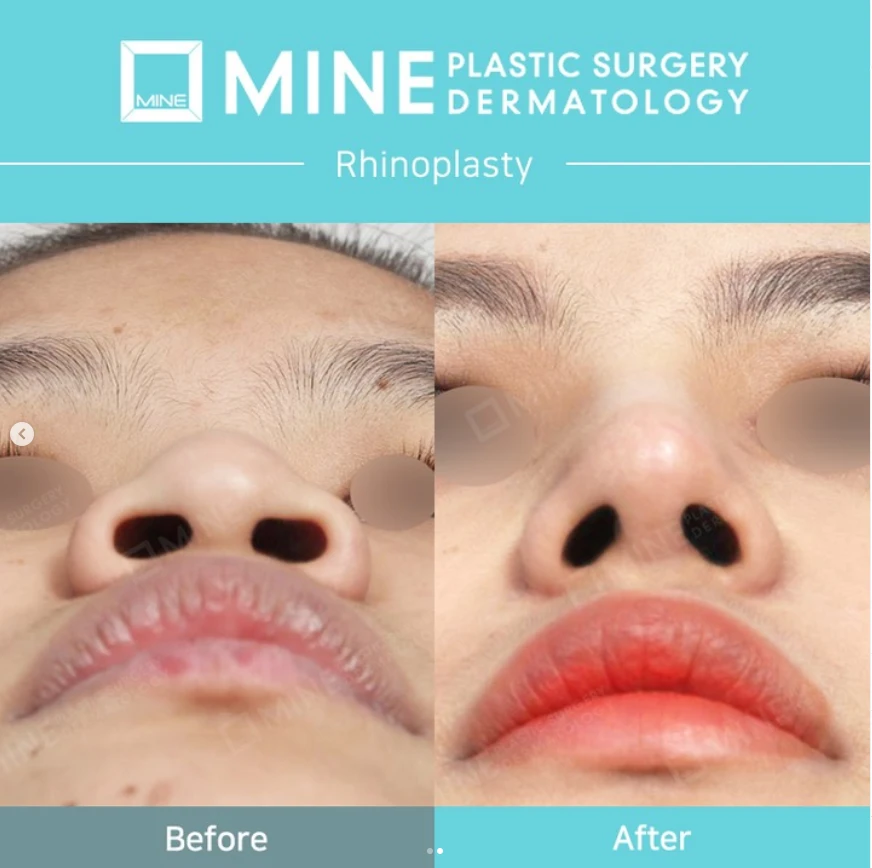
Mine Clinic distinguishes itself through several key factors. Our international service team provides end-to-end support for foreign patients, including airport pickup, accommodation assistance, translation services, and post-operative care coordination. You can view real stories and before-and-after photos from our international patients to see the results we achieve.
Our surgeons specialize in tip rhinoplasty and complex cases, including revision procedures for patients who have had unsatisfactory results elsewhere. This expertise in corrective procedures demonstrates a deep understanding of nasal anatomy and surgical techniques.
Important: Risks, Side Effects, and Safety
Rhinoplasty is a surgical procedure, and as with any surgery, it carries inherent risks. At Mine Clinic, we believe in complete transparency so that you can make an informed decision about your care.

Common Side Effects
Most patients experience the following temporary side effects, which are normal parts of the healing process:
Swelling is the most noticeable side effect and peaks around day two to three after surgery. While major swelling subsides within two to three weeks, subtle swelling in the nasal tip can persist for six to twelve months. Patience is essential, as final results take time to fully reveal themselves.
Bruising around the eyes and cheeks is common, particularly if osteotomies (bone work) were performed. Bruising typically transitions through various colors and resolves within one to two weeks. Arnica supplements may help accelerate this process.
Congestion and difficulty breathing through the nose is expected in the first week due to internal swelling and splints. This resolves as healing progresses.
Numbness in the nasal tip and surrounding skin may persist for several weeks to months as sensory nerves regenerate.
Potential Complications
While uncommon at experienced clinics like Mine Clinic, potential complications include:
Infection is rare when proper sterile techniques and post-operative care are followed. Signs include increasing redness, warmth, pain, or discharge, and require prompt medical attention.
Asymmetry may occur, though minor asymmetries are normal (no face is perfectly symmetrical). Significant asymmetry may require revision surgery.
Implant-related issues such as displacement, visibility, or infection can occur with synthetic implants. This is one reason why autologous cartilage grafting is often preferred.
Breathing difficulties can result if internal structures are altered inappropriately. Functional concerns should be communicated clearly before surgery.
Unsatisfactory aesthetic outcome is possible, which is why choosing an experienced surgeon and having realistic expectations is crucial.
Mine Clinic’s Safety Measures
Patient safety is our top priority. Our after-care program includes regular follow-up appointments, 24/7 emergency contact availability, and detailed recovery instructions. We use accredited anesthesiologists, maintain hospital-grade operating facilities, and follow strict infection control protocols.
Key Takeaway: While rhinoplasty is generally safe when performed by qualified surgeons, understanding potential risks allows you to prepare adequately and recognize any concerns during recovery.
Recovery Timeline in Korea
Planning your stay in Korea for rhinoplasty requires understanding the recovery timeline. Here is a detailed breakdown of what to expect.
Day 1-3: Immediate Post-Operative Period
You will wake up with a nasal splint (cast) on your nose and potentially internal splints or packing. Swelling and bruising are most intense during this period. Rest with your head elevated, apply cold compresses as directed, and take prescribed medications for pain and to prevent infection. Most patients stay in recovery accommodations near the clinic during this time.
Day 4-7: Early Recovery
Swelling begins to subside noticeably. You may feel well enough for light activities and gentle walks, which can actually help reduce swelling. Avoid bending over, lifting heavy objects, or any activity that increases blood pressure to your face.
Day 7: Splint and Stitch Removal
This is a milestone day. You will return to Mine Clinic to have your external splint and any sutures removed. Internal splints, if placed, may also be removed at this time. You will see your new nose shape for the first time, though remember that swelling will continue to improve over the coming weeks and months.
Can I fly home after day 7? Many international patients choose to fly home after splint removal. While it is generally safe, consider that cabin pressure changes can cause mild discomfort. We recommend waiting until day 10 if possible, but day 7 is acceptable for most patients with uncomplicated procedures.
Week 2-4: Continued Healing
Most visible bruising has resolved. You can typically return to desk work and light social activities, though strenuous exercise should still be avoided. Continue to protect your nose from accidental bumps.
Month 1-3: Intermediate Recovery
You can gradually resume all normal activities, including exercise. By the end of month three, approximately 80% of swelling has resolved, and you can appreciate the general shape of your nose.
Month 6-12: Final Results
The remaining tip swelling slowly resolves, revealing your final result. For patients with thick skin, this process may take longer.
Planning Your Stay in Korea
We recommend international patients plan for a minimum stay of seven to ten days in Seoul. This allows for your pre-operative consultation, surgery, initial recovery, and splint removal. Many patients choose to extend their stay to explore Korea’s culture, cuisine, and K-beauty shopping while recovering.
Frequently Asked Questions
How do I know which rhinoplasty technique is right for my nose type?
The best way to determine the appropriate technique is through a personalized consultation with an experienced surgeon. At Mine Clinic, we analyze your facial proportions, nasal structure, skin type, and aesthetic goals to recommend the most suitable approach. Factors like whether you need augmentation, reduction, tip refinement, or functional correction all influence the surgical plan. You can start this process with an online consultation from anywhere in the world.
Is rhinoplasty in Korea safe for international patients?
Yes, Korea is one of the safest destinations for medical tourism, and rhinoplasty in Korea is performed under strict regulations and standards. Mine Clinic maintains international safety protocols, and our dedicated international service team ensures seamless communication and care coordination for foreign patients. We provide translation services, post-operative care instructions in your language, and 24/7 support throughout your stay.
How much does rhinoplasty cost in Korea?
Pricing varies based on the complexity of the procedure, the techniques used, and whether it is a primary or revision surgery. At Mine Clinic, we provide personalized pricing after evaluating your specific needs during consultation. We believe in transparent pricing with no hidden fees. Book a consultation to begin the process.
What if I’m not satisfied with my rhinoplasty results?
While our goal is always patient satisfaction with the initial surgery, we understand that some patients may desire adjustments. Revision rhinoplasty is a specialized procedure that Mine Clinic surgeons are highly experienced in performing. We also offer a thorough consultation process to minimize the likelihood of dissatisfaction by ensuring alignment between patient expectations and achievable outcomes.
Can rhinoplasty improve my breathing?
Absolutely. Functional rhinoplasty addresses structural issues like a deviated septum, enlarged turbinates, or nasal valve collapse that impair airflow. Many patients combine cosmetic improvements with functional corrections in a single procedure. If breathing is a concern, be sure to mention this during your consultation so it can be incorporated into your surgical plan.
Take the Next Step Toward Your Ideal Nose
Rhinoplasty is a transformative procedure that can enhance your facial harmony, boost your confidence, and even improve your breathing. The key to a successful rhinoplasty in Korea lies in choosing an experienced surgeon who understands your unique nose type and can tailor the procedure to your individual needs.
At Mine Clinic, we combine world-class surgical expertise with compassionate care for international patients. From your first online consultation to your final follow-up, our team is dedicated to guiding you through every step of your rhinoplasty journey in Korea.
Interested in this procedure? Contact Mine Clinic today for a personalized online consultation. We are ready to assist you on WhatsApp (+82 10 3476 1175) and guide you through your K-Beauty journey in Seoul.
Reviewed by Dr. Lee Sung-wook, Board Certified Plastic Surgeon at Mine Clinic.
※ This content is for informational purposes only and does not replace professional medical advice, diagnosis, or treatment. Individual results may vary, and side effects may occur. Please consult with a board-certified plastic surgeon for personalized advice.