EN


“Can a cream or a laser make my areolas smaller again?” After childbirth, this is one of the questions I hear most often in clinic. How to reduce areola size depends on one distinction: whether the areola only looks bigger because its color has darkened, or whether the skin around it has actually stretched. Creams and lasers can fade color, but only reducing stretched skin changes the diameter.
The distinction matters because, depending on the cause, some changes settle on their own with time, and what creams and lasers change is usually color, not size. So I will leave surgery until the very end: first which causes improve on their own and how long to wait, then what creams and lasers can and cannot do, and only then when a consultation is worth it. If you are weighing other breast concerns too, you can browse our breast surgery options at MINE.
How to Reduce Areola Size: Size and Color Are Two Different Problems
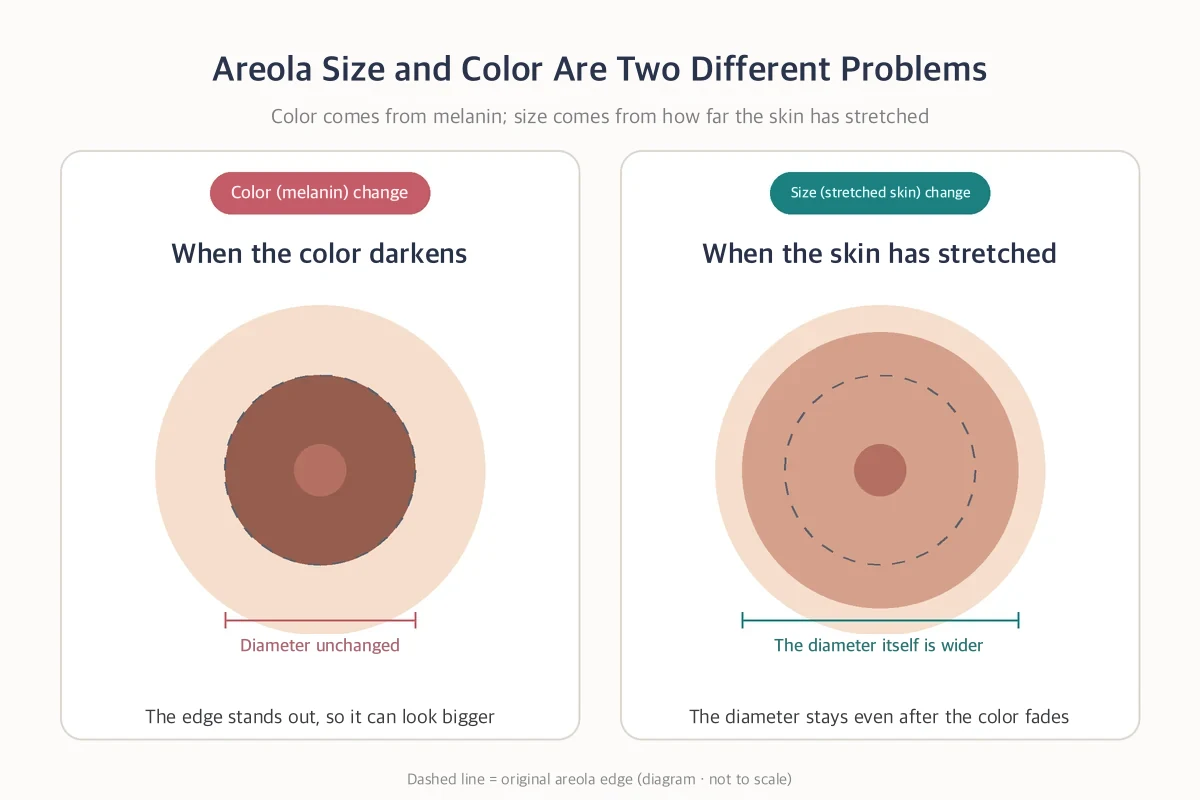
The size and the color of the areola are controlled by different things, so the right approach depends on which one bothers you. Anyone researching how to reduce areola size should start with this split, because it decides everything that follows.
What sets areola size: how far the skin has stretched
The diameter of the areola depends on how far the areolar skin has stretched. When the skin covering the breast and the ligaments that support it stretch along with changes in breast volume, the circle of the areola widens too.
Think of a balloon. Blow it up, let the air out, and the rubber is looser than it was before. In the same way, when the breast grows and then shrinks again, it is common for some extra skin to be left behind.
What sets areola color: melanin
The color of the areola is set by the amount of melanin, the pigment made by melanocytes (the cells that give skin its color). During pregnancy, hormones stimulate these cells throughout the body, so the nipples, the areolas and the skin of the lower belly all tend to darken.
If you have had a baby, both changes often happen together. The color deepens during pregnancy, and the skin stretches as the breast fills and empties through breastfeeding. Sometimes it is only after the color fades that you can see how much the areola has really widened, which is exactly why the question of how to reduce areola size is best answered in stages.
A mirror check: darker, or actually wider?
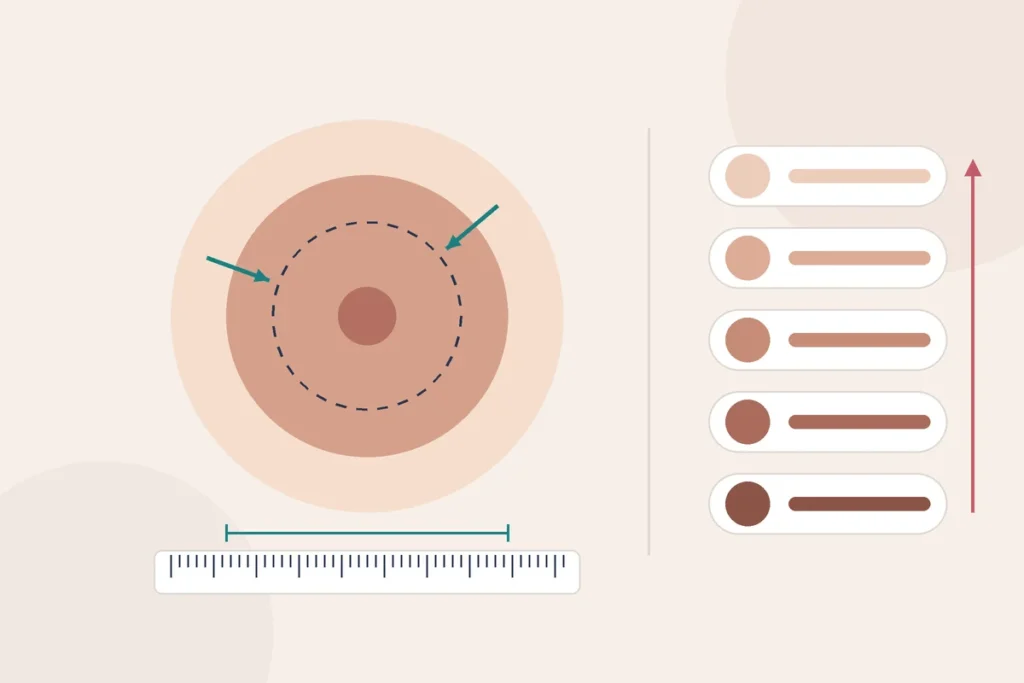
When the areola darkens, its edge stands out more sharply against the surrounding skin, so it can look bigger than it really is. On the other hand, if the color is fairly light but the edge itself sits further out, the diameter has genuinely widened.
Stand in front of a mirror in good, even light and ask two separate questions. Has the color changed? And has the outer edge moved? In my clinical experience, quite a few women who come in saying “my areolas got bigger” actually have more of a color change than a size change. If it is the nipple rather than the areola that concerns you, our guide to normal nipple size covers that question separately.
Dr. Lee’s Key Point: Before choosing how to reduce areola size, separate size from color. Find out whether the areola looks bigger because it is darker, or because its edge has really moved outward.
5 Reasons Areolas Get Larger — and Which Ones Shrink on Their Own
Areolas usually get larger for one of five reasons: pregnancy and breastfeeding, puberty, weight change, breast sagging, or simply natural size. Some of these change over time; others stay the same no matter how long you wait. That is why the answer to how to reduce areola size differs for each cause.
Temporary changes: pregnancy, breastfeeding and puberty
Pregnancy and breastfeeding are the most common reasons areolas get larger. Hormones darken the color, and as the breasts grow, the areolar skin stretches along with them. Each pregnancy can affect the areolas a little differently, too.
Dermatology textbooks describe pregnancy-related darkening as often fading within several months after delivery, while some pigment, especially melasma-type pigment, can take years to fade. Melasma here means the patchy, hormone-driven darkening many women notice on the face during pregnancy.
Size is the harder part. Skin that has stretched during the swing in breast volume often does not shrink all the way back. That is why the color can recover while the diameter stays wider.
Puberty can also make the areolas look large for a while. Plastic surgery textbooks note that most women reach breast maturity by age 16–18, when areolas that enlarged during development look relatively smaller. Doctors call this final step Tanner stage 5, which simply means the breast has finished developing and the areola now sits flush with the rounded breast instead of forming a small mound of its own.
Stretched-skin changes: weight loss and breast sagging
With weight change, the breast can lose volume while the skin that has already stretched stays behind. So if weight is the main cause, the chance that the areola returns to its old size on its own is relatively low.
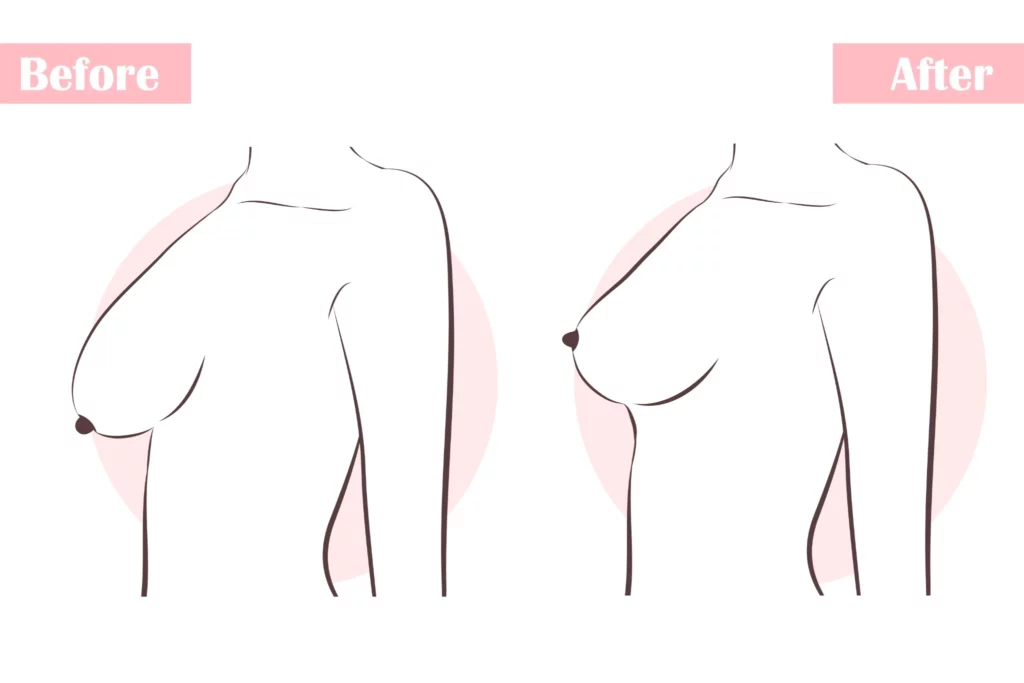
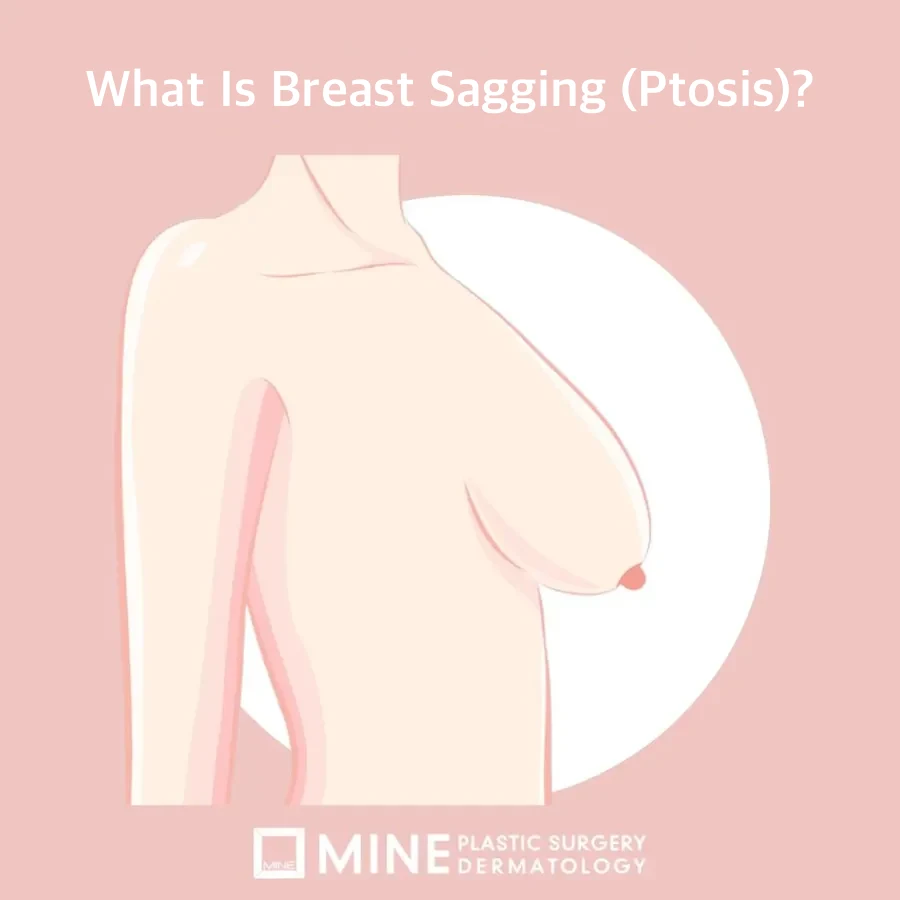
With breast sagging (ptosis), the areola tends to look larger as the breast moves lower. Sagging starts when the skin covering the breast and the ligaments that hold it up stretch out, so in this case it is hard to look at the areola in isolation.
Naturally large areolas
Some women have always had wider areolas. This is not a “change,” so waiting will not alter it. Here the yardstick is not a medical “normal range” but how much it bothers you. Enlarged areolas in men have different causes, such as glandular breast tissue, so this article does not cover them.
| Cause | What happens to size | What happens to color | Worth waiting? |
|---|---|---|---|
| Pregnancy & breastfeeding | Stretched skin may not fully recover | Often fades after delivery (varies widely) | Yes — until things settle after breastfeeding |
| Puberty | Looks relatively smaller once the breast matures | Varies | Yes — until development is complete |
| Weight change | Skin can stay stretched even as volume drops | Little effect | Assess after holding goal weight |
| Breast sagging | Looks larger as the breast descends | Little effect | Waiting rarely helps |
| Natural size | No change | No change | Waiting won’t change it |
A “Yes” in the table does not mean the areola is sure to return to how it was. It means there is a good reason to watch and wait rather than decide in a hurry. Even with the same cause, results differ from person to person depending on skin elasticity and how much breast volume has changed.
It is also common for two or more causes to overlap. If your weight changed a lot after having a baby, for example, look at each factor separately. Once you have narrowed down the cause, the right answer to how to reduce areola size in your own case becomes much clearer.
Dr. Lee’s Key Point: Pregnancy, breastfeeding and puberty are causes worth waiting out. Weight change, sagging and natural size rarely change the diameter with time alone.
Large Areolas After Pregnancy: How Long to Wait Before You Judge
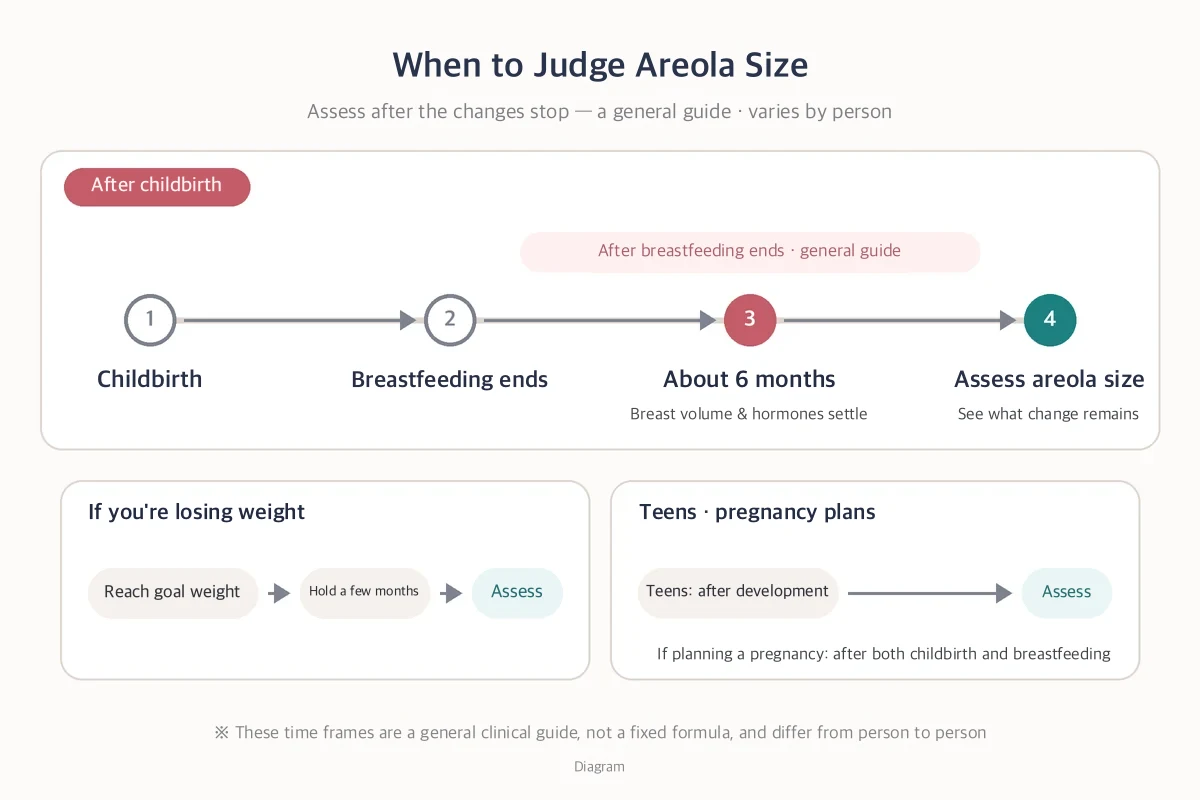
When you are working out how to reduce areola size, timing matters as much as method. Large areolas after pregnancy are best assessed once breastfeeding has ended and the breasts have settled. Judge too early and you end up making a decision based on a body that is still changing.
After breastfeeding: give it about 6 months
While you are breastfeeding, breast volume and hormone levels keep shifting. A common clinical guide is to wait about 6 months after breastfeeding ends before judging areola size, so that volume and hormones have time to settle.
This is a rule of thumb used in practice, not a fixed formula. In my clinical experience, once that period has passed, color and volume have usually found their new baseline, and it becomes much easier to see what change is actually left.
If you are losing weight: hold your goal weight first
If you are in the middle of losing weight, the shape of your breasts changes along with the number on the scale. It is more accurate to reach your goal weight, hold it steadily for a few months, and then take stock.
Planning another pregnancy, or still in your teens
If you plan to have more children, the general principle is to put off any decision that changes areola size until you have finished both childbirth and breastfeeding. Another pregnancy can change the breasts and areolas all over again.
If you are a teenager, your breasts may still be developing, so hold off on judging for now. As mentioned above, the proportion of the areola often changes once the breast reaches maturity. Parents asking on behalf of a teenage daughter can take some reassurance from this, too.
While you wait, what you can do is simpler than you might think. Sun protection is enough. If you are pregnant or trying to conceive, I recommend avoiding lightening creams altogether, whether prescription or over the counter.
Keep a photo log while you wait
Surprisingly, one of the most useful tools for deciding how to reduce areola size is a set of photos you take yourself. About once a month, take a front view and a side view in the same place, under the same light and in the same pose. That shows objectively whether things have stopped changing.
Track two things separately: how fast the color is fading, and where the outer edge sits. If the color keeps getting lighter but the edge stays in the same place, the concern that remains is most likely size. A record like this also makes the conversation with your surgeon much more specific.
Dr. Lee’s Key Point: Waiting is not wasted time. It is the time you spend collecting what you need for an accurate decision.
Can Lightening Creams or Lasers Reduce Areola Size?
No, not the diameter. Lightening creams and lasers target pigment, so the color of the areola can fade while its diameter stays the same. Many people searching for how to reduce areola size without surgery start with an areola lightening cream, so it helps to understand this difference first.
Where creams and lasers actually work
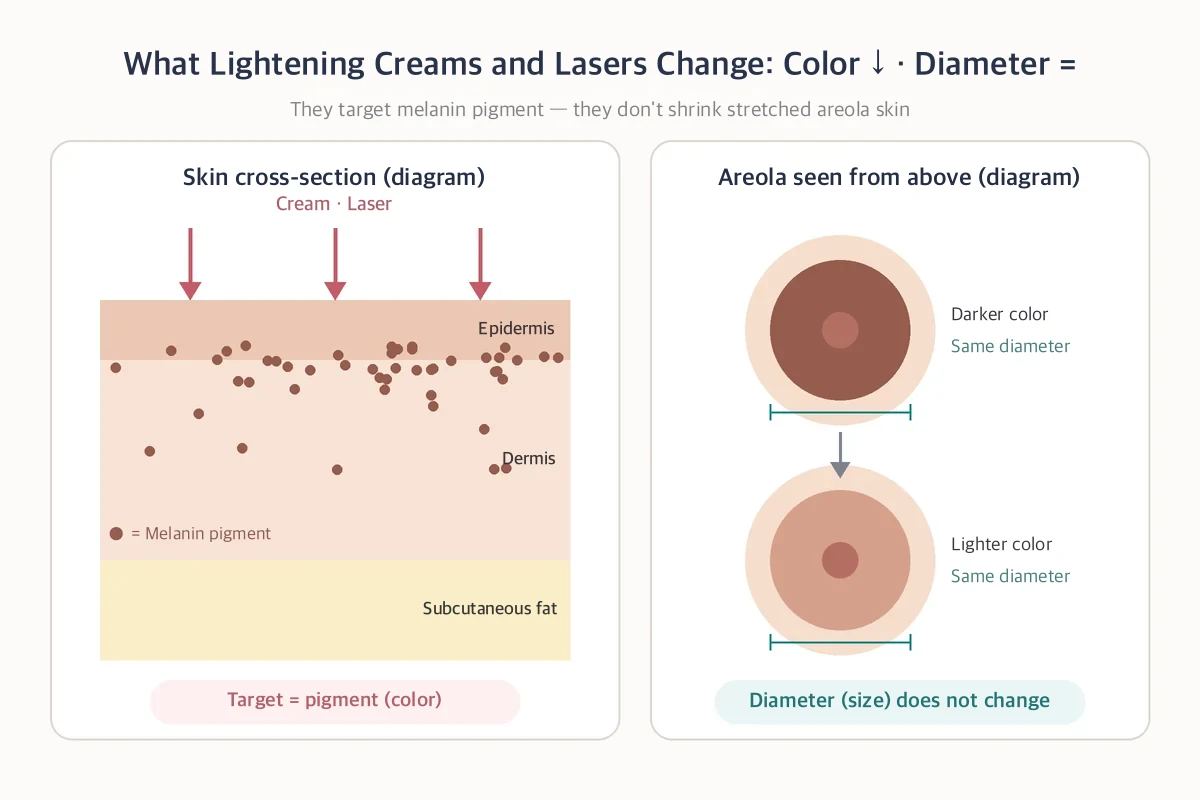
Lightening creams and lasers act on melanin in the top two skin layers, so they can change color but not the diameter. These two layers are the epidermis (the thin outer layer) and the dermis (the thicker layer beneath it). In other words, they are tools for treating color.
Hydroquinone-type creams are a standard topical option. According to dermatology textbooks, they work by blocking tyrosinase, the enzyme that helps melanocytes make pigment, so less new pigment is produced. That is not the same as removing pigment for good. Melanocytes keep working, so keeping the color lighter takes ongoing care and daily sun protection. If you are breastfeeding, talk to your doctor before using any of these products.
Why the diameter stays the same when the color fades
When the color fades, the edge stands out less, so the areola can look smaller. But the stretched skin around it, which is the diameter itself, does not change. Reducing pigment simply does not reduce skin.
So if you are counting on a cream or a laser as your answer to how to reduce areola size, be clear about what you expect from it: lighter color, or a smaller circle? A color concern falls within dermatology. For general background on pigment conditions such as melasma, the American Academy of Dermatology has patient-friendly information.
Exercise, massage and dieting: what they can’t do
There is no medical evidence that exercise or massage can shrink the diameter of the areola. There is no muscle under the areola that exercise can strengthen or tighten to shrink it. You may notice the areola puckering briefly in the cold or when touched. That comes from tiny smooth-muscle fibers reacting for a moment. It is a passing reflex, not a lasting change in diameter.
Dieting is no different. When you lose weight and breast volume drops, you are more likely to be left with extra skin, not less. Losing weight, in other words, does not make the areola smaller. So can areola size shrink naturally? With pregnancy-related and puberty-related changes, partly; with weight, sagging or natural size, rarely.
Dr. Lee’s Key Point: When you think about how to reduce areola size, remember that a color concern calls for color care, and a size concern calls for a method that changes size. Think about the two separately.
When a Surgical Consultation Makes Sense
Once the waiting period for your cause has passed and the edge itself is still wide, that is when a surgical consultation becomes meaningful. Of all the options for how to reduce areola size, the only one that physically changes the diameter is removing some of the stretched areolar skin and closing the edge with stitches.
4 signs it may be time to talk to a surgeon
- The waiting period for your cause has passed.
- The edge (the diameter) is wide, not just the color.
- You have tried caring for the color, and it still bothers you.
- Your plans for future pregnancy and breastfeeding are settled.

When you come in, it helps to bring the following:
- The photos you took while waiting
- When you last breastfed
- Your plans for future pregnancies
- Any previous breast surgery or procedures
With this information, we will first work out whether now is the right time to decide at all. If several of the four signs apply to you, I recommend an in-person examination to check your skin condition and whether there is any sagging.
If your breasts have also sagged, look beyond the areola
Textbooks commonly use a three-step guide for breast lift surgery based on how much the breast has dropped: an incision around the areola for mild sagging, a vertical incision for moderate sagging, and an anchor-shaped (inverted-T) incision for severe sagging. The differences between these approaches are explained in our article on breast lift incision methods.
The surgical literature recommends reserving periareolar (around-the-areola) lifting for large areolas with only minimal sagging, no more than 2 cm. Removing skin only around the areola does very little to lift the breast itself. So if sagging is what makes your areolas look larger, it is worth deciding whether a breast lift is needed instead of reducing the areola alone.
Where the procedure details live
How the incision is designed and what recovery looks like go beyond the scope of this article. You can read how areola reduction is performed at MINE on our dedicated procedure page.
In the end, what matters most is an examination in which a surgeon looks directly at the cause, your skin and any sagging. Before any consultation, also confirm that the doctor is a board-certified plastic surgeon; the Korean Society of Plastic and Reconstructive Surgeons is a good starting point for surgeons in Korea.
Dr. Lee’s Key Point: The only way to change the diameter is to reduce stretched skin. And if your breasts have sagged, look at the whole breast before the areola.
Limits and Side Effects to Know Before You Decide
Surgery is the most direct answer to how to reduce areola size, but it is still surgery, so it has limits and possible side effects. Rather than a recovery schedule, this section covers only the limits you need to know to decide whether to go ahead at all.
Possible side effects: scarring, asymmetry, sensation changes, breastfeeding
Problems that can occur after surgery include a difference between the two sides, raised and thickened scars (hypertrophic scars), changes in nipple sensation, and difficulty breastfeeding. How likely and how noticeable these are depends on your skin and the extent of the surgery.
The areola can widen again over time
After surgery that leaves a scar around the areola, the areola and the scar can gradually widen again. This tends to show up well after the operation, not right away. Factor this possibility into your decision rather than assuming the early result will stay exactly the same.
Why you should mention the surgery at breast screening
After surgery around the areola, bands of scar tissue or small calcium deposits behind the areola may show up on a mammogram. These are usually changes caused by the surgery itself, but telling the screening team about your operation helps them read the images correctly.
Dr. Lee’s Key Point: Areola surgery trades a wider areola for a scar, and the areola may widen again over time. Whether those two trade-offs are acceptable to you is the real deciding point.
Frequently Asked Questions
How long does it take for areolas to go back to normal after pregnancy?
Darkened color often fades over several months after delivery, but this varies widely and some pigment can take years. Stretched skin, however, may not shrink back on its own. As a general guide, wait about 6 months after breastfeeding ends, then judge what change remains.
Can areola size shrink naturally?
It depends on the cause. During puberty, areolas look relatively smaller once the breast matures, and pregnancy-related changes partly settle. Changes from weight loss, sagging or natural size, however, rarely alter the diameter with time alone, so waiting longer usually will not help.
Can an areola lightening cream reduce areola size?
No. A lightening cream acts on melanin, so it can fade the color but leaves the diameter unchanged. A lighter areola may look less prominent. Results need ongoing care and sun protection, and these creams are not recommended if you are pregnant or trying to conceive.
Will losing weight make my areolas smaller?
Usually not. Even when breast volume drops, stretched skin can remain, so the areola is unlikely to get smaller, and sagging may become more noticeable. If you are losing weight, hold your goal weight for a few months before you assess your areolas.
At what age can you judge areola size?
After breast development is complete. Areolas can look large while the breasts are developing and then look relatively smaller at maturity, which most women reach around age 16–18. An areola that seems wide in the mid-teens may still change in proportion afterward.
Does reducing the areola also lift sagging breasts?
Not much. The surgical literature describes removing skin only around the areola as having very little lifting effect on the breast itself. If you have sagging as well, a breast lift may need to be considered, and the degree of sagging can only be judged accurately in person.
Not Sure Which Cause Applies to You?
To sum up, how to reduce areola size begins with looking at size and color separately. If your cause is one worth waiting out, such as pregnancy, breastfeeding or puberty, give it time. If color is the issue, focus on color care. If the diameter itself is the issue, that is the time to think about a consultation.
Because skin condition and the degree of sagging differ from person to person, the best plan for how to reduce areola size differs from one woman to the next. For an accurate assessment, I recommend an in-person consultation at MINE Plastic Surgery & Dermatology in Seoul. If surgery is not what you need, I will tell you that honestly. Costs depend on your individual situation, so they are discussed during consultation. You can request a one-on-one consultation through our online consultation form or by phone at +82-2-516-1175.
Written and reviewed by Dr. Lee Sung-wook, Board-Certified Plastic Surgeon, MINE Plastic Surgery & Dermatology | 813 Nonhyeon-ro, Gangnam-gu, Seoul | +82-2-516-1175
Sources: Plastic surgery and aesthetic breast surgery textbooks (breast development, mastopexy and complications chapters); cosmetic dermatology textbooks (pregnancy-related pigmentation and topical lightening agents).
※ This content is for informational purposes only and does not replace professional medical advice, diagnosis, or treatment. Individual results may vary, and side effects may occur. Please consult with a board-certified plastic surgeon for personalized advice.