EN


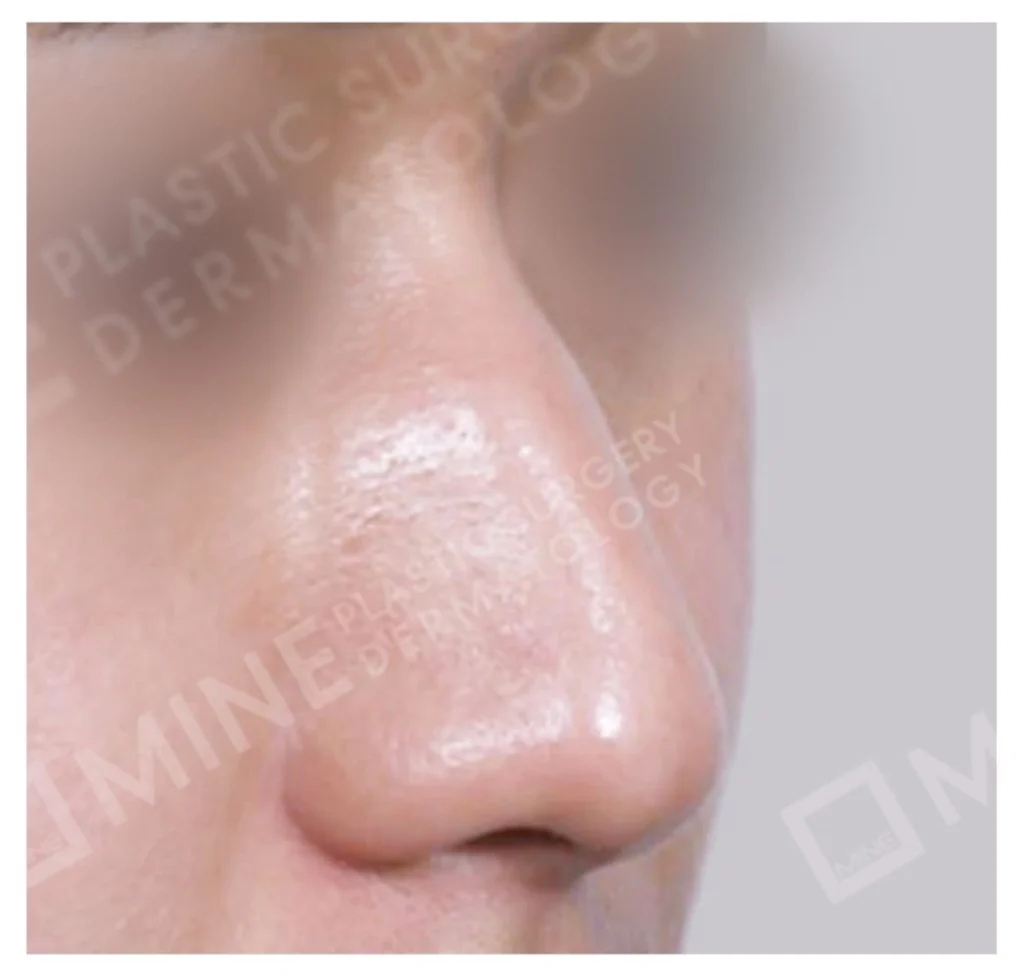
A nose hump (dorsal hump) is a bump on the bridge of the nose, usually where the nasal bone meets the cartilage. What causes a nose hump is most often inherited overgrowth of that bone and cartilage, but injury, an overgrown or deviated septum, and a drooping tip with age can also create one.
Many patients tell me the same thing in consultation: “From the front my nose looks fine, but I hate my profile.” Some were born with the bump. Others noticed it after a sports injury, or only in their forties. Almost all of them ask the same question before anything else: why do I have it?
That question matters more than most people realize. The cause decides which part of the nose needs work: bone, cartilage, the septum or the tip. In this article I go through the 7 common causes one by one, then show how each cause points to a different kind of correction.
What Causes a Nose Hump? The Short Answer
In one sentence each, here are the 7 causes I see most often:
- Bone and cartilage overgrowth where the nasal bone and cartilage meet, present from birth.
- Family traits: the same bridge shape often runs through parents and children.
- An overgrown septum (the wall dividing the two nostrils) that pushes the bridge upward.
- A nasal fracture that healed with extra bone or cartilage.
- Long-term pressure from glasses, which is a rare contributor.
- Aging, when the tip drops and the bridge above it starts to look humped.
- A deviated septum, which often comes together with a hump and a crooked nose.
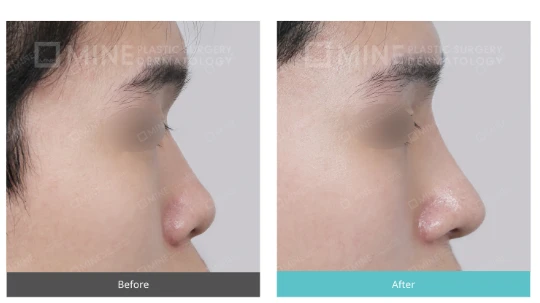
A hump shows mainly in profile. From the front, many people look completely ordinary, which is why the bump often surprises them in photos. It also frequently comes with a tip that points slightly downward, and that combination can make the face look sharper or more severe than the person’s actual expression.
Before anyone talks about surgery, I want to know which of these causes is at work. Two noses can look almost identical from the side yet need very different operations.
Dr. Lee’s Key Point: A hump is a profile problem first. Find the cause before you choose the fix.
Where a Nose Hump Forms: Bone, Cartilage and the Junction
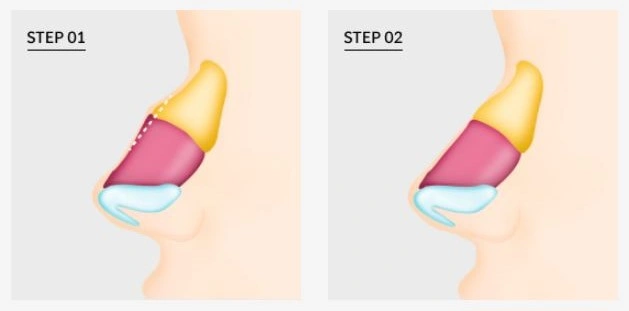
To understand what causes a nose hump, it helps to know what the bridge is made of. Anatomy and plastic surgery textbooks describe the nose in 3 zones: the upper third is bone (the nasal bones), the middle third is cartilage (the septum plus two side panels called upper lateral cartilages), and the lower third is the softer tip cartilage.
Most humps sit right where the upper and middle zones meet, at the bone-cartilage junction. Many people assume a hump is “a bone problem,” but that is often not the case. In my clinical experience, about 70% of humps are made up mainly of cartilage rather than bone. This changes the plan: cartilage can be trimmed precisely, while bone usually needs to be filed smooth.
Inborn Causes of a Bump on the Nose Bridge
For most of my patients, the hump was there long before anything happened to their nose. It usually becomes obvious in the teenage years, when the face finishes growing. When people ask me what causes a nose hump that “has always been there,” the answer is almost always one of the three inborn causes below.
Bone and cartilage overgrowth at the junction
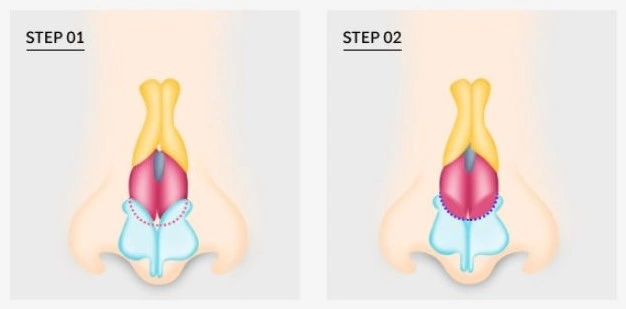
In some people, the central part of the nasal bone and the cartilage just below it simply grow more than the rest of the bridge. The result is a raised ridge at the junction. When the extra tissue is mostly cartilage, it can be shaved down in thin, controlled amounts. When the bony part is larger, the bone is smoothed with a fine file (a rasp) so the line stays even.
Family traits
Nose shape is strongly inherited. If one of your parents has a pronounced bridge, the chance that you have one is higher. A family trait is not a separate kind of hump, though. It simply means you inherited one of the structural patterns described here, so the correction still depends on what the hump is made of and how high the rest of your bridge sits.
An overgrown septum pushing the bridge up
The septum is the thin wall of cartilage and bone that divides the inside of your nose. Its top edge supports the bridge from below. If the septum grows too much, it can push the cartilage part of the bridge upward and create or enlarge a hump. In that case, trimming the outside alone is not enough. The top of the septum also has to be lowered carefully, while leaving enough support so the bridge does not sag.
Dr. Lee’s Key Point: An inborn hump is usually mostly cartilage, so the job is careful trimming, not aggressive bone cutting.
Acquired Causes: Injury, Glasses Pressure and Aging
A hump can also appear later in life. These “acquired” causes are less common than inborn ones, but they are important because they often bring other changes with them, such as a crooked line or a weakened tip.
Nasal fracture that heals with extra bone or cartilage
When the nose is broken, the bone and cartilage try to repair themselves. Sometimes they heal with extra tissue at the injury site, or the pieces knit together slightly out of line. Either way, a bump can form on the bridge where there was none before. A hump after injury is more likely to come with a crooked bridge or a shifted septum, so these noses need a closer look before any planning.
Long-term pressure from glasses (rare)
Constant pressure from the nose pads of heavy glasses has been described as a possible contributor to changes in the bridge. I want to be clear that this is uncommon. Most people who wear glasses every day never develop a hump from them, and when a patient blames their glasses, the real cause usually turns out to be inborn.
Aging: a dropping tip that makes the bridge look humped
With age, the tip cartilage loses some of its support and the skin over it stretches. The tip slowly drops. The bridge itself has not grown, but because the point of the nose now sits lower, the upper part of the bridge looks like it sticks out. This is a “pseudo” hump: the bridge is not too high; the tip has lost its support. The fix is usually to restore the tip, not to take bone away.
Dr. Lee’s Key Point: A hump that appears after an injury or with age often hides a second problem: a crooked bridge or a weak tip.
Deviated Septum and Crooked Nose: The Hidden Partner of a Hump
One finding surprises many patients. In my clinical experience, roughly 7 in 10 people who come in for a nose hump also have a crooked nose, even if they never noticed it. The bridge may lean slightly to one side, or the septum inside may be bent.
A deviated septum can be part of the cause, not just a side note. Patients with long-standing rhinitis or sinus problems are a good example. In some of them, the bent septum is contributing to both the blocked breathing and the shape of the bridge. In that situation, I recommend correcting function and shape in the same operation. If the hump is lowered but the septum is left bent, the bridge can look uneven again later, and breathing does not improve.
If your nose leans to one side as well, our page on crooked nose correction explains how the two problems are treated together.
True Hump or Pseudo Hump? A Quick Check
All the causes above fall into two groups. A true hump is real excess bone or cartilage on the bridge. A pseudo hump appears when the tip has dropped, so a normal bridge only looks humped. True humps usually need the extra tissue removed. Pseudo humps often improve with tip support alone, sometimes with little or no hump removal. Many Korean patients who were told they “need the bone shaved” actually fall into the second group. For simple ways to see which group you are in, read our guide on how to tell a pseudo hump from a true hump.
Asian Hump Nose with a Low Bridge: Why Shaving Alone Is Not Enough
Western hump surgery is often about making a large nose smaller. In my experience, many Korean and East Asian humps are a different problem. The hump itself is modest, but the area between the eyes is low and the tip sits low too. Lifting the tip and the upper bridge is often the real goal.
A low radix makes a modest hump look bigger
The radix is the deepest point of the nose, between the eyes. Plastic surgery textbooks note that most Asian rhinoplasty patients have a relatively low bridge, and that its height should be judged against the whole side profile, from the forehead down to the lips and chin. When the radix is low, even a small bump in the middle of the bridge stands out, because there is nothing above or below it to balance the line.
Why removing more is the wrong answer
If a surgeon tries to create a straight line by shaving the hump down to the level of a low radix, the whole nose ends up flat. Textbooks describe the opposite approach: when the radix is raised, the amount of hump that actually needs to be removed becomes smaller. In practice, that means gently smoothing the hump, then building up the radix and tip with your own cartilage or a custom implant.
If your main concern is a flat bridge more than the bump, our article on rhinoplasty for a low nose bridge covers the options in more detail.
Dr. Lee’s Key Point: With a low bridge, the right move is usually to build up above and below the hump, not to cut more of it away.
From Cause to Fix: Matching Your Hump to a Surgical Plan
Once you know what causes a nose hump in your case, the plan follows naturally. The table below links each cause to what usually needs correcting. The last column shows the profile pattern I most often see with that cause, sorted into four cases by radix height, hump size, nasal bone width and tip position: Case 1 (low radix, small hump), Case 2 (a moderate or larger hump), Case 3 (large hump with wide nasal bones) and Case 4 (higher radix with a drooping tip). The final plan always depends on examination and imaging, so treat this as a map, not a prescription.
Cause-to-fix table
| Cause | What usually needs correcting | Typical profile pattern |
|---|---|---|
| Bone and cartilage overgrowth | Trim the cartilage part; smooth the bony part with a rasp | Case 2: a moderate or larger hump, removed with cartilage and smoothed |
| Family trait | Depends on which structure was inherited (bone, cartilage or septum) | Any of Cases 1–3 |
| Overgrown septum | Lower the top of the septum along with the cartilage hump, keeping support | Case 2 |
| Healed nasal fracture | Smooth the extra tissue; straighten the bridge; reshape bones if they are wide or shifted | Case 3: large hump with wide nasal bones, needs bone narrowing |
| Glasses pressure (rare) | Usually minor smoothing once other causes are ruled out | Usually a mild pattern, such as Case 1: low radix, small hump, light rasp plus radix/tip lift |
| Aging tip droop | Support and lift the tip with your own cartilage; little hump removal | Case 4: higher radix, drooping tip, hump removed and tip raised |
| Deviated septum | Straighten the septum and the crooked bridge together | Combined with any case |
Not every hump needs the nasal bones cut. Bone-narrowing cuts (an osteotomy) are added only when the bones are wide, or when removing a large bony hump leaves an “open roof,” a flat gap on top of the nose that has to be closed. For the surgical steps themselves, see our full guide to hump nose rhinoplasty in Korea, and for how we plan treatment, visit our page on dorsal hump correction at MINE.
Who may not need hump removal at all
If your hump is a pseudo hump from a dropped tip, or a small bump that only looks large because your radix is low, removing it may not be necessary. Lifting the tip or raising the radix can make the bridge look straight on its own. Many patients are relieved to hear this.
Surgery at a glance
Hump correction at MINE usually takes about 1.5 to 2 hours under sedation or local anesthesia, with stitches removed 5 to 7 days later.
| Item | Typical range |
|---|---|
| Operating time | About 1.5–2 hours |
| Anesthesia | Sedation or local anesthesia |
| Stitch removal | Day 5–7 after surgery |
| Follow-up visits | 3–4 visits |
Dr. Lee’s Key Point: Bone cutting is not automatic. It is added only when your bones are wide or a large hump leaves a gap.
Recovery and Precautions
What to expect week by week
In the first week, bruising and swelling are normal. They are more noticeable around the eyes if the nasal bones were reshaped. A little bleeding inside the nose is common and usually stops quickly. The discomfort feels somewhat like a bumped nose and is strongest in the first 2 to 3 hours, then eases.
Most bruising fades within 1 to 2 weeks, and most people return to daily life in that time. Most swelling settles by about 3 months, while the final profile keeps refining for 6 to 12 months. For a general overview of nose surgery recovery, see this rhinoplasty overview from the American Society of Plastic Surgeons.
Rare complications
Any surgery has risks, and I prefer to name them openly. Infection can occur despite sterile technique. Perfect symmetry is not always possible because nasal bones are rarely symmetrical to begin with. In thin skin, the edge of an implant may show through, which is why we often recommend your own tissue instead. Contracture, where the skin over the nose stiffens and pulls the tip up, can develop over time; caught early, it can be corrected.
Planning also matters. Rhinoplasty textbooks list at least 5 problems that can follow a hump taken down without protecting the cartilage walls of the middle bridge, ranging from an uneven surface to a narrowed airway. That is why the hump is reduced gradually and the bridge is rebuilt smooth afterward.
Pre- and post-surgery checklist by cause
- 2 weeks before: after checking with your doctor, stop aspirin, vitamin E and other products that increase bleeding.
- 1 week before: no alcohol or smoking, as both slow healing.
- Day of surgery: no makeup or contact lenses; wear comfortable clothes.
- Week 1: do not blow your nose hard, avoid bending your head down, sleep with your head above your heart, and take medication as prescribed.
- Weeks 2–4: no glasses resting on the nose, no hard exercise, no sauna or hot rooms.
- After about 1 month: glasses are usually fine again, and light exercise can begin.
- If your hump came from a fracture: avoid contact sports and anything that risks another blow until your surgeon clears you.
- If you have a deviated septum: report any new blockage or breathing change at follow-up.
Dr. Lee’s Key Point: Keep pressure off your nose for the first month, and give an injured nose extra protection.
Frequently Asked Questions About Nose Hump Causes
Is a nose hump genetic?
Often, yes. Genes are the most common answer to what causes a nose hump: overgrowth of bone and cartilage at the bridge tends to run in families, which is why many people inherit a profile similar to a parent’s. Injury and aging can also create or reveal a hump in someone without that family trait.
Can a nose hump appear later in life?
Yes. A hump can form after a nasal fracture that heals with extra bone or cartilage. With age, the tip can also lose support and drop, making the bridge look humped even though it has not grown.
Can wearing glasses cause a bump on your nose?
Rarely. Long-term pressure from heavy glasses may contribute, but it is an uncommon cause, and most humps are inborn. After hump surgery, glasses are usually kept off the nose for about 1 month.
Does a broken nose always leave a hump?
No. A hump forms only when the bone or cartilage heals unevenly or with extra tissue. If you injure your nose, having it examined once the swelling goes down helps catch a shift or a crooked bridge early.
Why does my nose hump look bigger in photos than in the mirror?
You rarely see your own profile in a mirror, but cameras often catch it. A hump shows mainly from the side, and a low radix or drooping tip makes it look larger.
Can a nose hump come back after surgery?
A properly removed hump rarely returns. When a bump seems to come back, it is usually because the underlying cause, such as a bent septum or weak tip support, was not corrected at the first operation. That is why I identify the cause before deciding what to remove.
Find Out What Is Causing Your Nose Hump at MINE
So, what causes a nose hump in your case? The answer is not always visible from the outside. At MINE Plastic Surgery in Seoul, we use 3D-CT imaging to see how much of your hump is bone and how much is cartilage, how wide your nasal bones are, and whether your septum is straight. That picture tells us whether you need trimming, bone work, tip support, or a combination.
If you are abroad, you can start with an online consultation: send clear front and side photos of your nose, and I will review the likely cause before you travel. You can also reach us by phone at +82-2-516-1175.
Written and reviewed by Dr. Lee Sung-wook, Board-Certified Plastic Surgeon, MINE Plastic Surgery | 813 Nonhyeon-ro, Gangnam-gu, Seoul | +82-2-516-1175
Sources: Plastic surgery textbooks (aesthetic rhinoplasty, Asian rhinoplasty and dorsal hump reduction chapters); MINE Plastic Surgery clinical experience.
※ This content is for informational purposes only and does not replace professional medical advice, diagnosis, or treatment. Individual results may vary, and side effects may occur. Please consult with a board-certified plastic surgeon for personalized advice.