EN
EN

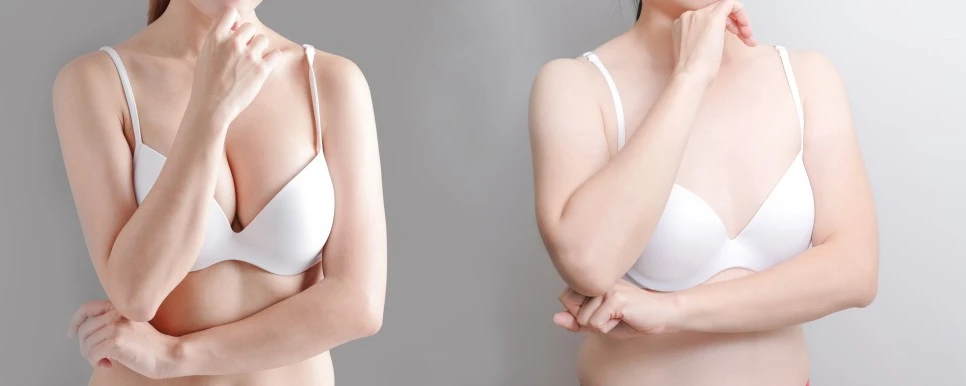
Breast augmentation is one of the most popular cosmetic procedures for enhancing body proportions and restoring confidence. In recent years, fat transfer breast augmentation has gained popularity alongside traditional implant methods. While both techniques aim to enhance breast volume, they differ significantly in approach and results. Which method might be right for you? This comprehensive guide compares fat transfer and implant breast augmentation, examining their differences, advantages, drawbacks, and ideal candidate profiles.
Table of contents
Two Approaches to Breast Augmentation: Overview
Breast augmentation surgery primarily falls into two categories: implant-based methods and fat transfer techniques. Implant insertion has a longer history as the traditional approach, while fat transfer represents a relatively recent advancement in aesthetic surgery.
In cosmetic surgery, fat transfer breast augmentation is an autologous procedure — it uses only your own fat. Surgical literature describes purified fat as a near-ideal natural filler: it is well tolerated, carries a low complication rate, and can even improve the quality of the overlying skin.
Key Features of Implant Breast Augmentation
- Uses silicone or saline implants
- Provides predictable volume enhancement with consistent results
- Relatively short surgical time (1-2 hours)
- Offers various sizes and shapes to choose from
- Requires insertion of artificial materials into the body
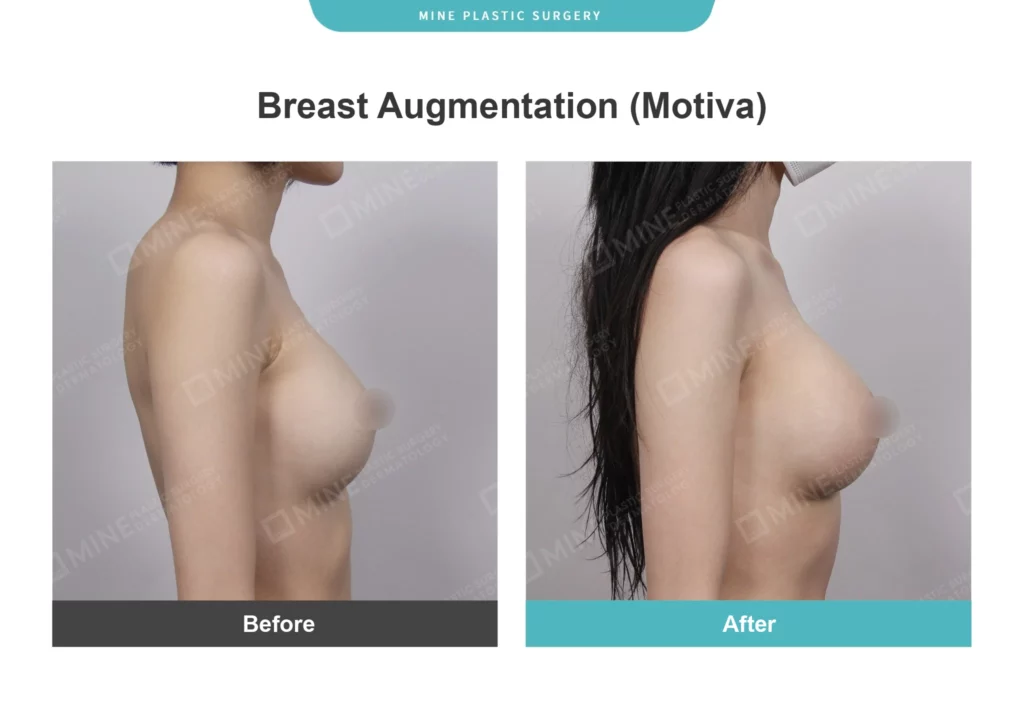
Key Features of Fat Transfer Breast Augmentation
- Uses your own natural fat tissue for enhancement
- Delivers dual benefits of fat reduction and breast enhancement
- Some transferred fat may be reabsorbed over time
- Limited ability to achieve dramatic size increases
- No concerns about foreign material reactions
Both fat transfer breast augmentation and implants effectively improve breast size and shape, but the most suitable approach varies based on individual body characteristics, desired outcomes, and lifestyle factors.
Fat Transfer Breast Augmentation: Natural Results
Fat transfer breast augmentation uses your body’s own tissue, making it increasingly popular as techniques continue to advance.
How much of the moved fat lasts is the central question with fat transfer breast augmentation. Studies that measured breast volume with MRI and 3D imaging show that a meaningful share of the grafted fat survives long term, though retention varies widely between patients — it depends on the fat’s new blood supply, the surgeon’s injection technique, and individual healing. Fat that does not gain a blood supply is simply reabsorbed within the first few months, which is completely normal. That balance of softness and permanence is what draws many patients to fat transfer breast augmentation.
Advantages of Fat Transfer Breast Augmentation
- Natural results: Using your own tissue creates extremely natural feel and appearance
- Dual benefits: Slim down donor areas while enhancing breast volume
- No foreign materials: Eliminates implant-related complications
- Minimal scarring: Fat injection requires only tiny incisions
- No allergic reactions: Using autologous tissue prevents rejection issues
Limitations of Fat Transfer Breast Augmentation
- Fat reabsorption: 20-40% of transferred fat may be reabsorbed over time
- Multiple procedures: Significant enhancement may require several sessions
- Donor fat requirements: Sufficient fat reserves must be available
- Unpredictable results: Outcomes vary based on fat survival rates
- Cost considerations: Generally more expensive than implant procedures
The Fat Transfer Procedure
- Liposuction: Fat is harvested from areas like the abdomen, thighs, or arms
- Purification: Extracted fat is processed and prepared for transfer
- Fat injection: Purified fat is carefully injected into breast tissue using micro-cannulas
- Contour refinement: Careful distribution creates natural breast contours
Fat transfer breast augmentation utilizes advanced fat grafting technology and offers an excellent option for those seeking natural results or who prefer to avoid implants.
Implant Breast Augmentation: Reliable Volume
Implant-based breast augmentation provides quick and dependable volume enhancement through traditional methods. Modern medicine has significantly improved implant safety and natural appearance.
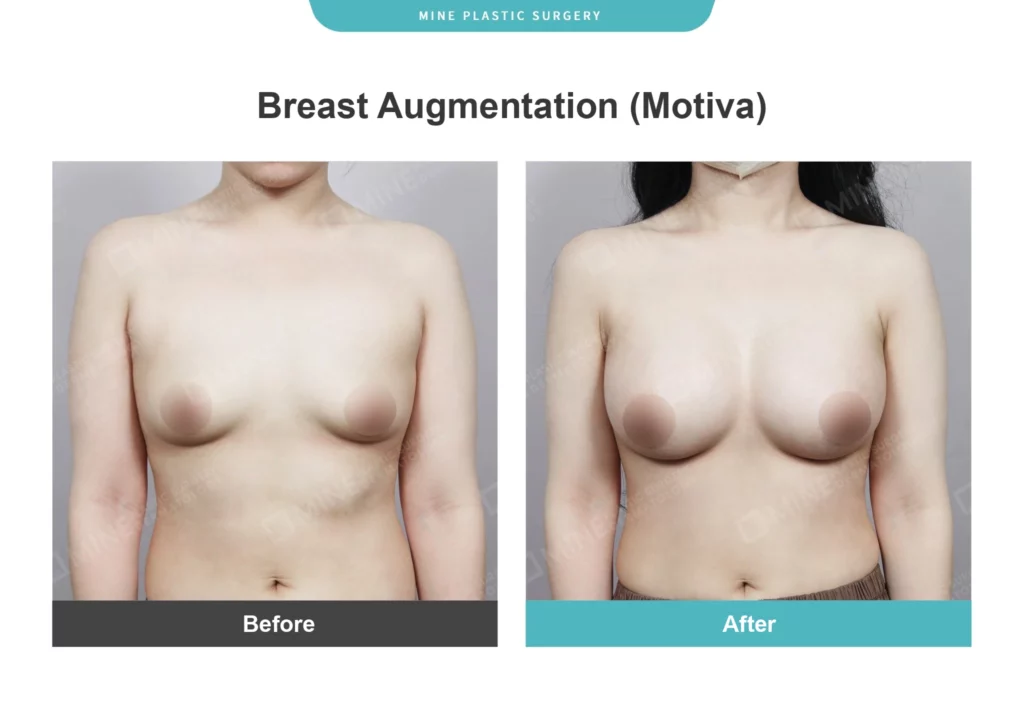
Advantages of Implant Breast Augmentation
- Predictable volume: Precise enhancement to desired size
- Consistent results: Outcomes match pre-selected implant dimensions
- Permanence: No absorption issues as with transferred fat
- Single procedure: Most patients achieve desired results in one surgery
- Universal applicability: Suitable for all body types, including slim builds
Limitations of Implant Breast Augmentation
- Foreign body sensation: Potential awareness of implant presence
- Capsular contracture: Firm tissue may form around implants
- Replacement needs: May require replacement after 10-15 years
- Incision scarring: Relatively larger incisions necessary
- Exercise restrictions: Temporary limitations on chest exercises post-surgery
Types of Implants and Characteristics
- Silicone Gel Implants
- Natural feel and appearance
- Minimal leakage risk if rupture occurs
- Various shapes and textures available
- Saline Implants
- Harmless saline absorption if rupture occurs
- Firmer feel compared to silicone
- Can be inserted through smaller incisions
- Anatomical (Teardrop) vs. Round Implants
- Anatomical: Recreates natural breast slope
- Round: Provides fuller upper breast volume
Implant breast augmentation at mineclinic’s specialized breast enhancement center offers personalized consultations to help select the most appropriate implant for your needs.
How Do Fat Transfer and Implants Feel Different?
One of the most significant considerations when weighing fat transfer breast augmentation against implants is post-surgical sensation. Fat transfer and implants offer distinctly different tactile experiences.
Characteristics of Fat Transfer Breast Sensation
- Natural feeling: Your own fat tissue closely mimics natural breast tissue
- Softness: Naturally soft and pliable texture
- Natural movement: Moves naturally during everyday activities
- Seamless transition: No discernible boundary between transferred fat and existing tissue
- Changes with body weight: Size may fluctuate slightly with weight changes
Characteristics of Implant Breast Sensation
- Modern implants: Latest cohesive gel implants offer significantly improved natural feel
- Firmness: Somewhat firmer sensation than fat transfer
- Palpable edges: Implant margins may be detectable (especially in thin patients)
- Placement differences: Submuscular placement provides more natural feel
- Consistency: Maintains consistent feel over time
Expert Opinions
According to research from the American Society of Plastic Surgeons, both implants and fat transfer yield high patient satisfaction, but those prioritizing natural feel report higher satisfaction with fat transfer breast augmentation.
Patients who prioritize intimate physical contact often prefer fat transfer methods. Conversely, those seeking definitive volume and shape consistency typically report higher satisfaction with implant procedures.
What Body Types Are Ideal for Fat Transfer?
Fat transfer breast augmentation isn’t suitable for everyone. Successful outcomes depend on specific body type requirements.
Because fat transfer breast augmentation moves only a limited amount of fat per session, good candidates need enough spare fat at donor sites such as the abdomen, thighs, or flanks. Surgeons usually plan the volume conservatively and can offer a second grafting session later — often after about six months — if more fullness is wanted.
Ideal Body Types for Fat Transfer
- Sufficient fat reserves: Adequate fat in abdomen, thighs, or flanks
- Appropriate BMI: Normal or slightly elevated BMI (not extremely thin)
- Good skin elasticity: Skin that can properly support transferred fat
- Adequate existing breast tissue: A solid foundation for fat grafting to build on
- Balanced physique: Overall balanced body proportions
Less Suitable Candidates for Fat Transfer
- Very thin builds: Insufficient donor fat available
- Desire for significant enlargement: Seeking more than 1-2 cup size increase
- Significant sagging: Those needing correction for pendulous breasts
- Unstable weight: Fluctuating weight may affect results
- Smokers: May experience reduced fat survival rates
Body Assessment Methods
Professional consultation is essential to evaluate fat transfer potential. Specialists assess:
- Donor site examination: Evaluating quantity and quality of available fat
- Skin elasticity measurement: Assessing supporting capacity
- Current breast tissue evaluation: Analyzing existing tissue quality and quantity
- Overall physique analysis: Evaluating for balanced outcomes
- Health status check: Identifying factors that might affect fat graft survival
If you’re unsure whether your body type suits fat transfer, consider scheduling a personalized breast augmentation consultation at mineclinic.
Comparing Surgical Procedures and Recovery
Breast augmentation methods differ significantly in surgical approach and recovery timeline. Let’s compare both methods:
Fat Transfer Breast Augmentation Surgery and Recovery
Surgical Process
- Liposuction: Fat harvesting under local or general anesthesia
- Fat processing: Purification through centrifugation or other methods
- Fat injection: Precise injection into multiple breast tissue layers
- Procedure duration: Average 2-3 hours
Recovery Process
- Initial recovery: 3-5 days of mild pain and swelling
- Compression garments: Worn on liposuction areas for 4-6 weeks
- Return to daily activities: Typically possible after 1 week
- Exercise limitations: Vigorous activity restricted for 2-3 weeks
- Final results: Visible after 3-6 months when fat stabilizes
Implant Breast Augmentation Surgery and Recovery
Surgical Process
- Incision: Made in armpit, around areola, or in inframammary fold
- Pocket creation: Creating space for implant (above or below muscle)
- Implant insertion: Placing and positioning the selected implant
- Procedure duration: Average 1-2 hours
Recovery Process
- Initial recovery: 3-7 days of discomfort and pain
- Supportive bra: Special post-surgical bra worn for 4-6 weeks
- Return to daily activities: Usually possible after 1-2 weeks
- Exercise limitations: Upper body exercises restricted for 4-6 weeks
- Final results: Visible after 3 months when implants settle and swelling subsides
Complication Risk Comparison
| Complication Type | Fat Transfer | Implants |
|---|---|---|
| Infection | Low | Low-Moderate |
| Bleeding | Low | Low-Moderate |
| Asymmetry | Moderate | Low |
| Fat necrosis/Oil cysts | Possible | Not applicable |
| Capsular contracture | Not applicable | 5-10% |
| Sensation changes | Temporary | Temporary-Permanent |
| Need for revision | For additional volume | Replacement after 10-15 years |
Both fat transfer breast augmentation and implant procedures are safe when performed by qualified specialists, but comprehensive pre-surgical consultation is essential to understand the appropriate method and expected recovery process for your situation.
Long-Term Results and Maintenance
Proper maintenance is crucial for prolonging fat transfer breast augmentation and implant results. Each method requires specific long-term care:
Over the long term, the surviving fat from a fat transfer breast augmentation behaves like the rest of your natural breast tissue: it is lasting, but it can grow or shrink a little if your weight changes noticeably.
Fat Transfer Longevity and Maintenance
Longevity
- Established fat: Once stabilized, transferred fat becomes permanent tissue
- Partial reabsorption: 20-40% of fat may be reabsorbed during first 3-6 months
- Weight fluctuation effects: Breast size may vary somewhat with weight changes
Maintenance Tips
- Weight stability: Avoid dramatic weight fluctuations
- Moisturizing care: Maintain skin elasticity through proper hydration
- Sun protection: Shield scars and skin from UV damage
- Regular check-ups: Follow-up appointments at 6 months and 1 year
- Healthy lifestyle: Avoid smoking and maintain proper exercise for good circulation
Implant Longevity and Maintenance
Longevity
- Implant lifespan: Modern implants typically last 10-15 years
- Some implants: May remain intact without replacement indefinitely
- Regular monitoring: Periodic MRI or ultrasound evaluation recommended
Maintenance Tips
- Regular check-ups: Implant status evaluation every 2-3 years
- Massage: Gentle massage as directed by surgeon (if recommended)
- Proper bra support: Wearing supportive bras that accommodate implants
- Careful exercise: Modifying exercises that place excessive pressure on chest
- Monitoring for changes: Seeking immediate consultation for shape changes or pain
Revision Surgery Considerations
- Fat transfer: Additional fat grafting sessions may be needed for desired volume
- Implants: Revision may be required for capsular contracture, rupture, or position changes
- Monitoring: Regular evaluations help identify potential issues early
Both methods require long-term maintenance and periodic professional assessment. Following your surgeon’s recommendations and maintaining a healthy lifestyle are key to maximizing results and longevity.
Frequently Asked Questions (FAQ)
How long does fat transfer breast augmentation last?
Fat transfer breast augmentation becomes permanent once stabilized. During the first 3-6 months, approximately 20-40% of transferred fat may be reabsorbed, but fat cells that successfully establish blood supply become permanent tissue. However, breast size may fluctuate somewhat with significant weight changes.
How often do breast implants need replacement?
High-quality modern implants have an average lifespan of 10-15 years. However, not every patient necessarily requires replacement after this period. If implants remain intact without complications, they can remain in place longer. Regular check-ups to monitor implant condition are essential for determining if and when replacement becomes necessary.
How much fat is needed for fat transfer breast augmentation?
Fat transfer breast augmentation typically requires approximately 500cc to 1000cc of harvestable fat. This provides about 150-300cc of fat per breast after processing. The amount varies based on desired size increase and current body type. Professional consultation is necessary to determine if you have sufficient fat reserves.
Which method produces more natural results: fat transfer or implants?
Fat transfer breast augmentation provides superior results in terms of natural feel and texture. Using your own tissue creates results nearly identical to natural breast tissue. While modern cohesive gel implants have improved significantly, implant edges may be detectable in very thin patients. Fat transfer is preferable for those prioritizing natural results, while implants are better suited for those seeking predictable volume and shape.
Can both methods be combined?
Yes, hybrid breast augmentation combines implants with fat transfer. This approach uses implants for baseline volume while adding fat around the implant edges and upper pole for natural transitions and feel. This technique is particularly effective for creating natural fullness in the upper breast area.
How does breast sensation change after surgery?
Both procedures may cause temporary sensation changes. Fat transfer requires only tiny incisions so sensation changes are minimal and usually temporary. Implant surgery may cause more significant sensation changes depending on incision location and size, with some patients experiencing permanent changes. In most cases, sensation returns within 6 months to 1 year.
Is breastfeeding possible after surgery?
Both methods are designed to preserve breastfeeding potential. Fat transfer doesn’t disrupt milk ducts and has minimal impact on breastfeeding ability. Modern implant techniques also preserve ductal tissue, though incision location (particularly periareolar incisions) may have some impact. If future breastfeeding is important to you, discuss this with your surgeon before proceeding.
Conclusion: Choosing the Right Breast Augmentation Method
Breast augmentation extends beyond aesthetics to enhance confidence and quality of life. While both fat transfer and implant insertion effectively enhance the breasts, the most suitable method depends on your body type, desired results, and lifestyle.
- Fat transfer breast augmentation offers natural results, dual benefits (liposuction plus enhancement), and avoids foreign materials, but requires sufficient fat reserves and has limitations for dramatic enlargement.
- Implant breast augmentation provides reliable volume, predictable results, and works for all body types, but may cause foreign body sensation, risks capsular contracture, and may eventually require replacement.
Whether you are drawn to fat transfer breast augmentation or to implants, the most important factor is making an informed decision based on your individual needs. Consultation with a board-certified plastic surgeon helps evaluate your body type, expectations, and long-term maintenance considerations.
At mineclinic, we provide personalized consultations to recommend the most appropriate breast augmentation approach for each patient. Our specialized medical team leverages extensive experience and advanced technology to deliver safe, satisfying results.
For more detailed information or a personalized consultation about fat transfer breast augmentation and implants, visit mineclinic’s breast surgery center or schedule a consultation with our experts. We’re committed to helping you achieve natural, confidence-enhancing results.
Found this article helpful? Have more questions about breast augmentation? Leave your comments below, and our medical experts will respond. Contact mineclinic for a consultation at https://mineclinic.com/
※ This content is for informational purposes only and does not replace professional medical advice, diagnosis, or treatment. Individual results may vary, and side effects may occur. Please consult with a board-certified plastic surgeon for personalized advice.
※ This content is for informational purposes only and does not replace professional medical advice, diagnosis, or treatment. Individual results may vary, and side effects may occur. Please consult with a board-certified plastic surgeon for personalized advice.