EN
EN


Table of Contents
What Are Inverted Nipples?
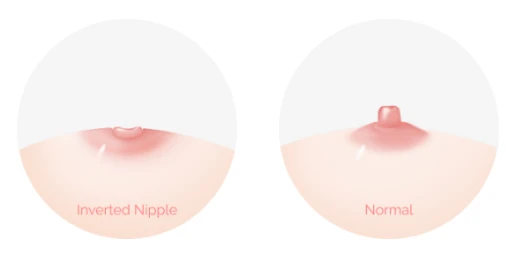
Inverted nipples are a condition in which the nipple retracts inward instead of pointing outward. Inverted nipple surgery is the corrective procedure that releases the fibrous bands tethering the nipple inward and secures it in a projected position. Nipple inversion is far more common than most people realize, and it affects both women and men. Professional bodies such as the American Society of Plastic Surgeons recognize it as a treatable condition rather than a rare abnormality.
Reliable prevalence data are limited, but a study of 1,625 young Korean women published in Aesthetic Plastic Surgery (Park et al., 1999) found congenital nipple inversion in 3.26% of participants. In 86.8% of those cases, both sides were affected.
For many individuals, an inverted nipple is something they have lived with since puberty. In other cases, nipple inversion develops later in life due to breastfeeding changes, aging, or underlying medical conditions. Regardless of the cause, inverted nipples can create both physical and emotional challenges.
| Inverted nipple surgery at a glance | What patients can expect |
|---|---|
| Anesthesia | Local anesthesia — you stay awake and comfortable |
| Procedure time | About 30–60 minutes |
| Hospital stay | Outpatient — you return to your accommodation the same day |
| Suture removal | Around day 5–7 |
| Cleared to fly home | Usually 7–10 days after surgery |
| Final result | Settles within 2–3 months |
| Breastfeeding | Often maintained with a duct-preserving technique (Grades 1–2) |
Why do people seek correction? The reasons vary from person to person, but the most common include:
- Self-consciousness and body image concerns: Many patients feel embarrassed or avoid intimacy because of the appearance of their nipples.
- Breastfeeding difficulties: Severely inverted nipples can make latching difficult or impossible for an infant.
- Hygiene issues: Deeply retracted nipples can trap moisture and become prone to irritation or infection.
- Medical concerns: In rare cases, a newly inverted nipple can be a sign of an underlying breast condition that requires evaluation.
Key Takeaway: Inverted nipples are a common condition that affects self-esteem, breastfeeding ability, and daily comfort. Corrective surgery is a well-established outpatient procedure.
If you have concerns about changes in your breast or nipple appearance, it is always a good idea to have a medical evaluation. Mine Clinic’s experienced medical team can help determine the cause and recommend the best course of action during a thorough online consultation.
Grades of Nipple Inversion
Not all inverted nipples are the same. Surgeons classify nipple inversion into three grades, following the system Han and Hong described in their 1999 study in Plastic and Reconstructive Surgery. Understanding your grade is essential, because it determines the right treatment approach.
Grade 1 — Mild Inversion
The nipple can be easily pulled out manually and may stay projected for a short time. The milk ducts are usually intact, and breastfeeding is often still possible. Grade 1 inversion is sometimes referred to as a “shy nipple” and may respond to non-surgical approaches in select cases.
Grade 2 — Moderate Inversion
The nipple can be pulled out, but it retracts back into its inverted position almost immediately. There is moderate fibrosis (scar tissue) around the milk ducts, and breastfeeding may be challenging. Grade 2 typically requires a surgical procedure for lasting correction.
Grade 3 — Severe Inversion
The nipple is deeply retracted and cannot be pulled out manually at all. There is significant fibrosis and the milk ducts are often shortened or constricted. Grade 3 inverted nipples nearly always require surgery, and breastfeeding preservation may not be possible depending on the extent of duct involvement.
Key Takeaway: The grade of your inverted nipple directly impacts the surgical technique your surgeon will choose. A proper in-person or online consultation is essential to assess your individual case.
Who Should Consider Inverted Nipple Surgery?
You may be a good candidate for inverted nipple surgery if you:
- Have one or both nipples that are persistently inverted and do not respond to gentle manual stimulation.
- Experience emotional distress, embarrassment, or reduced confidence because of nipple appearance.
- Have difficulty breastfeeding due to nipple inversion.
- Are in good overall health with no active breast infections.
- Have realistic expectations about the results of surgery.
Is this procedure only for women? Absolutely not. Men can also experience inverted nipples and may seek correction for cosmetic or comfort reasons. Mine Clinic’s nipple surgery program is designed to serve all patients regardless of gender.
It is important to note that if your nipple has recently become inverted without a clear cause, you should consult a physician to rule out any underlying conditions before pursuing cosmetic correction.
How Inverted Nipple Correction Is Performed at Mine Clinic
At Mine Clinic in Seoul’s Gangnam district, inverted nipple surgery is performed as a refined outpatient procedure by board-certified plastic surgeons with extensive experience in breast surgery.
Pre-Surgery Consultation
Every journey at Mine Clinic begins with a comprehensive consultation. For international patients, this can start with an online consultation where you share photos and medical history. Once you arrive in Seoul, you will have an in-person assessment with your surgeon to finalize the surgical plan.
During this consultation, your surgeon will:
- Assess the grade of nipple inversion.
- Discuss your goals — whether cosmetic improvement, breastfeeding preservation, or both.
- Explain which technique is best suited for your anatomy.
- Review your medical history and any medications.
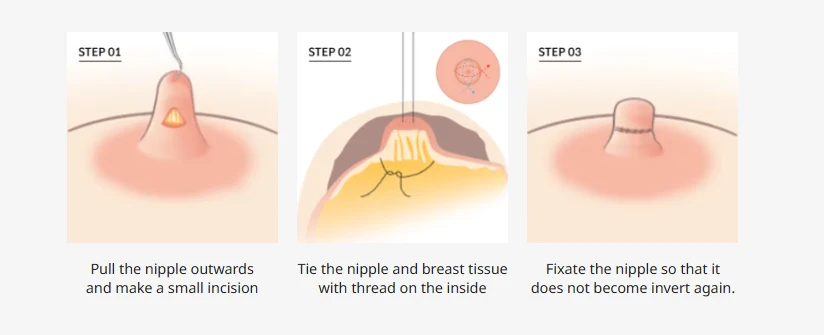
The Surgical Technique
The technique used for inverted nipple surgery depends on the grade of inversion and your personal goals.
For Grade 1 and some Grade 2 cases — Duct-Preserving Technique:
A small incision is made at the base of the nipple. The surgeon carefully releases the fibrous bands that are pulling the nipple inward while preserving as many milk ducts as possible. A small internal suture may be placed to hold the nipple in its new, projected position. This approach prioritizes maintaining the option for future breastfeeding.
For Grade 2 and Grade 3 cases — Comprehensive Release Technique:
In more severe cases, a greater degree of tissue release is required. The surgeon divides the shortened milk ducts and fibrous tissue that are causing the inversion. Internal sutures and sometimes a small supportive splint are used to maintain the nipple’s new shape during healing. While this technique provides the most reliable long-term correction for severe cases, it may affect the ability to breastfeed.
What to expect during the procedure:
- Anesthesia: Local anesthesia is typically used. You will be awake and comfortable throughout.
- Duration: Approximately 30–60 minutes depending on the complexity and whether one or both sides are treated.
- Setting: The procedure is performed in Mine Clinic’s fully equipped surgical facilities, which meet rigorous Korean medical safety standards.
Key Takeaway: Mine Clinic matches the surgical approach to your grade of inversion and your goals for breastfeeding. Both duct-preserving and comprehensive release options are available.
Why Choose Korea and Mine Clinic for Nipple Surgery?
Korea: A Global Leader in Plastic Surgery
South Korea has earned its reputation as the world capital of plastic surgery for good reason. The country performs more aesthetic procedures per capita than any other nation, and its surgeons are trained in some of the most competitive medical programs in the world.
For international patients considering inverted nipple surgery, Korea offers several distinct advantages:
- Surgical expertise: Korean plastic surgeons perform an exceptionally high volume of procedures, which translates to refined skills and consistent results.
- Advanced technology: Clinics in Seoul, particularly in Gangnam, invest heavily in the latest surgical equipment, anesthesia monitoring systems, and post-operative care technology.
- Strict regulation: The Korean Ministry of Health and Welfare enforces rigorous clinic licensing, safety inspections, and physician certification standards.
- K-Beauty culture: Korea’s deep cultural emphasis on aesthetics means that even subtle procedures like nipple correction are approached with a high level of precision and artistry.
Why Mine Clinic Specifically?
Mine Clinic stands out among Seoul’s many plastic surgery centers for several important reasons:
- Board-certified specialists: All procedures are performed by experienced, board-certified plastic surgeons. Dr. Lee Sung-wook and the Mine Clinic medical team bring years of specialized training in breast and body procedures.
- Comprehensive breast surgery expertise: Inverted nipple correction is part of Mine Clinic’s broader breast surgery program, which includes augmentation, reduction, lift, and revision procedures. This depth of experience means your surgeon understands the full anatomy and aesthetics of the breast.
- Dedicated international patient support: Mine Clinic’s international service team provides multilingual coordination, airport pickup guidance, accommodation recommendations, and in-clinic translation so you never feel lost in the process.
- Transparent aftercare: Mine Clinic’s structured post-operative care program ensures you are closely monitored during your recovery in Seoul.
- Proven results: You can view real patient outcomes on the Real Story page to see the quality of results firsthand.
Key Takeaway: Choosing Korea — and Mine Clinic in particular — means combining world-class surgical skill with a patient-centered experience designed specifically for international visitors.
Important: Risks, Side Effects & Safety
Honesty about potential risks is a cornerstone of responsible medical care. While inverted nipple surgery is considered safe and low-risk, no operation is entirely without risk. Here is what you should know.
Common Side Effects (Expected and Temporary)
- Swelling and bruising: Mild to moderate swelling around the nipple area is normal and typically resolves within 1–2 weeks.
- Sensitivity changes: Temporary increased or decreased nipple sensitivity is common in the first few weeks. In most cases, normal sensation returns gradually.
- Minor discomfort: Some soreness and tenderness at the surgical site is expected for the first few days. Over-the-counter pain relief is usually sufficient.
Less Common Risks
- Recurrence of inversion: There is a small chance the nipple may partially re-invert over time, particularly in Grade 3 cases. Proper surgical technique and post-operative care minimize this risk.
- Scarring: Incisions are very small and placed at the base of the nipple where they blend with the natural skin texture. Visible scarring is rare but possible.
- Infection: As with any surgical procedure, there is a low risk of infection. Mine Clinic’s strict sterilization protocols and care and safety standards significantly reduce this risk.
- Changes in breastfeeding ability: If milk ducts need to be divided (primarily in Grade 3 cases), breastfeeding may be affected. Your surgeon will discuss this in detail before surgery.
How Mine Clinic Prioritizes Your Safety
- All procedures take place in certified surgical facilities with real-time monitoring equipment.
- Mine Clinic follows Korea’s strict medical safety regulations and maintains transparent surgical observation protocols.
- Detailed pre-operative screening identifies any risk factors before you enter the operating room.
- A structured post-operative follow-up schedule ensures any complications are caught and addressed early.
Key Takeaway: Inverted nipple surgery is low-risk overall, but understanding potential side effects — and choosing a clinic with strong safety protocols — is essential for a positive outcome.
Recovery in Korea: What to Expect After Surgery
One of the most common questions international patients ask is: “How long do I need to stay in Korea after my procedure?” Here is a detailed recovery timeline for inverted nipple surgery to help you plan your medical trip.
Day of Surgery (Day 0)
- The procedure is completed in under an hour, and you can return to your hotel or accommodation the same day.
- Light wound dressing is applied to the nipple area.
- You will receive clear aftercare instructions and any prescribed medications.
- Avoid strenuous movement for the rest of the day.
Days 1–3: Initial Healing
- Mild swelling and tenderness are at their peak. This is normal.
- Keep the surgical area clean and dry. Follow your surgeon’s dressing change instructions.
- Light daily activities such as walking and sightseeing are generally fine, but avoid heavy lifting or vigorous exercise.
- A follow-up visit at Mine Clinic allows your surgeon to check healing progress.
Days 4–7: Suture Removal & Clearance
- Suture removal is typically scheduled around Day 5–7 at Mine Clinic.
- By this point, most swelling has noticeably decreased and the nipple is beginning to settle into its new position.
- Your surgeon will assess healing and provide clearance for travel home.
When Can I Fly Home?
- Most international patients are cleared to fly 7–10 days after surgery.
- Your surgeon will confirm this at your final follow-up appointment.
- Mine Clinic can provide a medical certificate if your airline requires documentation.
Weeks 2–4: Continued Recovery at Home
- Residual swelling continues to decrease gradually.
- Nipple sensitivity may fluctuate — this is part of the normal healing process.
- Avoid underwire bras or tight clothing that puts pressure on the nipple area.
- Follow up with Mine Clinic remotely via their online consultation system if you have any concerns after returning home.
Full Results
- Final results are typically visible within 2–3 months as all swelling resolves and tissues fully settle.
- The nipple should maintain a natural, projected appearance.
Frequently Asked Questions
How painful is inverted nipple surgery?
Most patients report only mild discomfort during and after the procedure. Because local anesthesia is used, you should not feel pain during surgery. Post-operative soreness is typically well-managed with standard pain medication for the first 2–3 days. Many patients describe the recovery as much easier than they expected.
Will I be able to breastfeed after inverted nipple correction?
This depends on the grade of your inversion and the surgical technique used. For Grade 1 and some Grade 2 cases, duct-preserving techniques can maintain the possibility of breastfeeding. In more severe Grade 3 cases where milk ducts must be divided, breastfeeding may be compromised. Your surgeon at Mine Clinic will thoroughly discuss this during your consultation so you can make an informed decision.
Can inverted nipples come back after surgery?
Some degree of re-inversion is possible, particularly in Grade 3 cases where the fibrous tissue is most severe. According to the StatPearls Inverted Nipple review (Rao and Winters, 2023), the greatest risk of recurrence falls within the first 6 to 12 months after surgery, which is exactly why aftercare during that window matters. Careful surgical technique, proper post-operative care, and following your surgeon’s instructions all help minimize the chance of re-inversion. If you experience any changes after healing, Mine Clinic offers follow-up support remotely through their international service.
How much does inverted nipple surgery cost in Korea?
Mine Clinic quotes each case individually after an assessment, so there is no single list price. What actually moves the quote is concrete:
- Grade of inversion: Grade 3 needs more release and internal support than Grade 1, so it takes longer in the operating room.
- One side or both: correcting both nipples is a longer procedure than correcting one.
- Technique: a duct-preserving repair and a comprehensive release are not the same operation.
- Revision cases: correcting a nipple that re-inverted after surgery elsewhere is usually more complex than a first-time correction.
- What the quote covers: ask whether follow-up visits, suture removal, and medication during your stay in Seoul are included.
Because all five factors interact, ask for a written total before you travel. You can begin with a free online consultation — photos and your medical history are enough for an initial assessment — or send a reservation request.
Is it safe to travel to Korea for this procedure?
Absolutely. South Korea is one of the safest countries in the world for medical tourism. Clinics are strictly regulated by the Korean government, and Mine Clinic in particular maintains the highest standards of care and surgical safety. The clinic’s international service team is experienced in helping patients from around the globe navigate every step of the process, from arrival to departure.
What do grades 1, 2 and 3 mean in inverted nipple classification?
Inverted nipples are graded by how easily the nipple comes out and whether it stays out. In grade 1 the nipple can be drawn out by hand or with cold stimulation and holds its position for a while. In grade 2 it can be pulled out but retracts again soon after. In grade 3 the nipple stays inverted and is difficult to draw out at all, because the milk ducts and fibrous tissue underneath are markedly shortened. The grade is what determines which surgical technique is appropriate, so it is assessed during the consultation rather than self-diagnosed.
Which technique is used for each grade — duct-preserving or duct-dividing?
Grade 1 and some grade 2 cases are generally treated with duct-preserving techniques, which release the tethering tissue while keeping the milk ducts intact. Grade 2 and grade 3 cases often have ducts that are too short to release without dividing them, so a duct-dividing technique may be needed. Because that choice affects future breastfeeding, patients are asked about pregnancy and breastfeeding plans before the technique is decided.
How long does recovery take after inverted nipple surgery?
The procedure is performed under local anesthesia as an outpatient surgery. Most patients are advised to plan for roughly 7 to 10 days covering the early recovery and suture removal period, with swelling and bruising settling gradually over that time. Recovery speed differs between individuals and between grades, so the exact schedule is confirmed at the post-operative visit.
Considering inverted nipple surgery in Korea? Contact Mine Clinic today for a personalized online consultation. We are ready to assist you on WhatsApp and guide you through your K-Beauty journey in Seoul.
👉 Book Your Free Online Consultation | Learn About Our International Services | Find Us in Gangnam, Seoul
Reviewed by Dr. Lee Sung-wook, Board Certified Plastic Surgeon at Mine Clinic.
※ This content is for informational purposes only and does not replace professional medical advice, diagnosis, or treatment. Individual results may vary, and side effects may occur. Please consult with a board-certified plastic surgeon for personalized advice.