EN
EN

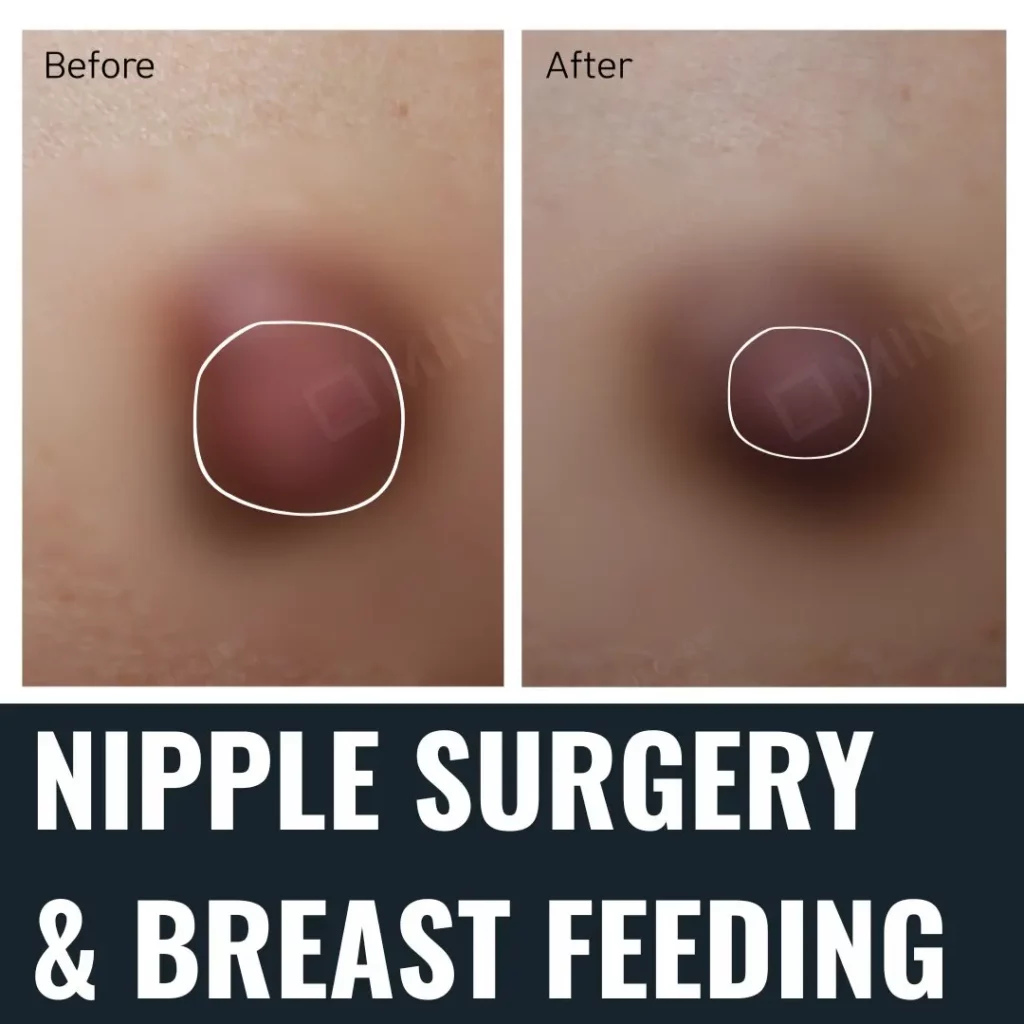
Table of Contents
What Is Nipple Surgery?
Nipple surgery — also called nipple correction surgery or areola surgery — is a set of minor yet highly impactful cosmetic procedures designed to reshape, resize, or correct the appearance of the nipple and areola complex. While the topic may feel intimate or niche, it is far more common than many people realize, and for good reason.

Many individuals around the world feel self-conscious about:
- Inverted nipples (one or both nipples that retract inward rather than projecting outward)
- Enlarged or puffy areolas that feel disproportionate to breast size
- Asymmetrical nipples with noticeable differences in size, height, or direction
- Overly protruding nipples that cause discomfort or visible self-consciousness under clothing
- Changes after pregnancy or breastfeeding that have left the nipples stretched or altered
These concerns are not merely cosmetic. Inverted nipples, in particular, can interfere with breastfeeding and personal intimacy, while enlarged areolas may cause lasting self-confidence issues. Nipple surgery addresses all of these concerns in a targeted, minimally invasive way.
The procedure has gained significant popularity among international patients visiting Seoul for K-Beauty treatments, often performed as a standalone procedure or in combination with breast augmentation, breast lift, or breast reduction.
Key Takeaway: Nipple surgery is a safe, minor-to-moderate surgical procedure that corrects functional and aesthetic concerns of the nipple and areola. It is performed routinely at Mine Clinic with a strong track record among international patients.
Types of Nipple Surgery at Mine Clinic
At Mine Clinic in Gangnam, Seoul, our board-certified plastic surgeons offer several specialized nipple correction procedures. Each is tailored to the patient’s anatomy and personal goals.
1. Inverted Nipple Correction
This is the most common type of nipple surgery performed at Mine Clinic. Inverted nipples are classified in three grades:
- Grade 1: Nipple can be manually pulled out and holds position temporarily
- Grade 2: Requires more effort to pull out; retracts quickly
- Grade 3: Severely inverted; cannot be pulled out manually
At Mine Clinic, correction is performed by releasing the fibrous tissue tethering the nipple inward. For Grade 1–2 cases, duct-preserving techniques are prioritized, which is especially important for patients who wish to preserve breastfeeding capability.
For Grade 3 inversions, the milk ducts may need to be partially divided to achieve full correction. In these cases, the procedure may affect breastfeeding function. Your surgeon will discuss this transparently during your consultation.
2. Areola Reduction Surgery
Areola reduction minimizes the diameter of the pigmented skin surrounding the nipple. A precise circular incision is made around the outer edge of the areola, and excess tissue is removed. The incision line is naturally concealed at the areola’s border, making scarring virtually imperceptible over time.

3. Nipple Reduction Surgery
For nipples that are excessively long or wide, a small amount of tissue is removed to create a more proportionate projection. This procedure has no impact on nipple sensitivity in most cases.

4. Combination Nipple & Breast Procedures
Many international patients at Mine Clinic combine nipple correction with breast fat grafting or implant-based augmentation using Motiva or Mentor implants for comprehensive breast rejuvenation. Combining procedures can reduce overall recovery time and surgical costs. See our full range of options on the Breast Surgery page.
Can You Breastfeed After Nipple Surgery?
This is the single most important question patients ask before proceeding with nipple surgery — and it deserves a thorough, honest answer.
The short answer: It depends on the type of procedure and the surgical technique used.
Inverted Nipple Correction & Breastfeeding
The milk ducts are the pathways through which breast milk travels from the mammary glands to the nipple. The key factor in preserving breastfeeding ability after inverted nipple correction is whether or not the milk ducts are cut.
| Procedure Type | Milk Duct Impact | Breastfeeding Likelihood |
|---|---|---|
| Grade 1–2 Correction (duct-sparing) | Ducts preserved | Likely retained |
| Grade 3 Correction (full release) | Ducts partially divided | May be reduced or affected |
| Areola Reduction | No duct involvement | Breastfeeding generally unaffected |
| Nipple Reduction | Minimal duct involvement | Breastfeeding generally unaffected |
At Mine Clinic, our surgeons use duct-sparing techniques for inverted nipple correction wherever clinically possible, particularly for Grade 1 and Grade 2 inversions. However, we always advise patients to consider their future family plans when deciding timing and technique.
Our Recommendation
If you are planning to breastfeed in the future and have not yet had children, we strongly recommend:
- Discussing your plans openly with your Mine Clinic surgeon during consultation
- Considering whether to delay Grade 3 correction until after you have completed breastfeeding
- Understanding that even with duct-sparing techniques, no surgical outcome regarding breastfeeding can be 100% guaranteed, as individual healing and anatomy vary
According to the American Society of Plastic Surgeons (ASPS), patients who undergo nipple surgery with duct-preservation have a reasonable chance of maintaining breastfeeding function, though success rates vary by severity and technique.
Key Takeaway: Breastfeeding after nipple surgery is often possible — especially with duct-sparing techniques for mild to moderate inversions. Always disclose your breastfeeding goals to your surgeon before proceeding.
Important: Risks, Side Effects & Safety
Transparency is a core value at Mine Clinic. As a YMYL (Your Money, Your Life) topic, we believe you deserve a clear, honest breakdown of what to expect.

Common and Temporary Side Effects
These are normal and expected, typically resolving within days to weeks:
- Swelling and mild bruising around the nipple and areola (resolves in 1–2 weeks)
- Temporary soreness or tenderness at the incision site
- Slight numbness or altered sensitivity in the nipple (usually temporary; resolves in weeks to months)
- Crusting or scabbing at the incision line during healing
Less Common Risks
These are rare but important to understand:
- Infection: Managed with post-operative antibiotics and proper wound care
- Asymmetry: Minor differences in healing can create slight asymmetry; revision is possible if needed
- Scarring: Minimal scarring at the areola border; fades significantly over 6–12 months
- Recurrence of inversion: In a small number of Grade 2–3 cases, partial recurrence is possible over time
- Changes in breastfeeding ability: As discussed above, primarily relevant to Grade 3 correction
- Altered nipple sensation: Permanent changes in sensitivity are rare but possible
Safety Measures at Mine Clinic
- All procedures are performed under sterile surgical conditions by board-certified surgeons
- Pre-operative health screening is mandatory
- Detailed post-operative instructions are provided in your language
- Emergency contact and follow-up support are available throughout your recovery
If you have a history of keloid scarring, bleeding disorders, or active skin infections near the surgical site, please disclose this during your consultation. Our surgeons will assess your suitability carefully.
Key Takeaway: Nipple surgery is a low-risk, minor procedure when performed by experienced surgeons. Understanding potential side effects in advance helps you prepare and recover with confidence.
Recovery in Korea: Your Timeline
One of the most practical concerns for international patients is: how long do I need to stay in Korea? Here is a realistic, procedure-specific recovery timeline for nipple surgery at Mine Clinic.
Nipple Correction: Recovery Timeline
| Timeframe | What to Expect |
|---|---|
| Day of Surgery | Procedure performed under local anesthesia (approx. 30–60 minutes). Light dressing applied. You are discharged the same day. |
| Days 1–3 | Mild swelling and soreness. Rest recommended. Avoid strenuous activity. Keep the area dry. |
| Day 5–7 | First follow-up visit at Mine Clinic. Wound checked; dressing may be changed. |
| Day 7 | Stitches removed (if non-dissolvable sutures were used). |
| Day 7–10 | Most international patients can fly home at this point. Swelling is significantly reduced. |
| Week 2–4 | Resume light daily activities. Avoid underwire bras for 3–4 weeks. |
| Month 1–3 | Sensation begins to normalize. Scar continues to fade. |
| Month 6–12 | Final result is visible. Scarring typically minimal and well-concealed. |
What to Pack & Plan
- Minimum recommended stay in Seoul: 7–10 days
- Loose, front-opening tops for easy dressing changes
- Keep our clinic’s contact information accessible via WhatsApp at all times
- Avoid public hot springs (jjimjilbang), swimming, or submerging the area until cleared by your surgeon
For more guidance on planning your medical visit, visit our Directions & Location page and our full International Service guide.
Frequently Asked Questions
1. How long does nipple surgery take at Mine Clinic?
Nipple correction procedures at Mine Clinic typically take between 30 and 60 minutes, depending on the type and complexity of the correction. They are performed under local anesthesia on an outpatient basis, meaning you return to your accommodation the same day. There is no need for general anesthesia in most cases.
2. Will I lose nipple sensation after the surgery?
Temporary changes in nipple sensitivity — including heightened sensitivity, reduced sensation, or mild numbness — are common in the first few weeks post-surgery. In the vast majority of patients, sensation returns to normal within 1 to 3 months. Permanent loss of sensation is rare and will be discussed during your consultation as part of the informed consent process.
3. Can I combine nipple surgery with breast augmentation in the same trip to Seoul?
Yes, and this is a very popular combination among Mine Clinic’s international patients. Nipple correction is frequently performed alongside breast augmentation, breast lift, or breast fat grafting for a comprehensive result in a single recovery period. Your surgeon will assess whether combining procedures is safe and appropriate for your individual case.
4. I had an inverted nipple correction at another clinic and am not satisfied. Can Mine Clinic help?
Absolutely. Mine Clinic specializes in breast revision surgery and has extensive experience addressing cases where previous procedures did not achieve the desired result. We encourage you to submit an online consultation with photos so our team can evaluate your case before you travel.
5. Is nipple surgery covered by health insurance for international patients?
Nipple surgery performed for purely cosmetic reasons is generally not covered by international health insurance. However, in cases where inverted nipples have caused functional issues — such as recurrent infections or inability to breastfeed — some insurance providers may offer partial coverage. We recommend checking with your insurer before your trip. Mine Clinic provides detailed procedure documentation to support any insurance claims where applicable. Consultation is required for personalized pricing.
Start Your Journey with Mine Clinic
Interested in this procedure? Contact Mine Clinic today for a personalized online consultation. We are ready to assist you on WhatsApp and guide you through your K-Beauty journey in Seoul.
👉 Book Your Online Consultation | Make a Reservation | Meet Our Medical Team
※ This content is for informational purposes only and does not replace professional medical advice, diagnosis, or treatment. Individual results may vary, and side effects may occur. Please consult with a board-certified plastic surgeon for personalized advice.
Reviewed by Dr. Lee Sung-wook, Board Certified Plastic Surgeon at Mine Clinic, Gangnam, Seoul, Korea.