EN



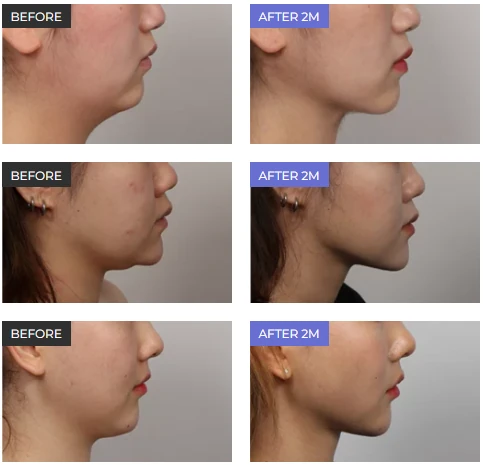
A double chin after weight loss is fullness under the jaw that stays even after your body fat drops, because dieting only shrinks fat — it can’t tighten loose skin, a lax neck muscle (platysma), enlarged salivary glands or a short chin bone.
You changed how you eat, the scale finally moved, and your clothes fit differently. Yet when you catch your profile in a mirror or a photo, the soft fold under your chin looks exactly the same. Some people even feel it looks worse than before. If that sounds familiar, please hear this first: a double chin after weight loss is not a willpower problem.
I’m Dr. Lee Sung-wook, a board-certified plastic surgeon at MINE Plastic Surgery in Seoul. In my practice, many people who come in about a double chin are already at a normal weight or slim. This guide explains what dieting can and can’t change under the chin, why the skin there can sag after losing weight, and how to match the treatment to the cause.
Why Your Double Chin Stays After Weight Loss
The first thing to understand about a double chin after weight loss is that you can’t choose where your body loses fat. Spot reduction — burning fat from one chosen area — isn’t possible. A calorie deficit lowers body fat overall, in an order largely set by your genes, and for many people the fat under the chin is among the last to change.
The second point matters even more. The area under your chin isn’t made of fat alone. It is a stack of layers: skin, fat just under the skin, a thin sheet of muscle, more fat beneath that muscle, the salivary glands, and the jaw bone that holds it all up. Dieting works on only some of those layers, so a double chin after weight loss usually means one of the other layers is doing the work.
That is why I never judge a double chin by body weight. Two people at the same weight can have completely different chins, and someone who has lost 10 kg can still have the same fullness they started with. If you’ve noticed a double chin even at your lightest, our separate article explains why some people have a double chin even when slim, with a closer look at the anatomy behind each cause.
Can You Lose a Double Chin by Dieting? A Cause-by-Cause Verdict
Plastic surgery textbooks describe fullness under the chin as a combination of layers rather than a single “fat pocket.” When I examine a patient, I check each layer in turn, because the answer to “will more dieting help?” depends entirely on which one is responsible. The table below sums up which causes of a double chin after weight loss respond to dieting.
| Cause | What it is, in plain terms | Can weight loss improve it? |
|---|---|---|
| Fat under the skin | The soft, pinchable layer sitting above the neck muscle | Partly |
| Fat beneath the neck muscle | Deeper fat under the platysma (subplatysmal fat) | Partly — but it can’t be targeted |
| Loose skin | Skin that has stretched and lost its spring | No — it can look worse after big or fast loss |
| Lax platysma muscle | The thin, sheet-like neck muscle has slackened and drooped | No |
| Enlarged or low-sitting salivary glands | The submandibular glands (salivary glands under the jaw) bulge below the jawline | No |
| Short or set-back chin bone | A small lower jaw gives the neck less support | No |
Our own summary of the layers involved — one line each. The causes overlap, and most people have more than one.
Put simply, weight loss can only partly improve two of the six causes of a double chin — fat above and below the neck muscle. The other four (loose skin, a lax platysma, enlarged salivary glands and a short chin) don’t respond to dieting at all.
What weight loss can change
If fat is the main contributor and your skin is still firm, losing weight overall does reduce the fat under the skin, and the jawline may sharpen. The deeper layer is a different story. Research on neck anatomy shows that a substantial amount of neck fat sits beneath the platysma muscle, a layer that no diet can target and standard liposuction does not reach. It may shrink a little as your weight drops, but you have no control over how much.
Clinical studies also note that in people who are overweight, fat can build up inside the salivary glands themselves and add to the fullness. Some of that may settle with weight loss — but the gland itself stays where it is.
What weight loss can’t change
Skin, muscle, glands and bone don’t get smaller when you eat less. Salivary glands are not fat, so neither dieting nor liposuction shrinks them. Textbooks point out that prominent submandibular glands are a frequent reason for leftover bulges at the sides of the chin after neck surgery, because they were hidden behind fat and a slack muscle until those were dealt with.
A short or set-back chin is a structural matter of bone, and it needs a separate assessment of its own. The practical takeaway is simple: once your weight is in a healthy range and your double chin after weight loss hasn’t changed, eating even less is unlikely to help.
Loose Skin Under the Chin After Losing Weight
This is the part of the story that surprises people most. You lose weight expecting a sharper jawline, and instead the area under your chin looks softer and more hollow, with a crepey fold. Loose skin under the chin after weight loss is common, and it explains why some people feel their chin looks older after a successful diet.
Why the chin can look worse after big or fast weight loss
Skin behaves a bit like a balloon. When fat builds up, the skin stretches to cover it. When that fat shrinks, the skin needs enough elasticity to shrink back. If the loss is large, or happens quickly, the skin may not fully retract — and what was a padded double chin becomes a looser, hanging one.
Age plays a big role. As we age, skin makes less of the proteins that keep it springy, and the neck is often neglected when it comes to sun protection, so it tends to show this earlier than the face. A lax platysma adds to the effect: once the fat that was holding it out is gone, a slack muscle drapes downward and the angle between chin and neck softens.
Why removing more fat isn’t the answer for loose skin
When the skin is loose, the instinct is often “just take out more fat.” Plastic surgery textbooks caution that liposuction under the chin, done alone, can leave looser skin over time — which is why fat is removed conservatively when skin is not firm. A thin layer of fat is deliberately left under the skin so the neck looks smooth rather than ridged.
Here is a quick self-check. It isn’t a diagnosis, but it can help you decide whether to keep dieting or get assessed:
- Has your weight been stable for a few months? If you are still losing, the picture is still changing.
- When you gently pinch the skin under your chin, does it spring back quickly? Quick recoil suggests firm skin; a slow, crepey return suggests laxity.
- Does the fullness feel soft and pinchable, or firm at the sides under the jaw? Firm side bulges point away from fat.
If your weight is stable and the skin is loose, more dieting won’t tighten it. That is usually the point to stop and have the area properly examined.
Fixing a Double Chin After Weight Loss: Match the Treatment to the Cause
Every plan at our clinic starts with diagnosis, not with a procedure. I examine the neck by hand and use ultrasound to see how much fat sits above and below the muscle, how firm the skin is, and whether the salivary glands are enlarged. Only then does it make sense to choose a treatment.

Mostly fat, firm skin: submental liposuction
For a double chin after weight loss that is still mainly fat, with skin that has kept its spring, submental liposuction is often enough. It is done through openings of about 2–3 mm, and the skin then contracts over the new contour. This route usually suits younger patients. If the skin is already loose, liposuction on its own can make sagging worse, which is why the skin check above matters so much.
Loose skin or lax platysma: muscle tightening with a mini lift or neck lift
When the platysma has slackened, the muscle itself needs to be tightened. Through a short incision hidden in the crease under the chin, the edges of the muscle are stitched together (platysmaplasty, sometimes called “muscle binding”), and fat beneath it can be addressed at the same time. Any loose skin that remains is then smoothed out with a neck lift through incisions behind the ear.
If the jawline has also started to sag, a mini lift can raise the lower face along with the neck. For more widespread laxity, a face and neck lift treats both areas together. The American Society of Plastic Surgeons (neck lift) also has a general patient overview if you’d like background reading.
Enlarged salivary glands: salivary gland reduction
When the fullness comes from the submandibular glands, the gland is partly removed through an incision under the chin. Salivary gland reduction is often combined with liposuction or a lift, because glands, fat and muscle laxity frequently appear together. A chin-bone issue, by contrast, calls for a separate structural assessment.
Non-surgical options: thread lift and energy devices
For a mild double chin after weight loss, or if you’d rather avoid surgery, a thread lift places dissolvable threads under the skin to lift sagging tissue, and ultrasound or radiofrequency devices heat the deeper layers to encourage new collagen. These options are milder, and the effect is temporary, so maintenance sessions are usually needed. To be honest with you: for moderate to severe laxity, surgery tends to give a clearer, longer-lasting result.
Recovery Compared: What to Expect From Each Option
Whichever option suits your double chin after weight loss, recovery depends on how much is done, your general health and how closely you follow aftercare. The ranges below give you a realistic starting point for planning time off.
Recovery comparison table
| Option | Bruising & swelling | Back to daily life | When results settle |
|---|---|---|---|
| Submental liposuction | About 1–2 weeks | About a week | A few months |
| Mini lift | A few weeks | About 2 weeks | A few months |
| Face + neck lift | Several weeks | 2–3 weeks | Several months |
| Salivary gland reduction | About 1–2 weeks | About a week or more | 1–2 months |
| Thread lift | A few days | A few days | A few weeks |
Typical ranges from our clinic’s experience, not fixed figures — recovery varies with health, habits and the extent of surgery.
Possible side effects
No procedure is risk-free, and you deserve a straight answer about what can happen. After surgery (liposuction, lifts or gland reduction), these are the effects to know about:
- Bruising and swelling: the most common effects, fading gradually over the first weeks.
- Temporary numbness: reduced feeling under the chin or around the ears, which usually returns over weeks to months.
- Scarring: incisions are placed in hidden creases under the chin or behind the ears so they are hard to see once healed.
- Asymmetry: uncommon, and a touch-up can be considered if needed.
- Hematoma or seroma: a build-up of blood or fluid under the skin; caught early, it is usually simple to treat.
After non-surgical treatment, mild soreness for a few days is common. With a thread lift, you may feel a thread under the skin or a sense of tightness, which usually settles with time. Our double chin surgery recovery and aftercare guide walks through the weeks after surgery in more detail.
Before and After Surgery: Practical Rules
If you’re considering surgery for a double chin after weight loss, good preparation and steady aftercare make a real difference to how smoothly you heal. Stop smoking at least 2 weeks before surgery, keep your head elevated for the first 2–3 weeks, and avoid strenuous exercise for about 3–4 weeks.
Before surgery checklist
- Stop smoking at least 2 weeks before. Smoking reduces blood flow to healing tissue and raises the risk of complications.
- List every medication and supplement. Aspirin, omega-3, vitamin E and other blood-thinning products are often paused for 1–2 weeks beforehand — but only on your surgeon’s instruction.
- Keep your weight stable. If you are still losing weight, your surgeon is planning around a moving target. A stable weight means the skin and fat seen at consultation are what will be treated.
- Set realistic expectations. Talk openly about the result you hope for and what is achievable for your anatomy.
After surgery: habits that help recovery
- Wear the chin compression band as instructed. It helps swelling go down and the skin settle against the new contour.
- Sleep with your head above your heart for the first 2–3 weeks. An extra pillow or two reduces morning swelling.
- Ease back into exercise. Start with gentle walks and avoid strenuous workouts for about 3–4 weeks.
- Protect the incision lines from the sun. Sunscreen helps scars fade to a fine, pale line.
Frequently Asked Questions
Can you lose a double chin by dieting?
Partly, and only if fat is the main cause and your skin is firm. Losing weight overall reduces fat everywhere, including under the chin, but you can’t target that spot, and chin exercises don’t burn chin fat selectively. If you are at a healthy weight and the fullness hasn’t changed, the cause is most likely structural.
Why does my double chin look worse after losing weight?
A double chin after weight loss often looks worse because the fat shrank, but the stretched skin and a slack platysma muscle didn’t shrink back with it. The result is a looser, hanging fold rather than a padded one. This is more likely after large or rapid weight loss, and it becomes more noticeable as skin loses elasticity with age.
How do I know if my double chin is fat, loose skin or a salivary gland?
There are general clues: fat feels soft and pinchable, loose skin is thin and slow to spring back, and an enlarged salivary gland feels like a firm bulge at the side, just under the jawline. Still, the layers often overlap, so a definite answer needs a hands-on examination and ultrasound by a specialist.
Will a double chin come back after treatment?
Fat cells removed by surgery do not grow back, but the remaining fat cells can enlarge if you regain weight. Skin also keeps aging over the years. Results from thread lifts and energy devices fade gradually and may need maintenance, so keeping a steady weight is the most practical way to protect any result.
How long should I wait after weight loss before treatment?
As a general guide, wait to treat a double chin after weight loss until your weight has been stable for a while — often a few months — so your surgeon can assess your final skin and fat. The right timing differs from person to person, so it’s worth discussing during consultation rather than following a fixed rule.
Get Your Double Chin Assessed Before You Diet Harder
If you have done the hard work of losing weight and the fullness under your chin is still there, it isn’t a failure of effort. A double chin after weight loss usually means the cause sits in a layer that dieting can’t reach. Finding that cause first saves you time, money and frustration with treatments aimed at the wrong layer.
At MINE Plastic Surgery in Gangnam, Seoul, I examine each patient personally and explain what I find before any treatment is planned. Cost depends on the cause and the extent of treatment, so it is quoted after consultation. International patients can start with an online consultation or call +82-2-516-1175.
※ This content is for informational purposes only and does not replace professional medical advice, diagnosis, or treatment. Individual results may vary, and side effects may occur. Please consult with a board-certified plastic surgeon for personalized advice.