EN



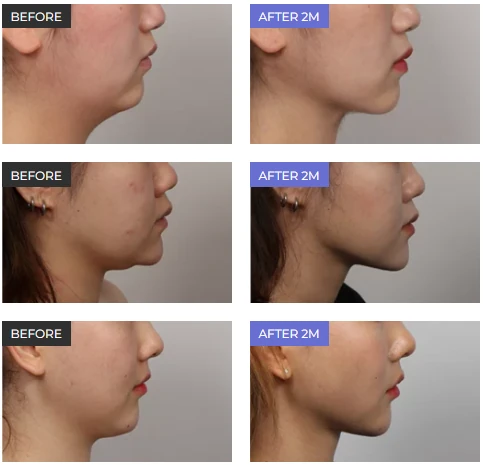
The double chin liposuction procedure is a 30–60 minute operation that removes stubborn under-chin fat through a 2–3 mm entry point behind the ear, using a thin suction tube called a cannula. It is done under IV sedation, most people go home the same day, and the new jawline settles over about 1–3 months.
“I lost the weight, so why does my jawline look exactly the same?” That is one of the questions I hear most often in my consultation room. If you are reading this, you have probably noticed that diet and exercise barely touch the soft fullness under your chin, and that it shows up in every video call and group photo. Wanting to change it is completely understandable.
I’m Dr. Lee Sung-wook, a board-certified plastic surgeon at MINE in Seoul. In my experience, most of the anxiety people feel before surgery comes from not knowing what happens, and in what order. So this guide walks through the double chin liposuction procedure exactly as it runs at our clinic: from the first consultation, through each stage of surgery day, to the point where we check your final result.
What Is the Double Chin Liposuction Procedure?
In plain terms, the double chin liposuction procedure removes the layer of fat that sits just under the skin between your chin and your neck. A cannula, a thin hollow tube about the width of a pencil lead, goes in through a tiny opening and gently suctions fat out while moving back and forth in a fan pattern. There is no long incision, and no skin is cut away.
Liposuction itself is one of the most established operations in plastic surgery. The American Society of Plastic Surgeons’ liposuction overview is a good general reference if you want to read about the technique more broadly. Under the chin, the treated area is small, which is why the procedure is short and the recovery is relatively quick compared with body liposuction.
What matters most is not the suction itself but the planning around it. The jawline curve, the point where the jaw turns into the neck, and left–right symmetry all have to be designed in advance. That design work is where a natural result is won or lost.
Who Is a Good Candidate (and Who Needs a Different Plan)?
Many patients ask me, “If I just lose more weight, won’t the double chin go away?” In my clinical experience, a double chin is very often not only about weight. Several different structures can create the same look, and liposuction only fixes one of them.
Five Causes of a Double Chin — Only One Responds to Liposuction
| Cause | What it looks like | Can diet fix it? |
|---|---|---|
| Fat under the skin (subcutaneous fat) | Soft fullness concentrated between the chin and neck | Partly, but often with limits |
| Loose skin (reduced elasticity) | Skin that sags with age or sun damage | No |
| Jaw structure | A short or set-back chin bone that blurs the jawline | No |
| Loose platysma (the thin sheet of muscle in the front of the neck) | The jaw-to-neck angle looks collapsed; cords may show in the neck | No |
| Enlarged submandibular gland (a salivary gland under the jaw) | A firm bulge under the jaw on one or both sides | No |
In other words, a double chin is often a mix of fat, skin, muscle and bone. Plastic surgery textbooks describe the ideal patient for neck liposuction as someone relatively young, with good skin elasticity and fat that is localized under the chin and along the jaw. In that situation the skin shrinks back neatly after chin liposuction, and the operation is straightforward.
When Liposuction Alone Is Not Enough
If an enlarged salivary gland is the main cause, liposuction will not give a satisfying result on its own, and gland reduction needs to be considered. If the skin has lost a lot of elasticity, removing fat alone can actually make sagging more noticeable, so a mini neck lift or a thread lift may be added. Textbooks also note that when the chin bone itself is small, adding chin surgery (genioplasty) to liposuction can improve the profile far more than suction alone.
None of this can be judged reliably from a selfie. It is decided at the consultation, with an examination and an ultrasound scan.
Dr. Lee’s key point: Before any double chin liposuction procedure, I first confirm that fat really is the main cause. If loose skin or jaw structure is part of the picture, the plan needs more than suction.
The Double Chin Liposuction Procedure in 5 Steps
Here is the whole double chin liposuction procedure at a glance, from first visit to final check. Each step is explained below.
- Consultation and ultrasound diagnosis — about 1–2 weeks before surgery
- Surgery day — about 30–60 minutes in the operating room
- Early recovery — from the day of surgery to about week 2
- Settling in — months 1–3
- Final result check — once the swelling has fully resolved
Step 1: Consultation and Ultrasound Diagnosis (1–2 Weeks Before)
The consultation is not just a booking formality; it is the first real stage of the double chin liposuction procedure. I would argue it is the step that decides the direction, and much of the quality, of your result. During this visit we check:
- Your chin and neck profile — fat thickness, skin elasticity, the condition of the platysma muscle and the position of the jaw.
- An ultrasound scan — this shows how thick each layer actually is, so we can explain objectively what liposuction can and cannot change. Here is more on why an ultrasound consultation matters.
- The scope of surgery — whether liposuction alone is enough, or whether a mini neck lift or thread lift should be combined.
- Blood tests and a health check — basic tests to confirm that IV sedation is safe for you.
A common misunderstanding is that chin lipo is simply “taking fat out.” In reality, we calculate the curve of the jawline, the boundary with the neck and the symmetry of both sides. That is why we give this design stage plenty of time.
Step 2: Surgery Day (About 30–60 Minutes)
On surgery day, the double chin liposuction procedure takes about 30–60 minutes, of which the suction itself takes 20–40 minutes. Because sedation needs some recovery time, plan on roughly half a day at the clinic. Each stage is broken down in the next section.
Step 3: Early Recovery (Day 0 to Week 2)
This is the period when you notice the most change. Swelling usually peaks around day 3–7, and bruising fades within 1–2 weeks. A tight, pulling feeling under the chin is a normal part of healing. You can go out, but visible swelling may mean adjusting your plans for a few days.
Step 4: Settling In (Months 1–3)
After about two weeks, the general swelling goes down quickly and the line under your jaw starts to appear. Some residual swelling remains, so think of this as a gradual refinement rather than a sharp line overnight.
Step 5: Final Result Check
By around 1–3 months after the procedure, the tissues have stabilized and the skin has re-draped against the new contour. This is when we review the final jawline together. Small differences in timing are normal, because skin elasticity and healing speed vary from person to person.
What Happens During Chin Liposuction: Surgery Day, Step by Step
If you have been wondering what happens during chin liposuction on the day itself, this is the sequence of the procedure at MINE. Knowing it in advance tends to make the day feel much calmer.
1. Pre-Surgery Marking While You Stand (10–15 Minutes)
Before you lie down, I mark the treatment area on your skin while you stand or sit upright. Gravity shows the true distribution of fat, which can look quite different once you are lying flat. I outline exactly where fat will be removed and where it will be left. This marking largely determines the balance of the final result, so I never rush it.
2. IV Sedation
Most double chin liposuction is done under IV sedation, often described as “twilight sedation.” You are deeply relaxed and do not feel pain during the operation, and you usually wake up faster than you would after general anesthesia. This is also why we ask you not to eat or drink anything, including water, after midnight the night before.
3. Tumescent Fluid Infusion
Next, a tumescent solution (a numbing fluid that also narrows small blood vessels) is infused into the fat layer. It limits bleeding and loosens fat cells so they can be removed gently and evenly. Plastic surgery textbooks describe the tumescent technique as the gold standard that has improved both the safety and the results of liposuction.
You may read online about “fluid overload” with this method. Textbook warnings about tumescent fluid overload concern large-volume body liposuction of more than 5 liters, far beyond the small volume treated under the chin. That said, safe fluid management is still part of every tumescent chin liposuction we perform.
4. Micro-Cannula Suction (20–40 Minutes)
Through a 2–3 mm entry point behind the ear or under the chin, I insert a fine cannula. Plastic surgery textbooks describe neck liposuction with a thin cannula of about 2.4 mm kept in constant motion just under the skin. Keeping the cannula moving, and working from several directions in a criss-cross pattern, helps remove fat evenly so the surface does not become lumpy.
Just as important is what we leave behind. A thin layer of fat is deliberately kept on the underside of the skin, which helps the skin stay smooth rather than stuck down or uneven. Textbooks also explain that fat lying deeper, beneath the platysma muscle, is rarely suctioned, because branches of the facial nerve run just below that muscle. Standard chin lipo therefore works in the layer just under the skin, which is where most stubborn chin fat sits.
5. Fine Closure and Compression Band
When suction is complete, the tiny openings are closed with fine stitches. You are then fitted with a compression band (a soft face band that supports the jawline) before you go home, which completes the procedure itself. The band helps the skin shrink evenly onto the new contour and keeps swelling under control.
Dr. Lee’s key point: The operating time is not what decides your result. Careful design before surgery, precise technique during it and good aftercare afterward all have to work together.
Recovery at a Glance
Recovery after chin liposuction is covered in depth in other articles, so here is the short version. Most desk workers return to work after about 5–7 days.
| Period | What to expect | Typical activity |
|---|---|---|
| Days 1–3 | Swelling begins | Rest |
| Week 1 | Bruising and swelling easing | Light outings |
| Week 2 | Mostly recovered | Back to work |
| Months 1–3 | Final line forming | No restrictions |
If you are traveling to Seoul for surgery, this short downtime is one reason chin lipo often fits into a trip. If you want to know how much chin liposuction hurts at each stage, or you need the full week-by-week recovery and aftercare guide, those articles go into far more detail.
Before and After Your Procedure: Rules That Change Your Result
Pre- and post-operative care is the part of the procedure that you control yourself. Following these points makes a real difference to how quickly you heal and how the final line looks.
Before Surgery
- 2 weeks before: Stop aspirin, omega-3 and vitamin E supplements, because they can increase bleeding. Tell us about every medication and supplement you take.
- The night before: Nothing by mouth, including water, after midnight. This is essential for safe sedation.
- On the day: Wear a comfortable top that zips or buttons at the front. Pulling clothes over your head can rub the treated area.
- If you smoke: Stop at least 2 weeks before surgery. Smoking slows tissue healing significantly.
After Surgery
- Compression band: Wear it 24 hours a day for the first 3–5 days, then at night until week 2. This pressure is important for skin tightening and for shaping the jawline.
- Avoid bending your head down: For the first week, try not to look down for long periods or lie face down.
- No alcohol or sauna: Avoid alcohol and hot environments such as saunas for at least 3–4 weeks, since widened blood vessels make swelling worse.
- Keep salt low: Sodium makes swelling worse, so a low-salt diet for 2 weeks is a good idea.
- Medication: Take the prescribed antibiotics exactly as directed.
Possible Side Effects, Briefly
I believe a surgeon owes patients an honest picture of the risks, not just the benefits. These are the effects to know about after chin liposuction:
- Swelling and bruising — the most common; usually gone within 1–2 weeks, though in some people it lasts 3–4 weeks.
- Temporary numbness — the skin under the chin may feel numb for a few weeks before returning to normal.
- Contour irregularity — uneven fat removal can leave a bumpy surface, which is why careful, even technique matters.
- Infection or bleeding — rare, but possible with any surgery.
- Sagging — if elasticity is poor and only fat is removed, the skin can look looser, which is why skin assessment comes first.
For how each of these is prevented and managed, see chin liposuction risks and how they are prevented.
Dr. Lee’s key point: Aftercare matters as much as the surgery. Wearing the compression band for the full recommended period has a large effect on how well-defined your final jawline is.
Double Chin Liposuction Procedure FAQ
How long does double chin liposuction take?
The double chin liposuction procedure itself takes about 30–60 minutes: around 10–15 minutes of pre-surgery marking and 20–40 minutes of suction. Because you also need time to recover from IV sedation, plan for roughly half a day at the clinic. Most people go home the same day with a compression band in place.
Will chin liposuction leave a visible scar?
Liposuction is done through a 2–3 mm entry point, usually behind the ear, so the scar is barely noticeable once healed. Neck muscle tightening (platysmaplasty) is a different operation that uses a small incision in the natural crease under the chin, and that mark also fades to a faint line over time in most patients.
Can the fat come back after the procedure?
Fat cells removed during a double chin liposuction procedure do not grow back. The cells that remain can still enlarge, so significant weight gain may bring back some fullness. With ordinary day-to-day weight changes, the result is generally well maintained.
What is the difference between chin liposuction and neck muscle tightening (platysmaplasty)?
Chin liposuction removes the fat just under the skin and suits people with good elasticity whose main problem is fat. Neck muscle tightening (platysmaplasty) gathers and stitches a loose platysma muscle together, for cases where the muscle has slackened and fat is not the main cause. Which one fits you, or whether both are needed, is decided at consultation.
When can I go back to work after chin lipo?
Most people with desk jobs return to work after about 5–7 days. A fully natural jawline takes 1–3 months to appear as the remaining swelling resolves. Recovery speed varies from person to person, and we schedule follow-up checks to monitor your progress.
Planning Your Consultation at MINE
We have now walked through the double chin liposuction procedure from consultation to final result. If there is one thing to remember, it is this: because a double chin has many possible causes, finding the treatment that matches your cause is the real first step toward a good outcome.
Information online cannot assess your skin elasticity, fat distribution or jaw structure. At MINE, I examine every patient personally, including an ultrasound check, and explain the plan that suits your anatomy before any surgery is booked. You can learn more about double chin liposuction at MINE, or book an online consultation or call +82-2-516-1175 to arrange a visit.
※ This content is for informational purposes only and does not replace professional medical advice, diagnosis, or treatment. Individual results may vary, and side effects may occur. Please consult with a board-certified plastic surgeon for personalized advice.