EN
EN


Double Chin Surgery in Korea: What Foreign Patients Need to Know About Cost, Methods & Recovery
If you have spent months tightening your jawline at the gym and watching your diet, yet a soft fullness beneath your chin refuses to budge, you are not alone. Many of our international patients arrive at our Gangnam clinic having tried creams, fat-dissolving injections, and radiofrequency devices — only to find the change they wanted never came. The reason is almost always anatomical, not a lack of effort.
Double chin surgery in Korea is a set of surgical procedures — including submental liposuction, platysmaplasty, and salivary gland reduction — designed to address the different anatomical layers that cause fullness beneath the chin, performed under local or twilight anaesthesia with same-day discharge. In my clinical experience, the patients who get the most satisfying outcomes are the ones who understand why their double chin formed in the first place, because that determines which procedure they actually need.
This guide to double chin surgery in Korea is written specifically for English-speaking patients considering a trip to Seoul. We will walk through the anatomy, the surgical methods available here, realistic costs and recovery, and a practical checklist for travelling to Korea as an international patient.
Table of Contents
- Why the Anatomy of Your Double Chin Determines Which Surgery You Need
- Double Chin Surgery Methods Available in Korea
- Why Patients Choose Korea for Double Chin Surgery
- Step-by-Step: What to Expect During Your Surgery
- Recovery Timeline for Double Chin Surgery in Korea
- Practical Guide for International Patients
- Risks, Side Effects and Realistic Expectations
- Frequently Asked Questions
Why the Anatomy of Your Double Chin Determines Which Surgery You Need
A double chin looks like a single problem, but underneath the skin it is built from several layers stacked on top of each other. When you understand those layers, it becomes obvious why one treatment works wonderfully for one person and does almost nothing for another.
The 4 Anatomical Layers Behind Every Double Chin
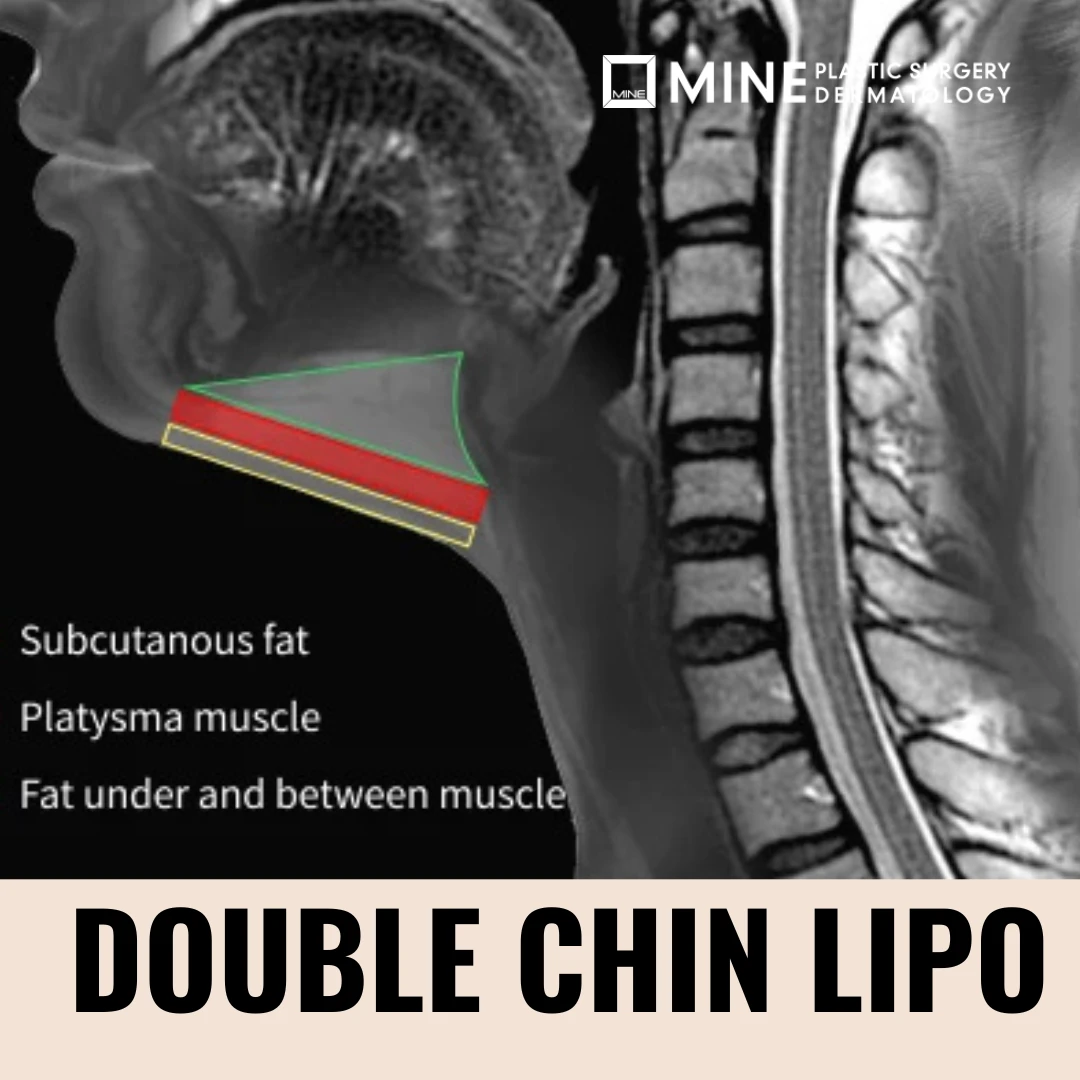
Medical textbooks describe four distinct layers in the area beneath your chin, and each one can contribute to fullness:
- Subcutaneous fat — the soft fat just under the skin. This is the layer most people imagine when they think of a double chin, and it is the layer liposuction can address.
- The platysma muscle — a thin sheet of muscle (the “neck muscle” that fans across the front of the neck). When it loosens or its edges separate, it creates visible bands and slackness.
- Subplatysmal fat — a deeper pad of fat that sits below the muscle. Crucially, this fat cannot be reached by liposuction.
- The submandibular gland and digastric muscle — a saliva gland and a small chewing muscle that, when enlarged, push outward and create fullness that no amount of fat removal can fix.
According to plastic surgery literature (Neligan, Plastic Surgery — Aesthetic), roughly 75% of necks show the two halves of the platysma muscle interlocking in the area under the chin. That single statistic explains why a one-size-fits-all approach simply does not exist — every neck is built a little differently.
Dr. Lee’s Key Point: A double chin is a layered problem, not a single lump of fat — and you cannot treat what you have not first identified.
What Happens When Liposuction Alone Is Not Enough
This is the single most important thing to understand before booking surgery. There is a clear reason why liposuction alone may not be enough for many patients.
Liposuction is excellent at removing the soft fat just under the skin. But if your fullness is coming from the deeper fat pad below the muscle, from a loose platysma muscle, or from an enlarged saliva gland, then suctioning the surface fat will not correct it. In fact, the medical literature notes that the deep fat below the muscle “cannot be suctioned and requires a direct approach” through a tiny incision under the chin — because important facial nerves run just beneath that muscle, so this layer must be handled with great care.
There is a second subtle point. The same textbooks caution that removing too much of the surface fat can, over time, allow the skin under the chin to become loose. That is why an experienced surgeon removes surface fat conservatively, leaving a healthy layer behind so the contour stays smooth rather than hollow or saggy.
Dr. Lee’s Key Point: If your double chin comes from a deeper layer, more liposuction is not the answer — it is the wrong tool for that layer.
Double Chin Surgery Methods Available in Korea
Because the cause can sit in any of those four layers, double chin surgery in Korea is offered through several distinct methods. Often the right plan combines two or three of them in a single session. Here is how each one works.
Double Chin Liposuction (Submental Liposuction)
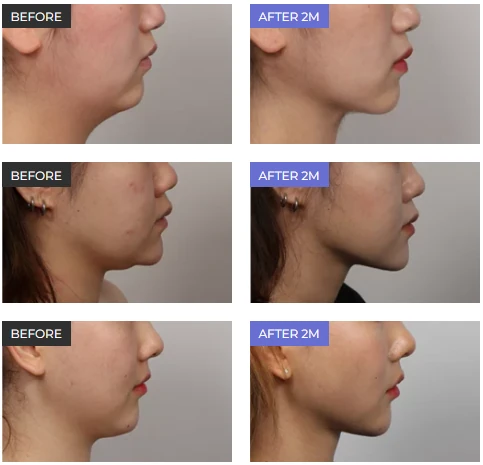
This is the most common procedure and the right choice when the problem is surface fat and your skin elasticity is good. A thin cannula is inserted through a 2–3 mm incision hidden under the chin to remove the subcutaneous fat layer, usually under local anaesthesia. You can read more about double chin liposuction at MINE on our dedicated service page.
Platysmaplasty — Muscle Layer Correction
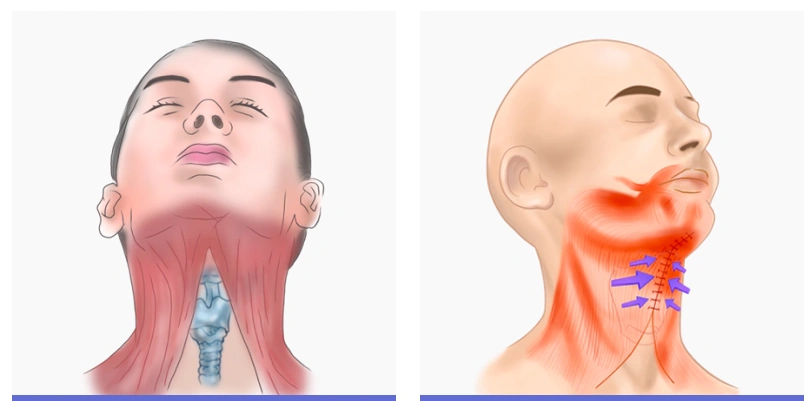
Platysmaplasty addresses the muscle layer. Through the same small incision under the chin, the surgeon tightens or repositions the platysma muscle — often by stitching its two inner edges back together. This corrects the bands and laxity that liposuction simply cannot touch, which is why it is frequently combined with fat removal for a sharper, longer-lasting jawline.
Salivary Gland Reduction for Stubborn Fullness
Sometimes the fullness is not fat or muscle at all but an enlarged saliva gland (the submandibular gland) sitting just below the jaw line. When that gland protrudes, it creates a roundness that persists even after a thorough liposuction. In these cases, salivary gland reduction may be recommended. This is a specialised area, so we cover it in depth on its own page rather than here.
Combined Approach: When Multiple Methods Are Used Together
Here is where Korean surgical practice tends to differ. Rather than treating one layer and hoping it is enough, the goal is to address every layer that is actually contributing to your fullness in a single, well-planned session. The medical literature supports this: when surgeons reduce one deep structure of the neck, they often need to manage the adjacent layer at the same time, otherwise that neighbouring layer can become more visible afterward. A combined plan that respects all the relevant layers typically delivers a more durable, natural result than treating problems one at a time. For a deeper look at the techniques themselves, see our complete guide to double chin removal surgery.
Dr. Lee’s Key Point: The right method is rarely a single procedure — it is the combination matched to your specific anatomy.
Why Patients Choose Korea for Double Chin Surgery
International patients do not travel thousands of kilometres for a procedure they could get at home unless there is a genuine reason. When it comes to double chin surgery in Korea, those reasons come down to diagnosis, value, and surgical training.
Ultrasound Diagnosis Before Surgery: Mine Clinic’s Assessment Protocol
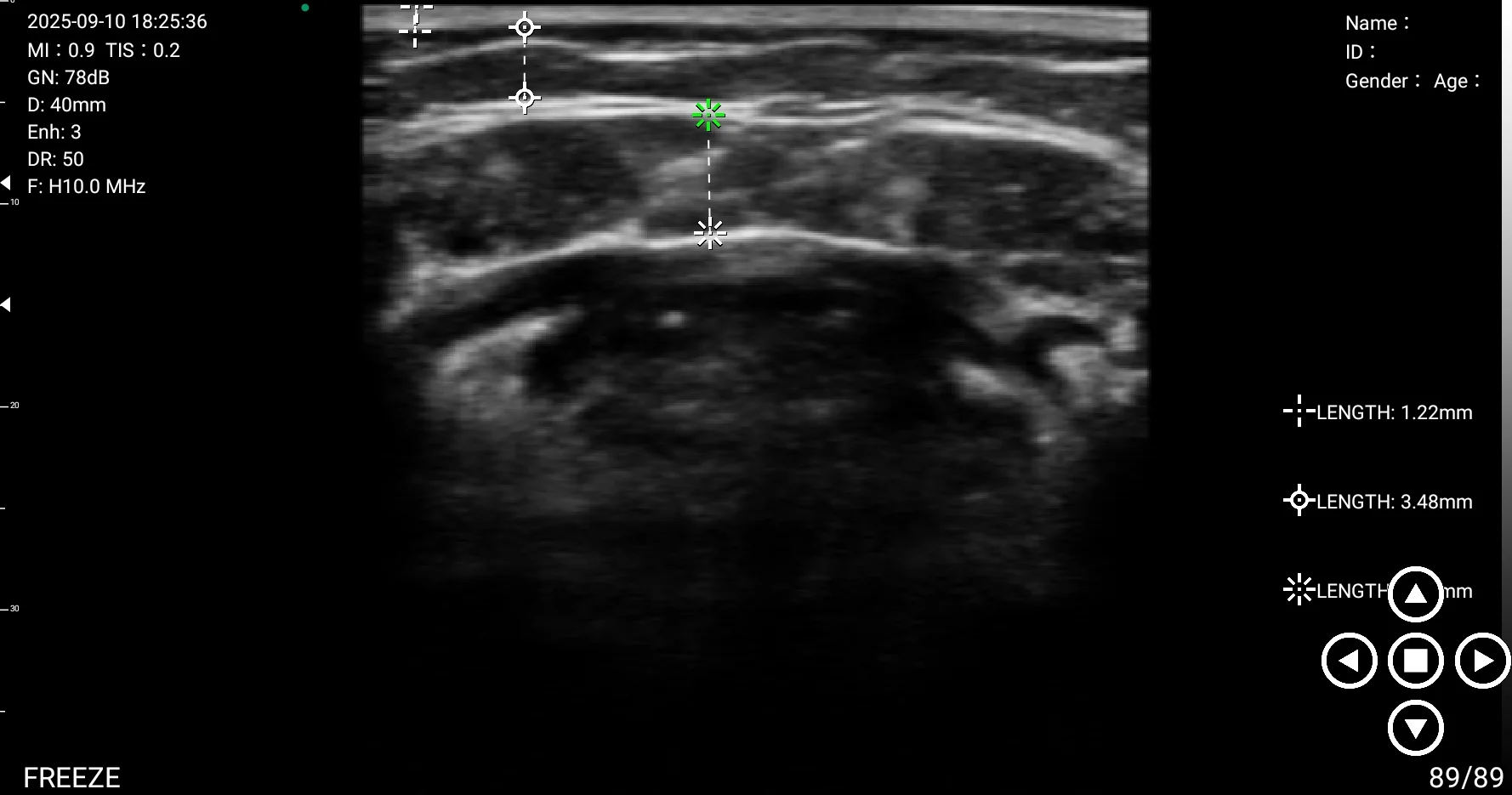
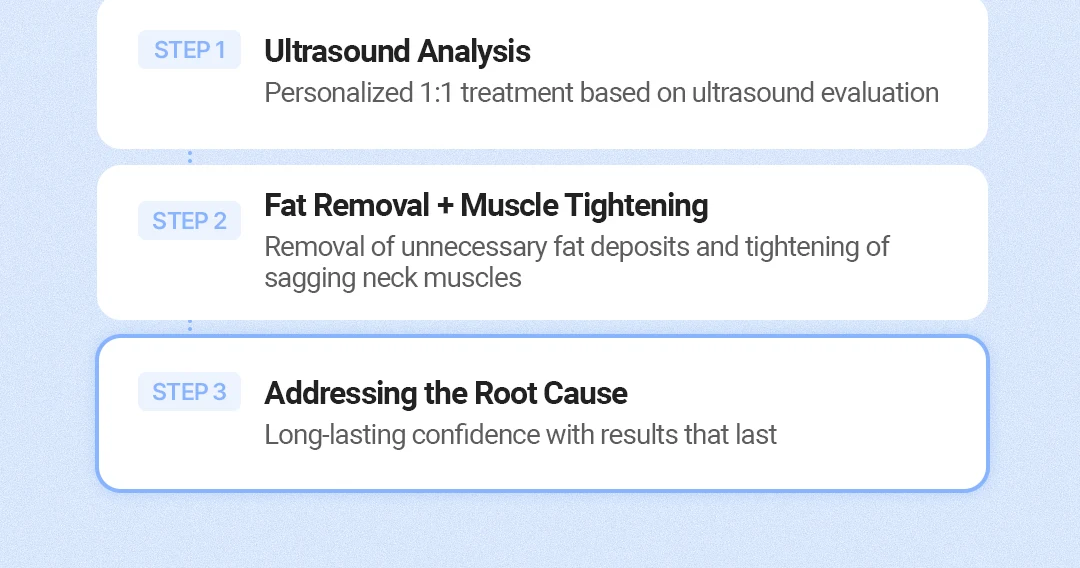
At Mine Clinic, we use a pre-operative ultrasound assessment to measure the thickness of your fat layers, the position of your platysma muscle, and the size of your saliva gland before we decide on any surgical plan. This matters enormously, because — as the anatomy section above explained — choosing the right procedure depends entirely on knowing which layer is causing your fullness. You can learn more about why ultrasound consultation matters before surgery in our dedicated article.
Cost Comparison: Korea vs USA and Europe
Cost is a major reason patients look to Korea. Double chin surgery in Korea, and liposuction in particular, typically costs 30–50% less than the equivalent procedure in the United States, and the gap can be wider for combined procedures. Rather than quote a fixed price here — every case is different and an accurate quote requires an in-person assessment — we provide a relative comparison. For reference on average pricing in the United States, you can consult American Society of Plastic Surgeons cost data. Individual quotes vary — a consultation is required for an accurate estimate.
Board-Certified Surgeons and Medical Tourism Infrastructure
South Korea’s board-certified plastic surgeons complete an additional 4–5 years of speciality residency after medical school, and the country has built a mature infrastructure for international patients. Same-day discharge under local or twilight anaesthesia is standard practice here, which keeps a procedure like this convenient for someone travelling from abroad. International accreditation bodies such as ISAPS (International Society of Aesthetic Plastic Surgery) provide a useful reference point for the global standards Korean surgeons train to.
Dr. Lee’s Key Point: Korea’s advantage is not just lower cost — it is precise diagnosis combined with rigorously trained surgeons.
Step-by-Step: What to Expect During Your Double Chin Surgery in Korea
For first-time patients, knowing the sequence of the day removes a great deal of anxiety. Here is what a typical day of double chin surgery in Korea looks like at our clinic.
Consultation and Pre-Operative Assessment
Your pre-operative consultation includes the ultrasound imaging described above, a review of your medical history, and a personalised surgical plan. For many patients this is completed in a single appointment, so an international patient can consult and proceed within the same trip when appropriate.
The Surgery Day: From Arrival to Discharge
The procedure itself usually lasts 60–120 minutes depending on how many layers are being treated, with the patient awake or lightly sedated. Most patients are discharged within 3–5 hours of arriving at the clinic on surgery day — there is no overnight hospital stay for a standard double chin procedure.
Post-Operative Instructions for International Patients
You will leave with a compression garment and clear aftercare instructions. We strongly advise international patients to plan a minimum 7-day stay in Seoul so that the suture-removal appointment on Day 7 can be completed before you fly home.
Dr. Lee’s Key Point: A double chin procedure is a same-day surgery, but the Day 7 suture removal is the appointment that shapes your travel plans.
Recovery Timeline for Double Chin Surgery in Korea
Recovery after double chin surgery in Korea is predictable for most patients, and understanding the timeline helps you plan both your trip and your return to work.
Days 1–7: Early Recovery and Suture Removal
Swelling tends to peak at 48–72 hours after surgery and is managed with a compression garment worn for roughly 7–10 days. Sutures are removed at Day 7, and most patients are able to return to office work within 5–7 days.
Weeks 2–6: Swelling Reduction and Visible Results
The major, visible swelling generally resolves within 2–3 weeks. This is why patients who want to see their early results before flying home often choose a 2-week stay in Seoul rather than the minimum seven days.
3–6 Months: Final Outcome
The final definition of your jawline and neck contour becomes visible at 3–6 months, as the last of the residual swelling fully settles. Results tend to look more natural month by month rather than appearing all at once.
For a complete day-by-day breakdown of aftercare, see our detailed double chin surgery recovery timeline.
Dr. Lee’s Key Point: Plan around the swelling — seven days covers suture removal, but two weeks lets you see the real change.
Practical Guide for International Patients Travelling to Korea
Beyond the medicine, a smooth trip comes down to logistics. Here is a practical checklist drawn from what our international patients tell us makes the biggest difference.
Before You Travel: Documentation and Medical Clearance
International patients need a pre-surgery consultation — by video call or in person — and a medical clearance form completed at least one week before the procedure. Sharing your medical history and any relevant medications in advance allows us to confirm you are a suitable candidate before you board your flight.
Accommodation and Logistics Near Mine Clinic in Gangnam
Mine Clinic is located in Gangnam-gu, Seoul, about a 10-minute walk from Gangnam Station. The surrounding district has a high concentration of medical-tourism-friendly accommodation and services, so staying nearby keeps your follow-up appointment effortless.
Language, Communication and Follow-Up Care at Home
English-language consultation and coordination are available, and translation for other languages can be arranged. After your Day 7 suture removal, post-operative follow-up can continue by video call once you return home, so you are not left without support after your trip.
Dr. Lee’s Key Point: The medical part is short — preparing your documents and accommodation in advance is what makes the whole trip feel easy.
Risks, Side Effects and Realistic Expectations
No procedure is without risk, and an honest conversation about side effects is part of responsible care. Before choosing this procedure, here is what you should realistically expect.
Common Side Effects and How They Are Managed
Common, temporary side effects include swelling, bruising, and a period of numbness in the area under the chin, which typically resolve within 2–3 weeks. These are an expected part of healing rather than a complication, and the compression garment helps manage them.
Who Is Not a Suitable Candidate?
Rare but possible complications include haematoma (a collection of blood under the skin), infection, asymmetry, and contour irregularity — all of which we discuss in full during your consultation. Patients with certain blood-clotting conditions, an active skin infection in the treatment area, or expectations that surgery cannot realistically meet may not be suitable candidates. Individual results vary depending on your baseline anatomy, skin elasticity, and the combination of techniques used.
Dr. Lee’s Key Point: Realistic expectations are part of a good outcome — a thorough consultation exists precisely to set them.
Frequently Asked Questions
How much does double chin surgery cost in Korea compared to the US?
Double chin liposuction in Korea typically costs 30–50% less than the equivalent procedure in the United States, with a wider gap for combined procedures that treat the muscle or gland as well. Because the right plan depends on your anatomy, an accurate quote requires an ultrasound assessment and a personal consultation rather than a fixed list price.
How long do I need to stay in Korea for double chin surgery?
We recommend a minimum 7-day stay, which covers the surgery day plus the Day 7 suture removal. Patients who want to see their early results before flying home often extend to about 14 days. The surgery itself is same-day, with discharge within a few hours.
Is double chin liposuction enough, or will I need platysmaplasty too?
If your fullness comes only from surface fat and your skin elasticity is good, liposuction alone can be enough. But if there is muscle laxity, deeper fat below the muscle, or an enlarged saliva gland, a combined approach is needed. An ultrasound assessment is what determines which case applies to you.
Is double chin surgery in Korea safe for foreigners?
Korea’s board-certified plastic surgeons operate within an established medical-tourism system, with same-day discharge under local or twilight anaesthesia as standard. A typical international protocol includes a pre-surgery video consultation, shared medical records, and video follow-up after you return home.
What is the recovery time for double chin surgery?
Sutures are removed at Day 7, major swelling resolves within 2–3 weeks, and the final contour appears at 3–6 months. Most patients return to office work within 5–7 days, wearing a compression garment for roughly 7–10 days.
Will the results of double chin surgery be permanent?
Removing fat cells is permanent, and platysma muscle stitching tends to hold over the long term. However, significant weight change and natural ageing can still affect the skin over time, so maintaining a stable weight helps preserve your result.
Book Your Double Chin Surgery Consultation in Korea
The most valuable first step before any double chin surgery in Korea is an accurate diagnosis of which layers are causing your double chin — because that single piece of information determines everything that follows. We invite you to book a free consultation, either in person at MINE Plastic Surgery in Gangnam-gu, Seoul, or via online video call if you are planning your trip from abroad.
Contact: mineclinic.com | +82-2-516-1175 (laser vs. surgical double chin removal)
Written and medically reviewed by Dr. Lee Sung-wook, Board-Certified Plastic Surgeon, MINE Plastic Surgery & Dermatology, Seoul.
※ This content is for informational purposes only and does not replace professional medical advice, diagnosis, or treatment. Individual results may vary, and side effects may occur. Please consult with a board-certified plastic surgeon for personalized advice.