EN
EN

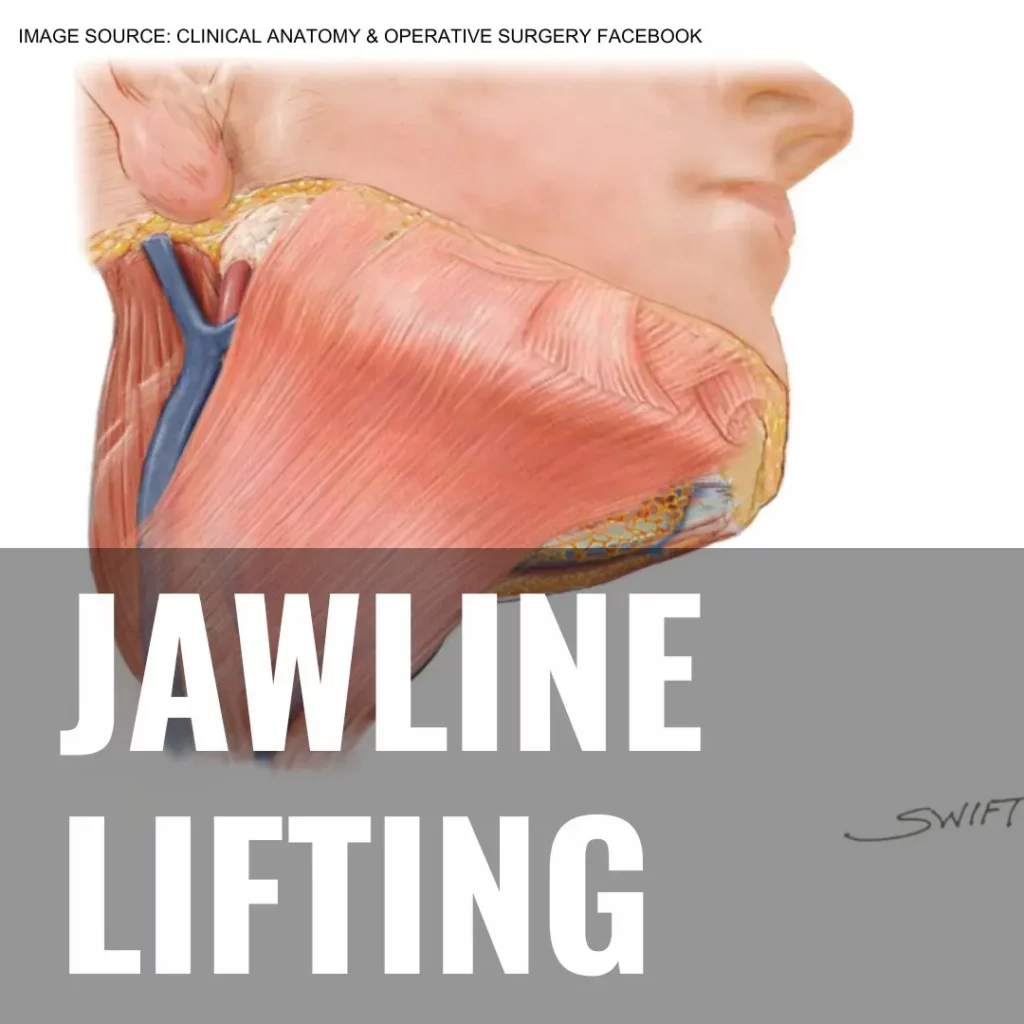
Table of Contents
What Is Jawline Lifting — And Why Is It So Complicated?
A sharp, well-defined jawline is one of the most sought-after features in aesthetic medicine — and one of the most misunderstood. Patients often walk into a consultation at Mine Clinic describing their concern simply as “a double chin” or “saggy neck,” when in reality, the underlying anatomy can vary dramatically from person to person.
Jawline lifting refers to a family of surgical and non-surgical procedures designed to restore a clear, youthful boundary between the jaw, chin, and neck. This includes everything from minimally invasive mini neck lifts to more comprehensive face and neck lift surgeries, and the right approach depends entirely on which anatomical structures are causing the problem.
This is where many patients — and unfortunately some clinics — get it wrong. Treating every jawline concern with the same procedure (usually liposuction or thread lifting) without properly assessing the deeper structures beneath the skin leads to underwhelming results and, in some cases, revision surgery.
Who Typically Seeks Jawline Lifting?
International patients who visit Mine Clinic for jawline lifting surgery generally fall into one of these groups:
- Patients in their late 30s to 50s noticing early jowling and loss of jaw definition
- Patients with a genetically weak chin or recessed jaw that makes the neck appear fuller even at a young age
- Patients who have already tried non-surgical treatments — Ulthera, Thermage, injection lipolysis, or thread lifts — with limited or diminishing results
- Patients seeking revision surgery after unsatisfactory outcomes at another clinic
As Dr. Lee Sung-wook explains in his patient consultation video, “Many people come in after already trying many kinds of injection treatments or laser lifting treatments — Ulthera, Thermage — and other machines that say they get rid of double chin. After these treatments there is not much subcutaneous fat left, or a lot of internal scarring has formed.”
The point is critical: the more non-surgical treatments you have tried, the more complex your anatomy may be when you arrive for surgery. This makes expert anatomical assessment even more essential.
The 3 Anatomical Zones That Actually Define Your Jawline
To understand which jawline lifting surgery you need, you first need to understand the three anatomical zones beneath the platysma muscle — the thin, flat muscle that runs from the collarbone up to the lower face. Everything beneath the platysma is what truly determines the shape of your jawline, and liposuction alone can only address the subcutaneous fat above it.
At Mine Clinic, Dr. Lee Sung-wook divides the sub-platysmal region into three distinct zones — Zone ①, Zone ②, and Zone ③ — each requiring a different surgical approach.

Image Source: Clinical Anatomy & Operative Surgery Facebook
Zone ① — The Subplatysmal Fibrous Fat (Under-Chin Center)
When you look at someone straight-on, Zone ① is the central area directly beneath the chin. Beneath the platysma muscle in this zone sits a mass of fibrous fatty tissue — sometimes called subplatysmal fat — that is fundamentally different from the regular subcutaneous fat found on the body.
This is a fact that surprises many patients: this fat cannot be suctioned. Unlike the soft, loosely connected subcutaneous fat in areas like the abdomen or thighs, the subplatysmal fat in Zone ① is densely packed with fibrous tissue, making it impossible to remove with a liposuction cannula. It must be surgically excised as a single block through a small incision made along the natural chin crease.
The surgical procedure for Zone ① typically includes:
- Excision of the subplatysmal fibrofatty mass
- Platysmaplasty — tightening and reapproximating the platysma muscle to restore the central neck contour
After Zone ① surgery, patients see significant improvement in the area directly beneath the chin — the part that “hangs down like a turkey neck” — while the mid-jawline and the jaw angle near the ear remain unchanged.

Zone ② — The Salivary Gland Region (Mid-Jawline)
Zone ② is the middle section of the jawline — the area between the chin and the ear. This is a zone that many patients and clinics overlook entirely. The fullness you see here is often not fat at all — it comes from enlarged submandibular salivary glands that protrude below the jawbone.
This distinction is critical. Performing liposuction in this area without addressing the salivary glands can actually worsen the appearance: once the overlying fat is removed, enlarged glands that were previously hidden now become more visible and prominent. Dr. Lee warns that quite a few patients have experienced this unfortunate outcome.
Self-diagnosis tip from Dr. Lee: If you gently roll the area under your chin between two fingers and feel a rounded, firm structure with the texture of a rubber eraser — that is most likely an enlarged submandibular salivary gland. If you feel no distinct structure, your salivary glands are likely normal in size.
The surgical approach for Zone ②:
- A partial salivary gland reduction, removing only the portion of the gland that protrudes below the jawbone
- This restores a cleaner mid-jawline contour, often dramatically
Zone ② surgery is performed through the same small incision along the chin crease as Zone ①, making it a logical addition when both zones are involved. Learn more about the salivary gland reduction procedure at Mine Clinic.
Zone ③ — The Jaw Angle Below the Ear
Zone ③ is the area beneath the ear where the jawline meets the neck — a region where the jugular vein and carotid artery ascend. For patients who have no visible boundary at all between their jaw and their neck, Zone ③ is almost always involved.
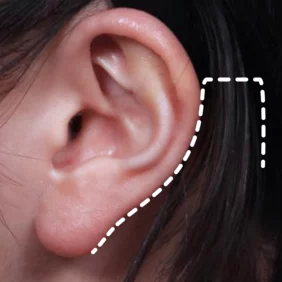
This zone cannot be addressed from the chin incision. The far end of the platysma muscle in this region is simply too distant from the chin entry point. Instead, an incision behind the ear and into the hairline is required, allowing the surgeon to physically pull the platysma backward and anchor it to restore that sharp angle beneath the ear.
Zone ③ surgery essentially converts a mini neck lift into a procedure closer to a full neck lift or mini facelift in terms of scope and recovery.

Summary: Which Zones Do You Need?
| Concern | Zone Involved | Key Procedure |
|---|---|---|
| Central chin sagging / “turkey neck” | Zone ① | Subplatysmal fat excision + platysmaplasty |
| Mid-jawline fullness that doesn’t respond to liposuction | Zone ② | Partial salivary gland reduction |
| No jaw-neck boundary beneath the ear | Zone ③ | Platysma anchoring via post-auricular incision |
| Full jawline redefinition (all zones) | Zones ①+②+③ | Combined mini neck lift + salivary gland reduction + lateral platysma anchoring |
Key Takeaway: The question of which zones need surgery determines which parts improve and how dramatic your result will be. This is why an in-person or video consultation with a qualified surgeon like Dr. Lee is essential before any procedure.
Jawline Lifting Procedures at Mine Clinic, Seoul
Based on the zone assessment above, Mine Clinic offers a range of surgical approaches tailored to each patient’s specific anatomy:
Double Chin Surgery (Zone ①)

Double Chin Surgery and Salivary Gland Reduction (Zones ① and ②)

Mini Neck Lift (Zones ①, ②, and ③)
The Mini Neck Lift is Mine Clinic’s most popular jawline surgery for patients with central and mid-jaw concerns. The procedure is performed under local or light general anesthesia through a small incision along the first natural chin crease. During surgery, the surgeon removes the subplatysmal fibrous fat mass, partially reduces any protruding salivary gland tissue, and then performs platysmaplasty — tightening the platysma muscle to restore neck definition.

For the right candidate, results are significant and natural-looking, with minimal visible scarring since the incision is hidden within the existing chin fold.
Double Chin Liposuction (for Appropriate Candidates)
In select patients who have primarily subcutaneous fat (above the platysma) and good skin elasticity with no sagging, double chin liposuction may be sufficient. However, as Dr. Lee emphasizes, the amount of subcutaneous fat available to suction in the neck is often very limited, and this approach does not address the deeper zones.
Non-Surgical Adjuncts
For patients not yet ready for surgery, or as a complement to surgical procedures, Mine Clinic also offers non-surgical options such as Thread Lifting, Ulthera, and Doublo HIFU treatments. It is important to understand, however, that these modalities address the skin layer only and cannot reach or resolve Zone ①, ②, or ③ concerns.
Why Choose Korea — and Mine Clinic — for Jawline Lifting?
Korea’s Anatomical Expertise is Unmatched
Korea has spent decades at the forefront of facial contouring surgery. The level of anatomical knowledge that Korean surgeons apply to the jawline — identifying sub-platysmal fat, salivary gland contribution, and lateral platysma tension as distinct, addressable structures — represents a fundamentally more precise approach than simply “tightening the skin” or performing liposuction.
According to the American Society of Plastic Surgeons (ASPS), neck lift procedures are among the most technically demanding in facial surgery, requiring intimate knowledge of the underlying anatomy, nerves, and vascular structures. Mine Clinic’s surgeons train specifically in this anatomy and apply it every day in a high-volume practice dedicated to facial contouring.
Why Mine Clinic Specifically?
- Dr. Lee Sung-wook is a board-certified plastic surgeon with deep specialization in jawline and neck anatomy. His zone-based diagnostic approach — explained publicly in educational patient videos — reflects the level of transparency and precision you can expect in your consultation.
- Comprehensive pre-op assessment includes a detailed physical examination to determine exactly which zones are involved, so you receive only the surgery you actually need.
- Safety-first environment: All surgeries are conducted under strict protocols.
- Mine Clinic is situated in the heart of Gangnam, Seoul — the center of Korea’s medical aesthetics industry and easily accessible from all major hotels and transit hubs. Get directions here.
Important: Risks, Side Effects & Safety
Jawline lifting surgery is a safe and routinely performed procedure at Mine Clinic, but as with all surgical interventions, it carries risks that every patient must understand before giving informed consent. Transparency about these risks is a core part of Mine Clinic’s patient care philosophy.
Common and Expected Side Effects
- Swelling and bruising: Significant swelling is normal in the first week and gradually resolves over 4–6 weeks. Most patients find it acceptable to appear in public after 2–3 weeks, though some residual swelling may persist for up to 3 months.
- Tightness and numbness: Temporary tightness in the neck and mild numbness around the incision sites are common. Sensation typically normalizes over several weeks.
- Visible incision lines: Scars along the chin crease and, if applicable, behind the ear are initially pink and firm, but fade to near-invisible lines over 6–12 months.
Less Common but Important Risks
- Asymmetry: Minor differences in contour between the left and right sides are a possibility with any facial surgery. Dr. Lee takes meticulous measurements intraoperatively to minimize this risk.
- Nerve sensitivity: Temporary changes in sensation near the surgical area are common. Permanent nerve injury is extremely rare when surgery is performed by an experienced, board-certified surgeon.
- Salivary gland considerations: Partial salivary gland reduction (Zone ②) is a specialized procedure. In rare cases, temporary swelling of the remaining gland (Frey’s syndrome, or transient gustatory sweating) may occur but typically resolves spontaneously.
- Hematoma: A small collection of blood beneath the skin can occur in rare cases and may require drainage. Mine Clinic’s post-op monitoring protocol is designed to detect and address this early.
- Revision surgery: If a patient is unhappy with their outcome, Mine Clinic has a dedicated facial revision program. Understanding your anatomy fully before surgery is the best defense against needing revision.
Recovery in Korea: Your Post-Op Timeline
Planning your trip to Seoul for jawline lifting surgery? Here is what to expect week by week:
Day of Surgery: Surgery is performed under local anesthesia with sedation or light general anesthesia, typically lasting 1.5–3 hours depending on the zones addressed. You will spend a few hours in the recovery room before returning to your accommodation.
Days 1–3: This is the peak swelling period. Rest is essential. A compression garment around the neck and chin should be worn as instructed. Mild pain is manageable with prescribed oral medication. Light walking around your hotel or accommodation is fine and encouraged.
Day 5–7 — First Follow-Up: You will return to Mine Clinic for your first post-operative check. Drainage (if placed) is removed. The surgical site is inspected and dressings are changed.
Day 7 — Stitch Removal: For most patients having Zone ① and/or ② surgery, sutures along the chin crease are removed on or around Day 7. This is a painless procedure.
Day 10–14 — When Can I Fly Home? Most international patients are cleared to fly home between Day 10 and Day 14, once the surgical team is satisfied with healing. Patients who undergo Zone ③ surgery (with the post-auricular incision) may be advised to stay slightly longer for suture removal behind the ear. We recommend planning for a minimum 10–14 day stay in Seoul.
Week 3–4: By this point, most patients feel comfortable returning to desk work and light daily activities. Heavy exercise should be avoided for 4–6 weeks.
Month 3: Swelling is largely resolved and patients begin to see their definitive result taking shape.
Month 6–12: Scars continue to mature and fade. Final results are fully visible.
Travel tip: Mine Clinic’s international team can help you arrange accommodation, airport transfers, and follow-up care scheduling as part of your International Patient Service.
FAQ: Jawline Lifting Surgery in Seoul
Is liposuction alone enough for jawline lifting?
In a small subset of patients who have primarily subcutaneous fat and excellent skin elasticity, double chin liposuction may produce satisfying results. However, as Dr. Lee explains, the amount of subcutaneous fat that can be safely removed from the chin area is often very limited. For most patients with a sagging or undefined jawline, the real culprits are the subplatysmal fibrous fat, the salivary glands, or lateral platysma laxity — none of which liposuction can address. A physical consultation is the only way to determine which approach is right for you.
What if I’ve already had Ulthera, threads, or injection fat dissolvers?
Prior non-surgical treatments do not disqualify you from surgery, but they do affect the tissue environment. Repeated energy-based treatments can reduce the amount of available subcutaneous fat and create internal scar tissue (fibrosis), which can complicate dissection. This is why it is crucial to disclose your full treatment history during your consultation. Dr. Lee’s team will assess your tissue condition and plan accordingly.
How is the incision hidden for Zone ① and ② surgery?
The incision for Zone ① and ② procedures is placed along the first natural chin crease — the fold that forms when you tilt your head downward. This natural skin fold conceals the scar extremely well during the healing period, and once fully healed, the scar is virtually imperceptible. For Zone ③ surgery, the additional incision follows the natural contour behind the ear and continues into the hairline, making it similarly discreet.

I want to address my full jawline — sagging under the chin, mid-jaw, AND beneath my ear. Is this possible in one surgery?
Yes. Many Mine Clinic patients address all three zones in a single surgical session. Combining Zone ①, ②, and ③ surgery produces the most comprehensive jawline transformation (mini neck lift) and is the most efficient approach for patients traveling from abroad. The procedure takes approximately 2.5–3.5 hours and the recovery timeline remains largely the same.
How much does jawline lifting surgery cost at Mine Clinic?
Pricing varies depending on the zones involved, anesthesia type, and any additional procedures combined with your jawline surgery. Mine Clinic provides personalized quotes after a formal consultation, as one-size-fits-all pricing would not reflect the individually tailored nature of each procedure. Please submit an online consultation request or book a reservation to receive a personalized treatment plan and quote.
Ready to Find Out Which Jawline Surgery You Need?
The most important first step is understanding your anatomy — which of the three zones is responsible for your concern, and which combination of procedures will give you the most natural, lasting result.
Interested in jawline lifting surgery? Contact Mine Clinic today for a personalized online consultation. We are ready to assist you on WhatsApp and guide you through your K-Beauty journey in Seoul. Book Your Free Consultation →
You can also explore Mine Clinic further:
- Meet our medical staff
- Tour our clinic facilities
- View real patient results
- See all anti-aging & lifting procedures
Medical Disclaimer: This content is for informational purposes only and does not substitute professional medical advice, diagnosis, or treatment. All surgical decisions should be made in consultation with a qualified, board-certified plastic surgeon following a thorough in-person or virtual clinical assessment.
Reviewed by Dr. Lee Sung-wook, Board Certified Plastic Surgeon at Mine Clinic, Gangnam, Seoul, Korea.