EN
EN

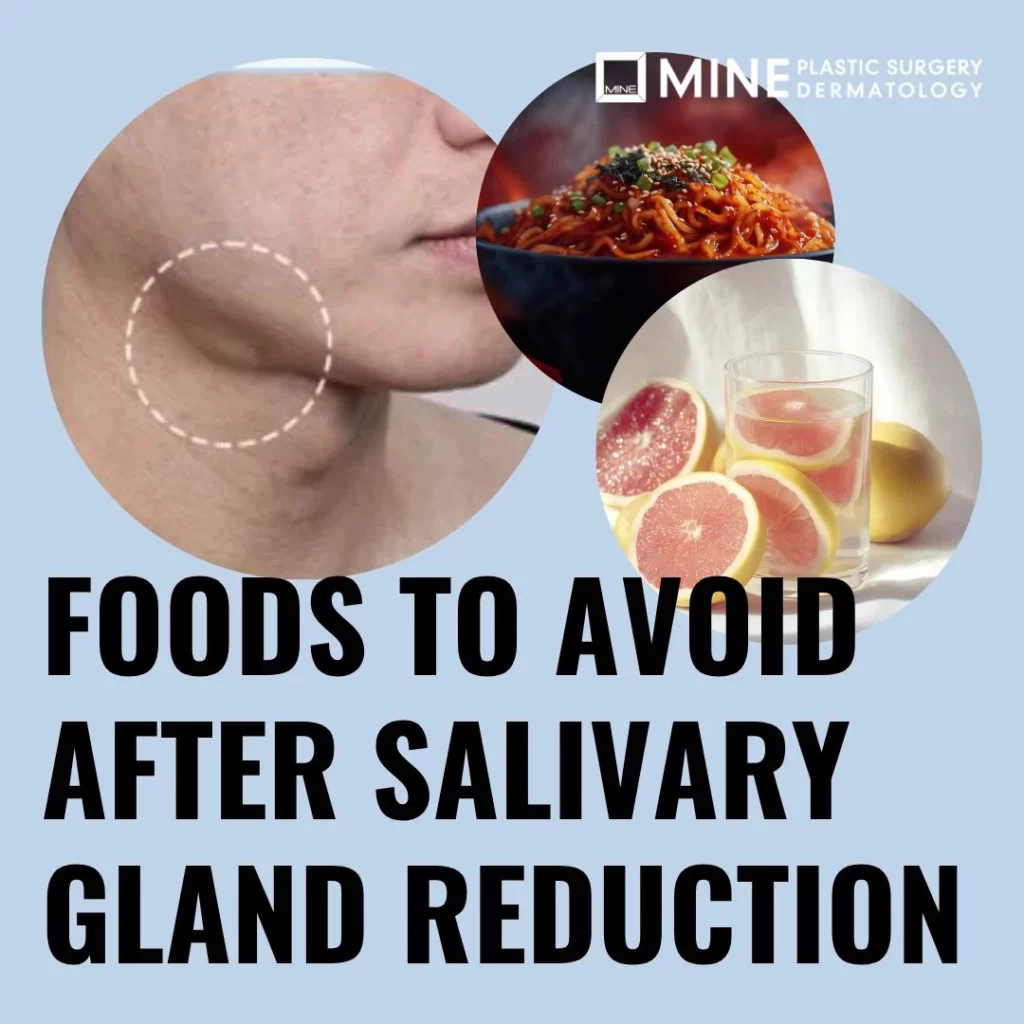
Table of Contents
What Is Salivary Gland Reduction Surgery?
Salivary gland reduction is a surgical jawline-contouring procedure that removes the enlarged portion of the submandibular salivary gland — specifically the part that protrudes below the lower jawbone and disrupts a clean jawline. It is not a simple injection treatment. At Mine Clinic, it is performed as a true surgical excision, almost always combined with double chin (submental) surgery, so that both excess fat and the bulging gland are addressed through the same approach for a smooth, defined lower face.
Haven’t had surgery yet? If your gland is swollen, painful or infected, the advice below does not apply to you — an infected or blocked gland is managed the opposite way. See Infection or stone vs. after surgery.
The short answer: for about 1–2 weeks after surgery, avoid sour and acidic foods first, then strongly flavored “mouth-watering” dishes, hard or chewy foods, spicy foods, very hot foods and drinks, salty and processed foods, and alcohol. Those are the foods to avoid after salivary gland reduction, and each one is explained below.
When the submandibular gland is enlarged — often due to genetics, aging, or chronic stimulation — it creates a heavy, sagging fullness beneath the jaw that liposuction or injectables alone cannot fix. Because the bulk is glandular tissue, the only way to meaningfully reduce it is to surgically excise the protruding portion.
International patients travel to Seoul for this procedure because it offers:
- A genuinely slimmer, more defined V-line that addresses the true cause of lower-face fullness
- A combined approach with double chin surgery through a single, discreet incision
- Surgical results performed by experienced Korean facial-contouring specialists
Key Takeaway: Salivary gland reduction is a surgery — performed together with double chin surgery — that excises the part of the salivary gland extending below the jawbone. It is ideal for patients whose lower-face fullness comes from glandular enlargement rather than fat alone. It pairs naturally with a Mini Neck Lift or V-line Surgery for a comprehensive lower-face transformation.
Infection or Salivary Stone vs. After Surgery: Why the Advice Is Opposite
This is the most common point of confusion, and getting it wrong can work against you. Everything in this guide describes the diet after elective salivary gland reduction surgery — a jawline-contouring operation on a healthy gland. A swollen, painful or infected gland (sialadenitis), or one blocked by a salivary stone, is an entirely different problem, and the standard approach is the reverse.
For an infected or blocked gland, medical textbooks describe conservative care aimed at getting saliva moving: drinking plenty of fluids, applying warm compresses, gently massaging the gland, and deliberately stimulating flow with tart or sour foods — the so-called sialagogue effect, where something as simple as a lemon drop helps flush the duct. Antibiotics are added when a bacterial infection is suspected. In other words, the sour foods listed as the first thing to avoid after surgery are, in that situation, often part of the treatment.
After surgery the goal inverts. The gland bed is an open, healing wound that is still producing saliva, so the aim for roughly the first 1–2 weeks is to keep secretion low.
Two complications are tied most directly to saliva flow. The first is a sialocele, a pocket of saliva that collects under the skin at the healing site. The second is a salivary fistula, where saliva leaks out through the incision instead of draining the normal way. Sialoceles are uncommon and settle on their own. In a 2015 study by Mendelson in Plastic and Reconstructive Surgery that followed 112 consecutive aesthetic submandibular gland reductions, one appeared in 5 patients, always between the first and second week, and all of them had resolved by 4 weeks without surgery.
So before you follow any food list, be clear which situation you are in. If you have not had gland surgery and your symptoms are swelling, pain, fever or a bad taste in the mouth, see a doctor rather than a food list — general medical references such as the MedlinePlus entry on salivary gland infections are a better starting point, and an infection may need antibiotics.
Key Takeaway: Infected or blocked gland — increase saliva flow. Recovering from gland reduction surgery — keep saliva flow low. The rest of this guide covers the second situation.
How Salivary Gland Reduction Surgery Is Performed at Mine Clinic
At Mine Clinic in Gangnam, Seoul, this procedure is performed as a surgery under IV sedation with local anesthesia, ensuring patient comfort while avoiding the risks of full general anesthesia. Here’s an overview of the process:
- In-Depth Consultation: Dr. Lee Sung-wook personally evaluates your jawline, the degree of glandular protrusion, and the amount of submental fat to determine the combined surgical plan.
- Discreet Submental Incision: A small incision is made under the chin — the same access point used for double chin surgery — so both the excess fat and the gland are treated through one well-hidden scar.
- Surgical Excision of the Gland: The surgeon excises the enlarged portion of the salivary gland, with the boundary being whatever protrudes below the jawbone. This is the precise tissue responsible for the sagging contour.
- Double Chin Refinement: Excess submental fat is contoured in the same session for a harmonious, sculpted jawline.
- Closure & Aftercare Briefing: The incision is closed, and patients receive detailed recovery instructions — including the critical dietary guidance covered below.
Because this is a surgical procedure, an experienced surgeon and careful post-operative care are essential — far more involved than a quick injectable.
Why Choose Korea and Mine Clinic for Salivary Gland Reduction?
Korea is the world’s leading destination for K-Beauty medical tourism, and Mine Clinic stands out for several reasons:
- Surgical Expertise: Our surgeons have extensive experience in combined submental and salivary gland surgery — a procedure that requires precise anatomical knowledge to protect surrounding nerves and vessels.
- Single-Incision Efficiency: Combining gland excision with double chin surgery means one incision, one recovery, and a more complete result.
- International Patient Care: From airport pickup to multilingual coordinators, our International Service ensures a seamless surgical-tourism experience.
- Holistic Approach: We tailor your treatment plan to your overall facial harmony, not just one isolated feature.
The risks that diet cannot control come down to anatomy and planning. In that same study, temporary weakness of the nerve that moves the corner of the mouth affected a different 5 patients, and all of them recovered fully within 3 months. It was far more common in people who had already had neck surgery — 3 of those 31 patients, against 2.5 percent of the ones having a first operation — which is why previous neck surgery is worth raising at consultation. No one in that 112-patient study was left with a permanently dry mouth.
Why Diet Matters After Surgery: Saliva & Healing
Here is the single most important concept for your recovery: after surgery, you want to minimize saliva secretion.
Because the procedure involves the salivary gland, the surgical site continues to actively produce saliva right where it is healing. If you eat foods that strongly stimulate saliva production, that extra saliva can pool internally at the surgical site while the tissue is still healing. Pooled saliva can lead to swelling, fluid collection (such as a salivary cyst or seroma), delayed healing, and discomfort.
This is why the dietary rules after salivary gland surgery are different from a typical cosmetic recovery diet. The goal isn’t just to avoid chewing — it’s to keep the glands quiet so the area can heal cleanly without saliva accumulating inside.
Key Takeaway: Foods that trigger saliva flow — especially sour and acidic foods — are the main concern after salivary gland reduction, because excess saliva can pool at the healing surgical site.
Top Foods to Avoid After Salivary Gland Reduction
This is the most important section for protecting your results and ensuring a clean recovery. Foods are listed roughly in order of how strongly they stimulate saliva or stress the surgical site.
1. Sour & Acidic Foods (Highest Priority to Avoid)
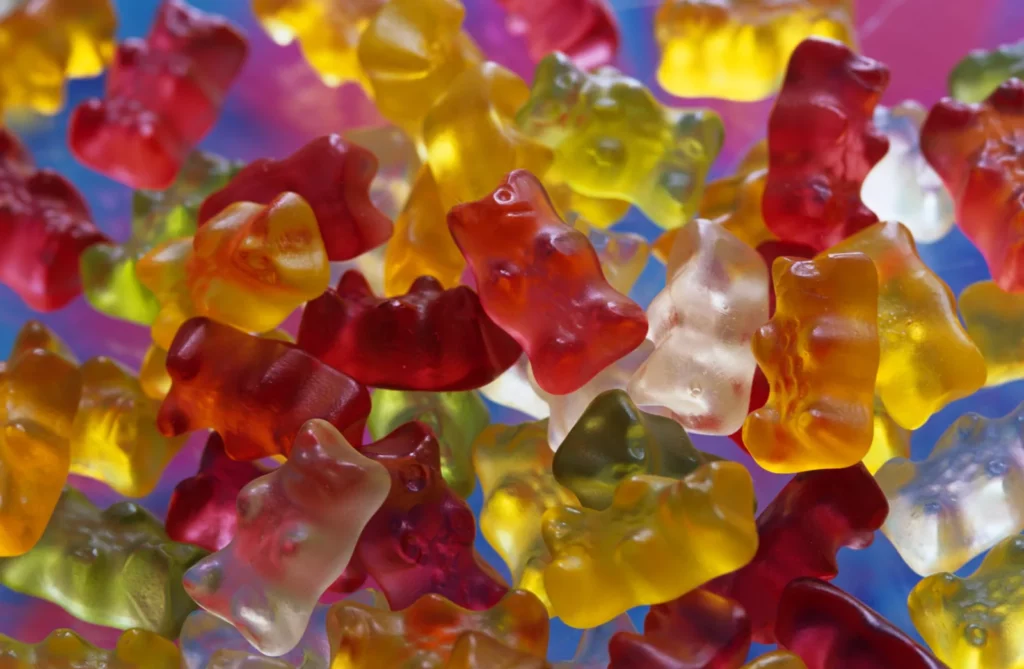
Examples: Lemons, limes, vinegar, sour kimchi, pickles, sour candies, plums, citrus juices, anything tart.

Why avoid them: Sour and acidic foods are the most powerful triggers of saliva secretion. Even thinking about a lemon can make you salivate. After surgery, this is exactly what you must prevent, because increased saliva flow can pool at the healing site and cause fluid collection or delayed healing.
2. Strongly Flavored, Savory & “Mouth-Watering” Foods
Examples: Intensely seasoned dishes, strong umami broths, heavily spiced foods, anything that makes your mouth water on sight or smell.
Why avoid them: Any food that provokes a strong “mouth-watering” reflex stimulates the salivary glands. The more your glands are activated, the more saliva accumulates around the surgical area.
3. Hard, Tough & Chewy Foods
Examples: Beef jerky, tough steak, hard baguettes, raw carrots, chewing gum, dried squid, nuts.
Why avoid them: Vigorous chewing both stimulates saliva flow and mechanically stresses the submental incision and underlying tissue, increasing swelling and the risk of disrupting healing.
4. Spicy Foods
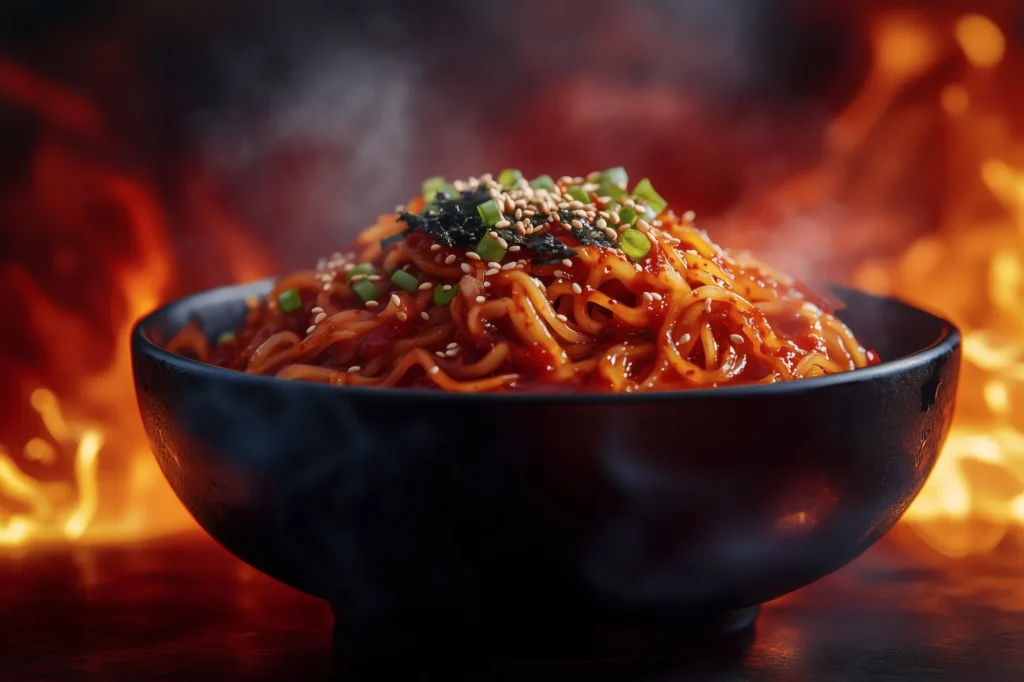
Examples: Spicy stews (jjigae), chili dishes, hot sauces, spicy ramen.
Why avoid them: Spice triggers both saliva secretion and inflammation, worsening swelling and discomfort around the surgical site.
5. Hot (Temperature) Foods & Beverages
Examples: Boiling-hot soups, very hot tea or coffee.
Why avoid them: Heat increases local circulation and can aggravate swelling in the first several days after surgery. Let foods and drinks cool to lukewarm.
6. Salty & Processed Foods
Examples: Instant noodles, chips, processed meats, soy-sauce-heavy dishes.
Why avoid them: High sodium causes water retention and prolonged facial puffiness, masking your results and slowing recovery.
7. Alcohol
Examples: Soju, wine, beer, cocktails.
Why avoid it: Alcohol dilates blood vessels (raising bruising and swelling risk), dehydrates tissue, and interferes with healing and any prescribed medication.
Key Takeaway: For the first 1–2 weeks after surgery, prioritize bland, mild, lukewarm, soft foods that don’t make your mouth water — this keeps saliva production low and protects the healing site.
What You Can Eat: Recovery-Friendly Foods
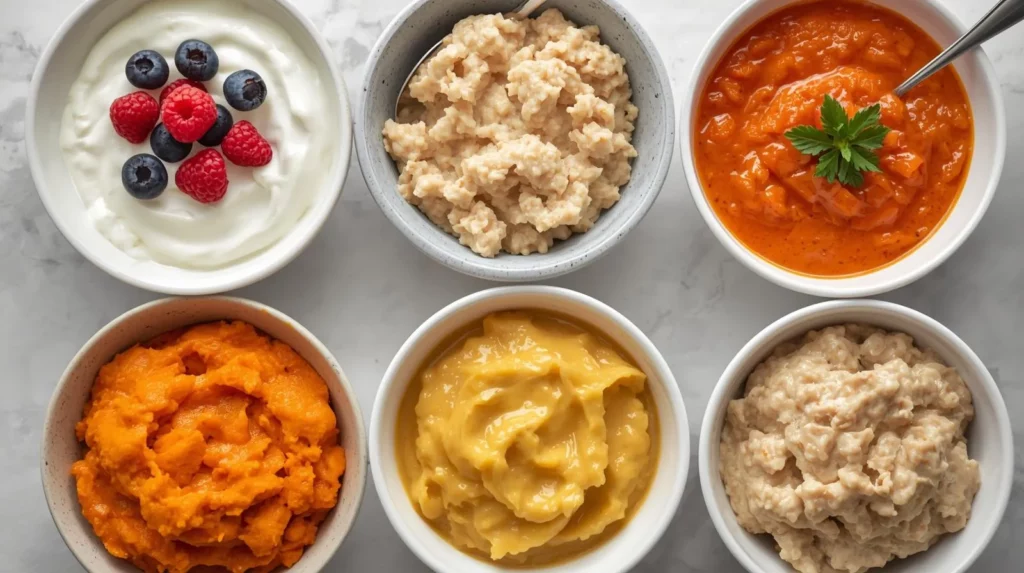
Focus on gentle, mild, low-stimulation options that are easy to swallow without heavy chewing:
- Soft proteins: Soft tofu, steamed white fish, scrambled eggs, well-cooked tender chicken
- Cooked, mild vegetables: Steamed zucchini, mashed pumpkin, soft-cooked carrots
- Bland soft grains: Plain rice porridge (juk), oatmeal, soft-cooked pasta
- Mild hydration: Lukewarm (not hot) water, cooled mild herbal teas
- Gentle, non-tart options: Plain yogurt, bananas, peeled apples, mild smoothies
The key is mild and bland — flavors that don’t make your mouth water — so the salivary glands stay calm while the surgical site heals.
Important: Risks, Side Effects & Safety
Because this is a surgical procedure, honest disclosure of risks is essential. When performed by an experienced surgeon, salivary gland reduction is safe — but all surgery carries some risk.
Common (Mild & Temporary) Side Effects
- Swelling and bruising under the chin and jaw (most prominent in the first 1–2 weeks)
- Tenderness, tightness, or numbness around the incision and treated area
- Mild discomfort when chewing or swallowing in the early days
Risks That Require Surgical Care to Prevent
- Saliva pooling / fluid collection (seroma or salivary cyst): The key reason dietary precautions matter — managed by minimizing saliva stimulation and, if needed, drainage
- Infection at the incision site: Minimized with sterile technique and post-op care
- Asymmetry or contour irregularity
- Temporary nerve-related effects (e.g., transient numbness or weakness), as nerves run near the surgical area
How Mine Clinic Ensures Safety
- Experienced facial-contouring surgeons familiar with submandibular anatomy
- IV sedation with local anesthesia for comfort and reduced anesthetic risk
- Sterile surgical technique and thorough pre-operative screening
- Structured Post-Op Care, including diet guidance and 24/7 international patient support to catch any saliva pooling early
Recovery in Korea: Your Timeline at a Glance
Because this is surgery combined with double chin surgery, recovery is more involved than an injectable. Here’s a typical timeline:
| Day | What to Expect |
|---|---|
| Day 0 (Surgery Day) | Performed under IV sedation + local. Swelling and tightness under the chin. Soft, bland, lukewarm foods only. No alcohol. |
| Day 1–3 | Peak swelling and bruising. Strictly avoid sour, acidic, spicy, and chewy foods to limit saliva flow. |
| Day 4–6 | Swelling begins to ease. Continue the mild, low-stimulation diet. |
| Day 7 | Stitches are removed. Many patients feel comfortable in light social settings. |
| Day 7–10 | Most international patients can fly home after stitch removal. |
| Week 2–4 | Residual swelling resolves; jawline definition becomes increasingly visible. |
| Week 6–8+ | Final results settle as healing completes — a slimmer, more sculpted jawline. |
Recommended stay in Korea: Plan for at least 7–10 days so you can have your surgery, initial recovery, and stitch removal on day 7 before flying home. Our full aftercare guide for salivary gland reduction with double chin surgery covers the rest of the recovery routine. Many patients combine the trip with other K-Beauty treatments such as Ulthera or Trapezius Botox.
How Does Diet Affect Long-Term Results?
Question: Can the wrong foods actually harm my recovery?
Answer: Yes — more than with non-surgical treatments. Foods that stimulate heavy saliva production, especially in the first 1–2 weeks, can cause saliva to pool at the surgical site, leading to swelling, fluid collection, or delayed healing. Following your dietary guidelines is one of the most important and controllable factors in achieving a clean recovery and optimal result.
For patients focused on overall lower-face slimming, our blog on Double Chin reduction options offers complementary insights, since the two procedures are so often combined.
Frequently Asked Questions
1. Is salivary gland reduction a surgery or an injection?
It is a surgery. The enlarged portion of the salivary gland that protrudes below the jawbone is surgically excised, typically combined with double chin surgery through a single incision under the chin. It is not a neurotoxin injection.
2. Why do I need to avoid sour and acidic foods specifically?
Sour and acidic foods are the strongest stimulants of saliva secretion. After surgery, excess saliva can pool inside the healing surgical site, raising the risk of swelling and fluid collection. Keeping saliva production low helps the area heal cleanly.
3. How long do I need to follow the dietary restrictions?
We recommend a strict mild, bland, soft diet for 1–2 weeks, with the first 72 hours being most critical. Normal foods are reintroduced gradually as healing progresses.
4. When can I fly home after surgery in Seoul?
Stitches are removed on day 7, and most international patients fly home between day 7 and day 10. We recommend planning a stay of at least 7–10 days.
5. How much does salivary gland reduction surgery cost at Mine Clinic?
Pricing depends on your anatomy and whether it’s combined with double chin surgery and other procedures. A consultation is required for personalized pricing. Please book a free Online Consultation for an accurate estimate.
Ready to Begin Your K-Beauty Journey?
Interested in this procedure? Contact Mine Clinic today for a personalized online consultation. We are ready to assist you on WhatsApp and guide you through your K-Beauty journey in Seoul.
📅 Book Your Online Consultation | 📍 Find Our Clinic in Gangnam, Seoul
Reviewed by Dr. Lee Sung-wook, Board Certified Plastic Surgeon at Mine Clinic. Last updated: September 25, 2026.
※ This content is for informational purposes only and does not replace professional medical advice, diagnosis, or treatment. Individual results may vary, and side effects may occur. Please consult with a board-certified plastic surgeon for personalized advice.