EN
EN


Table of Contents
What Is Autologous Rhinoplasty with Cartilage?
Autologous rhinoplasty with cartilage is a specialized nose reshaping procedure that uses your own body’s cartilage rather than synthetic implants to sculpt and define your nose. The term “autologous” means the grafting material originates from your own body, making it completely biocompatible and naturally integrated into your nasal structure.
This technique has become the gold standard in modern rhinoplasty, particularly in Korea, where surgeons have pioneered advanced methods for harvesting, shaping, and grafting natural cartilage. Unlike silicone or Gore-Tex implants that remain as foreign objects in your body, autologous rhinoplasty with cartilage creates a living part of your nose that grows and adapts with your facial tissues over time.
Key Takeaway: Autologous rhinoplasty with cartilage offers a natural, long-lasting solution for nose reshaping by using your own tissue, eliminating the risks associated with synthetic implants.
Why Do Patients Seek Autologous Rhinoplasty with Cartilage?
Patients from around the world choose autologous rhinoplasty with cartilage for various aesthetic and functional reasons. Understanding these motivations helps determine whether this procedure aligns with your goals.
Aesthetic Concerns:
Many individuals are dissatisfied with aspects of their natural nose shape. Common concerns include a flat or low nasal bridge, a bulbous or undefined tip, a drooping nasal tip, asymmetry or crookedness, wide nostrils requiring reduction, and a short or upturned nose. These characteristics are particularly common in Asian facial anatomy, where the nasal bridge may naturally be lower and the cartilage structure softer than in other ethnicities.
Previous Rhinoplasty Complications:
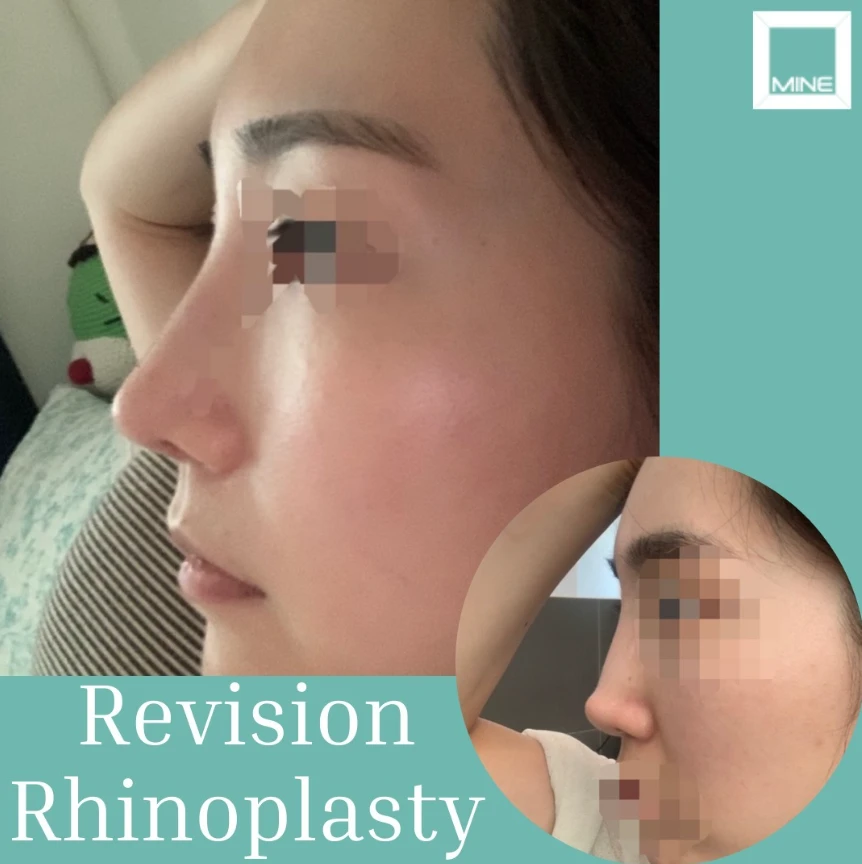
A significant portion of cartilage rhinoplasty patients come seeking revision rhinoplasty after experiencing problems with previous implant-based procedures. Issues such as implant migration, visible implant edges, skin thinning over time, infection or inflammation, and an unnatural appearance or feel drive many patients to seek a more permanent, natural solution.
Functional Improvement:
Beyond aesthetics, some patients require structural reconstruction to improve breathing. A deviated septum, collapsed nasal valve, or traumatic injury may necessitate cartilage grafting to restore both form and function. Mine Clinic’s approach ensures that any cartilage rhinoplasty procedure addresses both aesthetic desires and functional needs, creating a nose that looks beautiful and works properly.
Who is an ideal candidate?
Ideal candidates for autologous rhinoplasty with cartilage include individuals with realistic expectations about outcomes, those who have experienced complications from previous implant rhinoplasty, patients with thin nasal skin where implants might be visible, anyone seeking long-term stability rather than temporary results, and those who prefer using natural materials over synthetic alternatives.
Types of Cartilage Used in Rhinoplasty
Understanding the different cartilage sources available helps you make an informed decision during your consultation. Each type has specific advantages depending on your unique nasal anatomy and surgical goals.
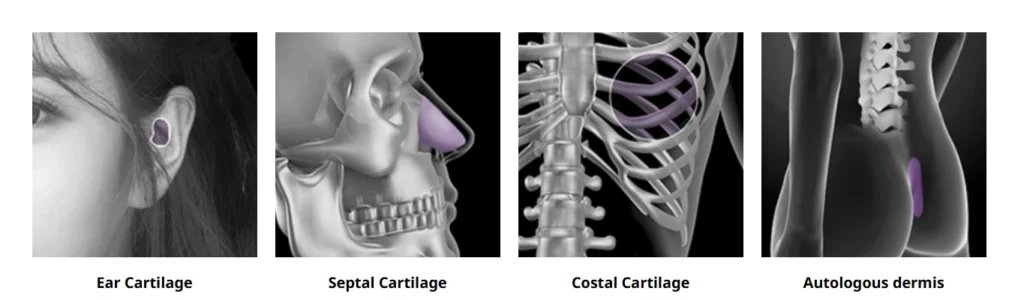
Septal Cartilage
Septal cartilage is harvested from the nasal septum inside your nose. This cartilage is naturally straight and strong, making it ideal for structural support. The advantage of septal cartilage is that no external incision is required for harvesting, meaning no visible scarring occurs.
However, septal cartilage has limitations. Many patients, particularly those with naturally small noses or those undergoing revision surgery, may not have sufficient septal cartilage available. Once used, it cannot be harvested again for future procedures.
Ear Cartilage (Auricular/Conchal Cartilage)
Ear cartilage is obtained from the concha, the curved portion of your outer ear. This cartilage is softer and more flexible than septal or rib cartilage, making it excellent for tip refinement and small contour adjustments.
The harvesting incision is typically made behind the ear, resulting in a virtually invisible scar. Ear cartilage blends naturally under thin skin and provides a soft, natural feel. However, its curved shape and limited volume make it unsuitable for significant bridge augmentation or major structural reconstruction.
Rib Cartilage (Costal Cartilage)
Rib cartilage represents the most versatile and abundant source of grafting material. Typically harvested from ribs 6, 7, or 8, this cartilage provides exceptional structural support and sufficient volume for even the most complex reconstructions.
Rib cartilage is particularly recommended for patients with extremely short or low noses, revision rhinoplasty cases where other cartilage sources have been depleted, cases requiring significant augmentation or lengthening, and patients who need both bridge and tip reconstruction.
The harvesting incision is made along the breast fold (inframammary crease), resulting in a 2-3 centimeter scar that becomes virtually invisible over time. At Mine Clinic, our surgeons employ advanced techniques to minimize any discomfort and scarring at the donor site.
Fascia and Dermis
While not cartilage, these autologous soft tissues are often used in conjunction with cartilage grafts. Fascia (typically from the temporalis muscle area) and dermis (usually harvested from the hip) provide additional coverage over cartilage grafts, particularly beneficial for patients with thin nasal skin. These tissues create a smoother contour and reduce the risk of graft visibility.
The Procedure at Mine Clinic
At Mine Clinic, every autologous rhinoplasty with cartilage begins with a comprehensive consultation that sets the foundation for your surgical journey. Our board-certified plastic surgeons combine technical expertise with artistic vision to deliver results that harmonize with your unique facial features.
Initial Consultation and Planning
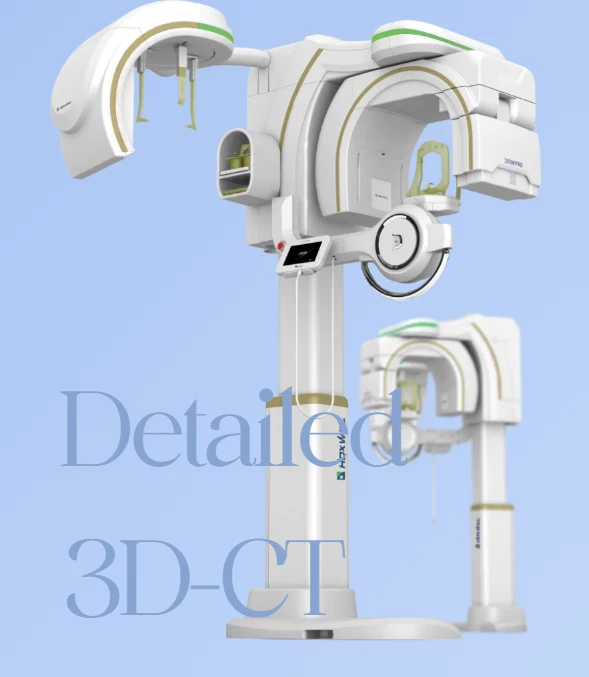
Your journey begins with a detailed consultation where our surgeons assess your nasal anatomy, discuss your aesthetic goals, and review your medical history. Using advanced 3D imaging technology, we can simulate potential outcomes, helping you visualize how different approaches might look on your face.
During this consultation, our team will determine which cartilage source best suits your needs, create a customized surgical plan tailored to your facial proportions, explain the procedure in detail, and answer all your questions. For international patients, we offer convenient online consultations via video call, allowing you to begin this process before traveling to Seoul.
The Surgical Process
Autologous rhinoplasty with cartilage at Mine Clinic typically takes 2-4 hours, depending on the complexity of your case. The procedure is performed under general anesthesia in our fully equipped, accredited surgical facility.
Cartilage Harvesting: Depending on your surgical plan, cartilage is carefully harvested from the selected donor site. Our surgeons use meticulous techniques to ensure minimal trauma to the surrounding tissues and optimal graft quality.
Cartilage Preparation: The harvested cartilage is precisely carved and shaped according to your customized surgical plan. This step requires exceptional skill and experience, as the cartilage must be sculpted to achieve the desired shape while maintaining structural integrity. Our surgeons account for natural tissue behavior over time, ensuring long-lasting results.
Graft Placement: Through either an open or closed rhinoplasty approach, the prepared cartilage grafts are strategically positioned to create the planned improvements. Common grafting techniques include spreader grafts to address the middle vault of the nose, columellar strut grafts to support and project the tip, tip grafts to refine and define the nasal tip, dorsal onlay grafts to augment the bridge, and alar batten grafts to strengthen the sidewalls.
Closure and Dressing: Once the grafts are secured, the incisions are closed with fine sutures. A protective splint is applied to your nose, and internal packing may be used if necessary.
[Image Suggestion: Surgical Consultation] (Alt Text: Mine Clinic surgeon discussing rhinoplasty options with international patient in Seoul consultation room)
Open vs. Closed Technique
Mine Clinic surgeons are proficient in both open and closed rhinoplasty techniques. The open approach involves a small incision across the columella (the tissue between your nostrils), providing maximum visibility for complex cases. The closed approach uses incisions entirely inside the nose, leaving no external scars.
The choice between techniques depends on your specific needs and surgical goals. Our surgeons will recommend the approach that offers the best access for your particular case while minimizing visible scarring.
Why Choose Korea and Mine Clinic
Korea has earned its reputation as the global leader in rhinoplasty, particularly for autologous rhinoplasty with cartilage procedures. There are compelling reasons why international patients travel to Seoul for their nose surgery.
Korea’s Expertise in Rhinoplasty
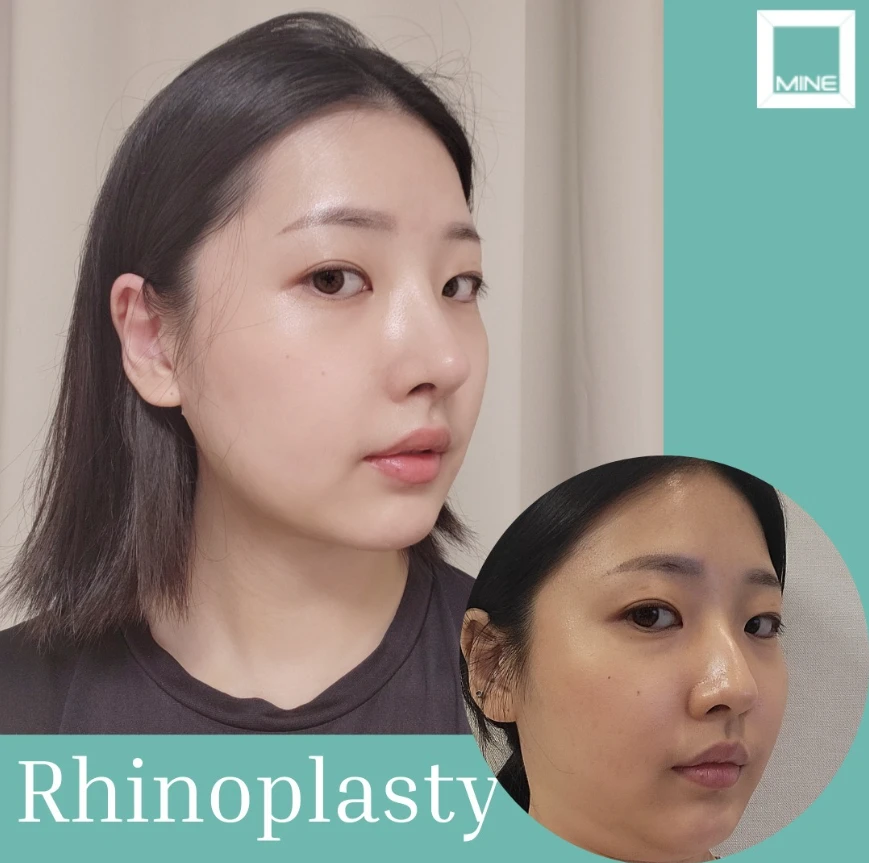
Korean plastic surgeons perform more rhinoplasty procedures per capita than surgeons anywhere else in the world. This volume of experience has driven remarkable innovation in techniques, particularly those suited to Asian nasal anatomy. Korean surgeons pioneered many modern cartilage rhinoplasty methods that are now used globally.
The success rate for rhinoplasty in Korea stands significantly higher than the global average, attributed to the rigorous training Korean surgeons undergo and their constant refinement of techniques. Korean surgeons have developed specialized approaches for creating refined, elegant noses that complement Asian and diverse facial features while avoiding the “operated look” that concerns many patients.
Advanced K-Beauty Medical Standards
South Korea’s healthcare system ranks among the best in the world. The country’s strict regulations, state-of-the-art medical technology, and commitment to patient safety create an environment where excellence is the standard.
Mine Clinic exemplifies these standards with our JCI-accredited facility, advanced surgical equipment, comprehensive post-operative care programs, and multilingual staff dedicated to international patient services.
The Mine Clinic Difference
What sets Mine Clinic apart is our patient-centered approach to cartilage rhinoplasty. Our surgeons understand that every face is unique, and so is every ideal nose. We reject the “one-size-fits-all” approach in favor of customized surgical plans that respect your ethnic identity while enhancing your natural beauty.
Our commitment to using the patient’s own cartilage whenever possible reflects our philosophy of achieving lasting, natural results. We prioritize long-term stability over quick fixes, ensuring your nose looks and feels natural years after your procedure.
Beyond technical excellence, we provide comprehensive support for our international patients. From airport pickup to post-operative aftercare services, we make your medical tourism experience as comfortable as possible. Our team is available via WhatsApp for consultations and support, understanding the unique concerns of patients traveling abroad for surgery.
[Image Suggestion: Mine Clinic Facility] (Alt Text: Modern surgical facility at Mine Clinic Seoul showing advanced medical equipment and comfortable patient environment)
Important: Risks, Side Effects & Safety
Transparency about potential risks is essential for making an informed decision. While autologous rhinoplasty with cartilage has an excellent safety profile, every surgical procedure carries some degree of risk.
Common Side Effects
These expected effects occur in most patients and resolve naturally during recovery. They include swelling (most prominent in the first two weeks, gradually subsiding over several months), bruising around the eyes and cheeks (typically fading within 10-14 days), temporary nasal congestion and difficulty breathing through the nose, mild discomfort or tenderness at the surgical site, numbness or altered sensation in the nasal skin (gradually returning to normal), and for rib cartilage cases, soreness at the donor site for 1-2 weeks.
Potential Complications
While less common, these complications can occur and are important to understand. They include infection (rare when proper protocols are followed, occurring in approximately 0.9% of autologous cartilage cases), cartilage warping (rib cartilage may slightly change shape over time; skilled surgeons use techniques to minimize this risk), graft absorption (some degree of cartilage absorption may occur, which experienced surgeons account for during surgical planning), asymmetry or unsatisfactory results (may require revision surgery), bleeding or hematoma formation, and scarring (minimal with proper technique and care).
Recent meta-analyses of rib cartilage rhinoplasty outcomes show pooled complication rates of approximately 7-8%, with the majority being minor issues such as temporary warping or minimal infection. These rates are comparable to or better than those associated with synthetic implants, while autologous cartilage offers significantly better long-term stability.
Safety Measures at Mine Clinic
We implement comprehensive safety protocols to minimize risks. Our thorough pre-operative screening identifies any factors that might increase complication risks. We use sterile surgical techniques in our fully accredited operating theater. Our surgeons employ advanced cartilage preparation methods to reduce warping risk. We provide detailed post-operative instructions and monitoring to catch any issues early. Additionally, our 24/7 support system ensures you can reach our team if concerns arise.
Key Takeaway: Autologous rhinoplasty with cartilage has a favorable safety profile. Choosing an experienced surgeon at an accredited facility like Mine Clinic significantly reduces complication risks.
Synthetic Implants vs. Autologous Cartilage: A Safety Comparison
While silicone and Gore-Tex implants remain popular for their convenience, they carry unique long-term risks that autologous cartilage avoids. Synthetic implants can shift or become displaced over time. Skin thinning can cause the implant to become visible, especially at the nasal tip. There is a risk of capsular contracture (hardening of tissue around the implant). Chronic low-grade inflammation may develop as the body continuously recognizes the material as foreign. Implant extrusion (the implant pushing through the skin) is another potential complication.
Autologous cartilage eliminates these concerns because your body recognizes the tissue as its own. This biocompatibility is why Korean surgeons, who see the long-term results of countless rhinoplasty procedures, increasingly prefer natural cartilage over synthetic options.
Recovery in Korea: What to Expect
Planning your recovery is crucial, especially for international patients who need to coordinate their stay in Seoul. Here’s a detailed timeline to help you prepare.
Immediately After Surgery (Day 1)
You will rest in our comfortable recovery room as anesthesia wears off. Expect some grogginess, mild nausea, and facial pressure. A nasal splint protects your nose, and you may have light packing inside your nostrils. Pain medication keeps any discomfort manageable. You will need someone to accompany you back to your hotel or recovery accommodation.
Days 2-7: Initial Recovery Period
This week involves the most active healing. Swelling and bruising peak around days 2-3, then gradually improve. Sleep with your head elevated (using multiple pillows) to minimize swelling. Apply cold compresses to your cheeks and eye area—never directly on your nose. Avoid blowing your nose, and sneeze through your mouth if necessary. Take prescribed medications as directed and stay well-hydrated. Gentle walking helps circulation and recovery.
For rib cartilage patients: You may experience chest tightness or discomfort at the donor site. This is normal and managed with pain medication. Deep breathing exercises help maintain lung function.
Day 7-10: Splint and Stitch Removal
This is a significant milestone. You will return to Mine Clinic for your follow-up appointment, where our team removes your external splint and any non-dissolvable sutures. While you will see your nose for the first time, remember that significant swelling remains. This is not your final result—be patient.
Watch a patient’s 7-day recovery video: https://www.instagram.com/p/DEBhAsBzUvc/
Can I fly home?
Most patients can safely fly approximately 7-10 days after surgery, after their splint has been removed and their surgeon confirms satisfactory healing. Some patients prefer to stay in Korea for 10-14 days to ensure the initial healing phase completes smoothly.
Weeks 2-4: Continued Healing
Most visible swelling and bruising has resolved by this point. Many patients return to work and normal daily activities within two weeks. However, you should continue to avoid strenuous activities, bending over, heavy lifting, contact sports or activities risking facial trauma, wearing glasses that rest on your nose (use tape to secure them to your forehead instead), and excessive sun exposure.
Months 1-6: Refinement Phase
Your nose continues to refine during this period. Residual swelling gradually subsides, revealing more definition. The nasal tip typically takes longest to settle. You can resume most activities, including moderate exercise, after 4-6 weeks. Follow-up appointments continue to monitor your progress.
6-12 Months and Beyond: Final Results
Full healing and final results are typically visible 12-18 months after surgery. By this time, all internal swelling has resolved, scar tissue has matured, and your nose has settled into its permanent shape. The cartilage grafts have fully integrated, providing stable, lasting support.
[Image Suggestion: Recovery Timeline] (Alt Text: Visual recovery timeline showing rhinoplasty healing stages from day 1 through 12 months at Mine Clinic Seoul)
Supporting Your Recovery in Seoul
Mine Clinic understands the unique needs of international patients. We provide detailed aftercare instructions in multiple languages, scheduled post-operative checkups during your stay, 24/7 support via WhatsApp for any questions or concerns, recommendations for comfortable recovery accommodations near our clinic, and guidance on what to eat, what to avoid, and how to care for your nose.
Many patients choose to explore Seoul’s attractions during their recovery. Our clinic is conveniently located in Gangnam, providing easy access to shopping, dining, and cultural experiences that can be enjoyed even during the recovery period.
Frequently Asked Questions
How long does autologous rhinoplasty with cartilage last?
Autologous rhinoplasty with cartilage provides permanent results. Unlike synthetic implants that may need replacement or cause problems over time, your own cartilage integrates permanently into your nasal structure. While minor cartilage absorption can occur (typically 5-10%), experienced surgeons account for this during surgical planning. Most patients enjoy their results for life without the need for additional procedures.
Is rib cartilage rhinoplasty more painful than other nose surgeries?
Most patients report that nasal discomfort is similar to other rhinoplasty procedures. The chest area where rib cartilage is harvested may feel sore or tight for 1-2 weeks, similar to a pulled muscle. Pain medication effectively manages any discomfort, and most patients describe the experience as more uncomfortable than truly painful. The donor site heals well, with the small scar hidden along the breast fold becoming virtually invisible over time.
How much does autologous rhinoplasty with cartilage in Korea cost?
The cost of autologous rhinoplasty with cartilage varies based on the complexity of your case, the cartilage sources required, and whether it is a primary or revision procedure. Korea offers exceptional value, with comprehensive procedures typically costing 40-60% less than comparable surgeries in the United States or Europe—without compromising quality. For personalized pricing, we recommend scheduling an online consultation where our team can assess your needs and provide an accurate estimate.
Can I combine cartilage rhinoplasty with other procedures?
Yes, many patients choose to combine rhinoplasty with complementary procedures for enhanced facial harmony. Popular combinations include eye surgery such as double eyelid or ptosis correction, facial fat grafting for volume enhancement, facial contouring procedures, and dermatology treatments for skin rejuvenation. Our surgeons can discuss combination options during your consultation to determine what would best achieve your goals.
What if I have had a previous rhinoplasty with implants?
Mine Clinic has extensive experience with revision rhinoplasty for patients who have experienced complications from previous implant-based procedures. During revision surgery, the existing implant is removed, and autologous cartilage (typically rib cartilage, as septal cartilage may already be depleted) is used to reconstruct the nose. While revision rhinoplasty is more complex than primary surgery, our surgeons’ expertise allows them to achieve excellent results even in challenging cases.
Take the Next Step Toward Your Ideal Nose
Autologous rhinoplasty with cartilage represents the pinnacle of modern nose surgery—combining the best of Korean surgical innovation with your body’s own natural materials. At Mine Clinic, our board-certified surgeons bring decades of combined experience to every procedure, ensuring results that look natural, feel natural, and last a lifetime.
Whether you are considering rhinoplasty for the first time or seeking revision after an unsatisfactory previous procedure, our team is here to guide you. We understand the decision to pursue surgery abroad is significant, and we are committed to making your experience as comfortable, safe, and rewarding as possible.
Interested in this procedure? Contact Mine Clinic today for a personalized online consultation. We are ready to assist you on WhatsApp and guide you through your K-Beauty journey in Seoul.
Book Your Online Consultation | View Our Real Stories | Contact International Services
Disclaimer: This content is for informational purposes only and does not substitute professional medical advice. Individual results may vary. Please consult with a qualified medical professional to determine if this procedure is appropriate for your specific situation.
Reviewed by Dr. Lee Sung-wook, Board Certified Plastic Surgeon at Mine Clinic.
External Reference: For more general information about rhinoplasty procedures and safety considerations, visit the American Society of Plastic Surgeons.
※ This content is for informational purposes only and does not replace professional medical advice, diagnosis, or treatment. Individual results may vary, and side effects may occur. Please consult with a board-certified plastic surgeon for personalized advice.