EN


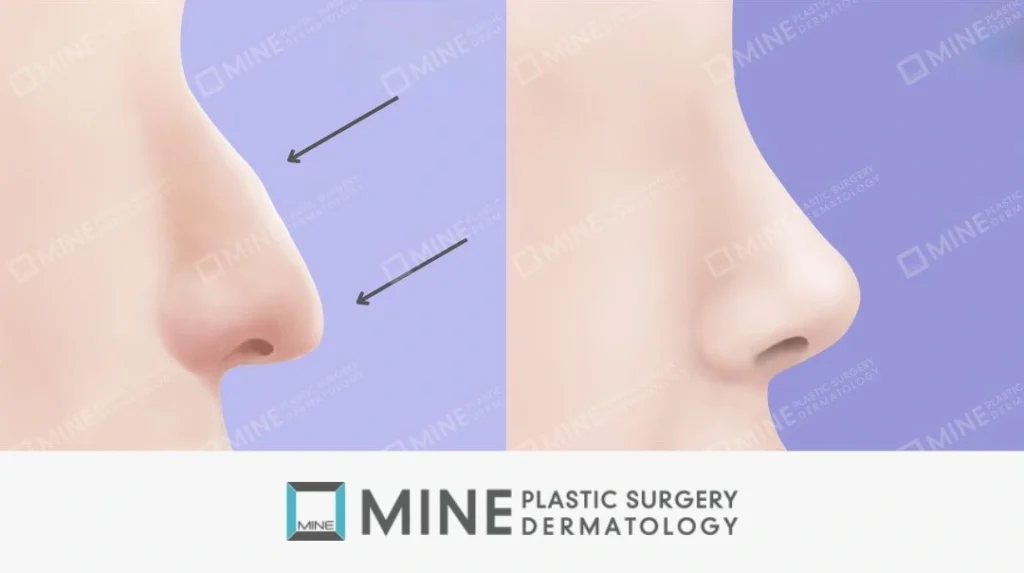
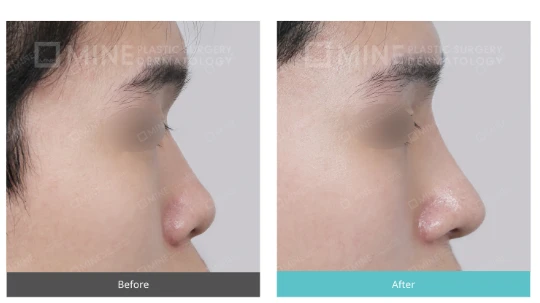
Hump removal side effects are problems that can appear after a dorsal hump — a bump on the bridge made of both nasal bone and septal cartilage — is reduced. The main ones are an open roof (a gap or flat, wide area on top of the bridge), an uneven bridge, a collapsed or “saddle” bridge, asymmetry, and breathing changes.
If the bump on your nose has bothered you for years, you may have pictured side-profile photos without it. Then the doubts arrive: “What if something goes wrong?” “Will I need a second surgery?” Those are fair questions, and they deserve straight answers.
I’m Dr. Lee Sung-wook, a board-certified plastic surgeon at MINE Plastic Surgery in Seoul. In this guide I’ll walk you through hump removal side effects honestly: which changes are a normal part of healing, which are true complications, what usually causes each one, and when revision surgery actually makes sense. It is written for people still deciding and for anyone already recovering.
What Are Hump Removal Side Effects?
A nasal hump is not just extra skin or soft tissue. It is a raised section of the bridge formed by two different materials working together: the nasal bones at the top and the upper edge of the septal cartilage (the cartilage wall that divides your nostrils) just below them. That mix of bone and cartilage is the key to understanding hump removal side effects. Treat the hump as one simple block to shave down, and the bridge can end up uneven, too low or too wide.
Why do humps form in the first place? Genetics play the largest role, and a past nasal injury or growth changes during the teenage years can contribute. I won’t repeat the full background here — you can read about the causes, techniques and recovery of dorsal hump surgery in our separate guide. This article focuses on one question: what can go wrong, and how to tell.
Dr. Lee’s Key Point: Most hump removal side effects can be prevented by an accurate diagnosis and a plan built around your own bone, cartilage and skin.
Normal Healing vs. True Hump Removal Side Effects
The first weeks after surgery are when worry peaks. Your nose is swollen, it may feel firm or numb, and the shape can change from one day to the next. Much of this is simply how the body heals after bone and cartilage are reshaped. Knowing what is expected makes it far easier to spot the few signs that point to true hump removal side effects.
What Is Normal in the First Weeks
Bruising and swelling after hump removal usually settle within 1 to 2 weeks, starting around the eyes and the bridge. Temporary numbness of the skin on the bridge or tip is also common; it typically recovers within 3 to 6 months as small sensory nerves recover. Because swelling fades unevenly, the bridge can look slightly wider or fuller on one side for a while. The final shape is usually visible only at 6 to 12 months, and thicker skin tends to take longer.
| What you notice | Usually normal? | When it typically improves | When to contact your surgeon |
|---|---|---|---|
| Bruising around the eyes and bridge | Yes | Within 1 to 2 weeks | If it spreads or worsens after the first few days |
| General swelling and a “puffy” bridge | Yes | Gradually over months; final shape at 6 to 12 months | If one area suddenly swells or turns hot and red |
| Numb or tingly skin on the nose | Yes | Mostly within 3 to 6 months | If numbness spreads or is still unchanged after 6 months |
| Shape looks slightly uneven early on | Often | As swelling settles | If the same spot still looks raised or dented after 6 months |
| Stuffy nose in the first weeks | Yes | As internal swelling goes down | If breathing is clearly worse than before surgery after healing |
Signs That Are Not Normal Swelling
Some changes deserve a closer look once the main swelling has passed. These are the patterns that can point to true hump removal side effects rather than ordinary healing:
- A bump you can still feel in the same place more than 6 months after surgery
- A hollow or “empty” feeling in the middle of the bridge when you touch it
- A bridge that looks sunken or flatter than you planned
- A bridge that clearly leans to one side when seen from the front
- Breathing that is harder than it was before surgery, even after healing
Some signs need a call the same day, at any stage: heavy bleeding that does not stop with gentle pressure, a high fever, or pain that suddenly gets much worse instead of better. These are uncommon, but they should never wait for your next scheduled visit.
Dr. Lee’s Key Point: Judge the shape at 6 months, not at 6 days. Early swelling hides the real result, so please ask your surgeon before drawing conclusions.
Hump Removal Side Effects and Their Causes
Every operation carries some risk, and hump reduction is no exception. Plastic surgery textbooks list 5 problems that can follow hump reduction done without careful attention to the anatomy and function of the bridge: an uneven bridge, removing too much or too little of the hump, the inverted-V deformity, excessive narrowing of the middle third of the nose, and collapse of the internal nasal valve.
The table below summarizes the most important hump removal side effects, what they look or feel like, and the technical gap that usually causes them. For a broader overview of general surgical risks, the American Society of Plastic Surgeons also provides rhinoplasty risks and safety information.
| Side effect | What it looks or feels like | Usual cause | How often |
|---|---|---|---|
| Open roof deformity | Flat, wide top of the bridge; a gap you may feel | Bone cuts (osteotomies) skipped or incomplete after a larger hump is removed | Uncommon with an experienced surgeon |
| Dorsal irregularity | Small ridges or steps visible under the skin | Uneven cut surfaces of bone and cartilage; more visible with thin skin | Occasional |
| Saddle nose | A bridge that dips or looks sunken | Too much bone and cartilage removed | Very rare |
| Asymmetry | Bridge leans or looks uneven from the front | Nasal bones healing unevenly after they are cut | Occasional |
| Inverted-V deformity | A shadowed “V” shape where bone meets cartilage | Loss of support from the upper lateral cartilages | Uncommon |
| Internal valve collapse | Stuffy nose, especially when breathing in | Middle third of the nose narrowed too much | Uncommon |
| Residual hump | The bump is still there once swelling has gone | Too little removed, often from caution or swelling during surgery | Occasional |
| Columella scar | A fine line under the tip | Open approach incision; usually hard to notice | Uncommon |
| Infection | Redness, heat, pain, fever | Wound care problems after surgery | Very rare |
Open Roof Deformity After Rhinoplasty
Picture the bridge of your nose as a roof with two sloping sides that meet at a ridge. When a hump is removed, the very top of that roof can be taken off, leaving a gap between the two nasal bones and the septum. That gap is called an open roof, one of the more familiar hump removal side effects. It can make the bridge look flat and wide in photos, especially under overhead light, and you may feel a hollow when you run a finger down the middle.
Not every hump reduction creates an open roof. Surgical textbooks explain that a small hump can often be removed without opening the roof at all, depending on how thick the septum is and the angle at which the cartilage meets the bone. When a larger hump is taken down and a gap does form, the surgeon closes it with osteotomies — controlled cuts in the nasal bones that let them be gently moved inward so the two sides meet again. Skipping this step, or doing it incompletely, is the most common reason an open roof is left behind.
Saddle Nose and Dorsal Irregularities
Rhinoplasty textbooks describe hump removal as turning one smooth, fused “cap” into 5 separate pieces: two nasal bones, two upper lateral cartilages and the septum. Each piece needs to be shaped and lined up again. If that work is rushed, small edges can be left behind, and on thin skin they show up as visible ridges or steps. Surgeons often place a very thin layer of the patient’s own cartilage or soft tissue over the bridge to camouflage minor edges without raising it.
A saddle nose is the opposite problem: too much has been removed, so the bridge dips in the middle. It is very rare when reduction is measured carefully, but it is one of the harder hump removal side effects to correct, because lost support usually has to be rebuilt with a cartilage graft.
Inverted-V Deformity and Breathing Problems
Just below the nasal bones sit the upper lateral cartilages — two thin panels that form the sidewalls of the middle third of your nose. They also hold open the internal nasal valve, the narrowest point of your airway just inside the nose. If a hump is cut away in one block, these panels can lose their connection to the septum and fall inward. These two hump removal side effects often appear together: outside, a shadowed inverted “V” forms where bone meets cartilage; inside, the airway narrows and breathing can feel blocked.
Textbooks describe a step-by-step approach, often called component reduction, to prevent this. Instead of removing bone and cartilage together, the surgeon separates the layers, reduces the septum and bone in measured steps, and preserves the upper lateral cartilages so they can be stitched back into place. Keeping these cartilages intact helps prevent both the inverted-V deformity and valve collapse, and often avoids the need for extra support grafts in a first surgery.
One more distinction is worth knowing. “Preservation” or push-down techniques lower the whole bridge instead of shaving off the hump, and published reports describe the hump coming back as their most common complication. That differs from a residual hump after shaving, where too little was simply removed.
Why Most Problems Start at the Planning Stage
Many patients assume complications come from a slip of the hand. In my experience, most hump removal side effects begin earlier — with a planning decision that did not fit the nose. Three examples I see often:
- The hump is removed but the bone cuts are skipped, leaving an open roof.
- The bridge is lowered without considering the tip, so the tip now looks relatively low or droopy.
- Skin thickness is not taken into account, so small edges show through thin skin.
Dr. Lee’s Key Point: The key to preventing hump removal side effects is a precise pre-surgery analysis and a plan tailored to each patient.
When Do Hump Removal Side Effects Need Revision Surgery?
Not every imperfection needs another operation. Minor asymmetry often softens as swelling settles, and small irregularities can sometimes be managed with a simple touch-up. But some hump removal side effects do not improve on their own, and that is when revision becomes a reasonable conversation.
5 Signs Revision Rhinoplasty After Hump Removal May Be Needed
These five hump removal side effects are the most common reasons people consider a second operation:
- Residual hump: more than 6 months after surgery, you can still feel the same bump in the same place.
- Open roof: the middle of the bridge feels hollow, or the bridge looks wide and flat under light.
- Over-correction or saddle nose: the bridge was lowered too much and now looks sunken.
- Asymmetry: from the front, the bridge clearly leans to one side.
- Breathing problems: your nose feels more blocked, or breathing is harder, than before surgery.
When Revision Is Safe: Waiting 6 to 12 Months
Most rhinoplasty literature advises waiting at least 6 to 12 months after the first surgery before planning a revision for hump removal side effects. During that time the swelling resolves, the bones finish healing and the final shape becomes clear. Operating too early means working on tissue that is still inflamed and changing, which raises the risk of further damage and makes the outcome much harder to predict.
Why a Second Surgery Is Harder Than the First
A second surgery is harder for 3 main reasons. First, scar tissue from the previous operation makes it more difficult to separate the tissue layers without injuring them. Second, the original structure has already been changed, so the surgeon has to reassess everything rather than follow the usual landmarks. Third, blood supply to the area is often reduced, which can slow healing.
For these reasons, it is worth choosing a surgeon with substantial experience in revision work. At MINE, we also see patients who had their first surgery elsewhere; you can learn more about our revision rhinoplasty consultation before deciding anything.
Dr. Lee’s Key Point: Revision should never be rushed, even when hump removal side effects are obvious. Wait until the tissue has fully settled, then decide carefully with your surgeon.
Planning Hump Correction to Avoid Side Effects
Hump correction is not just about shaving off what sticks out. Many patients ask me, “Can’t you just file it down?” That simple approach is often exactly where problems begin. The right plan depends on how high your nasal root is (the area between the eyes), how large the hump is, how wide the bridge is and how the tip is positioned. Each approach below is chosen partly to prevent specific hump removal side effects.
4 Correction Approaches by Nose Type
| Your nose | Approach | Side effect it helps prevent |
|---|---|---|
| Low nasal root, hump stands out | Reduce the hump, then support the bridge line with your own cartilage for a smooth, straight profile | A sunken or saddle-like bridge |
| High nasal root, large projection | Remove the projecting bone and cartilage together, then smooth the cut surfaces carefully | Dorsal irregularities |
| Large hump with a wide bridge | Remove the hump, then use bone cuts to bring the nasal bones inward and narrow the bridge | Open roof and a wide, flat bridge |
| High nasal root but a low tip | Reduce the hump and use your own cartilage to balance the bridge and tip | A tip that looks low after the bridge is lowered |
Before surgery, we use detailed imaging such as a 3D CT scan to see the bone and cartilage clearly, then calculate how much to remove rather than removing as much as possible. You can read more about MINE’s dorsal hump nose surgery, including how we approach different hump types.
Combining Tip or Deviated Nose Correction
A hump rarely exists in isolation. If your nose also bends to one side or the septum inside is crooked, correcting only the hump can make the bend more obvious — textbooks note that removing a hump can reveal a hidden twist in the septum. In those cases it often makes sense to combine hump reduction with tip refinement or deviated nose correction, so the whole nose stays balanced, the airway is protected and asymmetry is less likely.
Dr. Lee’s Key Point: In hump correction, how well the result is balanced matters more than how much is removed.
Recovery and Aftercare That Lower Your Risk
Your own care during recovery also shapes the final result and your risk of hump removal side effects. A few rules matter most. Keep glasses off the bridge for at least 4 to 6 weeks, because pressure while the bones are healing can change their position. Avoid blowing your nose hard for about 2 weeks, and sneeze with your mouth open. Stay away from saunas, hot baths and intense exercise for 4 weeks or more, since heat and strain can increase swelling and bleeding.
Smoking deserves special mention. Please stop at least 2 weeks before surgery and stay smoke-free while you heal. Smoking reduces blood flow to the healing tissue, which slows recovery and raises the risk of complications.
For a full schedule of what to do and avoid at each stage, see our day-by-day rhinoplasty aftercare guide. Following it closely is one of the simplest ways to protect your result.
Dr. Lee’s Key Point: Surgery is only half of the result; careful aftercare is the other half. Patience during recovery protects the shape you were hoping for.
Frequently Asked Questions
How common are serious hump removal side effects?
When surgery is performed by an experienced plastic surgeon, serious hump removal side effects are rare. Mild asymmetry or small irregularities do appear occasionally, but most improve as swelling settles or can be fixed with a minor correction. A thorough consultation and a plan suited to your nose are dependable ways to keep the risk low.
How long should I wait before revision rhinoplasty after hump removal?
If hump removal side effects such as an open roof remain, it is generally wiser to wait at least 6 months to 1 year after the first surgery. By then the tissues have stabilized and the final shape is clear. Revision done too early can damage tissue and make results unpredictable, so the timing should always be decided together with your surgeon.
Can the hump come back after surgery?
After a shaving or reduction technique, the bone and cartilage that were removed do not grow back, so a true return of the hump is uncommon. A bump can remain if too little was removed or if the nose is injured later. With preservation (push-down) techniques, hump recurrence is reported as the most common complication, which is one reason the choice of technique matters.
Will hump removal affect my breathing?
Breathing changes are among the hump removal side effects a careful plan aims to prevent. The plan preserves the upper lateral cartilages and the internal nasal valve so that breathing is not affected. If you also have a deviated septum or a crooked nose, correcting it at the same time can even improve breathing. A function check before surgery shows whether any airway problem needs to be treated together with the hump.
How do I know if a bump after surgery is swelling or a residual hump?
Swelling shrinks gradually over weeks to months, and the final shape usually appears at 6 to 12 months. If you can still feel a firm bump in exactly the same place after 6 months, it may be a residual hump rather than swelling. At that point, an in-person examination will give you a clear answer.
Talk to a Board-Certified Surgeon About Your Nose
If a nasal hump has bothered you for a long time, or you are worried about hump removal side effects, you don’t have to keep worrying alone. Hump removal side effects can be prevented or kept to a minimum when an accurate diagnosis, skilled surgery and careful aftercare come together. Still, skin thickness, bone structure and cartilage strength all change which approach fits you.
At MINE Plastic Surgery in Gangnam, Seoul, I examine each patient personally and explain what I find before any plan is made — including for patients worried about hump removal side effects after surgery at another clinic. Cost depends on your nose and the techniques required, so it is quoted after consultation. International patients can start with an online consultation or call +82-2-516-1175.
※ This content is for informational purposes only and does not replace professional medical advice, diagnosis, or treatment. Individual results may vary, and side effects may occur. Please consult with a board-certified plastic surgeon for personalized advice.