EN
EN

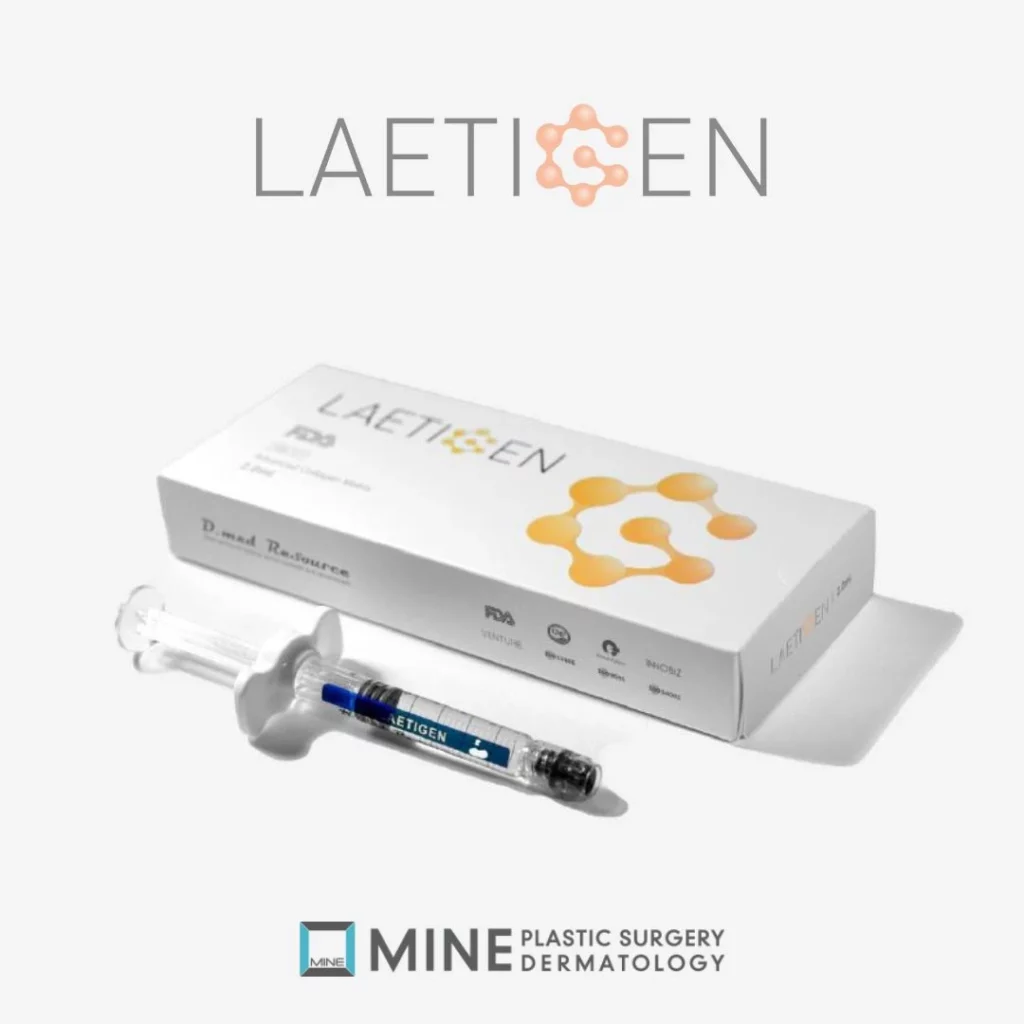
Table of Contents
What is Laetigen and Why is Everyone Talking About It?
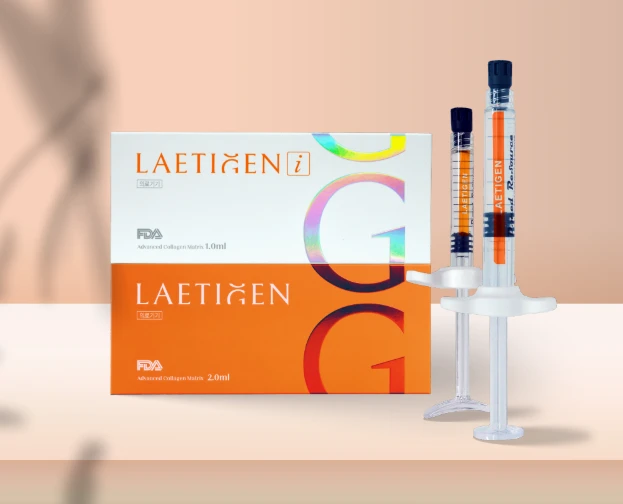
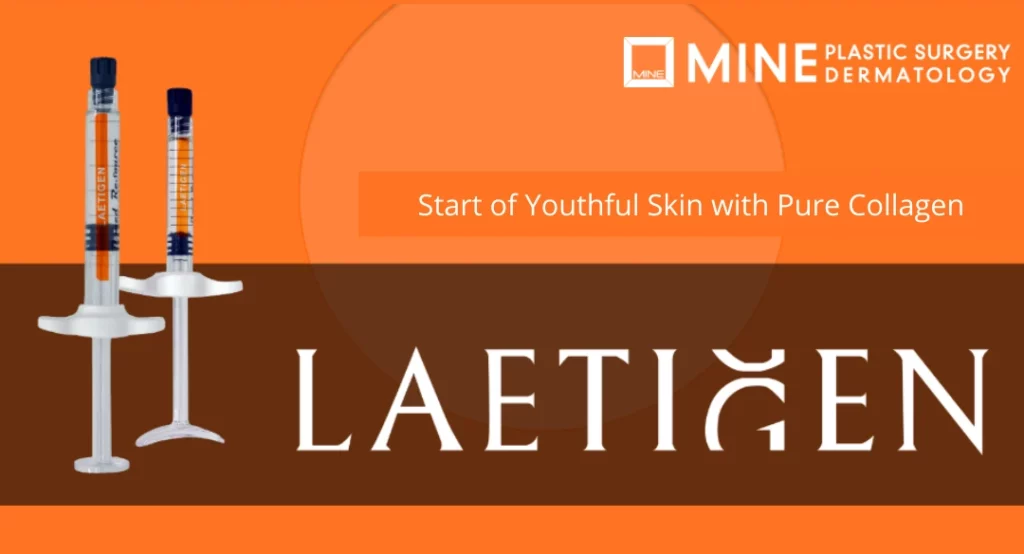
Laetigen is an injectable skin booster developed in Korea that places purified Type 1 collagen directly into the dermis, the supportive layer that sits beneath the surface of the skin. Rather than prompting your body to make more collagen of its own, it supplies collagen itself. It is used on the face, neck, décolletage and hands to improve firmness, hydration and texture, and it is given as a short in-clinic injection course rather than as surgery.
If you have been researching ways to restore firmer, better-hydrated skin, you have probably come across Laetigen on Korean clinic menus. What sets it apart from the skin boosters you may already know is the ingredient in the syringe. Instead of hyaluronic acid or a collagen-stimulating polymer, it contains collagen: the Korean manufacturer specifies Type 1 collagen at 99.9% purity, buffered to an injectable pH of 6.5 to 7.5.
According to the manufacturer, Laetigen is licensed in Korea by the Ministry of Food and Drug Safety (MFDS) as a Class 4 medical device, the category Korea reserves for its highest-risk devices and therefore the one subject to the most demanding review. It is worth being precise about what that does and does not mean. A Korean MFDS licence applies in Korea; it is a separate process from device clearance in the United States, the European Union or your own country, and it is not a promise of any particular result. If regulatory status in your home market matters to you, raise it during your consultation. The product name itself is taken from Laetitia, the Roman personification of joy.
Why are international patients choosing Laetigen?
Many people find that oral collagen supplements or topical creams simply don’t deliver the dramatic results they desire. The challenge lies in absorption: when collagen is consumed orally, much of it is broken down during digestion before it can benefit the skin. Topical products face similar barriers, as collagen molecules are often too large to penetrate the skin’s surface effectively. Laetigen takes a different route: the purified collagen is placed straight into the dermis, so it does not have to survive digestion or cross the skin’s surface barrier.
Understanding Type 1 Collagen and Skin Aging
To understand what Laetigen is actually doing, it helps to know what Type 1 collagen does in the first place.
Type 1 collagen is the most abundant protein in human skin. Dermatology textbooks put it at roughly 80 to 85% of the dermal matrix, the mesh of proteins that gives skin its tensile strength, with Type 3 collagen making up most of the remainder. Think of Type 1 as the architectural framework of your skin: when that framework is intact, the complexion looks plump and springs back when you press it.
The science behind collagen loss:
Dermatology textbooks describe a steady, age-related fall in collagen production. Fibroblasts, the cells that manufacture collagen, become less productive over time, so the Type 1 collagen content of the dermis drops. Varani and colleagues, writing in the American Journal of Pathology in 2001, went a step further: they showed that the fragmented collagen left behind in sun-damaged skin actively suppresses the synthesis of new Type 1 procollagen. In other words, damage does not simply subtract collagen, it also makes the skin worse at replacing it.
This decline is further accelerated by external factors. UV radiation from sun exposure triggers the production of matrix metalloproteinases (MMPs), enzymes that actively break down existing collagen fibers. Environmental pollution and oxidative stress compound this damage, creating a cycle where collagen is destroyed faster than it can be replaced. The visible result? Fine lines, wrinkles, loss of elasticity, enlarged pores, and that tired, dull appearance that makes skin look older than it should.
Why direct collagen replenishment matters:
Most anti-ageing injectables work indirectly: they irritate or signal the skin into making more of its own collagen, which takes time and depends on how well your fibroblasts still respond. Laetigen takes the more direct route and supplies purified Type 1 collagen to the dermis. It is only fair to add the caveat here: Laetigen is a recent product, and long-term head-to-head studies comparing it with the better-established skin boosters have not yet been published. What follows is what is currently known, not a guarantee.
How is Laetigen Performed at Mine Clinic?
At Mine Clinic, Laetigen treatments are performed by our board-certified dermatologists and plastic surgeons who specialize in advanced skin rejuvenation techniques. Here’s what you can expect during your treatment experience.
Before your procedure:
Your journey begins with a comprehensive consultation where our medical team assesses your skin condition, discusses your aesthetic goals, and determines whether Laetigen is the optimal treatment for your needs. For international patients, we offer online consultations to help you plan your visit to Seoul effectively.
During this consultation, our doctors will examine factors such as your skin’s current hydration levels, elasticity, the presence of fine lines or enlarged pores, and any specific concerns you wish to address. If you have allergies or medical conditions that might affect treatment, this is the time to discuss them.
The treatment process:
The Laetigen injection procedure typically takes approximately 20-30 minutes. After cleansing the treatment area, a topical numbing cream may be applied to ensure your comfort throughout the procedure. Using fine needles or a microdroplet technique, our doctors inject the purified Type 1 collagen into the superficial dermis at multiple points across the treatment area.
The formulation is buffered to a pH of 6.5 to 7.5, close to the skin’s own pH. Injectables that sit well outside that range tend to sting more and provoke more swelling, so a near-neutral pH is a sensible design choice rather than a marketing flourish. It does not remove the possibility of redness or swelling, but it is one reason most patients tolerate the injections comfortably.
Treatment areas:
Laetigen can be used to rejuvenate multiple areas, including the face (forehead, cheeks, around the eyes and mouth), neck, décolletage (chest area), and hands. These areas commonly show early signs of aging and respond well to direct collagen supplementation.
Treatment schedule:
For optimal results, our dermatologists typically recommend an initial course of 3 sessions spaced approximately 4 weeks apart. After completing this initial series, maintenance treatments every 6-12 months help sustain your results. This protocol allows for gradual improvement while giving your skin time to respond to each treatment.
Why Choose Korea and Mine Clinic for Laetigen Treatment?
South Korea is one of the busiest aesthetic medicine markets in the world, and for newer treatments such as Laetigen that has a practical consequence for patients travelling in.
Korea’s leadership in dermatological innovation:
Korea has one of the highest per-capita rates of cosmetic procedures in the world, so Korean dermatologists and plastic surgeons tend to build up case volume with a new product quickly. That matters most for the unglamorous details: injection depth, how much product a given area actually needs, and which skin types respond poorly. Those are learned from repetition, not from a brochure.
The Korean MFDS applies its most demanding review to Class 4 devices, which is why the licence is worth knowing about. That review covers manufacturing quality and safety; it is not a verdict on how well the product will work for any individual patient. Additionally, Korean clinics often have access to the latest technologies and products before they become available in other countries.
The Mine Clinic difference:
At Mine Clinic, located in the heart of Seoul’s Gangnam district, we combine Korea’s technical expertise with personalized care tailored to international patients. Our state-of-the-art facilities are equipped with advanced diagnostic tools and treatment technologies, while our multilingual staff ensures clear communication throughout your experience.
What sets Mine Clinic apart is our commitment to comprehensive care. We understand that traveling abroad for medical treatment requires trust, and we prioritize transparency in every interaction. From your initial online reservation through your post-operative care, our team is dedicated to supporting you every step of the way.
Our doctors take time to understand each patient’s unique skin characteristics and aesthetic goals. This personalized approach ensures that your Laetigen treatment is optimized for your specific needs, rather than applying a one-size-fits-all protocol.
K-Beauty expertise:
Korea’s K-Beauty industry has revolutionized skincare worldwide, and this expertise extends into clinical settings. Korean dermatologists approach skin health holistically, often combining treatments strategically to achieve natural-looking, long-lasting results. Whether you’re interested in Laetigen alone or as part of a comprehensive anti-aging program, Mine Clinic offers the expertise to create a customized treatment plan.
Important: Risks, Side Effects & Safety
At Mine Clinic, we believe informed patients make confident decisions. Laetigen holds a Korean MFDS device licence, but a licence is a regulatory step rather than a verdict on how safe the treatment is for you personally. It is still worth understanding the potential risks and side effects of any injectable procedure before you agree to one.
Common side effects (typically mild and temporary):
Like most injectable treatments, Laetigen can cause temporary reactions at the injection sites. You may experience mild redness, swelling, or tenderness in the treated areas immediately following the procedure. These effects generally resolve within 24-72 hours. Some patients notice small bumps or papules at injection points, which typically flatten within a few hours to a couple of days.
Bruising is possible, particularly for patients with sensitive skin, those taking blood-thinning medications, or when treating delicate areas such as around the eyes. If bruising occurs, it usually fades within a week. If you bruise easily, tell our doctors before treatment so the technique can be adjusted. Please do not stop or pause any prescribed anticoagulant or antiplatelet medication on your own for the sake of a cosmetic appointment. That decision belongs to the doctor who prescribed it.
Less common side effects:
In rare cases, patients may experience prolonged swelling, itching, or mild discomfort that persists beyond the typical recovery period. If you have a history of allergic reactions or sensitivities to injectable products, please inform our medical team during your consultation.
Who should avoid Laetigen:
Certain individuals should not undergo Laetigen treatment. These include pregnant or breastfeeding women, individuals with active skin infections or inflammatory conditions in the treatment area, those with known allergies to collagen-based products or to pork-derived materials, and patients with autoimmune disorders or bleeding disorders. If you’re currently taking immunosuppressive medications or have recently had other facial treatments, please discuss your full medical history with our doctors.
What the collagen is made from:
This point is often left out of product pages, so we will state it plainly: the collagen in Laetigen is porcine. The manufacturer sources it from miniature pigs raised in controlled, certified facilities, then purifies and sterilises it. That matters in two practical ways. If you have a known allergy to pork-derived materials, this treatment is not for you. And if you avoid porcine-derived products for religious or personal reasons, you should know the source before you consent, not afterwards. Our coordinators can confirm the material origin for you in writing before your appointment.
Safety protocols at Mine Clinic:
Our commitment to patient safety goes beyond product selection. Mine Clinic maintains strict safety and observation protocols for all procedures. Our medical team uses only genuine, certified products and follows precise injection techniques developed through extensive clinical experience. Before your treatment, you’ll receive detailed pre-care instructions, and our staff remains available to address any concerns that arise during your recovery.
Recovery in Korea: What International Patients Should Know
Planning a medical trip to Seoul requires understanding the recovery timeline so you can organize your stay effectively. The good news is that Laetigen involves minimal downtime, making it an excellent option for medical tourists with limited time.
Immediately after treatment:
Following your Laetigen session, you can expect your skin to appear slightly pink or flushed, with possible small bumps at injection sites. These typically subside within the first few hours. Most patients feel comfortable returning to light activities immediately, though you should avoid touching or massaging the treated areas.
Days 1-3:
During the first few days, any residual swelling or redness should diminish significantly. Your skin may feel more hydrated and plump almost immediately, although at this stage that largely reflects the volume of fluid that was injected rather than any lasting structural change. Light makeup can usually be applied after 12-24 hours to conceal any remaining redness if needed.
Week 1:
By the end of the first week, most visible signs of treatment have resolved. You’ll likely notice improved skin texture and hydration during this period. It’s important to protect your skin from direct sun exposure and avoid swimming pools, saunas, or intense heat during this initial recovery phase.
When can you fly home?
Unlike surgical procedures that may require extended stays, Laetigen patients can typically fly home within 1-2 days after treatment. However, if you’re planning multiple sessions or combining Laetigen with other treatments, you may want to allow additional time in Seoul.
Optimizing your results:
To maximize your Laetigen benefits, follow these aftercare guidelines: keep your skin well-hydrated with gentle moisturizers, apply broad-spectrum sunscreen daily, avoid alcohol and strenuous exercise for 24-48 hours post-treatment, and refrain from using harsh skincare products or undergoing chemical peels for at least one week.
For international visitors:
Mine Clinic’s location near Gangnam offers convenient access to hotels, restaurants, and attractions, making your recovery period comfortable and enjoyable. Our international patient coordinators can assist with recommendations for accommodations and help you navigate Seoul during your stay.
Laetigen vs. Other Skin Boosters: How Does It Compare?
With numerous skin booster options available, understanding what distinguishes Laetigen helps you make an informed treatment choice.
Laetigen vs. Hyaluronic Acid Boosters (Skinvive, Profhilo, Juvederm Volite):
Hyaluronic acid (HA) skin boosters are popular for their hydrating properties and proven track record. These products work primarily by attracting and retaining moisture in the skin, improving plumpness and radiance. Laetigen takes a different approach: rather than focusing solely on hydration, it directly replenishes structural collagen. Some patients choose to combine both approaches, using HA boosters for hydration alongside Laetigen for structural support.
Laetigen vs. Polynucleotide Boosters (Rejuran):
Rejuran and similar polynucleotide-based treatments prompt the skin’s own repair response and build collagen gradually as your body reacts. Laetigen supplies collagen directly instead. The two therefore work on different timelines rather than one being better than the other, and which suits you is a clinical judgement made after looking at your skin, not a ranking.
Laetigen vs. Collagen Stimulators (Sculptra):
Treatments like Sculptra use poly-L-lactic acid to stimulate collagen production gradually over several months. While effective, results develop slowly and require patience. Because Laetigen supplies collagen instead of waiting for the skin to build it, the two work on different timelines. No published head-to-head trial has compared them, so this is a difference in mechanism, not a proven speed advantage.
Combining treatments for comprehensive rejuvenation:
At Mine Clinic, our dermatologists often design personalized protocols that combine multiple approaches. For example, Laetigen might be paired with Ulthera for lifting effects, Botox for dynamic wrinkle reduction, or Exosome therapy for enhanced cellular regeneration. This customized approach addresses multiple aspects of aging simultaneously.
FAQs
How quickly can I see results from Laetigen?
Many patients say their skin feels better hydrated within a day or two of the first session, though some of that early change simply reflects the fluid that was injected. Changes in texture and firmness are generally reported over the following two to four weeks as the collagen settles into the dermis. Most protocols assume the fuller picture is only visible after the three-session course, and response varies between individuals.
How long do Laetigen results last?
The honest answer is that it varies, and long-term data on Laetigen is still limited because the product is new. The manufacturer reports improvements in elasticity, tone and hydration lasting more than six months. In practice, how long any collagen booster holds depends on your age, your baseline skin condition, sun exposure and lifestyle, which is why maintenance sessions are typically scheduled every 6 to 12 months rather than promised as a fixed duration. Anyone quoting you a guaranteed number is guessing.
Is Laetigen painful?
Most patients describe the procedure as very tolerable. A topical numbing cream is applied before treatment to minimize discomfort. The formulation is buffered close to the skin’s own pH (6.5 to 7.5), which tends to sting less than injectables sitting further from that range. It does not rule out redness or swelling. Some patients report feeling slight pressure or a mild pinching sensation during injections, but significant pain is uncommon.
Can Laetigen be combined with other treatments?
Yes, Laetigen works well in combination with many other aesthetic procedures. Popular combinations include pairing Laetigen with thread lifts, dermal fillers, Botox, or energy-based treatments like Ulthera or Titanium lifting. Our dermatologists can recommend the best combination protocol based on your specific goals and skin assessment.
Who is the ideal candidate for Laetigen?
Laetigen is suitable for adults experiencing early to moderate signs of skin aging, including fine lines, loss of elasticity, dull or dehydrated skin, enlarged pores, and rough texture. It’s appropriate for all skin types and both men and women. Ideal candidates are those seeking to improve overall skin quality rather than add volume to specific areas. Patients with realistic expectations who commit to the recommended treatment schedule typically achieve the best outcomes.
Take the Next Step Toward Radiant Skin
Laetigen approaches collagen loss from a different direction: rather than asking ageing skin to manufacture more collagen, it supplies purified Type 1 collagen to the dermis directly. It is also a new product, which is exactly why it deserves a realistic conversation about what is known, what is not yet known, and whether it suits your skin, rather than a booking made because it is trending.
At Mine Clinic in Seoul, our experienced dermatologists combine Korea’s renowned aesthetic expertise with personalized care tailored to international patients. Whether you’re exploring Laetigen as a standalone treatment or as part of a comprehensive anti-aging strategy, we’re here to guide you toward your best skin.
Interested in this procedure? Contact Mine Clinic today for a personalized online consultation. We are ready to assist you on WhatsApp and guide you through your K-Beauty journey in Seoul.
Schedule Your Online Consultation | View Our Real Patient Stories
※ This content is for informational purposes only and does not replace professional medical advice, diagnosis, or treatment. Individual results may vary, and side effects may occur. Please consult with a board-certified plastic surgeon for personalized advice.
Reviewed by Dr. Lee Sung-wook, Board-Certified Plastic Surgeon at Mine Clinic.
External Reference: For more information about collagen and skin aging, visit the American Academy of Dermatology.