EN
EN


Table of Contents
What Is a Collagen Skin Booster — and Why Do Patients Seek It?
Laetigen vs Re20 comes down to one question: what goes into your skin. Laetigen delivers purified type I collagen, while Re20 (officially Elravie Re2O) delivers human-derived extracellular matrix (ECM), the whole support network of collagen, elastin and other proteins. Both are injectable skin boosters placed in the dermis, but they rebuild skin in different ways.
As we age, our skin’s natural collagen production slows — often beginning in our mid-twenties. Dermatology literature describes collagen as roughly 70–80% of the dry weight of the dermis, most of it type I, and studies commonly estimate that collagen production declines by about 1% a year from the mid-20s. By the time most people notice fine lines, dullness, or a loss of elasticity, their dermal collagen levels have already declined significantly. This is the problem that collagen skin boosters are designed to solve.
Unlike traditional surface-level skincare, collagen skin boosters are injectable treatments delivered directly into the dermis — the skin’s deeper structural layer. Rather than adding volume like a conventional filler, these boosters supply the structural material the dermis is losing — and that material then acts as a framework on which your own fibroblasts can build new collagen.
The result? Skin that doesn’t just look better temporarily — it actually becomes better over time: firmer, more hydrated, smoother in texture, and visibly more youthful.
Two Korean products have become leading choices for this kind of structural rejuvenation: Laetigen and Re20 (Re2O). Both are widely used at K-Beauty clinics in Seoul — but they work quite differently. Laetigen replaces collagen directly; Re2O replaces the wider matrix collagen sits in. Understanding that difference is the key to choosing the right treatment for your skin.
Who is a typical candidate?
- Patients in their late 20s to 50s noticing early signs of aging
- Those with persistent skin dehydration that topical moisturizers cannot resolve
- Patients seeking a non-surgical “skin quality reset” before or after a surgical procedure
- International medical tourists wanting the best in Korean skin science
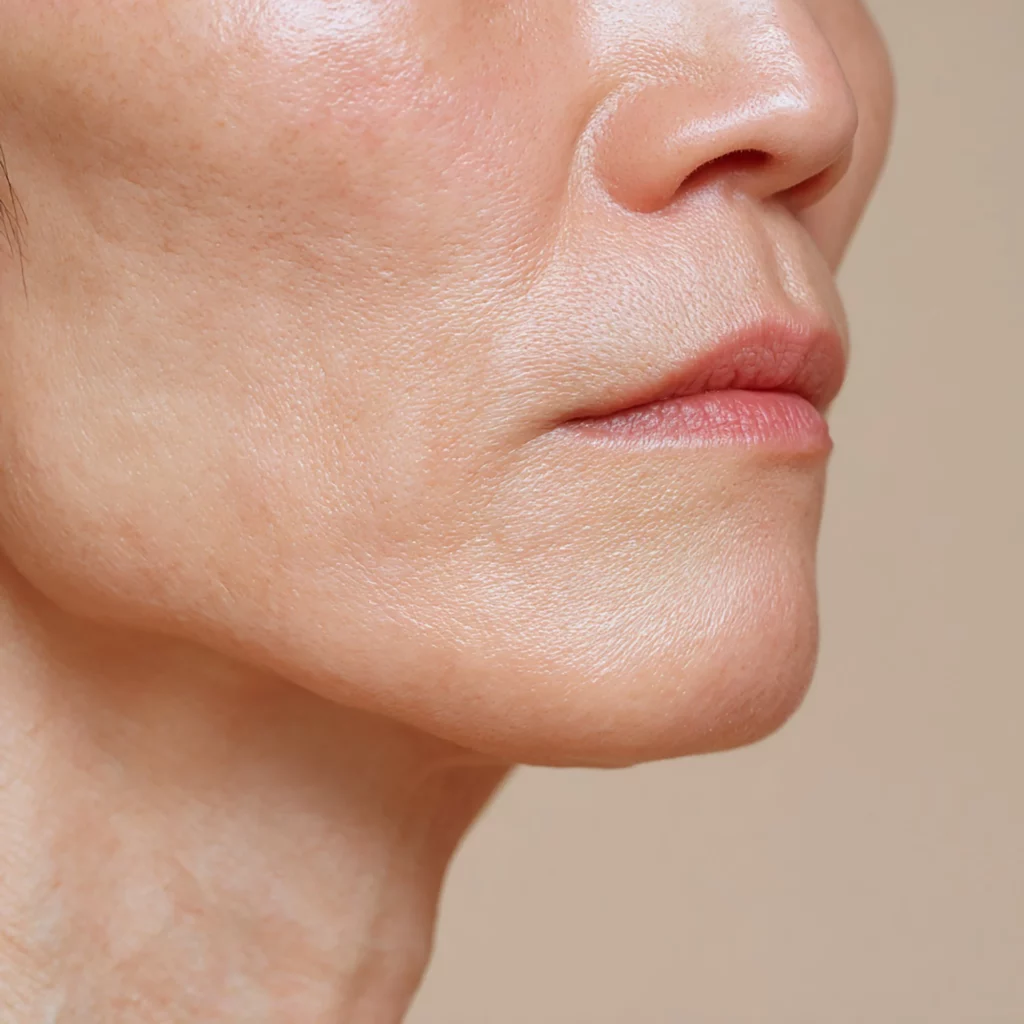
Dermatology textbooks and research consistently identify collagen loss as one of the main drivers of visible facial aging. Cosmetic dermatology textbooks have long described injectable collagen and injectable acellular dermal matrix as two distinct ways to restore the dermis: one supplies the main structural protein, the other supplies a processed dermal scaffold that the body’s own cells can move into. Laetigen and Re2O are modern Korean versions of those two approaches.
Laetigen vs Re20: Understanding Both Collagen Boosters
Before walking into a consultation, it helps to understand what each product is — and what it isn’t. Here is a clear, side-by-side breakdown.
What Is Laetigen?
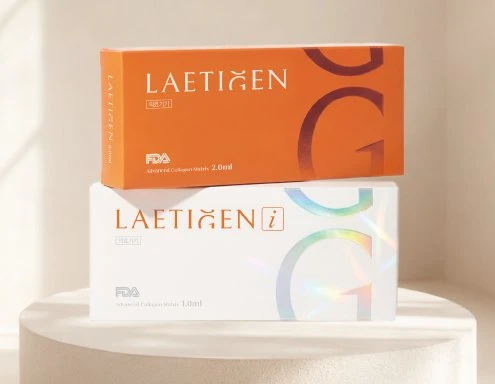
Laetigen is an injectable skin booster made of 99.9% pure type I collagen — the same type of collagen that forms most of the dermis. Instead of only signalling the skin to make more collagen, Laetigen delivers collagen itself into the dermis, filling in what has been lost and giving your fibroblasts a ready-made framework to work on.
It is an atelocollagen: the telopeptides (the short ends of the collagen molecule most responsible for immune reactions) are removed with enzymes, which lowers the risk of the body reacting to it. The collagen is sourced from young, antibiotic-free piglets under six months old, keeps the natural triple-helix structure of skin collagen, and is buffered to a neutral pH of about 7.2 — close to that of the dermis — which helps keep stinging and swelling low. Laetigen is approved as a medical device by Korea’s Ministry of Food and Drug Safety (MFDS). You can read more in our guide What Is Laetigen? Korea’s Next-Gen Collagen Booster.
Key characteristics of Laetigen:
- Direct collagen replacement (type I atelocollagen, 99.9% purity)
- Addresses thin skin, loss of firmness, enlarged pores, fine lines and dehydration
- Skin often feels more hydrated and firm right after treatment; collagen-remodeling effects build from about 2–4 weeks
- Typically 3 sessions spaced about 4 weeks apart, then maintenance every 6–12 months
- One session usually lasts around 4–6 months; after a full series of 3, results can last 12 months or more
- Because it is porcine-derived collagen, tell your doctor about any previous reaction to collagen or pork-derived products
Best for: Thin, lax skin that needs collagen put back quickly — patients who want a simple, direct collagen top-up.
What Is Re20 (Elravie Re2O)?
Re20 — officially Elravie Re2O, developed in Korea by L&C Bio — is a skin booster made from human-derived extracellular matrix (ECM). It is based on hADM (human acellular dermal matrix): donated human dermis from which all cells are removed, leaving only the structural network. That network contains collagen, elastin, fibronectin, laminin, tenascin and growth factors — the same components that hold healthy dermis together. Re2O was the first skin booster to use hADM, so rather than adding one ingredient, it replaces the whole matrix in which collagen sits.
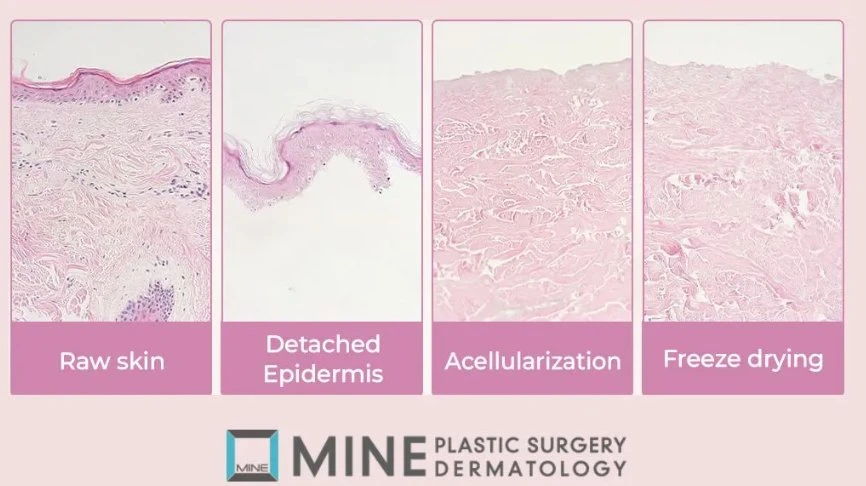
The image above shows the idea: the epidermis is removed, the cells are washed out (acellularization), and the remaining matrix is freeze-dried. L&C Bio’s patented AlloClean process removes the cells and immune-triggering components while preserving the tissue’s three-dimensional structure. It also keeps residual donor DNA to a minimum (the manufacturer reports no more than 144.12 ng/mg), which lowers the risk of rejection. Textbooks describe the same principle for injectable micronized acellular dermis: a preparation of collagen and elastin that provides a scaffold for the patient’s own cells to repopulate. For a deeper look, see Re20 Effect on Skin: Korea’s ECM Skin Booster or our Elravie Re2O treatment page.
Clinical research on this kind of material is growing. A 2026 double-blind, multicenter randomized trial, published in Aesthetic Plastic Surgery, included 202 adults with nasolabial folds (smile lines). It compared a micronized (finely ground) acellular dermal matrix filler with a collagen filler. At 6 months, 70.9% of the matrix group and 69.7% of the collagen group were still rated as improved on the study’s main measure. Early swelling or pain was somewhat more common after the matrix injection, but it resolved within a week. Because the trial tested different products, used as wrinkle fillers, its results don’t apply directly to Re2O or Laetigen. Still, it shows that both collagen and dermal-matrix injectables are being studied seriously.
Key characteristics of Re20 (Re2O):
- ECM-replacement mechanism: restores the dermal scaffold, then supports remodeling by your own fibroblasts
- Addresses several concerns at once: enlarged pores, loss of elasticity, fine lines, dull tone, pigmentation and oil–moisture imbalance
- Skin barrier function and circulation often begin to improve around day 3, with changes in pores and texture from 1–2 weeks
- In the manufacturer’s own clinical study, patients showed around 27% pore improvement, 16.3% better elasticity and 9.7% less redness (company data, not independent research)
- Standard protocol at Mine Clinic: 2 sessions 4–6 weeks apart; the injections themselves take about 15 minutes once the numbing cream has taken effect
- Results generally last 6 months or longer, and longer after a full series
Best for: Patients with several signs of aging at once — pores, laxity, fine lines and pigmentation — who want a structural, longer-term skin reset.
Laetigen vs Re20: 7 Key Differences at a Glance
| Feature | Laetigen | Re20 (Re2O) |
|---|---|---|
| Primary Ingredient | 99.9% pure type I atelocollagen | Human-derived ECM (hADM): collagen, elastin, fibronectin, laminin, growth factors |
| Source | Young porcine (pig) collagen, telopeptides removed | Donated human dermis, cells removed (AlloClean process) |
| Main Mechanism | Replaces lost collagen directly | Replaces the whole dermal matrix (scaffold) |
| Best Skin Concern | Thin, lax skin; enlarged pores; dehydration | Multiple concerns: pores, elasticity, fine lines, pigmentation |
| Onset of Results | Hydration and firmness right away; remodeling from 2–4 weeks | Barrier and circulation from ~3 days; pores and texture from 1–2 weeks |
| Session Protocol | 3 sessions, about 4 weeks apart | 2 sessions, 4–6 weeks apart |
| Longevity of Results | 4–6 months per session; 12+ months after 3 sessions | 6+ months; longer after a full series |

Key Takeaway: In Laetigen vs Re20, Laetigen puts collagen back; Re20 (Re2O) puts the whole matrix back. Choose Laetigen for a direct collagen top-up in thin, lax skin; choose Re2O when pores, elasticity, fine lines and pigmentation all need structural repair. The two can also be used in sequence — for example Re2O first, then Laetigen 3–4 weeks later.
According to Dr. Lee Sung-wook, board-certified plastic surgeon at Mine Clinic, “Re2O aims to rebuild the skin’s structure, while Laetigen aims to replenish collagen directly — so the right choice depends on each patient’s skin condition and goals.”
Where Does Rejuran Fit In?
Patients comparing Laetigen vs Re20 often ask about Rejuran too. Rejuran belongs to a different category: it is a polynucleotide (PN) booster that supports cell regeneration rather than replacing collagen or the dermal matrix. Results usually appear from 2–4 weeks and last around 3–6 months, and it is often chosen for thin, sensitive or dry skin with a weakened barrier. It can be combined with either product as part of a staged plan.
How Mine Clinic Performs Collagen Skin Booster Treatments
At Mine Clinic in Gangnam, Seoul, collagen skin booster treatments follow a meticulous clinical protocol designed specifically for international patients who may have limited time in Korea.
Step 1 — Skin Consultation
Before any injection or procedure is performed, our dermatology team thoroughly checks which procedure is suitable for the skin type.
We also review every skin concern you wish to address.
Step 2 — Topical Anesthesia Application
A numbing cream is applied to the treatment area approximately 30–45 minutes before the procedure begins. This ensures the experience is as comfortable as possible — most patients describe the sensation as mild pressure or a slight pinching sensation.
Step 3 — Precision Micro-Injection Technique

The skin booster is delivered using a manual injection technique or a fine cannula.
- Even distribution across the face (or targeted zones such as the neck or hands)
- Depth calibration to ensure product placement in the optimal skin layer
- Aseptic technique throughout to minimize infection risk
The injections themselves are quick (about 15 minutes for Re2O), but with numbing cream beforehand (30–45 minutes) and soothing care afterward, plan for a longer total visit.
Step 4 — Post-Treatment Soothing Care
Immediately after the injections, a calming LED session and a soothing mask are applied to reduce initial redness and accelerate recovery.
Korea Is the World’s Leader in Skin Booster Innovation
Korea doesn’t just use advanced skin boosters — Korea develops them. Seoul’s Gangnam district, where Mine Clinic is located, is home to some of the world’s most rigorous clinical research in aesthetic dermatology. Elravie Re2O is one example: it was developed by Korea’s L&C Bio as the first skin booster built on human acellular dermal matrix (hADM).
When you receive a collagen skin booster treatment at Mine Clinic, you’re accessing techniques and protocols refined through years of high-volume clinical practice — not a recently adopted trend.
- Genuine products, correct dosing — Mine Clinic uses only genuine, clinically validated, CE-marked or Korean MFDS-approved products, at the proper dose for your skin
- Multilingual international service — dedicated English-speaking coordinators available before, during, and after your visit. Learn more about our International Service
- Combination treatment expertise — our doctors frequently combine collagen boosters with complementary skin treatments such as Exosome therapy, Juvelook, or Botox for synergistic results
- Transparent, patient-first approach — we will honestly advise you if a different treatment is better suited to your goals. See our Care & Safety Standards
Cost-Effectiveness of Korean Medical Tourism
For international patients, Korea offers world-class dermatology at a fraction of the cost charged at equivalent clinics in the United States, United Kingdom, or Australia — without any compromise on safety or quality. A visit that includes multiple collagen booster sessions, a consultation, and a full skin analysis typically competes favorably with the price of a single session in many Western cities.
Consultation is required for personalized pricing, as your protocol will be customized to your specific skin condition and treatment goals. For what drives the cost of Re2O in Korea, see our Re2O price guide.
Important: Risks, Side Effects & Safety
We believe every informed patient deserves a transparent, honest discussion of risks. Collagen skin boosters are among the safest injectable treatments available — but they are still medical procedures and carry potential side effects.
Common & Expected Side Effects
These are normal, temporary reactions that typically resolve within 24–72 hours:
- Redness and warmth at injection sites
- Minor swelling (especially in thin-skinned areas like the under-eyes)
- Small bruises (particularly in patients on blood thinners or supplements like fish oil or vitamin E)
- Pinpoint marks or papules at injection sites that flatten within a few hours to a few days
- Mild tenderness to the touch for 1–2 days
Less Common Side Effects
These are rare but possible and should be discussed with your doctor:
- Allergic or hypersensitivity reaction (rare) — Laetigen is porcine-derived collagen and Re2O is human-derived matrix, so always tell your doctor about previous reactions to collagen, pork-derived or tissue-derived products
- Small raised bumps (“embossing”) along the injection lines — usually absorbed within 3–7 days
- Temporary skin lumpiness if the product is injected too superficially — typically self-resolving
Safety Measures at Mine Clinic
- All injections are performed in a fully sterile clinical environment
- Emergency protocols and equipment are on-site
- Patients receive a detailed post-care instruction sheet in English
- A follow-up check-in is arranged within 24–48 hours for international patients (via video call or in-person)
Who should NOT receive collagen skin boosters?
- Patients who are pregnant or breastfeeding
- Those with active skin infections or open wounds in the treatment area
- Patients with known hypersensitivity to any components of the product
- Those with autoimmune conditions — discuss with your doctor during consultation
Your safety is our absolute priority. View our full Post-Op Care and Real Patient Stories to learn more about how we support patients throughout their treatment journey.
Recovery After Your Collagen Skin Booster in Korea
One of the most frequently asked questions from international patients is: “How long do I need to stay in Korea?” Here is a realistic day-by-day guide.
Recovery Timeline
Day 0 (Treatment Day)
- Time in clinic: about 15 minutes of injections (Re2O), after 30–45 minutes of numbing cream
- Expect redness, minor swelling, and small bumps at injection sites
- Avoid makeup for the rest of the day
- Avoid strong direct sunlight for about one week, and use SPF 50+ whenever you go outdoors
- Avoid alcohol, saunas, hot baths and intense exercise for about one week — they widen blood vessels and can make bruising and swelling worse. Avoid smoking too, since it slows healing
Day 1–2
- Most redness and swelling has resolved significantly
- Pinpoint marks may still be visible but are easily covered with light makeup
- Gentle cleansing is permitted; avoid harsh exfoliants
- Continue to avoid saunas, swimming pools, and intense heat
Day 3–5
- Skin typically looks and feels normal; some patients notice early glow and hydration
- Full makeup and your regular skincare routine may resume, but skip scrubs, peels, facial massage and extractions for about 2 weeks
- Gentle exercise is permitted; save intense workouts until the first week has passed
Day 7
- If you’ve had a combination treatment involving micro-needling, a follow-up check may be scheduled
- For most collagen booster patients, no follow-up stitches or removal is required — a simple check-in call is sufficient
When Can I Fly Home?
Most international patients can safely fly home 48–72 hours after a collagen skin booster session. Because sessions are spaced weeks apart, a full series takes roughly 4–6 weeks for Re2O (2 sessions) and about 8 weeks for Laetigen (3 sessions about 4 weeks apart). If your stay is shorter, Mine Clinic’s international coordinators can fit your first session into this visit and plan the remaining sessions for a return trip.
When Will I See Full Results?
- Re20 (Re2O): Barrier and circulation improve from about day 3; pore and texture changes from 1–2 weeks, continuing as the matrix remodels
- Laetigen: Hydration and firmness right after treatment; collagen-remodeling effects from 2–4 weeks, strongest after the full 3-session series
Results typically last from about 4–6 months to 12 months or more, depending on the product, the number of sessions, your skin condition, lifestyle, and whether a maintenance protocol is followed.
For a full skin care plan tailored to your age group and skin type, explore Mine Clinic’s Treatments by Age guide.
Frequently Asked Questions
Can I combine Laetigen and Re20 in the same treatment plan?
Yes, and this is actually a common approach at Mine Clinic. Because Laetigen and Re20 work at different levels — Laetigen replaces collagen, Re2O replaces the wider dermal matrix — they can complement each other when used in sequence, for example Re2O first and Laetigen 3–4 weeks later, or Laetigen for a quick boost followed by Re2O for longer-term remodeling. Your doctor will design the sequencing based on your skin’s specific needs and your time in Seoul.
How many sessions of Re20 or Laetigen do I need as an international patient?
Many patients notice a difference after the first session, but the full result comes from a complete series. For Re20 (Re2O), 2 sessions spaced 4–6 weeks apart is the standard protocol at Mine Clinic. For Laetigen, 3 sessions about 4 weeks apart are typically recommended. If your time in Korea is limited, your coordinator will prioritize the sessions that deliver the greatest impact within your available window, and may suggest a maintenance session on a future visit.
Is there a “best” collagen skin booster, or does it depend on my skin?
It genuinely depends on your skin profile. Re20 (Re2O) suits skin with several structural problems at once — pores, laxity, fine lines and pigmentation — because it restores the whole matrix. Laetigen suits thin, lax skin where a direct collagen top-up is the main need. If your main concern is sensitivity or redness, a polynucleotide booster such as Rejuran may be discussed instead. Many patients benefit most from a customized combination of both. This is why the Mine Clinic consultation is so important — a one-product answer ignores your individual biology.
Do collagen skin boosters hurt?
Most patients find the procedure very tolerable. Topical anesthetic cream is applied 30–45 minutes before your appointment, which significantly reduces discomfort. You may feel a brief pinch at each injection site, but the needles used are extremely fine. The most sensitive areas are typically under the eyes and around the lips. Laetigen is also buffered to a neutral pH close to that of the dermis (about 7.2), which helps keep stinging low.
Are collagen skin boosters safe for all skin tones and ethnicities?
Yes. Collagen skin boosters like Laetigen and Re20 do not target melanin, so unlike some lasers they are generally well suited to all skin tones. Any injection can still cause temporary redness or bruising, and darker skin can occasionally show short-lived post-inflammatory darkening, so careful technique and sun protection matter. Mine Clinic serves a highly diverse international patient base — including patients from Southeast Asia, the Middle East, Europe, and the Americas — and our doctors are experienced in treating all skin tones and types safely. Browse our before and after gallery to see real results across a range of skin types.
Interested in this procedure? Contact Mine Clinic today for a personalized online consultation. We are ready to assist you on WhatsApp and guide you through your K-Beauty journey in Seoul.
👉 Book Your Free Online Consultation Here 👉 Make an Online Reservation 👉 Find Our Clinic in Gangnam, Seoul
Reviewed by Dr. Lee Sung-wook, Board Certified Plastic Surgeon at Mine Clinic. Last updated: October 2026. For more information about our medical team, visit our Medical Staff page.
※ This content is for informational purposes only and does not replace professional medical advice, diagnosis, or treatment. Individual results may vary, and side effects may occur. Please consult with a board-certified plastic surgeon for personalized advice.